President Donald Trump says the US blockade of Iranian ports is working and urges Iran to stop its nuclear program. Iran denies the blockade’s effect and says its military is holding back to allow for diplomacy. The standoff near the Strait of Hormuz has raised oil prices and increased fuel costs in the US.
Key Facts
President Trump calls the US blockade on Iranian ports a success and wants Iran to “just give up.”
Iran’s Parliament Speaker says the blockade has not damaged oil production and raises global oil prices instead.
The US aims to fill Iran’s oil storage to stop exports, but analysts say Iran has about 20 days of storage left.
Russian President Putin told President Trump that extending the ceasefire with Iran was a good decision.
Negotiations between the US and Iran are stuck over Iran’s nuclear program, frozen assets, the blockade, and war reparations.
The crisis is affecting global energy markets, with oil prices rising above $120 a barrel and US gas prices hitting four-year highs.
Iran condemned Bahrain for revoking citizenship from 69 people accused of supporting attacks linked to Iran.
US Defense Secretary estimated the conflict has cost less than $25 billion so far; President Trump expects a long blockade.
Read the Original
Want the full story? Tap a source to open the original
article.
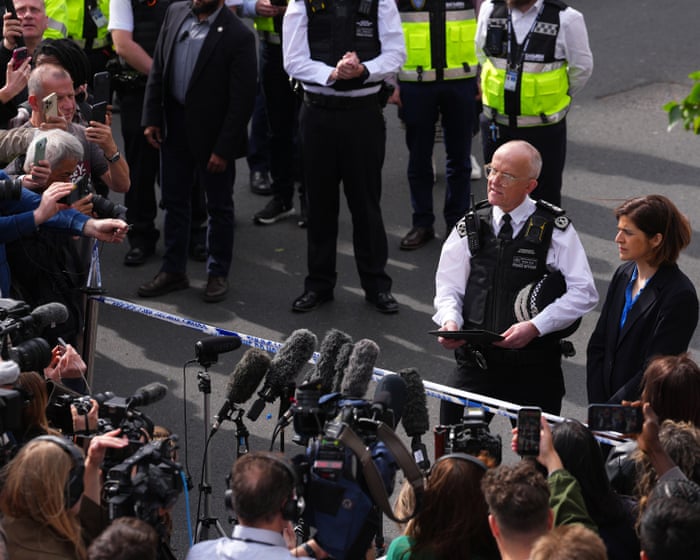
Two Jewish men were stabbed in a terror attack in Golders Green, London. The UK government announced extra funding to increase security around Jewish communities and will fast-track new laws to address state threats.
Key Facts
Two Jewish men were stabbed and are now in stable condition in hospital.
Police arrested a 45-year-old British man born in Somalia, suspecting attempted murder.
The attack in Golders Green has been declared a terrorist incident by police.
The suspect has a history of mental health problems, drug use, and violence.
The government will add £25 million to boost police patrols and security at synagogues, schools, and community centers.
Home Secretary Shabana Mahmood acknowledged the fear felt by Jewish people in the UK.
The government aims to pass new laws quickly to better tackle threats to the Jewish community.
Recent months saw several arson attacks on Jewish targets in London, including in Golders Green.
Read the Original
Want the full story? Tap a source to open the original
article.
The Trump administration is actively talking to countries to help bring back their citizens who are stuck in Syria, especially those in the al-Roj camp. Meanwhile, the Australian government refuses to repatriate Australian women and children held in Syria, leaving some stuck in Damascus after leaving the camp.
Key Facts
The Trump administration wants countries to take back their citizens from Syria, including people in the al-Roj camp.
Al-Roj camp is in northeast Syria and controlled by Kurdish-led forces; it houses families linked to Islamic State fighters.
Four Australian women and nine children left al-Roj camp recently, trying to return to Australia but were stopped in Damascus.
The Australian government has refused to receive these families and warned that anyone returning who committed crimes would be prosecuted.
Most of the Australian women and children have been in the camp for over six years; some children were born there.
None of the Australians in the camp have been charged with crimes, but one woman faces a temporary order banning her return.
The Syrian government said the families have Australian travel documents but are still waiting for a solution.
The US funds the operation of al-Roj camp and calls it an “incubator for radicalisation,” pushing for repatriation.
Read the Original
Want the full story? Tap a source to open the original
article.
The US and Iran have been in conflict for two months, with naval blockades disrupting global oil supplies and talks stalled. Despite a ceasefire since April 8, both sides continue military posturing, and experts warn the war could become a long-lasting, low-level conflict with serious economic and political costs.
Key Facts
The US and Israel launched a surprise attack on Iran about two months ago.
Negotiations between the US and Iran have stalled, with no agreement reached on Iran’s nuclear program.
Both the US and Iran have blockaded the Strait of Hormuz, a key waterway for global energy shipments.
A ceasefire has been in place since April 8, but military options remain active.
The US has deployed more than 10,000 troops and three aircraft carrier strike groups to the region.
The cost of this conflict for the US in the first month is estimated between $20 billion and $25 billion.
Iran’s strikes have damaged US military assets and affected relations with Gulf countries.
The conflict has contributed to higher US gasoline prices, nearing $4.18 per gallon.
Experts warn that a “frozen conflict” with no clear end could cause prolonged instability and economic harm.
Read the Original
Want the full story? Tap a source to open the original
article.
An 18-year-old French teenager in Singapore faces legal charges after posting a video of himself licking a straw from a vending machine and putting it back. The company that owns the machine reported the incident to the police, and the teen now faces possible prison time or fines.
Key Facts
The teenager’s name is Didier Gaspard Owen Maximilien.
He is charged with mischief and public nuisance.
The incident happened on March 12 at a shopping mall in Singapore.
Mischief can lead to up to two years in prison or a fine; public nuisance can lead to up to three months in prison or a fine.
The vending machine company sanitized the machine and replaced 500 straws.
The company plans to upgrade machines to have individually wrapped straws and secure compartments.
The teen is studying business in Singapore and was allowed to travel to Manila for a school trip from May 2 to 25.
He must return to court on May 29.
Read the Original
Want the full story? Tap a source to open the original
article.
David Allan Coe, a country singer and songwriter known for hits like "You Never Even Called Me by My Name" and "The Ride," has died at 86. His wife confirmed his death but did not share the cause.
Key Facts
David Allan Coe was 86 years old at the time of his death.
He wrote popular country songs including "You Never Even Called Me by My Name" and "The Ride."
Coe's wife, Kimberly, confirmed his death to Rolling Stone magazine.
The cause of death has not been disclosed.
Coe was born in Akron, Ohio, in 1939.
He spent part of his youth in reform schools and was in prison from 1963 to 1967.
He began his music career singing on the streets of Nashville, Tennessee.
One of his songs, "Take This Job And Shove It," became a number one country hit for Johnny Paycheck and inspired a 1981 movie.
Read the Original
Want the full story? Tap a source to open the original
article.
David Allan Coe, a country singer and songwriter known for the song "Take This Job and Shove It," has died at age 86. He was known for his raw lyrics, his time in prison early in life, and his influence on outlaw country music.
Key Facts
David Allan Coe died at the age of 86; the cause of death was not shared.
He wrote "Take This Job and Shove It," a famous working-class song recorded by Johnny Paycheck.
Coe also wrote hits for other artists, like Tanya Tucker's "Would You Lay With Me (in a Field of Stone)."
He recorded the first country version of "Tennessee Whiskey," later made famous by George Jones and Chris Stapleton.
Coe had a rough past, including time in Ohio prison from 1963 to 1967 for burglary tools possession.
He began his music career while in prison, recording an album called "Penitentiary Blues."
He was part of the outlaw country music movement, known for his raw and sometimes controversial lyrics.
Coe performed with artists like Willie Nelson, Kid Rock, and Neil Young and acted in several movies.
Read the Original
Want the full story? Tap a source to open the original
article.
The group Reporters Without Borders (RSF) says that freedom of the press is at its lowest point in 25 years worldwide. Many countries now have serious problems with press freedom, and the United States has dropped in the rankings, partly due to actions taken by President Donald Trump.
Key Facts
RSF’s annual press freedom ranking shows media freedom worsening globally.
More than half of the world’s countries now have "difficult" or "very serious" press freedom conditions.
Less than 1% of the world population lives in countries rated as having "good" press freedom, down from 20% before.
The United States ranks 64th, down seven places, with the press labeled as "problematic."
President Donald Trump’s repetitive criticism of the press and actions like deporting a journalist have contributed to the US decline.
Northern European countries, including Norway, have the best press freedom ratings.
Countries with severe declines include El Salvador, Georgia, and Niger due to violence and government repression.
Saudi Arabia executed a journalist, placing it near the bottom of the rank along with Russia, Iran, and China.
Read the Original
Want the full story? Tap a source to open the original
article.
A Syrian rights commission is preparing a case against Fadi Saqr, a militia leader linked to the Assad regime, for war crimes and crimes against humanity in Damascus. The commission, working with victims and evidence, aims to refer the case to Syria’s courts as part of efforts toward justice after years of war.
Key Facts
Fadi Saqr is a former commander of the National Defence Forces militia in Damascus.
He is accused of involvement in mass killings and forced disappearances in the Tadamon area.
After Assad was ousted in December 2024, Syrian authorities initially worked with Saqr, causing anger among victims.
The National Commission for Transitional Justice is an independent body working to build evidence against Saqr.
Judicial action against Saqr would mark progress in Syria’s attempts at transitional justice after a long war.
Videos leaked from a former intelligence officer showed killings in Tadamon, including executions ordered by Amjad Youssef.
Saqr denies responsibility but was commander during some killings documented after June 2013.
Local activists say Saqr controlled orders for abuses in Tadamon, not just Youssef.
Read the Original
Want the full story? Tap a source to open the original
article.
India plans to place crocodiles and venomous snakes along parts of its long border with Bangladesh where building fences is too hard, hoping these animals will stop illegal crossing and smuggling. This idea comes from the Border Security Force to protect difficult areas by the river but has raised concerns among human rights and wildlife groups.
Key Facts
India’s border with Bangladesh is about 4,096 kilometers (2,545 miles) long and runs through difficult land including rivers and hills.
Nearly 3,000 kilometers of the border have already been fenced, but many river areas remain open.
The Border Security Force (BSF) suggested deploying crocodiles and venomous snakes to block river gaps that are hard to fence.
Officials ordered strict compliance and asked for reports on the use of these reptiles.
Human rights and conservation groups worry about the danger to people and wildlife this plan could cause.
The idea aims to reduce undocumented migration and smuggling in hard-to-secure border zones.
Critics say the animals cannot distinguish between people from India or Bangladesh, making the plan risky and cruel.
The Indian government views undocumented migrants as a threat to the country’s demographics, especially in eastern and northeastern states.
Read the Original
Want the full story? Tap a source to open the original
article.
China will ban the sale, rental, and import of drones in Beijing starting Friday due to security concerns. Drone owners in the city must register their devices, get permission before flying, and complete online training and a test on drone rules.
Key Facts
Beijing will ban selling, renting, or bringing drones and key drone parts into the city.
Drone owners must register their drones with the police.
Flying drones outdoors in Beijing requires prior approval from authorities.
Users must finish online training and pass a rules test before flying drones.
Exceptions for drone use exist for counter-terrorism and disaster relief if approved.
Beijing’s airspace is largely a no-drone zone, requiring air traffic authority approval to fly.
China has over three million registered drones and is home to major companies like DJI.
The new rules aim to improve safety while supporting technological and economic growth.
Read the Original
Want the full story? Tap a source to open the original
article.
European leaders are discussing how to better use Article 42.7, a mutual defence clause in the European Union treaty, as doubts grow about the United States’ long-term commitment to NATO. Unlike NATO’s collective defence rule, the EU’s clause lacks a permanent military force, making it less strong but potentially important if European countries want to rely more on themselves for security.
Key Facts
NATO’s Article 5 means an attack on one member is an attack on all members.
The EU’s Article 42.7 requires members to help each other if one is attacked but has no automatic military response.
EU Article 42.7 is not supported by a combined military command or standing forces like NATO.
President Donald Trump has criticized NATO allies for their defence spending and questioned the alliance’s value.
Recent tensions have risen between the US and Europe over issues like the wars on Iran and Ukraine.
Cyprus, an EU but not NATO member, wants to strengthen Article 42.7 after a drone strike on a British base in Cyprus.
The European Commission will work on a plan to explain how to act if Article 42.7 is invoked.
French President Emmanuel Macron supports treating Article 42.7 as a real, binding defence commitment, not just words.
Read the Original
Want the full story? Tap a source to open the original
article.
On the biggest stories we show what the outlets agree on and where they differ. Readers keep that going, and get the daily digest by email every morning. Most choose $3.99/month.
Police believe a five-year-old girl named Kumanjayi Little Baby was murdered after her body was found in the Australian Outback. They are searching for Jefferson Lewis, a man who was recently released from prison and is suspected of abducting and killing her.
Key Facts
The girl was last seen at an Aboriginal town camp near Alice Springs on Saturday night.
Police found the body of a child on Thursday and are testing to confirm it is Kumanjayi Little Baby.
Jefferson Lewis, 47, was released from prison six days before the girl disappeared.
DNA tests on children’s underwear found near the camp matched both the girl and Lewis.
Lewis has a history of domestic and family violence offenses.
The police are searching the area with dogs, drones, and a helicopter.
Lewis has no phone, bank account, or car, and police believe he may have help.
Authorities have informed the family and are asking anyone with information to contact them.
Read the Original
Want the full story? Tap a source to open the original
article.
Levi Davies was raped in a park in Southampton in February 2023 and died a year later from a lethal overdose of ketamine. Her family shares her story to raise awareness of the mental health struggles faced by sexual violence survivors and the need for long-term support.
Key Facts
Levi Davies, aged 20, was raped in Palmerston Park, Southampton, in February 2023.
The attacker, Rosario Dos Reis, was caught and jailed after the incident.
Levi died in February 2024 from a fatal overdose of ketamine, a class B drug.
An inquest recorded an open conclusion, meaning it was unclear if the overdose was accidental or intentional.
Her family describes how Levi suffered mental torment and trauma after the attack.
Levi spoke publicly about her experience to encourage other survivors to seek help.
The family hopes sharing Levi’s story will highlight the need for longer-term support for sexual violence survivors.
Hampshire Police were praised for handling Levi’s case with care.
Read the Original
Want the full story? Tap a source to open the original
article.
A group of Welsh grandmothers made friends with a professional wrestler on a flight to Las Vegas. They attended his wrestling event after scattering a late husband's ashes and plan to meet again at a future show in London.
Key Facts
Four grandmothers were traveling to Las Vegas to scatter the ashes of Rose Sulley's late husband, Pete.
They accidentally ended up with a professional wrestler, DeReiss Gordon (“Man Like DeReiss”), sitting in the seat they thought was theirs on the flight.
After a brief mix-up, the women started talking with DeReiss, who invited them to his wrestling event in Las Vegas.
The grandmothers attended the wrestling show during WrestleMania week, their first live wrestling experience.
They sent a message backstage to let DeReiss know they were at the event; he came to greet them.
After returning home, DeReiss used social media to find the women to keep in touch.
Plans are underway for the women to meet DeReiss and other wrestlers again at a show in London.
DeReiss said the friendship showed how people with very different lives can connect by simply talking.
Read the Original
Want the full story? Tap a source to open the original
article.
The new EU entry-exit system (EES), which started in Schengen countries in April 2026, has caused long waits and delays at border checks. Many travelers reported queues, problems with fingerprint scans, unclear instructions, and having to repeat the process during their trips.
Key Facts
The EU entry-exit system began in October 2025 and was fully applied in Schengen countries by April 2026.
Schengen includes 25 EU states plus Iceland, Norway, Liechtenstein, and Switzerland.
Some travelers waited up to three hours in lines at passport control.
Issues included fingerprint scans not working and confusion about using kiosks.
Families and travelers with children experienced extra delays and little special assistance.
Some had to repeat the registration on different flight legs without explanation.
One traveler missed his flight due to queues and faced over £2,000 in extra costs.
Pregnant travelers and people with infants faced difficult waiting conditions without enough seating or support.
Read the Original
Want the full story? Tap a source to open the original
article.
Jarvis Cocker and his wife, Kim Sion, will curate a new art exhibition called "Hodge Podge" at Hepworth Wakefield, opening in May 2027. The show will feature diverse artworks that challenge traditional ideas about art and invite people to explore their own creativity.
Key Facts
The exhibition is titled "Hodge Podge" and opens in May 2027 at Hepworth Wakefield.
It brings together works by well-known artists and unknown outsider artists not previously shown in UK museums.
Artists featured include Jeremy Deller, Peter Doig, Barbara Hepworth, Klara Kristalova, Emma Kunz, Mark Leckey, and Agnes Pelton.
Jarvis Cocker and Kim Sion want the exhibition to help people realize their own creativity.
The show explores themes like alternative spiritualities, dreams, poetry, music, and community outside traditional groups.
A special feature is the Dreamachine, a light device designed to create visual patterns when viewed with closed eyes.
The exhibition is inspired by the idea that humans are naturally creative, not just consumers.
The name "Hodge Podge" comes from a 15th-century word meaning a mix or stew of different things.
Read the Original
Want the full story? Tap a source to open the original
article.
The BBC has launched a new weekly podcast called Learn Cornish to help people discover and learn the Cornish language. The show features hosts Danni Diston and Sarah Buck and aims to support the growing interest and official promotion of Cornish as a protected regional language.
Key Facts
The podcast Learn Cornish is hosted by Radio 1’s Danni Diston and fluent speaker Sarah Buck.
Cornish (Kernewek) recently gained enhanced protection under the European charter for regional languages, requiring government support in education and media.
Currently, Cornish language content is limited to weekly news on BBC Radio Cornwall.
The podcast aims to introduce basic Cornish words and phrases to listeners.
Cornwall is experiencing a cultural revival, with filmmakers and musicians promoting the Cornish language.
Cornwall will be honored as the featured nation at the Lorient festival, a major Celtic culture event in Brittany.
The podcast includes segments outside the studio, like meeting local surfers and visiting primary schools teaching Cornish.
BBC hopes the podcast will increase the number of Cornish speakers and lead to more media content in the language.
Read the Original
Want the full story? Tap a source to open the original
article.
The UK nightingale population has increased by about 9% over the last ten years, with the largest group found at RSPB Northward Hill in Kent. Conservation efforts like planting and natural land recovery have helped, but the birds still face ongoing risks, and their numbers remain low compared to the past.
Key Facts
Nightingales have declined by 90% since the 1970s in the UK.
There are currently about 5,500 singing male nightingales in the UK.
The British Trust for Ornithology reported an 8.9% rise in singing males from 2014 to 2024.
RSPB Northward Hill in Kent has the largest nightingale population, with 47 singing males.
Nightingales prefer dense scrub and woodland for shelter and nesting.
Habitat improvements at Northward Hill, such as coppicing (cutting trees to encourage growth) and planting, have helped the birds recover.
Nightingales are hard to spot because they stay hidden and rarely fly in open areas.
Threats like predators (including domestic cats) and nearby housing developments still endanger the birds.
Read the Original
Want the full story? Tap a source to open the original
article.
New Zealand’s Court of Appeal rejected Brenton Tarrant’s attempt to appeal his conviction and life sentence for killing 51 people in mosque shootings in 2019. The court found no evidence that Tarrant’s guilty plea was made under pressure or because of poor mental health due to prison conditions.
Key Facts
Brenton Tarrant killed 51 people at two mosques in Christchurch, New Zealand, in 2019.
He pleaded guilty to murder, attempted murder, and terrorism charges and was sentenced to life in prison without parole in 2020.
Tarrant appealed his conviction, claiming harsh prison conditions affected his mental state and decision to plead guilty.
New Zealand’s Court of Appeal ruled that his appeal had no merit and his guilty plea was voluntary.
The court found inconsistencies in Tarrant’s claims about his mental health and relied on prison and health professionals’ reports.
Survivors and victims’ families expressed relief that there would be no new trial, avoiding further trauma.
Tarrant livestreamed the attack and published a manifesto before the shootings.
The court confirmed the facts of the crime were clear and no legal defense existed for Tarrant’s actions.
Read the Original
Want the full story? Tap a source to open the original
article.