Two Israeli air strikes hit a building in southern Lebanon, killing five people including three rescue workers who were responding to the first strike. Lebanon’s Prime Minister called the attack on rescuers a war crime, while the conflict between Israel and Hezbollah continues despite a US-brokered ceasefire.
Key Facts
Two Israeli air strikes occurred in Majdal Zoun, southern Lebanon.
Five people died, including three Lebanese Civil Defense rescuers.
The rescuers were trapped under rubble caused by the second strike.
Two Lebanese soldiers were wounded in the attack.
The Israeli military said it targeted Hezbollah infrastructure sites and killed three Hezbollah members.
The conflict started on March 2 after Hezbollah fired rockets into Israel.
Over 2,500 people have been killed in Lebanon since the conflict began, including many civilians and health workers.
A US-brokered ceasefire has reduced fighting but not fully stopped the violence.
Read the Original
Want the full story? Tap a source to open the original
article.
A Japanese oil tanker, the Idemitsu Maru, passed through the Strait of Hormuz for the first time since the Iran war started. This happened after talks between Japan and Iran, offering some relief to Japan, which relies heavily on Middle Eastern oil.
Key Facts
The Idemitsu Maru, owned by Japan and flagged in Panama, carried 2 million barrels of Saudi crude oil.
The tanker was stuck in the Persian Gulf for two months before being allowed through.
Japan used its strategic oil reserves in March and plans another release in May due to shortages caused by the Iran war.
The Strait of Hormuz was closed to most commercial ships after attacks involving the U.S. and Israel beginning February 28.
Japan and Iran engaged in intensive talks to secure the tanker's passage.
No transit fees were reportedly paid to Iran, although the ship followed a route designated by Iran's Revolutionary Guard.
The U.S. government has sanctions against paying tolls to Iran for oil transport but it is unclear if it knew about this negotiation.
About 40 other Japan-linked ships remain stuck in the Gulf due to risks and Iran’s control of the strait.
Read the Original
Want the full story? Tap a source to open the original
article.
Iran has developed a large cryptocurrency market used by citizens and the Islamic Revolutionary Guard Corps (IRGC) to bypass economic sanctions and inflation. The United States has responded by targeting Iran-linked crypto wallets, freezing millions of dollars in digital assets to limit Tehran’s economic activities during ongoing conflicts and negotiations.
Key Facts
Iran’s cryptocurrency market was worth over $7.78 billion last year and is growing fast.
About half of Iran’s crypto activity is linked to the IRGC, a powerful military group.
Crypto is used in Iran to pay for oil sales, weapons, goods imports, and even tolls for ships passing the Strait of Hormuz.
Many Iranians use crypto to protect their savings from inflation and currency loss, since the rial has lost about 90% of its value since 2018.
The U.S. government recently froze $344 million in Iran-linked digital assets.
Iran’s economy has been under heavy sanctions that limit access to international banking.
Iran’s IRGC controls many crypto mining operations, making it harder for ordinary Iranians to participate freely in the market.
The U.S. aims to cut off all financial channels Iran uses tied to its regime as part of its strategy to increase pressure on Tehran.
Read the Original
Want the full story? Tap a source to open the original
article.
Police in London arrested a man after he stabbed two Jewish men in the Golders Green neighborhood, which has a large Jewish community. This attack is part of a recent series of anti-Jewish incidents in London, including arson attempts on synagogues.
Key Facts
A man was arrested after stabbing two Jewish men in north London's Golders Green area.
The suspect was seen carrying a knife and trying to stab Jewish people before police used a taser to stop him.
The two victims were treated by emergency services at the scene.
The incident adds to a series of attacks on Jewish sites in London, including attempted arson on synagogues.
Over two dozen people have been arrested recently in connection with attacks on Jewish-linked properties in London.
Police are investigating possible connections to Iran, as some attacks were claimed by a pro-Iranian group.
There has been an increase in anti-Semitic attacks in the UK following the 2023 Hamas attack on Israel and the Gaza War.
The worst anti-Semitic attack last year was in Manchester, where two Jewish worshippers were killed on Yom Kippur.
Read the Original
Want the full story? Tap a source to open the original
article.
North Korean leader Kim Jong-un praised soldiers who used grenades to kill themselves rather than be captured during fighting near the Russia-Ukraine border. North Korea sent about 14,000 troops to support Russia in the war, and many were killed or captured in battles around the town of Sudzha.
Key Facts
Kim Jong-un honored North Korean soldiers who chose to end their own lives to avoid enemy capture.
North Korea sent around 14,000 elite soldiers to fight alongside Russian forces in the western Kursk region near Ukraine.
Over 6,000 North Korean troops were reportedly killed in fighting after Ukrainian forces briefly took control of the town of Sudzha.
Two North Korean soldiers were captured alive by Ukraine but had failed in their attempt to self-detonate due to injuries.
Kim called both those who died and survivors loyal patriots and warriors for their actions in battle.
North Korea has provided Russia with artillery shells and short-range ballistic missiles during the conflict.
In return, Russia has given North Korea economic help and military technology.
Russia regained control of Sudzha in early 2025 after Ukraine’s counter-attack had crossed into Russian territory.
Read the Original
Want the full story? Tap a source to open the original
article.
Prince William and Princess Catherine shared a new family photo to celebrate their 15th wedding anniversary. The picture shows them with their three children and was taken in Cornwall during Easter.
Key Facts
William and Catherine have been married for 15 years since their wedding in 2011.
They posted a new family photo on social media to mark the anniversary.
The photo was taken by Matt Porteous in Cornwall during the Easter holiday.
The picture shows the couple lying in grass with their children: Prince George, Princess Charlotte, and Prince Louis.
William and Catherine met at the University of St Andrews.
They lived in Anglesey during the first three years of marriage while William trained as a search and rescue pilot.
Prince William expressed fond memories of his time in Anglesey during a recent visit.
Their three children were born in 2013, 2015, and 2018 respectively.
Read the Original
Want the full story? Tap a source to open the original
article.
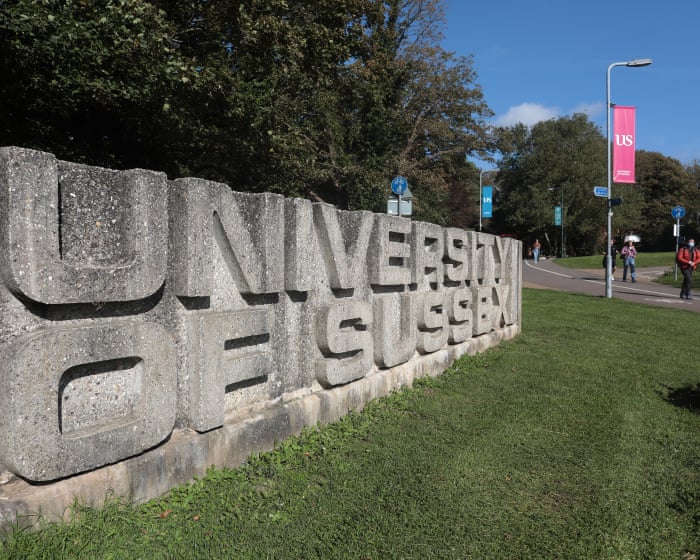
The University of Sussex won a court case against a £585,000 fine from England's university regulator, the Office for Students (OfS). The fine was linked to the university’s policy on trans and non-binary inclusion, which the OfS said harmed free speech, but the court found the regulator’s process was flawed.
Key Facts
The fine was issued by the Office for Students over Sussex’s trans and non-binary inclusion policy.
The policy asked staff to "positively represent trans people" and warned against "transphobic propaganda."
The fine followed protests against Professor Kathleen Stock, who left Sussex due to threats after her views on gender and biological sex caused controversy.
The High Court ruled that the OfS did not properly follow procedure when issuing the fine.
The judge said the OfS showed bias by deciding the university was at fault before fully considering evidence.
The court found the OfS used a wrong approach to decide what counts as academic freedom.
Sussex argued their policy was not an official governing document, and the court agreed.
A new law about university free speech began after the fine, with stronger powers for the OfS coming later this year.
Read the Original
Want the full story? Tap a source to open the original
article.
Two people were stabbed in the Golders Green area of London, and a man was arrested after being seen carrying a knife and trying to stab Jewish members of the public. The Jewish neighborhood watch group Shomrim detained the suspect, but the police have not confirmed the details or the condition of the victims.
Key Facts
The stabbing happened in Golders Green, London.
Two people were stabbed.
Shomrim, a Jewish neighborhood watch group, saw a man carrying a knife and trying to stab Jewish people.
Shomrim volunteers detained the man.
The man was later arrested, though the police have not officially confirmed this.
There is no public information about how badly the victims were hurt.
The incident has raised concerns amid fears of rising antisemitism.
The Metropolitan Police have been contacted for comment but have not responded yet.
Read the Original
Want the full story? Tap a source to open the original
article.
Russian paramilitary forces carried out air strikes near Mali’s capital, Bamako, after rebel groups launched a large attack across the country. The fighting included the killing of Mali’s Defence Minister and the withdrawal of Russian-backed forces from a key northern town.
Key Facts
Russian paramilitary forces launched air strikes against rebels near Bamako, Mali.
Rebel groups involved included jihadists and Tuareg separatists who attacked multiple areas.
Mali’s Defence Minister, Sadio Camara, was killed during a rebel attack on his home.
Russia’s Africa Corps, supporting Mali’s military, posted videos showing these strikes.
Despite counterattacks, Russian-backed forces withdrew from Kidal, a strategic northern town.
Mali has faced conflict with various rebel groups for over ten years.
The military took control of Mali in 2020, blaming the civilian government for poor security.
The recent rebel offensive represents a major increase in fighting, now targeting cities as well as rural areas.
Read the Original
Want the full story? Tap a source to open the original
article.
A new report finds that press freedom is declining in the European Union. Media ownership is becoming more concentrated, information sources are less transparent, and trust in the media is falling, which affects democracy and political accountability.
Key Facts
The report covers 22 EU member countries.
Press freedom decline is linked to weaker democratic institutions and the rule of law.
Media ownership concentration means fewer companies control more news sources.
Less transparency makes it harder for people to know who owns the media they consume.
A lack of diverse information sources can harm democracy.
The study highlights the importance of a free press for government accountability.
The report was discussed by Eva Simon, Head of Tech & Rights Program at Liberties.
The findings suggest that problems in media freedom are part of a broader decline in EU democracy.
Read the Original
Want the full story? Tap a source to open the original
article.
The United Arab Emirates (UAE) has announced it will leave the Organization of the Petroleum Exporting Countries (OPEC) and its expanded group OPEC+ by May 2026. This decision reflects deeper political and strategic disagreements with Saudi Arabia and signals a breakdown in Gulf Cooperation on oil policy and regional order.
Key Facts
The UAE will exit OPEC and OPEC+ on May 1, 2026.
OPEC has long been a way for Gulf countries to work together on oil production and influence global markets.
The UAE’s departure shows a serious regional split, especially between Saudi Arabia and the UAE.
In late 2025, Saudi Arabia bombed a UAE weapons convoy in Yemen, worsening tensions.
Saudi Arabia wants to keep Arab states united and stable, while the UAE supports using local groups in other countries to gain influence.
Staying in OPEC would mean the UAE accepted Saudi dominance over oil policy, which it no longer wants.
The UAE is OPEC’s third-largest oil producer, making this exit very significant.
OPEC faces a legitimacy crisis, partly due to perceptions in Washington that it supports Russian interests through oil price control.
Read the Original
Want the full story? Tap a source to open the original
article.
A man was arrested after stabbing two people in Golders Green, a neighborhood in North London with a large Jewish community. Local Jewish security groups detain the suspect and emergency volunteers treated the victims before police arrived.
Key Facts
A man was seen running with a knife in Golders Green, trying to stab Jewish people.
Shomrim, a Jewish volunteer security group, quickly detained the suspect.
The suspect was handed over to the police, who used a taser at the scene.
Two people were injured and treated by Hatzola, a Jewish emergency volunteer group.
Police had not released a detailed statement about the incident immediately.
This attack follows several recent attacks targeting Jewish communities in North London.
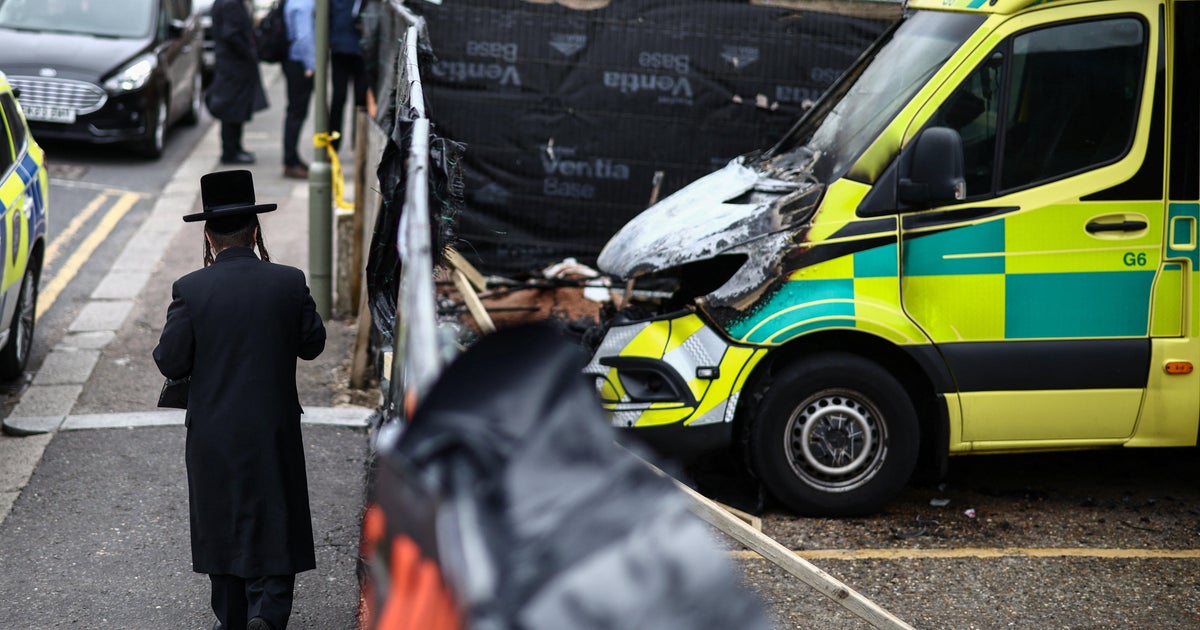
One previous attack involved an arson that destroyed several ambulances used by Hatzola.
The Community Security Trust confirmed the stabbing and thanked those who responded quickly.
Read the Original
Want the full story? Tap a source to open the original
article.
Staying informed here is free for everyone. If it's worth something to you, pay what you want. Supporters also get the daily digest by email every morning.
Two people were stabbed in Golders Green, north-west London. A man carrying a knife was arrested after being detained by a local Jewish neighborhood watch group and then by police using a stun gun.
Key Facts
The stabbing occurred in Golders Green, an area with a significant Jewish community.
The suspect was seen trying to stab Jewish members of the public.
Members of the Jewish group Shomrim detained the man before police arrived.
Police used a stun gun to arrest the suspect.
Two people injured in the attack were treated by Hatzola, a Jewish volunteer ambulance service.
The incident follows recent arson attacks on Jewish sites in north London.
Jewish community groups and police are working together on the investigation.
Political leaders expressed concern and support for the investigation into the attack.
Read the Original
Want the full story? Tap a source to open the original
article.
Rashid Khalidi, a historian who studies the Palestinian people, says there is still hope for peace between Israelis and Palestinians. He explains that millions of Palestinians are determined to stay on their land, which means both sides will need to find a way to live together.
Key Facts
Rashid Khalidi is a leading historian focused on the Palestinian people and their history.
He has written many books about the Israeli-Palestinian conflict, including stories from his own family.
Khalidi believes millions of Palestinians will not leave their land despite the conflict.
This determination offers a basis for peace talks between Israelis and Palestinians.
Khalidi spoke about these views during appearances in Paris, including at the Arab World Institute.
The Israeli-Palestinian conflict remains a major issue in the Middle East.
Public opinion in the United States on Palestine has changed significantly in recent years, according to Khalidi.
The article appeared as part of a series discussing the future and history of the region.
Read the Original
Want the full story? Tap a source to open the original
article.
Sydney Sweeney’s recent performance in the TV show "Euphoria" received praise online for showing natural facial expressions without Botox. Viewers noted her moving forehead during a wedding scene, contrasting it with other actors whose faces appeared less expressive. This moment sparked conversations about the impact of Botox on actors’ performances.
Key Facts
Sydney Sweeney played Cassie Howard in a wedding episode of "Euphoria."
In a key scene, Sweeney’s forehead moved naturally as she showed confusion.
Many social media users praised her for not having Botox and showing real expressions.
Botox use has increased by nearly 460% in the U.S. between 2000 and 2020.
In 2024, over 9 million Botox-like treatments were given in the U.S.
Sweeney stated in 2025 she has never had plastic surgery or body work done.
The scene went viral, with millions viewing posts praising her acting.
Social media compared Sweeney’s expressive face to other actors whose foreheads appeared still due to fillers.
Read the Original
Want the full story? Tap a source to open the original
article.
Global military spending reached $2.88 trillion in 2025, increasing by 2.9% from the previous year. The US leads in military spending, followed by China, Russia, Germany, and India, with a few countries showing rapid military spending growth in recent years.
Key Facts
Total global military spending in 2025 was $2.88 trillion, about $350 per person worldwide.
The top five military spenders in 2025 were the US ($954 billion), China ($336 billion), Russia ($190 billion), Germany ($114 billion), and India ($92 billion).
The US has been the world’s biggest military spender since World War II and has spent over $53.5 trillion on its military since 1949.
Global military spending rose sharply during wars such as the Korean War, Vietnam War, and after 9/11, and fell in peaceful times like after the Cold War.
Military spending in Europe doubled since 2016, with Eastern Europe increasing by 173%, influenced by tensions like Russia’s 2014 annexation of Crimea.
Qatar, Israel, Norway, and Ukraine show the highest per capita increases in military spending, with Ukraine’s rise linked to its conflict with Russia.
The US also dominates global arms exports, selling $115 billion worth of weapons between 2016-2025, which is 39% of the world’s total arms sales.
The world’s total military spending has grown 41% from $1.69 trillion in 2016 to $2.88 trillion in 2025.
Read the Original
Want the full story? Tap a source to open the original
article.
The article says that while the situation in Iran is important, the United States should not lose focus on its interests in the West Pacific region. It emphasizes the need for strong alliances to support U.S. military, economic, and technology goals in both areas.
Key Facts
The conflict in Iran is significant but should not distract the U.S. from its priorities in the West Pacific.
The U.S. experience in the Middle East shows how important allies are for success.
Allies help the U.S. in military, economic, and technological ways.
The West Pacific is a key area for U.S. strategic interests.
Maintaining focus on multiple global regions is necessary for U.S. grand strategy.
Partnerships are important to strengthen the U.S. position internationally.
The article suggests balancing attention between Iran and Taiwan-related issues.
Read the Original
Want the full story? Tap a source to open the original
article.
France has told its citizens to leave Mali quickly after attacks by rebel groups and Islamist militants in several cities, including the capital, Bamako. The UK has also warned its citizens to leave Mali and avoid travel there due to unsafe security conditions.
Key Facts
Rebel and militant attacks occurred across Mali, including Bamako, Kati, Gao, Kidal, Sévaré, and Mopti over the weekend.
Sadio Camara, Mali’s defense leader, was killed in a suicide bombing in Kati.
The separatist Azawad Liberation Front took control of Kidal, a northern city.
Mali’s military leader, Gen Assimi Goïta, said the army had responded strongly and that security was under control.
France advised its citizens to stay home, limit movement, and leave Mali as soon as possible by commercial flights.
The UK government similarly advised against all travel to Mali and told British citizens to leave immediately if it was safe.
Mali is governed by a military junta led by Goïta, who came to power in a 2020 coup promising to improve security.
Russia has provided mercenaries to help Mali’s military, but conflict with armed groups continues in the north and east.
Read the Original
Want the full story? Tap a source to open the original
article.
A drone attack by Ukraine reportedly set an oil facility on fire in Russia’s Perm region, more than 1,500 kilometers from Ukraine. Ukrainian President Zelenskyy said this shows Ukraine is increasing the range of its drone strikes to reduce Russia’s oil income used for war.
Key Facts
A drone hit an industrial facility in Russia’s Perm region, causing a fire.
The location is in the Ural mountains, about 900 miles from Ukraine’s border.
Ukrainian President Zelenskyy shared a video showing black smoke from a distant drone strike.
Ukraine says it is improving long-range drone attacks to limit Russia’s oil revenue for war funding.
Just a day earlier, Ukraine attacked the Tuapse oil refinery on Russia’s Black Sea coast for the third time in two weeks.
Russian air defenses reportedly intercepted 98 Ukrainian drones overnight in multiple regions.
The Institute for the Study of War says Ukraine is using Russia’s large size and stretched defenses to launch strikes deep inside Russia.
Ukraine is producing extra drones and is beginning military cooperation with countries in the Middle East, Gulf, Europe, and Caucasus.
Read the Original
Want the full story? Tap a source to open the original
article.
Sussex University won a legal battle to overturn a £585,000 fine imposed by the Office for Students (OfS) for alleged free speech violations related to protests about a former professor’s views on transgender rights. The high court ruled against the OfS, saying the university did not breach free speech laws, rejecting the regulator’s investigation and the large fine.
Key Facts
Sussex University was fined £585,000 by the Office for Students in March 2023 for claims of breaching free speech rules.
The fine was the largest ever given by the OfS, England’s higher education watchdog.
The case involved protests against former professor Kathleen Stock over her views on transgender rights.
The high court ruled the OfS had no legal authority to issue the fine and criticized its investigation.
Sussex argued that the policies the OfS targeted were not core university documents and thus outside the regulator’s reach.
Professor Stock resigned in October 2021 after protests and police advising her to stay away from campus.
The OfS’s first director for free speech, Arif Ahmed, led the investigation.
The OfS said it will review the ruling before deciding on further action.
Read the Original
Want the full story? Tap a source to open the original
article.