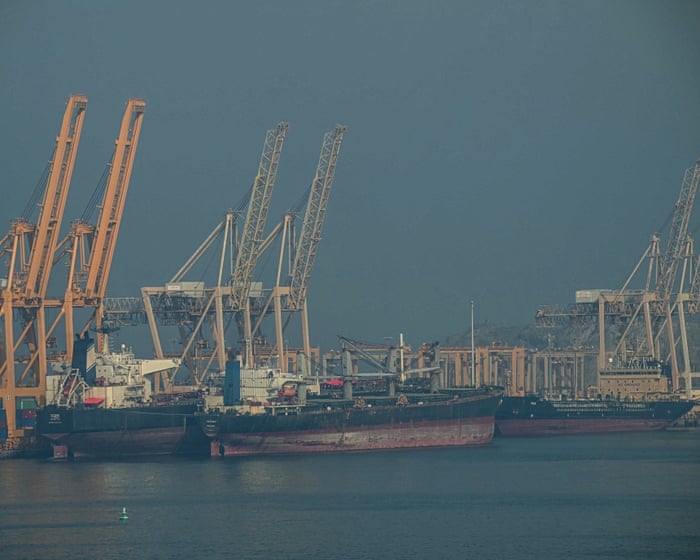
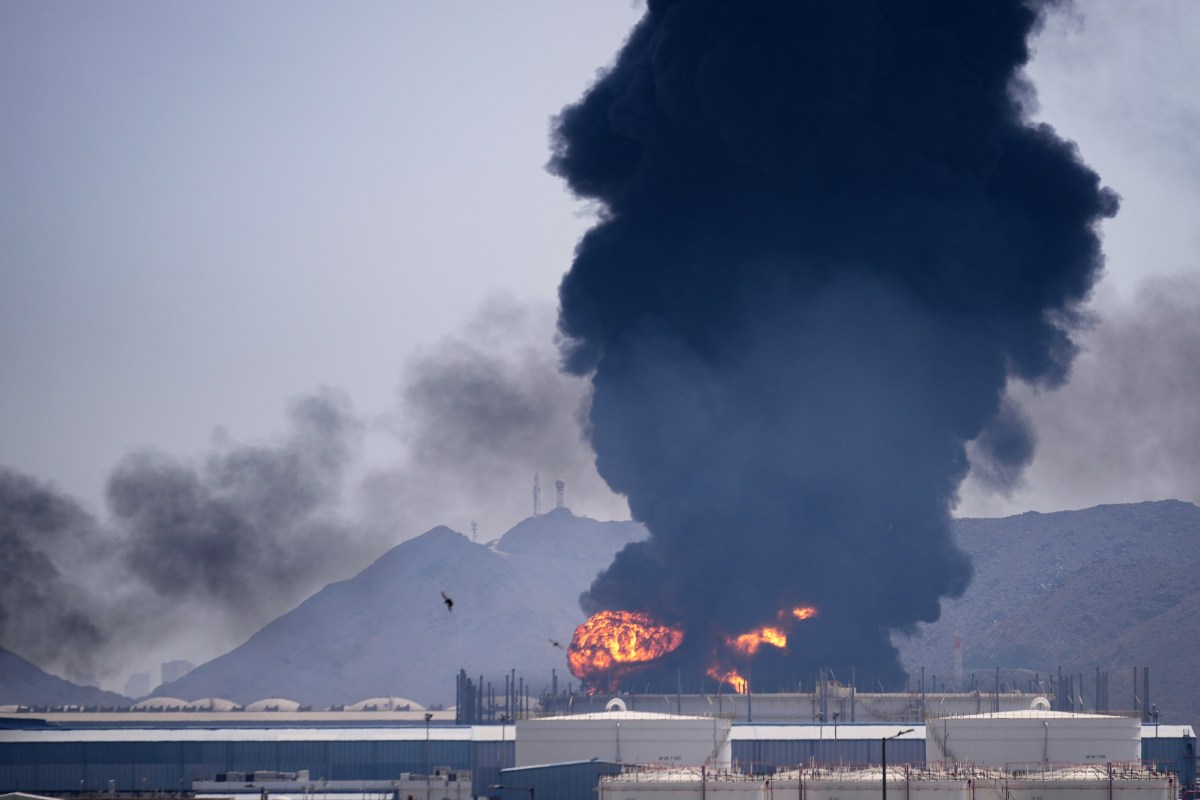
The United Arab Emirates (UAE) is leaving the OPEC oil group, which is a major change for the organization. The UAE said this would give it more freedom, and the move could weaken OPEC's ability to control oil prices.
Key Facts
The UAE has been an OPEC member since 1967 and will officially leave on Friday.
OPEC is a group of oil-producing countries that work together to manage oil production and prices.
The UAE’s exit could disrupt OPEC’s unity and reduce its influence on global oil markets.
Tensions in the Persian Gulf, especially around the strait of Hormuz, have made it hard for Gulf countries to export oil safely.
The UAE wants more flexibility to follow its own long-term economic plans.
The oil price has risen recently, partly due to the conflict involving Iran and attacks near the Gulf.
President Donald Trump has criticized OPEC for keeping oil prices high and has linked US military support of Gulf countries with this issue.
Experts say the UAE leaving may cause more ups and downs in oil prices and reduce Saudi Arabia’s control over the market.
Read the Original
Want the full story? Tap a source to open the original
article.
Secretary of State Marco Rubio dismissed a reported proposal from Iran to end a two-month conflict by reopening the Strait of Hormuz. Iran suggested easing control over the strait if the U.S. ended its naval blockade, while delaying talks about Iran’s nuclear program.
Key Facts
Iran proposed to allow more freedom in the Strait of Hormuz to end ongoing conflict.
The proposal included postponing negotiation on Iran’s nuclear program.
Iran wanted the U.S. to lift its naval blockade as part of the deal.
The conflict referenced has lasted about two months.
Secretary of State Marco Rubio rejected or doubted the proposal’s viability.
The Strait of Hormuz is a key shipping route for global oil supplies.
The situation involves tension between Iran and the U.S. and affects regional security.
Read the Original
Want the full story? Tap a source to open the original
article.
Mexico City’s Benito Juárez International Airport is undergoing major upgrades to improve its facilities before the 2026 World Cup. The project faces delays due to challenges with logistics and budget, and workers are rushing to finish the renovations in time for the tournament.
Key Facts
The airport is being modernized to update old infrastructure and handle more travelers.
The 2026 World Cup will take place in just a few months.
Renovations include work inside and outside the airport.
Budget limits have slowed some parts of the project.
Logistical problems have also caused delays.
Workers are working quickly to complete the upgrades before the event.
Benito Juárez International is Mexico City’s main airport.
Read the Original
Want the full story? Tap a source to open the original
article.
The United States is reviewing a new proposal from Iran to help end the war and keep a fragile ceasefire. Iran wants to reopen the important Strait of Hormuz if the US stops its naval blockade and ends the war, but Iran wants to delay talks about its nuclear program until after the war ends. President Trump and his administration have expressed doubts about accepting the plan as it stands.
Key Facts
Iran proposes reopening the Strait of Hormuz, a key shipping route for global oil and gas, if the US lifts a naval blockade and ends the war.
The Strait of Hormuz has been effectively closed by Iran, causing worldwide energy prices to rise.
The US started the naval blockade shortly after a ceasefire began in April 2026.
Iran wants to postpone discussions about its nuclear program until after the war ends, which the US opposes.
The proposal was sent to the US via Pakistan, serving as a messenger between the two countries.
Iran sees this offer as a new approach and a way to build trust, different from previous talks involving nuclear compromises for sanctions relief.
President Trump met with security advisers but was reportedly unhappy because the proposal does not address Iran’s nuclear program.
Iranian officials state that lasting peace in the region requires an end to attacks on Iran.
Read the Original
Want the full story? Tap a source to open the original
article.
An 89-year-old man is being searched for by police in Athens after shooting five people at two locations. The shooting began at a social security office and continued at a nearby courthouse, with all injured victims expected to survive.
Key Facts
The suspect is 89 years old.
The first shooting occurred at a social security agency in Petralona, Athens.
One employee was shot in the leg at the social security office.
The suspect then went to a courthouse in Ampelokipi, where four more people were injured.
The injured include one man and four women, all with non-life-threatening wounds.
The attacker used a shotgun hidden under his coat.
The suspect fled and is still being sought by police.
Gun violence is rare in Greece because gun ownership is allowed but tightly controlled.
Read the Original
Want the full story? Tap a source to open the original
article.
The United Arab Emirates (UAE) has announced it will leave the OPEC and OPEC+ groups, which are major organizations of oil-producing countries. The UAE said this decision matches its long-term economic plans and changing energy goals.
Key Facts
The UAE is quitting OPEC and OPEC+ after nearly 60 years of membership.
OPEC (Organization of the Petroleum Exporting Countries) is a group of major oil producers.
OPEC+ includes OPEC members plus other big oil-producing countries.
The UAE said its decision is based on its future economic and energy strategies.
The move signals a shift in the UAE’s energy priorities and policies.
This announcement was made recently and ongoing updates are expected.
The UAE has been a key player in global oil markets through OPEC.
Read the Original
Want the full story? Tap a source to open the original
article.
The United Arab Emirates (UAE) plans to leave OPEC, the group of major oil exporting countries, on May 1 after being a member for over 50 years. This decision comes amid tensions with Saudi Arabia, the impact of the war involving Iran, and pressures on Gulf oil exporters. The UAE wants more control over its oil production and investment, and the move may benefit President Donald Trump by challenging OPEC's influence on oil prices.
Key Facts
The UAE will leave OPEC and OPEC+ on May 1.
The UAE has been a member of OPEC since 1967 (over 50 years).
Tensions with Saudi Arabia and the Iran war are factors in the UAE's departure.
The Strait of Hormuz, a key oil shipping route, is affected by the Iran conflict, impacting global oil supply.
OPEC will lose about 15 percent of its oil production capacity due to the UAE exit.
The UAE wants more freedom to increase its oil production and invest in domestic energy.
President Trump has criticized OPEC for raising oil prices and may benefit from the UAE's decision.
The departure may cause instability within OPEC, which typically tries to act as one group.
Read the Original
Want the full story? Tap a source to open the original
article.
The United Arab Emirates (UAE) announced it will leave OPEC and OPEC+ on May 1 after being a member for 60 years. The decision is linked to increased tensions with Saudi Arabia and issues caused by the war in Iran affecting oil exports.
Key Facts
The UAE has been part of OPEC for six decades.
The UAE plans to leave OPEC and OPEC+ on May 1.
The departure is due to rivalry with Saudi Arabia and regional conflicts.
The war in Iran has disrupted oil shipments through the Strait of Hormuz, a key oil passage.
The UAE aims to focus on domestic energy production and a new economic strategy.
OPEC is an organization of major oil-exporting countries controlling oil supply and prices.
The UAE stated its decision supports its role as a reliable and forward-looking energy market participant.
The change comes amid a global energy crisis with high uncertainty in oil markets.
Read the Original
Want the full story? Tap a source to open the original
article.
A group of 81 children from Gaza, who are sick or injured, arrived in Jordan for medical treatment. This is the 26th group of Palestinian children sent to Jordan since the conflict in Gaza began in October 2023.
Key Facts
The children are from Gaza and need medical care.
They arrived in Jordan on April 28, 2026.
The group includes 81 children and 108 family members.
They crossed the border through the King Hussein (Allenby) crossing between the West Bank and Jordan.
This is the 26th group of Palestinian children sent to Jordan since October 2023.
The Jordanian army announced the arrival in an official statement.
The children are wounded or ill due to the ongoing war in Gaza.
Read the Original
Want the full story? Tap a source to open the original
article.
A protester named Joe, who came to the UK from Malaysia as a child, criticized Home Secretary Shabana Mahmood’s proposed immigration changes. Joe said these changes would harm many young migrants by putting their status and futures in uncertainty. Mahmood described critics as “white liberals” who misunderstand her position, while Joe rejected that label and highlighted the impact of the reforms on migrant families.
Key Facts
Joe migrated from Malaysia to the UK at age four.
He protested Home Secretary Shabana Mahmood’s immigration reform plan.
Mahmood’s plan includes ending permanent protection for refugees and reviewing asylum status every 30 months.
Refugees would need to afford living expenses before bringing family members and must wait 20 years for permanent settlement.
The time for overseas workers to gain permanent settlement would increase from five to ten years.
Joe said these changes could keep 90,000 young people in poverty and cause family separations.
Mahmood called critics “white liberals,” implying racial and political bias, which Joe disputed.
The protest took place at a live event in London and involved a youth-led climate campaign group.
Read the Original
Want the full story? Tap a source to open the original
article.
Afghanistan’s Taliban government said Pakistani military strikes hit a university and nearby areas in Kunar province, killing at least seven people and injuring over 80. Pakistan denied hitting the university but confirmed ongoing border clashes despite a formal ceasefire, raising concern over increasing tensions after recent peace talks in China.
Key Facts
Mortars and missiles struck Asadabad city and nearby districts in Kunar province on Monday.
At least seven people died and more than 80 were wounded in the attacks.
Sayed Jamaluddin Afghani University was heavily damaged, with students and professors among the injured.
The Taliban called the strikes war crimes targeting civilians and schools.
Pakistan denied attacking the university and said its strikes are precise and based on intelligence.
Both Afghan and Pakistani officials admit to cross-border firing despite a ceasefire agreement.
Recent peace talks in Urumqi, China involved all three countries but ended without a formal deal.
Pakistan accuses Afghanistan’s Taliban of sheltering the Pakistan Taliban group, which Afghanistan denies.
Read the Original
Want the full story? Tap a source to open the original
article.
The United Arab Emirates (UAE) announced it will leave the Organization of the Petroleum Exporting Countries (OPEC) starting May 1. The UAE said this decision is part of its long-term economic plan and growing focus on domestic energy production.
Key Facts
The UAE will officially leave OPEC on May 1, 2026.
The announcement was made through the UAE’s state news agency, WAM.
The UAE’s decision is linked to its strategic and economic goals.
The country is investing more in its own energy production.
The UAE wants to play a responsible and reliable role in global energy markets.
Recently, the UAE has had disagreements with Saudi Arabia over economic issues and the war in Yemen.
OPEC is an organization of major oil-producing countries that work together to manage oil production and prices.
Read the Original
Want the full story? Tap a source to open the original
article.
A memorial wall in Golders Green, north London, was targeted in a suspected arson attack early Monday morning. Police say the fire did not damage the wall, and counter-terrorism officers are investigating but do not currently treat it as terrorism.
Key Facts
The fire happened around 12:15 a.m. on Monday at a memorial wall in Limes Avenue, Golders Green.
The memorial wall displays photos of protesters killed during protests against the Iranian government.
Counter-terrorism police are leading the investigation but are keeping an open mind about the motive.
No arrests have been made so far related to this attack.
There have been other recent attacks in Golders Green, including attacks on Jewish sites and a Persian-language media group.
A group called Harakat Ashab al-Yamin al-Islamia has claimed responsibility for several attacks on Jewish sites in north London.
Since March 23, police arrested 26 people connected to these attacks, with some charged for arson offenses.
Police have increased patrols in the area, including armed officers and specially trained teams to prevent crime.
Read the Original
Want the full story? Tap a source to open the original
article.
Militant groups linked to al-Qaida and separatists launched the largest coordinated attack in Mali in more than ten years. This event marks a serious increase in violence in a region already known for frequent extremist attacks.
Key Facts
The attack involved both jihadist militants connected to al-Qaida and separatist forces.
It is the biggest coordinated attack in Mali in over a decade.
Mali is considered one of the deadliest areas in the world for extremist violence.
The Prime Minister of Mali advised people not to panic after the attack.
This escalation highlights growing instability in the region.
The violence complicates efforts to improve security in Mali and neighboring countries.
Al-Qaida-linked groups have been active in the region for many years.
Separatists in Mali have been involved in ongoing conflicts related to ethnic and political issues.
Read the Original
Want the full story? Tap a source to open the original
article.
The UK's former prime minister's chief of staff, Morgan McSweeney, said he made a serious error in recommending Lord Mandelson as ambassador to the US because Mandelson did not fully disclose his close ties to Jeffrey Epstein, a convicted sex offender. Despite some concerns raised during security checks, Lord Mandelson was approved for the role but was later dismissed after new information about his relationship with Epstein became public.
Key Facts
Morgan McSweeney resigned in February over recommending Lord Mandelson as UK ambassador to the US.
Mandelson's appointment was meant to help secure a US trade deal due to his EU trade experience.
New information showed Mandelson had a closer connection to Jeffrey Epstein than he admitted.
The Foreign Office granted Mandelson security clearance despite warnings from vetting officials.
The prime minister and Downing Street staff said they were unaware Foreign Office ignored vetting concerns until recently.
Mandelson was removed from his ambassador role in September 2025 after the revelations.
A due diligence check flagged Mandelson's link to Epstein as a reputational risk before his appointment.
Officials felt pressured to complete Mandelson’s vetting quickly before President Trump’s inauguration.
Read the Original
Want the full story? Tap a source to open the original
article.
King Charles and Queen Camilla visited the United States for a four-day state visit. The trip marks the 250th anniversary of the US declaring independence from Britain. During the visit, there were noted disagreements between President Trump and the British government about the war in Iran.
Key Facts
King Charles and Queen Camilla arrived in the US for a four-day state visit.
This visit is the first by a British monarch to the US in 20 years.
The visit coincides with the 250th anniversary of the US Declaration of Independence.
President Donald Trump welcomed the royal couple.
President Trump has differences with the British government over the Iran war.
King Charles planned meetings with President Trump and to address the US Congress.
The visit is seen as important for UK-US relations.
Read the Original
Want the full story? Tap a source to open the original
article.
Violence has increased in Colombia’s southwest region with several attacks on civilians and military sites just before the presidential election in May. Rebel groups have used explosives and drones, leading to at least 21 deaths in one recent explosion.
Key Facts
There have been 26 attacks by rebel groups since last Friday in southwestern Colombia.
The attacks involved explosives and drones targeting civilians and military bases.
One explosion on a highway between Cali and Popayan killed 21 people.
These attacks have raised concerns about security ahead of Colombia’s May presidential vote.
Crime is expected to be a main issue for voters in the upcoming election.
Read the Original
Want the full story? Tap a source to open the original
article.
The United Arab Emirates announced it is leaving OPEC and OPEC+, two groups of oil-producing countries. This decision comes amid ongoing conflicts in the region, including attacks near key shipping routes and tensions involving Iran, which have disrupted global energy supplies.
Key Facts
The UAE officially quit OPEC and OPEC+ on Tuesday.
OPEC Gulf countries face challenges shipping oil through the Strait of Hormuz due to threats and attacks linked to Iran.
About 20% of the world’s crude oil and gas travel through the Strait of Hormuz.
President Donald Trump accused OPEC of causing high oil prices and criticized how U.S. military support is linked to these prices.
The UAE criticized Arab and Gulf states for not providing enough protection against Iranian attacks during the regional conflict.
Anwar Gargash, a top adviser to the UAE president, said Gulf Cooperation Council countries offered logistical but weak political and military support.
The UAE’s departure signals frustration with the response from other Arab and Gulf nations.
Read the Original
Want the full story? Tap a source to open the original
article.
An expert from the International Crisis Group says Iran believes it can survive a double blockade by the US better than the US can handle the pressure Iran faces. This view changes how Iran and the US act in their ongoing conflict and negotiations.
Key Facts
Iran feels it can endure economic and military blockades longer than the US.
The US and Iran are involved in a conflict that includes economic sanctions and military pressure.
Iran’s belief in its endurance affects its strategy in talks with the US.
The US faces political and economic challenges at home and abroad related to this conflict.
The expert discussing this is Ali Vaez, director of the Iran Project at the International Crisis Group.
The situation involves key locations like the Strait of Hormuz, a strategic waterway.
Iran has offered to reopen the Strait of Hormuz if the US ends its blockade and the war finishes.
This issue is part of larger tensions involving the Middle East, Europe, and the Americas.
Read the Original
Want the full story? Tap a source to open the original
article.