An Israeli settler threw rocks and tried to break into the home of Palestinian activist Issa Amro while an Israeli soldier watched. The settler was arrested for a short time but then released.
Key Facts
The incident involved an Israeli settler attacking Issa Amro’s home.
Rocks were thrown at the home, and there was an attempt to break in.
The attack happened in Hebron, a city with frequent tensions.
An Israeli soldier was present and did not stop the settler.
The settler was arrested but released soon after.
Issa Amro is known as a Palestinian activist.
The event highlights ongoing conflict between Israeli settlers and Palestinians.
Read the Original
Want the full story? Tap a source to open the original
article.
In Mali, different armed groups, including one linked to al-Qaeda, have joined together to attack military targets. The Mali defense minister was killed, and Russian mercenaries supporting the government have also been attacked. This violence shows rising unrest and challenges for the Mali government and its allies.
Key Facts
Various armed groups in Mali, even former enemies, are cooperating to attack military forces.
One of these groups is connected to al-Qaeda, a well-known global terrorist network.
The Mali defense minister was killed during this wave of attacks.
Russian mercenaries working with the Mali government are also under attack.
These attacks highlight growing instability in Mali and surrounding regions.
The situation involves complex local and international players, including Russia.
Experts from security and regional organizations are analyzing the conflict.
Read the Original
Want the full story? Tap a source to open the original
article.
A bomb exploded on a highway in southwestern Colombia, killing 19 people and injuring at least 38. The attack happened amid rising violence in the region and just over a month before Colombia's presidential election.
Key Facts
The bomb exploded on the Pan-American Highway in Cauca department, southwestern Colombia.
The blast killed 19 people and injured at least 38, damaging buses, vans, and cars.
Attackers stopped traffic by blocking the road with a bus and another vehicle before detonating the bomb.
The Colombian president blamed the bombing on Ivan Mordisco, a known criminal compared to Pablo Escobar.
The attack follows a recent bomb assault on a military base in Cali, injuring two people.
Over two days, 26 attacks were reported in Cauca and Valle del Cauca departments.
Authorities increased military and police presence in affected areas.
Security is a major concern ahead of the May 31 presidential election, with candidates facing threats and campaigning under protection.
Read the Original
Want the full story? Tap a source to open the original
article.
Two former Israeli prime ministers, Naftali Bennett and Yair Lapid, have joined their political parties to challenge Prime Minister Benjamin Netanyahu in the upcoming election. They formed a new party called "Together" to unite the opposition and try to change the current government.
Key Facts
Naftali Bennett leads the new party "Together," which merges his party Bennett 2026 with Lapid’s There is a Future.
Bennett is right-wing, Lapid is centrist, but both oppose Netanyahu.
They aim to end divisions within the opposition and focus on winning the elections expected later this year.
Bennett wants to create a national inquiry into failures ahead of the October 7, 2023 Hamas attack, which Netanyahu’s government rejects.
Bennett and Lapid have previously worked together to end Netanyahu’s 12-year run as prime minister in 2021.
Netanyahu returned to power after winning the 2022 election and formed Israel’s most right-wing government.
Polls show Netanyahu currently leading but suggest he may lose in the upcoming election.
Lapid says he represents Israel’s secular middle class concerned about tax and military service fairness.
Read the Original
Want the full story? Tap a source to open the original
article.
Palestinian authorities said local elections held recently in a Gaza community and the West Bank went well and could lead to future presidential elections. These were the first elections in parts of Gaza in over 20 years and had moderate voter turnout amid challenging conditions.
Key Facts
Local elections took place in Deir al-Balah, central Gaza, and parts of the West Bank.
Deir al-Balah election turnout was 23%, affected by displacement and outdated voter records.
West Bank turnout was higher, at 56%, with over half a million people voting.
Hamas, controlling much of Gaza, did not participate or block the elections.
The elections focused on local councils managing services like water, roads, and electricity.
Voting reforms now let people choose individuals instead of party lists.
No presidential elections have been held since 2005, and the political situation remains difficult.
Palestinian Authority leaders hope these elections lead to national unity and future presidential votes.
Read the Original
Want the full story? Tap a source to open the original
article.
A professor of international affairs says the United States must focus on diplomacy with Iran instead of military action. He explains that Iran has shown it will not easily surrender, so both sides need to reach an agreement through negotiation.
Key Facts
The U.S. and Israel have attempted military pressure on Iran.
Iran has resisted these military efforts and has not surrendered.
Diplomatic talks between the U.S. and Iran have happened on and off.
A professor from Johns Hopkins University says the U.S. must seek a diplomatic solution.
Military force alone has limits in dealing with Iran.
Iran wants to show that war with them will be difficult.
Successful negotiation requires both sides to make deals, not demands.
Read the Original
Want the full story? Tap a source to open the original
article.
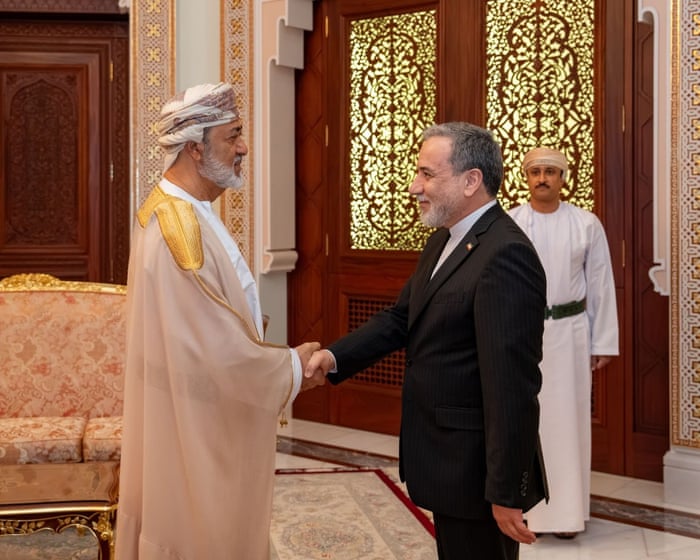
Iran’s Foreign Minister Abbas Araghchi traveled between Oman, Pakistan, and Russia for talks amid ongoing efforts to restart diplomacy with the United States. Meanwhile, President Donald Trump canceled a planned U.S. envoy trip to Pakistan but said Iran and the U.S. could communicate by phone if they wanted.
Key Facts
Iranian Foreign Minister Abbas Araghchi visited Oman, Pakistan, and then traveled to Russia for diplomatic talks.
Araghchi was scheduled to meet Russian President Vladimir Putin in Moscow.
President Trump canceled a planned trip by U.S. negotiators Steve Witkoff and Jared Kushner to Pakistan.
Trump said the U.S. would not continue talks he saw as unproductive but offered phone communication with Iran.
Indirect diplomatic efforts continued, with Iran sending written messages to the U.S. through Pakistan.
The U.S.-Iran conflict escalated tensions at the Strait of Hormuz, a crucial global shipping route.
Iran and the U.S. have maintained a fragile ceasefire since a war between the U.S. and Iran began on April 8, 2026.
Trump denied that a recent security incident at the White House was linked to Iran and said it would not affect his approach.
Read the Original
Want the full story? Tap a source to open the original
article.
A bombing on a bus in southwest Colombia has killed 20 people and injured 36 others. The attack took place in a region troubled by illegal armed groups involved in drug trafficking and violence.
Key Facts
The bombing happened on a bus traveling on the Pan-American Highway in Cajibio, Colombia.
Among the 20 dead, there are 15 women and 5 men.
Thirty-six people were injured, including five minors; three of the injured are in intensive care.
Authorities are using specialists like dentists and forensic doctors to identify the victims.
The area has seen over two dozen violent incidents in the last three days.
Illegal armed groups there fight over coca leaf farming and drug trafficking routes.
Colombia’s military commander called the bombing a "terrorist act" linked to dissident groups from the former Revolutionary Armed Forces of Colombia.
The U.N. High Commissioner for Human Rights condemned the attacks and urged justice for the victims.
Read the Original
Want the full story? Tap a source to open the original
article.
President Donald Trump said he helped save eight Iranian women from being executed. Iran denied that these women were ever facing the death penalty and called the reports false. The situation remains unclear, with media restrictions affecting information from Iran.
Key Facts
President Trump claimed he stopped the execution of eight Iranian women.
Iran said the women Trump mentioned were never sentenced to death.
Iran accused President Trump of spreading false information.
BBC correspondent Lyse Doucet reported on this issue from Tehran under strict rules.
These rules limit what international media can report from Iran, including the BBC.
The story is part of ongoing tensions between the U.S. and Iran.
The exact fate of the women remains uncertain due to conflicting statements.
Read the Original
Want the full story? Tap a source to open the original
article.
Malian Defense Minister General Sadio Camara was killed during a coordinated attack by jihadi and rebel forces. These groups seized towns and military bases, including the northern city of Kidal, where Malian troops and Russian mercenaries withdrew peacefully.
Key Facts
Malian Defense Minister Gen. Sadio Camara was killed in an attack on his home.
Jihadi and rebel forces launched coordinated attacks on multiple cities, including the capital Bamako and Kidal.
At least 16 people were wounded in the attacks, including civilians and soldiers.
Separatist fighters seeking independence for northern Mali joined forces with Islamic militants linked to al-Qaida.
Malian troops and Russian mercenaries withdrew peacefully from Kidal after reaching an agreement with separatists.
This is the first time separatists and al-Qaida-linked militants openly cooperated in attacks.
A curfew was imposed in Bamako from 9 p.m. to 6 a.m. to improve security.
Regional groups, including the Economic Community of West African States, condemned the attacks and called for united efforts against terrorism.
Read the Original
Want the full story? Tap a source to open the original
article.
Israel has ordered people to leave seven towns in southern Lebanon, outside its buffer zone, because of ongoing conflict with the group Hezbollah. Despite a US-brokered ceasefire, both sides have continued attacks, and Israel says it will act to protect its security.
Key Facts
Israel issued forced evacuation orders for seven towns north of the Litani River in southern Lebanon.
These towns lie beyond Israel’s declared buffer zone, about 10 km inside Lebanon near the border.
Israel says Hezbollah is violating the ceasefire and that it will respond to protect its soldiers and communities.
Hezbollah denies breaking the ceasefire and calls its attacks a response to Israel’s violations.
The ceasefire started on April 16 and was extended to mid-May but has not stopped fighting completely.
There have been multiple airstrikes and drone attacks in southern Lebanon in recent days.
A 19-year-old Israeli soldier was killed and five others wounded in southern Lebanon during fighting.
At least 2,509 people have died and 7,755 wounded in Israeli attacks in Lebanon since the conflict renewed on March 2.
Read the Original
Want the full story? Tap a source to open the original
article.
The U.S. Coast Guard stopped searching for a crew member who fell overboard from the Norwegian Breakaway cruise ship near Cape Cod. The ship was traveling from Bermuda to Boston when the incident happened, and rescue efforts lasted overnight before being paused around noon.
Key Facts
A crew member fell off the Norwegian Breakaway cruise ship about 12 miles off Wellfleet, Massachusetts.
The crew member was seen falling overboard on a security camera.
A man overboard alert was announced to passengers, and lifeboats were launched for rescue.
The U.S. Coast Guard and helicopters took part in the search overnight and into Sunday morning.
The search was suspended around noon, waiting for new information.
The ship arrived late at Boston’s Black Falcon Terminal due to the search efforts.
Passengers were informed that boarding would start later than expected because of the delay.
The cause of the crew member falling overboard and their identity have not been announced.
Read the Original
Want the full story? Tap a source to open the original
article.
The CBS News show on April 26, Sunday Morning, covered several topics. These included the difficult relationship between the United States and Cuba, singer Kacey Musgraves, Congressman Jim Clyburn, efforts to bring life back to a Welsh soccer town, people who love trees, artist Jenny Saville, and efforts to save Venus fly traps.
Key Facts
The show was hosted by Jane Pauley.
It discussed the challenging relationship between the U.S. and Cuba.
Singer-songwriter Kacey Musgraves was featured.
Congressman Jim Clyburn appeared on the program.
The show highlighted the revival of a soccer town in Wales.
There was coverage about people who are passionate about trees.
Artist Jenny Saville was part of the stories.
The program included efforts to protect Venus fly traps, a type of carnivorous plant.
Read the Original
Want the full story? Tap a source to open the original
article.
King Charles III’s state visit to the United States will continue as planned on Monday. This decision follows a shooting incident at a White House dinner attended by President Donald Trump, with Buckingham Palace confirming the visit after talks with US officials.
Key Facts
The shooting happened at a White House dinner.
President Donald Trump was present at the dinner.
Despite the incident, King Charles III’s visit to the US will go ahead as scheduled.
Buckingham Palace and US officials discussed the visit before confirming it would continue.
The state visit is planned for Monday.
The announcement was made on April 26, 2026.
The visit involves official state events between the UK and the US.
Read the Original
Want the full story? Tap a source to open the original
article.
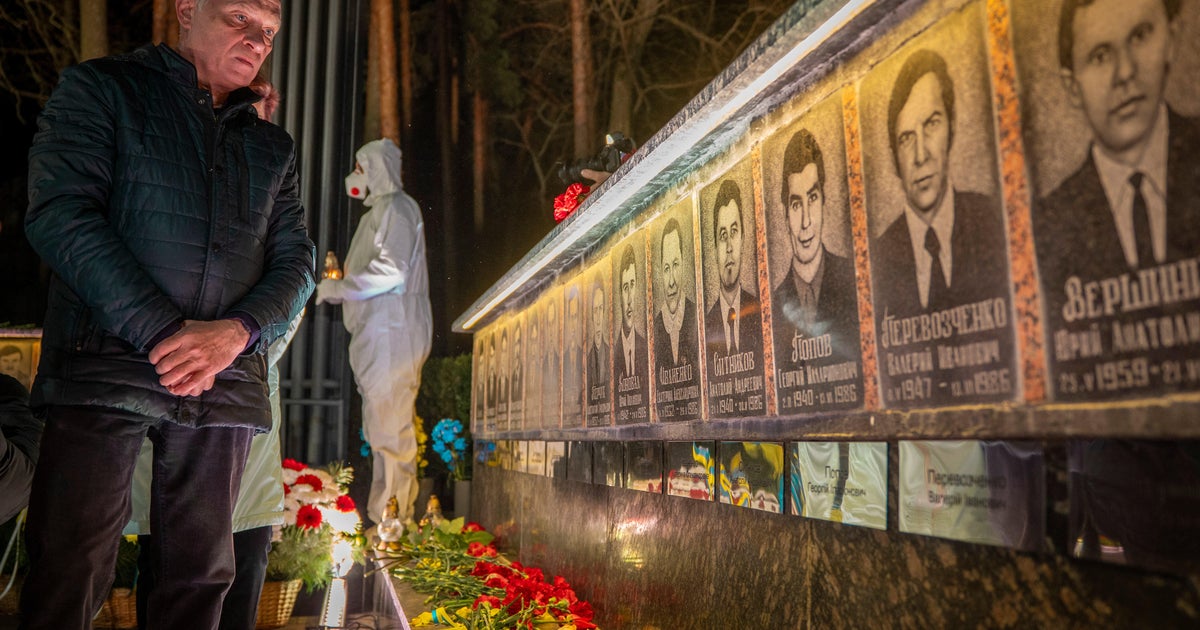
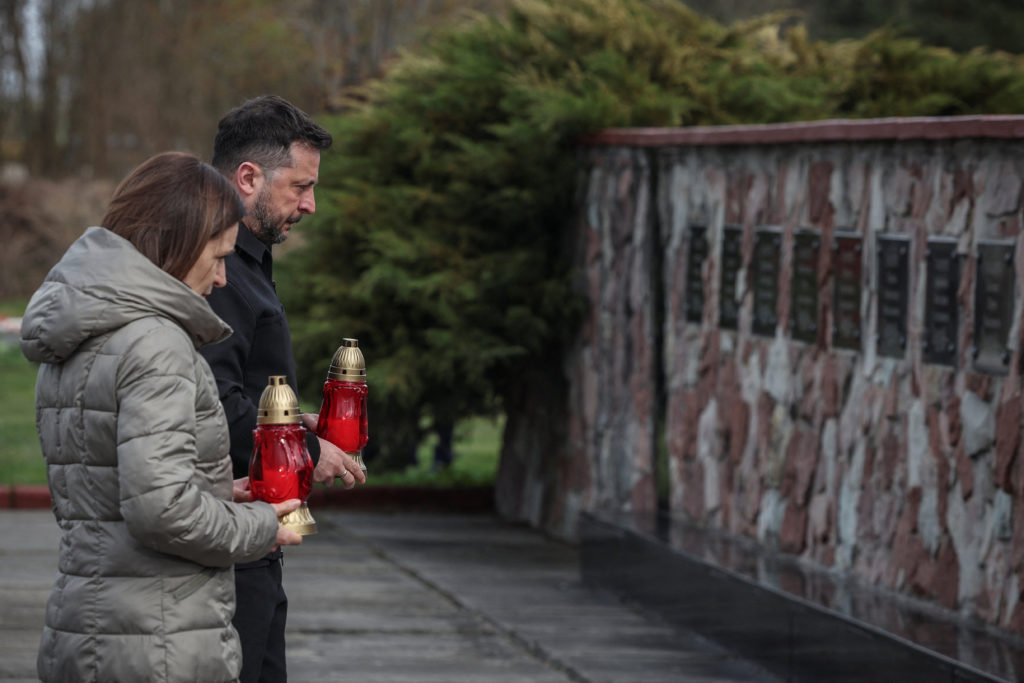
At least 16 people died in strikes in Ukraine, Russian-controlled areas, and Russia on the 40th anniversary of the Chernobyl nuclear disaster. The attacks included drone and missile strikes on cities and an oil refinery, raising concerns about the safety of the Chernobyl plant during the ongoing conflict.
Key Facts
Nine people died in Russian drone and missile strikes on the Ukrainian city of Dnipro.
One person was killed in a Ukrainian drone strike on Sevastopol, a Russian-occupied port city in Crimea.
Three people died in a Ukrainian drone strike on a village in the Luhansk region, which Russia claims to control.
A woman was killed in a Ukrainian drone strike in Russia's Belgorod border area.
Ukrainian forces struck an oil refinery in Yaroslavl, Russia, causing fires; the refinery supplies fuel to the Russian military.
Ukraine uses long-range drones that can reach targets deep inside Russia to attack military and economic sites.
Ukrainian President Zelenskyy warned that Russian attacks near Chernobyl risk causing a nuclear disaster similar to the 1986 accident.
The International Atomic Energy Agency urged immediate repairs to the damaged protective shell over the Chernobyl reactor to avoid increased danger.
Russia's Defense Minister visited North Korea to discuss long-term military cooperation.
Read the Original
Want the full story? Tap a source to open the original
article.
A UK minister said that food and fuel prices will stay higher for about eight months after the war in Iran ends, due to disruptions in energy supplies. The closure of a key shipping route, the Strait of Hormuz, has caused oil prices to rise since February, and the UK government is preparing to manage the impact on supplies.
Key Facts
The Strait of Hormuz carries about 20% of the world’s oil and gas but was closed during the conflict in Iran.
This closure has caused oil prices to increase, affecting energy and food costs in the UK.
Higher prices for energy, food, and flights may last for around eight months after the conflict ends and the strait reopens.
The UK government encourages people to keep using fuel and air travel as normal despite price rises.
President Donald Trump’s actions in the Middle East have been linked to this situation by the UK minister.
The US extended a ceasefire with Iran recently, but further peace talks were canceled.
The UK government is monitoring stock levels and planning how to reduce supply problems.
They are securing supplies of carbon dioxide, important for food production, drinks, medical use, and defense, to avoid shortages this summer.
Read the Original
Want the full story? Tap a source to open the original
article.
Strikes in Ukraine, Russian-occupied areas, and Russia have killed at least 16 people around the 40th anniversary of the Chernobyl nuclear disaster. Ukrainian President Zelenskyy warned that attacks near the Chernobyl plant risk causing a new nuclear disaster, while both sides have launched drone and missile strikes in recent days.
Key Facts
At least 16 people have died due to strikes in Ukraine, Russian-held territory, and Russia in the past day.
Ukrainian President Zelenskyy warned that Russian attacks near Chernobyl could cause a nuclear disaster similar to the 1986 accident.
Iran-designed Shahed drones have regularly flown over the Chernobyl plant; one previously struck the plant’s protective enclosure.
Russian strikes on the city of Dnipro killed at least nine people.
A Ukrainian drone strike on Sevastopol in Russian-occupied Crimea killed a man, according to Moscow-installed authorities.
Ukrainian drones also struck inside Russia, hitting an oil refinery in Yaroslavl, causing fires.
The International Atomic Energy Agency says repairs must begin soon on Chernobyl’s damaged protective structure to avoid safety risks.
Repairs on the Chernobyl facility are estimated to cost at least 500 million euros; funding commitments so far total about 130 million euros.
Read the Original
Want the full story? Tap a source to open the original
article.
Strikes in Ukraine, Russian-occupied areas, and Russia have killed at least 16 people amid ongoing conflict. On the 40th anniversary of the Chernobyl nuclear disaster, officials renewed concerns about attacks near the damaged nuclear plant, which could cause serious environmental and safety risks.
Key Facts
At least 16 people were killed in drone and missile strikes across Ukraine, occupied territories, and Russia.
Nine people died from Russian strikes on the city of Dnipro in Ukraine.
A Ukrainian drone strike killed one person in Sevastopol, Crimea, which Russia annexed in 2014.
Ukrainian drones hit a village in Luhansk region and an oil refinery in Yaroslavl, Russia.
Ukraine’s long-range drones can reach targets 900 miles inside Russia and have recently targeted Russian oil facilities.
Ukrainian President Zelenskyy warned that Russian attacks threaten a repeat of a nuclear disaster near Chernobyl.
The International Atomic Energy Agency (IAEA) says repairs to Chernobyl’s protective shell are urgent to prevent further damage.
Russia denies targeting the Chernobyl plant and accused Ukraine of staging attacks.
Read the Original
Want the full story? Tap a source to open the original
article.
There are no ads, so there is no reason to bait you. Readers who chip in keep it that way. Most choose $3.99/month, and get the daily digest every morning.
Forty years ago, a nuclear reactor exploded at the Chernobyl power plant in Ukraine, causing the worst nuclear disaster in history. This event led to widespread environmental and health effects that are still studied today.
Key Facts
The Chernobyl accident happened 40 years ago at a nuclear power plant in Ukraine.
One reactor exploded, causing a major nuclear disaster.
It is considered the worst nuclear accident ever recorded.
The explosion released harmful radiation into the environment.
The disaster has had long-lasting effects on people and nature.
Experts continue to study and discuss the impact of the accident.
The event is an important moment in the history of nuclear energy.
The article references a video and guests who provide insights about Chernobyl.
Read the Original
Want the full story? Tap a source to open the original
article.
Negotiations between the US and Iran have stalled amid ongoing conflict and no scheduled talks to resolve it. Both sides remain firm, with Iran refusing direct talks while the US enforces a blockade on Iranian shipping. Efforts by Pakistan and other mediators have so far failed to restart meaningful discussions.
Key Facts
The conflict between the US and Iran has lasted nearly two months with no resolution.
Iran’s foreign minister, Abbas Araghchi, has been holding talks in Pakistan and Oman.
President Donald Trump canceled a planned visit by US envoys to Pakistan for talks with Iran due to what he called an inadequate Iranian offer.
Iran declined to attend direct talks while the US has blocked all shipping to and from Iran.
After Trump canceled the talks, Iran quickly sent a new proposal, which Trump said was improved.
Earlier US-Iran talks in Islamabad ended without agreement on key issues like Iran’s nuclear program and control of the Strait of Hormuz.
The US has extended a ceasefire but demands Iran allow free shipping through the strategic Strait of Hormuz, which is crucial for global oil supply.
Iran’s Islamic Revolutionary Guard Corps opposes lifting its blockade and wants to charge $2 million per tanker passing through the strait.
Read the Original
Want the full story? Tap a source to open the original
article.