Ukraine is marking 40 years since the Chornobyl nuclear disaster, the worst civilian nuclear accident in history. Survivors of the cleanup work, known as liquidators, have returned to the site, highlighting the continuing impacts on people and the environment.
Key Facts
The Chornobyl explosion happened on April 26, 1986, during a safety test at reactor four.
The blast spread radioactive smoke over large parts of Ukraine, Belarus, Russia, and across Europe.
About 600,000 liquidators, including soldiers, firefighters, and engineers, helped contain and clean up the disaster over four years.
Liquidators worked with limited protective gear and often did not fully understand the risks.
Helicopters dropped sand, clay, and lead to stop the burning nuclear fuel that lasted more than 10 days.
The nearby city of Pripyat, once home to 48,000 people, remains abandoned inside an exclusion zone.
The exclusion zone has been closed to tourists since Russia’s invasion of Ukraine in 2022.
Wildlife, including endangered horses, now live freely in the area around Chornobyl.
Read the Original
Want the full story? Tap a source to open the original
article.
Russian attacks in several parts of Ukraine have killed at least five people and damaged a ship in the port of Odesa. Both Ukraine and Russia report drone attacks on each other, with many drones destroyed on both sides. Diplomatic talks to end the war continue without progress.
Key Facts
Russian attacks killed two men in Ukraine’s Sumy region near the Russian border.
Fighting in Dnipropetrovsk, Kherson, and Zaporizhia regions caused casualties and damaged homes and infrastructure.
A civilian ship was damaged in Odesa port, but no crew members were harmed.
Ukraine’s air force said it destroyed 124 out of 144 Russian drones launched overnight.
Russia said it destroyed 203 Ukrainian drones and 95 drone control centers recently.
Drone attacks in Russian regions caused injuries and damage to facilities and infrastructure.
Ukrainian President Zelenskyy signed security and energy cooperation agreements with Azerbaijan and expressed hope for future peace talks there.
The war between Russia and Ukraine has continued for four years with ongoing violence and stalled diplomacy.
Read the Original
Want the full story? Tap a source to open the original
article.
Fighting has started again in northern Mali’s city of Kidal between the army and Tuareg rebels. The rebels and jihadist groups launched coordinated attacks last weekend targeting major cities and government leaders across Mali.
Key Facts
New fighting broke out on Sunday in Kidal between Mali’s army and Tuareg rebels.
Tuareg rebels say they want to remove Russian fighters who are helping the government troops.
The attacks on Saturday involved both Tuareg rebels and jihadists working together.
These groups launched surprise attacks across the country, including near the capital Bamako.
The rebels claimed they have taken control of the city of Kidal.
The United Nations Secretary-General condemned the violence and called for protection of civilians.
Mali has been facing attacks from jihadists, separatists, and criminal groups since 2012.
A military junta took power in Mali in 2020 and 2021 promising to fight these groups, but violence continues.
Read the Original
Want the full story? Tap a source to open the original
article.
New fighting has started in the Kidal region of Mali between the national army and rebel groups. This conflict adds to ongoing instability in the northern part of Mali.
Key Facts
The fighting is taking place in the Kidal region of Mali.
The clashes involve Mali’s army and rebel forces.
Kidal is located in northern Mali, an area with frequent conflicts.
The renewed fighting could affect security in the region.
Mali has experienced instability due to rebel movements in the past.
This news was reported on April 26, 2026.
The article focuses on the conflict between government forces and rebels.
Read the Original
Want the full story? Tap a source to open the original
article.
Keir Starmer said most members of the Labour party support him despite calls for his resignation. He defended his choice to appoint Peter Mandelson as ambassador to Washington, even though security officials advised against it.
Key Facts
Keir Starmer said the majority of the Labour party remains loyal to his leadership.
Some members of his own party have asked him to resign.
Starmer appointed Peter Mandelson as ambassador to Washington.
Security vetting officials recommended that Mandelson not be given clearance.
Starmer believes Labour can still win the next general election under his leadership.
Morgan McSweeney, Starmer’s former chief of staff, resigned over Mandelson’s hiring and will appear before a foreign affairs committee.
A former senior Foreign Office official said government pressure made it hard to deny Mandelson security clearance.
Starmer condemned the shooting incident at the White House correspondents’ dinner and confirmed President Trump and attendees were safe.
Read the Original
Want the full story? Tap a source to open the original
article.
Forty years after the Chornobyl nuclear disaster, nuclear sites in Ukraine and Iran face new dangers due to war activities, risking another serious nuclear accident. Experts say decentralizing energy and using renewable sources like solar and wind can improve safety and reduce risks connected to central power plants and fossil fuels during conflicts.
Key Facts
The Chornobyl nuclear reactor exploded 40 years ago, killing at least 30 people immediately.
Radioactive particles spread through Ukraine, Belarus, Russia, and parts of Europe, causing tens of thousands of deaths and a rise in birth defects.
Military actions near Ukrainian nuclear sites, including attacks and occupation, increase disaster risk.
Nuclear sites in Iran have been bombed, and US-Israeli strikes have come close to Iran’s Bushehr Nuclear Power Plant.
Conflicts have disrupted fossil fuel supply routes like the Strait of Hormuz, raising global energy prices and living costs.
Centralized nuclear and fossil fuel systems are vulnerable to war and supply disruption risks.
Decentralized renewable energy systems with storage can provide more resilience and stability during crises.
Solar and battery systems have helped keep critical services running during attacks on Ukraine’s energy grid.
Read the Original
Want the full story? Tap a source to open the original
article.
Talks to end the war between the US-Israel coalition and Iran have stopped, with both sides not willing to change their demands. President Trump canceled a planned peace mission, saying Iran’s peace offer was not good enough, while Iran continues diplomatic talks with other countries and rejects US blockades.
Key Facts
US-Iran war has lasted 58 days with no sign of a peace agreement soon.
President Trump canceled a visit to Pakistan by his envoys because he found Iran’s offer insufficient.
Iranian Foreign Minister Abbas Araghchi is continuing diplomatic talks in Pakistan, Oman, Russia, Egypt, and Turkey.
Iran demands the US remove blockades on its ports before serious talks can start.
US forces intercepted an Iranian oil-carrying ship part of a secret fleet sanctioned by the US.
Iran executed a man linked to attacks on its security forces.
Israeli Prime Minister Netanyahu ordered attacks on Hezbollah targets in Lebanon, challenging a three-week ceasefire.
The ongoing conflict has caused energy prices to rise, increasing inflation and slowing global economic growth.
Read the Original
Want the full story? Tap a source to open the original
article.
A rare violet satin gown from the early 1600s, once worn by Bess of Hardwick, will be displayed at Hardwick Hall in Derbyshire. The exhibition, titled "Bess's Dream," runs until October 30 and aims to show new details about Bess’s life, including her role as a mother and a powerful woman of the Elizabethan era.
Key Facts
The gown dates back to around 1601 and is recorded in Hardwick’s inventories from that time.
It is considered a rare surviving piece of clothing from the 1600s because textiles then were valuable and often reused.
The exhibition will take place mainly in Bess’s bedchamber at Hardwick Hall and features an animated film about her letters.
The gown was recently restored at the National Trust Conservation Studio in Norfolk before returning to Hardwick.
Evelyn, the last Duchess of Hardwick, helped preserve the gown by storing it carefully.
Bess of Hardwick was a wealthy and influential figure, friend to Queen Elizabeth I, who remodeled Hardwick Old Hall.
The National Trust owns Hardwick Hall and organized the exhibition to provide insights into Bess’s private and family life.
The exhibition runs from Saturday until October 30.
Read the Original
Want the full story? Tap a source to open the original
article.
A bomb exploded on a highway in southwestern Colombia, killing 14 people and injuring 38. Authorities said dissidents from the former FARC guerrilla group carried out the attack, which happened just before Colombia’s presidential election amid ongoing violence.
Key Facts
The attack occurred in the Cauca region, known for conflict and coca farming.
14 people died and more than 38 were injured, including five children.
The bomb exploded on the Pan-American Highway after attackers blocked the road with vehicles.
Authorities blamed the attack on FARC dissidents, especially a criminal named Ivan Mordisco.
The Colombian military said 26 attacks happened in the area over two days.
The government increased security in the region ahead of the May 31 presidential election.
Political violence is common in Colombia, with armed groups using violence to influence elections.
Several presidential candidates have been threatened and are campaigning with heavy police protection.
Read the Original
Want the full story? Tap a source to open the original
article.
A patient at a hospital in Sydney was shot with a Taser after they allegedly hurt a nurse and other people. The incident took place inside the hospital, leading to police intervention.
Key Facts
The event happened in a hospital in Sydney, Australia.
A patient reportedly injured a nurse and some other individuals.
Police used a Taser on the patient to control the situation.
The use of the Taser occurred inside the hospital building.
The incident required police to step in for safety reasons.
Details about the patient's condition or motives were not provided.
The hospital responded promptly to the situation.
No additional information about injuries to others was given.
Read the Original
Want the full story? Tap a source to open the original
article.
The article discusses the competition between China and the United States in returning humans to the moon. It compares their progress and plans for lunar exploration.
Key Facts
Both China and the U.S. aim to send humans back to the moon.
The article looks at who might achieve this goal first.
It compares the space programs and strategies of both countries.
The focus is on the race to establish a presence on the moon again.
The article highlights recent developments in lunar missions by China and the U.S.
Read the Original
Want the full story? Tap a source to open the original
article.
Nearly 41 years after Theresa Fusco, a teenager from New York, was killed, there has been a new important development in the investigation. CBS News correspondent Erin Moriarty reports on this breakthrough.
Key Facts
Theresa Fusco was a teenager from New York.
She was killed about 41 years ago.
The case had remained unsolved for decades.
Recently, investigators made a new breakthrough.
CBS News correspondent Erin Moriarty covered the story.
The update brings renewed attention to the cold case.
The information was shared through a CBS News broadcast.
Read the Original
Want the full story? Tap a source to open the original
article.
A shooting occurred at the White House Correspondents’ Dinner in Washington, D.C., but President Donald Trump, the First Lady, and other guests were safely evacuated. The suspect was caught, and several world leaders condemned the violence and expressed relief that no one was seriously hurt.
Key Facts
Gunshots were fired in the Washington Hilton hotel lobby during the White House Correspondents’ Dinner.
President Donald Trump, First Lady Melania Trump, and U.S. cabinet members were evacuated from the ballroom.
The suspect, identified as Cole Tomas Allen, 31, was armed with a shotgun, a handgun, and knives.
The suspect is in custody and being examined at a hospital.
Washington DC Police Chief said the suspect fired at least one shot and was a guest at the hotel.
Mayor Muriel Bowser said the suspect rushed at the Secret Service and no one else was involved.
Leaders from Canada, Mexico, Australia, and the UK expressed relief that all attendees were safe.
Officials praised the swift response of the Secret Service and law enforcement agencies.
Read the Original
Want the full story? Tap a source to open the original
article.
Iran's Foreign Minister Abbas Araghchi is returning to Pakistan for more peace talks after recently leaving Islamabad. Meanwhile, U.S. envoys canceled a planned visit to Pakistan because Iran refused direct negotiations with the U.S. President Donald Trump said a recent shooting would not stop him from continuing the war with Iran.
Key Facts
Iranian Foreign Minister Abbas Araghchi left Pakistan but will return soon for further talks.
Iran refuses to hold direct talks with the United States.
U.S. envoys Steve Witkoff and Jared Kushner canceled their trip to Pakistan.
President Donald Trump announced the cancellation and said Iran can call the U.S. anytime for talks.
Trump said a shooting incident at a White House event will not stop his efforts in the Iran conflict.
Lebanon reported six deaths from Israeli strikes despite an extended ceasefire with Hezbollah.
Araghchi is traveling to Oman and then Russia after his Pakistan visits.
Part of Araghchi’s delegation returned to Iran for consultations about ending the war.
Read the Original
Want the full story? Tap a source to open the original
article.
Jean Lafaurie, a 102-year-old survivor of the Dachau concentration camp and member of the French Resistance during World War II, continues to share his story with younger generations. He emphasizes the importance of remembering the past and warns about the rise of far-right politics in Europe.
Key Facts
Jean Lafaurie is 102 years old and a survivor of Dachau, a Nazi concentration camp.
He was a member of the French Resistance, fighting against Nazi occupation.
Lafaurie grew up in a modest family and joined the Communist Youth before the war.
He helped distribute underground newspapers and political messages against the Nazis.
In 1943, he was arrested by Vichy police and imprisoned for resistance activities.
He has received several medals for his actions during the war, including the Military Medal.
Lafaurie believes in continuing to resist injustice and shares his experiences with students.
He warns about the return of far-right forces in Europe and stresses the importance of solidarity.
Read the Original
Want the full story? Tap a source to open the original
article.
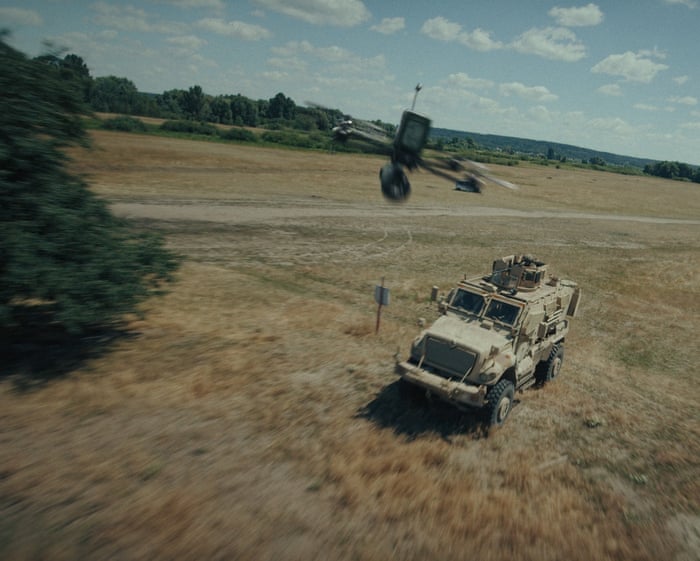
The Ukrainian film *Killhouse* is a war action thriller that highlights the use of modern battlefield technology, such as drones, set during the 2024 conflict involving Ukraine and Russia. Inspired by a true story, the movie features real Ukrainian military figures and aims to show the complex nature of today's war.
Key Facts
*Killhouse* is Ukraine's war movie, compared to *Saving Private Ryan* but updated for drone warfare.
The story is based on an actual rescue in which a drone guided a woman to safety under fire.
Filming took place near Kyiv with participation from Ukrainian soldiers and well-known military intelligence officials.
The plot includes scenes in Kyiv, eastern Ukraine, and the White House situation room, with action like shootouts and car chases.
Some actors experienced air raid alerts and took shelter during filming, showing the real dangers around them.
The movie explores the role of technology and drones in modern conflict as a key theme.
Ukrainian intelligence agencies assisted with the movie’s production, adding authenticity.
The film received a positive reaction in Ukraine for mixing real events and fiction with patriotic themes.
Read the Original
Want the full story? Tap a source to open the original
article.
Tibetans living outside China voted to elect leaders for their government-in-exile based in India. This election is important as the community prepares for a time without the Dalai Lama, their spiritual leader.
Key Facts
Tibetans in exile voted on Sunday for a government-in-exile called the Central Tibetan Administration (CTA).
The CTA is based in Dharamsala, India, and represents about 150,000 Tibetans worldwide.
Over 91,000 Tibetans registered to vote, including monks and refugees in 27 countries, but not in China.
The Dalai Lama, who fled Tibet in 1959, gave up political power in 2011 but remains the spiritual leader.
China says it should approve the Dalai Lama's successor, but the Tibetan community claims only the Dalai Lama's office has that right.
The Tibetan parliament has 45 members representing provinces, religious traditions, and the diaspora.
Penpa Tsering was re-elected as the leader ("sikyong") of the Tibetan government-in-exile in February.
The Tibetan government-in-exile seeks autonomy for Tibet, not full independence, following the Dalai Lama’s "Middle Way" policy.
Read the Original
Want the full story? Tap a source to open the original
article.
A bus carrying a bomb exploded on a major highway in Colombia near the border with Venezuela, killing at least 14 people. The president of Colombia said that a dissident leader from the FARC rebel group, called Marlon, is responsible for the attack.
Key Facts
The explosion happened on Colombia’s Pan-American Highway near Venezuela.
At least 14 people died in the bus bombing.
Colombia’s president blamed a dissident FARC leader named Marlon for the attack.
FARC is a rebel group that has split into factions, some of which reject peace deals.
The bombing targeted a public bus, causing many casualties.
This incident adds to ongoing violence involving armed groups in Colombia.
The location is important as it is a key route connecting Colombia and Venezuela.
Read the Original
Want the full story? Tap a source to open the original
article.
That's the point of this site, and readers keep it that way. Support for any amount and the daily digest lands in your inbox every morning at 7am Eastern.
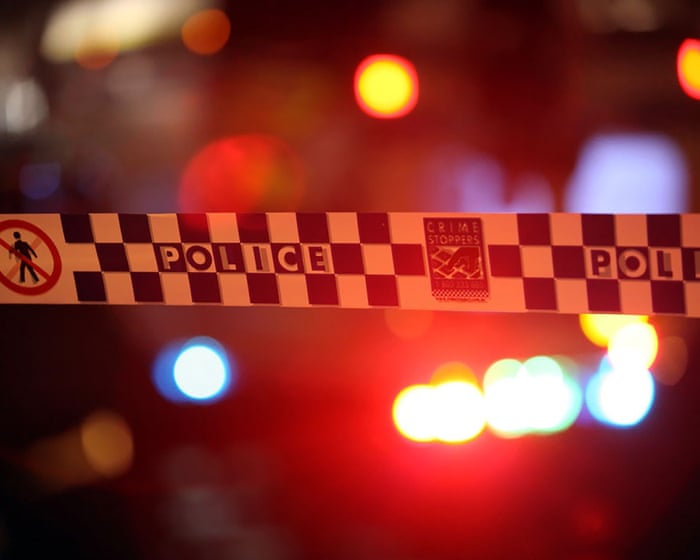
Homes were evacuated in Dunmurray, Northern Ireland, after an explosion near a police station early Sunday morning. Police are at the scene, asking people to stay away, and no injuries have been reported.
Key Facts
The explosion happened in the Kingsway area of Dunmurray, near Belfast.
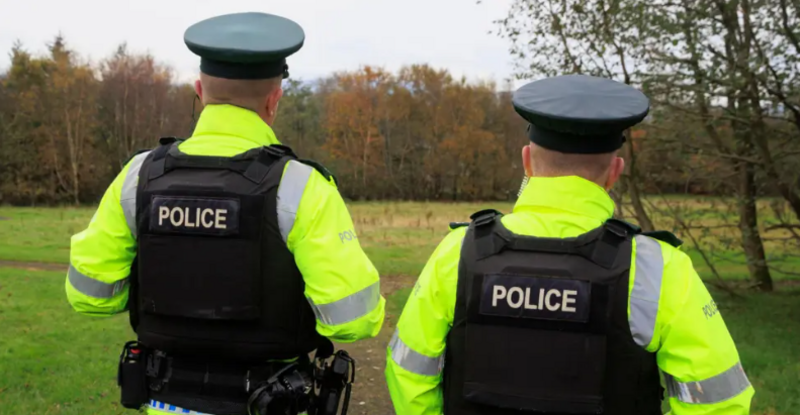
Police confirmed the incident and set up cordons around the area.
It is believed the explosion involved a car bomb.
No one is reported to be injured so far.
People have been asked to avoid the area and take different routes.
Sinn Féin representative Danny Baker advised caution and expressed hope that nobody was hurt.
The evacuation was part of a security response to the explosion.
The event took place in the early hours of Sunday morning.
Read the Original
Want the full story? Tap a source to open the original
article.
Two teenage girls, Kelly Morrissey and Theresa Fusco, went missing in Long Island in 1984, just five months apart. At that time, communication was mostly in person or through letters, and no digital tracking existed. Recently, DNA found on a smoothie straw connected a suspect to one of the disappearances.
Key Facts
Kelly Morrissey disappeared on June 12, 1984, after leaving her home following dinner.
Theresa Fusco went missing on November 10, 1984, after finishing her job at a roller rink named Hot Skates.
The girls lived in Long Island suburbs and were close friends after Morrissey moved to Lynbrook.
In 1984, teens communicated by writing letters and meeting in public places, as there were no cellphones or social media.
Both families were unaware of the danger because it was normal for teens to be out alone in that era.
Hot Skates roller rink was a popular hangout spot for local teens, including Fusco and their friends.
Police now linked a suspect to one of the girls' cases using DNA found on a smoothie straw.
The story reflects how investigations and daily life have changed since the 1980s.
Read the Original
Want the full story? Tap a source to open the original
article.