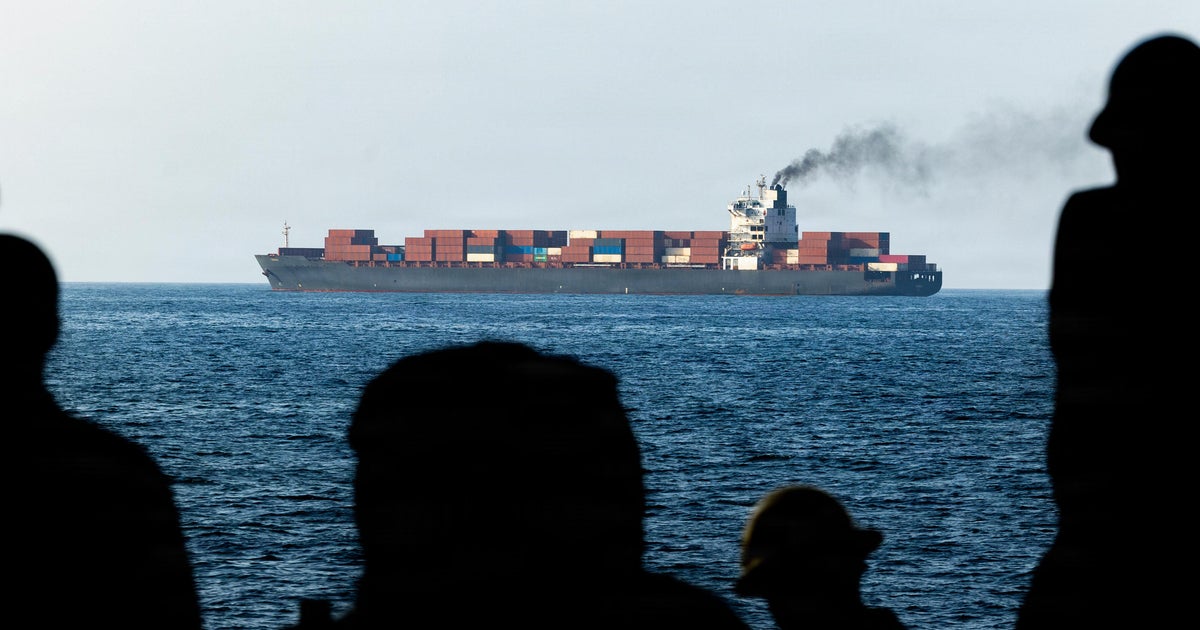
A retired US Army Colonel named Joe Buccino, who used to lead communications for US Central Command (CentCom), discussed naval strategies around the Strait of Hormuz. CentCom manages American military actions in the Middle East and nearby regions.
Key Facts
Joe Buccino is a retired US Army Colonel.
He was the communications director for US Central Command (CentCom).
CentCom directs US military operations in the Middle East, Central, and South Asia.
Buccino talked about naval strategy involving the Strait of Hormuz, a key shipping route.
The discussion took place in a video segment by France 24 on April 24, 2026.
Buccino is also the author of a book on communication skills called "When Every Word Counts."
The Strait of Hormuz is a focus of US military and diplomatic attention.
Read the Original
Want the full story? Tap a source to open the original
article.
The International Energy Agency (IEA) says the war in Iran will reduce the supply of natural gas worldwide for about two years. Damage to a major liquefied natural gas (LNG) facility in Qatar and the closure of the Strait of Hormuz have disrupted energy exports and will keep natural gas markets tight until at least 2027.
Key Facts
The Iran war has damaged LNG facilities in Qatar, cutting their capacity by 17%.
Repairs to the damaged Qatari facilities could take up to five years.
The Strait of Hormuz, a key passage for oil and LNG, is closed due to the conflict.
About 20% of global oil and LNG supplies are blocked by the closure of the Strait of Hormuz.
The IEA predicts a loss of 120 billion cubic meters of LNG supply through 2030.
New LNG projects in other regions will eventually help, but supply will stay tight through 2026 and 2027.
Demand for natural gas dropped in March due to higher prices and efforts by some Asian countries to use less gas.
The length of time the Strait of Hormuz remains closed is uncertain and will affect gas demand in 2026.
Read the Original
Want the full story? Tap a source to open the original
article.
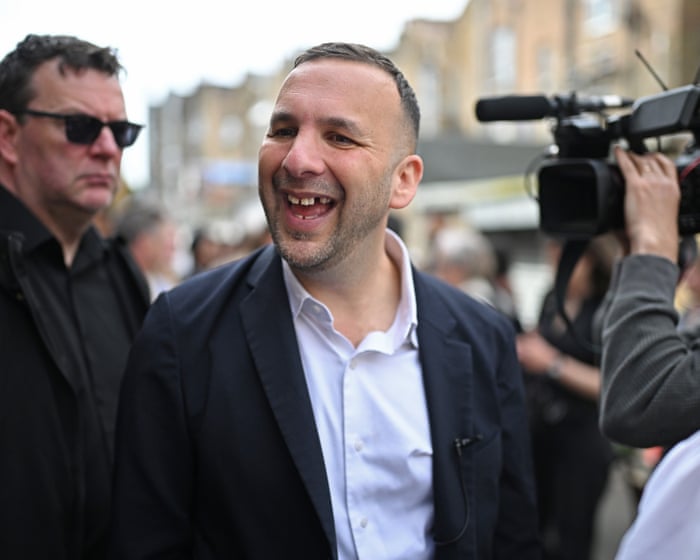
Zack Polanski, leader of the Green Party in England and Wales, urged politicians to handle antisemitism carefully and with nuance. He criticized Prime Minister Keir Starmer for accusing him of downplaying antisemitism and said Starmer was using the issue politically. The Green Party faces scrutiny over some members’ comments seen as crossing into antisemitism.
Key Facts
Zack Polanski called for “consideration, care and nuance” when discussing antisemitism.
Polanski accused Prime Minister Keir Starmer of playing political games with antisemitism.
Starmer called Polanski “disgraceful” for differentiating between real threats and feelings of unsafety after antisemitic attacks.
Polanski admitted he was wrong to previously criticize Labour’s handling of antisemitism under Jeremy Corbyn but said the issue was weaponized.
Polanski, who is Jewish, said wrongly labeling pro-Palestinian views as antisemitic makes him feel unsafe.
Some Green Party members have posted comments seen as sympathetic to Hamas or questioning Israel’s right to exist.
The Green Party’s decentralized structure makes it hard to monitor and control members’ statements.
Antisemitism concerns have grown alongside rising Islamophobia and hate crimes in the UK.
Read the Original
Want the full story? Tap a source to open the original
article.
British police are investigating former prince Andrew and Peter Mandelson over claims they shared sensitive information with Jeffrey Epstein. The US Department of Justice, under President Trump, will only provide the original Epstein documents to the UK after a formal, lengthy request, slowing the investigations.
Key Facts
British police are preparing to interview witnesses in royal and government circles related to Epstein.
Prince Andrew and Peter Mandelson are being investigated for misconduct in public office linked to Epstein.
Both men have been arrested and released, and they deny any wrongdoing.
The US Department of Justice has only released redacted Epstein documents so far.
The US will only give the UK original, unredacted documents after a formal legal request.
British police tried informal requests for documents but were unsuccessful.
A national police group is coordinating investigations, including possible investigations into flights linked to Epstein arriving in the UK.
The European anti-fraud office (OLAF) is investigating Mandelson’s actions during his time as an EU trade commissioner.
Read the Original
Want the full story? Tap a source to open the original
article.
Scientists discovered fossilized remains of very large, finned octopuses that lived about 80 million years ago. These ancient octopuses could grow up to 19 meters long and were likely top predators in the late Cretaceous oceans.
Key Facts
The octopuses lived during the late Cretaceous period, about 80 million years ago.
They were finned and lacked bones, unlike other large marine predators of the time.
Fossilized remains found were their hard beaks, similar to a parrot’s beak.
Researchers used a new method called Digital Fossil Mining, which involves grinding rock layers and using AI to find fossils inside.
The species found is named Nanaimoteuthis haggarti.
Size estimates suggest these octopuses could reach between 6.6 and 18.6 meters in length.
The discovery challenges the previous belief that only large vertebrate animals were apex predators in that era.
Size estimates were made using comparisons with modern finned octopuses.
Read the Original
Want the full story? Tap a source to open the original
article.
A court in Kosovo sentenced three Kosovo Serbs to long prison terms for their role in a gun attack and siege at a monastery in September 2023. The attack led to the deaths of a police officer and three armed men and worsened tensions between Kosovo and Serbia.
Key Facts
Two men were sentenced to life in prison and one to 30 years for participating in the September 2023 attack.
The attackers were accused of violating Kosovo's constitutional order and inciting terrorism.
The attack began with a blockade on a bridge and escalated into a gun battle near Banjska village, close to the Serbia border.
One Kosovo police officer was killed and two were injured during the fighting.
The armed group then entered and barricaded themselves inside a 14th-century Serbian Orthodox monastery.
Three armed group members died during the police operation to regain control of the monastery.
The group’s leader, Milan Radoičić, a Kosovo Serb politician, admitted organizing the attack but faces no charges in Serbia.
Kosovo’s government claims Serbia’s government was behind the attack, worsening already poor relations between the two countries.
Read the Original
Want the full story? Tap a source to open the original
article.
Amal Khalil, a Lebanese journalist, was killed while reporting on an Israeli air strike in southern Lebanon during a 10-day ceasefire. She is the ninth journalist to die in Lebanon this year as talks continue about extending the ceasefire.
Key Facts
Amal Khalil died during an Israeli air strike in southern Lebanon.
The air strike happened during a 10-day ceasefire.
She was reporting on the event at the time.
Khalil is the ninth journalist killed in Lebanon in 2024.
Lebanon is currently burying her while peace talks are ongoing.
Discussions are happening about whether to extend the ceasefire.
The death raises questions about holding those responsible accountable.
The report was shared by Al Jazeera and involved several journalists and producers.
Read the Original
Want the full story? Tap a source to open the original
article.
Pakistan has acted as a mediator in peace talks between the United States and Iran, becoming a key player in regional diplomacy. President Donald Trump has shown strong support for Pakistan’s military leader, General Asim Munir, who is seen as an important figure in these efforts.
Key Facts
Pakistan positioned itself as a mediator between the US and Iran in peace talks.
After the US helped settle a conflict between India and Pakistan last year, Pakistan nominated President Trump for the Nobel Peace Prize.
Pakistan extradited a terror suspect involved in the 2021 Kabul Airport attack that killed US soldiers and civilians.
General Asim Munir is Pakistan’s military chief and is described as President Trump’s favorite military leader.
President Trump has publicly praised General Munir’s leadership.
These developments highlight Pakistan’s growing role in international peace efforts in the Middle East.
The article is connected to ongoing Middle East diplomatic and security issues.
Read the Original
Want the full story? Tap a source to open the original
article.
A man named James Kempster was found guilty of having dead wild birds of prey after they were left outside a village shop in Hampshire along with 50 dead hares. The court did not find enough proof that he was the person who dumped the animals or damaged the shop, but he will be sentenced for possessing the birds.
Key Facts
Dead barn owl and kestrel birds had Kempster’s DNA on them.
About 50 dead hares were also dumped outside the shop in Broughton, Hampshire.
The shop was left smeared with blood and the hares placed nearby.
Kempster denied involvement and was cleared of damaging the shop.
Kempster has past convictions for poaching.
Three men reportedly caused this incident, and the vehicle they used was found burned nearby.
Leaving dead hare bodies is sometimes used as a threatening message in rural areas.
The court sentenced Kempster under a law protecting wild birds from being kept illegally.
Read the Original
Want the full story? Tap a source to open the original
article.
The UK government plans to introduce new laws to ban groups supported by foreign states, including Iran’s Islamic Revolutionary Guard Corps (IRGC). These laws would make it a crime to support or promote such groups and are expected to be announced in the King’s Speech in May.
Key Facts
New UK anti-terror powers would allow banning state-backed groups like Iran’s IRGC.
Supporting or promoting these banned groups would become a criminal offense.
The IRGC is a major military and political force in Iran accused of sponsoring terrorism abroad.
Some European countries and the EU have already banned the IRGC as a terrorist group.
Labour leader Keir Starmer plans to bring this legislation forward soon to address state threats.
Previous Conservative government did not ban the IRGC, partly due to diplomatic concerns.
Current UK laws already ban groups like Hezbollah but need updating for state-supported groups.
An independent review recommended these new powers to tackle threats from state-backed organizations.
Read the Original
Want the full story? Tap a source to open the original
article.
Pirates hijacked an oil tanker named Honour 25 off the coast of Somalia. The ship had 17 crew members and was carrying 18,500 barrels of oil when six gunmen took control about 30 nautical miles from shore.
Key Facts
The oil tanker Honour 25 was seized late Wednesday by six armed pirates near Somalia’s coast.
The ship was carrying 18,500 barrels of oil and had 17 crew members from Pakistan, Indonesia, India, Sri Lanka, and Myanmar.
The tanker left Berbera port in Somaliland on February 20 and was heading toward Mogadishu before being hijacked.
Piracy near Somalia had decreased after 2011 but has increased again in recent years.
The pirates anchored the ship close to the Somali shore between Xaafun and Bander Beyla fishing towns.
Five more armed pirates joined the hijackers after they took control of the vessel.
Somali authorities and the European Naval Force have not yet commented on the hijacking.
The hijacking may increase concerns in Mogadishu, where fuel prices have already risen sharply due to regional conflicts.
Read the Original
Want the full story? Tap a source to open the original
article.
Nearly eight weeks after President Donald Trump began military actions against Iran, the White House has shifted to using economic pressure to get Iran to negotiate. The U.S. is waiting for Iran’s response to ceasefire offers while managing the impact of the closed Strait of Hormuz on the global economy.
Key Facts
President Trump started with military strikes against Iran but now focuses on economic pressure.
The U.S. and Israel carried out strikes that reportedly disrupted Iran’s leadership.
The Strait of Hormuz is closed, causing global energy supply problems and flight cancellations.
The White House is waiting for Iran’s unified response to ceasefire proposals.
Some European allies say the U.S. lacks a clear strategy for ending the conflict.
U.S. defense officials criticize European countries for not doing enough to keep the strait open.
A third U.S. aircraft carrier has been sent to the region, but no full military escort operation has started.
The U.S. faces pressure to resolve the crisis before the November midterm elections.
Read the Original
Want the full story? Tap a source to open the original
article.
The article argues that democracy is not working well because it is too strict and disconnected from the people it should support. It suggests that leaders can help each other by sharing experiences and solutions to problems they face.
Key Facts
Democracy is described as failing in its current form.
The system is seen as too rigid, meaning too fixed and unchanging.
Democracy is also said to be out of touch with the societies it is meant to serve.
Support from other leaders who have faced similar problems is valuable.
Sharing solutions among leaders can help overcome challenges in democracy.
Read the Original
Want the full story? Tap a source to open the original
article.
U.S. envoys Steve Witkoff and Jared Kushner plan to visit Pakistan soon to meet with Iran's Foreign Minister Abbas Araghchi. The goal is to restart talks with Iran, as current diplomatic efforts have stalled despite a ceasefire extension by President Trump.
Key Facts
Steve Witkoff and Jared Kushner are traveling to Pakistan for discussions with Iran's Foreign Minister Abbas Araghchi.
Abbas Araghchi is expected to meet Pakistani leaders, including Prime Minister Shehbaz Sharif.
The talks aim to relaunch negotiations between Iran and the U.S. under President Trump.
It is unclear when Araghchi will meet the U.S. envoys, as he may travel next to Muscat and Moscow.
Vice President Vance, former lead U.S. negotiator, will not join the trip but will remain ready to assist.
Mohammad Bagher Ghalibaf, Iran’s parliament speaker and previous lead negotiator, may be stepping down due to internal disputes.
Vance’s team members will support Witkoff and Kushner during the mission.
The trip is seen as an effort to end the diplomatic stalemate and avoid military options.
Read the Original
Want the full story? Tap a source to open the original
article.
Ukraine launched targeted attacks on Russian oil ports and refineries in March and April 2026, significantly reducing Russia’s oil exports and causing large fires. These strikes have caused Russia to cut its crude oil production and struggle to sustain its oil revenue amid high global prices.
Key Facts
Ukraine began a long-range strike campaign on Russian oil and port infrastructure on March 21, 2026.
Russian oil exports dropped by 300,000 barrels per day in March, and refined product exports fell by 200,000 barrels per day.
Ukraine’s attacks caused major fires at refineries in Tuapse, Sizran, Novokuibyshevsk, Samara, and Nizhny Novgorod.
Russia cut crude oil production by approximately 300,000 to 400,000 barrels per day in April.
The U.S. suspended sanctions on Russian oil in early March to help ease global price pressures after the Strait of Hormuz was closed by Iran.
Despite the waiver, Russian oil exports fell to their lowest levels since 2023 and 2024.
Russian officials and experts state that oil prices must stay above $100 per barrel for Russia to cover its budget deficit this year.
Russia is increasing defenses near key industrial areas to protect against drone attacks.
Read the Original
Want the full story? Tap a source to open the original
article.
Defense Secretary Pete Hegseth and General Dan Caine spoke to reporters about U.S. military actions in the Middle East. They described a blockade near the Strait of Hormuz aimed at stopping ships connected to Iran.
Key Facts
Defense Secretary Pete Hegseth and Chairman of the Joint Chiefs of Staff Gen. Dan Caine gave a news briefing.
The briefing focused on U.S. military operations in the Middle East.
The U.S. is enforcing a blockade near the Strait of Hormuz.
The blockade targets vessels linked to Iran.
The Strait of Hormuz is a key waterway for global oil shipments.
The U.S. aims to control Iran’s ability to move goods by sea.
Read the Original
Want the full story? Tap a source to open the original
article.
The article describes changes in international alliances and military policies as the traditional post-World War II order shifts. It highlights challenges in the US-led NATO alliance, Germany’s new military strategy, and Japan’s move toward increased armament and a more active military role.
Key Facts
President Donald Trump has criticized long-standing US alliances and challenged the postwar global order.
Polish President Donald Tusk expressed doubts about US loyalty to NATO if Russia attacks.
The US Pentagon considered suspending Spain from NATO and reexamining its support for Britain over the Falkland Islands.
Germany released its first military strategy since World War II, planning major rearmament and more defined national interests.
France and Germany continue to struggle over a joint fighter jet project started early in Trump’s presidency.
Japan loosened its rules on exporting lethal weapons, signaling a shift away from postwar pacifism and planning to double defense spending by 2027.
Protests have arisen in Japan due to concerns about moving away from pacifism and fear of being involved in US-led wars.
Despite historical tensions, Japan and South Korea have improved bilateral relations amid concerns about China and North Korea’s growing military power.
Read the Original
Want the full story? Tap a source to open the original
article.
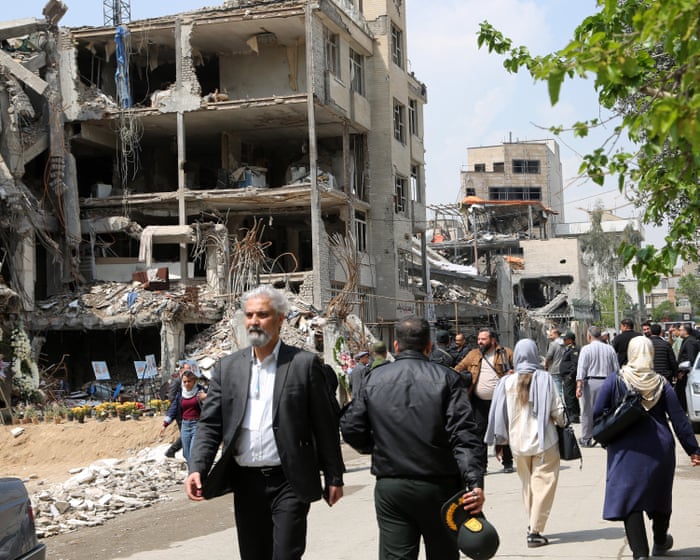
Iran’s foreign minister, Abbas Araghchi, is planning visits to Pakistan, Russia, and Oman to explore starting peace talks with the US and Israel aimed at ending attacks on Iran. Both sides remain firm on their demands, with Iran requiring the US to lift its blockade of Iranian ports and the US demanding guarantees that Iran will end its nuclear program and stop blocking the Strait of Hormuz.
Key Facts
Abbas Araghchi, Iran’s foreign minister, will tour Pakistan, Russia, and Oman to seek grounds for peace talks with the US.
Iran demands that the US remove its blockade on Iranian ports before talks can resume.
The US wants proof that Iran will end its nuclear activities and stop blocking the Strait of Hormuz.
Pakistan is acting as a mediator but has not yet found a compromise.
Iran is considering breaking up its 400kg uranium stockpile to reduce enrichment gradually in exchange for lifting sanctions.
Russia may offer to take some of Iran’s uranium stockpile as part of negotiations.
Iran wants a ceasefire that includes commitments from both the US and Israel to stop attacks.
The US is maintaining and expanding a naval blockade and warns it will act against Iranian attempts to lay mines or block shipping.
Read the Original
Want the full story? Tap a source to open the original
article.
Each summary links back to the original reporting, so you can check the work. Support that, and get the daily digest every morning. Most choose $3.99/month.
Mojtaba Khamenei has become Iran’s supreme leader after his father, Ali Khamenei, died on the first day of the current war with the US and Israel. However, Mojtaba has not appeared publicly and may be injured, leading to unclear and less centralized decision-making in Iran’s leadership during the conflict.
Key Facts
Mojtaba Khamenei succeeded his father as Iran’s supreme leader on February 28, the war’s first day.
He has not been seen in public and may have injuries that affect his ability to speak and lead actively.
Iran’s political system expects the supreme leader to have the final say on major issues like war and peace.
Decision-making in Iran appears less centralized and more unclear since Mojtaba took power.
Diplomatic talks with the US continue but with limited control from Iran’s Foreign Minister and President.
The Iranian Parliament Speaker leads Iran’s delegation in talks, not the diplomats usually responsible.
The Islamic Revolutionary Guard Corps (IRGC), a powerful military group, controls strategic moves like closing the Strait of Hormuz.
Iran’s leadership sends mixed messages, often acting first and explaining later, showing possible internal confusion.
Read the Original
Want the full story? Tap a source to open the original
article.
The White House is considering punishing some European countries for not fully supporting President Trump in his actions in Iran. One idea reportedly discussed is withdrawing U.S. support for Britain's control of the Falkland Islands, a territory also claimed by Argentina.
Key Facts
The Pentagon sent an internal email discussing possible punishments for European countries not helping the U.S. in Iran.
President Trump has called UK opposition leader Keir Starmer a “coward” and “no Churchill."
One punishment under review is suspending Spain from NATO, though details are unclear.
The U.S. currently does not take a position on who owns the Falkland Islands but recognizes British administration.
The Falklands are disputed between the UK and Argentina, with Argentina claiming the islands based on inheritance from Spain.
The U.S. helped the UK militarily during the 1982 Falklands conflict by providing intelligence and weapons.
Shifting U.S. support toward Argentina would leave the UK isolated in the dispute.
It is unlikely that the U.S. will change its stance on the Falklands due to strong UK-U.S. security ties and an upcoming visit from King Charles.
Read the Original
Want the full story? Tap a source to open the original
article.