Sleeping next to a person who snores can disturb your sleep and affect your health. Disrupted sleep reduces focus, memory, energy, and emotional balance, which may lead to irritability and stress. Using earplugs, sleeping separately, or seeking treatment for snoring can help improve sleep quality.
Key Facts
About 40% of adults in the UK snore, more men than women.
75% of people with a snoring partner say their sleep is affected.
Snoring happens because soft tissues in the throat vibrate during sleep.
Interrupted sleep lowers the time spent in deep rest, causing tiredness even after a full night in bed.
Poor sleep affects how the brain stores memories and controls stress and emotions.
Some partners choose to sleep in different rooms to avoid snoring disturbance.
Using earplugs can help block out snoring noise and improve sleep.
Seeking treatment for snoring can reduce sleep problems and improve relationships.
Read the Original
Want the full story? Tap a source to open the original
article.
Canada will produce millions of drones in the next two years and send one-third of them to Ukraine to help defend against Russia's attacks. Ukrainian President Zelenskyy visited Canada to ask for more military and energy support as Russia increases missile and drone strikes on Ukraine.
Key Facts
Canada currently has about 2,000 drones but plans to increase its fleet tenfold.
One-third of all drones Canada makes will be sent to Ukraine for its defense.
Canada announced a $254 million package of air-defense systems to help Ukraine.
Canada will also provide over $312 million in loan guarantees to help Ukraine buy natural gas and improve energy security.
Ukraine faces intensified Russian attacks targeting power grids, aiming to weaken civilians before winter.
Zelenskyy said Ukraine needs to strengthen its defense before meaningful talks with Russia can happen.
Both Ukraine and Russia have used drones in attacks on each other’s territory, causing casualties and damage.
Zelenskyy is working closely with U.S. officials on possible future negotiations involving Russia.
Read the Original
Want the full story? Tap a source to open the original
article.
The United Nations warns that Yemen’s war has become more dangerous as fighting spreads and the Houthi rebels capture the port city of Mocha near a key shipping route. The conflict has caused many deaths, displaced thousands of families, and increased attacks on civilian and energy targets in Saudi Arabia.
Key Facts
The UN envoy for Yemen said the war entered a “new and more dangerous phase” as a four-year truce broke down.
Houthi rebels took control of Mocha, a strategic port near the Bab al-Mandeb strait, an important global trade and energy route.
Fighting has spread across several Yemeni provinces, killing civilians and displacing over 11,400 families since early September.
Houthis have launched attacks on civilian and energy infrastructure in Saudi Arabia, wounding at least 73 civilians.
The Yemeni government’s UN ambassador condemned Houthi attacks and called for enforcement of arms restrictions to stop supplies reaching the Houthis.
Saudi Arabia’s UN ambassador demanded the enforcement of UN resolutions 2216 and 2722, which call for a ceasefire and an end to support for the Houthis.
The United States accused Iran of supporting the Houthis and called for an immediate end to attacks and release of detained UN and humanitarian staff.
The UN reported worsening food shortages in Yemen, with 18.3 million people facing serious hunger and over 2.2 million children suffering from severe malnutrition.
Read the Original
Want the full story? Tap a source to open the original
article.
This article shows how the area around the World Trade Center in Lower Manhattan, New York City, has changed in the 25 years since the September 11, 2001 terrorist attacks. It uses photos from 2001 and 2026 to compare the neighborhood before and after redevelopment and memorial efforts.
Key Facts
The article features photos of Lower Manhattan taken before and after the 9/11 attacks.
The World Trade Center was destroyed in the 2001 attacks and has since been rebuilt with new buildings like One World Trade Center.
Some parts of the area have been redeveloped completely, while others look much the same as they did 25 years ago.
The Tribute in Light memorial is visible in the 2026 photos as a way to honor those lost.
Sites near Ground Zero, such as restaurants and stores, have changed businesses or uses over time but retain some original architecture.
A Burger King near the site was once used as a temporary police headquarters after the attacks and still exists today.
The article aims to visually show the recovery and change in the neighborhood since 2001.
Read the Original
Want the full story? Tap a source to open the original
article.
Dolly Parton's sister talked with Gayle King about Dolly’s long marriage to her husband Carl. She said Carl really loved Dolly, showing how strong their relationship was over the years.
Key Facts
Dolly Parton has been married to her husband Carl for many years.
Dolly’s sister described their marriage as full of love and admiration.
Carl adored Dolly, according to her sister’s account.
The conversation also mentioned Dolly’s makeup routine.
The interview was featured on CBS News with Gayle King.
Read the Original
Want the full story? Tap a source to open the original
article.
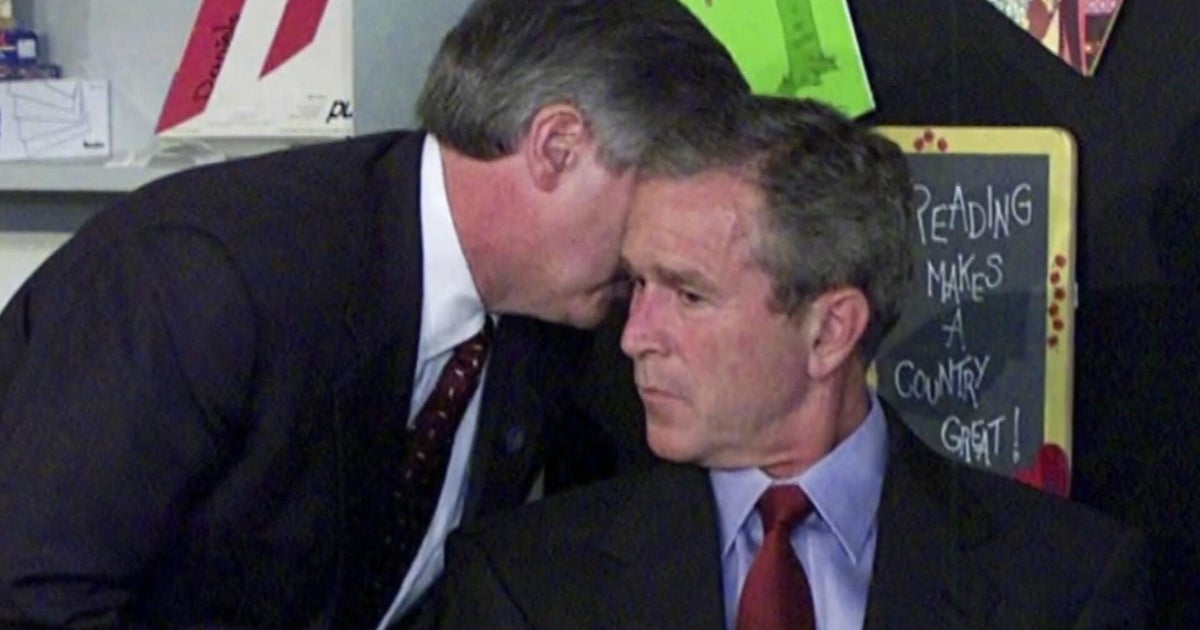
Andy Card, who was President George W. Bush's chief of staff, and the teacher present in the classroom with President Bush on September 11, 2001, talked about their memories of that day. They shared their experiences during the terrorist attacks that changed the United States.
Key Facts
Andy Card was President George W. Bush’s chief of staff in 2001.
He was with President Bush on September 11 when the terrorist attacks happened.
The teacher was in the same classroom as President Bush when the attacks were announced.
They spoke publicly about what they experienced and how they learned about the attacks.
Their accounts help explain how the President first reacted to the events on 9/11.
September 11, 2001, is remembered for the terrorist attacks on the U.S., including the World Trade Center and the Pentagon.
Read the Original
Want the full story? Tap a source to open the original
article.
In April, an American F-15E fighter jet was shot down over Iran. Two U.S. Air Force officers were trapped behind enemy lines but were rescued by U.S. Special Forces. One of the officers spoke exclusively with 60 Minutes about the experience.
Key Facts
The incident happened in April when a U.S. fighter jet was shot down above Iran.
Two Air Force officers were left stranded behind enemy territory.
U.S. Special Forces rescued the officers.
One officer gave an exclusive interview to the TV program 60 Minutes.
The officer discussed how they avoided being captured after the crash.
The fighter jet involved was an F-15E model.
The interview was conducted by 60 Minutes journalist Norah O'Donnell.
Read the Original
Want the full story? Tap a source to open the original
article.
This year’s Atlantic hurricane season has been unusually quiet, with no hurricanes forming yet, which is rare for this time of year. A strong El Niño weather pattern and dry dust from the Sahara Desert are stopping storms from developing in the Atlantic.
Key Facts
No hurricanes have formed in the Atlantic this season, even though it is the peak time for hurricanes.
The current record for the latest hurricane formation is September 11, and this year will likely break that record.
Usually, by this time, there are about eight named tropical storms and three hurricanes; this year there have been only five named storms.
The Eastern Pacific hurricane season is more active this year, with 13 named storms and five hurricanes.
El Niño is a natural event that warms the tropical Pacific Ocean and changes global weather patterns, especially increasing upper-level winds over the Atlantic.
These stronger winds cause wind shear, which breaks up storms so they don’t grow into hurricanes.
This El Niño is one of the strongest on record and is expected to peak in late 2026.
Dust from the Sahara Desert is carried over the Atlantic and makes the air dry, which also prevents storms from forming.
Read the Original
Want the full story? Tap a source to open the original
article.
Russian forces are attacking the eastern Ukrainian cities of Slovyansk and Kramatorsk, which remain under full Ukrainian control in the Donbas region. The area is heavily targeted by Russian glide bombs, causing many civilian injuries and forcing evacuations.
Key Facts
Slovyansk and Kramatorsk are the largest cities still fully controlled by Ukraine in Donbas.
Police have started forced evacuations, especially for families with children, due to worsening security.
Russia controls almost all of Luhansk region and about 80% of Donetsk region, aiming to take full control of Donbas.
The Russian military is using glide bombs, which are heavy bombs that glide to targets silently and cause major damage.
The number of civilian injuries from Russian attacks rose from 70 in June to 212 in August.
Residential areas and important city infrastructure have been heavily damaged.
Anti-drone nets have been set up in Kramatorsk to defend against unmanned aerial attacks.
Kramatorsk is the current seat of the Donetsk regional administration after Donetsk city was captured.
Read the Original
Want the full story? Tap a source to open the original
article.
A Delta Air Lines flight made an emergency landing after the cabin lost air pressure. This was one of four emergency landings Delta had in one week, involving issues like cabin fumes and pressurization problems.
Key Facts
Delta Air Lines had four emergency landings in one week.
Two emergencies were caused by reports of cabin fumes.
Two emergencies, including Thursday’s incident, were due to lost cabin pressurization.
Lost pressurization means the air pressure inside the plane dropped unexpectedly.
When pressurization fails, planes must land quickly for passenger safety.
Kris Van Cleave reported details about the most recent incident.
The news was shared by CBS News and is available on their app.
Read the Original
Want the full story? Tap a source to open the original
article.
The 9/11 attacks in 2001 were a major failure of intelligence sharing and imagination by the US government, with warnings present but not acted upon. Since then, the US and other countries have improved how they share information and coordinate counter-terrorism efforts, but some failures still happened after 9/11.
Key Facts
The 9/11 attacks killed 2,977 people and involved hijacked planes flown into the World Trade Center.
The CIA knew about al-Qaeda and its leader Osama Bin Laden before 9/11 but failed to stop the attacks due to poor information sharing and assessment.
The 9/11 Commission blamed US agencies for failures in imagination, policy, and management leading to the attacks.
Since 2001, intelligence sharing between agencies like the CIA, FBI, MI5, and international partners has greatly improved.
New organizations were created, such as the US National Counter Terrorism Center and a Director of National Intelligence, to enhance cooperation and information flow.
The UK uses fusion centers where intelligence officers from different agencies and countries work closely together.
The US and UK intelligence services (CIA and MI6) have a strong relationship supported by the Five Eyes alliance (US, UK, Canada, Australia, New Zealand).
Despite improvements, intelligence and planning failures have continued, including issues before the 2003 Iraq invasion.
Read the Original
Want the full story? Tap a source to open the original
article.
A new CBS documentary called "Daughters of 9/11" follows two women who lost their fathers in the 2001 attacks. They seek justice by focusing on Khalid Sheikh Mohammed, the alleged mastermind behind 9/11. Retired FBI Agent Frank Pellegrino, who spent over ten years searching for Mohammed and interviewed him, talks about this effort.
Key Facts
The documentary "Daughters of 9/11" airs on CBS.
It features two women whose fathers died in the September 11 attacks.
These women want Khalid Sheikh Mohammed to be held responsible for the attacks.
Khalid Sheikh Mohammed is considered the alleged mastermind behind 9/11.
Retired FBI Special Agent Frank Pellegrino hunted for Mohammed for more than a decade.
Pellegrino eventually questioned Khalid Sheikh Mohammed.
Pellegrino discusses his experience on the CBS show "The Takeout."
Read the Original
Want the full story? Tap a source to open the original
article.
Female DJs have reported facing harassment, rude behaviour, and intimidation while working in nightlife venues. They say women DJs are often treated more like visitors than as professionals and experience more unwanted attention than male DJs.
Key Facts
Female DJs like Anna McAteer, Andrea Shearer, and Julie Dunne shared their experiences of harassment during performances.
Harassment includes people interfering with DJ equipment and making inappropriate or aggressive comments.
Andrea Shearer received online abuse accusing her of getting gigs because she is a woman and making false claims about her personal life.
Anna McAteer said men have entered the DJ booth without permission and interrupted her sets multiple times.
Physical intimidation has occurred, such as a man asking inappropriate questions and touching equipment.
Julie Dunne stopped DJing in bars after an aggressive incident with a man demanding a song.
Women working in other nightlife roles like photographers and bar staff also face similar behaviour.
The DJs believe these problems reflect wider attitudes towards women in the nightlife industry, not just isolated events.
Read the Original
Want the full story? Tap a source to open the original
article.
Yemen’s Iran-backed Houthi rebels took control of the strategic Red Sea port city of Mocha, as part of their attack on Saudi-backed government forces. Saudi Arabia responded with many airstrikes after the Houthis carried out attacks in Saudi territory.
Key Facts
The Houthis seized Mocha, a key port on the Red Sea, and nearby Zuqar Island.
The Houthis control large parts of northwest Yemen and have been fighting Saudi-backed Yemeni government forces.
The Bab al-Mandab strait near Mocha links Asia to Europe and is important for global shipping.
The conflict is connected to a wider Middle East war involving US-Israeli strikes on Iran and Iran-backed groups.
The war has disrupted maritime traffic and caused oil prices to rise above $100 per barrel.
Yemen’s recognized government called for protection of the country’s coasts and control restoration.
Many civilians fled Mocha due to heavy fighting and airstrikes.
The Houthis have used drones and missiles to disrupt Red Sea shipping routes before, and controlling the coast increases their power in the region.
Read the Original
Want the full story? Tap a source to open the original
article.
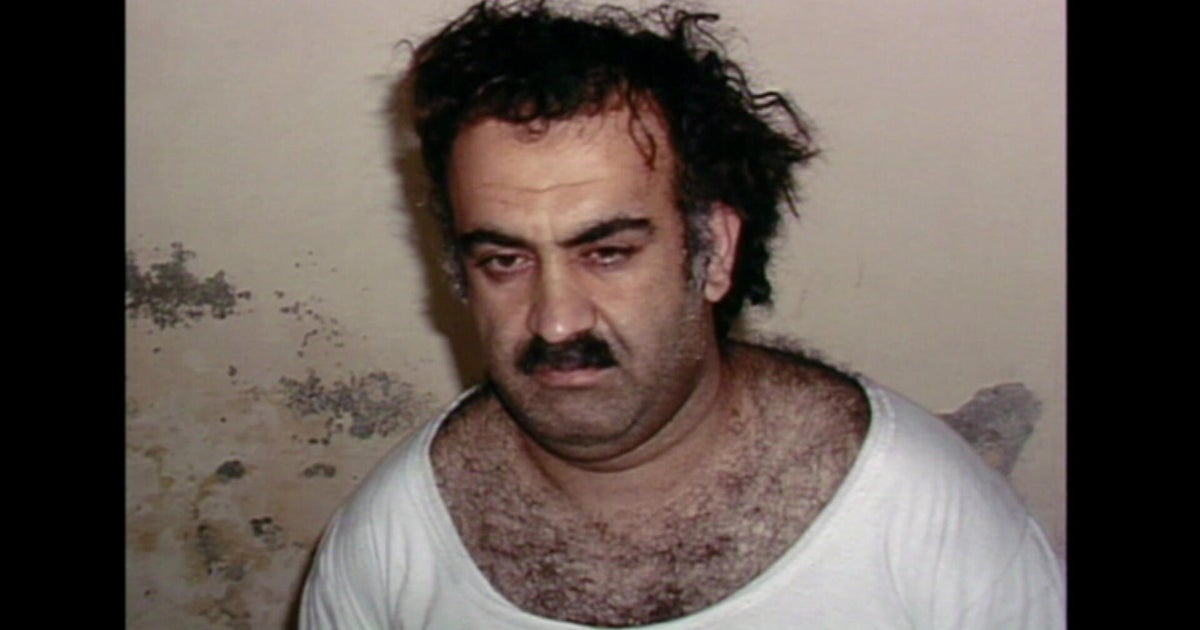
Khalid Sheikh Mohammed is accused of planning the September 11, 2001, terrorist attacks. He has been held by the U.S. government since 2003 while awaiting trial.
Key Facts
Khalid Sheikh Mohammed is identified as the person behind the 9/11 attacks.
The attacks occurred on September 11, 2001.
He was captured and taken into U.S. custody in 2003.
The U.S. has kept him detained as part of the legal process.
The 9/11 attacks targeted locations in the United States, causing many deaths and damage.
His trial has faced delays over the years.
The U.S. government views him as a major terrorist figure.
CBS News covered his story in a program called 60 Minutes Archive.
Read the Original
Want the full story? Tap a source to open the original
article.
The acting U.S. Navy secretary, Hung Cao, said Iran caused heavy damage to a U.S. Navy base in Bahrain. This incident highlights rising tensions between Iran and the United States in the Middle East.
Key Facts
Iran attacked a U.S. Navy base located in Bahrain.
The attack caused significant damage to the base.
Acting Navy Secretary Hung Cao publicly described the damage as severe.
Bahrain hosts important U.S. military facilities in the Gulf region.
This event reflects ongoing conflict issues between Iran and the U.S. military presence in the area.
No details were given in this summary about casualties or the exact nature of the damage.
The U.S. maintains naval forces in Bahrain to help secure the region and protect shipping routes.
Read the Original
Want the full story? Tap a source to open the original
article.
The Iran-backed Houthis have taken control of Mokha, an important port city in Yemen. This city is located on the Bab el-Mandeb strait, a key point for global shipping through the Red Sea. This move increases tensions and risks in the region, affecting oil markets.
Key Facts
The Houthis are a group supported by Iran.
They recently captured Mokha, a port city in Yemen.
Mokha is on the Bab el-Mandeb, a vital waterway for ships.
The Bab el-Mandeb links the Red Sea to other major shipping routes.
Yemen’s internationally recognized government has allies who lost control of Mokha.
The fighting suggests Yemen could return to full-scale war.
Control over this area can influence the flow and price of oil globally.
Read the Original
Want the full story? Tap a source to open the original
article.
Hillary Clinton questioned Israeli Prime Minister Benjamin Netanyahu’s handling of warnings about the Hamas attack on October 7, 2023. An Israeli newspaper reported that Netanyahu received a warning from the UAE president before the attack but did not share it with top security officials. Netanyahu denies these claims and plans to sue the newspaper.
Key Facts
Hamas launched a deadly attack on Israel on October 7, 2023, killing about 1,200 people and taking 251 hostages.
The attack led to a war between Israel and Hamas in Gaza, causing over 73,000 Palestinian deaths according to local health authorities.
Israeli newspaper Haaretz reported that Netanyahu was warned 10 days before the attack by UAE President Sheikh Mohammed bin Zayed about Hamas’ planned operation.
Netanyahu allegedly did not alert Israel’s main security agencies after receiving this warning.
Netanyahu called the report a "wicked fabrication" and plans to sue Haaretz.
Hillary Clinton called this a failure of leadership but said she does not know Netanyahu’s exact reasons.
Some Israeli opposition leaders say Netanyahu should resign because of the attack’s handling.
Haaretz stands by its reporting, and an Emirati source confirmed the conversation about the warning.
Read the Original
Want the full story? Tap a source to open the original
article.
The Israeli military destroyed an underground Hezbollah base on the Ali al-Taher ridge in southern Lebanon. Israeli officials said they will stay in the area to stop Hezbollah from rebuilding, while Hezbollah has not yet responded to the attack.
Key Facts
Israeli forces destroyed Hezbollah tunnels and weapons in southern Lebanon near the Israeli border.
The Ali al-Taher ridge is a key area contested by Israel and Hezbollah in ongoing conflicts.
Israeli Prime Minister Netanyahu and Defense Minister Katz said Israel will remain in the area to prevent Hezbollah's return.
Hezbollah reportedly built an underground base with command centers, weapons stores, and living spaces.
This base included rockets, missiles, drones, anti-tank missiles, mines, and explosives.
Iran warned the U.S. it would respond strongly if Israel continued attacks on this site.
A ceasefire was agreed in June, aiming for Israeli withdrawal and Hezbollah disarmament, but progress has stalled.
Israel has recently seized strategic positions in southern Lebanon to create a buffer zone against Hezbollah.
Read the Original
Want the full story? Tap a source to open the original
article.
A boy who used a laptop on his abdomen for many hours developed a skin condition called erythema ab igne (EAI), also known as toasted skin syndrome. This condition happens after long exposure to low heat and causes a reddish, lace-like rash. The boy’s skin got worse over time but showed no serious internal injuries.
Key Facts
The boy had a patch of reddish-brown marks on his abdomen shaped like irregular circles and lace patterns.
He used to rest his laptop on his stomach for up to eight hours a day, often while it was charging.
The doctors initially thought the marks were bruises but found no internal injuries on scans.
A chest X-ray showed a small patch in his lung, possibly a minor infection, treated with antibiotics.
The marks worsened over two weeks and became tender with skin breaking down.
Doctors diagnosed the boy with erythema ab igne (EAI), caused by repeated low-level heat exposure.
EAI is usually seen in adults exposed to heat from heating pads, heaters, or certain jobs.
The condition results from damage to skin blood vessels due to long-term heat contact, causing the rash.
Read the Original
Want the full story? Tap a source to open the original
article.