A 10-day ceasefire between Israel and Lebanon has begun, allowing talks for a longer peace deal. President Donald Trump says an agreement to end the broader US-Iran conflict is close, while Iran welcomes the truce as a chance to pause the fighting.
Key Facts
The 10-day ceasefire is between Israel and Lebanon and is seen as a step toward longer peace talks.
President Donald Trump said a deal to end the US-Iran conflict is near, with talks possibly happening soon in Islamabad.
Iran’s Foreign Ministry supports the truce as part of efforts to pause regional fighting.
Israeli Prime Minister Benjamin Netanyahu called the truce an opportunity for historic peace but insists Hezbollah must disarm.
An Israeli attack before the ceasefire killed at least seven people in southern Lebanon.
Hezbollah, backed by Iran, is involved in the ceasefire but operates quietly behind the scenes.
Some Israelis feel frustrated as goals like disarming Hezbollah have not been met.
Lebanese officials welcome the ceasefire, but tensions remain due to disagreements over Israeli withdrawal and Hezbollah’s role.
Read the Original
Want the full story? Tap a source to open the original
article.
French President Emmanuel Macron and British Prime Minister Keir Starmer are leading an international meeting with dozens of countries to plan the reopening of the Strait of Hormuz, a crucial oil shipping route blocked due to the ongoing U.S.-Israel war on Iran. The U.S. is not involved in this initiative, which aims to provide safe, defensive security measures for ships passing through the strait once conditions allow.
Key Facts
The Strait of Hormuz is currently closed because of conflict involving the U.S., Israel, and Iran.
About 20% of the world’s oil typically passes through this narrow waterway.
France and the U.K. are organizing a coalition called the Strait of Hormuz Maritime Freedom of Navigation Initiative.
The U.S. is not participating in these plans.
The coalition will focus on defensive actions like mine-clearing, intelligence sharing, and safe communication for ships.
Military planning for the initiative is still ongoing and depends on a lasting ceasefire in the region.
President Macron said the mission will only be deployed when security conditions are safe.
British Prime Minister Starmer described reopening the strait as a global responsibility to restore energy and trade flow.
Read the Original
Want the full story? Tap a source to open the original
article.
The war involving Iran has caused energy prices to rise globally, leading some countries in Asia and Africa to increase or plan for nuclear power. These nations want to reduce their dependence on fossil fuels and protect themselves from future energy shocks.
Key Facts
The Iran conflict has disrupted oil and gas shipping routes, especially affecting Asia and then Africa.
Countries in Asia like South Korea are producing more nuclear power, and Taiwan is considering restarting old nuclear reactors.
African countries such as Kenya, Rwanda, and South Africa are speeding up plans to build nuclear reactors.
Nuclear power uses a process called fission, which produces energy without carbon dioxide but creates radioactive waste.
Developing nuclear energy is a long-term process that can take decades, not an immediate solution.
Around 31 countries currently use nuclear power, providing about 10% of the world's electricity.
Another 40 countries are thinking about or preparing to build nuclear power plants.
The global increase in interest in nuclear energy is called a “nuclear renaissance” driven by energy security concerns.
Read the Original
Want the full story? Tap a source to open the original
article.
A 10-day ceasefire has started between Israel and Hezbollah in Lebanon, bringing a pause to recent fighting. President Donald Trump expressed hope that peace talks with Iran could resume soon and that the broader conflict might end quickly.
Key Facts
A 10-day truce between Israel and Hezbollah is in effect in Lebanon.
The ceasefire allows displaced people to return to their homes in southern Lebanon and Beirut’s southern suburbs.
It is unclear if Israel will fully stop military strikes on Hezbollah or if Hezbollah accepts the deal.
President Trump called the ceasefire a “historic day for Lebanon” and expressed optimism about ending the war with Iran soon.
Iran plays a key role in negotiations but Hezbollah was not involved in making the ceasefire agreement.
The ceasefire deal is a significant step toward resolving the broader conflict involving Iran, the U.S., and Israel.
Pakistan’s army chief met with Iran’s parliament speaker to support extending the ceasefire.
The Strait of Hormuz remains closed by Iran, threatening global oil supplies and energy security.
Read the Original
Want the full story? Tap a source to open the original
article.
Ben Roberts-Smith, Australia’s most decorated living veteran, was granted bail after being charged with war crimes related to the deaths of five people in Afghanistan. He faces serious charges of intentionally killing civilians or prisoners while serving in the military and is awaiting trial.
Key Facts
Ben Roberts-Smith is a former corporal in Australia’s Special Air Service Regiment.
He was arrested on April 7 and charged with five counts of war crime murder involving killings in Afghanistan in 2009 and 2012.
War crime murder means intentionally killing people not involved in fighting, such as civilians or prisoners.
Roberts-Smith received the Victoria Cross and Medal of Gallantry for his military service in Afghanistan.
The charges come after a 2020 military report found evidence of unlawful killings by Australian troops in Afghanistan.
In 2023, a civil court found similar allegations against Roberts-Smith mostly true, but these criminal charges require a higher proof standard.
Prosecutors worried Roberts-Smith might flee or interfere with witnesses but the judge found special reasons to grant bail.
Roberts-Smith has not yet pleaded guilty or not guilty and faces up to life imprisonment on conviction.
Read the Original
Want the full story? Tap a source to open the original
article.
Pope Leo XIV is visiting Cameroon as part of his four-nation trip to Africa, focusing on encouraging young people and addressing social challenges. He is expected to celebrate a Mass attended by around 600,000 people and will meet students and staff at the Catholic University of Central Africa.
Key Facts
Pope Leo XIV is on an 11-day visit to Africa, including Cameroon.
About 600,000 people are expected to attend a Mass in Douala, Cameroon’s main port city.
Cameroon has a population of 29 million, with Catholics making up around 29%, and most citizens are young (median age 18).
The Pope has called for an end to corruption and encouraged investment in youth education and entrepreneurship.
Cameroon’s President Paul Biya, 93 years old, has been in power since 1982.
Despite some economic growth, many young people struggle with unemployment and work informally.
Many trained doctors and nurses leave Cameroon for better jobs abroad, worsening healthcare shortages.
President Biya won an eighth term in October 2025 amid growing frustration among the youth.
Read the Original
Want the full story? Tap a source to open the original
article.
DNA tests have confirmed that the remains found in a car in the Columbia River belong to the Martin family from Oregon, who went missing in 1958. Authorities found no signs of a crime after finishing their investigation.
Key Facts
The remains were discovered inside a Ford station wagon in the Columbia River.
The Martin family disappeared in December 1958 while searching for Christmas greenery.
The Ford car was found by a diver in 2024 after years of searching.
Only part of the car frame could be recovered due to sediment buildup.
Human remains were found in 2025 and sent for DNA testing.
DNA matched the remains with relatives of Kenneth, Barbara, and their daughter Barbie Martin.
Two of the Martin children’s bodies were recovered shortly after the disappearance, but the rest of the family was missing until now.
Authorities found no evidence that a crime occurred in the family’s disappearance.
Read the Original
Want the full story? Tap a source to open the original
article.
Young South Sudanese women, including model and law student Khloe Nyanda, are working to show their talent despite cultural and practical challenges. They face family disapproval, lack of industry support at home, and visa difficulties when trying to work abroad.
Key Facts
Khloe Nyanda is a 21-year-old model and law student in Juba, South Sudan.
Many South Sudanese models look up to Adut Akech, a successful model who grew up in a refugee camp.
Families often disapprove of modeling as a career, causing personal conflicts and loss of support for some models.
South Sudan lacks strong agencies to protect models from exploitation and abuse.
Nyanda faced harassment by a modeling coach, which affected her career opportunities.
South Sudanese passports make international travel difficult due to visa rejections and the need to apply from neighboring countries.
Visa problems prevented Nyanda from attending major fashion events in Milan and Paris.
Cultural expectations and weak local support systems limit the career growth of aspiring South Sudanese models.
Read the Original
Want the full story? Tap a source to open the original
article.
More than 15 million young oysters will be released into the North Sea near Orkney as part of a large project to restore oyster beds. Experts say this effort will help improve marine life, reduce carbon in the atmosphere, and serve as a model for restoring oyster beds around the UK and Europe.
Key Facts
The project aims to restore a large oyster bed around Orkney with over 15 million juvenile oysters.
Oyster beds once covered large areas of UK coast but declined due to overfishing, pollution, climate change, and clearing for shipping.
Restoring oyster beds can help marine ecosystems by supporting fish, sea mammals, seabirds, and many other species.
The Green Britain Foundation and other groups manage the scheme, using a method that grows oysters on plates with calcium carbonate before placing them in the sea.
Oyster reefs can capture carbon dioxide, helping to fight climate change by removing greenhouse gases from the atmosphere.
The restored oyster bed is expected to cover over 100 hectares and could sequester up to 76 tonnes of CO2 each year initially.
Over time, natural oyster reproduction could greatly increase carbon capture, possibly more than 1,000 times after 15 years.
Local leaders support the project for its environmental benefits and its potential to balance the use of marine resources for future generations.
Read the Original
Want the full story? Tap a source to open the original
article.
A German woman living in the UK was stopped from boarding her flight back to Edinburgh due to a Home Office error that showed a wrong passport number in the digital immigration system. She has been separated from her two-year-old daughter while authorities work to fix the mistake, which could take weeks.
Key Facts
Liza Tobay, a German woman living in the UK for 15 years, was visiting family with her children.
Her return flight was blocked because the Home Office system showed a "red flag" on her settled status.
The system had recorded a completely wrong passport number, called a “ghost number.”
Tobay could prove her status by email but was told only a phone app is accepted, which she did not have.
She has been separated from her two-year-old daughter and fears the error could keep her apart for up to a month.
The Home Office said the case is being prioritized but it may take three weeks to fix.
The3million, a campaign group, criticizes the UK’s digital-only immigration status system and calls for physical documents.
The Home Office has not given a public comment on this specific case yet.
Read the Original
Want the full story? Tap a source to open the original
article.
Two Iranian women football players, Fatemeh Pasandideh and Atefeh Ramezanisadeh, thanked the Australian government for offering them protection and safe living conditions. They have begun training with an Australian team and hope to continue their football careers in Australia after rebuilding their lives.
Key Facts
Pasandideh and Ramezanisadeh received humanitarian visas from Australia to stay safely in the country.
They were part of the Iranian women's football team during the Asian Cup in Australia.
Six players and one staff member were initially granted visas; four players later chose to return to Iran.
The two players started training with Brisbane Roar, an A-League Women’s football team, in Australia.
They expressed gratitude to the Australian government and specifically to Home Affairs Minister Tony Burke.
Some Iranian players faced criticism at home for not singing the national anthem, being called “wartime traitors” by Iranian state TV.
The rest of the Iranian team returned to Iran through Turkey after the Asian Cup.
Read the Original
Want the full story? Tap a source to open the original
article.
An Iran-based group called Explosive Media makes viral videos using Lego-style animations to show victims of U.S. actions and criticize President Donald Trump. Their videos combine symbols, music, and political messages to present Iran’s viewpoint in the conflict with the U.S. and Israel, but some have been removed from platforms like YouTube for allegedly promoting violence.
Key Facts
Explosive Media uses Lego-like animations to tell stories about victims of U.S. government actions and wars.
Their videos include references to events like Abu Ghraib prison abuse, Hiroshima and Nagasaki bombings, and the downing of Iran Air Flight 655.
The animations show missiles labeled with messages honoring victims and end with statues of President Trump and Israeli Prime Minister Netanyahu collapsing.
The group's videos often use rap and mock President Trump by reusing his words to accuse him of hypocrisy and prioritizing Israel's interests.
Explosive Media’s YouTube channel was deleted for allegedly promoting violence, but the group denies their animations are violent.
Colors used in the videos have symbolic meaning: green represents justice and red the oppressor, connected to Shia-Muslim history.
The videos criticize Trump’s broken promises and portray him as a "loser" by flipping his own insults.
The videos have gained significant views on social media, including nearly 150,000 views on X (formerly Twitter).
Read the Original
Want the full story? Tap a source to open the original
article.
There are no ads, so there is no reason to bait you. Readers who chip in keep it that way. Most choose $3.99/month, and get the daily digest every morning.
A war between the US-Israel alliance and Iran has lasted nearly seven weeks, causing many deaths and damage in Iran. Despite public opposition to the war in the US and Europe, there have been fewer large protests against this conflict compared to recent wars like those in Gaza and Ukraine.
Key Facts
The US and Israel have attacked Iran, killing over 2,000 people and damaging important infrastructure.
President Donald Trump warned Iran that their entire civilization could be destroyed if they did not follow US demands.
Iran has responded by attacking Israeli targets and firing missiles at nearby Gulf countries.
A ceasefire brokered by Pakistan has paused direct fighting for about 10 days but is threatened by continued Israeli air strikes in Lebanon.
Global protests related to the Iran war number about 3,200 in the first month, fewer than protests for the Ukraine and Gaza conflicts.
Public opinion polls show most Americans oppose the war, with no significant increase in support for President Trump’s actions.
The war has led to higher oil and gas prices, shortages in fertilizer, and unstable stock markets worldwide.
US troop deaths have been low, with 14 killed, and the conflict has mostly involved missile strikes rather than large ground battles.
Read the Original
Want the full story? Tap a source to open the original
article.
President Donald Trump announced a 10-day ceasefire between Israel and Lebanon that started on April 16. The deal aims to reduce violence and open the way for peace talks, with the US helping to mediate discussions between the two countries.
Key Facts
The ceasefire began at 17:00 EST on April 16 and will last 10 days, with a chance to extend if talks go well.
Israel keeps the right to defend itself against attacks during the ceasefire.
Lebanon must prevent attacks from Hezbollah and other armed groups against Israel.
Israel and Lebanon asked the US to support further direct talks to resolve ongoing conflicts.
Israeli Prime Minister Netanyahu and Lebanese Prime Minister Salam welcomed the truce.
Hezbollah said it may join the ceasefire but wants all attacks to stop and no Israeli troop movement.
Israel will keep a 10-kilometer security zone in southern Lebanon to block potential attacks.
International leaders like the UN Secretary General and European officials praised the ceasefire and called for respect of Lebanon’s sovereignty.
Read the Original
Want the full story? Tap a source to open the original
article.
Italian Prime Minister Giorgia Meloni publicly disagreed with President Donald Trump over issues including the pope, Iran, and a defense deal with Israel. After Trump criticized her firmly, Meloni emphasized that being allies does not mean being controlled and took steps like suspending a defense agreement with Israel.
Key Facts
President Trump called Prime Minister Meloni "unacceptable" for not supporting the US-led war on Iran and for criticizing his attacks on the pope.
Meloni responded by saying allies should respect each other's limits and not be treated as subjects.
The dispute happened during tensions over a defense cooperation agreement between Italy and Israel.
Italy decided to suspend the automatic renewal of the defense agreement with Israel.
The defense deal with Israel had included military cooperation, training, and technology sharing.
Italy protested after Israeli forces reportedly fired warning shots at an Italian UN peacekeepers convoy in Lebanon.
Italian political leaders expressed unity in supporting Meloni’s stance and called for mutual respect between allies.
The disagreement highlights growing tensions in Italy-US relations amid wider regional conflicts involving Iran and Israel.
Read the Original
Want the full story? Tap a source to open the original
article.
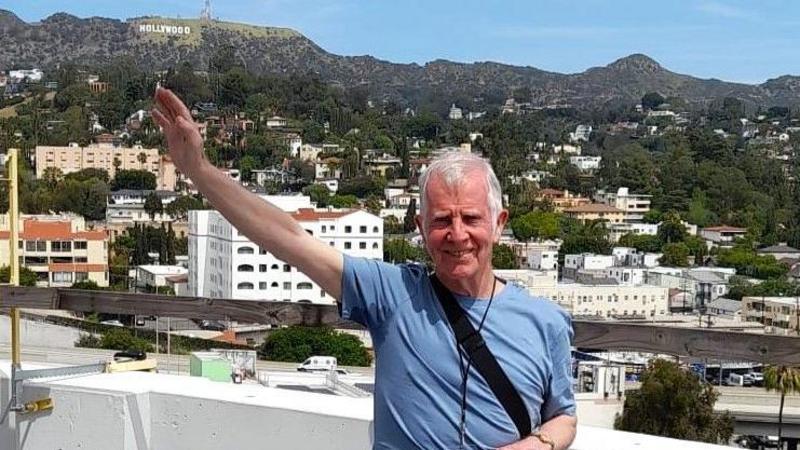
Jimmy Moir, an 82-year-old widower from Dundee, fulfilled a promise to his late wife Gladys by traveling to Los Angeles to visit Capitol Records, where Frank Sinatra recorded music. The trip honored their shared love for Sinatra and was widely shared on social media, gaining national and international attention.
Key Facts
Jimmy and Gladys Moir were married for 62 years before Gladys passed away from cancer in 2023.
Before dying, Gladys asked Jimmy to take their planned trip to Los Angeles.
Capitol Records invited Jimmy to visit after he wrote to them about his dream.
Jimmy traveled 10,000 miles for the trip and visited sites related to Frank Sinatra.
On arrival, Jimmy was given the opportunity to hold Frank Sinatra’s microphone, an emotional moment for him.
A fellow passenger named Jena Goldsack shared Jimmy’s story on social media, which was seen by over six million people.
Jimmy’s trip was covered by American news outlets such as CBS News.
The visit included stops like the Hollywood Walk of Fame and Paramount Studios, places linked to Sinatra.
Read the Original
Want the full story? Tap a source to open the original
article.
The weather in the UK will become calmer this weekend with more sunshine and light winds. While recent days had rain, thunderstorms, and unusual clouds, the weather is expected to stay mostly dry and mild into next week.
Key Facts
Saturday will be mostly dry with some sun, and Sunday will have a lot of sunshine as high pressure builds.
Temperatures will be slightly above average, ranging from 11 to 16 degrees Celsius.
Recent weather included a mix of sunshine, showers, thunderstorms, and rare cloud types called mammatus clouds.
Rainfall this spring varies a lot across the UK, with parts of south-east England being very dry and western Scotland much wetter than usual.
In April so far, eastern and south-east England have received far less rain than normal, while western Scotland has had about twice its usual rain.
The mostly dry and mild weather is expected to last into next week, though some clouds will remain.
Last year had a very dry spring and hot summer, but this year started wetter after a very wet winter.
Read the Original
Want the full story? Tap a source to open the original
article.
Martin Dandridge was attacked and beaten with a hockey stick by horse trainer Richard Evan Rhys Williams while walking his dog in Wales. Williams was sentenced to three years in prison, but Dandridge says the punishment is too light and is asking for a review.
Key Facts
The attack happened in Llancarfan, Vale of Glamorgan, in December 2024.
Martin Dandridge, 72, was walking his dog when Williams, 54, attacked him.
Dandridge suffered a broken arm and continues to have pain and difficulty in his left forearm and hand.
Williams was found guilty of causing serious harm with the intent to injure.
He was sentenced to three years in prison by Cardiff Crown Court.
Dandridge says the sentence is too short and has used the Unduly Lenient Sentence scheme to ask for a review.
The scheme allows the Attorney General's office to request a higher court to reconsider the sentence.
A decision on the review has not yet been made.
Read the Original
Want the full story? Tap a source to open the original
article.
Each summary links back to the original reporting, so you can check the work. Support that, and get the daily digest every morning. Most choose $3.99/month.
President Donald Trump called the war on Iran a "little diversion" while speaking in Las Vegas. He said the conflict, which has resulted in over 2,000 deaths, is going well and should end soon.
Key Facts
The war on Iran has caused more than 2,000 deaths.
President Trump referred to the war as a "little diversion."
He spoke about the conflict during an event in Las Vegas.
President Trump said the situation is "going swimmingly."
He expects the war to end in the near future.
Read the Original
Want the full story? Tap a source to open the original
article.
Shaheen Hashmat left her family at age 12 to avoid a forced marriage and eventually cut all contact with them in her twenties. She describes losing her family as a painful experience that made her question her identity, but over time she rebuilt her life by defining her own values and relationships.
Key Facts
Shaheen Hashmat left her family home at 12 to escape a forced marriage.
She initially stayed in contact with her family but chose estrangement in her twenties.
Cutting ties with family caused her to lose her sense of identity and belonging.
She describes the family break as the worst kind of breakup that led to self-doubt.
Over time, she rebuilt her life by focusing on her own values and relationships.
The story is shared on the BBC podcast "Ready to Talk with Emma Barnett."
The podcast invites listener participation through email, WhatsApp, and voice notes.
Support resources for related issues are provided on the BBC website.
Read the Original
Want the full story? Tap a source to open the original
article.