Pope Leo warned that powerful leaders are causing destruction by spending large amounts of money on wars. The U.S. Senate voted to allow mining near Minnesota's Boundary Waters Canoe Area Wilderness. Police reported that former Virginia Lt. Gov. Justin Fairfax killed his wife and then himself.
Key Facts
Pope Leo criticized world leaders for causing damage through expensive wars.
The U.S. Senate approved lifting a ban on mining upstream from the Boundary Waters Canoe Area Wilderness in Minnesota.
The Boundary Waters Canoe Area Wilderness is a protected natural region in Minnesota.
Police say Justin Fairfax, ex-Lieutenant Governor of Virginia, shot and killed his wife.
Justin Fairfax then took his own life after the shooting.
These events were reported on the same day, Thursday.
Read the Original
Want the full story? Tap a source to open the original
article.
The United States has been blocking Iranian ports for four days. CBS News provided updates on the situation, including military analysis from retired U.S. Navy Admiral James Foggo.
Key Facts
The U.S. is enforcing a blockade on ports in Iran.
The blockade has lasted for four days so far.
CBS News is reporting live updates on this event.
Retired Admiral James Foggo gave expert military insights about the blockade.
The purpose and specific details of the blockade were being covered in the news report.
Read the Original
Want the full story? Tap a source to open the original
article.
President Donald Trump is trying to change public attention away from the ongoing war. At the same time, Israel and Lebanon have agreed to a ceasefire to stop fighting.
Key Facts
President Donald Trump is working to shift focus from the war.
Israel and Lebanon have reached an agreement to stop fighting.
The ceasefire is meant to reduce conflict between the two countries.
The news was reported on CBS Evening News on April 16.
The article highlights both U.S. political moves and international peace efforts.
Read the Original
Want the full story? Tap a source to open the original
article.
Thousands of factory workers in northern India, especially in Noida, have protested for higher wages and better work conditions. The protests grew partly because minimum wages vary across states and have not kept pace with living costs, causing frustration among low-paid, mainly migrant, contract workers.
Key Facts
Protests started with small groups and became large and sometimes violent.
Police used tear gas and arrested over 300 people during protests in Noida.
Most protesting workers are contract laborers in industries like auto parts, electronics, and garments.
Workers earn about 10,000 to 15,000 rupees ($107-$160) per month, with wages unchanged for years.
Migrant workers often live in cramped housing and spend much of their income on basics like rent and food.
Minimum wages in India differ widely by state and skill level and are often not fully enforced.
Following protests, some states raised wages temporarily, but workers feel offers are inadequate.
The protests lack typical union leadership, reflecting broad worker frustration and political tensions.
Read the Original
Want the full story? Tap a source to open the original
article.
Lebanon and Israel agreed to a 10-day ceasefire starting Thursday. This ceasefire was arranged with the help of the United States as part of efforts toward a larger peace agreement involving Iran.
Key Facts
Lebanon and Israel agreed to stop fighting for 10 days.
The United States helped negotiate the ceasefire.
This ceasefire is seen as an important step toward a broader peace deal.
The broader peace deal would include Iran.
The agreement aims to reduce conflict in the region temporarily.
The ceasefire started on a Thursday.
The negotiation highlights U.S. involvement in Middle East peace efforts.
Read the Original
Want the full story? Tap a source to open the original
article.
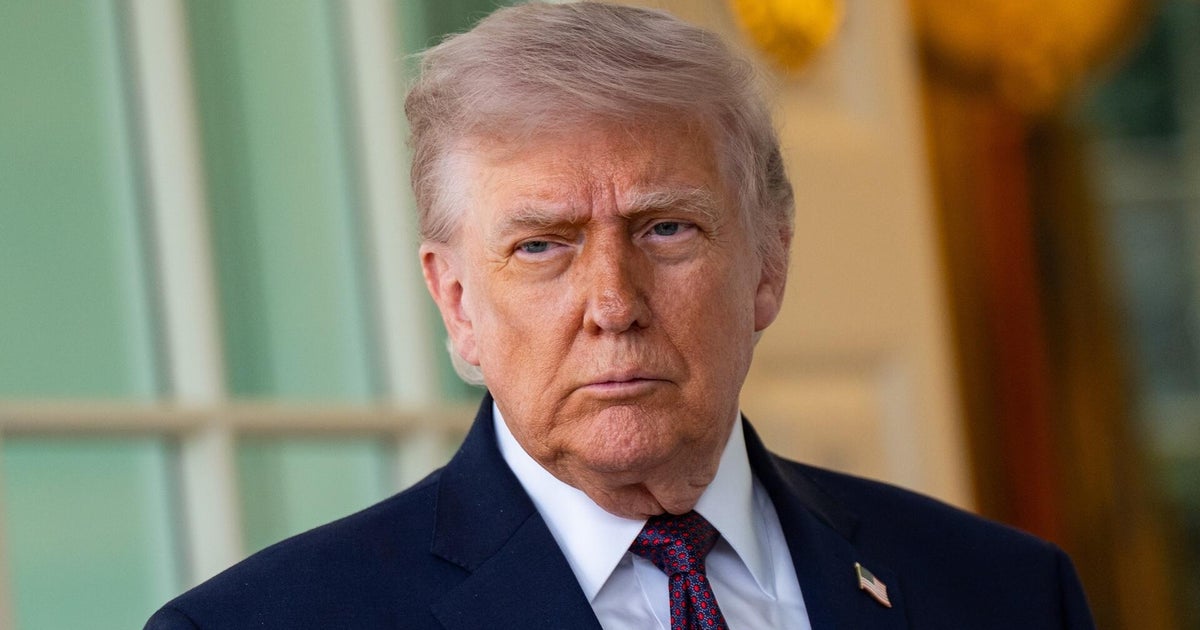
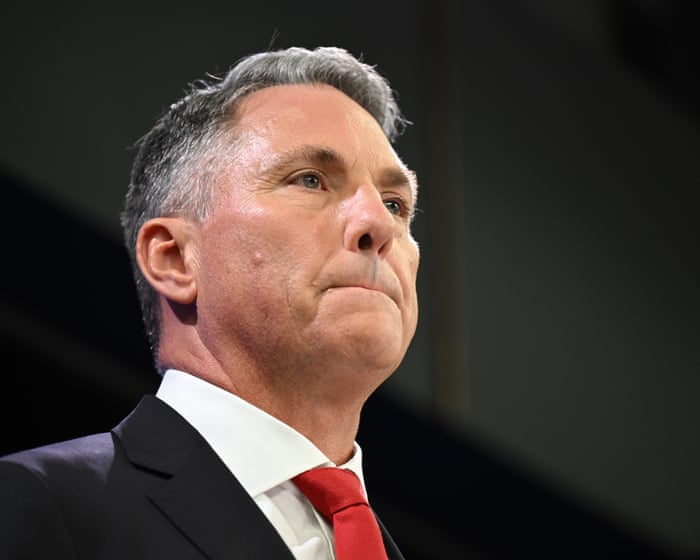
President Donald Trump said he was unhappy with Australia for not supporting the U.S. in the Middle East, specifically around the Strait of Hormuz, although Australia says it received no specific request from the U.S. Prime Minister Anthony Albanese and Defence Minister Richard Marles confirmed no direct request had been made, but Australia is open to helping when needed. Australia currently has forces supporting Gulf states after a specific request from the UAE.
Key Facts
President Trump criticized Australia for not being present when the U.S. asked for help related to the Strait of Hormuz in the Middle East.
Australia’s Prime Minister Anthony Albanese said no new or specific requests were made by the U.S. to Australia.
Defence Minister Richard Marles said Australia had not received a specific request about the Strait of Hormuz but would work with allies when the situation allows.
Australia has an E-7 Wedgetail aircraft operating over Gulf states to help defend the UAE, following a direct request from the UAE.
Planning for any military operation in the Strait of Hormuz depends on changing circumstances and has not yet occurred.
Australia, the U.S., UK, and France are holding talks and will discuss the region at a summit in Paris.
Australia recently announced a $53 billion increase in defence spending over the next decade.
President Trump wants U.S. allies to spend up to 3.5% of their GDP on defense to lessen reliance on the U.S.
Read the Original
Want the full story? Tap a source to open the original
article.
A 10-day ceasefire between Israel and Hezbollah started at midnight in Beirut after six weeks of fighting. Many displaced people in Beirut are hesitant to return home due to destroyed houses and doubts about whether the ceasefire will hold.
Key Facts
The ceasefire began at midnight Beirut time, following fighting since early March.
President Donald Trump announced the ceasefire after talks with Lebanon’s President Joseph Aoun.
Displaced people in Beirut are cautious and some plan to wait before returning home.
Many homes in Beirut’s southern suburbs were heavily damaged or destroyed by Israeli bombings.
Israel intensified attacks on southern Lebanon just before the ceasefire took effect.
Israeli troops are not withdrawing from southern Lebanon during the ceasefire period, according to Prime Minister Netanyahu.
Hezbollah and Israel held their first direct diplomatic talks in decades shortly before the ceasefire.
Many Lebanese affected by the war distrust the government and credit Hezbollah for the ceasefire.
Read the Original
Want the full story? Tap a source to open the original
article.
Sir Olly Robbins, the top civil servant at the UK Foreign Office, is leaving after a decision to overturn a security vetting failure for Peter Mandelson was made without full approval. Mandelson was initially denied clearance required to become the UK ambassador to the US, but officials in the Foreign Office overruled this recommendation, leading to loss of confidence in Robbins.
Key Facts
Sir Olly Robbins was the senior official at the UK Foreign Office in January 2025 when the vetting decision about Peter Mandelson was made.
Peter Mandelson failed a developed vetting process, a confidential background security check needed for sensitive roles.
Despite the failed vetting, Foreign Office officials used a special authority to approve Mandelson’s appointment as US ambassador.
Prime Minister Keir Starmer and Foreign Secretary Yvette Cooper reportedly lost confidence in Robbins after the issue came to light.
Starmer and David Lammy (former foreign secretary) said they did not know about the vetting failure before the news broke.
Robbins had been in his role only three weeks when the veto decision occurred; he previously worked on Brexit negotiations.
The government released statements saying responsibility for the vetting decision lies with the Foreign Office, not political leaders.
The vetting failure and the official override had not been made public until reported by The Guardian, sparking political controversy.
Read the Original
Want the full story? Tap a source to open the original
article.
The Trump administration is asking other countries to support a plan that prioritizes trade instead of foreign aid in global assistance efforts. This plan aims to change how the U.S. spends money helping other countries, but some experts say it goes against U.S. interests and traditional values.
Key Facts
The U.S. wants a "trade over aid" approach at the United Nations.
This means focusing more on trade deals than giving money as aid.
The policy is part of a bigger change in U.S. foreign assistance spending.
Eric Pelofsky from The Rockefeller Foundation says the policy conflicts with U.S. interests and traditions.
The push is led by President Donald Trump’s administration.
The policy is aimed at countries around the world.
The announcement was covered by France 24 with expert commentary.
Read the Original
Want the full story? Tap a source to open the original
article.
Cuban President Miguel Díaz-Canel said Cuba does not want military conflict with the United States but is ready to defend itself if needed. He spoke during a rally marking the 65th anniversary of the Cuban Revolution’s socialist identity amid ongoing tensions and U.S. sanctions affecting Cuba’s economy.
Key Facts
Cuba’s president said the country is prepared to fight if the U.S. tries military aggression.
The rally commemorated 65 years since a key Cuban Revolution speech by Fidel Castro.
The U.S. has imposed an energy and economic embargo on Cuba, worsening its economic crisis.
President Donald Trump called Cuba a failing nation and suggested U.S. focus on Cuba after the Iran conflict.
Trump has previously threatened intervention and tariffs related to Cuba’s oil supply.
U.S. officials demand political change in Cuba for sanctions relief, including releasing political prisoners.
Díaz-Canel called Cuba a "besieged state" facing economic and energy blockades but said it will resist.
Talks between Cuba and the U.S. to reduce tensions have happened but no details were shared.
Read the Original
Want the full story? Tap a source to open the original
article.
Senator Lindsey Graham commented on the recent short-term ceasefire deal between Israel and Lebanon. He expressed cautious support for peace efforts but highlighted concerns about Hezbollah’s role in the conflict.
Key Facts
A short-term ceasefire was agreed upon between Israel and Lebanon.
Senator Lindsey Graham is from South Carolina and is a member of the Republican Party.
He spoke about the ceasefire on the social media platform X.
Graham supports efforts for peace through diplomacy in the Middle East.
He emphasized the need to be realistic about the ongoing conflict situation.
He warned against actions that might help Hezbollah, a group involved in the conflict.
Hezbollah is a political and military organization based in Lebanon.
Read the Original
Want the full story? Tap a source to open the original
article.
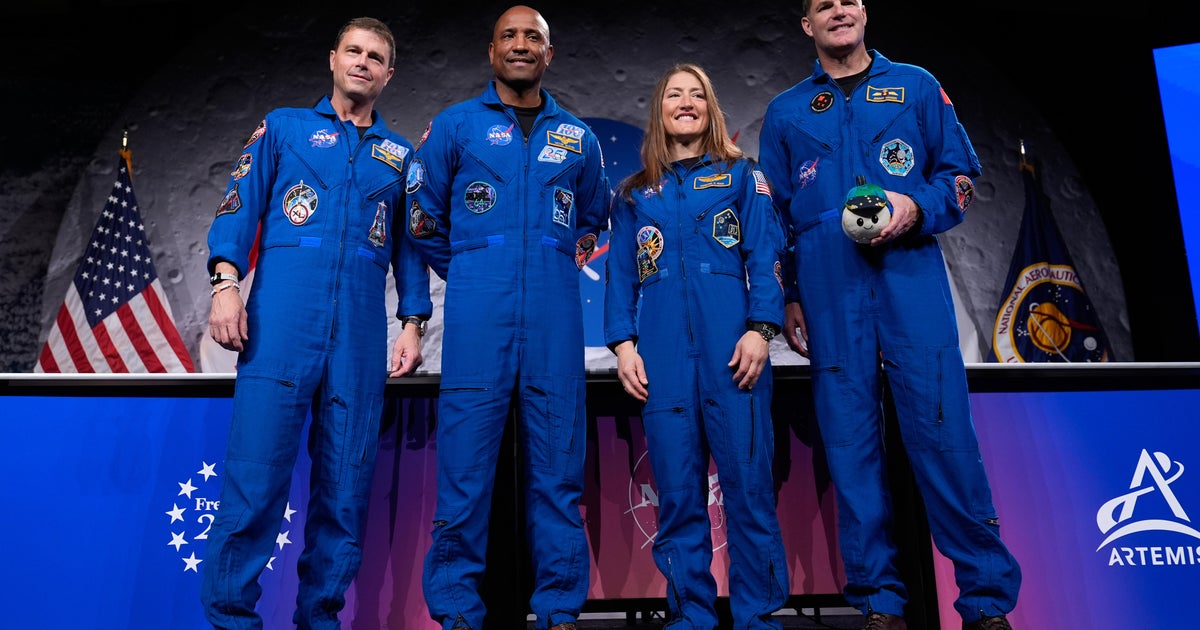
The Artemis II mission, which orbited the Moon, brought four astronauts closer together and inspired people around the world. The crew said the experience showed the power of human unity and the achievement of reaching the Moon is now closer than ever.
Key Facts
Artemis II carried four astronauts around the far side of the Moon in just over nine days.
The crew members were Reid Wiseman, Victor Glover, Christina Koch, and Jeremy Hansen.
Victor Glover was the first Black astronaut to reach deep space.
Christina Koch was the first woman to travel that far from Earth.
Jeremy Hansen was the first Canadian to participate in a deep space mission.
The Orion spacecraft used was named Integrity and launched on NASA’s Space Launch System rocket.
The astronauts felt the mission united people worldwide and gave hope during difficult times.
The crew described deep emotional moments, including witnessing a lunar eclipse from 250,000 miles away.
Read the Original
Want the full story? Tap a source to open the original
article.
There are no ads, so there is no reason to bait you. Readers who chip in keep it that way. Most choose $3.99/month, and get the daily digest every morning.
The four Artemis II astronauts recently returned from a mission flying around the moon, sharing their awe at seeing the moon’s far side and a solar eclipse from space. They described the experience as powerful and almost beyond words, noting the global support for their mission.
Key Facts
The Artemis II crew launched from Kennedy Space Center on April 1, 2026, and returned to Earth on April 10 after orbiting the moon.
The astronauts saw the moon’s far side, which is normally hidden from Earth’s view.
During the mission, they witnessed a solar eclipse where the moon blocked the sun, creating a glowing ring.
Commander Reid Wiseman asked a Navy ship chaplain to visit after landing to help express his emotions from the experience.
Canadian astronaut Jeremy Hansen noted the three-dimensional depth of stars and space visible from the spacecraft.
The crew traveled nearly 700,000 miles on the mission.
After returning, the astronauts underwent medical and physical tests and have not yet had time to fully process their journey.
Read the Original
Want the full story? Tap a source to open the original
article.
The Artemis II astronauts, including three Americans and one Canadian, returned safely to Earth after a nearly 10-day mission flying around the moon. They praised their spacecraft, especially the heat shield, for performing well during the reentry into Earth’s atmosphere.
Key Facts
Artemis II crew members are Reid Wiseman (commander), Victor Glover (pilot), Christina Koch, and Jeremy Hansen from Canada.
The crew launched from Florida on April 1, 2026, and flew around the far side of the moon.
They set a new distance record for human space travelers, further than Apollo 13.
The mission included viewing a total lunar eclipse, never seen before by humans.
Their Orion capsule, called Integrity, splashed down safely in the Pacific Ocean on April 10, 2026.
The astronauts observed only minor wear on the heat shield after reentry, describing it as performing excellently.
The mission is seen as a step toward a crewed moon landing planned within two years and eventually a lunar base.
The press conference was held at NASA’s Johnson Space Center in Houston shortly after their return.
Read the Original
Want the full story? Tap a source to open the original
article.
A senior dog named Isabelle was found near a busy intersection in Las Vegas after being missing for two months. She was taken to a shelter, where staff scanned her microchip, contacted her owner, and later she was adopted quickly after being moved to an adoption center.
Key Facts
Isabelle is a senior dog found near a busy six-lane road in Las Vegas.
A good Samaritan and animal rescue group Hearts Alive Village helped rescue her.
She was missing for two months before being found.
Isabelle’s original owner could no longer care for her due to declining health.
At the shelter, Isabelle showed signs of fear and stress common in kennels.
She stayed at the shelter for eight days before being moved to a PetSmart adoption center.
A woman adopted Isabelle on the same day she arrived at the adoption center.
Isabelle’s story was widely shared on Instagram, gathering over 239,000 views.
Read the Original
Want the full story? Tap a source to open the original
article.
The Artemis II astronauts spoke with reporters after their mission, with Reid Wiseman thanking his crewmates for their teamwork. The article also mentions ongoing international events and updates from various news topics.
Key Facts
The Artemis II crew held a press conference after their spaceflight.
Astronaut Reid Wiseman expressed appreciation for his fellow astronauts.
The event took place on April 16, 2026.
The article includes references to current global news such as a ceasefire between Israel and Lebanon.
Other topics mentioned include US-Iran negotiations and severe weather in the US.
The news also covers various unrelated current events in politics, health, and society.
The article lists multiple live streams and news coverage available on ABC News Live.
President Donald Trump is mentioned regarding statements about the Israel-Lebanon talks and Federal Reserve leadership.
Read the Original
Want the full story? Tap a source to open the original
article.
France and Britain will lead an online meeting with countries willing to help protect the Strait of Hormuz, a key waterway in the Middle East. France’s finance minister said the strait should be open for trade but warned it should not be done at any cost.
Key Facts
France and Britain are organizing a video conference about a defensive mission for the Strait of Hormuz.
The mission aims to keep the Strait of Hormuz open and secure.
The Strait of Hormuz is an important passage for global oil shipping.
France’s finance minister stated the strait must remain open but cautioned against risking too much to do so.
A university expert said this effort shows Europe trying to get involved in a crisis influenced by the US and Israel.
Iran has criticized US actions around the region, calling a blockade of its ports “piracy.”
The situation involves tensions between several countries including Iran, the US, France, and Britain.
Read the Original
Want the full story? Tap a source to open the original
article.
Each summary links back to the original reporting, so you can check the work. Support that, and get the daily digest every morning. Most choose $3.99/month.
Ten people died in a school shooting in Kahramanmaras, Turkiye, on Wednesday. Among the victims were eight students, and many people attended their funerals. This shooting was the second attack at a school in Turkiye within two days.
Key Facts
A school shooting happened in Kahramanmaras, Turkiye.
Ten people were killed in the attack.
Eight of those killed were students.
Hundreds of people attended the funerals for the student victims.
This was the second school shooting in Turkiye in two days.
The incident caused grief and mourning in the community.
Read the Original
Want the full story? Tap a source to open the original
article.
NASA has shared new video footage taken during the launch of the Artemis II mission. The footage comes from cameras installed on the spacecraft and shows the event from start to finish.
Key Facts
NASA released new onboard video from the Artemis II Space Launch System.
The footage shows the launch process of Artemis II.
The cameras used are part of NASA’s Flight Imaging Launch Monitoring Real-time System.
Artemis II is a mission that includes astronauts flying around the Moon.
This video offers a close-up view of the launch from the spacecraft’s perspective.
Read the Original
Want the full story? Tap a source to open the original
article.