Katy Perry has faced several controversies over the years, including recent sexual assault allegations from actress Ruby Rose, which Perry’s team denies. Other disputes involve criticism over her collaborations, public comments, political views, and legal battles relating to property ownership.
Key Facts
Ruby Rose accused Katy Perry of sexually assaulting her about 20 years ago; Perry’s team called the claim false.
Perry joined an all-female Blue Origin space trip in 2025 and faced criticism during economic troubles.
She worked with producer Dr. Luke in her 2024 album despite his controversies from earlier sexual assault allegations.
In 2023, Perry was criticized for a comment perceived as insensitive to a young mother on “American Idol.”
Perry’s public support for Rick Caruso in the 2022 Los Angeles mayoral race caused backlash among fans.
From 2015-2017, Perry was involved in a legal fight over a former convent property in Los Angeles; the court sided with her.
Perry’s controversies include issues with politics, culture, creative choices, and public statements.
Read the Original
Want the full story? Tap a source to open the original
article.
Three people, a 16-year-old boy and two men aged 19 and 21, were arrested after an attempted arson attack at a Persian media office in Wembley, northwest London. The attack involved throwing a lit container at the building, causing no injuries or damage, and the police are investigating without treating it as terrorism.
Key Facts
The incident happened around 8:30 pm local time on Wednesday in Wembley, London.
An ignited container was thrown toward the Persian media office but landed in a car park and the fire quickly went out.
No injuries or damage were reported from the attack.
Police chased a black SUV that left the scene and arrested three suspects after the vehicle crashed.
The suspects are a 16-year-old boy and two men aged 19 and 21.
Nearby buildings were evacuated as a safety measure but reopened soon after.
Police do not believe the attack is linked to other recent arson incidents in north London.
Detectives from Counter Terrorism Policing London are leading the investigation, supported by local officers, but the attack is not being treated as terrorism.
Read the Original
Want the full story? Tap a source to open the original
article.
Lebanese President Joseph Aoun expressed skepticism about President Donald Trump’s announcement of direct talks between Lebanon and Israel. Aoun spoke with Trump and reportedly rejected the idea of a direct call between Lebanon’s and Israel’s leaders.
Key Facts
President Joseph Aoun of Lebanon questioned the idea of direct talks with Israel announced by President Trump.
President Trump made the announcement about direct talks between Beirut and Israel.
Aoun spoke with President Trump on Thursday following this announcement.
Aoun reportedly refused a proposal for a direct phone call with Israeli Prime Minister Benjamin Netanyahu.
The talks relate to broader tensions involving the U.S., Israel, Lebanon, and Iran.
Lebanon and Israel have had long-standing conflicts and no formal diplomatic relations.
The situation is part of wider regional issues involving multiple countries and alliances.
Read the Original
Want the full story? Tap a source to open the original
article.
Satellite images show a fire at an Iranian oil storage tank on Sirri Island in the Persian Gulf. This incident damaged a large tank holding about one million barrels of crude oil, amid ongoing tensions and a U.S. naval blockade in the region.
Key Facts
Satellite photos taken on April 15 show smoke from a fire at Iran’s Sirri Island oil storage facility.
The damaged tank holds about one million barrels, roughly one-fifth of the island’s capacity.
Iran’s oil exports are mainly sent to Chinese refineries and are critical to its economy despite heavy sanctions.
President Donald Trump has avoided targeting Iranian energy sites in the conflict, possibly to stabilize oil prices.
There was a ceasefire declared on April 7, but explosions were still reported at Iranian oil sites afterwards.
The U.S. has imposed a naval blockade in the Persian Gulf, preventing Iranian oil exports and turning away all ships trying to pass.
Iran’s military views the blockade as a violation and threatens to restrict shipping in nearby strategic waterways, including the Red Sea.
Iran says it wants to resolve tensions peacefully through negotiations, as stated by its foreign minister during talks with China.
Read the Original
Want the full story? Tap a source to open the original
article.
French billionaire Vincent Bollore is causing major changes at Grasset, a top French publishing company. Olivier Nora, who led Grasset for 26 years, left recently without explanation, amid reports of a disagreement with Bollore. This situation is similar to controversies in other media businesses Bollore owns.
Key Facts
Vincent Bollore is a French conservative billionaire involved in media.
He controls Grasset, a leading French publishing house.
Olivier Nora headed Grasset for 26 years before leaving suddenly.
Reports suggest Bollore dismissed Nora after a disagreement about a book.
Bollore also owns TV, radio, and newspaper companies in France.
These companies have faced public disputes under Bollore's control.
Bollore is known to have close ties to far-right political figures.
The turmoil at Grasset reflects broader changes in the French media scene caused by Bollore.
Read the Original
Want the full story? Tap a source to open the original
article.
Israel and Lebanon have started peace talks, but future discussions depend on building trust between the two sides. Experts say Lebanon faces challenges from Hezbollah, a group active in politics and the military, and recommend a slow, peaceful approach supported by nation-building and international help.
Key Facts
Israel and Lebanon are engaging in peace negotiations.
Successful future talks depend on "confidence-building measures" to create trust.
Lebanon’s government is committed to reform and opposes outside interference.
Hezbollah is a powerful group involved in political, military, and economic activities in Lebanon.
Experts suggest avoiding violent conflict and promoting gradual, peaceful efforts.
International support is important for Lebanon's nation-building and stability.
The situation remains tense, with recent airstrikes reported in Beirut.
Discussions are part of broader Middle East peace efforts involving external countries.
Read the Original
Want the full story? Tap a source to open the original
article.
Ece Temelkuran, a Turkish author and journalist, wrote a book called "Nation of Strangers" about the experiences of exiles, migrants, and refugees. She talks about what it feels like to lose one's home in many ways and discusses the challenges of writing in a second language as well as concerns about how AI might affect emotional and intellectual expression.
Key Facts
The book "Nation of Strangers" explores the lives of people labeled as outsiders, like migrants and refugees.
Ece Temelkuran reflects on losing a home morally, spiritually, and politically.
She is both an author and a journalist from Turkey.
Writing in a second language presents unique challenges for her.
She believes art can change perspectives in powerful ways.
Temelkuran warns that AI may threaten the space for human emotions and intellectual freedom in the future.
The discussion is part of a culture-focused program on FRANCE 24.
Read the Original
Want the full story? Tap a source to open the original
article.
China rejected U.S. threats to punish countries buying Iranian oil, calling such sanctions illegal without UN approval. The U.S. aims to cut Iran’s oil income through sanctions and a naval blockade in the Strait of Hormuz, a key route for global oil, while talks between the U.S. and Iran over nuclear issues and sanctions continue without agreement.
Key Facts
China opposes U.S. sanctions on Iran that are not approved by the United Nations Security Council.
The U.S. Treasury warned Chinese banks against handling Iranian oil money, threatening further sanctions.
The U.S. and Israel recently carried out military strikes on Iran, followed by a temporary ceasefire.
The Strait of Hormuz, which is vital for about 25% of the world’s shipped oil, is partially blocked due to tensions.
China is the main buyer of Iranian oil, receiving over 80% of Iran’s crude exports despite sanctions.
Iran uses covert methods to sell oil to China, avoiding Western enforcement efforts.
Disruptions in oil supply have caused price increases and worries about global economic growth.
U.S.-Iran talks in Pakistan failed to reach agreement on nuclear limits and sanctions relief.
Read the Original
Want the full story? Tap a source to open the original
article.
Lebanon's President Joseph Aoun will not have a phone call with Israeli Prime Minister Benjamin Netanyahu soon, according to Lebanese officials. This was stated after U.S. President Donald Trump said the leaders of Lebanon and Israel would talk.
Key Facts
Lebanese officials confirmed President Aoun will not call Prime Minister Netanyahu in the near future.
The Lebanese embassy in Washington informed the U.S. government before a call with Secretary of State Marco Rubio that Aoun would not speak to Netanyahu.
President Donald Trump had said the leaders of Lebanon and Israel would have a conversation.
The information was reported by France 24 and Reuters on April 16, 2026.
Israeli officials had previously indicated that Netanyahu would speak with Aoun.
The disagreement highlights ongoing tensions between Lebanon and Israel.
Read the Original
Want the full story? Tap a source to open the original
article.
The French government is asking the US to release Marie-Thérèse Ross, an 85-year-old French woman detained by US Immigration and Customs Enforcement (ICE) since April 1. She moved to the US last year to marry her old love, a US veteran, but was arrested before she received her permanent residency card after her husband's death.
Key Facts
Marie-Thérèse Ross is an 85-year-old French citizen held in a US detention center in Louisiana since April 1, 2026.
She moved to the US last year to marry Billy Ross, a US military veteran she dated in the 1960s and reconnected with decades later.
The couple married in 2025, and Marie-Thérèse applied for a Green Card to live permanently in the US.
Billy Ross died in January 2026 before Marie-Thérèse received her Green Card.
She was arrested by ICE at her home in Alabama and called an “illegal alien” because she did not have her Green Card yet.
French officials are working closely with US authorities to secure her release and ensure she gets proper care.
Her family says she has health problems and needs urgent return to France.
A family dispute over inheritance possibly led to information being given to ICE that contributed to her arrest.
Read the Original
Want the full story? Tap a source to open the original
article.
Thousands of families in Lebanon are leaving their homes because of ongoing war and looking for temporary shelter. The government is unable to provide enough help, so private aid groups are giving support to these displaced people.
Key Facts
Lebanon is experiencing ongoing war that causes many people to become displaced.
Thousands of families have left their homes due to the conflict.
The country is under great strain because of the war.
Government aid for displaced families is limited and insufficient.
Private aid organizations are stepping in to help fill the gap.
These groups provide support and relief to families without homes.
The report was made by FRANCE 24 journalists Abdelkader Dermas and Cyril Payen.
Read the Original
Want the full story? Tap a source to open the original
article.
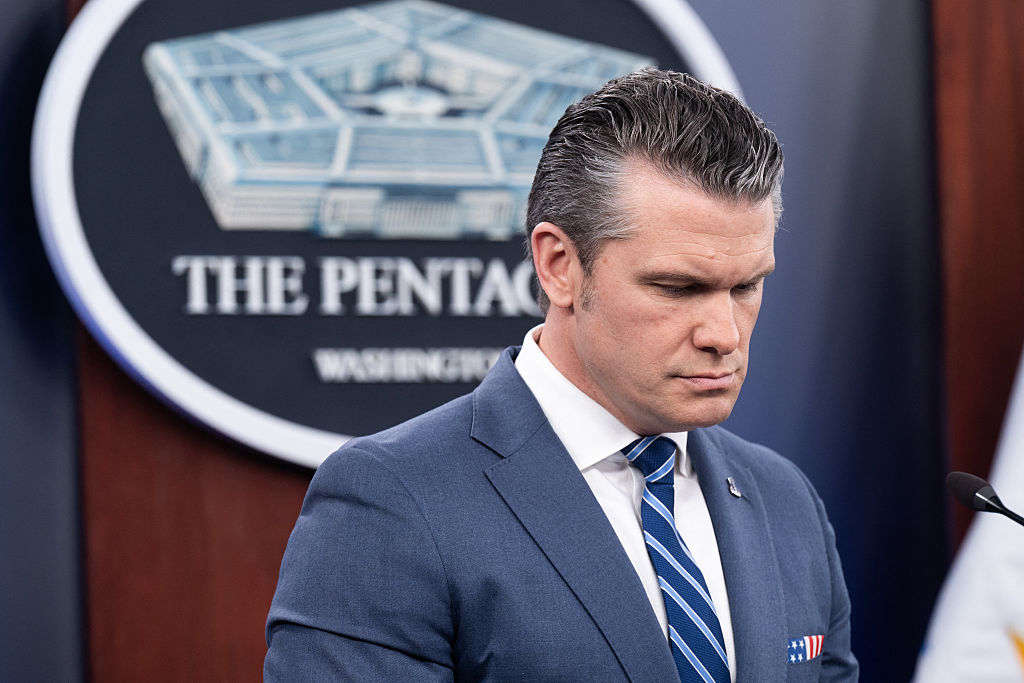
US Defense Secretary Pete Hegseth announced that the United States will block Iranian ports until Iran makes a deal, warning that military strikes could follow if Iran does not comply. He said the blockade and possible attacks would target Iran’s infrastructure, power, and energy sectors.
Key Facts
The US will keep Iranian ports blocked for an indefinite time.
This blockade aims to pressure Iran into reaching an agreement.
Defense Secretary Pete Hegseth spoke at a Pentagon news conference.
If Iran refuses to cooperate, the US warns of bombing key infrastructure.
Targeted areas could include Iran’s power plants and energy facilities.
The announcement suggests a possibility of renewed military action against Iran.
The situation is part of ongoing tensions between the US and Iran.
Other countries, like China, have criticized the US blockade for disrupting oil flow.
Read the Original
Want the full story? Tap a source to open the original
article.
There are no ads, so there is no reason to bait you. Readers who chip in keep it that way. Most choose $3.99/month, and get the daily digest every morning.
Russia has increased limits on the use of VPNs, which are tools that help people hide the websites they visit. This move is part of a broader effort by the government to control online communication and block access to many news sites and social media platforms.
Key Facts
Russia has tightened restrictions on virtual private networks (VPNs).
VPNs let users mask their internet activity and improve privacy.
Many Russians use VPNs to bypass government censorship.
The government blocks critical news websites, Western services, social media, and messaging apps.
This step is part of a larger internet crackdown by Russian authorities.
The new rules aim to increase control over what people can access online.
Independent and state media report on these new restrictions as of April 16, 2026.
Read the Original
Want the full story? Tap a source to open the original
article.
Hungarian Prime Minister Viktor Orbán lost his election after 16 years in power, signaling less support for President Trump's influence among right-wing groups in Europe. Some European right-wing leaders are now distancing themselves from Trump due to his recent policies and actions.
Key Facts
Viktor Orbán conceded defeat in Hungary’s parliamentary election after 16 years as prime minister.
Orbán had close ties with President Donald Trump and welcomed support from Trump’s allies.
Péter Magyar, leader of the Tisza Party, won the election and is seen as conservative but supports the European Union and rule of law.
Vice President JD Vance visited Hungary to back Orbán before the election but was not influential.
Hungary’s economic links with the U.S. are weak compared to ties with the European Union and neighbors.
Some European right-wing leaders, including in Germany and Italy, are now criticizing or distancing themselves from Trump.
Trump’s policies on issues like Iran, NATO, and the EU have caused concern and discomfort among his previous European supporters.
Experts say the Iran war and recent U.S. foreign policies have made Trump less popular with far-right movements in Europe.
Read the Original
Want the full story? Tap a source to open the original
article.
Many people enter rich countries on temporary work visas seeking better jobs, but some end up trapped in abusive work situations. Legal migrants can face forced labor, withheld wages, and loss of freedom because visa rules tie them to one employer, making it hard to leave bad conditions.
Key Facts
Hundreds of thousands of people enter wealthy countries yearly on temporary work visas.
Some migrants experience forced labor, no pay, and long working hours.
Migrants often have their passports taken away and cannot leave their workplace.
Many temporary visa programs require workers to stay with one employer to keep their visa.
Workers may face threats, intimidation, or deportation warnings if they complain.
In the U.S., the H-2A visa program for seasonal farm workers has documented abuses like wage theft and unsafe housing.
Almost half of reported labor trafficking victims in the U.S. on temporary visas were legally present in the country.
Similar exploitation happens in Europe, the Gulf, and other regions that use many temporary migrant workers.
Read the Original
Want the full story? Tap a source to open the original
article.
The Pentagon is focusing heavily on autonomous warfare, which means using machines and technology to fight without human control. A special group called the Departmental Autonomous Warfighting Group will receive a huge budget increase to develop these capabilities.
Key Facts
The Pentagon is investing more in autonomous warfare technology.
Autonomous warfare involves machines operating with little or no human input.
The Departmental Autonomous Warfighting Group is a key part of this plan.
This group's budget is increasing by 24,000 percent.
The funding boost will support research and development in this area.
The goal is to advance military technology for future combat situations.
Read the Original
Want the full story? Tap a source to open the original
article.
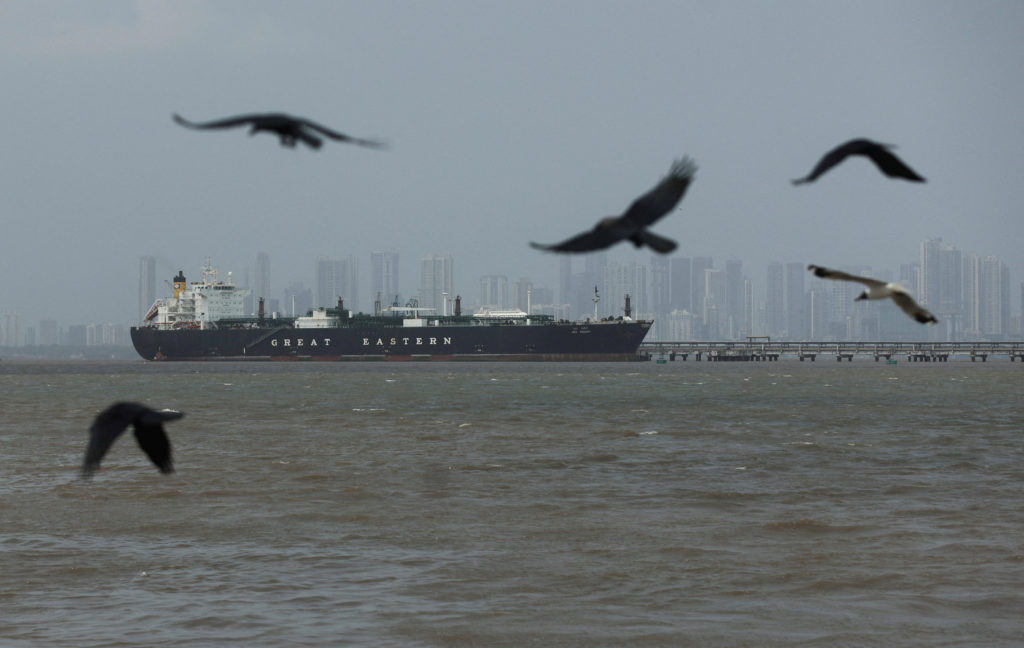
The U.S. Navy has started a sea blockade around Iran to stop ships linked to Iran from carrying goods through the Strait of Hormuz. So far, many vessels have stopped or turned around, and some have tried to hide or fake their locations to avoid the blockade.
Key Facts
The U.S. Navy began the blockade to stop economic trade by sea going in and out of Iran.
The blockade covers the Gulf of Oman beyond the Strait of Hormuz.
The U.S. blocks all ships going to or coming from Iranian ports, regardless of their nationality.
Ships have been forced by U.S. warships to turn back, with no ships passing through since the blockade began.
Some ships have turned off their automatic location signals, a tactic called "running dark," to avoid detection.
Some vessels, like the tanker Rich Starry, have faked their location data to try to sneak past the blockade.
The blockade aims to put economic pressure on Iran amid tensions with the U.S. and Israel.
Shipping companies and analysts say the area is still very risky for ships due to the blockade and ongoing conflicts.
Read the Original
Want the full story? Tap a source to open the original
article.
General Dan Caine, head of the Joint Chiefs of Staff, said that 13 ships decided to turn back and not go through the Strait of Hormuz because of a U.S. blockade. He called this choice by the ship captains a wise decision.
Key Facts
The U.S. has imposed a blockade on the Strait of Hormuz.
Thirteen ships turned around and did not pass through the strait.
General Dan Caine is the Chair of the Joint Chiefs of Staff.
He gave this information during a news briefing.
The ship captains chose not to risk going through the blockade.
The Strait of Hormuz is a key waterway for global shipping.
The blockade affects international maritime traffic in that area.
Read the Original
Want the full story? Tap a source to open the original
article.
A homeowner in the UK found about £75,000 in old British banknotes and personal items hidden under the floor while renovating their house. The cash appears to belong to the previous owners, who owned the home from 1999 to 2022, but the new owner is unsure if they should keep the money or return it.
Key Facts
The homeowner bought the house in 2022 and discovered the cash under the dining room floorboards.
The money totaled around £75,000 in old British banknotes, confirmed as genuine by the homeowner.
The banknotes were from series issued around 2007 or earlier.
The house was last sold in 1999 before the current owner’s purchase, so the cash was likely hidden by the previous owners.
Along with money, personal items like DVDs, glasses, and a branded wallet were also found.
The previous owners were described as an Indian family, and the cash may have been forgotten or hidden without full knowledge.
The homeowner plans to contact the previous owners through a solicitor by mentioning only the personal items, to see if they claim the cash.
Reddit users debated ownership, with some saying the money belongs to the new owner and others suggesting the previous owners should get it back.
Read the Original
Want the full story? Tap a source to open the original
article.
Defense Secretary Pete Hegseth warned Iran that the U.S. may strike its energy infrastructure if it does not agree to a peace deal before a temporary cease-fire ends. The U.S. is maintaining a naval blockade of Iranian ports and is prepared to intercept ships linked to Iran beyond the Middle East.
Key Facts
Hegseth said Iran must decide carefully or face possible U.S. attacks on energy and power sites.
The U.S. naval blockade of Iranian ports will continue until the U.S. decides otherwise.
Targeting civilian infrastructure could be considered a war crime under international law.
U.S. forces in the Pacific might help stop ships supplying Iran, extending the blockade beyond the Persian Gulf.
Iran threatened to stop all trade in large nearby sea areas in response to the blockade.
Iran’s military can still use mines and fast boats in the Strait of Hormuz; its allies have attacked ships in the Red Sea before.
Experts say the blockade might hurt Iran’s economy but may not force big changes or reduce global energy problems.
Pakistan is expected to host a second round of U.S.-Iran peace talks, but no date is set.
Read the Original
Want the full story? Tap a source to open the original
article.