More than 200 Iranian sailors who were stranded in Sri Lanka after their warship was hit by a US torpedo have returned home. The Iranian ship Iris Dena sank near Sri Lanka in early March after the attack, which killed over 100 sailors.
Key Facts
The US torpedo attack on March 4 sank the Iranian warship Iris Dena about 40 km from Sri Lanka’s southern coast.
104 Iranian sailors died in the attack, and 84 bodies were recovered and sent back to Iran by plane.
Sri Lanka took control of another Iranian ship, Irins Bushehr, after it docked due to engine failure.
More than 200 sailors from the two ships stayed in Sri Lanka for over a month before returning home.
Sri Lanka gave the sailors 30-day visas and sheltered them in navy and air force camps.
About 15 sailors stayed in Sri Lanka to operate the Irins Bushehr, which remains anchored off the northeast coast.
The incident happened soon after the US-Israeli war with Iran escalated, leading to Iranian strikes in the Middle East.
Sri Lanka said it stayed neutral and focused on protecting human lives and following international rules.
Read the Original
Want the full story? Tap a source to open the original
article.
Lagos, Nigeria’s largest city, is facing a serious housing crisis as rents rise much faster than wages. Many workers cannot afford to live near their jobs and spend hours commuting from cheaper, distant neighborhoods. The city has a shortage of over 3 million housing units due to rapid population growth.
Key Facts
Lagos has about 22 million people and is Africa’s most populous city after Cairo.
Around 6,000 people move into Lagos daily, while about 3,000 leave each day.
Rents have increased dramatically, with some flats costing up to five times more than two years ago.
The national minimum wage is ₦840,000 per year, which is far less than many rents demand.
Many residents share apartments or live far from work to afford rent.
Some workers commute for 2 to 4 hours each day due to high housing costs near the city center.
Lagos has an estimated housing shortage of more than 3.4 million units.
The housing problem pushes some workers to consider leaving the city or using informal living arrangements.
Read the Original
Want the full story? Tap a source to open the original
article.
The article discusses the importance of a trade route called the Middle Corridor, which passes through the South Caucasus countries of Azerbaijan and Armenia. This route avoids Russia and Iran and is crucial for transporting critical minerals that the U.S. needs for defense and technology. The author argues that the U.S. should support this corridor to ensure stable supply chains and strengthen regional partnerships.
Key Facts
The Middle Corridor is a trade route passing through Azerbaijan and Armenia, avoiding Russian and Iranian territory.
Iran has attacked infrastructure in the region, showing the corridor's strategic vulnerability.
The Strait of Hormuz, a major energy transit route, is currently blocked.
China controls over 90% of global rare earth mineral processing and has restricted exports essential for U.S. defense.
Central Asia, especially Kazakhstan, has large reserves of rare earth minerals and other critical materials like tungsten.
Several Central Asian countries have signed agreements with the U.S. and the EU to develop strategic mineral partnerships.
The Middle Corridor has seen increased cargo traffic and significant international investment since 2022.
Armenia and Azerbaijan are moving toward peace and improved cooperation, which could enhance the corridor’s stability.
Read the Original
Want the full story? Tap a source to open the original
article.
A recent survey shows more Americans have a positive view of China than three years ago, especially among Democrats and younger people. This change happens as President Trump prepares to meet Chinese President Xi Jinping in Beijing to improve ties between the two countries.
Key Facts
27% of Americans now see China in a positive light, up 6 points from last year.
More Democrats view China favorably, with a jump to 34%, the biggest increase since 2009.
Among Republicans, 18% have a positive view, about double last year’s number.
Younger Americans under 50 are more likely to have a favorable opinion of China than those over 50.
Confidence in President Trump’s handling of China has dropped slightly among Republicans, from 78% to 64% in those under 50.
Only 17% of Americans have confidence in President Xi to do the right thing in world affairs, up from 9% earlier this year.
A Gallup poll showed more people internationally approved of China’s leadership than the U.S. last year.
The expected Trump-Xi meeting aims to reduce tensions that have risen over trade, technology, and regional influence.
Read the Original
Want the full story? Tap a source to open the original
article.
An Iranian citizen, Mahdieh Esfandiari, has returned to Iran after being held in France for over a year. Her release is part of a possible prisoner exchange between Iran and France, following the return of two French nationals from Iranian prison.
Key Facts
Mahdieh Esfandiari, an Iranian rights activist, was arrested in France in February last year.
She was sentenced to one year in prison for online comments supporting Palestine and the 2023 Hamas attack on Israel.
Esfandiari was released on bail in October and returned to Iran recently.
French citizens Cecile Kohler and Jacques Paris were held in Iran for more than three years on espionage charges.
Kohler and Paris were freed in November and returned to France in early April after living under house arrest in Tehran.
Their release was described by French President Emmanuel Macron’s office as the result of long-term diplomatic efforts.
Iran’s state agency IRNA indicated the French and Iranian prisoner releases were linked as part of a deal between the two countries.
The recent US-Israel conflict with Iran increased urgency for the negotiations.
Read the Original
Want the full story? Tap a source to open the original
article.
A man did not like wearing his wedding ring because it was uncomfortable. To solve this, his wife shared a video showing that he got a wedding band tattooed on his finger instead of wearing a metal ring.
Key Facts
The man's wife posted an Instagram video explaining that he found his wedding ring uncomfortable.
The husband got a tattoo of a wedding band on his ring finger.
The video got over 1.7 million views on Instagram.
Many people online liked the idea of tattooed wedding rings as a practical alternative.
Some workers avoid metal rings for safety reasons, making tattoos a safer option.
Some couples choose matching tattoo rings instead of traditional rings.
Others still prefer traditional wedding rings and see them as an important symbol.
The wife said marriage is about compromise, which inspired the tattoo solution.
Read the Original
Want the full story? Tap a source to open the original
article.
Romania sent fighter jets to respond to Russian drones flying near its border during attacks on Ukraine. The Romanian military monitored the situation closely but did not report any drones crossing into its airspace.
Key Facts
Romania scrambled two F-16 fighter jets after Russian drones were detected near its border with Ukraine.
The drones were linked to Russian attacks on civilian and infrastructure targets in Ukraine.
The air alerts lasted from early morning until no drones were seen near Romanian airspace.
This was the second consecutive day Romania deployed jets in response to Russian drone activity nearby.
Russian drones have frequently drifted toward or into Romanian territory during the Ukraine conflict.
Romania has a law that allows shooting down drones entering its airspace, but it hasn't used this law yet.
Romania and Ukraine plan to build drones together using EU funding of up to 200 million euros.
Separately, a Russian missile strike killed five people and injured 27 in the Ukrainian city of Dnipro.
Read the Original
Want the full story? Tap a source to open the original
article.
The head of the International Atomic Energy Agency (IAEA) has reported a significant rise in North Korea’s ability to produce nuclear weapons. North Korea has increased activity at several nuclear sites, including Yongbyon, and has built a new facility to enrich uranium, a key material for nuclear bombs.
Key Facts
North Korea is rapidly increasing its nuclear weapons production capabilities.
The country operates multiple uranium enrichment facilities, including the Yongbyon site.
Yongbyon’s reactor, previously shut down after talks, was restarted in 2021.
IAEA reports more activity at Yongbyon’s reactor, reprocessing unit, and light-water reactor.
A new uranium enrichment facility has been built, raising concerns about greater nuclear production.
North Korea has not allowed IAEA inspectors since 2009.
The country is estimated to possess a few dozen nuclear warheads.
The IAEA has no clear evidence that Russia is helping North Korea with its nuclear program, despite some military support between the two countries.
Read the Original
Want the full story? Tap a source to open the original
article.
More Americans have a better opinion of China now than in the past few years, according to a recent Pew survey. The number of people who see China as an enemy has dropped, but most still think of China as a competitor rather than a partner.
Key Facts
Favorable views of China among Americans increased from 14% in 2023 to 27% in early 2026.
The share of Americans who view China as an enemy decreased from 42% in 2024 to 28% in 2026.
Democrats are more likely to view China favorably (34%) than Republicans (18%).
Democrats are less likely than Republicans to call China an enemy (14% vs. 44%).
Confidence in Chinese President Xi Jinping to do the right thing in world affairs rose to 17%, doubling since 2023.
60% of Americans do not trust President Trump’s handling of relations with China.
President Trump is scheduled to visit China next month amid ongoing tensions, including issues related to Iran.
The data comes from a Pew Research Center survey conducted in late March 2026 with over 3,500 U.S. adults.
Read the Original
Want the full story? Tap a source to open the original
article.
Two more men have been charged with murder related to the stabbing death of Finbar Sullivan, a 21-year-old film student, in Primrose Hill, north London. Sullivan died after the attack on April 7, and other suspects have also been charged with related offenses.
Key Facts
Finbar Sullivan, aged 21, was fatally stabbed in Primrose Hill on April 7 around 6:30 pm.
Two men, Alexis Bidace and Ernest Boateng, both 25 years old, have been charged with murder.
Another man, Oliuwadamilola Ogunyankinnu, 27, was earlier charged with murder and will appear at the Old Bailey court.
A fourth man, Khalid Abdulqadir, faces charges including serious injury, violent disorder, and carrying a knife.
Sullivan was found with stab wounds and died at the scene despite treatment by paramedics.
A second man in his 20s was also found with stab wounds but his injuries were not life-threatening.
Sullivan was a film student at the London Screen Academy and had recently faced health challenges.
The police continue to investigate the incident.
Read the Original
Want the full story? Tap a source to open the original
article.
Clavicular, a 20-year-old influencer known in the online "looksmaxxing" community, shared the list of drugs and supplements he is taking. He was reportedly hospitalized on Tuesday night for a suspected overdose.
Key Facts
Clavicular's real name is Braden Peters.
He revealed his drug and supplement regimen during a livestream on February 7.
His regimen includes 220 mg of testosterone, 25 mg of Accutane, 12 mg of Retatrutide, and 10 mg of Nebivolol.
He also takes Melatonin, Melanotan II, L-Glutathione, Nicotinamide adenine dinucleotide (NAD+), and Anavar.
Clavicular is a well-known figure in the "looksmaxxing" community, which focuses on improving appearance through various means.
He was hospitalized due to a suspected overdose on Tuesday night.
The story is ongoing, with more updates expected.
Read the Original
Want the full story? Tap a source to open the original
article.
Lebanon and Israel held the first direct diplomatic talks in more than 30 years in Washington, seeking to start a peace process amid ongoing conflict with Hezbollah. The talks did not produce a deal but were seen as a significant step toward ending the fighting and addressing the humanitarian crisis.
Key Facts
Lebanon and Israel met for direct talks for the first time since 1991.
The talks were held in Washington and lasted about two hours.
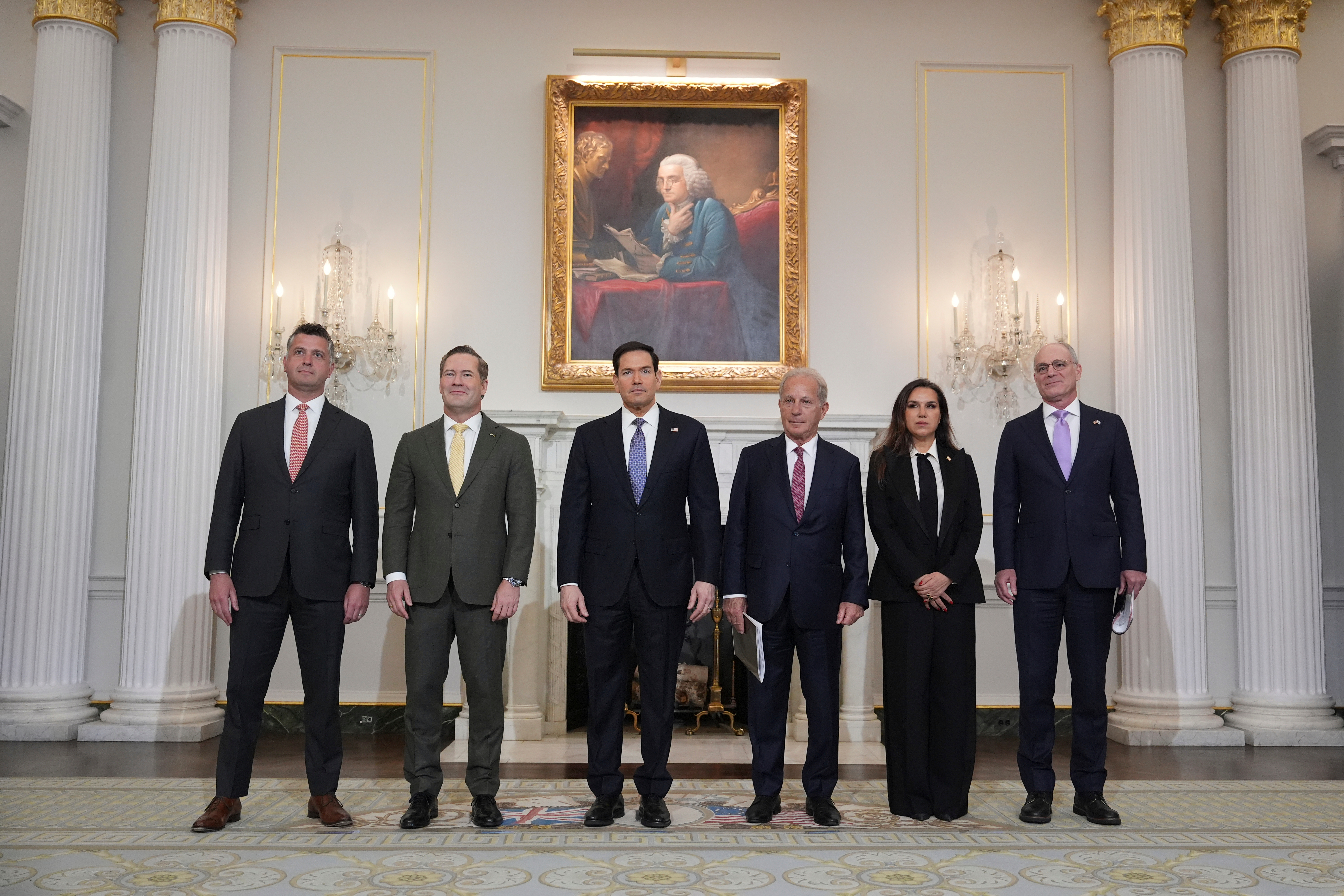
U.S. Secretary of State Marco Rubio called the meeting a historic chance but said no immediate agreement would happen.
Hezbollah, which opposes the talks, was not part of the discussions and continued attacks on northern Israel.
Both Lebanon and Israel discussed stopping hostilities and supporting Lebanon’s full control over its territory.
The recent conflict started after Hezbollah fired rockets into northern Israel following U.S. and Israeli strikes on Iran.
The war has caused over 2,000 deaths in Lebanon and displaced more than a million people.
Despite the heavy fighting and political tensions, the Lebanese government wants peace and humanitarian relief for affected people.
Read the Original
Want the full story? Tap a source to open the original
article.
Staying informed here is free for everyone. If it's worth something to you, pay what you want. Supporters also get the daily digest by email every morning.
Palestinian leader Marwan Barghouti has experienced several violent assaults in Israeli prisons recently, raising concerns about his safety. He is serving multiple life sentences in Israel and has been badly injured during these attacks, according to his lawyer and supporters.
Key Facts
Marwan Barghouti is a prominent Palestinian leader serving five life sentences in Israeli prisons since 2002.
He was reportedly assaulted three times between March and April while held in different Israeli prisons.
In one assault on April 8, Barghouti was severely beaten in Ganot Prison and denied medical care.
Earlier, guards attacked him during a prison transfer and forced him to lie on the floor while a dog attacked him.
Barghouti is seen as a key figure in Palestinian politics and unity across different groups.
Despite harsh treatment, he remains mentally alert and follows events outside prison.
Israel has refused to release him during recent prisoner exchange talks with Hamas.
A new Israeli law allowing the death penalty for certain Palestinians has increased fears for prisoners like Barghouti.
Read the Original
Want the full story? Tap a source to open the original
article.
Three years of civil war in Sudan have caused a severe humanitarian crisis. About 65% of the population needs basic help like food, water, shelter, and medicine, while thousands have died and millions have been forced to leave their homes. Efforts by the world to stop the fighting have not been successful.
Key Facts
Sudan's civil war began three years ago.
The conflict has created the world's worst humanitarian crisis.
Around 65% of Sudan’s people need food, water, shelter, and medicine.
Thousands of people have been killed in the war.
Millions of Sudanese have been forced to leave their homes.
International efforts to end the war have mostly failed.
The fighting continues to cause widespread suffering and displacement.
Read the Original
Want the full story? Tap a source to open the original
article.
Scotland’s Reform party leader, Malcolm Offord, said Scottish Labour’s leader, Anas Sarwar, told him they wanted to work together against the SNP. Sarwar denied this and called Offord’s claim untrue during a TV debate. The debate also covered controversial ads from Reform about asylum seekers and discussions on energy policies.
Key Facts
Malcolm Offord, leader of Reform Scotland, said Anas Sarwar wanted to cooperate against the SNP.
Anas Sarwar strongly denied this claim and said he had no deals with Reform.
The Reform party used a billboard with a small boat and asylum seekers, which caused criticism from other parties.
Sarwar accused Reform of racism and said a Reform candidate had made harsh comments about his children.
Reform’s energy stance supports increased North Sea oil and gas drilling, echoing President Donald Trump’s phrase “drill, baby, drill.”
SNP leader John Swinney criticized Reform’s asylum seeker ad and supported renewable energy development.
Scottish Conservatives supported a mix of energy sources, including oil, gas, and nuclear power.
Liberal Democrats rejected any partnership with Reform and called such talk “dirty tricks.”
Read the Original
Want the full story? Tap a source to open the original
article.
The Lyrid meteor shower, the oldest known recorded meteor shower, will be visible in the UK starting April 16 and will peak on April 22. It is caused by Earth passing through dust from Comet Thatcher, producing 10 to 15 meteors per hour, with occasional bursts of up to 100. Another meteor shower, the Eta Aquarids, will also be active in April and May, created by dust from Halley’s Comet.
Key Facts
The Lyrid meteor shower originates from dust left by Comet Thatcher, which orbits the Sun every 415 years and won’t be visible again until 2283.
The Lyrids were first recorded in 687 BCE by Chinese astronomers, making them the oldest known meteor shower.
The shower usually shows 10 to 15 meteors per hour, but sometimes there can be up to 100 meteors an hour.
Lyrid meteors are bright and colorful; larger pieces create fireballs that can shine brighter than Venus.
Meteors appear to come from the Lyra constellation in the sky.
The Eta Aquarid meteor shower will be active from April 9 to May 28, peaking on May 6, with around 40 meteors per hour.
Eta Aquarids come from dust of Halley’s Comet, which orbits the Sun every 75-76 years and will return in 2061.
Northern Scotland is expected to have the clearest skies for viewing the Lyrids around April 22, with better overall viewing conditions on the weekend.
Read the Original
Want the full story? Tap a source to open the original
article.
The United States, under President Donald Trump, began a blockade of Iranian ports to pressure Iran regarding the Strait of Hormuz, a crucial route for global oil trade. This action raises questions about international law, demands significant U.S. Navy resources, and may disrupt the supply of oil and other goods.
Key Facts
President Donald Trump announced a blockade of Iranian ports starting Monday.
The blockade aims to influence Iran to reopen the Strait of Hormuz, a vital waterway for nearly 20% of the world's traded oil.
Iran had previously restricted tanker traffic through the Strait, allowing only some ships and charging fees.
Enforcing the blockade requires many U.S. Navy ships and clear legal guidelines; currently, about 16 U.S. warships are in the Middle East, but none reported directly in the Persian Gulf.
The U.S. has issued a notice restricting access to Iranian ports, but full enforcement plans are still in development.
International law requires blockades to allow humanitarian aid and to be applied impartially.
The high volume of shipping traffic through the Strait of Hormuz makes the blockade difficult to enforce.
Most merchant ships are expected to comply with the blockade due to the risk posed by U.S. warships.
Read the Original
Want the full story? Tap a source to open the original
article.
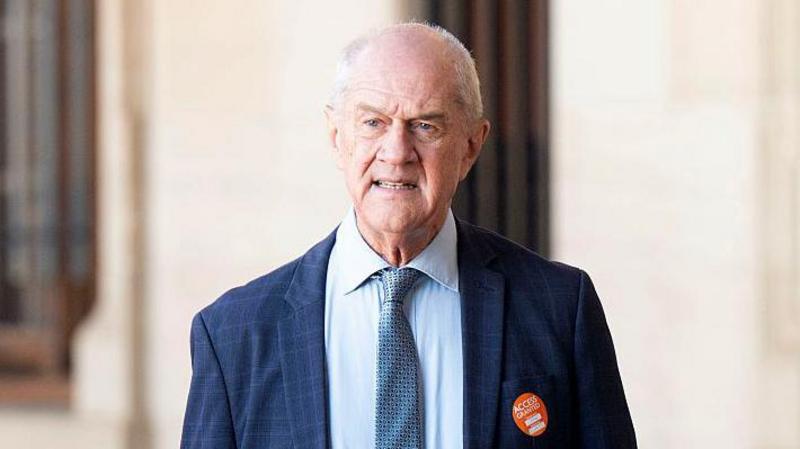
South Africa’s President Cyril Ramaphosa has appointed Roelf Meyer, a former politician from the apartheid era, as the new ambassador to the United States. This comes after a period without a top ambassador due to strained relations following comments made about President Donald Trump.
Key Facts
Roelf Meyer served in South Africa’s government during the apartheid era and helped negotiate its end.
Meyer was the chief representative of the National Party, which introduced apartheid.
He worked with Ramaphosa during talks to end apartheid and later served in the post-apartheid government.
South Africa did not have a top ambassador in the US since Ebrahim Rasool was expelled last year.
Rasool was expelled after accusing President Trump of using "white victimhood" language.
Relations between South Africa and the US worsened after President Trump returned to office last year.
Meyer’s appointment as ambassador is effective immediately.
President Ramaphosa’s spokesperson confirmed the appointment to the BBC.
Read the Original
Want the full story? Tap a source to open the original
article.
Migrant workers in Lebanon are helping displaced people by providing food through community kitchens amid war and bombings, despite facing discrimination and difficult living conditions. The conflict between Hezbollah and Israel has caused many to lose their homes, including many migrants, who often work under harsh labor rules and struggle to find shelter.
Key Facts
Migrant workers, mostly from countries like the Philippines, Sudan, and Ethiopia, are running food kitchens to help displaced people in Lebanon.
Hezbollah fired rockets at Israel on March 2, which led to Israeli military responses causing over one million people to be displaced in Lebanon.
Israeli attacks have caused deaths among migrant workers and destroyed areas with high migrant populations, especially in Beirut’s southern suburbs.
Over 200,000 migrant workers live in Lebanon, many bound by the kafala labor system, which ties workers to local sponsors and can be abusive.
Many migrants have been left homeless due to the war, and shelters often prioritize Lebanese people and discriminate against migrants.
Migrant workers often choose to organize among themselves to support each other in difficult times, with over 100 community houses identified by Doctors Without Borders.
Tres Marias, a community center and kitchen run by Filipino migrant Myra Aragon, feeds about 200 people daily.
Displaced migrants face challenges including social exclusion, restricted access to shelters, and ongoing fear due to the conflict and economic collapse.
Read the Original
Want the full story? Tap a source to open the original
article.
Katey Wiseman shared an emotional post on Instagram about her father, Reid Wiseman, who commanded NASA’s Artemis 2 mission. Artemis 2 was the first crewed mission around the moon since 1972, and the crew safely returned to Earth after traveling a record distance.
Key Facts
Reid Wiseman was the commander of NASA’s Artemis 2 mission.
Artemis 2 launched on April 1, 2026, as the first crewed mission beyond low-Earth orbit in over 50 years.
The crew traveled about 252,760 miles around the moon, breaking the distance record set by Apollo 13 in 1970.
Artemis 2’s crew included Reid Wiseman, Victor Glover, Christina Koch, and Jeremy Hansen from Canada.
The crew proposed naming two lunar craters: one "Carroll" after Reid’s late wife and mother of his daughters, and one "Integrity" after their spacecraft.
Carroll Wiseman was a neonatal intensive-care nurse who died of cancer in 2020.
The crater names are pending approval by the International Astronomical Union (IAU).
Katey thanked all the international teams involved in making the mission possible and safe.
Read the Original
Want the full story? Tap a source to open the original
article.