Hundreds of people in Paris protested against a proposed law that is intended to fight new forms of anti-Semitism. Critics believe this law might limit free speech and prevent pro-Palestinian activism. Over 660,000 people have signed a petition against the law before it is discussed in parliament.
Key Facts
Protesters gathered in Paris to show their opposition to a new anti-Semitism bill.
The proposed law is meant to tackle new forms of anti-Semitism.
Some people think the law could limit free speech.
There is concern that the law might suppress pro-Palestinian activism.
A petition against the bill has gathered over 660,000 signatures.
The French parliament is set to debate the bill soon.
Read the Original
Want the full story? Tap a source to open the original
article.
Mediators from Pakistan, Egypt, and Turkey are working to restart talks between the U.S. and Iran to end a war and make a new deal. President Trump is considering military actions if negotiations don't succeed. Discussions focus on Iran's nuclear program and financial issues.
Key Facts
Mediators from Pakistan, Egypt, and Turkey are involved in U.S.-Iran talks.
The aim is to end a conflict and reach a new agreement.
President Trump may resume military strikes if talks fail.
The U.S. imposed a naval blockade on Iran starting Monday.
Talks have focused on Iran's nuclear activities and financial matters.
The U.S. wants Iran to stop enriching uranium.
Negotiations continue despite challenges, with both sides making proposals.
The focus is on preventing Iran from using the Strait of Hormuz to gain leverage.
Read the Original
Want the full story? Tap a source to open the original
article.
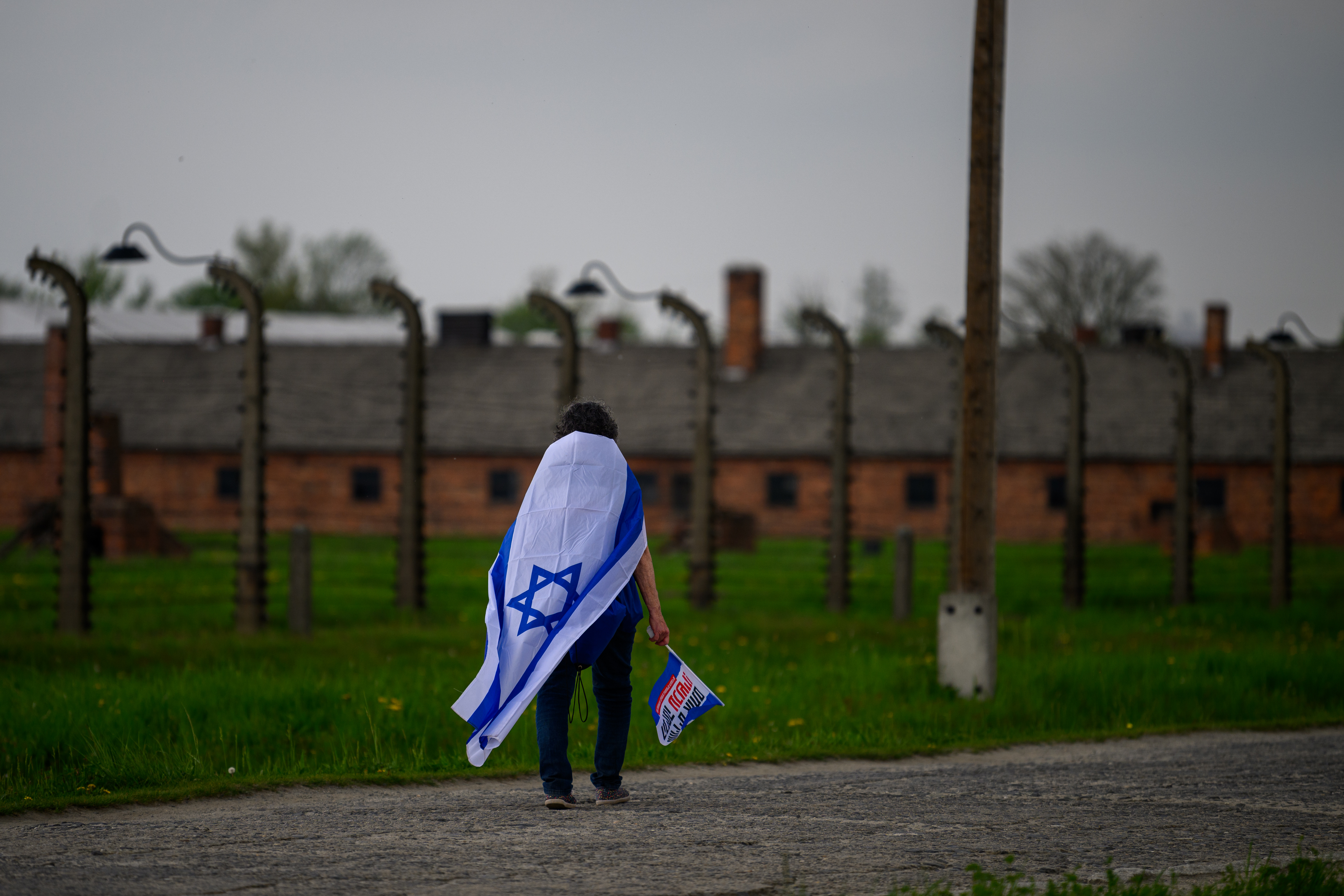
Yom Hashoah, a day for remembering the Holocaust, will be observed in Israel on April 13, 2026. The article discusses how antisemitism and the portrayal of Israel have been influenced by past geopolitical factors, particularly during the Cold War, which linger into the present through media and academic narratives. The Cold War-era views and propaganda about Israel still impact perceptions today.
Key Facts
Yom Hashoah is Israel's Holocaust Remembrance Day, observed on April 13, 2026.
The Cold War affected how countries treated Israel, with increased international condemnation.
In the 1970s, new nations altered the UN's stance, often viewing Israel as a colonial power.
By 1970, the UN had grown to include many countries from Africa, Asia, and the Middle East.
The Soviet Union led campaigns to discredit Israel, linking it with racism and colonialism.
UN Resolution 3379 in 1975 labeled Zionism as racism but was repealed in 1991.
Present-day antisemitism is partly rooted in Cold War-era narratives and is spread by social media.
Soviet propaganda still influences views on Israel, affecting international perspectives.
Read the Original
Want the full story? Tap a source to open the original
article.
Iran's military is criticizing the United States' plans to block ports in the Strait of Hormuz. Iran refers to this action as "piracy" and states that access to these ports should be open to everyone.
Key Facts
Iran's military has opposed the U.S. plan to blockade ports in the Strait of Hormuz.
They describe the U.S. action as "an act of piracy."
The Strait of Hormuz is a vital waterway for global oil shipments.
Iran claims ports should be accessible to everyone or no one at all.
Al Jazeera is reporting on this situation from Tehran.
Read the Original
Want the full story? Tap a source to open the original
article.
Thousands of people in California have been advised to stay indoors due to poor air quality caused by windblown dust. The National Weather Service has warned that the air pollution levels in the Coachella Valley are harmful and people should keep windows and doors closed to minimize exposure.
Key Facts
An air quality alert has been issued for parts of California, especially the Coachella Valley.
The National Weather Service advises staying indoors with windows and doors closed.
The poor air quality is caused by windblown dust.
Pollution levels can change based on weather and local emissions.
Residents are advised not to burn candles, use indoor fires, or run certain appliances that could worsen air quality.
Using air purifiers and reducing car usage are recommended steps to minimize exposure.
People in sensitive groups, like the elderly and those with lung conditions, should be especially cautious.
Particle pollution can be smaller than 2.5 micrometers and can cause health issues if inhaled.
Read the Original
Want the full story? Tap a source to open the original
article.
Last month, Cuba experienced a major power outage affecting 10 million people. During this time, a Russian oil tanker delivered much-needed oil to Cuba while the U.S. continued its blockade, enforced by military presence in the Caribbean. President Trump expressed his intent to "take" Cuba, highlighting ongoing tensions between the U.S. and Cuba.
Key Facts
Cuba had a massive power outage last month that left many people without electricity.
A Russian tanker delivered 730,000 barrels of oil to Cuba, which will last the country only about 10 days.
Another Russian tanker, the Sea Horse, was diverted to Venezuela instead of going to Cuba.
The U.S. maintains a blockade on Cuba with military ships, including a destroyer, in the Caribbean.
President Trump stated he wants to "take" Cuba and feels he can do anything he wants with it.
Marco Rubio, the U.S. Secretary of State, supports strong actions against Cuba.
The U.S. has historically viewed Cuba as influenced by American interests rather than respecting its sovereignty.
Read the Original
Want the full story? Tap a source to open the original
article.
The article tells the story of Sana, a woman living in Tehran during a war between Israel and Iran that started in February 2025. Sana decided to stay in the city despite the bombings, refusing to leave as she did during a previous conflict. She and her roommate, Fatemeh, adjusted to life under frequent airstrikes by relying on deliveries and limited internet access.
Key Facts
Sana is a 27-year-old economics student and risk control analyst living in Tehran.
The war between Israel and Iran began in late February 2025.
On February 28, Tehran experienced its first missile strikes.
Despite pressure from family and friends, Sana chose to stay in the city.
Her roommate's office was near one of the explosions.
The city experienced regular bombings at certain times of the day.
Internet access was very limited, affecting communication and daily life.
Sana and her roommate lived under a constant threat, using supermarket deliveries to avoid going outside.
Read the Original
Want the full story? Tap a source to open the original
article.
A major election result in Hungary has replaced long-time Prime Minister Viktor Orbán with Péter Magyar and his Tisza party. The election result is significant for Europe due to Orbán's close ties with Russian President Putin and impacts on EU politics. President Zelensky of Ukraine welcomed Magyar's victory, signaling potential changes in Hungary's stance on EU and Ukraine matters.
Key Facts
Viktor Orbán, Hungary's Prime Minister for 16 years, lost the election.
Péter Magyar and the Tisza party won, with supporters feeling they regained their country.
Voter turnout for the election was at a record high.
Orbán was known for his close relationship with Russian President Putin.
President Zelensky of Ukraine congratulated Magyar and expressed readiness for cooperation.
Orbán had been delaying EU sanctions against Russia and blocking a large EU loan to Ukraine.
Orbán's exit is seen as a positive change by many European leaders.
Read the Original
Want the full story? Tap a source to open the original
article.
Australia has named Lieutenant General Susan Coyle as the first female chief of the army in its 125-year history. She will take over in July, marking a significant step as the military seeks to increase female leadership amid allegations of harassment and discrimination. This appointment is part of a broader reshuffle in the Australian Defence Force leadership.
Key Facts
Lieutenant General Susan Coyle will become Australia's first female chief of army in July.
She currently serves as the chief of joint capabilities.
Coyle has nearly 40 years of military experience, including roles in Afghanistan and the Middle East.
Her appointment aims to encourage more women to join the Australian Defence Force.
Women make up about 21% of the Australian Defence Forces and 18.5% of senior leadership roles.
The ADF has a goal for women to reach 25% of overall participation by 2030.
Allegations of systemic sexual harassment and discrimination within the ADF have been raised.
The government announced other leadership changes, including appointing Vice Admiral Mark Hammond as the new head of the ADF.
Read the Original
Want the full story? Tap a source to open the original
article.
Oil prices have significantly risen following the US-Israel war on Iran and the effective blockade of the Strait of Hormuz. The conflict has caused a large disruption in global oil supply, leading to higher prices and a noticeable difference between spot prices and futures prices.
Key Facts
Oil prices jumped after the US and Israel began military action against Iran.
President Donald Trump announced a naval blockade on Iran, pushing prices over $103 a barrel.
The physical market and futures market for oil have shown different pricing trends.
Dated Brent is the benchmark for spot prices, while Brent futures reflect longer-term expectations.
Iran’s blockade of the Strait of Hormuz has severely disrupted oil supply, with a daily shortfall of about 8 million barrels.
The gap between spot and futures oil prices has widened since the conflict started.
The Strait of Hormuz normally handles about one-fifth of global oil shipments.
Alternative routes have been increased by countries like Saudi Arabia, but challenges remain.
Read the Original
Want the full story? Tap a source to open the original
article.
Britney Spears has voluntarily entered a rehab facility after being arrested for driving under the influence of alcohol and drugs. Her court appearance for this charge is scheduled for next month in California. Her family and friends are working on a plan to support her recovery and well-being.
Key Facts
Britney Spears entered rehab after an arrest related to driving under the influence.
She will appear in court in California next month for this charge.
Spears was reportedly driving her BMW erratically and at high speed.
She underwent field sobriety tests after being pulled over.
Her representatives expressed that the incident was unacceptable and emphasized the need for positive changes in her life.
Spears' family and friends are creating a plan to support her recovery.
Britney Spears was under a conservatorship from 2008 to 2021.
This legal arrangement allowed her father to manage her life and finances.
Read the Original
Want the full story? Tap a source to open the original
article.
Prime Minister Mark Carney's Liberal Party in Canada is aiming for a slim majority in the House of Commons through three by-elections. These elections are crucial for gaining more control without needing opposition support. Carney's strategy includes attracting members from other parties to strengthen his position.
Key Facts
The Liberals need one more seat to reach a majority in Canada's House of Commons.
Three important by-elections are happening, two in Toronto and one near Montreal.
The Liberal Party expects to win the two Toronto seats.
In Terrebonne, a Montreal suburb, the race is close between the Liberals and the Bloc Quebecois.
The Liberals already gained support from five legislators who switched parties.
Mark Carney became Prime Minister a year ago and has shifted some policies to attract more conservative politicians.
The Conservative Party accuses the Liberals of making deals to gain more seats, calling it undemocratic.
Opinion polls show Carney and the Liberals leading the Conservatives by 10 to 15 points.
Read the Original
Want the full story? Tap a source to open the original
article.
Staying informed here is free for everyone. If it's worth something to you, pay what you want. Supporters also get the daily digest by email every morning.
The National Weather Service has issued warnings for heavy snow in five U.S. states, with up to 20 inches expected. This snowstorm may make travel very difficult or impossible from Monday or Tuesday. The affected states include parts of Alaska, Oregon, Washington, Utah, and California.
Key Facts
The National Weather Service has issued heavy snow warnings for parts of Alaska, Oregon, Washington, Utah, and California.
Some areas could see up to 20 inches of snow, creating potentially impassable travel conditions.
Alaska's Upper Tanana Valley may experience 6 to 12 inches of snow with strong winds along the Alaska Highway.
Oregon's eastern and southern Cascades could receive up to 15 inches of snow with winds up to 45 mph.
Washington's Cascades in specified counties could get up to 20 inches of snow and gusts reaching 35 mph.
Utah's central and southern mountains might receive 8 to 12 inches of snow.
California's mountainous regions are expected to see up to 6 inches of "wet snow" and winds up to 40 mph.
Read the Original
Want the full story? Tap a source to open the original
article.
Viktor Orbán, Hungary's leader, lost the election to a pro-EU challenger. President Donald Trump's plan in Europe had relied on Orbán, so this result impacts Trump's strategy. Orbán's defeat shows the limits of Trump's political influence in Europe.
Key Facts
Viktor Orbán, Hungary's leader for 16 years, lost the election to a center-right, pro-EU challenger.
President Trump viewed Orbán as a key part of his strategy to build alliances with nationalist leaders in Europe.
Orbán's loss signals challenges for Trump's "MAGA-style" nationalism beyond the U.S.
Trump endorsed Orbán in the election, but this did not help Orbán win.
With Orbán out, the EU may find it easier to make decisions, especially about Ukraine and sanctions.
Trump loses an ally in Europe who could previously block or slow EU actions.
The result may affect Trump's idea of building strong bilateral relationships in Europe.
Read the Original
Want the full story? Tap a source to open the original
article.
President Donald Trump criticized Pope Leo for opposing U.S. immigration policy and the war in Iran. In a social media post, Trump called the Pope "weak on crime" and criticized his stance on foreign policy. Pope Leo, who has been vocal about reducing conflict in the Middle East, urged a peaceful approach to the situation in Iran.
Key Facts
President Trump attacked Pope Leo on Truth Social over his views on U.S. immigration and the Iran war.
Trump described the Pope as "weak on crime" and criticized his foreign policy views.
Pope Leo criticized Trump's threat to Iran and called for ending the conflict peacefully.
Pope Leo questioned if Trump's immigration policy matched the Catholic Church's pro-life stance.
Trump's comments came as Pope Leo was starting an 11-day trip to Africa.
Trump suggested the Pope was only elected because he is American.
Trump's remarks drew criticism from Catholics, comparing them to historical conflicts with the Papacy.
Pope Leo has consistently called for de-escalation in the Middle East.
Read the Original
Want the full story? Tap a source to open the original
article.
People in Budapest celebrated after Peter Magyar won the election against Prime Minister Viktor Orban, who had been in power for 16 years. This marks a significant change in Hungary's political leadership.
Key Facts
Peter Magyar won the election in Hungary.
Viktor Orban had been the Prime Minister for 16 years.
Magyar's party gained a strong lead in the election.
There were celebrations in Budapest following the election results.
People sang on trains and celebrated in the streets.
The election marks a major shift in Hungary's political scene.
Read the Original
Want the full story? Tap a source to open the original
article.
Pope Leo XIV begins an 11-day tour across four African countries, focusing on fostering relationships between Christians and Muslims and addressing various social issues. The tour includes visits to Algeria, Cameroon, Angola, and Equatorial Guinea, where he will deliver 25 speeches. Africa has a significant Catholic population, and the pope's visit aims to build better interfaith connections and discuss important topics affecting the region.
Key Facts
Pope Leo XIV starts an 11-day visit to four African countries: Algeria, Cameroon, Angola, and Equatorial Guinea.
The pope will travel 18,000km (11,185 miles) on this tour, covering 18 flights and visiting 11 cities and towns.
Africa is home to over 20% of the world's Catholics, with high Catholic populations in Cameroon, Angola, and Equatorial Guinea.
Algeria, predominantly Muslim, hosts a pope for the first time, with around 10,000 Catholics in its 48 million population.
Pope Leo will give 25 speeches, touching on topics like natural resource exploitation, Catholic-Muslim dialogue, and political corruption.
The pope plans to visit the Great Mosque of Algiers and the Basilica of Our Lady of Africa in Algeria.
The biggest event is expected in Douala, Cameroon, with an anticipated mass attendance of 600,000 people.
The tour highlights Africa’s growing role in Catholicism, with significant new members and contributions to clergy and religious orders.
Read the Original
Want the full story? Tap a source to open the original
article.
The U.S. military plans to start blocking Iranian ports and the Strait of Hormuz after President Donald Trump's announcement. This follows failed peace talks between the U.S. and Iran in Islamabad. The move has pushed oil prices higher and increased tensions between the countries.
Key Facts
The U.S. will start a blockade of all Iranian ports at 14:00 GMT on Monday.
President Trump announced the blockade of the Strait of Hormuz, a key route for global oil supply.
Talks between the U.S. and Iran ended without a peace deal.
Oil prices rose above $100 a barrel after the announcement.
The Iranian military warned it would handle any military vessel threatening the strait harshly.
The U.S. military stated it would only stop ships heading to or from Iran in the strait.
President Trump stated the U.S. forces would intercept vessels paying Iran for passage.
Iran claimed control over the Strait of Hormuz and criticized Trump's decision.
Read the Original
Want the full story? Tap a source to open the original
article.
That's the point of this site, and readers keep it that way. Support for any amount and the daily digest lands in your inbox every morning at 7am Eastern.
Israel's ambassador to the United States, Yechiel Leiter, had a historic phone call with the Lebanese ambassador, marking a break from tradition since Israel and Lebanon don't have formal ties. They discussed starting official peace talks, with meetings planned for next week, despite ongoing conflicts involving Hezbollah.
Key Facts
Yechiel Leiter is Israel's ambassador to the U.S. and had a first-ever call with his Lebanese counterpart, Nada Hamadeh Moawad.
Israel and Lebanon do not have formal diplomatic relations.
Global pressure is on Israel to end its military campaign in Lebanon, which has resulted in over 2,000 deaths and more than one million displaced people.
Leiter has a background in Israeli politics and has been involved in controversial matters due to his far-right affiliations.
Official peace talks between Israel and Lebanon are set to begin next Tuesday, as confirmed by Leiter.
Israel refuses to negotiate a ceasefire with Hezbollah, blaming it for ongoing conflicts.
Hezbollah opposes direct talks between Israel and Lebanon.
Leiter, born in the U.S., has held various roles in the Israeli government and became ambassador to the U.S. in January 2025.
Read the Original
Want the full story? Tap a source to open the original
article.
President Donald Trump announced that the United States would start a naval blockade on ships entering or leaving Iranian ports starting at 10 a.m. ET on Monday. This move follows the collapse of peace talks with Iran in Pakistan. The blockade is intended to be enforced without bias against vessels from any nation, although Iran has warned of severe action against military vessels approaching the Strait of Hormuz.
Key Facts
President Trump announced a naval blockade on Iranian ports starting Monday, 10 a.m. ET.
The blockade comes after peace talks with Iran broke down in Pakistan.
The U.S. Central Command stated the blockade would apply to all countries' vessels impartially.
Free navigation will continue for vessels passing through the Strait of Hormuz to non-Iranian ports.
Iran’s Revolutionary Guards warned that military ships near the strait would face strong action.
The announcement caused oil prices to rise, with U.S. crude oil increasing by 8% and Brent crude by 7%.
Read the Original
Want the full story? Tap a source to open the original
article.