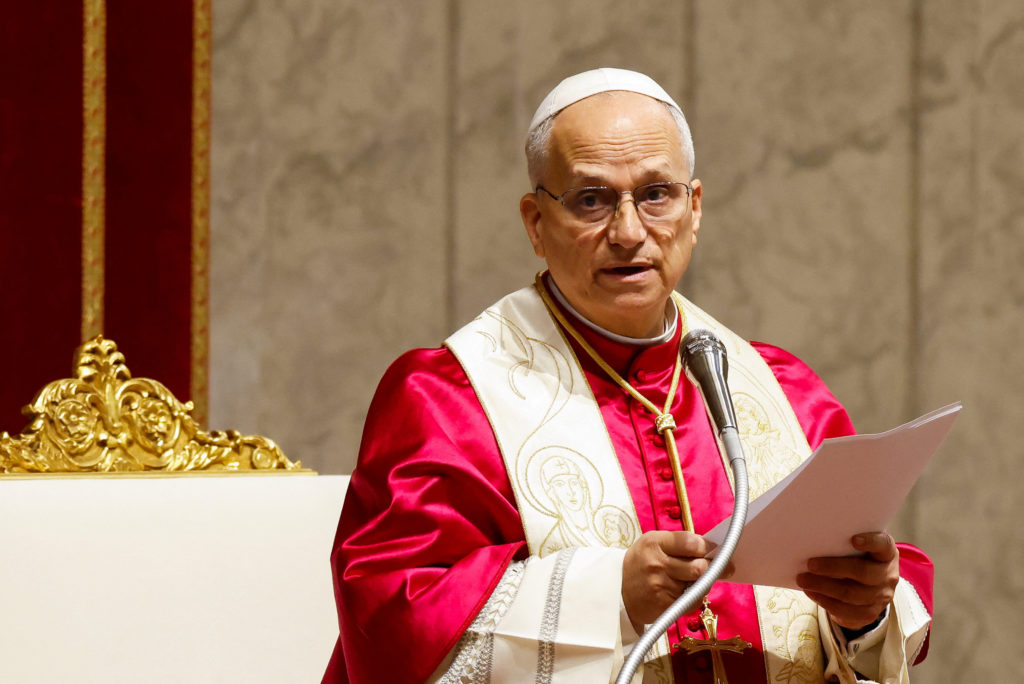
Pope Leo XIV criticized the "delusion of omnipotence" driving the U.S.-Israel war in Iran and called for peace talks. He made these remarks during a prayer service in Rome as U.S. and Iranian officials began negotiations in Pakistan. Pope Leo urged leaders to abandon displays of power and focus on dialogue instead of war.
Key Facts
Pope Leo XIV spoke against what he called the "delusion of omnipotence" fueling the U.S.-Israel war in Iran.
He called for peace and negotiation during a prayer service at St. Peter's Basilica.
The United States and Iran started direct talks in Pakistan on the same day.
Pope Leo's comments seemed directed at the U.S., though he did not mention them specifically.
The Pope criticized President Trump's past threats and military superiority claims.
Pope Leo encouraged everyone to pray for peace and reject the use of religion to justify war.
The Vatican is worried about the impact on Christian communities from Israel's conflict with Hezbollah in Lebanon.
Read the Original
Want the full story? Tap a source to open the original
article.
President Donald Trump announced that U.S. forces are starting to clear the Strait of Hormuz of Iranian sea mines, which has been affecting global oil shipments. CENTCOM confirmed that two U.S. Navy ships have begun the operation. Meanwhile, high-level talks between the U.S. and Iran took place in Pakistan to address ongoing tensions.
Key Facts
President Trump said U.S. forces are clearing sea mines from the Strait of Hormuz.
The Strait of Hormuz is important for a large part of the world's oil and gas shipments.
CENTCOM confirmed that two Navy guided-missile destroyers have started clearing mines.
The U.S. and Iran held high-level talks in Islamabad, Pakistan, during these developments.
The talks are the highest-level U.S.-Iran discussions since 1979.
Iran recently mined the strait, affecting global oil prices and U.S. gasoline prices.
Additional U.S. forces, including underwater drones, are expected to join the mine-clearing effort.
Iranian state TV denied the U.S. operation, labeling reports as "false news," while some commercial ships exited the Gulf.
Read the Original
Want the full story? Tap a source to open the original
article.
An Iranian rabbi named Younes Hamami Lalehzar reported that an Israeli strike destroyed one of Tehran's synagogues on April 7. The synagogue was among the few present in Tehran.
Key Facts
Younes Hamami Lalehzar is both an Iranian rabbi and a physician.
He was informed about the destruction of the synagogue.
The synagogue was located in Tehran, Iran.
The destruction occurred due to an Israeli strike.
This incident happened on April 7.
Read the Original
Want the full story? Tap a source to open the original
article.
Overnight Israeli air strikes in central Gaza resulted in the deaths of seven people. Since a ceasefire six months ago, Israeli actions in Gaza have led to the deaths of at least 738 people and injuries to over 2,000 others.
Key Facts
Overnight Israeli air strikes in central Gaza killed seven people.
The strikes took place near Al-Aqsa Martyrs Hospital.
Since the ceasefire six months ago, at least 738 people have died in Gaza due to Israeli actions.
Over 2,000 people have been injured in Gaza since the ceasefire.
Families gathered outside the hospital to mourn loved ones.
Read the Original
Want the full story? Tap a source to open the original
article.
More than 200 people were arrested in London during a protest against the ban on Palestine Action, which is a group the government considers illegal. The protest took place in Trafalgar Square, and signs supporting the group were seen. The ban remains under legal review, but police continue to enforce it.
Key Facts
Over 200 arrests were made at the protest against the ban on Palestine Action in London.
The protest was held in Trafalgar Square, where people carried signs supporting Palestine Action.
Supporting Palestine Action has been illegal since July 2025 under anti-terror laws.
The ban on Palestine Action was ruled unlawful in February, but it is still in place while waiting for an appeal.
The Metropolitan Police warned that supporting a banned group is illegal under the Terrorism Act.
Since the ban, over 2,200 people have been arrested for allegedly supporting Palestine Action.
The legal cases for those arrested are on hold as the legality of the ban is being contested in court.
The Met Police continues to arrest protesters showing support for Palestine Action even after the High Court ruling.
Read the Original
Want the full story? Tap a source to open the original
article.
People in Madrid held a vigil to remember those who died in Israeli airstrikes on Lebanon. These events happened just after a ceasefire between the US and Iran was announced. Lebanon's Health Ministry reported that 357 people died in the strikes.
Key Facts
A vigil took place in Madrid to honor victims of Israeli airstrikes on Lebanon.
The strikes resulted in 357 deaths, based on information from Lebanon's Health Ministry.
The vigil happened a day after a ceasefire was announced between the US and Iran.
The event was a gathering to show support and remembrance for those affected by the airstrikes.
The situation involved both local and international diplomatic developments.
Read the Original
Want the full story? Tap a source to open the original
article.
A ceasefire has paused fighting in Iran, allowing more people in Tehran to return to work. However, economic challenges persist, with high inflation and severe internet restrictions disrupting business and daily life.
Key Facts
A ceasefire has temporarily stopped the fighting involving the United States and Israel in Iran.
Shops in Tehran's Grand Bazaar have opened for longer hours since the ceasefire.
Despite the pause in fighting, sales remain low compared to pre-war levels.
Inflation has significantly increased prices, with some goods now 20-30% more expensive.
Iran has had two major internet shutdowns this year, affecting businesses and online activities.
The government cites security for continued internet restrictions but offers limited support to digital businesses.
Iranian citizens face challenges accessing global internet platforms, impacting communication and business operations.
Read the Original
Want the full story? Tap a source to open the original
article.
Iraq's parliament has elected Nizar Amedi as the new president, ending a political stalemate. He was nominated by the Patriotic Union of Kurdistan and won against his competitor, Muthanna Amin Nader. Amedi now has the task of working with Iraq's government branches to overcome challenges facing the country.
Key Facts
Nizar Amedi has been elected as Iraq's new president.
He received 227 votes, while his opponent, Muthanna Amin Nader, got 15 votes.
Amedi was nominated by the Patriotic Union of Kurdistan (PUK).
He is Iraq's sixth president since Saddam Hussein's removal in 2003.
Amedi has 15 days to task the nominee of the largest parliamentary bloc to form a cabinet.
Under Iraq's sectarian power-sharing, the prime minister must be a Shia Muslim.
The Coordination Framework, a group of Iran-aligned parties, plans to nominate Nouri al-Maliki for prime minister.
President Trump threatened to withdraw U.S. support if al-Maliki forms a government.
Read the Original
Want the full story? Tap a source to open the original
article.
The United States and Iran are having direct talks in Islamabad for the first time since 1979. The discussions might be influenced by Iran's control over the Strait of Hormuz and the outcome of separate talks between Israel and Lebanon.
Key Facts
The US and Iran are holding direct talks in Islamabad.
These are the first direct talks between the US and Iran since 1979.
The discussions may be affected by Iran's control of the Strait of Hormuz.
The Strait of Hormuz is a crucial waterway for global oil shipments.
The outcome of talks between Israel and Lebanon may also impact these discussions.
Read the Original
Want the full story? Tap a source to open the original
article.
Protesters in Northern Ireland joined a slow convoy to protest rising fuel costs, in solidarity with protesters in the Republic of Ireland where fuel shortages have occurred due to similar protests. The convoy included various vehicles and aimed to raise awareness about how increasing fuel and living costs are affecting ordinary people.
Key Facts
A slow-moving convoy protested rising fuel costs in Northern Ireland.
The protest showed support for similar protests in the Republic of Ireland, where fuel shortages have been reported.
The convoy included different vehicles such as vans, lorries, tractors, and a limousine.
Protesters expressed frustration with high fuel costs and the overall cost of living.
Michael McLaughlin, one of the organizers, emphasized the financial struggle faced by everyday workers.
Paddy McLaughlin, a local business owner, stated his fuel costs rose by over £5,000 in the past month.
The Police Service of Northern Ireland monitored the protest to ensure public safety.
Signs at the protest called for reductions in fuel bills.
Read the Original
Want the full story? Tap a source to open the original
article.
After Russia announced a ceasefire for the Orthodox Easter holiday, Ukraine reported that Russian drone attacks continued, raising doubts about the truce's effectiveness. Ukrainian officials mentioned ongoing drone strikes despite the pause announced by Russia, while both countries participated in a prisoner exchange.
Key Facts
Russia declared a 32-hour ceasefire for Orthodox Easter starting Saturday.
Ukraine reported continued Russian drone strikes despite the ceasefire.
Ukrainian President Zelenskyy agreed to the ceasefire but warned of retaliation if violated.
Russia and Ukraine completed a prisoner exchange, with 175 Russian soldiers and several Ukrainian captives returning home.
Before the ceasefire began, Russian drone strikes in Odesa killed two people.
Russia claims to have shot down 99 Ukrainian drones overnight.
Previous ceasefires have often seen violations from both sides.
The ceasefire was described by the Kremlin as a humanitarian gesture, although no permanent peace agreement has been reached.
Read the Original
Want the full story? Tap a source to open the original
article.
A temporary ceasefire between Russia and Ukraine started to align with Orthodox Easter celebrations. The ceasefire is intended to last 32 hours, but skepticism exists due to previous violations during past truces. Despite ongoing tensions, both countries exchanged prisoners of war during the ceasefire period.
Key Facts
The ceasefire is set from 4:00 pm Saturday to midnight Sunday, local time.
President Putin ordered the ceasefire to coincide with Orthodox Easter.
President Zelenskyy stated Ukraine would honor the ceasefire if Russia does too.
There were drone attacks before the truce, causing casualties in Ukraine.
Ukrainian army is on alert to respond if the ceasefire is violated.
Previous Easter ceasefires have seen accusations of violations by both sides.
Ukraine and Russia exchanged 175 prisoners of war each during the ceasefire.
The United Arab Emirates assisted in the POW exchange process.
Read the Original
Want the full story? Tap a source to open the original
article.
A woman running on a path in Superior, Colorado, was struck by lightning and is in critical condition. Authorities identified her after two days with the help of public tips, since she had no identification with her. Colorado frequently experiences dangerous thunderstorms, contributing to higher lightning-related fatalities.
Key Facts
A woman was struck by lightning in Superior, Colorado, while running on a path.
She was found with no initial pulse and not breathing; bystanders began CPR.
First responders resuscitated her, reviving her breathing and pulse.
She is currently in critical condition at a Denver-area hospital.
Authorities sought public help to identify her due to lack of ID and damaged cellphone.
The Boulder County Sheriff's Office posted a public appeal, leading to her identification.
About 60 lightning strikes occurred in Boulder County around the incident.
Colorado often has higher lightning fatality rates compared to many other states.
Read the Original
Want the full story? Tap a source to open the original
article.
The US and Iran have started direct peace talks in Pakistan, with discussions focusing on improving relations. Additionally, NASA's Artemis II crew has returned to Earth after their mission.
Key Facts
The US and Iran are holding direct peace talks in Pakistan.
The talks involve three countries: the US, Iran, and Pakistan.
The focus of the talks is to improve relations between the US and Iran.
NASA's Artemis II mission crew has returned from space.
Artemis II is part of NASA's efforts to explore space further.
Tim Peake, a British astronaut, discussed the experience of returning from space.
Read the Original
Want the full story? Tap a source to open the original
article.
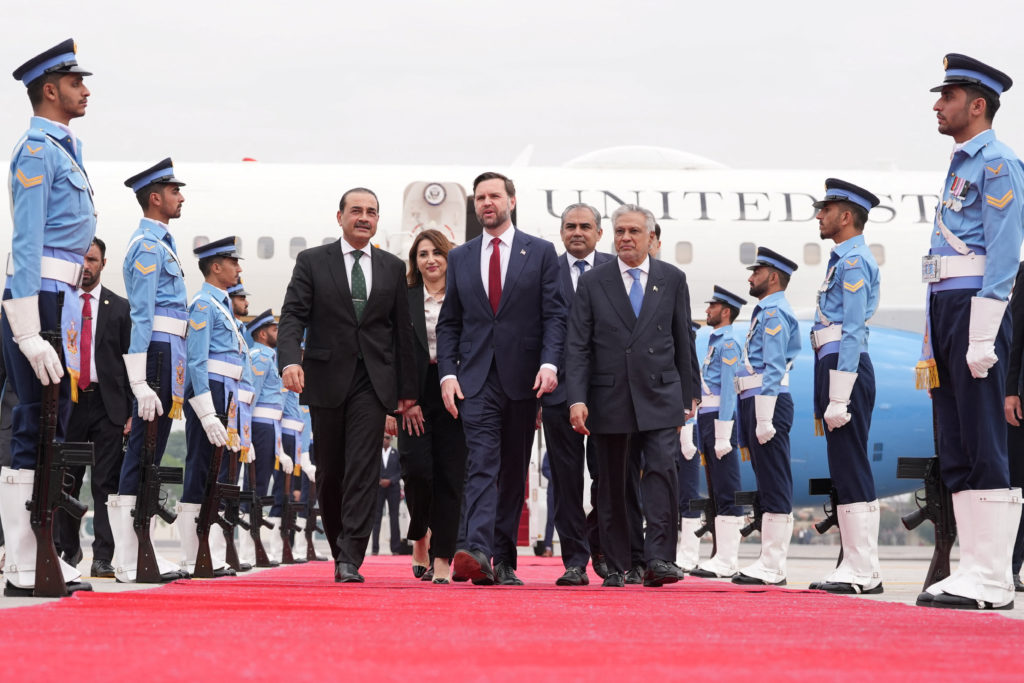
The United States and Iran held talks in Islamabad to discuss a ceasefire and nuclear issues but ended without an agreement. The U.S. delegation, led by Vice President JD Vance, stressed that Iran must commit to not developing nuclear weapons. Pakistani mediators are hopeful a new dialogue will begin soon.
Key Facts
The U.S. and Iran held face-to-face talks in Islamabad, Pakistan, but did not reach an agreement.
Vice President JD Vance led the U.S. team and emphasized the need for Iran to commit to not pursuing nuclear weapons.
The discussions lasted 21 hours and were part of efforts to maintain a fragile two-week ceasefire.
Pakistani Foreign Minister Ishaq Dar encouraged both sides to keep the ceasefire and offered to help continue talks.
President Donald Trump and other top U.S. officials were consulted during the negotiations.
The U.S. military moved two destroyers through the Strait of Hormuz during the talks.
The ceasefire was challenged by ongoing conflicts involving Iranian-backed Hezbollah in Lebanon.
This round of negotiations was one of the most direct contacts between the U.S. and Iran since 1979.
Read the Original
Want the full story? Tap a source to open the original
article.
The United States and Iran have started direct talks in Pakistan following a fragile ceasefire in a war affecting several Middle Eastern countries. The discussions aim to address ongoing tensions and disagreements, with Vice President JD Vance leading the U.S. delegation and Parliament Speaker Mohammad Bagher Qalibaf leading the Iranian side. The talks are part of efforts to stabilize the region and involve other countries like Pakistan, China, Egypt, Saudi Arabia, and Qatar.
Key Facts
The U.S. and Iran are engaged in direct talks in Pakistan after a fragile two-week ceasefire was established.
Vice President JD Vance leads the U.S. delegation, and Parliament Speaker Mohammad Bagher Qalibaf leads the Iranian delegation.
The war has resulted in over 3,000 deaths in Iran and significant casualties in Lebanon, Israel, and Gulf Arab states.
Iran has set "red lines" in the talks, including seeking compensation for damage from strikes.
The closure of the Strait of Hormuz by Iran has impacted global oil and gas exports.
Other countries, including Pakistan, China, Egypt, Saudi Arabia, and Qatar, are involved in facilitating the talks.
Iran has expressed a desire for the release of its frozen assets as part of the negotiation process.
Ongoing Israeli strikes in Lebanon pose a threat to the ceasefire and regional stability.
Read the Original
Want the full story? Tap a source to open the original
article.
The United States and Iran began face-to-face talks in Pakistan amid a fragile ceasefire in an ongoing war. The negotiations, led by Vice President JD Vance and Iranian Parliament Speaker Mohammad Bagher Qalibaf, address issues like the ceasefire stability and regional military actions. The war has caused significant casualties and disrupted global energy markets.
Key Facts
The U.S. and Iran started direct talks in Pakistan as a ceasefire temporarily halted in a contentious war.
The two-week ceasefire follows weeks of conflict resulting in thousands of deaths.
The U.S. military moved two warships through the Strait of Hormuz for mine-clearing operations.
Iran's negotiators want compensation for damage from U.S. and Israeli strikes and the release of frozen assets.
The war has disrupted Persian Gulf oil exports, leading to higher energy prices.
Talks are also mediated by officials from China, Egypt, Saudi Arabia, and Qatar.
President Trump stated efforts are underway to open the Strait of Hormuz for international passage.
Previous direct U.S.-Iran contacts were limited, with the last high-level discussions on nuclear issues in 2013.
Read the Original
Want the full story? Tap a source to open the original
article.
The United States and Iran are holding important talks in Pakistan to discuss a ceasefire in a war affecting multiple countries in the Middle East. These discussions, led by Vice President JD Vance and Iranian Parliament Speaker Mohammad Bagher Qalibaf, are taking place as the war has caused thousands of deaths and economic challenges. The U.S. has also started clearing the Strait of Hormuz to ensure the safe passage of ships.
Key Facts
The U.S. and Iran are negotiating face-to-face in Pakistan amid a two-week ceasefire.
Talks are complicated by disagreements and ongoing military actions involving Israel and Hezbollah.
The negotiations are led by JD Vance for the U.S. and Mohammad Bagher Qalibaf for Iran.
Iran has set conditions, like compensation for damages and reduced Israeli attacks, before continuing talks.
The war has killed over 5,000 people and disrupted oil and gas exports from the Persian Gulf.
The U.S. is working on clearing the Strait of Hormuz to allow for the safe transit of ships.
Other countries like China, Egypt, Saudi Arabia, and Qatar are indirectly helping with the talks.
Read the Original
Want the full story? Tap a source to open the original
article.
Staying informed here is free for everyone. If it's worth something to you, pay what you want. Supporters also get the daily digest by email every morning.
The Coachella music festival started with a headlining performance by Sabrina Carpenter, which included surprise appearances from several actors. The festival, held in California, faced weather challenges with strong winds and dust warnings. Justin Bieber and Karol G are set to headline the following days.
Key Facts
Coachella festival began with Sabrina Carpenter's performance featuring surprise guests like Susan Sarandon, Will Ferrell, and Sam Elliott.
The festival takes place in Indio, California, drawing over 100,000 attendees daily.
Weather services warned of strong winds up to 25 miles per hour and windblown dust in the Coachella Valley.
DJ Anyma's performance was canceled due to unsafe wind conditions.
An air quality advisory is in effect due to windblown dust, posing health risks for sensitive individuals.
Justin Bieber and Karol G are headlining on Saturday and Sunday, respectively.
The festival runs for two weekends and has been held annually since 2002.
Read the Original
Want the full story? Tap a source to open the original
article.
Peru is holding a presidential election amid a decade of political uncertainty and corruption. Many candidates, including 80-year-old Ricardo Belmont, are promising to tackle the corruption that has seen frequent leadership changes. The election will likely result in a runoff in June due to the large number of candidates.
Key Facts
Peru is holding a presidential election with 35 candidates running.
Ricardo Belmont, 80, is one of the oldest candidates and was a former mayor of Lima.
The country has had nine presidents in the last decade, with only one serving a full term.
Many past presidents in Peru faced imprisonment or criminal investigations related to corruption.
Voter turnout is mandatory, but analysts expect high numbers of blank ballots.
The outcome of the election is uncertain, with changing predictions and possible runoff in June.
Political instability and voter apathy are significant issues in this election.
Read the Original
Want the full story? Tap a source to open the original
article.