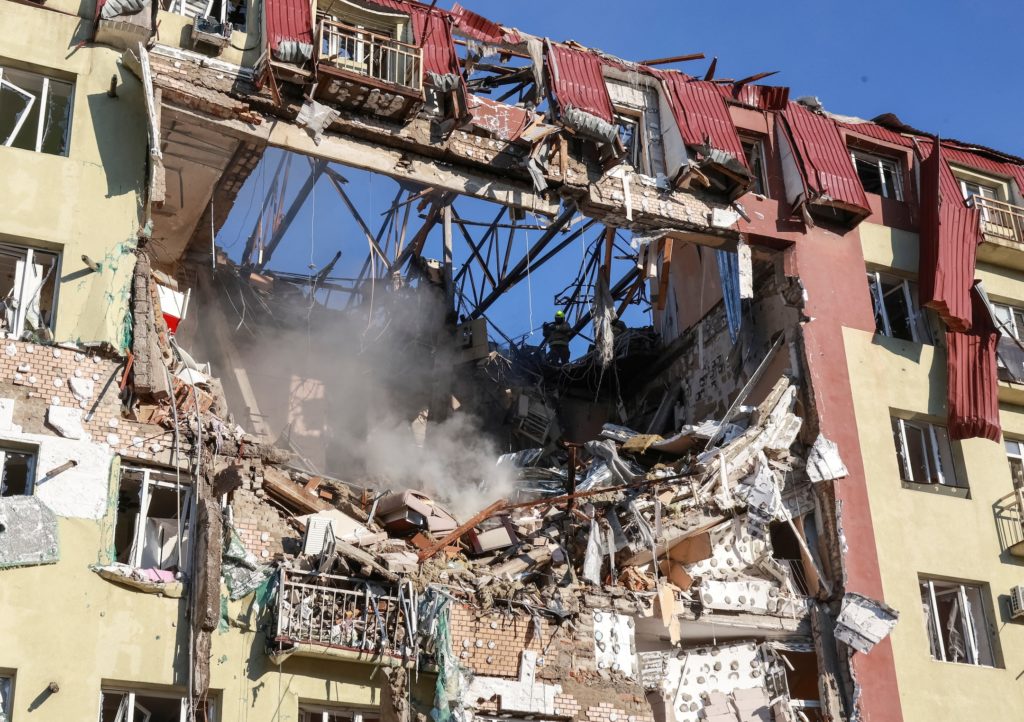
On Sunday, Israeli airstrikes hit Lebanon, killing three people in a residential area in Beirut. Israeli attacks have caused extensive damage, with many people killed and over a million displaced. The violence has increased divisions in Lebanon between different communities about who is to blame for the ongoing conflict.
Key Facts
Israeli airstrikes hit Ain Saadeh in Lebanon, killing three people.
Among the dead was a member of the Lebanese Forces, an anti-Hezbollah Christian party.
Israeli attacks have killed about 1,500 people in Lebanon, including 130 children.
More than 1.2 million people have been displaced from their homes in Lebanon.
The violence has amplified divisions between Lebanese communities.
The conflict began after Hezbollah attacked in response to the killing of Iran's Supreme Leader.
Israel used this as a reason to increase strikes and continue to battle Hezbollah.
Israeli military showed videos of demolitions and forced evacuation warnings in southern Lebanon.
Read the Original
Want the full story? Tap a source to open the original
article.
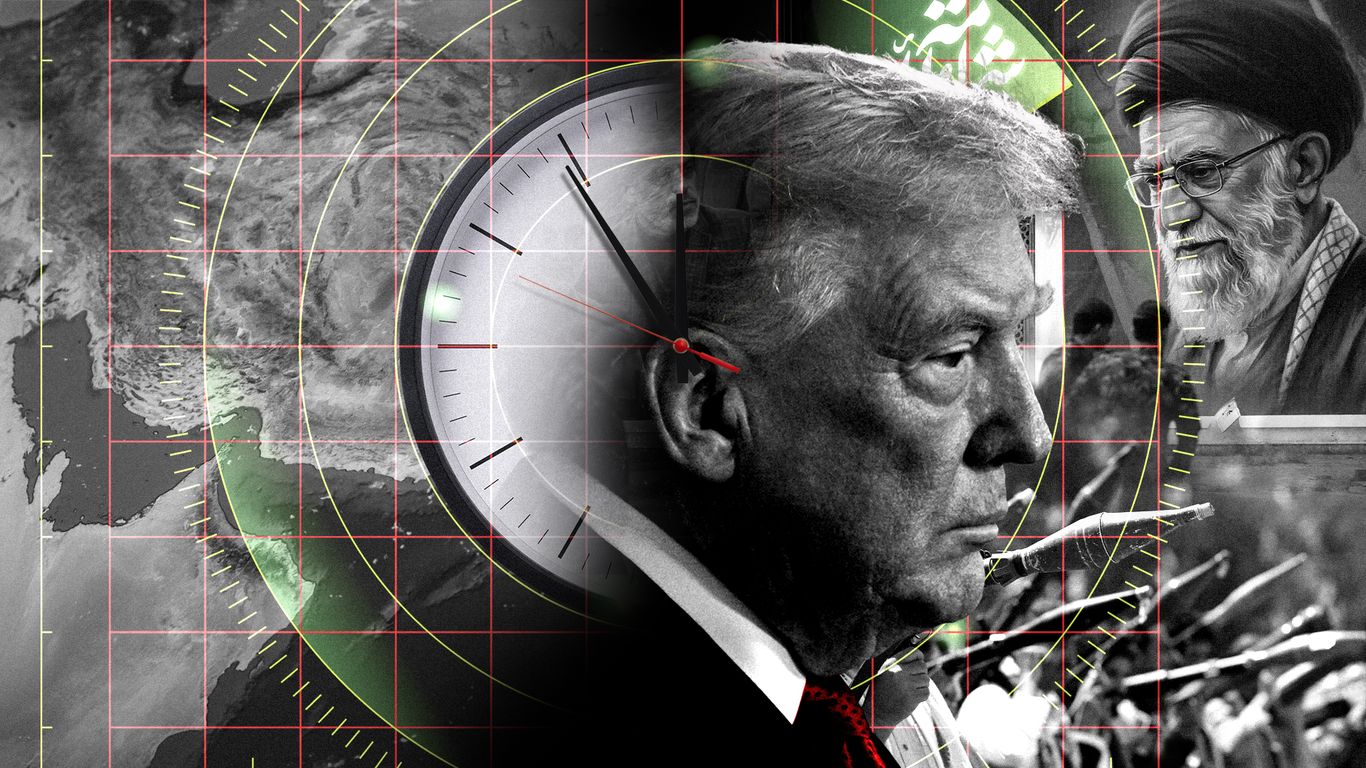
President Trump faces a decision about whether to attack Iran's infrastructure or allow more time for diplomatic talks. Mediators from Pakistan, Egypt, and Turkey are trying to help negotiate a deal to prevent military action. Trump has warned of severe actions if no agreement is reached soon.
Key Facts
President Trump has set an 8pm ET deadline to decide on attacking Iran's infrastructure.
The proposed attack includes targeting bridges and power plants in Iran.
Mediators from Pakistan, Egypt, and Turkey are working to broker a deal.
Trump's advisors are divided, with some urging diplomacy and others advising against a ceasefire unless Iran agrees to certain terms.
Iran responded to peace proposals with a 10-point response seen as a negotiating move.
The White House may need to extend the deadline due to Iran's slow decision-making.
Trump stated that negotiations are still ongoing but mentioned that Iran could face significant military action if no deal is reached.
Key regional leaders like Israeli Prime Minister Netanyahu are influencing Trump's decision.
Read the Original
Want the full story? Tap a source to open the original
article.
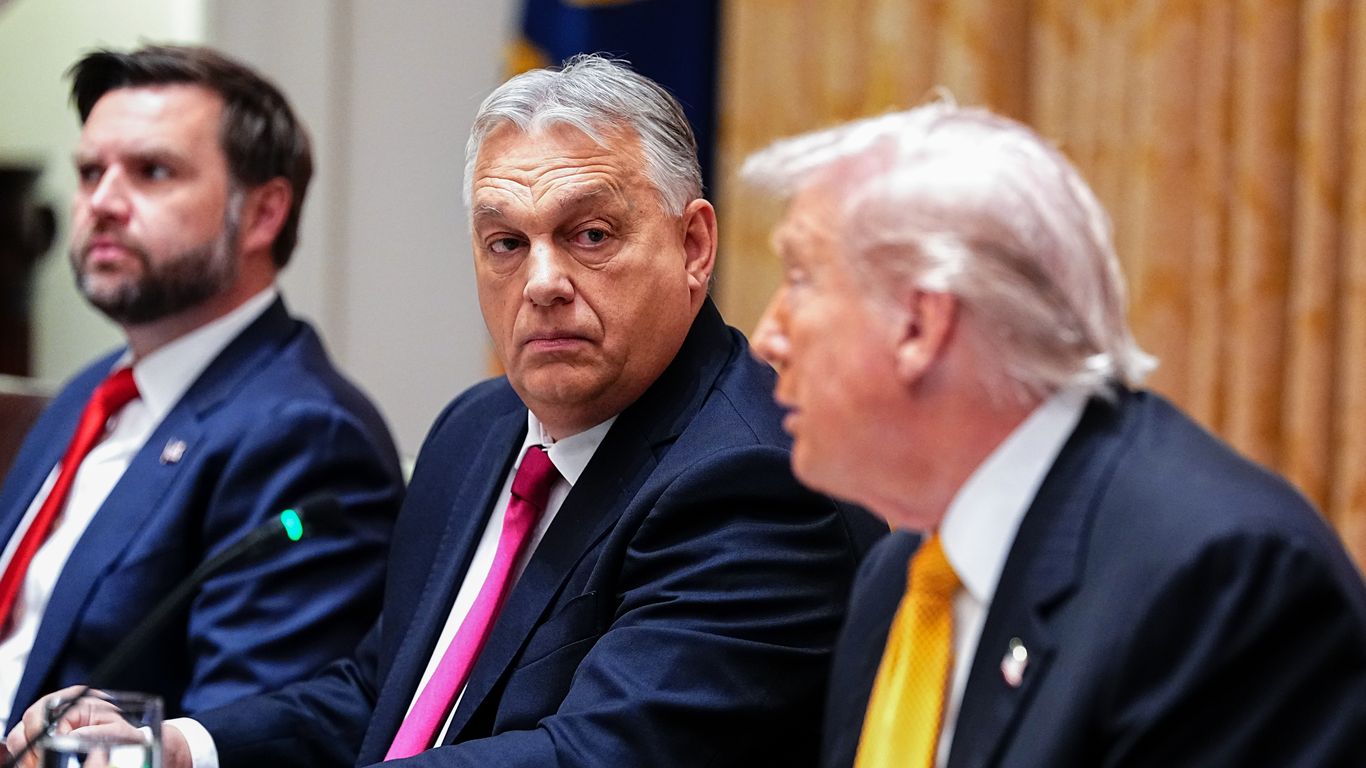
U.S. Vice-President JD Vance is visiting Hungary to support Prime Minister Viktor Orban in his upcoming election. President Donald Trump has expressed full support for Orban, highlighting their strong political relationship. The political contest is expected to be challenging for Orban as he competes against Peter Magyar and the Tisza party.
Key Facts
JD Vance, U.S. Vice-President, is visiting Hungary to support Prime Minister Viktor Orban.
President Donald Trump has shown strong support for Orban, a key ally.
The Hungarian election on April 12 is viewed as Orban's toughest challenge yet.
Orban faces Peter Magyar, who is now leading a new party called Tisza.
Orban and the government have blamed Ukraine and a recent pipeline incident for energy issues.
Leak scandals involving Hungarian officials and Russian contacts have affected Orban's popularity.
Hungary continues to oppose reducing reliance on Russian energy, unlike other EU nations.
Vance's visit aims to bolster Orban's image among voters in Hungary.
Read the Original
Want the full story? Tap a source to open the original
article.
Vice President Vance is visiting Hungary to support Prime Minister Viktor Orbán during their election period, which is characterized by political tension and foreign interference. Orbán is favored by President Trump as a key ally in Europe, supporting nationalist governance. The election involves multiple nations, with Russia and the U.S. backing Orbán, while the EU and Ukraine oppose him.
Key Facts
Vice President Vance is in Hungary to support Prime Minister Viktor Orbán during a tense election.
Orbán has been a key ally for President Trump and supports nationalist policies similar to Trump's vision for Europe.
Hungary's election on April 12 involves international interest, as the U.S. and Russia support Orbán, while the EU and Ukraine want a change in leadership.
Viktor Orbán has been Hungary's leader since 2010 and has restructured political institutions to secure control.
The opposition candidate, Péter Magyar, poses a significant threat to Orbán, citing issues such as corruption and economic challenges.
Hungary is an important ally for Russia within NATO and the EU, often opposing EU measures against Russia.
Recent events have included leaked audio involving Hungarian and Russian officials and allegations of espionage and sabotage, increasing election tensions.
Orbán's continued rule or loss in the election could significantly impact EU unity and international relations.
Read the Original
Want the full story? Tap a source to open the original
article.
United States Vice President JD Vance is visiting Hungary to support Prime Minister Viktor Orban ahead of a crucial election. President Donald Trump endorsed Orban, while the opposition led by Peter Magyar holds a lead in the polls. The trip highlights the ties between Trump and Orban.
Key Facts
Vice President JD Vance is in Budapest to support Hungarian Prime Minister Viktor Orban.
The Fidesz Party, led by Orban, faces a challenging election on April 12.
Most polls show opposition leader Peter Magyar leading Orban in the election race.
President Donald Trump endorsed Orban, showing close ties between the U.S. and Orban.
Hungary recently faced European Union funding cuts due to concerns about democracy and judicial independence.
Opposition leader Magyar promises to improve relations with the EU and restore funding.
Orban has been in power for 16 years, with critics highlighting issues in media and judicial independence.
Magyar is a former Fidesz member now leading the Tisza Party, whose policies differ from Orban’s mostly on corruption and EU relations.
Read the Original
Want the full story? Tap a source to open the original
article.
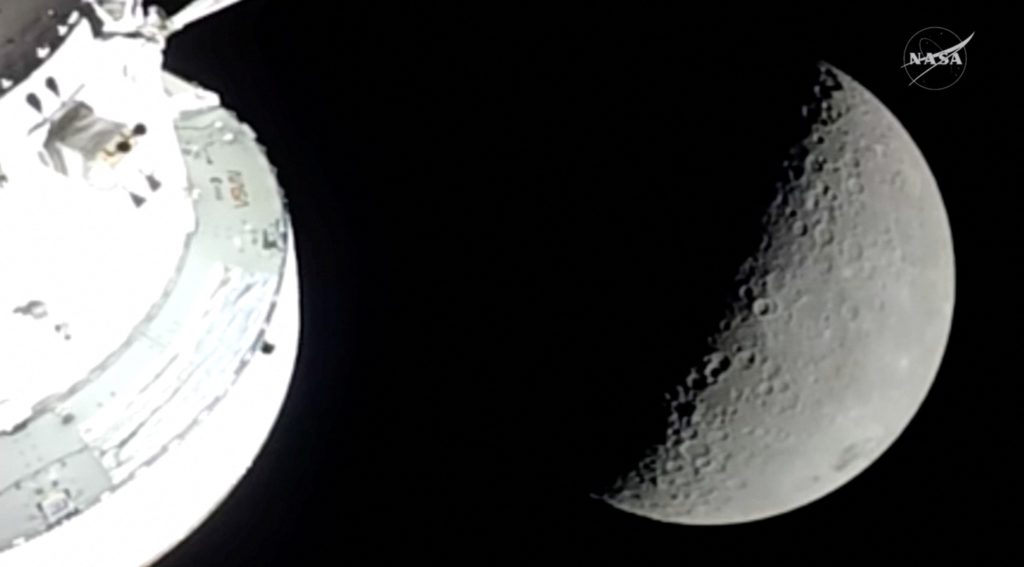
The Artemis II mission experienced a temporary communication blackout with Earth while traveling behind the Moon. This loss of contact lasted for about 40 minutes and was expected due to the Moon blocking the spacecraft's signals. NASA noted that during this time, the crew reached the farthest distance from Earth, at 252,756 miles away.
Key Facts
Artemis II mission lost contact with Earth for about 40 minutes.
The blackout happened as the spacecraft traveled behind the Moon.
Communication loss was expected due to the Moon blocking signals.
NASA reported the crew went 252,756 miles from Earth during this time.
Once communication was restored, astronaut Christina Koch expressed relief.
The mission is part of NASA's ongoing efforts to explore the Moon.
Read the Original
Want the full story? Tap a source to open the original
article.
Representative Pat Fallon, a Texas Republican, believes the United States may need to send ground troops into Iran to address the ongoing conflict, as airstrikes alone might not be effective. Fallon, who chairs a House subcommittee on military personnel, highlighted the challenges of military action in Iran, emphasizing the country's large size and substantial population. President Trump has not ruled out the possibility of using ground forces as the situation develops.
Key Facts
Pat Fallon is a Republican representative from Texas and chairs a House Armed Services Subcommittee.
Fallon suggests that U.S. ground troops may be necessary in Iran due to the ongoing conflict.
He mentioned airstrikes alone might not achieve a political solution in Iran.
The Trump administration is considering its next steps after recent strikes on Iranian targets.
Fallon compared Iran's leadership to the Taliban, suggesting they are resilient to pressure.
Iran has a population of about 93 million and a large land area, complicating military efforts.
Fallon noted the possibility of needing U.S. special operators on the ground with air support.
President Trump has not ruled out further military escalation, including ground troop deployment.
Read the Original
Want the full story? Tap a source to open the original
article.
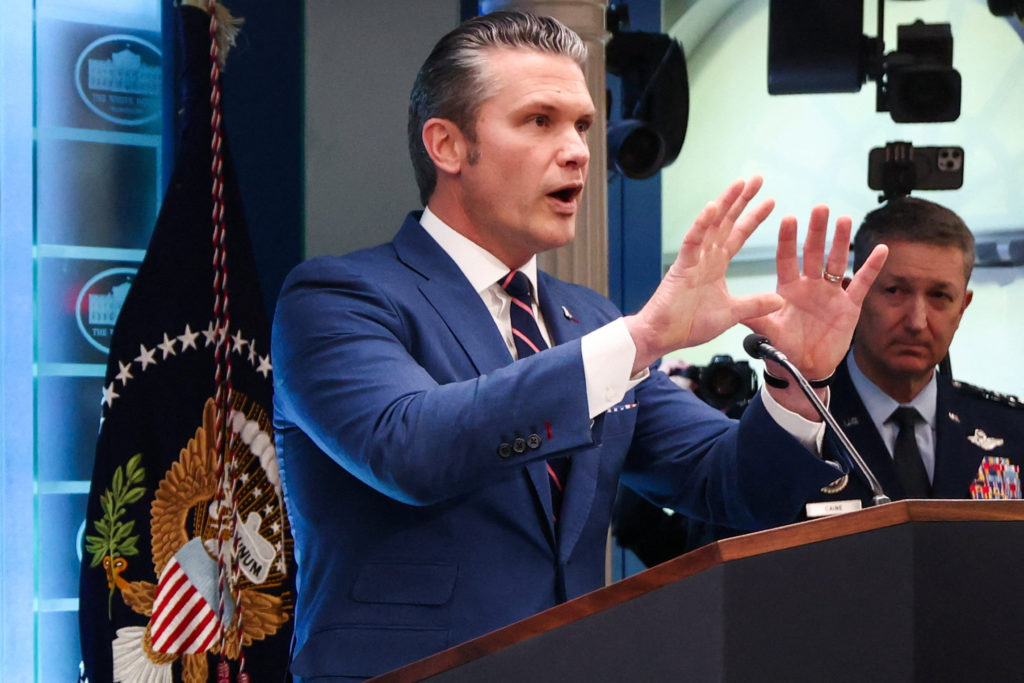
President Donald Trump has threatened to attack Iran's bridges and power plants if Iran does not open the Strait of Hormuz by Tuesday night. Such actions could be in violation of international laws banning attacks on civilian infrastructure unless they are military targets and do not excessively harm civilians. Defense officials Pete Hegseth and Gen. Dan Caine are holding a Pentagon briefing to discuss the situation.
Key Facts
President Trump threatened to destroy Iran's infrastructure, including power plants and bridges.
Attacking civilian infrastructure can be illegal under international law if it risks harming civilians excessively.
President Trump set a deadline for Iran to open the Strait of Hormuz by Tuesday night.
The threats have raised oil prices and affected the stock market, with shipping in the Strait of Hormuz significantly reduced.
U.N. officials have warned against such attacks, stating they could be considered war crimes.
Defense Secretary Pete Hegseth and Air Force Gen. Dan Caine will discuss these issues in a Pentagon briefing.
Ships in the Strait of Hormuz usually transport 20% of the world's oil, making it a crucial passage.
White House spokeswoman Anna Kelly stated that Iranian civilians welcome the threats, which she claims target their oppressors.
Read the Original
Want the full story? Tap a source to open the original
article.
A planned six-day strike by resident doctors in the UK is expected to significantly disrupt the National Health Service (NHS), with concerns about financial costs and patient care. On an international front, President Trump has issued an ultimatum to Iran concerning the reopening of the Strait of Hormuz, warning of military action if no agreement is reached by a set deadline.
Key Facts
The UK is facing a six-day strike by resident doctors starting on Tuesday.
The strike is expected to cost hospitals about £50 million per day.
This strike is reported to be the 15th round of industrial action by medical union members since 2023.
Senior medical professionals warn the strike could be highly disruptive to patient care.
The U.S. President, Donald Trump, has made threats to bomb Iran if the Strait of Hormuz is not reopened by a set deadline.
Iran has threatened strong retaliation if their civilian infrastructure is attacked.
Iran has rejected a U.S. proposal but seeks the lifting of U.S. sanctions and safe shipping routes.
Prime Minister Sir Keir Starmer will not allow strikes on civilian infrastructure from UK bases.
Read the Original
Want the full story? Tap a source to open the original
article.
President Donald Trump has set a deadline for Iran to reopen the Strait of Hormuz or face possible action from the U.S. Meanwhile, several Asian countries, including the Philippines, India, and Pakistan, have already secured agreements with Iran to ensure their ships can pass through this vital shipping route. This is important because the Strait is crucial for global energy transportation.
Key Facts
President Trump threatened action against Iran if the Strait of Hormuz doesn't reopen by the set deadline.
The Strait of Hormuz is important for global energy trade, with a fifth of the world's energy shipments passing through it.
Asian countries have made deals with Iran to allow their ships to pass safely through the strait.
The Philippines, heavily reliant on Middle Eastern oil, reached an agreement with Iran for safe passage.
India and Pakistan have also negotiated with Iran to secure access for their ships.
There is still some uncertainty about the specific details and longevity of these agreements.
Iran has indicated it may allow passage to certain countries while excluding the U.S. and its allies.
Read the Original
Want the full story? Tap a source to open the original
article.
A massive scam compound was discovered and seized in O Smach, Cambodia, where fake police stations and other fraudulent setups were used to deceive people globally. The compound, located behind the Royal Hill Casino, included replicas of police stations from different countries and aimed to exploit thousands of victims. The Thai military highlighted the scam's scale, emphasizing the need for international assistance to combat the scam industry.
Key Facts
The scam compound was located near the Royal Hill Casino in the border town of O Smach, Cambodia.
It included fake setups of Australian, Chinese, and Brazilian police stations.
Thousands of workers ran scams from this compound, targeting people worldwide.
The Thai air force bombed the Royal Hill Casino during a brief border conflict in December.
Thai soldiers currently occupy the site, which remains mostly empty.
Royal Hill's owner, Lim Heng, is a Cambodian tycoon with no international sanctions.
Cambodia has issued around 200 casino licenses over the past 30 years.
These casinos have attracted crime syndicates due to gambling bans in nearby countries.
Read the Original
Want the full story? Tap a source to open the original
article.
The UK's Information Commissioner's Office (ICO) is encouraging parents to teach their children about online privacy as a critical life skill, similar to road safety and stranger danger. This push is part of a campaign to promote discussions about online privacy at home, amid findings that many parents are concerned about their children's digital safety.
Key Facts
The ICO wants parents to view online privacy as important as road safety.
A survey found that 75% of parents worry their children cannot make safe online privacy choices.
The ICO launched a campaign to encourage family discussions on protecting personal information.
A study of 1,000 UK parents found 35% believe their child might trade personal info for game rewards.
22% of children have shared personal details like health information with AI tools.
8- and 9-year-olds are most at risk of sharing personal information.
21% of parents have never discussed online privacy with their children.
Online privacy includes names, ages, addresses, photos, and social media activity.
Read the Original
Want the full story? Tap a source to open the original
article.
There are no ads, so there is no reason to bait you. Readers who chip in keep it that way. Most choose $3.99/month, and get the daily digest every morning.
President Donald Trump has issued a new ultimatum to Iran, demanding a deal that ensures the free movement of oil through the Strait of Hormuz. If Iran does not comply, Trump has threatened devastating military strikes. As the deadline approaches, Iran shows little sign of agreeing to the ultimatum.
Key Facts
President Trump set a deadline for Iran to make a deal by Tuesday at 20:00 Washington DC time.
The proposed deal involves allowing free oil movement through the Strait of Hormuz.
Trump threatened extensive military strikes if Iran does not agree to the deal.
Iran has shown little indication of accepting the ultimatum, preferring to issue their own demands.
The situation follows a five-week US-Israeli conflict involving Iran.
President Trump described the potential military action as devastating, sparing few targets from attack.
There is tension about the credibility of threats versus the realities of military limits.
Trump emphasized that he does not want to go forward with bombing, as it would lead to long-term consequences for Iran's infrastructure.
Read the Original
Want the full story? Tap a source to open the original
article.
Doctors in England are starting a six-day strike due to a disagreement over pay, which is expected to cause disruptions in healthcare services. This strike follows failed negotiations between the government and the doctors' union. The NHS assures emergency services will remain available, but some scheduled treatments and appointments will be canceled.
Key Facts
The strike began at 7:00 BST on Tuesday and involves resident doctors in the NHS.
Resident doctors make up nearly half of the NHS medical workforce.
Senior doctors are providing emergency coverage, affecting planned medical appointments.
The strike is organized by the British Medical Association after failed talks with the government.
The NHS advises patients to continue seeking emergency care if needed.
The doctors' union argues pay has decreased in real terms since 2008 due to inflation.
The UK government states they have offered doctors a generous pay deal.
Polls show that 53% of people oppose the strike, while 38% support it.
Read the Original
Want the full story? Tap a source to open the original
article.
The conflict involving Iran might become more intense. President Trump has threatened to target Iran's power grid, while Iran has promised stronger attacks on Israel and Gulf countries if a ceasefire does not occur by Tuesday night.
Key Facts
The situation between Iran and other countries is tense and might escalate.
President Trump stated he might target Iran’s power grid.
Iran responded by threatening stronger strikes on Israel.
Iran also threatened Gulf nations with attacks.
A ceasefire is demanded by Tehran to avoid further conflict, with a Tuesday night deadline.
The report was provided by journalist Nick Schifrin.
Read the Original
Want the full story? Tap a source to open the original
article.
President Donald Trump has made threats to strike Iran's civilian infrastructure. A correspondent in Tehran discussed the situation and its impact on people living there.
Key Facts
President Trump has threatened to attack Iran's civilian infrastructure.
These threats are causing concern among people in Tehran.
The situation involves potential military action by the United States.
Amna Nawaz interviewed a special correspondent named Reza Sayah in Tehran.
The discussions reveal anxiety among Tehran's residents regarding potential U.S. actions.
Read the Original
Want the full story? Tap a source to open the original
article.
The article discusses President Trump's comments about potentially bombing Iran's infrastructure, focusing on whether such actions would be legal under international law. An expert, Rachel VanLandingham, explains the legal implications of these threats.
Key Facts
President Donald Trump mentioned the possibility of bombing Iran's bridges and power plants.
International law can restrict the types of targets that can be bombed during conflicts.
Rachel VanLandingham, a retired Air Force Lieutenant Colonel, provided insights on the legal issues.
VanLandingham is currently a professor at Southwestern Law School.
The discussion aims to determine if targeting infrastructure like bridges and power plants violates international law.
The legality of military actions usually involves considerations of proportionality and necessity, according to international law experts.
Read the Original
Want the full story? Tap a source to open the original
article.
Russian attacks in southern Ukraine resulted in at least four deaths. In Afghanistan, severe weather has led to at least 110 deaths. Savannah Guthrie returned to her TV show after her mother was missing for over two months.
Key Facts
Russian strikes killed at least four people in southern Ukraine.
The strikes are part of ongoing conflict in the region.
In Afghanistan, storms, floods, and landslides have killed at least 110 people.
Severe weather events are affecting large areas of Afghanistan.
Savannah Guthrie, a TV host, returned to work after her mother's disappearance.
Her mother was missing for more than two months.
Read the Original
Want the full story? Tap a source to open the original
article.
Each summary links back to the original reporting, so you can check the work. Support that, and get the daily digest every morning. Most choose $3.99/month.
The closure of the Strait of Hormuz is affecting the supply of fertilizer, which is important for growing crops. This disruption is leading to higher costs for fertilizer and concerns about increased food prices and reduced crop production.
Key Facts
About one-third of the world's fertilizer moves through the Strait of Hormuz.
The effective closure of this strait is causing fertilizer shortages.
Fertilizer prices are rising due to these shortages.
The increase in fertilizer costs comes during a crucial time for planting crops.
Farmers are worried that higher costs and less fertilizer will lead to more expensive food.
There are also concerns about lower crop yields because of the fertilizer shortage.
Discussions on the potential impact involve experts like Geoff Bennett and Caitlin Welsh.
Read the Original
Want the full story? Tap a source to open the original
article.
NASA's Artemis II mission sent four astronauts to the far side of the moon, where they set a new record for the farthest distance traveled by humans from Earth. The mission's significant event was a seven-hour flyby of the moon on Monday.
Key Facts
Artemis II is a NASA mission involving four astronauts.
The astronauts traveled to the far side of the moon.
They set a new record for the farthest distance humans have traveled from Earth.
The key part of the mission was a seven-hour lunar flyby.
The mission received widespread attention for its historic achievement.
Read the Original
Want the full story? Tap a source to open the original
article.