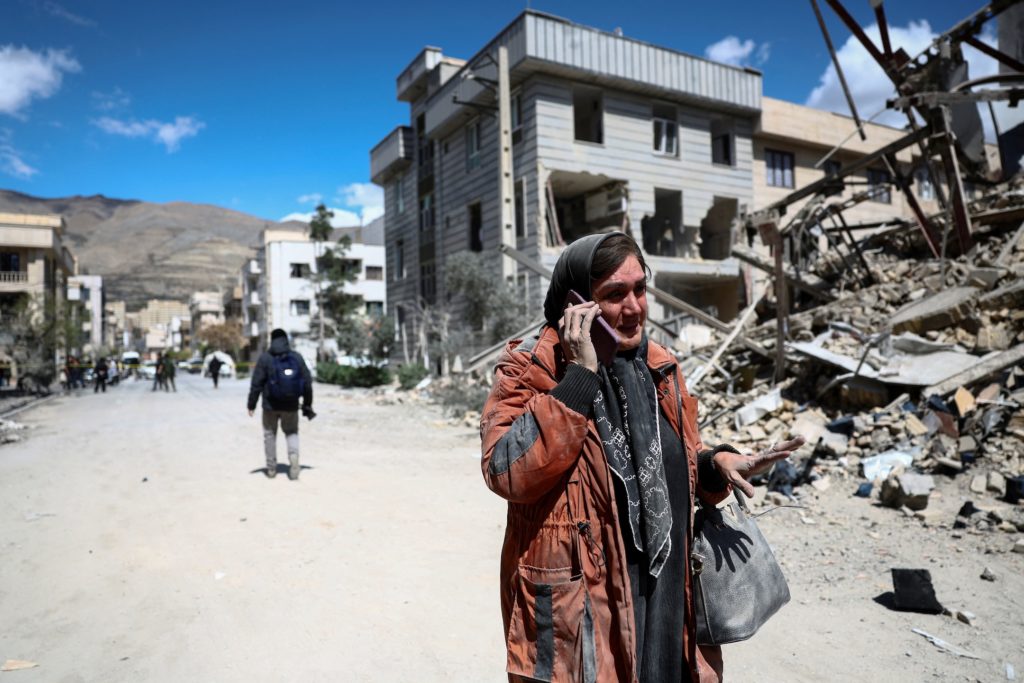
Iran has attacked an Israeli oil refinery amid an ongoing conflict that has lasted for two months with the United States. President Trump has warned Iran to end the conflict soon or face further damage to its energy facilities. Iran has dismissed these U.S. demands and continued its military actions.
Key Facts
Iran has been in conflict with the United States for two months.
President Trump has threatened Iran with further destruction of its energy sites.
Iran has attacked an Israeli oil refinery.
The U.S. wants Iran to agree to end the conflict.
Iran calls U.S. demands "unrealistic."
Iran continues its attacks on Israel and the region.
Read the Original
Want the full story? Tap a source to open the original
article.
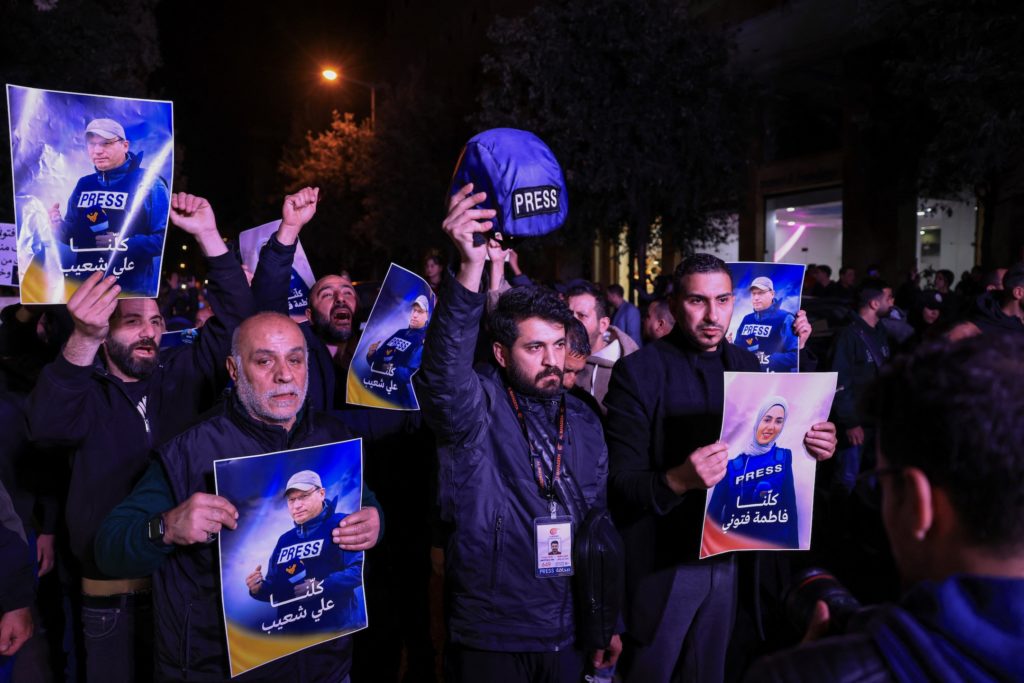
An Israeli airstrike in southern Lebanon resulted in the deaths of three journalists and several paramedics. The incident highlights the dangers faced by journalists working in the Middle East.
Key Facts
An Israeli airstrike occurred in southern Lebanon.
The strike killed three journalists.
Multiple paramedics also died in the incident.
The event underscores the risks journalists encounter while reporting in conflict zones.
Sara Qudaa from the Committee to Protect Journalists discussed this issue with Nick Schifrin.
Read the Original
Want the full story? Tap a source to open the original
article.
The Prime Minister has given the British Medical Association (BMA) 48 hours to stop a planned six-day doctor strike in England, or 1,000 extra medical training positions could be lost. The strike was announced after doctors were offered a 3.5% pay rise, which the BMA finds insufficient. Talks to improve terms have been ongoing, but disagreements over pay and training opportunities remain.
Key Facts
The Prime Minister gave the BMA a 48-hour deadline to cancel the strike.
The proposed six-day strike is set to begin after Easter.
Doctors were offered a 3.5% pay rise, but the BMA rejected it.
The BMA states inflation has outpaced doctor pay rises since 2008.
The government offered 1,000 extra medical training positions as part of a larger plan.
Talks between the BMA and the government have been taking place over the past year.
In the last three years, doctors received nearly 30% in pay increases.
Resident doctors play a significant role in the NHS, with many being BMA members.
Read the Original
Want the full story? Tap a source to open the original
article.
The FBI reported that a Michigan synagogue attack was inspired by Hezbollah's militant ideas. Ayman Muhammad Ghazali, the attacker, targeted Temple Israel while children were present and later died from a self-inflicted gunshot. Before the attack, he bought a rifle and sent videos showing his intent to commit a terrorist act.
Key Facts
The FBI identified the attack as Hezbollah-inspired terrorism.
The attacker was Ayman Muhammad Ghazali, a naturalized US citizen from Lebanon.
Ghazali targeted Temple Israel in West Bloomfield, Michigan.
Children were inside the synagogue during the attack.
Ghazali's online activity showed interest in pro-Hezbollah channels and violent content.
His brother was reportedly a Hezbollah commander, according to the Israel Defense Forces.
Ghazali died from a self-inflicted gunshot; no one else was killed.
He prepared for the attack by purchasing weapons, ammunition, and other materials.
Read the Original
Want the full story? Tap a source to open the original
article.
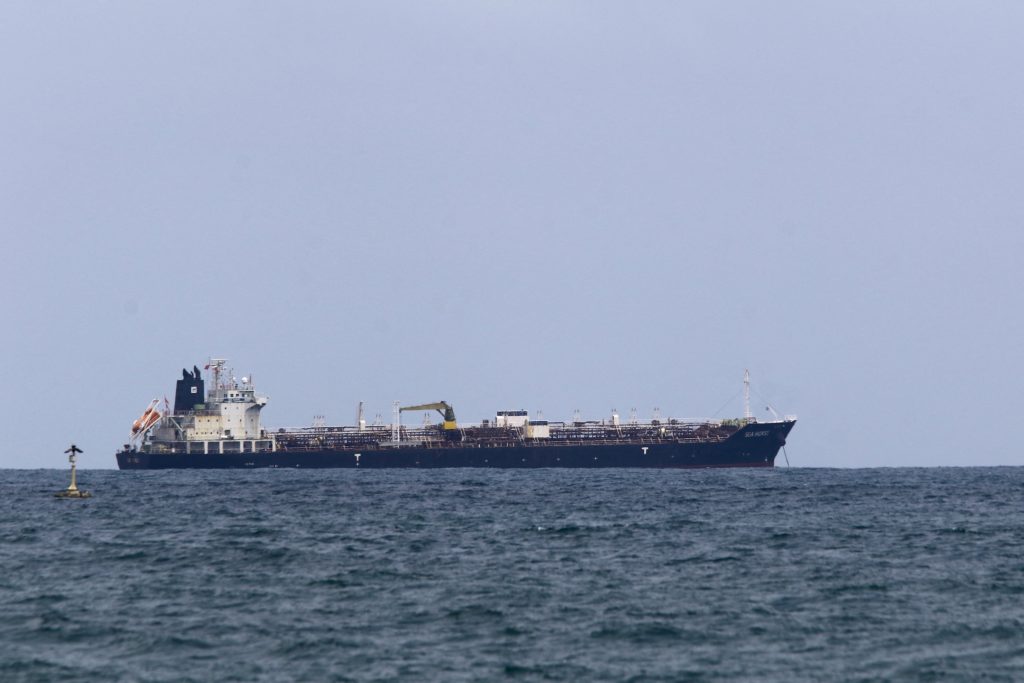
A Russian tanker delivered 700,000 barrels of oil to Cuba. The U.S. reopened its embassy in Venezuela. Israel passed a new law about the death penalty for certain crimes. In Italy, thieves stole three famous paintings from a museum.
Key Facts
A Russian oil tanker brought 700,000 barrels of oil to Cuba.
The U.S. has officially reopened its embassy in Venezuela.
Israel’s new law makes hanging the default death penalty for Palestinians who murder Israelis.
Thieves stole three famous paintings from a museum near Parma, Italy.
Read the Original
Want the full story? Tap a source to open the original
article.
U.S. Secretary of State Marco Rubio discussed the conflict in Iran and the strategic area of the Strait of Hormuz during an interview with Al Jazeera. The conversation covered important topics related to the region.
Key Facts
Marco Rubio is the U.S. Secretary of State.
He gave an interview to Al Jazeera's journalist Hashem Ahelbarra.
The main subject was the conflict involving Iran.
Rubio discussed the significance of the Strait of Hormuz, a key oil transit route.
The interview also touched on issues concerning the broader region around Iran.
Read the Original
Want the full story? Tap a source to open the original
article.
Colorectal cancer rates are increasing among adults younger than 50. This cancer was once more common in older people but now affects younger adults more often.
Key Facts
Colorectal cancer cases are rising in people under 50.
This type of cancer used to mostly affect older adults.
Dr. Robin Mendelsohn is a specialist in this field.
The Center for Young Onset Colorectal and Gastrointestinal Cancers focuses on cancer in younger people.
Awareness efforts are underway to inform younger adults about this health risk.
Read the Original
Want the full story? Tap a source to open the original
article.
The US-Israel conflict with Iran is intensifying, and Pakistan is trying to help find a peaceful solution. Pakistan's foreign minister held talks with leaders from Saudi Arabia, Turkiye, and Egypt to explore peace discussions between Iran and the US.
Key Facts
There is an ongoing conflict involving the US, Israel, and Iran.
Pakistan aims to mediate peace talks to resolve this conflict.
Pakistan hosted a meeting with diplomats from Saudi Arabia, Turkiye, and Egypt.
Pakistan's foreign minister mentioned the country's readiness to facilitate discussions between Iran and the US.
Pakistan has strong connections with both Iran and the US, which could aid in mediation.
The conflict started last month when the US and Israel launched operations against Iran.
Read the Original
Want the full story? Tap a source to open the original
article.
The White House has indicated that President Donald Trump plans to ask Arab countries to help pay for the U.S. war with Iran, which has already cost billions of dollars. The conflict has led to increased global energy prices and resulted in significant military expenses for the United States.
Key Facts
President Trump may ask Arab countries to fund the U.S. war against Iran.
The war has cost billions, with an estimated $16.5 billion spent in the first 12 days.
Earlier wars, like the Gulf War, saw allied funding, but this conflict started without allied involvement.
A commentator close to Trump suggested that Iran should repay the U.S. in oil for war costs.
Iran has retaliated with attacks across the Middle East.
The war has raised global energy prices, with U.S. gas prices rising by over $1 per gallon.
The White House is requesting $200 billion more for military expenses related to the war.
Read the Original
Want the full story? Tap a source to open the original
article.
The closing of the Strait of Hormuz after a conflict involving the US, Israel, and Iran has led to a sharp rise in oil prices and disrupted shipping. This has caused long lines at gas stations in Myanmar, where local authorities have imposed fuel consumption limits due to shortages.
Key Facts
The Strait of Hormuz is crucial for global oil shipping, especially for Asian countries.
The disruption began after military actions by the US and Israel against Iran in February.
Oil flow through the strait has significantly slowed, causing price hikes.
Myanmar drivers face long waits at gas stations to refuel.
Myanmar's government limits private vehicle fuel purchases to 35 liters per week.
The country has been experiencing internal conflict since May 2021, complicating the situation.
Read the Original
Want the full story? Tap a source to open the original
article.
NASA's Artemis II mission plans to launch towards the Moon on April 1, 2026, after facing delays. This mission follows over 50 years after the last crewed lunar mission and is part of a new international space race. Experts discuss the reasons and strategic context for returning to the Moon.
Key Facts
NASA's Artemis II mission is set to launch on April 1, 2026.
The mission experienced several months of delays.
It is the first crewed lunar mission in over 50 years.
The launch will take place at Kennedy Space Centre in Florida.
The mission is part of a new international focus on lunar exploration.
The discussions around the mission involve BBC correspondents and space experts.
The program covering the mission is a BBC Audio Science production.
Read the Original
Want the full story? Tap a source to open the original
article.
A new poll from the Jewish Electorate Institute shows that 55% of Jewish Americans do not support President Trump's war with Iran. The survey included 800 registered Jewish voters and indicates concerns about the war's impact on Jewish communities.
Key Facts
55% of Jewish American respondents disapprove of U.S. military action against Iran.
32% of respondents approve of the military action.
Nearly half of the respondents strongly disapprove of the war.
About 75% of respondents said President Trump should have obtained congressional approval before taking military action.
60% believe the Iran war will be a major topic of discussion at Passover seders.
Over half of the respondents are concerned about antisemitism resulting from the conflict.
54% of Jewish voters worry about long-term effects on U.S.-Israel relations.
President Trump referred to the action as a "military decimation" rather than a war.
Read the Original
Want the full story? Tap a source to open the original
article.
Each summary links back to the original reporting, so you can check the work. Support that, and get the daily digest every morning. Most choose $3.99/month.
Australia's internet regulator says major social media companies are not fully enforcing a law that bans under-16s from using certain platforms like Facebook and TikTok. The regulator found that many underage users can still access these platforms despite the ban and plans to start enforcing compliance. The law was introduced to protect children from harmful content.
Key Facts
A law in Australia bans children under 16 from using certain social media platforms.
The platforms involved include Facebook, Instagram, Snapchat, TikTok, YouTube, and others.
The eSafety Commissioner says these companies are not doing enough to stop underage users.
The regulator found that many underage users can still access their accounts.
In January, 4.7 million accounts were restricted or removed after the law took effect.
The regulator will start enforcing the law and collecting evidence of non-compliance.
Critics question the ban's enforceability and say it may exclude certain minority groups.
Some parents support the ban, believing it helps protect their children online.
Read the Original
Want the full story? Tap a source to open the original
article.
Pope Leo XIV criticized people who start wars during his Palm Sunday speech, as the conflict in Iran entered its fifth week. In a press briefing, White House spokesperson Karoline Leavitt mentioned that U.S. leaders have often used prayer during difficult periods.
Key Facts
Pope Leo XIV spoke against war during his Palm Sunday Mass.
The pope's speech was held in St. Peter's Square.
He emphasized that Jesus, referred to as the "King of Peace," does not support war.
The conflict in Iran has been ongoing for five weeks.
Pope Leo quoted the Old Testament, saying God would not listen to those who engage in war.
White House press secretary Karoline Leavitt addressed the pope's comments.
Leavitt noted that U.S. leaders historically relied on prayer during tough times.
Read the Original
Want the full story? Tap a source to open the original
article.
Israel's Parliament, the Knesset, has passed a law allowing the death penalty for Palestinians convicted of killing Israelis in the West Bank. Human rights groups and Palestinian leaders criticize the law, calling it discriminatory and a violation of international law. The law's passage occurs amid increased tensions and violence in the region.
Key Facts
Israel’s Parliament approved the use of the death penalty for Palestinians who kill Israelis.
The punishment will apply in the occupied West Bank and will be by hanging.
The law passed with a vote of 62 in favor and 48 against in the Knesset.
Itamar Ben-Gvir, Israeli National Security Minister, supported the law and celebrated its passage.
Palestinian leaders and human rights groups have strongly condemned the law.
The UN Human Rights Office urged Israel to repeal the law, citing international law violations.
The law has drawn criticism for being discriminatory against Palestinians.
Tensions between Israelis and Palestinians are rising, with recent military actions and arrests.
Read the Original
Want the full story? Tap a source to open the original
article.
The United Nations condemned the killing of three Indonesian peacekeepers in southern Lebanon. The peacekeepers died in two separate incidents, including a vehicle explosion, during a time when Israel expanded its ground invasion.
Key Facts
The UN condemned the killings of three Indonesian peacekeepers.
The incidents occurred in southern Lebanon.
The peacekeepers were killed in two separate incidents.
One of the incidents involved a vehicle explosion.
The events happened as Israel expanded its ground invasion.
The peacekeepers were part of a UN mission in Lebanon.
Read the Original
Want the full story? Tap a source to open the original
article.
A Gazan mother was reunited with her daughter, who was evacuated from Gaza as a premature baby during the November 2023 fighting. The child was among over 30 newborns taken from Shifa Hospital to Egypt for safety. The reunion happened amidst ongoing uncertainty in Gaza following a ceasefire brokered by President Donald Trump.
Key Facts
Eight children evacuated from Gaza as premature babies were reunited with their families after two years.
The babies were part of over 30 newborns evacuated from Shifa Hospital amid heavy fighting in November 2023.
Israeli forces had occupied the hospital, claiming it was used by Hamas.
Bisan, the daughter of Sundus al-Kurd, was identified in Egypt after nearly a year.
President Donald Trump's ceasefire in Gaza has not fully resolved the area's tensions.
Gaza is divided with Israeli forces controlling half, while Hamas retains power in the other half.
Reconstruction and Israeli withdrawal are tied to Hamas's disarmament, but progress is limited.
Ongoing conflicts in Lebanon and Iran have shifted focus away from Gaza.
Read the Original
Want the full story? Tap a source to open the original
article.
Israel's parliament approved a law making the death penalty the default punishment for Palestinians convicted of lethal attacks considered "acts of terrorism." The law was supported by far-right politicians and faces criticism as discriminatory. Some European countries and Palestinian groups expressed concern about the law's impact on democratic principles and human rights.
Key Facts
Israel's parliament passed a new death penalty law for Palestinians convicted of specific deadly attacks.
The law allows execution by hanging within 90 to 180 days after sentencing.
Israeli National Security Minister Itamar Ben-Gvir supported the law.
This law targets attacks deemed as efforts to "negate the existence of the state of Israel."
The law passed with a vote of 62 to 48 in the Knesset, with Prime Minister Benjamin Netanyahu supporting it.
Critics, including European nations and Palestinian authorities, argue it risks undermining democratic principles.
The Palestinian Authority and Hamas condemned the law, citing threats to Palestinian prisoners.
Israel's Supreme Court is expected to consider a challenge against the law by the Association for Civil Rights in Israel.
Read the Original
Want the full story? Tap a source to open the original
article.
The United States, led by Secretary of State Marco Rubio, is in indirect talks with Iran through intermediaries. The U.S. aims to end Iran's nuclear and missile programs and intends to maintain open access to the Strait of Hormuz despite Iran's actions.
Key Facts
Marco Rubio, the U.S. Secretary of State, reported ongoing indirect talks with Iran.
The U.S. demands Iran stop its nuclear and missile programs.
President Trump made strong online statements, threatening action if no ceasefire is reached.
The Strait of Hormuz, a crucial waterway, will remain open, according to Rubio.
Some NATO allies have denied the U.S. access to their bases during the conflict.
The U.S. is also monitoring situations in Cuba and Venezuela.
Rubio stated potential political change in Iran is welcome but not a U.S. objective.
Read the Original
Want the full story? Tap a source to open the original
article.
Winter weather advisories warn of snow, ice, and hazardous travel conditions across nine U.S. states from Monday evening through Wednesday. These states include Colorado, Wyoming, Minnesota, Wisconsin, New York, Vermont, Maine, Montana, and Alaska. Residents should prepare for potentially dangerous travel and rapidly changing weather conditions.
Key Facts
Winter weather advisories affect nine U.S. states: Colorado, Wyoming, Minnesota, Wisconsin, New York, Vermont, Maine, Montana, and Alaska.
The advisories warn of snow, ice, and travel hazards expected from Monday evening through Wednesday.
In Colorado, mountain areas can expect 2 to 10 inches of snow and strong winds from Tuesday evening to Wednesday night.
Wyoming's high-elevation areas are on alert for up to 12 inches of snow from Tuesday evening through Wednesday night.
Northern Minnesota faces snow and light icing, impacting travel from Monday evening through Tuesday.
Northern Wisconsin is warned of snow and ice from early Tuesday morning through the afternoon.
Winter storm watch is also in effect in Oregon for potential heavy wet snow.
Forecasters highlight risks of slick roads and difficult commutes due to the weather conditions.
Read the Original
Want the full story? Tap a source to open the original
article.