In Kharkiv, Ukraine, about 20,000 children attend classes in subway stations and bunkers because it is safer than regular schools during ongoing conflict. Schools have been set up inside subway stations and underground areas to protect students from missile and drone attacks.
Key Facts
Kharkiv is near the Russian border, making it vulnerable to attacks.
20,000 students attend classes in subway stations and bunkers.
8 subway schools and 10 underground schools operate in the region.
Regular schools are closed due to safety concerns.
Air raid sirens in Kharkiv sound several times daily.
Children are provided meals and study under luminescent lights in these underground schools.
The setup aims to offer a safer learning environment compared to online classes at home.
A deadly attack in August 2025 highlighted the risk, reinforcing the need for safe schooling areas underground.
Read the Original
Want the full story? Tap a source to open the original
article.
A fire in a hospital’s trauma care unit in Cuttack, Odisha, India, killed 10 people. The fire likely started due to a short circuit, and a judicial inquiry has been ordered. Medical staff were injured while rescuing patients.
Key Facts
A fire broke out at SCB Medical College and Hospital in Cuttack, Odisha.
The fire killed 10 patients who were being moved from the intensive care unit.
Officials believe the fire started due to a short circuit.
At least 11 staff members were injured during the rescue efforts.
The Chief Minister of Odisha has ordered a judicial investigation.
Prime Minister Narendra Modi expressed sorrow and announced compensation for affected families.
Fires in India often occur due to inadequate safety measures and poorly maintained electrical systems.
Previous fires in India in 2024 caused deaths and injuries in hospitals and other facilities.
Read the Original
Want the full story? Tap a source to open the original
article.
Two people have died from an outbreak of invasive meningitis in Kent, UK. Authorities are responding with antibiotics and monitoring the situation, while experts highlight the importance of vaccines in preventing the disease.
Key Facts
Two people have died from meningitis in Kent, including a student and a high school pupil.
The UK Health Security Agency reported 13 cases of suspected meningitis in the Canterbury area from Friday to Sunday.
Meningitis is a dangerous infection of the brain and spinal cord linings that can be caused by bacteria or viruses.
Invasive meningitis, a severe form, involves the infection entering the bloodstream or brain linings.
Symptoms of meningitis include rash, fever, headache, stiff neck, vomiting, and a dislike of bright lights.
The infection can spread through saliva by coughing, sneezing, or sharing utensils.
Antibiotics are being given to some students in the area as a preventative measure.
Various vaccines exist to protect against different types of meningitis, especially for children and teenagers.
Read the Original
Want the full story? Tap a source to open the original
article.
An 18-year-old girl from Northern Ireland, referred to as Olivia, was mistakenly sent to England for an abortion. Despite abortion services being available in Northern Ireland up to 24 weeks, confusion led to this unnecessary trip. The experience was described as traumatic by her mother.
Key Facts
Olivia, an 18-year-old girl, was sent to England for an abortion due to a booking error.
Abortion services are available in Northern Ireland up to 24 weeks of pregnancy.
Olivia was 18 weeks pregnant and could have undergone the procedure in Northern Ireland.
The booking mistake caused her to travel unnecessarily, adding to her distress.
Olivia had to wait for her return flight while experiencing bleeding and cramping.
Confusion around available services and a lack of public information contributed to the issue.
In 2023, 145 women from Northern Ireland traveled to England or Wales for abortions.
The British Pregnancy Advisory Service (BPAS) directed Olivia to England instead of referring to local services.
Read the Original
Want the full story? Tap a source to open the original
article.
The Israeli military has started limited ground operations in southern Lebanon targeting Hezbollah strongholds. This is part of an ongoing conflict that has resulted in Israeli airstrikes on multiple towns and the displacement of over 800,000 people.
Key Facts
The Israeli military is conducting targeted ground operations in southern Lebanon.
These operations focus on areas controlled by Hezbollah, particularly the town of Khiam.
Israeli airstrikes have hit Khiam and several other towns, including Yater, Burj Qalawiya, Sultaniya, and Chaqra.
The conflict began after Hezbollah responded to the killing of Iran’s Supreme Leader with rocket attacks.
The Israeli operations aim to destroy Hezbollah's infrastructure and cut its supply lines.
The conflict has displaced more than 800,000 people from their homes in Lebanon.
At least 850 people in Lebanon have died due to the Israeli attacks, including 107 children and 66 women.
Read the Original
Want the full story? Tap a source to open the original
article.
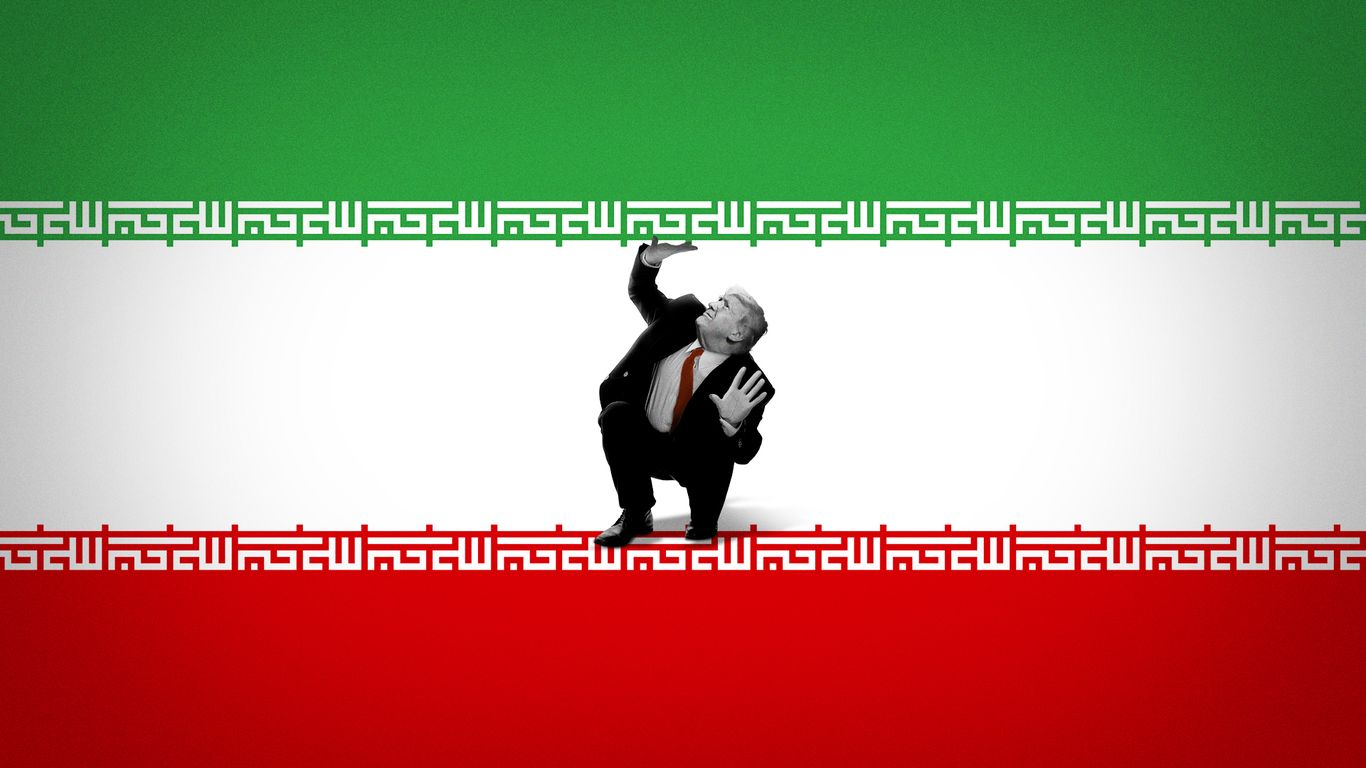
President Trump is engaged in a conflict with Iran that has lasted for three weeks. The war is creating challenges that require careful management, unlike previous actions that could be resolved quickly. Other countries are concerned about the stability in the Middle East and the impact on oil flow.
Key Facts
President Trump is dealing with a war in Iran in its third week.
The conflict is more difficult to resolve than other quick actions like tariffs.
Israel is pushing for a change in Iran's regime and is planning more attacks.
Iran aims to show strength and cause pain to prevent future attacks.
The stability of the Persian Gulf and oil flow is a concern for other nations.
U.S. officials believe the conflict might last until September, even if tensions decrease.
President Trump claims significant damage to Iran's military capabilities.
Some of Trump's advisors are worried that starting the conflict was a mistake.
Read the Original
Want the full story? Tap a source to open the original
article.
Many people in southern Lebanon are leaving their homes and finding safety in schools and stadiums in Beirut due to Israeli air attacks. The conflict expanded after Hezbollah in Lebanon fired rockets into Israel, which they did following the death of Iran's Supreme Leader.
Key Facts
Over 800,000 people in Lebanon have fled their homes because of Israeli air attacks.
The conflict heightened after Hezbollah launched rockets at Israel.
Hezbollah's action followed the death of Iran's Supreme Leader, Ayatollah Ali Khamenei.
Prior to this conflict, Hezbollah had not attacked Israel since the November 2024 ceasefire.
About 132,000 displaced people are in official shelters in Lebanon.
Many displaced people are staying with relatives, in unfinished buildings, or on the streets.
At least 850 people have died, and more than 2,100 were injured in Lebanon due to the attacks.
The United Nations has requested $308 million in aid to help Lebanon.
Read the Original
Want the full story? Tap a source to open the original
article.
Israel, the U.S., and Iran have used covert operations for spying, sabotage, and targeted killings against enemies abroad. These secret missions have included political assassinations, sabotage, and espionage. The article highlights specific examples from each country's covert activities.
Key Facts
Israel ran Operation Wrath of God in response to the 1972 Munich Olympics attack, targeting Palestinian groups.
In 2010, Mossad agents reportedly killed Mahmoud al-Mabhouh in Dubai.
Iran's top nuclear scientist, Mohsen Fakhrizadeh, was assassinated using a remote-controlled machinegun hidden in a truck.
The CIA led a covert operation in 1953 that overthrew Iran's Prime Minister Mohammad Mossadegh.
Operation Merlin in 2000 was a failed CIA mission involving flawed plans for a nuclear bomb sent to Iran.
In 2011, Manssor Arbabsiar was convicted for plotting to kill the Saudi Arabian ambassador to the U.S.
Ayatollah Ali Khamenei was assassinated in 2026 with Israeli intelligence and CIA assistance.
Recent cyberattacks and arrests have been linked to Iran's Revolutionary Guard Corps.
Read the Original
Want the full story? Tap a source to open the original
article.
Muslims gathered to pray outside the Al-Aqsa Mosque during the significant night of Laylat al-Qadr in the month of Ramadan. The mosque remained closed to worshippers due to restrictions by Israeli authorities.
Key Facts
Muslims gathered for prayer near the Al-Aqsa Mosque, an important religious site.
The occasion was Laylat al-Qadr, a holy night in the Islamic month of Ramadan.
The Al-Aqsa Mosque was closed by Israeli authorities at the time.
Laylat al-Qadr is considered one of the most sacred nights in Islam.
The closure led worshippers to pray in the streets outside the mosque.
Read the Original
Want the full story? Tap a source to open the original
article.
The United States and Israel are engaged in a conflict with Iran that has continued for 17 days. The fighting has led to significant damage, including the closure of a key global oil route and over 2,300 deaths. The conflict involves missile and drone attacks and affects numerous countries, with heavy bombardments in Iran's capital, Tehran.
Key Facts
The conflict has continued for 17 days and involves the United States, Israel, and Iran.
Over 2,300 people have died as a result of the conflict.
The Strait of Hormuz, a major route for oil transport, is closed.
Iran's capital, Tehran, has seen the most intense attacks.
The US and Israel have targeted Iran's nuclear, military, and energy sites.
At least 18 hospitals and health facilities in Iran have been hit.
Iran's attacks have targeted sites in Israel and US interests in the Gulf region.
Advanced weaponry, including drones and missile systems, is being used by both sides.
Read the Original
Want the full story? Tap a source to open the original
article.
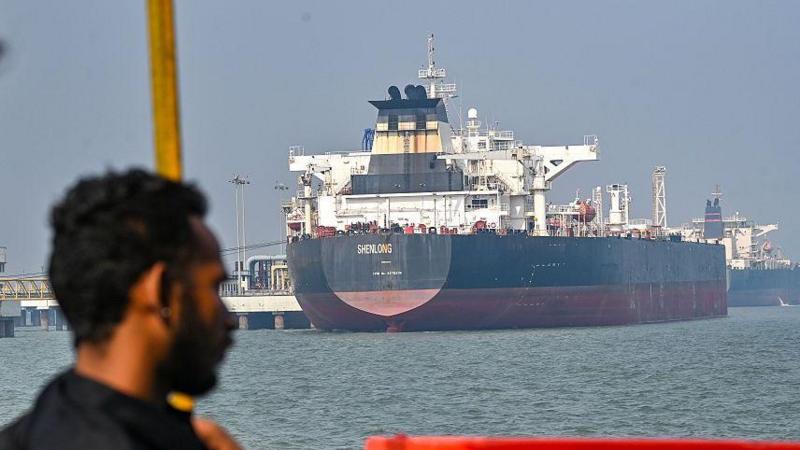
India is talking with Iran to ease the passage of its ships through the Strait of Hormuz, a crucial waterway for oil and gas imports. The talks come after Iran nearly closed the route following a conflict in the Middle East that started when the US and Israel launched strikes on Iran.
Key Facts
India's Foreign Minister, S Jaishankar, said discussions with Iran are ongoing.
Two Indian-flagged gas tankers recently passed through the Strait of Hormuz after diplomatic talks.
The Strait of Hormuz handles about one-fifth of the world's oil and gas shipping.
The conflict in the Middle East began after the US and Israel launched attacks on Iran on February 28.
India relies on the strait for 40-50% of its crude oil imports and other gas supplies.
The recent tensions have affected cooking gas supplies in India, causing panic buying.
Jaishankar emphasized dialogue for resolving the crisis rather than escalating tensions.
President Trump has encouraged countries to send ships to help keep the Strait of Hormuz open.
Read the Original
Want the full story? Tap a source to open the original
article.
The US-Israel conflict with Iran has been ongoing for 17 days, with Israel launching new attacks on Tehran. Tensions are high in the Gulf region, with drone incidents causing disruptions, and the US and regional countries responding to the situation. President Donald Trump accused Iran of using AI to spread false information about the conflict.
Key Facts
Israel launched new strikes on Tehran, targeting Iranian positions.
A drone incident led to a temporary suspension of flights at Dubai airport.
Iran reported damage to a clinic and aid post from Israeli raids.
Trump claimed Iran is using AI for spreading disinformation.
Saudi Arabia intercepted 37 drones, and other Gulf countries also reported drone interceptions.
Iran arrested 18 people allegedly linked to a pro-Israel news channel.
As of the latest reports, 1,444 people have died, and 18,551 were injured in Iran.
US claimed it hit Iran's drone factories, with President Trump saying Iran's military capability is weakened.
Read the Original
Want the full story? Tap a source to open the original
article.
Several flights from Dubai International Airport were redirected after a drone attack caused a fire near the airport. Iran has been launching missile and drone attacks on Gulf countries, disrupting civilian infrastructure and travel. Gulf nations condemned Iran's actions and called for de-escalation while expressing their intent to defend their territories.
Key Facts
Dubai International Airport, a busy global transit hub, redirected flights due to a nearby drone attack.
The fire near the airport was contained without reports of injuries.
Abu Dhabi reported a missile hitting a civilian vehicle, resulting in one death.
A drone attack in Fujairah’s industrial zone led to another fire.
Iran has launched over 1,800 missiles and drones at the UAE amid regional conflict.
Gulf countries, including Saudi Arabia, Qatar, and Kuwait, reported numerous drone interceptions.
The recent tensions follow joint US-Israel airstrikes on Tehran.
Gulf leaders issued a joint statement condemning Iran's attacks and calling for peace.
Read the Original
Want the full story? Tap a source to open the original
article.
Oscar winner Pavel Talankin spoke out against wars during his award acceptance speech. He received an Oscar for the best documentary for "Mr Nobody Against Putin."
Key Facts
Pavel Talankin is an Oscar-winning filmmaker.
He won the best documentary award.
The documentary is titled "Mr Nobody Against Putin."
Talankin called for an end to all wars in his speech.
The statement was made during the Oscars event.
Read the Original
Want the full story? Tap a source to open the original
article.
An episode from the program "Witness History" discusses a 2006 nuclear deal between the United States and India which ended India's isolation due to its nuclear policies. Alongside the nuclear agreement, the deal included the import of Indian mangoes to the U.S. The conversation includes insights from Ronen Sen, a former Indian ambassador to the U.S.
Key Facts
The episode is part of the "Witness History" series by the World Service.
On 2 March 2006, the U.S. and India finalized a nuclear deal.
The deal ended India's three decades of international isolation over nuclear policy.
U.S. President at the time, George W. Bush, and India's Prime Minister, Manmohan Singh, agreed on the terms.
The agreement included cooperative measures on nuclear power and importing Indian mangoes.
Ronen Sen, former Indian ambassador to the U.S., shares insights in the episode.
"Witness History" covers a wide range of historical events and aims to bring eyewitness experiences to life through archival material.
Read the Original
Want the full story? Tap a source to open the original
article.
Japan is releasing oil from its emergency reserves because of an energy crisis caused by Iran closing a key waterway in response to attacks. The Japanese government announced plans to release 80 million barrels of oil as the Strait of Hormuz remains a chokepoint for global oil supply. Despite efforts to stabilize the market, oil prices continue to be volatile due to ongoing disruptions.
Key Facts
Japan started using its oil reserves due to an energy crisis linked to issues in the Strait of Hormuz.
The announcement of the oil release was made on Monday through an official government notice.
Japan plans to release 80 million barrels of oil to help with supply concerns.
The International Energy Agency (IEA) plans to release 400 million barrels worldwide to stabilize markets.
Oil prices are fluctuating, with Brent crude reaching $104.85 a barrel on Monday.
The strait usually handles about 20% of the world's oil transportation.
Japan relies on overseas fossil fuels for approximately 80% of its energy needs and has large oil reserves for emergencies.
Read the Original
Want the full story? Tap a source to open the original
article.
Madagascar's President, Michael Randrianirina, appointed Mamitiana Rajaonarison, the country's anticorruption chief, as the new Prime Minister. This change follows the recent dismissal of the previous Prime Minister and the entire cabinet. The new government's goal is to restore integrity and address issues such as corruption and public trust.
Key Facts
President Michael Randrianirina of Madagascar took power in October.
Mamitiana Rajaonarison, the anticorruption chief, is now the Prime Minister.
The previous Prime Minister, Herintsalama Rajaonarivelo, and the cabinet were dismissed last week.
Rajaonarison led Madagascar's Financial Intelligence Unit since 2021.
Recent protests in Madagascar led to political changes, with Randrianirina's army unit supporting demonstrators.
President Randrianirina denies accusations of a coup, claiming the Constitutional Court transferred power to him.
Randrianirina plans a two-year transition, aiming for presidential elections in 2027.
Key goals include drafting a new constitution and combating corruption.
Read the Original
Want the full story? Tap a source to open the original
article.
That's the point of this site, and readers keep it that way. Support for any amount and the daily digest lands in your inbox every morning at 7am Eastern.
School holiday supermarket vouchers for families getting free school meals will no longer be automatically given out due to changes in government funding. The British government replaced the Household Support Fund with a new Crisis Resilience Fund, which offers similar overall funding but differently distributed. Bracknell Forest Council and other local councils are adjusting to the funding change by offering different support, like low-cost activities, though some councils are still deciding on future steps.
Key Facts
The Household Support Fund (HSF) has been replaced by the Crisis Resilience Fund (CRF).
Bracknell Forest Council's funding decreased slightly from £979,000 to just under £907,000.
CRF funding is used for emergencies like sudden expenses or income drops.
The new distribution method means some councils get less funding.
School holiday supermarket vouchers will not be automatically provided anymore for eligible families.
Some councils will offer low-cost activities through the Holiday Activities and Food programme.
Decisions on voucher schemes are pending for some councils like Reading, Slough, and Wokingham.
A government spokesperson said the CRF aims to prevent families from falling into long-term financial troubles.
Read the Original
Want the full story? Tap a source to open the original
article.
People in Wales are frustrated with the rising number of potholes on the roads. Sharon Williams, who was injured after falling into a pothole, and other residents are expressing safety concerns. The Welsh government has spent money to fix the roads, but many believe the problem persists.
Key Facts
Sharon Williams was injured after tripping on a pothole in Carmarthenshire, Wales.
The RAC reported an increase in potholes due to frequent rain.
A tyre-fitting business in South Wales noticed more customers with pothole-related damage.
The Welsh government allocated an extra £120 million for road repairs in recent years.
Statistics show 11,250 potholes were fixed in Wales from April 2025 to January 2026.
Over 185,935 potholes were prevented by resurfacing nearly 400 miles of roads in Wales.
Some Welsh councils reportedly reject most compensation claims for pothole damages.
Residents like Julian Morgan express concerns about road safety due to potholes.
Read the Original
Want the full story? Tap a source to open the original
article.