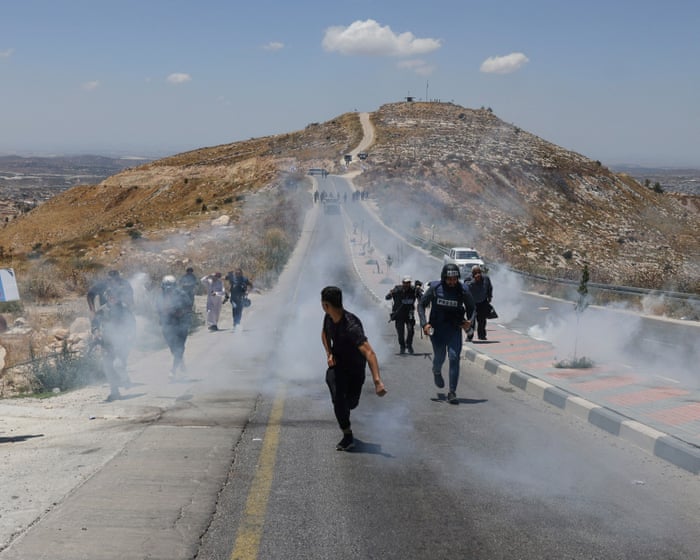
The UK government, led by Foreign Secretary Ed Miliband, announced strong new sanctions against Israeli settlements in the West Bank, criticizing their expansion as illegal and harmful to peace efforts. This marks the toughest UK stance on Israel’s settlement policy, aiming to address ongoing conflicts and support a two-state solution.
Key Facts
British governments have long condemned Israeli settlements as obstacles to peace but had not enforced measures to stop their growth.
Ed Miliband gave a powerful speech condemning Israeli settlements and announced new sanctions to address the issue.
The number of Israeli settlers in the West Bank and East Jerusalem has grown from 270,000 in 1993 to about 770,000 today.
Israeli government plans to build 1,200 homes in the E1 settlement threaten to split the West Bank and undermine the two-state solution.
The UK’s new sanctions target trade linked to Israeli settlements to pressure Israel to stop expansion.
The announcement reflects a stronger and more consistent UK approach compared to previous foreign secretaries.
The decision also reflects Labour’s strategy to regain support from left-leaning voters.
Israeli support for settlements remains strong across political parties despite international criticism.
Read the Original
Want the full story? Tap a source to open the original
article.
A U.S. airstrike hit the Shajareh Tayyebeh school in Minab, southern Iran, on February 28, killing many children and teachers. Families are mourning the loss of their loved ones and trying to understand the tragedy.
Key Facts
The airstrike happened on February 28, 2026, the first day of the war on Iran.
At least one U.S. missile struck the Shajareh Tayyebeh school.
Iranian media report 168 people died, mostly children.
Around 120 children were killed after being dropped off at school.
Heydar Sadeghi lost his 11-year-old grandson, Hami, and other family members in the attack.
Hami’s younger sister, Nila, survived after being pulled from the rubble.
The U.S. government has not officially accepted responsibility or shared investigation results.
The school ruins have become a place for families to grieve and remember the victims.
Read the Original
Want the full story? Tap a source to open the original
article.
Norway will hold a funeral for King Harald V, who died at 89 after a 35-year reign. Leaders and royalty from Europe and other parts of the world will attend to honor the late king, and his son Haakon has become King Haakon VIII.
Key Facts
King Harald V died on August 28 at the age of 89.
He was Europe’s oldest monarch and ruled Norway for 35 years.
Harald modernized the Norwegian royal family but chose not to abdicate, unlike other monarchs.
His son, Haakon, immediately became the new king and swore allegiance to Norway’s constitution.
The funeral procession will move from the royal palace to Oslo Cathedral.
Many foreign royals, including Sweden’s, Denmark’s, Spain’s, the UK’s Prince William, and Japan’s Crown Prince Akishino, will attend the funeral.
Norwegians have queued for hours to pay respects as Harald’s coffin lay in state.
Security is strict for the funeral, with vehicle bans and restrictions on items like bicycles and umbrellas.
After the funeral, Harald’s coffin will be taken to Akershus Castle for a private burial with family and officials.
Read the Original
Want the full story? Tap a source to open the original
article.
A Russian strike damaged a couple’s home in Kyiv on the night before their wedding, but the couple still went ahead with their ceremony despite the war. The attack destroyed parts of their apartment and delayed their plans, but they decided not to let the violence stop their wedding.
Key Facts
The couple, Liudmyla Ryzhak and Leonid Ryzhak, were preparing to marry in Kyiv, Ukraine.
Leonid Ryzhak is a Ukrainian soldier who had been fighting in eastern Ukraine.
A Russian strike hit a warehouse nearby, causing a blast that damaged their apartment.
The explosion broke windows and scattered furniture, making their home unsafe.
Liudmyla had to retrieve her wedding dress and skirt from the rubble.
Despite repeated delays due to the war, the couple chose to hold the wedding as planned.
The couple fled to a shelter with Liudmyla’s daughter and guinea pigs after the blast.
Russian missiles and drone attacks continued in Kyiv around the time of the wedding.
Read the Original
Want the full story? Tap a source to open the original
article.
Two Cleveland police officers, PC Matthew Blades and PC Tom Clough, died in a crash involving a wrong-way driver on the A66 near Middlesbrough. A funeral for PC Blades will be held in Hartlepool with road closures to allow a full police ceremony.
Key Facts
PC Matthew Blades, 37, and PC Tom Clough, 38, were killed on August 22 in a crash with a Volkswagen Passat.
The crash also killed five young men aged between 17 and 23.
The Passat had been involved in alleged criminal activity and was driving the wrong way on the road.
The police officers were searching for the Passat after its fake license plate was detected by an automated camera, but they were not in an active pursuit at the time of the crash.
PC Blades was a father of two and had worked as an English teacher before joining the police.
The funeral for PC Blades will include police honors and road closures starting at 7:30 am BST in Hartlepool.
Officers and community members are mourning the loss and recognizing the officers' dedication and service.
Read the Original
Want the full story? Tap a source to open the original
article.
European democracies face growing challenges from far-right nationalist parties, such as Germany’s Alternative für Deutschland (AfD), which reject efforts to come to terms with their countries' extremist pasts. This rise is influencing political dynamics across Europe and has connections to support from some figures and movements in the United States and Britain.
Key Facts
Europe was once seen as a model of liberal tolerance and hoped for unity beyond national and religious differences.
The far-right party AfD won a significant vote in Saxony-Anhalt, Germany, raising concern due to Germany’s history with fascism.
AfD rejects full acknowledgment of Germany’s past and promotes nationalist and racist ideas.
French far-right leader Marine Le Pen seeks more mainstream acceptance and distances herself from AfD’s extremism.
Elon Musk supports AfD through his social media platform X and helps spread their messages.
US Vice President JD Vance met with the AfD co-leader, showing political ties that bypass German leaders.
America’s national security strategy under President Trump supports “patriotic resistance” movements opposing immigration in Europe.
In Britain, far-right groups and individuals compete with figures like Nigel Farage for influence, with some being more extreme.
Read the Original
Want the full story? Tap a source to open the original
article.
A study of 5,800 Europeans found most want a united and strong Europe but doubt it can be achieved. Many see Europe facing big problems like war and economic stress, yet feel the continent is not handling them well, leading to worry about Europe's future.
Key Facts
The study included interviews from France, Germany, Italy, the Netherlands, Poland, and the UK.
68% of respondents said Europe is getting worse or losing normal conditions.
Only 12% saw this time as a chance for Europe to renew itself.
43% identified war as a major challenge, 33% mentioned economic pressures, and 29% want Europe to be more independent internationally.
74% believe Europe is not managing these challenges well.
56% think Europe’s future is at risk.
73% want a stronger Europe with more unity, peace, security, and prosperity.
The study grouped voters into four types: Positives (19%), Negatives (39%), Disconnected (12%), and Uncertain (31%).
Many people say Europe talks a lot but acts slowly, which causes frustration.
Read the Original
Want the full story? Tap a source to open the original
article.
Several women have spoken publicly about being exploited by drug gangs as teenagers in the UK. They say gang members used them for drug trafficking and sexual abuse, while police and authorities failed to protect them or take their claims seriously.
Key Facts
Christine started talking online to a man she thought was a teenager but was 10 years older and involved in gangs and drugs.
Over years, Christine was forced to carry drugs, sexually abused, and violently assaulted.
Four women shared their stories in a BBC documentary about being exploited by drug gangs from 2002 to recent years.
The women describe being manipulated by gang members into abusive relationships and repeated sexual exploitation.
Experts say drug gangs exploit girls mainly to make money but often also sexually abuse them.
Authorities have been criticized for not protecting these victims or responding properly to their allegations.
A government audit found authorities often fail victims of group-based sexual abuse in England and Wales.
An independent inquiry is planned to investigate the issue of drug gangs and sexual exploitation.
Read the Original
Want the full story? Tap a source to open the original
article.
Rescuers in Indonesia are searching for eight people, including five photojournalists, who went missing at sea near the Anak Krakatau volcano. The group lost contact after traveling from the mainland toward the volcano, which has been erupting intermittently.
Key Facts
Eight people went missing at sea near Anak Krakatau volcano: five photojournalists, two crew members, and one guide.
The group departed from Carita, Banten province, heading to Anak Krakatau island.
The last contact was on Monday evening when they reached waters near the volcano.
Rescuers began searching on Tuesday but have not found or contacted the missing group.
Anak Krakatau continues to erupt intermittently, ejecting lava and ash.
The eruption caused airport closures affecting nearly 3,000 flights and around 341,000 passengers.
Schools in affected areas were temporarily switched to online learning to avoid volcanic ash exposure.
Anak Krakatau formed after the powerful 1883 Krakatau eruption and is located in a volcanic region known as the Pacific “Ring of Fire.”
Read the Original
Want the full story? Tap a source to open the original
article.
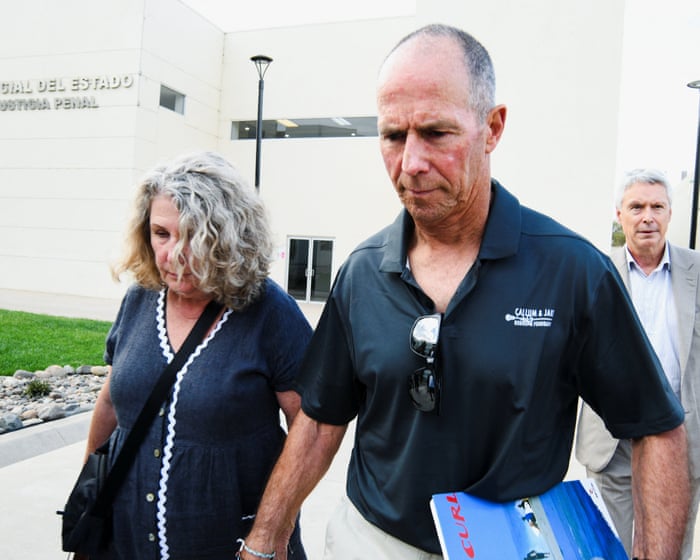
The father of two Australian surfers killed in Mexico spoke in court about the pain of losing his sons as their murder trial continues. Three men are accused of killing the surfers and their American friend during a robbery attempt in April 2024.
Key Facts
Australian brothers Jake and Callum Robinson, aged 30 and 33, and American Jack Carter Rhoad, 30, were killed on a surfing trip to Mexico’s Pacific coast.
Their bodies were found in a cliff-top shaft with gunshot wounds to the head.
Authorities said the killings happened during an attempted robbery of their pickup truck, which was later burned.
The victims’ father described identifying his sons’ bodies, including using a tattoo to identify Callum.
A protected witness said they went to the crime scene with one defendant but fled after hearing gunshots and were later threatened.
The surfers’ deaths caused widespread grief in Australia and the US and led to a big social media search for their bodies.
The trial is expected to continue until the end of September.
The widow of Jack Carter Rhoad is expected to give testimony soon.
Read the Original
Want the full story? Tap a source to open the original
article.
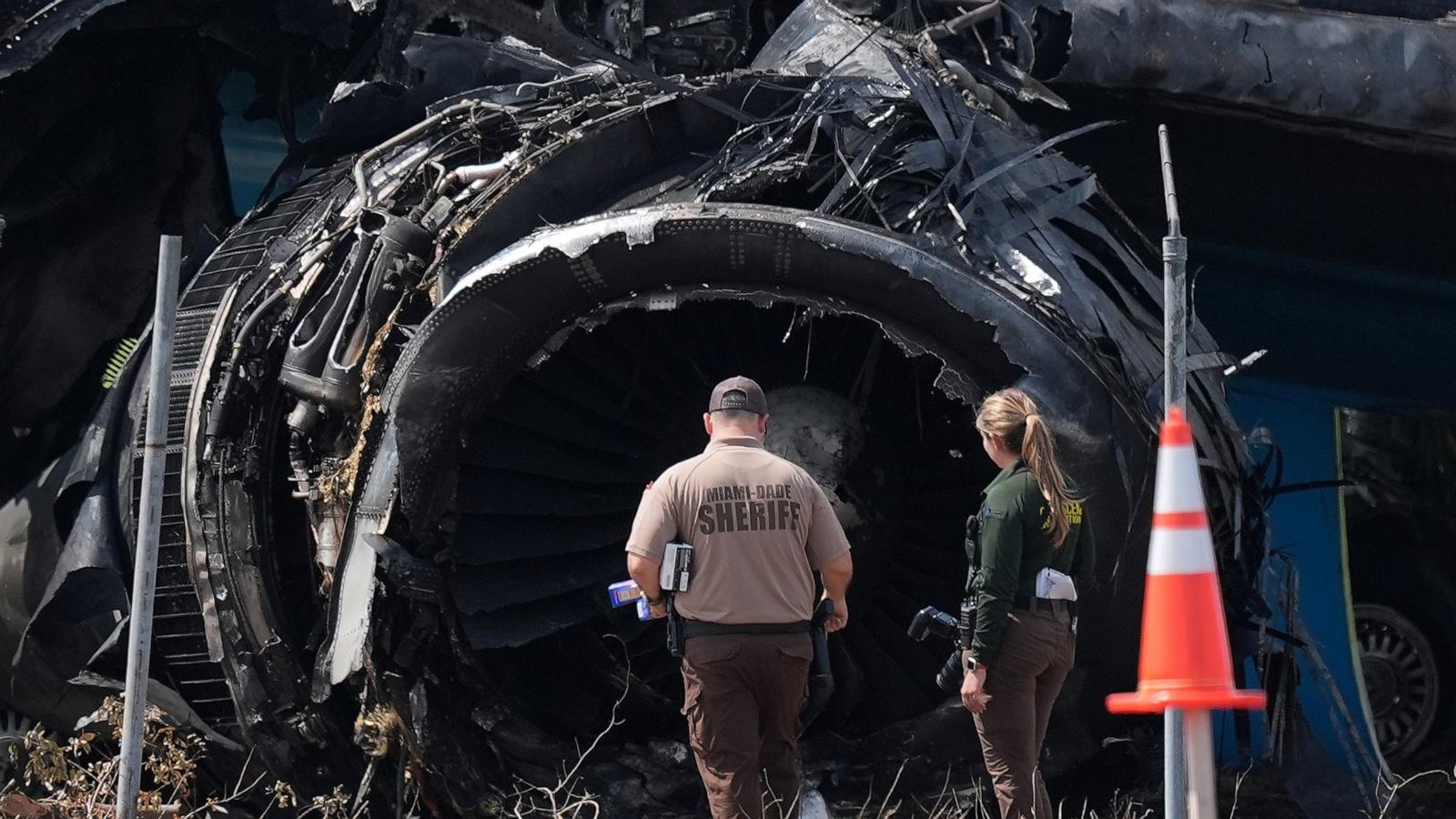
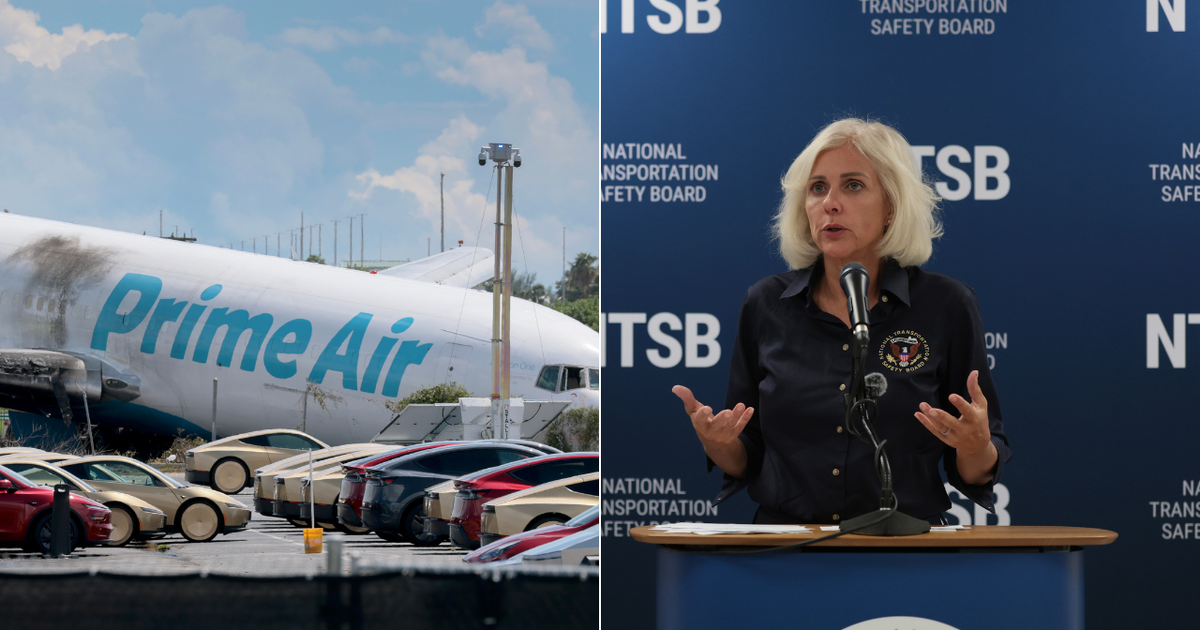
The National Transportation Safety Board (NTSB) is investigating a crash involving an Amazon Air cargo plane that overran a runway at Miami International Airport, killing five people. Investigators have recovered cockpit recordings and data from the flight and plan to release a readout after interviewing the pilots.
Key Facts
The crash happened on Sunday when an Amazon Air cargo plane overshot the runway at Miami International Airport.
Five people died when the plane hit a van with seven people inside; the van belonged to an aircraft cleaning company.
The two pilots were treated for injuries and have been released from the hospital.
The cargo plane was carrying about 32,000 pounds of mostly contact lenses, arriving from Puerto Rico.
Investigators recovered two important devices: the cockpit voice recorder with 2 hours of audio and the flight data recorder with 55 hours of data.
Data shows the plane was landing, then the throttles increased for a "go-around" maneuver before the plane hit the van.
No speed brakes or thrust reversers were used, but brakes were applied just before the crash.
The NTSB plans to release the cockpit voice recorder readout after interviewing the pilots.
Read the Original
Want the full story? Tap a source to open the original
article.
Four Renoir paintings were stolen from the Renoir Museum in Cagnes-sur-Mer, France, on September 8, 2026. Two paintings were later found in the museum garden, but two others remain missing. Experts say it is very difficult to sell stolen famous paintings because buyers usually avoid the risks involved.
Key Facts
The theft involved four paintings by Pierre-Auguste Renoir, a famous painter.
Two of the stolen paintings, “Portrait of Madame Pichon” and “Coco Reading,” were dropped and recovered in the museum garden.
“Portrait of Madame Colonna Romano” and “Young Woman at the Well” are still missing.
The total estimated value of the stolen paintings is about 9 million euros ($10.5 million).
Experts say stolen high-profile paintings lose most of their value because they cannot be sold openly or easily.
Stolen art usually does not fetch high prices since most buyers avoid legal risks.
Some thieves try to make money through ransom or insurance, but many museums don’t have insurance for artwork.
Stolen paintings may remain hidden or be destroyed to avoid evidence.
Read the Original
Want the full story? Tap a source to open the original
article.
Street acrobats perform at traffic stops in Nairobi, Kenya, to entertain drivers stuck in heavy traffic. They rely on tips from motorists as a way to earn money in a country with high unemployment.
Key Facts
The acrobats appear at traffic lights in Nairobi, performing stunts and juggling to entertain waiting drivers.
They began performing in this way during the COVID-19 pandemic in 2020.
The acrobats hope to earn tips, usually small amounts like 50 Kenyan shillings (about 40 cents).
Some acrobats, like Mohammed Nyale, started at a young age and moved to Nairobi seeking a better career.
The performers practice their routines early in the morning in a poor neighborhood called Kawangware.
They perform mainly during morning rush hour until about noon.
On good days, they can earn roughly $6, similar to wages in construction or farming jobs in Kenya.
Many Kenyans use mobile wallets, so acrobats share phone numbers for digital tips.
Read the Original
Want the full story? Tap a source to open the original
article.
Iran-backed fighters from Yemen and Iraq have coordinated attacks on Saudi oil facilities, raising tensions in the Gulf. Saudi Arabia and the U.S. responded with airstrikes targeting these militias and Iranian advisors, amid concerns of escalating regional conflict.
Key Facts
Iran supports armed groups in Yemen (Houthis) and Iraq that threaten Saudi Arabia and other Gulf countries.
In July 2026, Saudi Arabia and the U.S. launched airstrikes on Iran-backed militias in Iraq after drone attacks on Saudi oil sites.
The Houthis helped Iraqi militias plan and carry out a two-day swarm drone attack.
The attacks aim to increase pressure on Saudi Arabia and U.S. allies during ongoing regional conflicts involving Israel and Gaza.
Saudi and U.S. airstrikes killed at least 20 Iraqi fighters, six Iranian advisers, and one Houthi official.
Iraqi militias officially refuse to disarm despite government orders by the end of September 2026.
The U.S. is worried about the Houthis’ ability to launch attacks from Iraq on neighboring countries.
Increased economic sanctions on Iran may lead to further escalation of violence in the region.
Read the Original
Want the full story? Tap a source to open the original
article.
A study found that babies born to mothers with anaemia have smaller brains, especially in areas important for movement, learning, and emotions. These brain differences appear by one year old and may cause thinking and learning problems when children start school.
Key Facts
Anaemia in mothers means they have fewer red blood cells, often due to iron deficiency.
Over one-third of pregnant women worldwide have anaemia, especially in sub-Saharan Africa and South Asia.
Researchers studied over 300 mothers and babies in Cape Town, South Africa, using brain scans from 3 months to 2 years old.
Babies of anaemic mothers had brains about 4% smaller on average, even when mothers had mild anaemia.
The brain regions affected include the putamen, caudate nucleus, and corpus callosum, areas linked to movement, emotion, and thinking skills.
The brain size gap between babies of anaemic and non-anaemic mothers grew larger by age 2.
Brain differences persisted in children up to six years old, potentially affecting their learning at school.
The study suggests screening and treating anaemia in pregnant women is important, using methods like iron supplements and managing infections such as HIV.
Read the Original
Want the full story? Tap a source to open the original
article.
The National Transportation Safety Board (NTSB) is investigating an Amazon cargo plane crash in Miami that killed five people on the ground. Investigators plan to interview the two pilots, review flight data, and gather evidence to find out why the plane overshot the runway during landing.
Key Facts
The cargo plane crashed on Sunday after overshooting a runway at Miami International Airport.
Five people on the ground died in the accident.
The two pilots, a 55-year-old captain and a 37-year-old first officer, were released from the hospital and will be interviewed by the NTSB.
Both the cockpit voice recorder and flight data recorder were recovered and contain detailed information about the flight.
The plane was a Boeing 767-33, carrying about 32,000 pounds of cargo, mostly contact lenses.
Investigators found no signs that speed brakes or thrust reversers were used during landing.
The plane stopped about 1,300 feet beyond the runway, hitting vehicles before catching fire.
The NTSB team is also talking to air traffic controllers and others present at the time of the crash.
Read the Original
Want the full story? Tap a source to open the original
article.
Tung Chee-hwa, the first leader of Hong Kong after it returned to Chinese rule in 1997, has died at 89. He served as chief executive during difficult times, including economic crisis, health outbreaks, and major protests, and resigned in 2005.
Key Facts
Tung Chee-hwa became Hong Kong’s first chief executive in July 1997 after Britain handed the city back to China.
He was born in Shanghai in 1937 and studied mechanical engineering in the UK.
Before politics, he led his family’s shipping company, Orient Overseas.
His time as leader included the Asian Financial Crisis and two health epidemics: bird flu and SARS.
In 2003, half a million people protested a proposed national security law that many feared would reduce their freedoms.
Tung resigned in 2005, with health reasons cited, though some said he faced pressure from Beijing.
Beijing imposed a national security law on Hong Kong in 2020, which officials say keeps order but critics say limits freedoms.
Tung died surrounded by family, and his office praised his character and dedication.
Read the Original
Want the full story? Tap a source to open the original
article.
The National Park Service expects to restore the Grand Canyon’s water supply within weeks after a flash flood damaged the main water pipeline. The damage did not affect most of a new pipeline project, and temporary water intake construction will begin soon to provide water while repairs continue.
Key Facts
A flash flood on August 29 caused two deaths, left one person missing, and led to about 80 rescues at the Grand Canyon.
The main water pipeline, the 12.5-mile Transcanyon Waterline, was damaged but most of a near-complete upgrade project was not affected.
The pipeline supplies water to millions of visitors and about 1,600 residents of the Grand Canyon Village.
Officials plan to build a temporary water intake this week to provide water at pre-flood levels.
The ongoing repair and upgrade project costs more than $200 million and will secure water supply for over 50 years.
Water conservation is currently encouraged for residents and tourists due to limited stored water.
Overnight stays at the park have paused three times since August 2024 because of pipeline failures.
Residents are adapting by conserving water in daily activities like limiting showers and reusing water.
Read the Original
Want the full story? Tap a source to open the original
article.
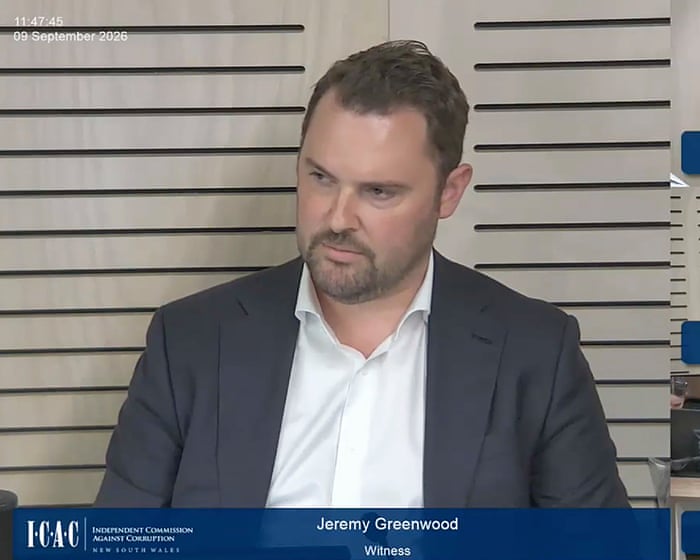
A corruption inquiry (ICAC) is investigating claims that a political operative, Jeremy Greenwood, and others received payments from a fugitive property developer, Jean Nassif, in exchange for fast-tracking development projects. Greenwood denied inventing a colorful paper note said to be proof of their agreement, and key figures related to the case have denied wrongdoing or are yet to give evidence.
Key Facts
Jeremy Greenwood is a political operative who told ICAC about an agreement with developer Jean Nassif involving payments for fast-tracking projects.
The agreement allegedly involved $1 million per project for up to five projects, totaling up to $5 million.
Greenwood described a pink or fuchsia folded note as the only written proof of this deal.
Greenwood, Charles Perrottet, and Christian Ellis are accused of sharing about $2 million in payments from Nassif between 2020 and 2023.
Charles Perrottet and Greenwood deny accepting illegal donations; Ellis is overseas and not participating in hearings.
Dominic Perrottet, former premier and brother of Charles, is not involved in the investigation.
Greenwood said a lawyer friend, Sharangan Maheswaran, acted for him and had a verbal payment agreement, raising possible conflict of interest issues.
Jean Nassif, the developer, is a fugitive and was expected to appear by video, but delayed with a medical certificate.
Read the Original
Want the full story? Tap a source to open the original
article.
A 12-year-old boy named Samuel Henderson has become well-known online for his ability to copy over 100 different bird calls. He shared his interest in birds and how he learned to mimic their sounds.
Key Facts
Samuel Henderson is 12 years old.
He can mimic over 100 bird calls.
Samuel has become popular on social media for his skill.
He started learning to copy bird sounds because he likes birds.
The article highlights his talent and how he shares it with others.
Read the Original
Want the full story? Tap a source to open the original
article.