President Donald Trump shared a map on Truth Social showing expanded U.S. borders that include parts of Canada and other territories. The United States and Canada have unresolved disputes over land and maritime borders, especially in the Arctic, where valuable resources are at stake. Both countries have begun talks to try to solve some of these disagreements.
Key Facts
President Trump posted an AI-generated map showing expanded U.S. territory including parts of Canada.
Trump has previously referred to Canada as the "51st state" and renamed some geographic features like Lake Ontario to Lake America.
The U.S. and Canada have multiple unresolved border disputes that started long before Trump’s presidency.
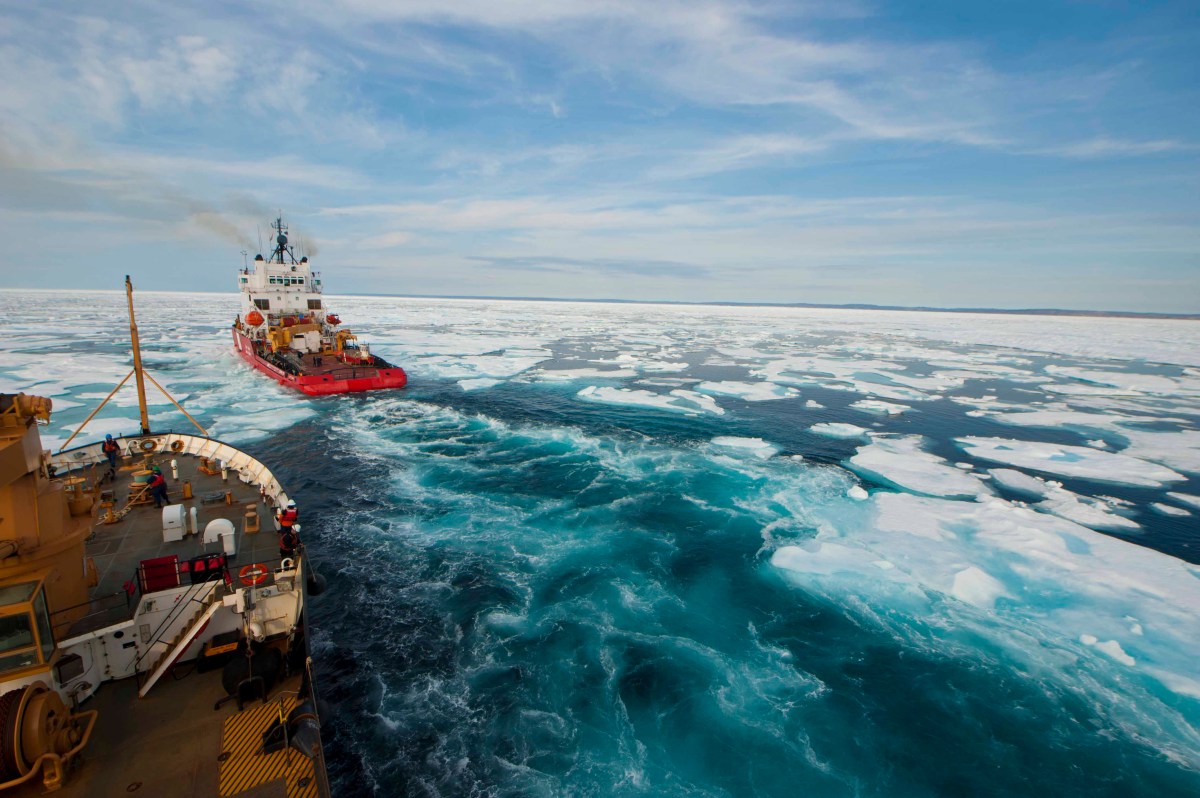
One major disagreement is over the Beaufort Sea in the Arctic, a region thought to have large oil and gas reserves.
The dispute over Arctic boundaries comes from different interpretations of an 1825 treaty between Russia and Great Britain.
Canada wants the boundary to follow the 141st meridian northward, while the U.S. proposes a different offshore boundary.
In September 2024, the U.S. and Canada formed a joint task force to negotiate the maritime border and continental shelf claims.
Experts warn that Canada is preparing to strengthen its defense as tensions with the U.S. increase over these territorial issues.
Read the Original
Want the full story? Tap a source to open the original
article.
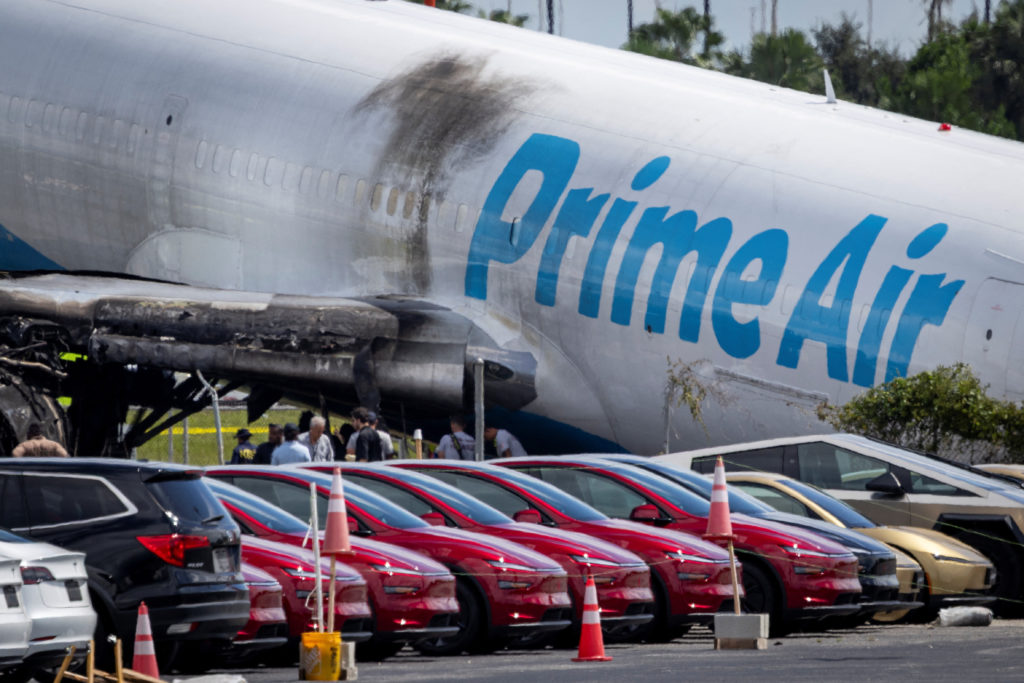
An Amazon cargo plane went off the runway while landing at Miami International Airport and hit a van used to transport plane cleaners, killing all five people inside. The crash also injured five others and is now under investigation by the National Transportation Safety Board (NTSB).
Key Facts
The cargo jet overran the runway, hit a cleaning crew van, went through a fence, and crashed into an SUV on a city street.
All five people killed were in the van owned by Professional Ocean Service Corp., which cleans airplanes.
Five other people were injured; the pilot and co-pilot have been released from the hospital.
The NTSB is investigating why the plane could not stop, including the absence of a system to slow or stop jets that go off the runway.
Miami International Airport does not have a special safety system found in about 120 U.S. airports, but it has a long safety zone at the runway’s end.
The plane landed during strong winds, and experts think the wind pushed the plane farther down the runway than expected.
The pilot did not abort the landing despite the difficult conditions, and air traffic control did not change the landing plan to face the wind.
The plane was originally a passenger jet but was converted to a cargo plane and operated by 21 Air for Amazon.
Read the Original
Want the full story? Tap a source to open the original
article.
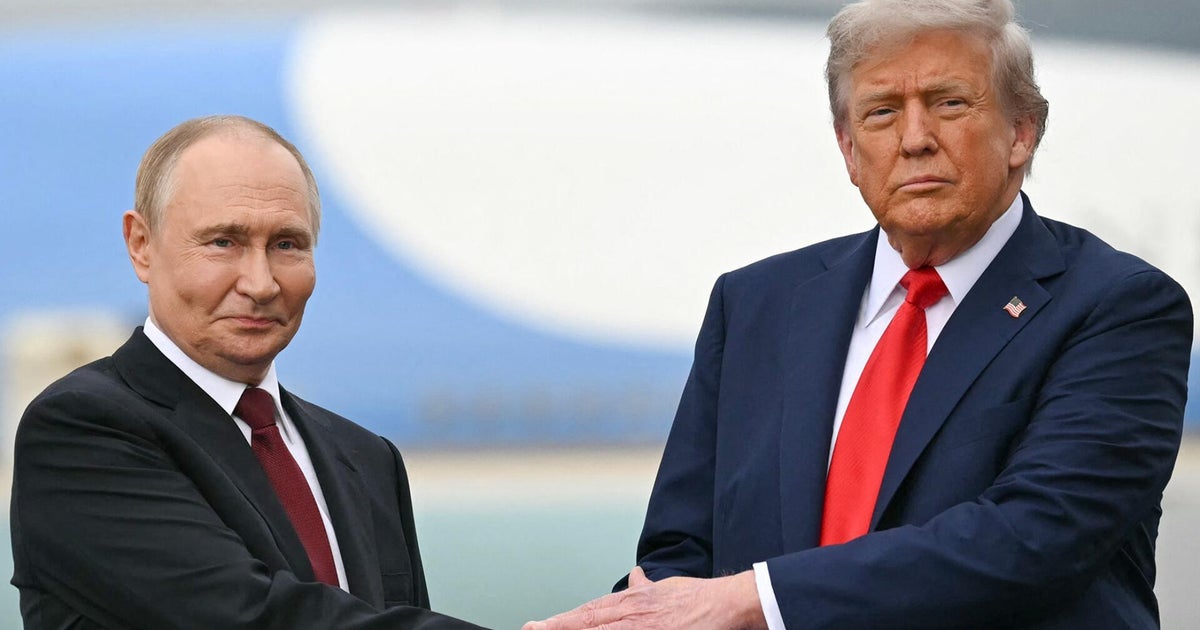
President Donald Trump and Russian President Vladimir Putin spoke on the phone about a visit to Moscow by U.S. peace envoys. The call also covered the current situation in the war in Ukraine, according to Russian officials.
Key Facts
President Trump and President Putin had a phone conversation.
They discussed a recent visit to Moscow by U.S. peace envoys.
The call included talks about the ongoing conflict in Ukraine.
Russian officials shared this information on Tuesday.
The U.S. peace envoys involved include Jared Kushner and Michael Witkoff.
The conversation indicates ongoing communication between the U.S. and Russia about Ukraine.
The news was reported by CBS News and their White House reporter Olivia Rinaldi.
Read the Original
Want the full story? Tap a source to open the original
article.
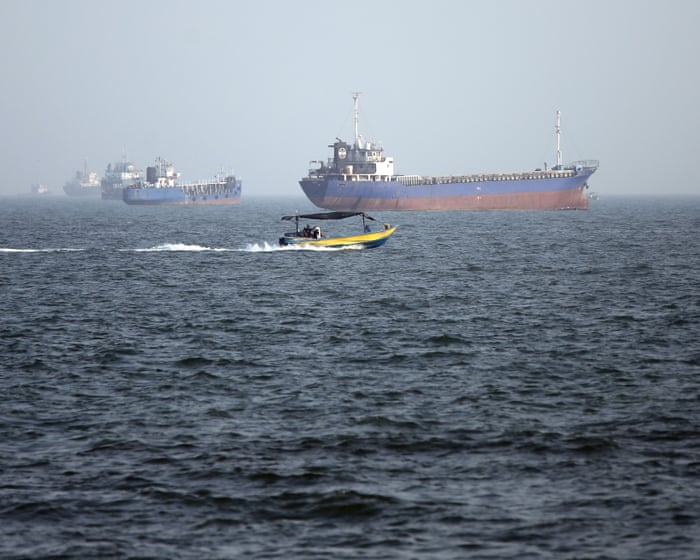
The U.S. launched strikes on several Iranian oil tankers after Iran’s missile attacks on a U.S. Navy warship. Iran has warned tanker crews near Kuwait and Bahrain to leave immediately, threatening to target vessels in the area amid ongoing conflict between the two countries.
Key Facts
The U.S. struck multiple Iranian oil tankers in response to missile attacks on a Navy warship.
Iran’s Revolutionary Guard Navy warned crews to abandon tankers near ports in Kuwait and Bahrain.
Iran accused Kuwait and Bahrain of hosting U.S. forces and aiding in the attacks.
The conflict has lasted more than six months with both sides carrying out retaliatory strikes.
Iran plans to establish a new "exclusion zone" near the Strait of Hormuz to control shipping routes.
About 20% of the world’s oil passed through the Strait of Hormuz before the war began.
The U.S. has imposed sanctions on Iran’s aviation sector to isolate its economy further.
Rising oil prices caused by the conflict are creating political challenges for President Trump ahead of U.S. midterm elections.
Read the Original
Want the full story? Tap a source to open the original
article.
Authorities in Southern California responded to a slow leak coming from a chemical tank. The chemical and the cause of the leak are still unknown, but officials managed to control the situation quickly. Some local residents were told to stay indoors and parts of the area were evacuated.
Key Facts
A chemical tank in Southern California had a slow leak on Tuesday.
Officials do not yet know what the chemical is or how the leak started.
The Los Angeles County Fire Department controlled the leak quickly.
Three people at the scene chose not to go to the hospital.
Photos showed an orange haze or mist in the sky after the leak.
La Habra’s mayor asked people nearby to stay indoors for safety.
Some streets near the leak were evacuated.
The area affected includes homes and industrial warehouses about 10 miles north of Anaheim.
Read the Original
Want the full story? Tap a source to open the original
article.
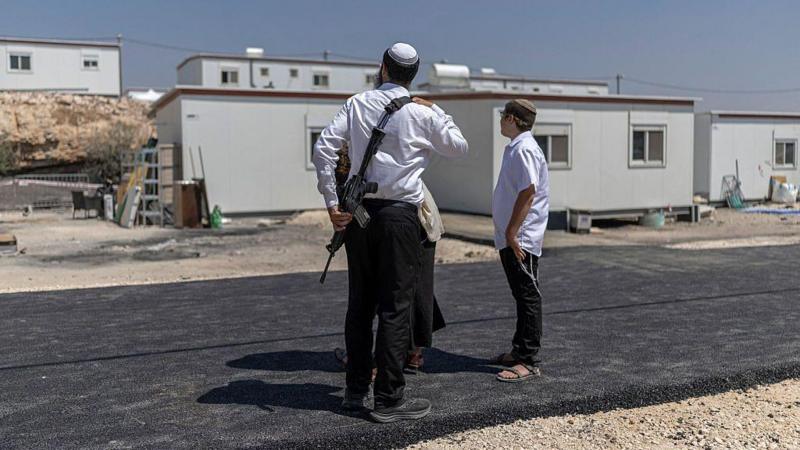
The British government has banned trade with Israeli settlements in the occupied West Bank, following the International Court of Justice's ruling that the Israeli occupation is unlawful. This move led to a strong and angry response from Israel, including closing the UK's consulate in East Jerusalem and removing British officials from an international aid group in Gaza.
Key Facts
Britain and 11 other countries, including France, Spain, and Canada, have banned trade with Israeli settlements in the West Bank.
The ban targets products made in settlements and companies involved in settlement construction, infrastructure, or financing.
The UK government sees the entire Israeli occupation, including military presence, as unlawful according to a 2024 court ruling.
Israel responded by shutting down the UK consulate in East Jerusalem and removing British staff from the International Gaza Support Centre.
British Foreign Secretary Ed Miliband, who is Jewish and supports Israel, criticized settler violence and accused Israel of ignoring "ethnic cleansing" of Palestinians.
The new UK policy marks a significant shift and worsens British-Israeli relations to their lowest point in decades.
Some Israelis view the settlers’ violent actions as a problem but do not agree the settlements are illegal.
The situation is politically sensitive amid upcoming Israeli elections.
Read the Original
Want the full story? Tap a source to open the original
article.
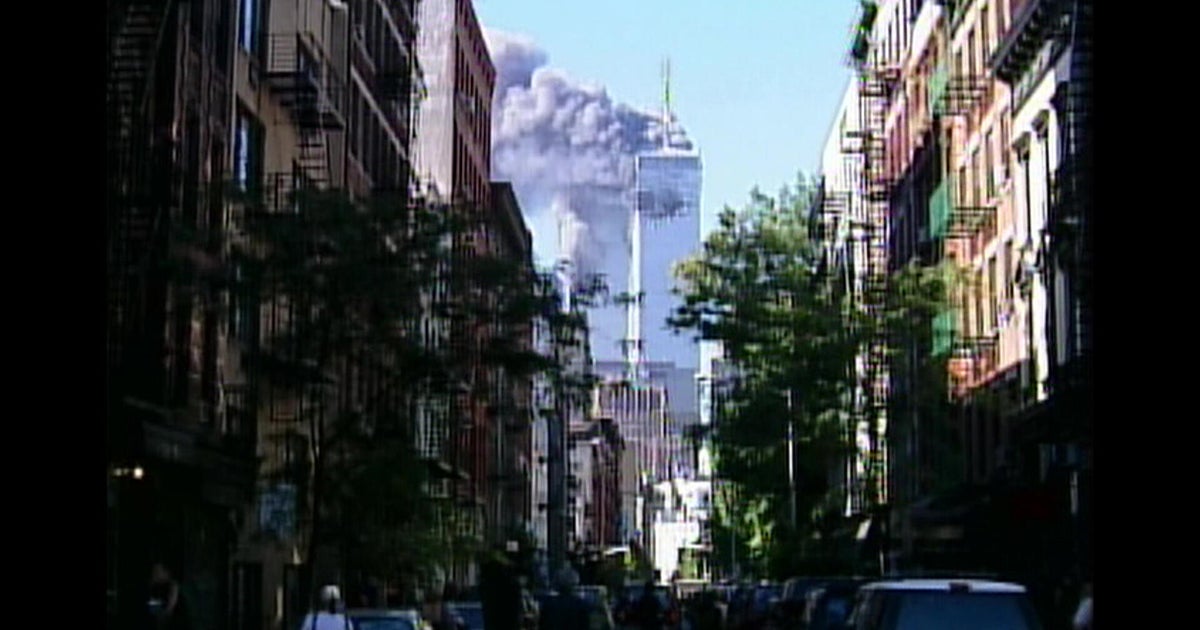
Two workers who were on different floors of the South Tower of the World Trade Center during the 9/11 attacks share their story of escaping safely. One worked on the 78th floor, and the other on the 70th floor. Their stories reveal the difficulty and bravery involved in leaving the building that day.
Key Facts
The story features a bank employee on the 78th floor of the South Tower.
A Morgan Stanley executive was on the 70th floor during the attack.
Both individuals managed to escape the tower despite extreme danger.
The article is based on an interview from the CBS News program 60 Minutes.
It recalls the events of September 11, 2001, when terrorists attacked the World Trade Center.
The escape took place amidst chaos and destruction in the towers.
The interview is available through the CBS News app and website.
The story highlights personal experiences from that day’s tragedy.
Read the Original
Want the full story? Tap a source to open the original
article.
Iranian forces said they captured an American underwater drone near the Strait of Hormuz, but the US military said the drone had stopped working more than a day earlier. The US Navy said the drone was old, not carrying secret equipment, and was on patrol when it malfunctioned.
Key Facts
Iran’s Revolutionary Guard claimed they seized a modern American unmanned underwater drone.
The US military said the drone had malfunctioned and was defective.
The drone was an older model, without sensitive data or classified equipment.
The incident took place near the Strait of Hormuz, a key waterway for global oil shipments.
Iran has blocked the Strait of Hormuz since the war began over six months ago.
The US has also blocked Iranian ports at the same time.
After a calm period in August, Iran and the US have started exchanges of fire again.
President Donald Trump has had difficulty ending the conflict, which has caused US and Iranian deaths.
Read the Original
Want the full story? Tap a source to open the original
article.
The RNLI chief has reported that volunteers have faced unacceptable abuse after assisting migrants arriving by boat in Portsmouth. The abuse followed protests against migrant landings, with misinformation spreading about the charity’s role in rescuing people in danger at sea.
Key Facts
RNLI volunteers experienced online and physical abuse after anti-migrant protests in Portsmouth.
Protesters blocked roads to prevent migrants arriving at Eastney Landing ferry port.
RNLI CEO Peter Sparkes called the abuse unacceptable and said misinformation about the charity was spread.
Hundreds of protesters also disrupted the Port of Dover the day before.
Digital Secretary Lisa Nandy is working with tech companies to remove posts sharing personal information about RNLI staff and volunteers.
RNLI boats carrying migrants were not allowed to land in Portsmouth harbour and Southampton Port.
The charity’s main mission is to save lives at sea, with only 1.2% of rescues in 2025 involving migrants crossing the Channel.
Almost 95% of small migrant boats are intercepted by the UK Border Force before RNLI involvement.
Read the Original
Want the full story? Tap a source to open the original
article.
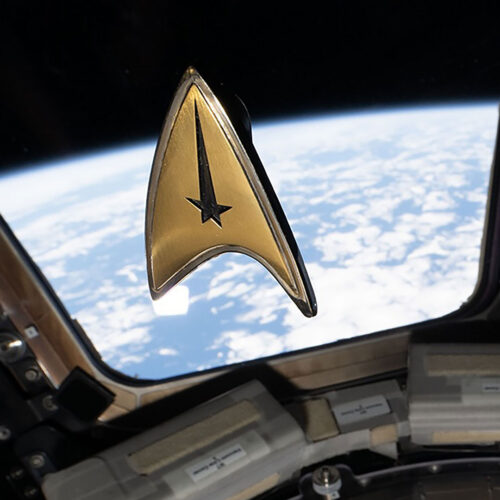
An astronaut on the International Space Station (ISS), Sophie Adenot from the European Space Agency (ESA), wore the badge of Star Trek's fictional Captain Christopher Pike to celebrate the 60th anniversary of the Star Trek series. The ESA and the streaming service Paramount+ shared a video of Adenot wearing the badge to highlight the connection between the fictional stories of space exploration and real-life science and cooperation in space missions.
Key Facts
Sophie Adenot, an ESA astronaut, wore Captain Pike’s Star Trek badge on the ISS.
The badge was originally worn by actor Anson Mount in the series Star Trek: Strange New Worlds.
The video of Adenot was released by both ESA and Paramount+ on Instagram.
Adenot said Star Trek promotes friendship, exploration, and working together to learn new things.
ESA said the badge represents 60 years of Star Trek inspiring real space exploration.
The ISS has had a continuous human presence from 12 countries over more than 50 years.
Another ESA astronaut, Samantha Cristoforetti, previously honored Star Trek by wearing a costume and making espresso in space.
Star Trek has inspired real technology and astronauts while imagining future space exploration.
Read the Original
Want the full story? Tap a source to open the original
article.
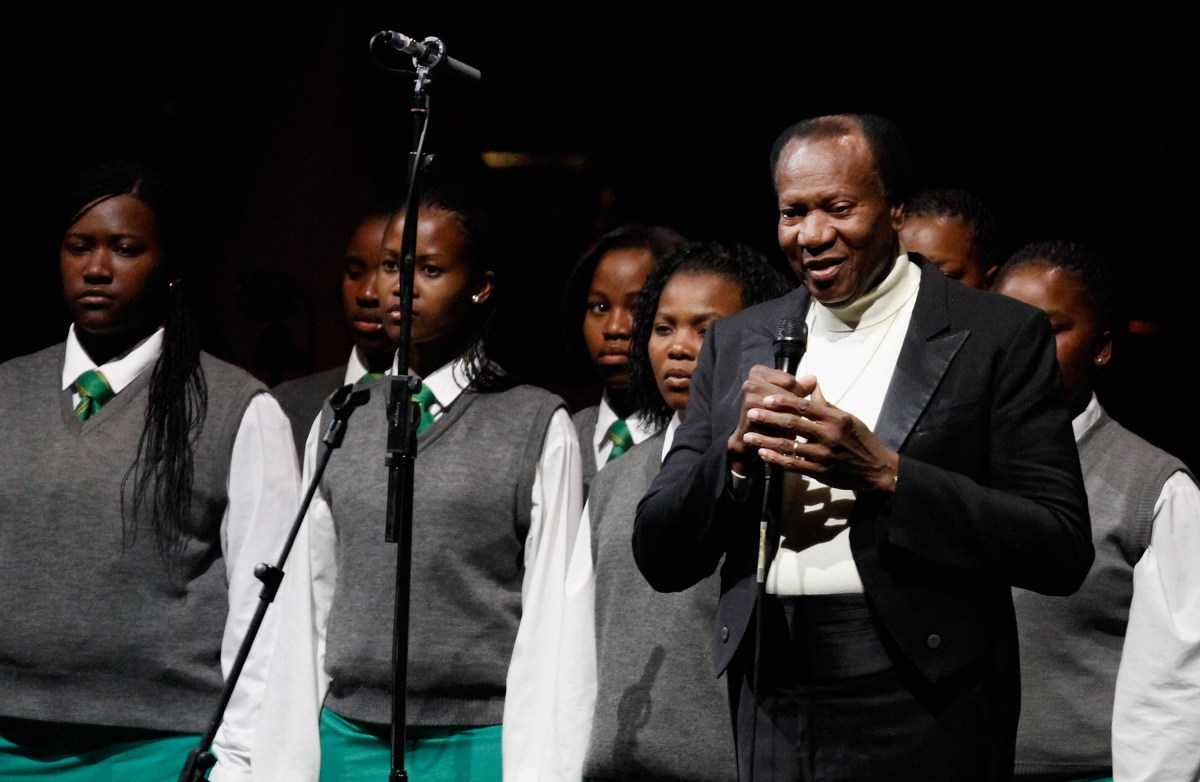
Simon Estes grew up in a small, poor coal-mining town in Iowa facing racial discrimination. Despite these hardships, he became a leading opera singer performing at famous places like the Metropolitan Opera House in New York City.
Key Facts
Simon Estes was born in Centerville, Iowa, in a small house without running water or electricity.
His father worked long hours in coal mines but earned very little and suffered health problems.
Estes experienced racial discrimination, such as segregation in theaters, restaurants, and pools.
His family relied on faith and the Bible to overcome bitterness and hardship.
Estes' mother introduced him to music by directing the church choir and playing piano.
He sang as a boy soprano and joined the high school choir, continuing music at the University of Iowa.
Although initially rejected by a prestigious choir, a music teacher encouraged him to pursue opera.
Estes attended the Julliard School, a top music conservatory, and later performed at major opera houses.
Read the Original
Want the full story? Tap a source to open the original
article.
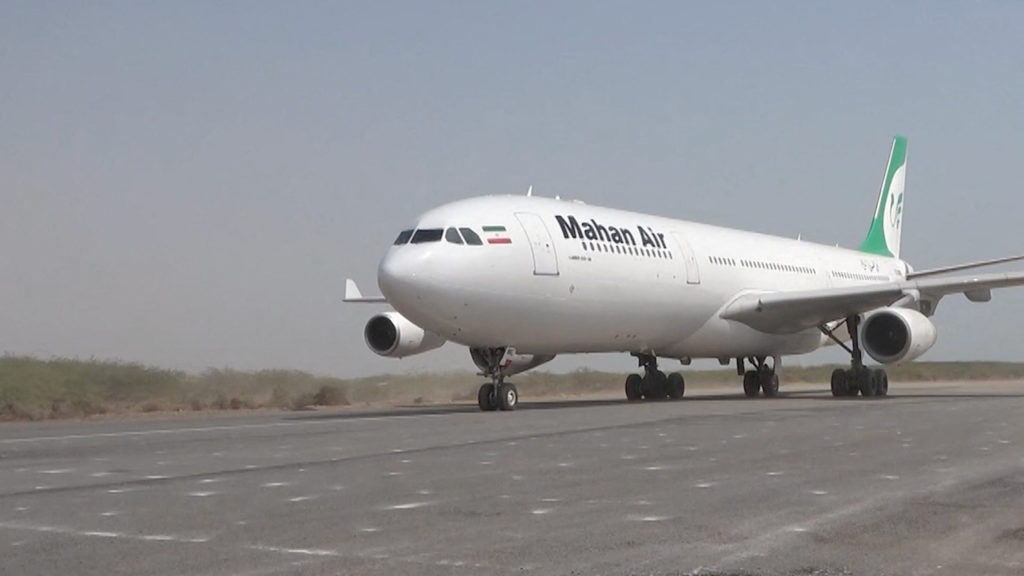
The Trump administration imposed new sanctions on parts of Iran's aviation sector, targeting airlines and foreign cargo companies involved with the Iranian government. This move is part of a campaign to cut off Iran from international trade and financial systems.
Key Facts
The sanctions focus on over two dozen commercial and private airlines, plus foreign cargo providers linked to Iran.
These actions are part of Operation Economic Outcast, aiming to block financial support to Iran's government.
The U.S. accuses targeted companies of helping Iran move weapons, personnel, and illegal cargo.
Foreign firms doing business with these Iranian entities risk U.S. sanctions like asset freezes.
Mahan Air, Iran's major airline, has been under U.S. sanctions since 2011 for supporting Iran's Revolutionary Guard.
Private companies in Turkey, UAE, Kazakhstan, and Malaysia have been linked to supplying parts and services to Mahan Air.
The sanctions follow recent U.S. moves against a Turkish bank and an Egyptian bank’s operations connected to Iran's oil revenue.
Iranian officials criticized the sanctions, saying they harm America's reputation worldwide.
Read the Original
Want the full story? Tap a source to open the original
article.
Secretary of State Marco Rubio began a tour of Latin America to meet with conservative leaders who support President Donald Trump’s policies. The visit focuses on strengthening cooperation to fight drug trafficking, improve energy ties, and manage migration. Rubio also defended a recent U.S. deal giving control over part of Venezuela’s oil reserves.
Key Facts
Marco Rubio is visiting three Latin American countries to promote U.S. priorities on drugs, energy, and immigration.
Rubio met Colombia’s President Abelardo de la Espriella, who supports Trump’s policies.
Colombia and the U.S. will sign agreements on civil nuclear cooperation and mining important minerals.
The U.S. recently made a deal to control about 20% of Venezuela’s oil reserves, previously under influence of China, Russia, and Iran.
Rubio said the oil revenues should benefit the Venezuelan people once a democratic government is in place.
Colombia’s government plans to strengthen efforts against drug trafficking and illegal migration with U.S. support.
Rubio said he will visit Venezuela but has not scheduled a trip yet.
The visit aims to build a strategic alliance between the U.S. and countries in the Western Hemisphere aligned with U.S. interests.
Read the Original
Want the full story? Tap a source to open the original
article.
Over 600 flights were canceled across the UK on Tuesday because of a technical problem with the air traffic control system. Engineers fixed the issue and the system started to recover, but many passengers faced long delays and cancellations at major airports including London Heathrow and Manchester.
Key Facts
More than 600 flights were canceled due to a technical issue in Britain's air traffic control system.
The problem affected flights at major UK airports like Heathrow, Stansted, Manchester, Birmingham, Gatwick, and airports in Scotland.
The UK's National Air Traffic Services identified the issue in their flight processing system and worked urgently to fix it.
A fix was implemented and the flight system began to recover after the problem was found.
Airlines affected included British Airways, EasyJet, KLM, and Lufthansa.
Some passengers were stuck on planes on the runway for hours before flights were canceled.
EasyJet said the system failure also caused delays to flights across Europe.
The exact cause of the technical problem was not immediately known.
Read the Original
Want the full story? Tap a source to open the original
article.
Kenya’s government has given foreign business owners 90 days to get or update their permits and licenses. This decision came after President William Ruto spoke about foreign-owned businesses, causing fear among immigrant communities like Burundians and Congolese.
Key Facts
Foreigners running businesses in Kenya must now obtain or update work permits and business licenses within 90 days.
The move followed President Ruto’s remarks about foreign business owners competing with local small-business owners.
Some immigrants, especially Burundians, were worried and visited their embassy in Nairobi to get documents or consider returning home.
The government will work with foreign embassies to manage the registration and ensure laws are followed.
President Ruto asked lawmakers to change a bill to allow fair participation by foreigners in small businesses and protect some sectors for locals.
There have been complaints that foreigners take low-paying jobs and run small businesses, which some Kenyans see as unfair competition.
Kenyan officials emphasized the process is to ensure compliance with Kenyan and East African laws on business, immigration, and work permits.
A government official apologized for any confusion caused by the president’s remarks about the exercise.
Read the Original
Want the full story? Tap a source to open the original
article.
A man wanted in the UK for the killing of his wife and two daughters has pleaded guilty to gun-related crimes in South Africa. After finishing his legal case there, South African officials plan to send him back to the UK to face murder charges.
Key Facts
Ndodana Mkhanyisi Tshuma is wanted by British police for the deaths of his wife and two daughters.
He pleaded guilty to illegally possessing a gun and ammunition in South Africa.
Tshuma also admitted to entering South Africa illegally while on the run.
South African authorities arrested him in Johannesburg in July 2026.
He is a British citizen originally from Zimbabwe.
The victims were found dead with head injuries near Bedford, north of London, on July 6, 2026.
British police believe Tshuma left the UK on July 4, traveled to Zimbabwe, and then went to South Africa.
After Tshuma’s court case in South Africa ends, he will be extradited to the UK to face murder charges.
Read the Original
Want the full story? Tap a source to open the original
article.
Doctors in Kenya have threatened to join a nurses’ strike that is now six weeks long because hospitals have too much work. The nurses are demanding the government officially enforce a pay and work agreement signed in 2017, but the government says it cannot afford to pay due to budget problems.
Key Facts
Nurses in Kenya have been on strike for six weeks, demanding a 2017 agreement be put into action.
The 2017 agreement included higher pay and better work conditions but is not yet implemented due to government budget limits.
Kenyan doctors say they are overwhelmed by extra work from the nurses’ strike and cannot do nursing tasks.
Doctors warn they will strike too if the government does not fix the situation within seven days.
The Council of Governors, which represents county governments, was meeting to discuss pay on the day of the protests.
Kenyan courts have declared the nurses’ strike illegal and some counties have threatened action against striking nurses.
Nurses say they are owed nine years of unpaid allowances related to uniforms and nursing services.
The chair of the Council of Governors asked nurses to stop striking and allow time for talks with the government.
Read the Original
Want the full story? Tap a source to open the original
article.
Brazil’s Supreme Court Justice André Mendonca removed the country’s federal police chief Andrei Rodrigues and an intelligence chief due to alleged illegal reports about the court’s activities. This decision has caused more conflict inside the Supreme Court and draws President Luiz Inácio Lula da Silva’s government into political tensions before the upcoming national elections.
Key Facts
Justice André Mendonca, appointed by former President Bolsonaro, ordered the removal of federal police Director-General Andrei Rodrigues and intelligence director Leandro Almada.
The officials were accused of producing six illegal reports about the Supreme Court’s actions.
Mendonca is leading investigations related to a bank collapse and alleged fraud in Brazil’s pension system, involving politicians from both the opposition and Lula’s family.
President Lula is seeking reelection in October and faces Sen. Flávio Bolsonaro, son of former President Bolsonaro.
The federal police’s acting director said Rodrigues has the force’s full support despite Mendonca’s ruling.
Eleven federal police directors offered to resign in protest, claiming the accusations damage the police’s reputation and history.
Mendonca’s move adds to ongoing tensions with fellow Justice Alexandre de Moraes, who sentenced former President Bolsonaro to prison last year.
Documents showed the arrest-related Banco Master owner had legal contact with Justice de Moraes, complicating court relations.
Read the Original
Want the full story? Tap a source to open the original
article.
A wildfire in Antalya, Turkey, forced hundreds of people to leave their homes and injured at least two people. Firefighters used planes, helicopters, and trucks to control the fire, which spread quickly due to strong winds.
Key Facts
The fire started Monday evening in the Aksu district and spread to the Kepez district in Antalya.
Two people were hospitalized with leg injuries, and six others were treated for smoke exposure.
At least 254 homes were evacuated in the affected areas.
A highway between Antalya and Isparta was temporarily closed because of the fire.
Over 100 dogs were evacuated from an animal shelter and given medical care for smoke effects.
More than 2,000 homes lost power during the wildfire.
Firefighters used 5 aircraft, 10 helicopters, 110 fire trucks, and 600 personnel to fight the fire.
There were also wildfires being fought in the nearby provinces of Adana and Mersin.
Read the Original
Want the full story? Tap a source to open the original
article.
A small plane carrying four family members went missing near the Bahamas while flying from Great Harbour Cay to Miami. Their bodies were found on Tuesday after family members and authorities searched for them.
Key Facts
The plane disappeared on Monday about 13 miles west of Andros Island in the Bahamas.
The four people on board were Mario Lamar (80), his wife Lili (79), and their grandchildren Sofi Sosa (28) and Christian Sosa (22).
Mario Lamar was an experienced pilot with over 40 years of flying, often traveling between his homes in the Bahamas and Miami.
The plane was a PA-34 Piper five-seater with tail number N212ML.
The U.S. Coast Guard helped with the search after the Bahamas police requested assistance.
Weather delayed initial search efforts.
Family members found the bodies during their own search on boats.
This crash follows another deadly plane accident in the Bahamas that killed 10 people less than two months ago.
Read the Original
Want the full story? Tap a source to open the original
article.