President Donald Trump showed Chinese President Xi Jinping some new features at the White House during Xi’s state visit. Trump showed him a new granite landing area for the presidential helicopter, Marine One, and the site where a new ballroom is being built.
Key Facts
President Trump and President Xi Jinping met for a state visit on Thursday.
Trump gave Xi a tour of new White House projects.
They visited a new granite landing pad on the South Lawn for Marine One.
Marine One is the helicopter used by the President.
Trump pointed out the construction site of a new ballroom in the East Wing.
The ballroom is part of ongoing construction work at the White House.
The visit was part of official U.S.-China relations during Xi’s trip.
Read the Original
Want the full story? Tap a source to open the original
article.
Researchers in the UK have created a large database of dog DNA to help police investigations. By analyzing small DNA segments, they can identify a dog's breed or individual dog from evidence left at crime scenes, which can provide useful leads in solving cases.
Key Facts
Dogs have helped police with tasks like finding criminals and sniffing out drugs.
Canine DNA such as hair or saliva found at crime scenes is often not fully studied.
Scientists at King’s College London and the Royal Veterinary College created the first UK database of dog DNA profiles.
The database uses short tandem repeats (STRs), small repeated DNA segments, to create unique DNA profiles for dogs.
It covers 80 dog breeds, with at least 50 samples from the 10 most common breeds like labradors and cocker spaniels.
This database helps identify whether a dog or its breed was involved in a crime, even if the dog isn’t known or available for testing.
Another DNA method they use sequences mitochondrial DNA, which is passed from mother to offspring and helps when there is little sample material.
The dog DNA analysis has already helped police in cases such as a man’s injury and a sheep attack by ruling in or out suspected dogs.
Read the Original
Want the full story? Tap a source to open the original
article.
The article shares a look back at Dolly Parton's first visit to New York City. It highlights a 2009 interview where she recalls feeling like she had arrived in the big city while the Broadway show "Hello, Dolly!" was playing.
Key Facts
Dolly Parton visited New York City for the first time during the time the musical "Hello, Dolly!" was on Broadway.
The visit is remembered in a 2009 interview with Morley Safer on the program 60 Minutes.
Dolly Parton said she felt like she had truly "arrived" during this visit.
New York City celebrates Dolly Parton Appreciation Day.
The article is from CBS News and includes a video archive clip.
The coverage reflects on Dolly Parton's early experiences in a major city for music and entertainment.
Read the Original
Want the full story? Tap a source to open the original
article.
The BBC’s director general, Matt Brittin, said the BBC may have to close some TV channels and radio stations to save money and focus more on on-demand services like iPlayer. He also highlighted growing changes in how people watch media and mentioned plans to use AI carefully without replacing human creativity.
Key Facts
The BBC needs to save £500 million and is considering closing some channels and radio stations.
Many viewers now prefer to watch programs on demand rather than live broadcasts.
Brittin said no BBC channel or program is guaranteed to last forever.
Recent BBC cuts include shows like Blankety Blank, Celebrity Mastermind, Live At The Apollo, and Football Focus.
Matt Brittin became BBC director general in May after working for Google in Europe, the Middle East, and Africa.
He supports using AI to help with creativity and decision-making but not to replace humans.
Brittin warned about the risk of a few big tech companies controlling information and misinformation through AI.
He stated the BBC should offer trustworthy content different from commercial platforms driven by algorithms.
Read the Original
Want the full story? Tap a source to open the original
article.
Daniel Thomas, a far-right activist in the UK, was arrested after a video showed him slashing a migrant boat. He pleaded not guilty to two charges. Protests took place outside a police station in southern England following his arrest.
Key Facts
Daniel Thomas is a far-right activist also known as Danny Tommo.
A video appeared to show him damaging a migrant boat by slashing it.
He was arrested by police in southern England.
Thomas pleaded not guilty to two charges related to the incident.
After his arrest, people gathered to protest outside the local police station.
The protests occurred in southern England.
The case involves migrant boats, which are used to carry people crossing borders.
Read the Original
Want the full story? Tap a source to open the original
article.
President Donald Trump told Ukrainian President Volodymyr Zelensky that he had made a final decision to allow Ukraine to produce Patriot air defense missiles. This decision aims to help Ukraine deal with missile attacks from Russia, but building production capacity will take over a year and will not meet Ukraine’s immediate needs.
Key Facts
President Trump confirmed to President Zelensky that Ukraine will get licenses to produce Patriot missiles.
Patriot missiles are key to defending Ukraine against Russian ballistic missile attacks.
Ukraine has a shortage of these missiles, partly because supplies shifted to support conflicts involving the US and Israel in February.
Even if Ukraine gets the license, setting up missile production will take more than a year.
Ukraine needs a small percentage of US Patriot missiles to protect itself through winter and to block Russian missiles.
Ukraine is also developing its own missile defense system called Freya.
Diplomatic talks on the Ukraine conflict involving the US, Russia, and Ukraine might take place soon, possibly in the United Arab Emirates.
Ukraine recently attacked two Russian oil refineries, and Russia reported drone attacks causing casualties and damage.
Read the Original
Want the full story? Tap a source to open the original
article.
Thélyson Orélien, a Canadian-Haitian writer, was removed from the Prix Goncourt longlist after claims that his novel was mostly written using artificial intelligence (AI). The prize organizers said they want to protect the prize's honor and do not support works created with AI. Orélien denies the claims and is preparing evidence to prove he wrote the book himself.
Key Facts
The Prix Goncourt is France's top literary prize.
Orélien's book is called "It Was Either That or Die."
Online accusations said the book was largely made by AI and included plagiarism.
The Goncourt Academy removed the book to preserve the prize’s integrity.
Orélien denies using AI and says he loves writing.
The publisher suspended book promotions to protect Orélien's well-being.
The controversy has sparked debate about AI's role in future literature.
A group behind the accusations includes writer Samuel Fitoussi, concerned that AI could replace human authors.
Read the Original
Want the full story? Tap a source to open the original
article.
In India, a person dies in a road accident every three minutes. Major reasons for these accidents include speeding, breaking traffic rules, and poorly designed roads, causing serious harm to people and the economy.
Key Facts
India has the second-largest road network in the world, over 6 million kilometers long.
One death occurs on Indian roads every three minutes.
Common causes of accidents are speeding, ignoring traffic rules, and bad road design.
Accidents involve incidents like drunk drivers, buses crashing, and trucks hitting school buses.
These fatalities cause not only loss of life but also cost India about 3% of its yearly GDP.
The report was made by FRANCE 24 journalists Navodita Kumari and Suhel Khan.
Read the Original
Want the full story? Tap a source to open the original
article.
Iran has proposed a 7-day plan to reopen the Strait of Hormuz and wants to reach a peace deal with the U.S. before the November midterm elections. Iranian officials criticized Israeli Prime Minister Benjamin Netanyahu's recent U.N. speech and denied plans to harm President Donald Trump or his family.
Key Facts
Iran’s president said they want a deal with the U.S. before the midterm elections in November.
Iran proposed a 7-day plan to reopen the Strait of Hormuz, a key oil shipping route.
Iranian Deputy Foreign Minister accused Israeli Prime Minister Netanyahu of using the U.N. speech to justify war.
Many delegates walked out during Netanyahu’s U.N. address, though claims of 77 walkouts are unconfirmed.
Netanyahu thanked President Trump for supporting Israel in Middle East conflicts.
Iran’s president said the country is open to nuclear inspections.
Iran denied any plans to assassinate President Trump or his family.
U.S. troops targeted by an Iranian drone attack could have been moved to safer locations, but the plan was rejected by their commander.
Read the Original
Want the full story? Tap a source to open the original
article.
The Italian government, led by Prime Minister Giorgia Meloni, passed a decree to limit the number of newly arrived migrant students in classrooms and ban burqas and niqabs in schools. The government says these measures will help integration, but critics see them as an attempt to gain support from far-right voters before next year’s election.
Key Facts
The decree caps the number of students with poor Italian skills in each class to 30%.
Burqas and niqabs will be banned in Italian schools.
Students struggling with integration may have their parents referred to social services and required to attend free Italian language classes.
Parents who do not comply with these classes could be fined up to €1,000.
Exemptions apply to students born or raised in Italy or those with several years of schooling in the country.
Critics say the measures are politically motivated to appeal to far-right voters ahead of the 2027 election.
A new far-right party, Futuro Nazionale, is gaining support and challenging Meloni's party.
The government claims the measures will affect about 1,000 classrooms, approximately 0.3% of the total nationwide.
Read the Original
Want the full story? Tap a source to open the original
article.
Ten years after the large Calais migrant camp called the "Jungle" was cleared by French police, many migrants still come to northern France hoping to reach the UK. French authorities now prevent big camps by regularly clearing smaller ones that appear along the coast, but migrants continue to try crossing the Channel using dangerous boats.
Key Facts
The original "Jungle" camp in Calais was dismantled in October 2016 by French police.
The camp used to house thousands of migrants trying to get to the UK.
Since then, smaller camps or "jungles" have spread along the northern French coast.
French authorities use a "zero fixation points" policy to stop large camps from forming.
Police regularly move migrants, take down tents, place boulders, and cut trees in these camps.
Migrants still try to cross the Channel, now often using small boats instead of hiding in trucks.
Crossing the Channel this way is very dangerous, but many take the risk every year.
Migrants come from many different countries and are motivated by the hope of a better life in the UK.
Read the Original
Want the full story? Tap a source to open the original
article.
Millions of people along the East Coast are preparing for a nor’easter, a strong storm with heavy rain and high winds expected to last through the weekend. The storm is developing off the coast and could cause significant weather impacts across the region.
Key Facts
A nor’easter is a type of storm that typically brings heavy rain and strong winds to the East Coast of the U.S.
Millions of residents on the East Coast are being warned to prepare for this storm.
The storm is expected to continue through the weekend.
It is currently developing off the East Coast.
Nor’easters often cause travel disruptions, flooding, and power outages.
Weather officials are actively tracking the storm’s progress.
Residents are advised to stay updated on weather alerts.
The storm could lead to hazardous conditions in many areas along the coast.
Read the Original
Want the full story? Tap a source to open the original
article.
Pope Leo XIV gave a speech at the Élysée Palace in Paris during his visit to France. He talked about the need for peace, the challenges France faces, the importance of looking out for each other, and expressed concerns about gestational surrogacy and defending human dignity.
Key Facts
Pope Leo XIV visited France for four days starting September 25, 2026.
He spoke in French at the Élysée Palace, the official residence of the French president.
The Pope emphasized peace and solidarity among people.
He addressed the impact of artificial intelligence on society.
He criticized gestational surrogacy, asking for more protection of human dignity.
French President Macron welcomed Pope Leo XIV during this visit.
The visit includes stops such as Notre-Dame cathedral and meetings with French leaders.
The Pope’s visit is expected to influence both religious and social discussions in France.
Read the Original
Want the full story? Tap a source to open the original
article.
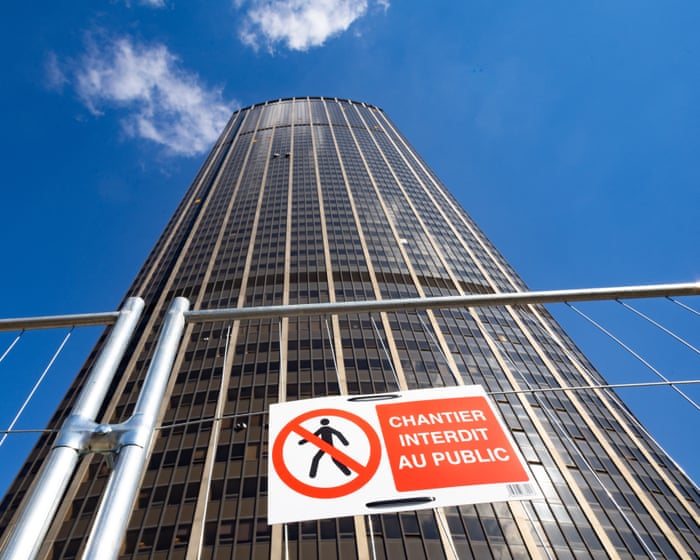
The renovation of the Tour Montparnasse skyscraper in Paris has been stopped due to disagreements among the building's private owners. The €800 million project, which planned to modernize and improve the tower, failed to get enough support, putting the future of the building in question.
Key Facts
Tour Montparnasse is the tallest skyscraper in inner-city Paris, opened in 1973.
The building is known for its unpopular design and is often criticized by locals.
Plans included adding a glass exterior, gardens, a hotel, offices, and leisure spaces.
The renovation also required removing asbestos, a harmful material in the building.
The estimated cost rose to around €800 million, causing disagreements among owners.
Over three-quarters of the private co-owners voted against starting the renovation.
The building permit for renovation expires at the end of November.
Some officials want to find alternative solutions or reduce the project's size, while some suggest demolishing the tower to build a park.
Read the Original
Want the full story? Tap a source to open the original
article.
A Russian drone struck central Kyiv early on September 25, 2026, killing a 14-year-old boy and damaging buildings. Rescue workers are clearing rubble, while other drone attacks hit logistics and postal facilities in the city.
Key Facts
The drone strike happened before 8 a.m. in central Kyiv.
One person killed was a 14-year-old child.
The attack caused damage to non-residential buildings.
Rescue teams are working to clear debris after the strike.
Air raid sirens gave residents little time to prepare or find safety.
Russia’s drone attacks have been increasing in intensity and deadliness.
Other strikes targeted logistics and postal infrastructure in Kyiv.
The attack is part of the ongoing conflict between Russia and Ukraine.
Read the Original
Want the full story? Tap a source to open the original
article.
Thousands of migrants crossed from Morocco into the Spanish enclave of Ceuta in July and many remain stranded in difficult conditions. The Spanish government estimates between 6,000 and 13,000 people are still there, with many sleeping outside and facing shortages of food, shelter, and medical care.
Key Facts
Around 70,000 migrants crossed into Ceuta from Morocco in late July.
Between 6,000 and 13,000 migrants remain stranded in Ceuta, living mostly outdoors.
About 5,000 migrants, mainly women and children, have temporary housing.
Migrants face overcrowded shelters, long waits for food, poor hygiene, and lack of medical aid.
There have been reports of violence against migrants by police or military personnel.
More than 100 people died attempting the crossing.
Ceuta’s population nearly doubled because of this migration, from about 84,000 to over 150,000 temporarily.
Some migrants say they were abused and fear seeking hospital care due to possible deportation.
Read the Original
Want the full story? Tap a source to open the original
article.
Turkey and Pakistan are sending their top military leaders to Saudi Arabia for a meeting after Saudi Arabia asked for urgent talks. This is because of ongoing attacks by the Houthi group from Yemen against Saudi territory, and it relates to a defense agreement between the three countries.
Key Facts
Turkey’s Chief of General Staff, General Selcuk Bayraktaroglu, is confirmed to be traveling to Riyadh.
Pakistan’s Chief of Defence, Field Marshal Asim Munir, is expected to arrive in Riyadh soon.
Saudi Arabia, Turkey, and Pakistan have a Mecca Joint Defence Agreement that treats an attack on one as an attack on all.
Recent Houthi missile and drone attacks targeted Saudi cities like Riyadh, Taif, Yanbu, and Mecca.
Saudi air defenses intercepted several ballistic missiles directed at their territory.
The meeting was planned after a discussion in New York involving Saudi, Pakistani, and Turkish foreign ministers.
Saudi Arabia condemned the attacks and cited their right to self-defense under the UN Charter.
Turkey and Pakistan have spoken cautiously about the agreement, focusing on technical and political negotiations.
Read the Original
Want the full story? Tap a source to open the original
article.
Fighting has increased between the Tigray rebel forces and Ethiopia’s federal army, spreading into nearby regions. The Ethiopian army said they killed 272 rebels and wounded 260 in northern Ethiopia, while Tigray's leaders say the country is now in full war.
Key Facts
Tigray’s rebel authorities have declared a full-scale war with the Ethiopian government.
Fighting has spread beyond Tigray into the Amhara and Afar regions.
The Ethiopian federal army claims to have killed 272 Tigray rebels and wounded 260.
The conflict is part of ongoing violence in northern Ethiopia.
The violence has raised fears the country could return to a civil war.
Political analysts are studying the reasons behind the renewed fighting.
The conflict impacts the stability of the wider Horn of Africa region.
Read the Original
Want the full story? Tap a source to open the original
article.
Senegal is experiencing power cuts again in its capital, Dakar, after several years of more stable electricity. These blackouts are causing problems for people, especially because the city is going through a period of very hot weather.
Key Facts
Power cuts have returned to Dakar, Senegal’s capital, in September 2026.
Senegal had a more stable electricity supply in recent years before these outages.
Residents of Dakar are frustrated by the blackouts.
The power cuts happen during a time of intense heat in Dakar.
The article links these power issues to the daily life challenges in Senegal’s major city.
Read the Original
Want the full story? Tap a source to open the original
article.
The Tigray People's Liberation Front (TPLF) says it is now in full war with Ethiopia’s federal government. They have taken control of important airports and attacked neighboring regions, raising fears that a deadly civil conflict could resume.
Key Facts
The TPLF declared a "full-blown war" against Ethiopia’s federal government.
TPLF seized key airports in Ethiopia.
The TPLF launched attacks in the Amhara and Afar regions, which neighbor Tigray.
Recently, the TPLF joined six other armed groups to form a new alliance opposing the government.
The current fighting raises concerns about a return to the 2020-2022 civil war in Ethiopia.
The previous conflict killed at least 600,000 people.
The situation remains tense and could lead to more violence.
Read the Original
Want the full story? Tap a source to open the original
article.