Neutral summaries of your favorite news sources — just the facts.
Your favorite news sources, one neutral feed — we distill their reporting into fact-first
summaries and always link to the original story. How it works
World News
Comprehensive coverage of international news and global events
A military prosecutor in the Democratic Republic of the Congo (DRC) is seeking the death penalty for former President Joseph Kabila, who is accused of crimes including treason and supporting armed rebels. Kabila, tried in his absence, is alleged to have ties to the M23 rebels and is charged with various war crimes. Kabila denies these allegations and criticizes the DRC legal system.
Key Facts
The DRC's former President Joseph Kabila faces the death penalty for treason and war crimes.
Kabila is on trial in absentia, meaning he is being tried without being present.
He is accused of supporting the M23 rebels, who have taken control of parts of eastern DRC.
Charges against him include organizing an insurrection and other war crimes related to the M23 group.
The DRC lifted its moratorium on the death penalty last year, but no executions have taken place.
Kabila ruled from 2001 to 2018 and has been outside the DRC since late 2023.
His political party was banned, and his assets were seized by the DRC government.
The United Nations reports that Rwanda’s army played a significant role in the region's conflict, although Rwanda denies military support for M23.
Read the Original
Want the full story? Tap a source to open the original
article.
Serena Williams has publicly shared her experience using weight-loss drugs to help reduce the stigma associated with them. She initially tried traditional methods to lose weight after having children but ultimately opted for medication. Williams recently became a spokesperson for a company that sells such medications.
Key Facts
Serena Williams, a successful tennis player, spoke about using weight-loss drugs.
Williams struggled to lose weight, even with extensive physical training.
She chose to use GLP-1 weight-loss medication after seeing friends use it successfully.
Williams lost 31 pounds (14 kg) over eight months using the medication.
She became a spokesperson for Ro, a company selling GLP-1 medications.
Her husband is an investor in the company.
Williams aims to reduce the shame associated with using weight-loss drugs.
Public figures like Oprah Winfrey also openly use similar medications.
Read the Original
Want the full story? Tap a source to open the original
article.
Ghislaine Maxwell, a close associate of Jeffrey Epstein, stated in an interview with the Department of Justice that she does not believe Epstein died by suicide. Maxwell is currently in prison for her role in sex trafficking minors. Official investigations concluded that Epstein committed suicide and did not maintain any blackmail material or a "client list."
Key Facts
Ghislaine Maxwell does not believe Jeffrey Epstein died by suicide.
Maxwell is serving a 20-year sentence for sex trafficking minors.
The Department of Justice and FBI concluded that Epstein committed suicide.
Maxwell, in interviews, expressed her views but had no personal knowledge of Epstein's death.
Epstein was not on suicide watch at the time of his death, and prison cameras were not working that night.
Maxwell thinks Epstein’s death was an internal issue within the jail, not a targeted hit.
The Justice Department released redacted transcripts of Maxwell's interviews.
Official investigations found no evidence of Epstein blackmailing powerful individuals.
Read the Original
Want the full story? Tap a source to open the original
article.
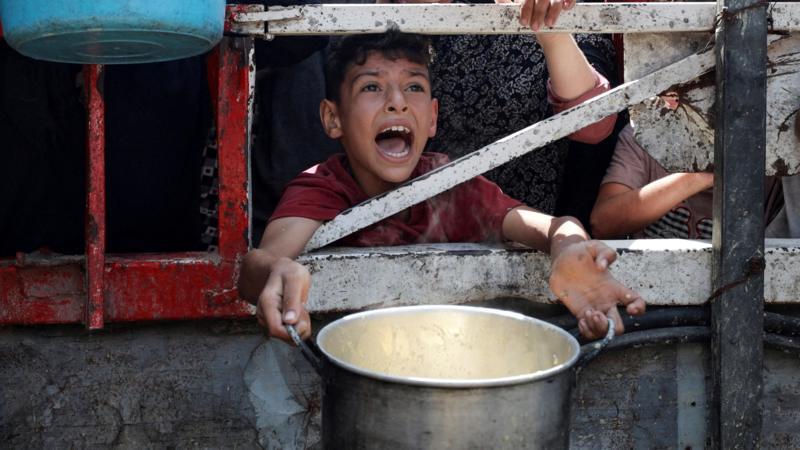
The article discusses a famine occurring in Gaza, stating it is caused by man-made factors, with significant impact on the population. The report by the Integrated Food Security Phase Classification (IPC), supported by the United Nations, describes severe food shortages, malnutrition, and deaths despite aid being available nearby but not distributed due to Israeli restrictions. Israel denies responsibility, blaming aid agencies and Hamas for the crisis.
Key Facts
A famine is reported in Gaza, affecting half a million people, or a quarter of the population.
The IPC report states this famine is "entirely man-made."
Three main indicators of famine are mentioned: extreme food shortages, high child malnutrition rates, and increased mortality.
Israel has put restrictions on goods entering Gaza, worsening after a war began in 2023.
Aid trucks are present but not entering Gaza due to the Israeli blockade.
A new system by the Gaza Humanitarian Foundation has replaced the UN-led food distribution, with fewer and riskier distribution points.
At least 994 Palestinians have reportedly died near these new food distribution sites.
Israel refutes claims of starvation in Gaza and blames aid agencies and Hamas for the situation.
Read the Original
Want the full story? Tap a source to open the original
article.
Hungary and Slovakia are concerned about potential fuel shortages after Ukraine attacked a key oil pipeline in Russia. This pipeline is essential for transporting Russian oil to Central Europe. Both countries have requested help from the European Union to ensure energy supplies continue without interruption.
Key Facts
Hungary and Slovakia fear oil shortages because of a Ukrainian attack on the Druzhba pipeline in Russia.
The Druzhba pipeline is an important route for delivering Russian oil to Central Europe.
The attack targeted the Unecha oil pumping station, a significant hub in western Russia.
Hungary and Slovakia have asked the European Commission to help secure energy supplies.
Hungary's Prime Minister, Viktor Orban, discussed the incident with former US President Donald Trump.
Ukraine confirmed it attacked the Unecha facility, calling it a key part of Russia's oil export system.
The European Union aims to phase out Russian oil and gas by 2027, but Hungary and Slovakia rely heavily on it.
Other countries using the Druzhba pipeline, like Germany and Kazakhstan, reported their oil supplies remain unaffected.
Read the Original
Want the full story? Tap a source to open the original
article.
A 10-day series of attacks by Sudan's paramilitary Rapid Support Forces (RSF) in Darfur have resulted in at least 89 deaths, according to the United Nations. The ongoing conflict in Sudan, which began in April 2023, is part of a power struggle between the army and the RSF. The fighting has caused more than 40,000 deaths and a severe humanitarian crisis, including a cholera outbreak.
Key Facts
At least 89 people were killed in RSF attacks in Darfur over 10 days.
The conflict involves a power struggle between the Sudanese army and the RSF.
Fighting in Sudan has resulted in over 40,000 deaths since April 2023.
The United Nations reported attacks may have included summary executions.
The RSF has imposed a blockade on el-Fasher, the capital of North Darfur.
Humanitarian crises include food shortages, famine, and a cholera outbreak.
The United Nations and International Criminal Court are investigating potential war crimes.
WHO reports nearly 1,100 deaths from cholera in Sudan this year.
Read the Original
Want the full story? Tap a source to open the original
article.
An international group that watches hunger situations has declared a famine in parts of Gaza City. They report that 500,000 people, which is about one-fourth of Gaza's population, are facing severe hunger and lack of basic needs.
Key Facts
An international organization has declared a famine in parts of Gaza.
The group is backed by the United Nations.
Estimated 500,000 people in Gaza are affected by this famine.
These people are experiencing extreme starvation and lack of basic living needs.
This situation is described as "catastrophic," involving starvation and destitution.
David Miliband from the International Rescue Committee was involved in discussions about this crisis.
Read the Original
Want the full story? Tap a source to open the original
article.
A group of experts supported by the United Nations reported that 132,000 children under five in Gaza could face severe malnutrition by next summer. Many children in Gaza are experiencing trauma and lasting impacts because of the ongoing conflict.
Key Facts
132,000 children under five in Gaza are at risk of severe malnutrition.
The risk period for these children extends until next summer.
Half of Gaza's population consists of children.
Many children in Gaza have been affected and changed by the ongoing war.
The information comes from a group of experts supported by the United Nations.
Read the Original
Want the full story? Tap a source to open the original
article.
South Korea's President Lee Jae Myung is attending important meetings in Japan and the U.S. to manage challenges related to President Donald Trump's policies on trade and security. These discussions are crucial as South Korea and Japan face shared issues, including security threats from North Korea and Russia.
Key Facts
South Korea’s President is meeting with leaders in Japan and the U.S.
President Trump's policies are impacting trade and security agreements with U.S. allies.
South Korea and Japan previously made trade deals with the U.S. to avoid high tariffs.
Trump wants U.S. allies to pay more for American troop presence in their countries.
South Korea and Japan are concerned about reduced U.S. military involvement in Asia.
Both countries face security threats from North Korea and Russia.
The meetings aim to strengthen cooperation between Japan and South Korea.
They might discuss South Korea joining a major Asia-Pacific trade agreement.
Read the Original
Want the full story? Tap a source to open the original
article.
Leaked military data shows that a majority of Palestinians killed in Gaza are civilians. The data indicates that 83% of those killed were not fighters.
Key Facts
Leaked data come from the Israeli military.
The investigation found that five out of six Palestinians killed in Gaza were civilians.
Only 17% of those who died were identified as combatants, meaning fighters.
This civilian death rate is considered one of the highest recorded in modern wars.
The data raises questions about Israel's statements that it does not target civilians.
The discussion was led by a news presenter and included experts from different organizations.
Read the Original
Want the full story? Tap a source to open the original
article.
A United Nations-backed group has declared a famine in Gaza, affecting 514,000 people, with numbers expected to increase. The declaration comes after a lengthy conflict and damage to Gaza's infrastructure. Global leaders and organizations are calling for action to address the humanitarian crisis.
Key Facts
The UN-backed group declared a famine in Gaza City and surrounding areas.
Approximately 514,000 people in Gaza are currently experiencing famine.
The number of people affected by famine is expected to rise to 641,000 by the end of September.
The declaration follows 22 months of conflict, which destroyed infrastructure and limited aid access.
This is the first recorded famine by the IPC outside of Africa.
UN Secretary-General Antonio Guterres described the situation as a "man-made disaster."
Israeli Prime Minister Benjamin Netanyahu rejected the famine declaration, citing ongoing aid deliveries.
Palestinian group Hamas called for an end to the conflict and lifting of the siege on Gaza.
Read the Original
Want the full story? Tap a source to open the original
article.
Some Sudanese refugees are choosing to return home even though there is still a civil war. The UNHCR discusses why these refugees are going back and what help they need as they face big challenges.
Key Facts
The conflict in Sudan has caused millions of people to leave their homes.
Some refugees are deciding to return to Sudan despite the war continuing.
The UNHCR is working to understand the reasons behind these returns.
Returning refugees face many challenges, including safety and lack of resources.
There is a call for urgent international support to help these returning families.
Mamadou Dian Balde from the UNHCR provides insights into the situation.
Read the Original
Want the full story? Tap a source to open the original
article.
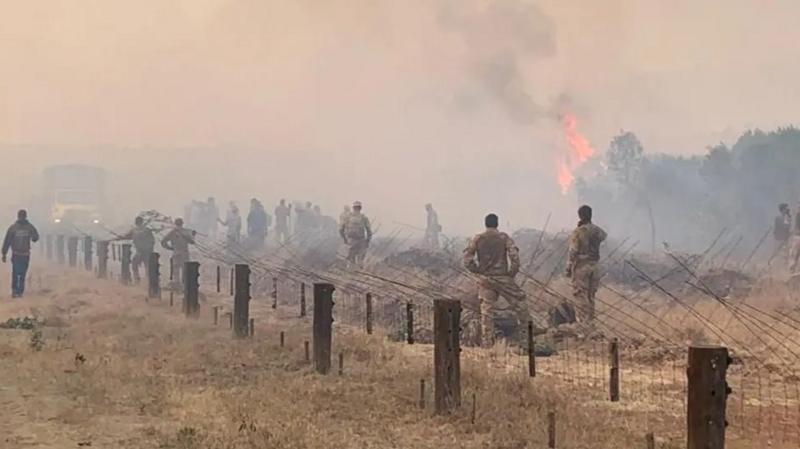
The UK has agreed to pay compensation to Kenyans affected by a fire caused by a British military training exercise in 2021. The settlement came after a legal battle involving thousands of claimants who experienced property loss and health issues. The UK has not disclosed the exact payout, but it reportedly totals £2.9 million.
Key Facts
The fire occurred in March 2021 during a British military training exercise in Kenya's Lolldaiga conservancy.
7,723 Kenyans claimed they lost property and had health problems because of the fire.
The UK government reached an out-of-court settlement, reportedly paying £2.9 million.
A stove knocked over during the exercise likely caused the fire, damaging around 7,000 acres of private land.
There were claims of environmental damage and property destruction due to stampeding animals.
The British government helped restore the burnt area of the conservancy.
The British Army Training Unit Kenya (BATUK) conducts regular exercises in the region, contributing significantly to the Kenyan economy but has faced criticism for the conduct of some soldiers.
Read the Original
Want the full story? Tap a source to open the original
article.
Iran and three major European countries will restart nuclear talks next week. These talks come amidst threats of renewed sanctions from Europe if Iran does not agree to a verifiable nuclear agreement. Iran has rejected these threats, claiming the European nations lack the right to impose such sanctions.
Key Facts
Iran and European countries (France, Britain, and Germany) plan to resume nuclear discussions next week.
European nations have threatened to reimpose United Nations sanctions on Iran unless it agrees to a solid and verifiable deal.
The German Foreign Minister stated that Europe is ready to use a “snapback” mechanism for sanctions if necessary.
Iran’s Foreign Minister, Abbas Araghchi, criticized the European countries’ threats and their ability to impose sanctions.
The European countries and the U.S. accuse Iran of possibly using its nuclear program to develop nuclear weapons; Iran denies these claims.
The International Atomic Energy Agency (IAEA) says Iran is not near building a nuclear weapon.
Iran's cooperation with the IAEA declined after attacks on its nuclear sites, reducing trust in the agency.
Previous negotiations in June with Europe did not achieve significant progress.
Read the Original
Want the full story? Tap a source to open the original
article.
Russia's Foreign Minister Sergey Lavrov stated that there are no current plans for a meeting between Russian President Vladimir Putin and Ukrainian President Volodymyr Zelenskyy to discuss peace. This statement comes after U.S. President Donald Trump indicated he had started making arrangements for such a meeting. Russian officials and U.S. officials continue to have disagreements over peace proposals, and recent military attacks further complicate the situation.
Key Facts
Russia’s Foreign Minister Sergey Lavrov announced no meeting is planned between Putin and Zelenskyy.
U.S. President Donald Trump claimed he began arranging a summit between the Russian and Ukrainian leaders.
Russia has shown uncertainty about U.S.-led peace efforts and objects to some proposals.
Lavrov said Putin is ready to meet Zelenskyy but only after resolving certain issues at a senior official level.
A Russian attack recently targeted an American-owned plant in Ukraine amid ongoing conflict.
Ukrainian President Zelenskyy expressed concern that Russia aims to avoid peace talks.
NATO and U.S. officials discuss security guarantees for Ukraine post-conflict.
The European Union warns against concessions to Russia as it views them as a trap.
Read the Original
Want the full story? Tap a source to open the original
article.
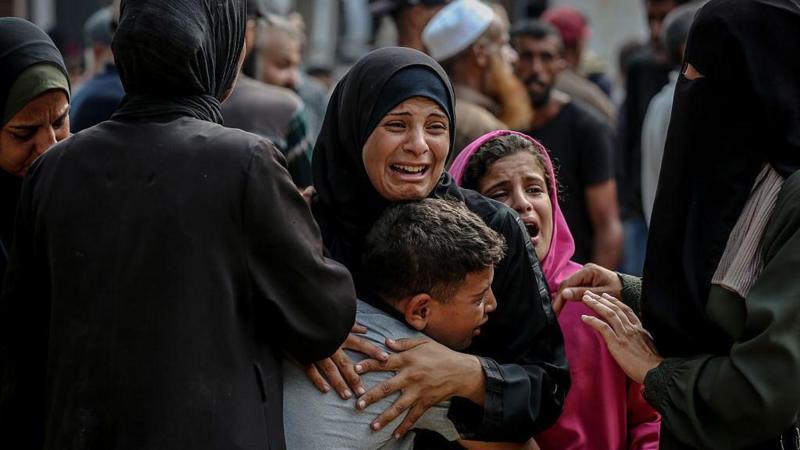
The United Nations has confirmed a famine in Gaza City and nearby areas, labeling it a severe humanitarian crisis. Over half a million people in Gaza face life-threatening conditions due to food shortages, with restricted aid access contributing to the situation. Israel disputes these claims, but numerous humanitarian organizations and nations confirm the UN's findings.
Key Facts
The UN has labeled the situation in Gaza as a "famine," which is a severe food shortage causing starvation and death.
More than 500,000 people in Gaza are in "catastrophic" conditions, according to the Integrated Food Security Phase Classification (IPC).
Israel denies the existence of a famine and disputes the restriction of aid.
Over 100 humanitarian groups, as well as UN bodies, confirm the crisis, blaming the obstruction of aid delivery.
Nearly 641,000 people could be in "catastrophic conditions" by the end of September if aid is not increased.
Among these, 132,000 children under five face life-threatening malnutrition up to June 2026.
Since the war began, 271 people in Gaza have died from malnutrition, including 112 children.
The IPC cannot declare a famine; it typically requires acknowledgment from governments or the UN.
Read the Original
Want the full story? Tap a source to open the original
article.
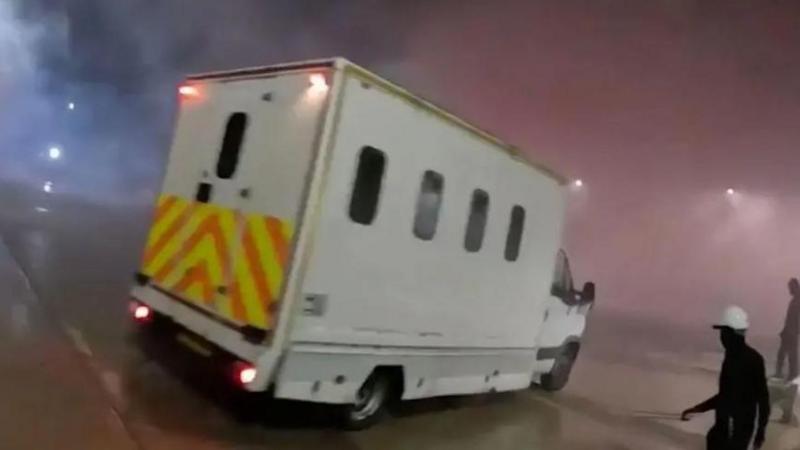
Six more people have been charged in connection with a break-in at Elbit Systems, an Israeli defense company, which was claimed by the group Palestine Action. The group was recently banned in the UK under terrorism laws. The accused face charges of aggravated burglary, criminal damage, and violent disorder.
Key Facts
Six people appeared at the Old Bailey in London charged with breaking into Elbit Systems in August 2024.
The group Palestine Action is accused of organizing the break-in; they were banned under terrorism laws in July 2024.
In total, 24 people are charged with offenses related to this incident.
The charges include aggravated burglary and over £1 million in criminal damage.
The accused allegedly used tools like sledgehammers during the break-in.
A plea hearing for the six appeared in court is set for 12 December.
A separate case involves a break-in at RAF Brize Norton, related to the same activist group.
Amnesty International has launched a campaign against the UK's arrest of people supporting Palestine Action.
Read the Original
Want the full story? Tap a source to open the original
article.
A United Nations-backed panel declared a famine in northern Gaza and warned it could spread to other areas. This declaration comes amid restrictions on food and aid due to ongoing conflict with Israel.
Key Facts
Famine has been officially declared in northern Gaza by a U.N.-backed panel.
Over half a million people in Gaza are at risk of starvation.
The conflict with Israel began nearly two years ago, affecting food availability.
Famine declarations involve documentation of widespread starvation and illness.
The Integrated Food Security Phase Classification (IPC) is a global system used to measure hunger levels.
Israel has disputed claims about food shortages in Gaza.
The IPC uses a five-phase scale to assess hunger, with phase five indicating famine.
Read the Original
Want the full story? Tap a source to open the original
article.
A U.N.-backed panel has confirmed a famine in Gaza, making it the first time such a declaration has happened in the Middle East. This panel involved in the confirmation is known as the Integrated Food Security Phase Classification (IPC).
Key Facts
The Integrated Food Security Phase Classification (IPC) is the panel that declared the famine.
This is the first time a famine has been declared in the Middle East by the IPC.
The declaration was made on August 22, 2025.
Gaza is the specific area where the famine has been confirmed.
The announcement was reported by NPR through their program "All Things Considered."
Read the Original
Want the full story? Tap a source to open the original
article.