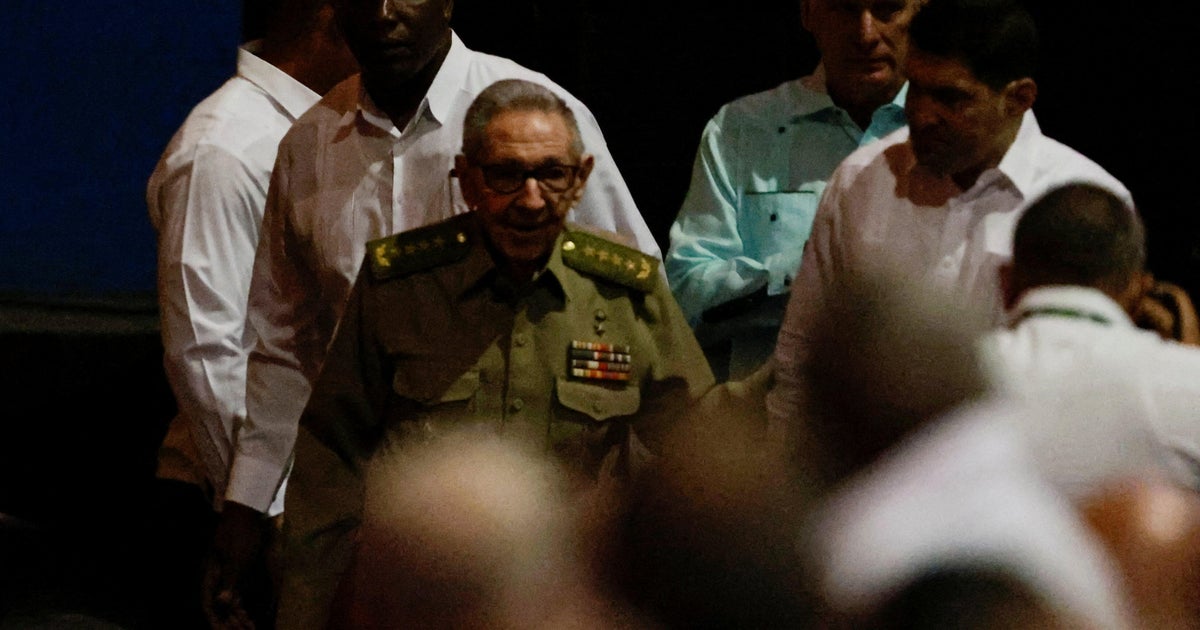
Raúl Castro, the former president of Cuba, made his first public appearance in months at a military event after being hospitalized for a serious illness. The event celebrated the anniversary of a military branch that protects Cuba’s top leaders, and Cuban state TV showed Castro attending alongside military officials.
Key Facts
Raúl Castro, 95 years old, appeared publicly for the first time since a reported serious illness.
The event marked the 65th anniversary of the Personal Security Directorate, a military unit protecting high-ranking officials.
Castro was seen wearing his traditional olive-green military uniform and was accompanied by his grandson and bodyguard.
Castro’s grandson was reported to have participated in earlier talks with the United States, but those talks have stopped.
The US has imposed an oil and financial blockade on Cuba since January, worsening the island's ongoing crisis.
The Cuban government has not confirmed Castro’s illness, despite reports from other sources.
In June, the US Department of Justice charged Castro in connection with a 1996 incident involving the downing of planes flown by an anti-Castro group.
Cuban President Miguel Díaz-Canel publicly acknowledged Castro's presence at the event on social media.
Read the Original
Want the full story? Tap a source to open the original
article.
Argentina is once again claiming the Falkland Islands, a group of islands that led to a war with Britain over 44 years ago. The dispute has gained attention partly because of recent tensions between US President Donald Trump and Britain.
Key Facts
The Falkland Islands are a group of islands in the South Atlantic Ocean.
Britain and Argentina fought a war over these islands in 1982.
Argentina continues to say the islands belong to them.
Britain currently controls the Falkland Islands.
The dispute has remained a sensitive issue between the two countries for decades.
Recent political tensions involving President Donald Trump and Britain have brought new attention to this dispute.
Argentina’s renewed claims have reignited debates about sovereignty over the islands.
Read the Original
Want the full story? Tap a source to open the original
article.
Research on 9/11 first responders shows that the trauma and toxic dust they experienced may cause their brains to age faster, leading to problems like memory loss and dementia. Post-traumatic stress disorder (PTSD) affects many of these responders, and those with higher exposure to dust and debris have higher rates of cognitive decline.
Key Facts
About 23% of World Trade Center first responders have been diagnosed with PTSD.
PTSD is a mental health condition triggered by experiencing or witnessing traumatic events.
Symptoms of PTSD include intrusive memories, mood changes, sleep problems, and anxiety.
First responders with strong exposure to toxic dust at Ground Zero showed higher rates of dementia before age 65.
Protective equipment like respirators can reduce harmful exposure to toxic dust.
Research tracked over 5,000 responders without dementia and found 228 developed dementia in about five years.
Physical illness, cognitive problems, and emotional distress often happen together in these responders.
Similar health risks may affect first responders in other disasters involving toxic substances and trauma.
Read the Original
Want the full story? Tap a source to open the original
article.
Germany’s far-right party Alternative für Deutschland (AfD) is projected to win over 44% of the vote in the Saxony-Anhalt state election. This result is higher than earlier polls and represents a significant success for the party, though final details on governing power depend on smaller parties passing a 5% vote threshold.
Key Facts
The AfD is a far-right political party in Germany.
Exit polls show the AfD may get more than 44% of the vote in Saxony-Anhalt.
This projected percentage is higher than previous opinion polls suggested.
AfD leaders called the result a "historic outcome."
The party’s ability to govern depends on which smaller parties earn seats.
Smaller parties must receive at least 5% of the vote to enter the state parliament.
Final election results and seat distribution are not yet confirmed.
The report included a live update from the AfD party headquarters.
Read the Original
Want the full story? Tap a source to open the original
article.
US envoy Steve Witkoff visited Kyiv with Jared Kushner to continue efforts for peace between Russia and Ukraine. Witkoff described the peace talks as very meaningful during their first official visit.
Key Facts
Steve Witkoff and Jared Kushner traveled to Kyiv as official US envoys.
Their visit aimed to restart peace talks in the Russia-Ukraine conflict.
Witkoff called the peace discussions "very meaningful."
This was their first formal trip to Ukraine for this purpose.
The talks focus on finding a way to end the ongoing war between Russia and Ukraine.
Read the Original
Want the full story? Tap a source to open the original
article.
Raúl Castro, the former Cuban President, appeared in public at a military event celebrating an army branch that protects Cuba’s top leaders. The event highlighted Castro’s presence after some time away from public view, amid recent U.S. sanctions and halted talks between Cuba and the United States.
Key Facts
Raúl Castro, 95 years old, wore his military uniform at the event.
The event marked the 65th anniversary of Cuba’s Personal Security Directorate.
Cuban TV showed Castro walking and receiving a certificate alongside military leaders.
Castro’s grandson, Raúl Guillermo Rodríguez Castro, attended and took part in earlier talks with the U.S. about oil and financial sanctions.
These talks stopped recently while sanctions against Cuba increased.
Raúl Castro has no current government or party position and rarely appears in public.
The U.S. has charged Castro in connection with a 1996 incident involving downed planes from an anti-Castro group.
Cuba faces a severe economic crisis worsened by U.S. energy sanctions, causing long power blackouts.
Read the Original
Want the full story? Tap a source to open the original
article.
Rescuers in Algeria found the body of a 10-year-old boy named Ayoub, who died after being trapped for four days in a well near his home in Brezina, El Bayadh province. The well was 80 meters (about 260 feet) deep.
Key Facts
A 10-year-old boy named Ayoub was trapped in a well.
The well was 80 meters deep.
The well was located near his home in Brezina, El Bayadh province, Algeria.
Ayoub was trapped for four days before rescuers recovered his body.
Rescuers worked to try to save him during that time.
Sadly, Ayoub did not survive the accident.
Read the Original
Want the full story? Tap a source to open the original
article.
The United Nations has called for international help after severe flooding in Nepal and the Tibet region of China killed over 1,300 people. The floods caused major damage to roads, bridges, and homes, leaving many communities cut off and thousands missing.
Key Facts
Flooding on August 26 affected areas along the China-Nepal border in the Himalayas.
At least 1,384 people have died, and more than 5,500 are missing in Nepal and Tibet.
Over 800 foreigners from 34 countries are among the missing, including tourists and pilgrims.
The floods destroyed important infrastructure like roads, bridges, and hydropower dams.
Many communities are isolated because roads were washed away, making travel difficult.
The UN and Nepal’s government started a $50 million aid appeal to help more than 84,000 people.
There is a risk of cholera and other diseases due to poor sanitation after the floods.
The UN urges urgent support, especially for vulnerable groups like women and girls.
Read the Original
Want the full story? Tap a source to open the original
article.
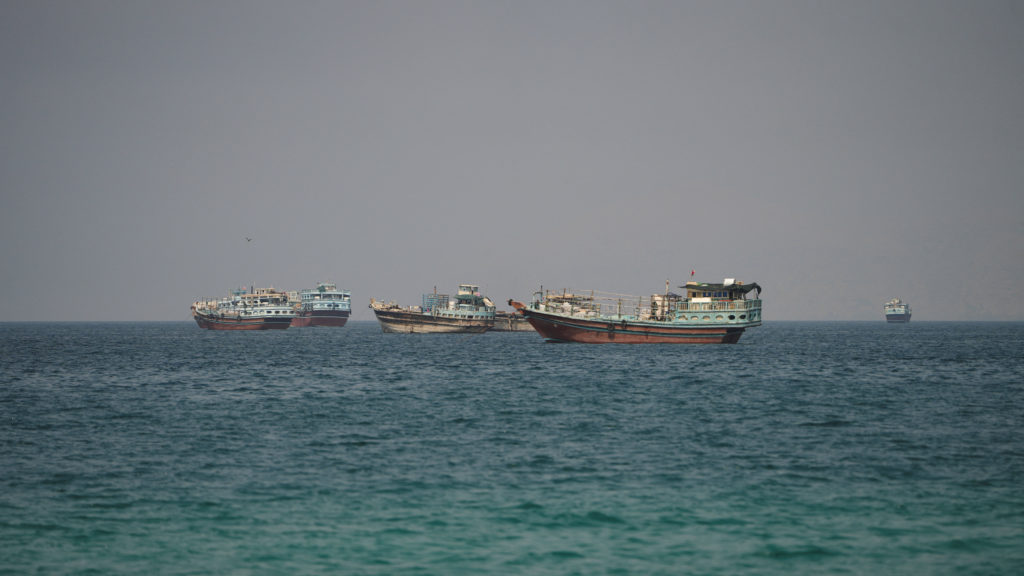
Iran claimed it struck an unmanned U.S. ship in the Strait of Hormuz, but the U.S. military denied this claim. The incident comes amid ongoing conflict and military strikes between Iran and the U.S., occurring after a fragile ceasefire ended and tensions escalated around a key shipping route for global oil.
Key Facts
Iran said it attacked an unmanned U.S. vessel near the Strait of Hormuz.
The U.S. military called Iran’s claim a “total lie.”
The U.S. recently struck three Iranian oil tankers after Iranian attacks on Navy warships.
The conflict began with U.S. and Israeli attacks on Iran on February 28 and continues despite a ceasefire agreement made in June.
Fighting resumed last week, causing several deaths and further attacks on the Strait of Hormuz and Iran's southern coast.
The Strait of Hormuz is a vital route for about 9 million barrels of oil per day going to global markets.
The U.S. Navy helps protect tankers passing through the strait to keep oil flowing and stabilize energy prices.
Diplomatic talks on Iran’s nuclear program have failed, and some countries want to bring Iran’s compliance issues to the U.N. Security Council.
Read the Original
Want the full story? Tap a source to open the original
article.
The far-right Alternative for Germany (AfD) party won a strong result in a regional election in Saxony-Anhalt, Germany, but it is uncertain if they can form a government. AfD gained about 44% of the vote, doubling its support from five years ago, while the center-right party led by Chancellor Friedrich Merz lost half its support.
Key Facts
AfD achieved around 44% of the vote in Saxony-Anhalt, a region of 2.1 million people.
This result is more than double AfD’s share from five years ago in the region.
The center-right Christian Democratic Union (CDU), led nationally by Chancellor Merz, got about 18.5% of the vote and lost about half its support.
It is unclear if AfD won an absolute majority needed to govern without partners.
AfD aims to form the first far-right state government in Germany since World War II.
Germany’s domestic intelligence agency classifies AfD’s Saxony-Anhalt branch as a proven right-wing extremist group, though AfD denies this.
Chancellor Merz’s party has led Saxony-Anhalt for 24 years.
AfD’s priorities include deporting illegal immigrants and withdrawing the state from the regional public broadcaster.
Read the Original
Want the full story? Tap a source to open the original
article.
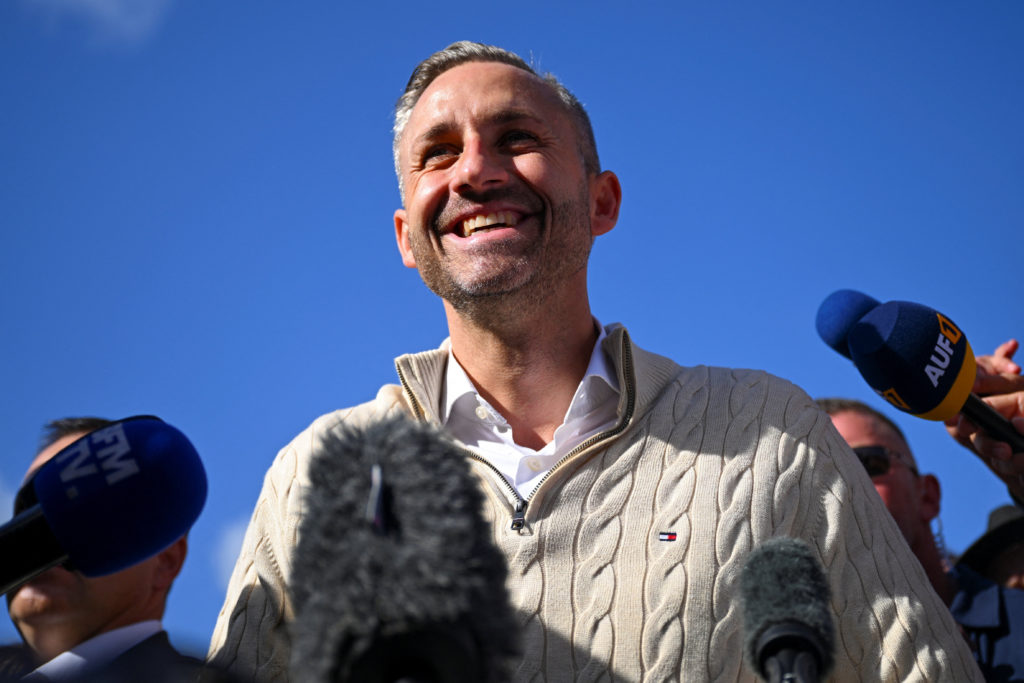
The far-right party Alternative for Germany (AfD) won a strong position in the Saxony-Anhalt state election. Their lead candidate, Ulrich Siegmund, celebrates a historic moment, as this is the first time a far-right party has gained such influence in a German state since World War II.
Key Facts
The far-right AfD party led the election in Saxony-Anhalt, eastern Germany.
Ulrich Siegmund is the AfD’s main candidate and likely to become the state leader.
This is the first significant far-right victory in a German state since World War II.
Other German political parties have agreed to avoid cooperation with the AfD, creating a "firewall" around them.
German intelligence has labeled parts of the AfD as right-wing extremists.
The AfD has shifted its campaign style from aggressive slogans to a more positive message.
Ulrich Siegmund disputes negative media portrayals and says criticism is fake PR.
The party’s new approach aims to appear more approachable while maintaining a radical agenda.
Read the Original
Want the full story? Tap a source to open the original
article.
Palestinian farmers in the West Bank town of Beit Ummar near Hebron face daily challenges from nearby settler outposts that block their access to farmland and destroy crops. Settlers release livestock onto the fields to damage crops, and the Israeli military requires Palestinians to have permits to work their own land, making farming difficult and risky.
Key Facts
Palestinian farmer Theeba al-Sabaa spends her time protecting her farmland from settler encroachment in Beit Ummar.
Settlers use their sheep to trample and eat crops, causing significant damage to Palestinian farmland.
The Israeli army demands permits from Palestinians to access and work on their land.
Some Palestinian farmers have been forced to leave their fields due to settler attacks.
Settler attacks in the West Bank increased to over 11,000 incidents in the first half of 2026.
Military checkpoints and roads restrict Palestinians from reaching their orchards and vineyards.
Palestinian farmers have missed four farming seasons because they cannot properly tend to their land.
Palestinian women often take on the role of guarding family land amid these challenges.
Read the Original
Want the full story? Tap a source to open the original
article.
A top U.S. official said there might not be a new nuclear agreement with Iran, hinting that the U.S. could use strikes to stop Iran’s nuclear progress. The official also said a deal might happen with new leaders in Iran but is currently unlikely.
Key Facts
U.S. Energy Secretary Chris Wright said on ABC News that a nuclear deal with Iran “may not” happen.
The U.S. may focus on destroying Iran’s nuclear capabilities instead of diplomacy.
Iran says its nuclear program is for energy, not weapons.
Wright mentioned the U.S. is reducing Iran’s ability to build and deliver nuclear weapons.
He said a nuclear deal might be possible under future Iranian leadership.
Since July, U.S.-Iran attacks have resumed after a pause, including Iran blocking the Strait of Hormuz.
President Trump and Vice President JD Vance have downplayed the conflict publicly.
Wright said the U.S. will work with regional allies and other countries to address the conflict.
Read the Original
Want the full story? Tap a source to open the original
article.
Energy Secretary Chris Wright said the U.S. needs a war with Iran to "reset" the Middle East. He said the main reason is to stop Iran from getting a nuclear weapon.
Key Facts
Chris Wright is the U.S. Energy Secretary.
He spoke about the situation on ABC’s show “This Week.”
Wright called for a war with Iran to change the balance in the Middle East.
The U.S. government wants to prevent Iran from having nuclear weapons.
This is a repeated message from the current administration.
Wright used the word "reset" to describe the goal in the Middle East.
The interview was on a Sunday program.
Read the Original
Want the full story? Tap a source to open the original
article.
Germany's far-right party Alternative for Germany (AfD) won 44.5% of the vote in the Saxony-Anhalt state election, marking the strongest far-right performance in Germany since World War II. The party gained support by focusing on immigration control and nationalist policies, but other parties may refuse to form a government with them.
Key Facts
AfD won 44.5% of the vote in Saxony-Anhalt's election, well ahead of other parties.
Voter turnout reached a record 65.3% by 4 p.m., much higher than previous elections.
AfD campaigns on restricting immigration, stricter border controls, and reducing asylum applications.
The party's strong support comes mainly from eastern Germany, especially the former communist areas.
AfD’s Saxony-Anhalt branch is classified as a "far-right extremist organization" by a government agency.
If in power, AfD would control state policies like education, policing, and parts of immigration.
Other German parties have so far refused to join coalitions with AfD due to its far-right stance.
The election result challenges Chancellor Friedrich Merz's conservative party and may influence future national politics.
Read the Original
Want the full story? Tap a source to open the original
article.
Around 140 migrants on a single inflatable boat were rescued in the English Channel after launching from the Normandy coast. French and UK rescue teams worked together, and the migrants will be taken to the UK shore. Officials recently discussed ways to reduce these dangerous small boat crossings.
Key Facts
The dinghy carried about 140 people and launched from near the Bay of the Seine in Normandy.
French rescue boats followed the dinghy for about 10 hours but did not stop it in French waters for safety reasons.
The migrants were rescued in UK waters by RNLI lifeboats from Bembridge and Yarmouth.
This crossing is unusual because the launch point is about 170 miles from the usual departure area near Calais.
In August, a record boat carried 230 migrants across the Channel.
Between January and September 2026, about 16,513 people crossed the English Channel by small boats, down 43% from the previous year.
Migrant boats are now larger, carrying more people to avoid detection as policing strengthens near Calais.
The UK government is sending 45 extra police officers to French beaches to handle larger "mega dinghies."
Many migrants arriving by small boat apply for asylum, which under international law allows them to stay while their cases are reviewed.
At least 84 people died trying to cross the Channel in 2024, showing how dangerous the trip is.
Read the Original
Want the full story? Tap a source to open the original
article.
FIFA President Gianni Infantino will run for re-election in 2027 despite criticism over his failed plan to sell shares of the World Cup. Some soccer organizations, including UEFA and the English FA, have lost confidence in him and want him to step down.
Key Facts
Gianni Infantino is currently FIFA President and will seek a fourth and final term through 2031.
Infantino tried to sell stakes in the World Cup but abandoned the plan after strong opposition.
UEFA has publicly said it lost confidence in Infantino and threatened to boycott FIFA events.
The English Football Association and other national groups have withdrawn support for Infantino’s re-election.
FIFA apologized for mistakes related to the World Cup sale plan and promised to avoid similar errors.
Infantino did not comment on his future at the Under-20 Women's World Cup event in Poland.
The deadline to enter the FIFA presidential race is November 18, with the vote taking place in March 2027.
Read the Original
Want the full story? Tap a source to open the original
article.
Germany's far-right party, Alternative for Germany (AfD), is set to win a large share of votes in the eastern state of Saxony-Anhalt, according to exit polls. This could be the first time since World War Two that a far-right party controls a German state, giving them power over local issues like policing and education.
Key Facts
The AfD is projected to win about 44-44.5% of the vote in Saxony-Anhalt.
The main rival, the conservative CDU, is expected to get about 18.5%.
If the AfD wins a majority, they would govern the state and control areas like policing and education.
The Saxony-Anhalt population is approximately 2.1 million people.
Germany's domestic intelligence labels the Saxony-Anhalt AfD as "far-right extremist," but party leader Ulrich Siegmund denies this.
The AfD’s final majority depends on whether smaller parties pass a 5% vote threshold to enter the state parliament.
No far-right party has governed a German state since World War Two.
Read the Original
Want the full story? Tap a source to open the original
article.
Early results from the Saxony-Anhalt state election in eastern Germany show the far-right AfD party leading by a large margin. If the AfD forms the government, it would be the first time since World War II that a far-right party governs a German region.
Key Facts
The election took place in Saxony-Anhalt, a state in eastern Germany.
The far-right party Alternative for Germany (AfD) is the clear frontrunner according to early results.
AfD winning and forming a government would be the first far-right regional government in Germany since World War II.
The last time a far-right government ruled Germany was during the Nazi era.
This election result is closely watched due to its historical and political significance.
Saxony-Anhalt is a region where AfD has gained popularity in recent years.
The development may affect political dynamics in Germany and Europe.
Read the Original
Want the full story? Tap a source to open the original
article.
The far-right party Alternative für Deutschland (AfD) won a major state election in Saxony-Anhalt, Germany, with about 44.5% of the vote. However, it is unclear if the AfD will have enough support to form a government, as they need an absolute majority and other parties have refused to work with them.
Key Facts
The AfD received 44.5% of the vote in the Saxony-Anhalt state election.
The Christian Democrats (CDU) came second with 18.5%, followed by Die Linke (9.5%), Greens (9%), and Social Democrats (8%).
The AfD may have failed to get an absolute majority, which they consider necessary to govern alone.
Other mainstream parties have rejected forming any coalition with the AfD.
Voter turnout was a record high at 76.5%.
Saxony-Anhalt has been governed by the CDU since 2002.
The AfD is classified as “rightwing extremist” by Germany’s domestic intelligence agency.
If the AfD forms a government, its leader plans policies including increased deportations, banning rainbow flags in schools, and stopping new windfarm projects.
Read the Original
Want the full story? Tap a source to open the original
article.