Neutral summaries of your favorite news sources — just the facts.
Your favorite news sources, one neutral feed — we distill their reporting into fact-first
summaries and always link to the original story. How it works
World News
Comprehensive coverage of international news and global events
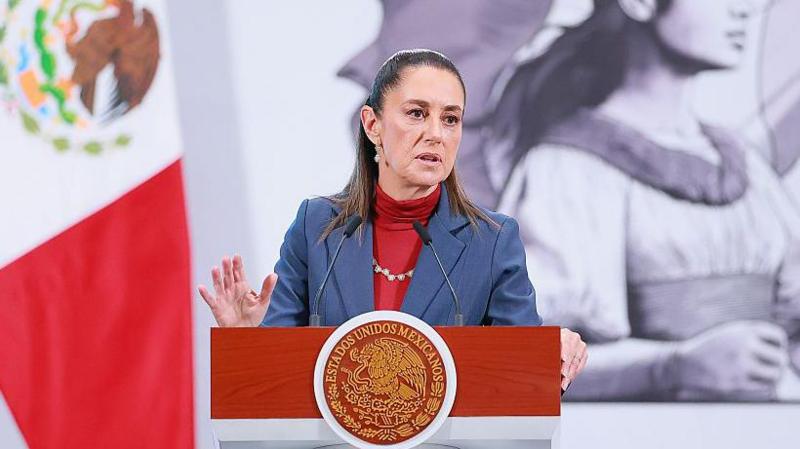
Mexico's President Claudia Sheinbaum stated that the United States will not send military forces into Mexico following reports that former President Donald Trump had planned such action against drug cartels. The New York Times reported that Trump signed a secret directive to allow U.S. military action against drug cartels on foreign soil. Both countries are working together on border security without involving military intervention.
Key Facts
Mexico's President Claudia Sheinbaum said U.S. military forces will not enter Mexico.
Reports suggest former President Trump signed a directive to use military force against drug cartels.
The directive follows the designation of eight drug cartels as terrorist entities.
Mexico was informed about the order but stated it does not involve military participation.
Secretary of State Marco Rubio said the U.S. should view cartels as terrorist organizations.
Mexico and the U.S. are cooperating to reduce illegal migration and drug trafficking.
U.S. Customs and Border Protection reported record low border crossings in June.
Fentanyl seizures at the US-Mexico border have decreased significantly, according to U.S. officials.
Read the Original
Want the full story? Tap a source to open the original
article.
The Israeli government has decided to intensify its military actions, leading to global reactions. There is concern that this increased action could endanger hostages still being held.
Key Facts
The Israeli government has decided to escalate, or increase, its military activities.
This decision has led to global reactions from various countries and leaders.
People are worried that the hostages who are still being held could be in more danger due to the increased military actions.
The news about this situation was shared on Weekend Edition Saturday.
Additional information or an audio version will be available later.
Read the Original
Want the full story? Tap a source to open the original
article.
NPR reported that Moshe Lavi's brother-in-law, Omri Miran, was kidnapped by Hamas from his community in Israel on October 7. Lavi is working to secure Miran's release.
Key Facts
Hamas kidnapped Omri Miran from his kibbutz in Israel.
The kidnapping took place on October 7.
Moshe Lavi is Omri Miran's brother-in-law.
Lavi is actively trying to free Miran from captivity.
The incident was discussed on NPR's Weekend Edition Saturday.
Additional audio content related to this discussion will be made available later.
Read the Original
Want the full story? Tap a source to open the original
article.
A Ugandan court has denied bail to opposition leader Kizza Besigye, who faces treason charges and has been in jail for nearly nine months. The judge ruled that the required 180 days for automatic bail had not yet passed. Besigye's case has raised concerns about political pressure ahead of Uganda's upcoming national election.
Key Facts
Kizza Besigye is a Ugandan opposition leader facing treason charges.
He has been in jail for nearly nine months.
A judge said he must stay in jail because the 180-day period for automatic bail is not complete.
Besigye was initially charged in a military court before moving to a civilian one.
The case is gaining attention ahead of Uganda's national election next year.
Critics, including opposition leader Bobi Wine, express concern about political repression.
Besigye has contested Ugandan President Museveni in four past elections but lost each time.
The government denies targeting Besigye for political reasons, stating the charges are criminal.
Read the Original
Want the full story? Tap a source to open the original
article.
The Perseids meteor shower will peak next week, but it won't be as clear to see because a full moon will brighten the sky. The Perseids started on July 17 and can be seen until August 23, mainly in the Northern Hemisphere.
Key Facts
The Perseids meteor shower will peak on the night of August 12 into the morning of August 13.
A full moon during the peak will make it harder to see the meteors clearly.
Viewers may still spot about 25 meteors per hour if observing conditions are good.
The best viewing times are before dawn, but meteors can also be seen as early as 10 p.m.
The Perseids are most visible in the Northern Hemisphere.
Robert Lunsford from the American Meteor Society suggests using a comfortable chair for viewing.
The Perseids come from the Swift-Tuttle comet, which orbits the Sun every 133 years.
The last time the Swift-Tuttle comet was in the solar system was in 1992, leading to many visible meteors that year.
Read the Original
Want the full story? Tap a source to open the original
article.
A new horror movie called "Weapons" features a mysterious event where 17 third-grade children vanish in the night from a suburban area. The story explores how the local community, including teachers and parents, deal with the unexplained incident and its emotional aftermath.
Key Facts
"Weapons" is a horror movie directed by Zach Cregger.
In the film, 17 children disappear mysteriously from a third-grade classroom.
The vanishings occur at 2:17 a.m. in a suburban town called Maybrook.
The children are seen running into the night on security cameras.
The teacher, Justine, played by Julia Garner, becomes a suspect.
Other characters include a determined father, Archer, and a local policeman, played by Josh Brolin and Alden Ehrenreich, respectively.
The film builds a tense atmosphere, exploring themes of community trauma and mystery.
Read the Original
Want the full story? Tap a source to open the original
article.
The article describes a new children's book, "Island Storm," by author Brian Floca and illustrated by Sydney Smith. The book is about two kids exploring an island during a storm, representing themes of adventure, risk-taking, and childhood exploration. Floca was inspired by his own experience on a stormy island, and Smith's illustrations capture the drama and emotion of being in a storm.
Key Facts
"Island Storm" is a children's book written by Brian Floca.
Sydney Smith illustrated the book with dramatic and emotional artwork.
The book's story is about two kids who explore during a storm on an island.
The book explores themes of risk-taking and childhood exploration.
Brian Floca is a Caldecott Medal-winning illustrator.
The illustrations use a mix of watercolor, gouache, acrylic ink, and more.
The book encourages experiencing childhood through exploration and discovery.
The siblings in the book experience the storm together and find safety at home.
Read the Original
Want the full story? Tap a source to open the original
article.
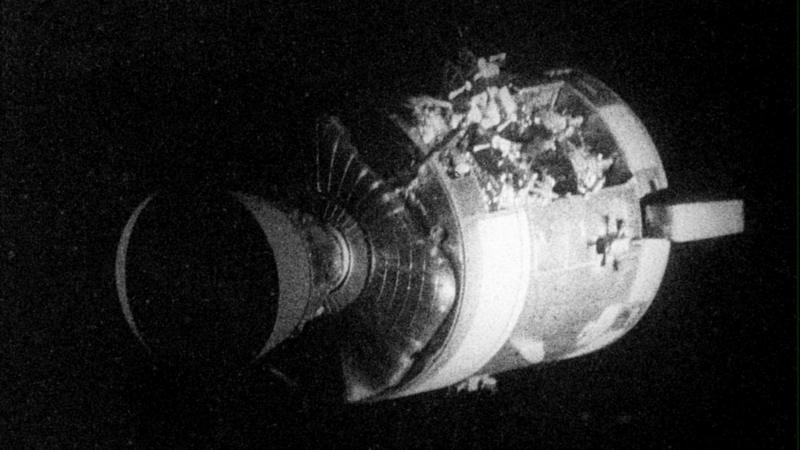
Jim Lovell, an astronaut from the Apollo 13 mission, passed away at 97 years old. His famous message, "Houston, we've had a problem," came after an explosion during the 1970 mission to the Moon, which forced the crew to abort their landing and safely return to Earth. The event, watched by millions, is considered a historic moment in space travel.
Key Facts
Jim Lovell was an astronaut on the Apollo 13 mission.
He died at the age of 97.
The Apollo 13 mission took place in 1970.
An explosion on the spacecraft led to the mission's Moon landing being aborted.
The crew communicated, "Houston, we've had a problem," to Mission Control.
Millions of people watched the astronauts safely land back on Earth in the Pacific Ocean.
This mission is a significant event in the history of space exploration.
Read the Original
Want the full story? Tap a source to open the original
article.
A fundraising appeal for a funeral for Zaahir Jan, a four-year-old boy who died after being hit by a bus, has quickly raised over £5,000. The incident happened near the Queen Elizabeth The Queen Mother Hospital in Margate, and the local community has placed flowers and other tributes near the site.
Key Facts
A four-year-old boy named Zaahir Jan died after being hit by a bus.
The accident occurred near the Queen Elizabeth The Queen Mother Hospital in Margate.
Zaahir was visiting his grandmother at the hospital before the accident happened.
His mother, Azaria, started a fundraising page for his funeral, and it raised more than £5,000 in one day.
People have placed blankets, flowers, sweets, and letters at a memorial near the hospital.
Zaahir's mother described him as a "sweet funny boy" in her fundraising appeal.
Kent Police are asking for witnesses to the accident to come forward with information.
Read the Original
Want the full story? Tap a source to open the original
article.
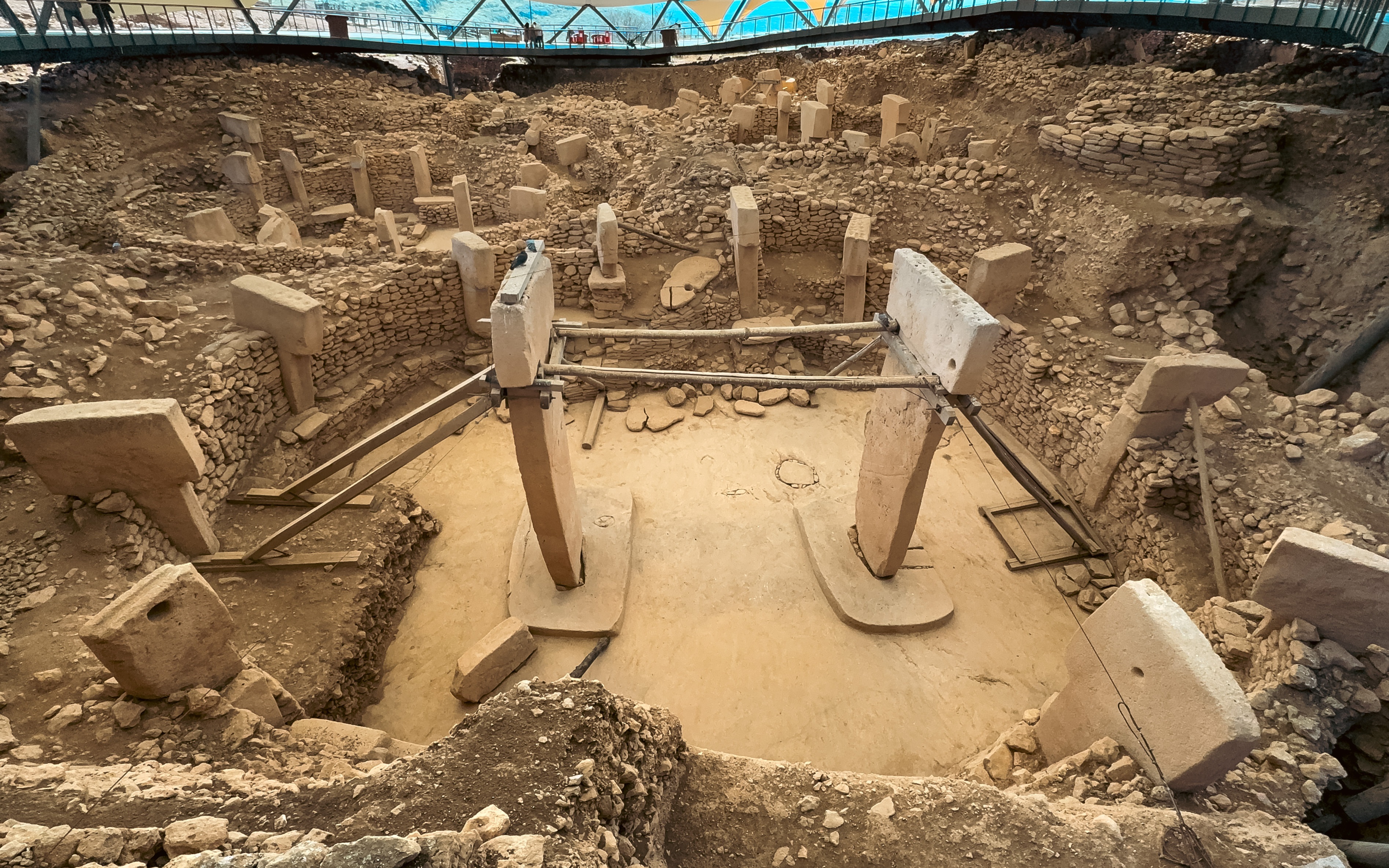
The ancient site of Gobekli Tepe in Turkey, dating back nearly 12,000 years, is believed to be one of the oldest known archaeological sites. Scientists are still exploring its purpose, with theories ranging from a ceremonial gathering site to a social hub. The site has become a focal point for conspiracy theories, particularly popularized through media figures like Joe Rogan.
Key Facts
Gobekli Tepe is located in Turkey and is thought to be one of the oldest archaeological sites on Earth.
The site dates back nearly 12,000 years and features T-shaped limestone pillars with carvings of humans and animals.
German archaeologist Klaus Schmidt led the first major excavations in the 1990s and suggested it was the "world's oldest temple."
Current theories about the site's purpose include it being a ceremonial gathering site or a social hub for early communities.
The true purpose of Gobekli Tepe remains mostly unknown, and scientists continue to explore and debate its significance.
Conspiracy theories about the site have gained mainstream attention through platforms like Joe Rogan's podcast.
Some conspiracy theorists, like Graham Hancock, suggest it was built by a "lost civilization," though there is no empirical evidence to support these claims.
Read the Original
Want the full story? Tap a source to open the original
article.
Brazilian President Luiz Inacio Lula da Silva signed a bill into law that changes environmental licensing rules but vetoed key parts after pressure from environmental groups. The vetoes keep strict licensing rules for important projects, aiming to protect the Amazon rainforest and Indigenous communities. Lula plans to introduce a new type of license to speed up strategic projects while ensuring environmental protection.
Key Facts
President Lula signed a law easing some environmental licensing requirements but vetoed significant parts.
Lula's changes keep current strict licensing rules for important projects.
The initial bill aimed to simplify permits, needing only company statements for some types.
Lula plans to introduce a "Special Environmental Licence" for strategic projects.
The Congress in Brazil, leaning conservative, may not easily support Lula’s amendments.
Lula’s veto was partly due to pressure from environmental advocacy groups.
Nongovernmental organization SOS Atlantic Forest collected over a million signatures for a veto.
Environment Minister Marina Silva stated the changes support environmental protection goals, like reducing deforestation.
Read the Original
Want the full story? Tap a source to open the original
article.
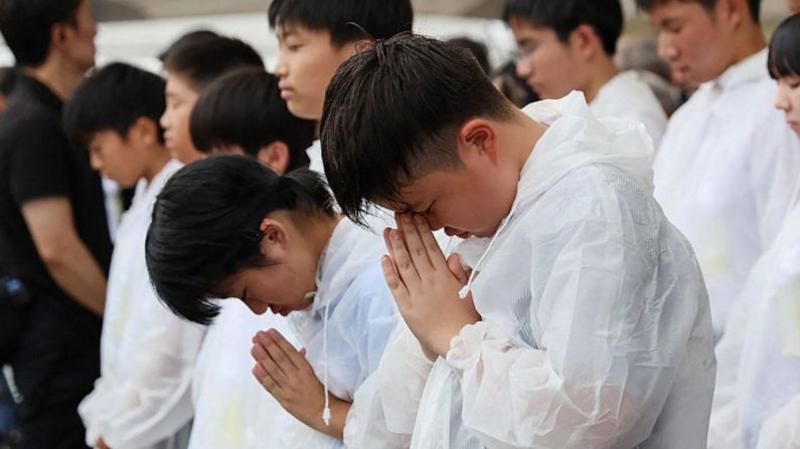
The mayor of Nagasaki called for an end to global conflicts at a ceremony marking the 80th anniversary of the U.S. atomic bomb attack on the city. The mayor warned that ongoing conflicts could lead to nuclear war. The ceremony included symbolic gestures to honor those affected by the 1945 bombing.
Key Facts
Nagasaki's mayor made the appeal during a ceremony on the 80th anniversary of the atomic bombing.
The atomic bomb dropped on Nagasaki on August 9, 1945, killed an estimated 74,000 people.
Survivors of the bombing suffered long-term health effects such as leukemia and other radiation-related issues.
A moment of silence and symbolic water offerings were part of the commemoration.
Nagasaki's ceremony happened shortly after a similar event in Hiroshima, where another atomic bomb was dropped.
The mayor urged an end to current global conflicts, which he said could lead to nuclear war.
An international treaty banning nuclear weapons took effect in 2021, but many nuclear-armed countries have not supported it.
Japan has not joined the treaty, stating its security relies on U.S. nuclear weapons.
Read the Original
Want the full story? Tap a source to open the original
article.
Authorities in India-administered Kashmir have banned 25 books, including works by recognized authors, citing concerns about their influence on youth. The ban, followed by police raids to seize these books, happens while the region hosts a government-sponsored book festival. The banned books address historical and political issues related to the Kashmir conflict.
Key Facts
25 books were banned in India-administered Kashmir for allegedly misleading youth.
The banned titles cover topics about Kashmir's history and political situation.
Authorities also conducted police raids to seize these banned books in Srinagar.
The ban coincides with a government-sponsored book festival in the region.
The government claims the books promote grievance and support for terrorism.
Historical roots of the Kashmir conflict involve issues from the 1947 partition of India.
One of the banned authors, Hafsa Kanjwal, recently won the Bernard Cohn Book Prize.
Kashmir lost its semiautonomous status in 2019, leading to increased censorship concerns.
Read the Original
Want the full story? Tap a source to open the original
article.
Italy plans to build a suspension bridge connecting Sicily to the mainland over the Strait of Messina. The bridge will be the longest of its kind and is set to cost about 13.5 billion euros, funded by the government. Construction is expected to begin in May 2026 and finish in 2032, despite concerns over earthquakes and local opposition.
Key Facts
The bridge will span 2 miles over the Strait of Messina, linking Sicily to mainland Italy.
It is planned to be the world's longest single-span suspension bridge.
The project is expected to cost 13.5 billion euros, funded entirely by the Italian government.
The bridge's construction is scheduled to start in May 2026 and conclude by 2032.
Initial approval for the bridge was granted in 1971, with several cancellations since then.
Engineers are considering seismic risks, using special materials and designs to manage these challenges.
The area is prone to seismic activity, but similar projects have been successful in other countries.
Local groups oppose the project, saying the funds should improve existing infrastructure instead.
Read the Original
Want the full story? Tap a source to open the original
article.
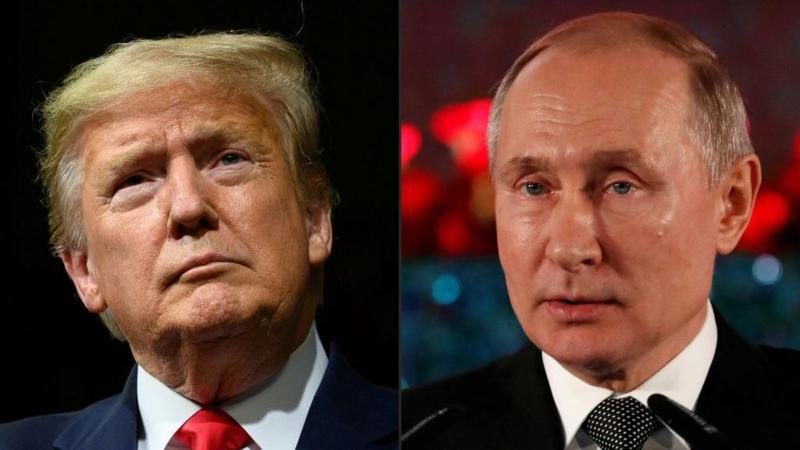
Ukrainian President Volodymyr Zelenskyy stated that Ukraine will not formally give up any of its territory to Russia. He expressed concerns over a planned meeting between U.S. President Donald Trump and Russian President Vladimir Putin, which does not include Ukraine, warning that any peace deal excluding Ukraine would be ineffective.
Key Facts
Ukrainian President Zelenskyy rejected the idea of giving up Ukrainian territory to Russia.
A summit between U.S. President Trump and Russian President Putin is planned to take place in Alaska.
Zelenskyy emphasized that Ukraine must be involved in any peace talks concerning its territory.
Trump indicated his summit with Putin might involve discussions about territory exchanges, though he provided no specifics.
Zelenskyy warned that agreements made without Ukraine's involvement would not lead to lasting peace.
Earlier, Ukrainian officials privately indicated openness to recognizing current territorial realities for peace.
Trump's announcement of the meeting with Putin came after the U.S. threatened new sanctions if Russia did not work towards a peace settlement.
Read the Original
Want the full story? Tap a source to open the original
article.
Singapore is celebrating its 60th anniversary with events like fireworks but is also planning for future challenges. The country is looking at ways to boost growth with new construction projects and addressing climate change issues. Rising temperatures and sea levels pose risks to its infrastructure and economy.
Key Facts
Singapore is celebrating 60 years since breaking away from Malaysia in 1965.
It is known for its high wealth per person and a strong, stable economy.
New projects include a fourth tower at Marina Bay Sands and a fifth terminal at Changi Airport.
Singapore faces risks from climate change, with rising sea levels potentially causing flooding.
The government is considering building artificial islands to protect against floods.
A study predicts temperatures in Singapore could rise significantly by the end of the century.
Climate change could affect economic productivity, especially for outdoor labor.
Read the Original
Want the full story? Tap a source to open the original
article.
U.S. President Donald Trump and Russian President Vladimir Putin will meet in Alaska on August 15 to discuss the ongoing war in Ukraine. Trump suggested that the talks could involve exchanging territories between Russia and Ukraine, although details are not yet clear. There has been no reaction from Ukraine regarding the planned discussions.
Key Facts
Trump and Putin are set to meet in Alaska on August 15 to discuss Ukraine.
Trump mentioned the possibility of swapping territories between Russia and Ukraine.
The Kremlin confirmed the meeting and saw Alaska as a logical location.
Ukraine has not yet officially responded to the news of the meeting.
Trump suggested Russia might retain the Donbas region and Crimea as part of a deal.
Previous talks between Ukraine and Russia have failed to end the conflict.
Russian demands include Ukraine becoming neutral and reducing its military.
Trump believes there is a possibility for a peace agreement involving Russia, Ukraine, and European leaders.
Read the Original
Want the full story? Tap a source to open the original
article.
Twin cathedral bells in Nagasaki will ring together for the first time in 80 years to commemorate the atomic bombing by the United States in 1945. The Immaculate Conception Cathedral, rebuilt after being damaged in the bombing, will see the second bell, newly funded and restored, ring alongside the original bell. This event is part of a larger commemoration attended by nearly 100 countries to remember the impact of the bomb and promote peace.
Key Facts
Nagasaki was hit by an atomic bomb on August 9, 1945, days after Hiroshima.
Approximately 74,000 people died in the Nagasaki bombing.
The original cathedral, Urakami Cathedral, was near the bomb's hypocenter and destroyed.
Only one original bell survived; a new second bell has now been restored.
The restored bell was funded by donations, notably raised by James Nolan from the US.
Nearly 100 countries are attending the commemoration in Nagasaki this year.
Representatives from Russia and Israel are among this year's attendees.
The event aims to show the reality of the devastation caused by nuclear weapons.
Read the Original
Want the full story? Tap a source to open the original
article.
On August 9, a Russian drone attack damaged an oil depot in Ukraine's Odesa region. US President Donald Trump announced plans to meet with Russian President Vladimir Putin to discuss ending the war in Ukraine. Additionally, Canada, the EU, and the UK plan to lower the price cap on Russian oil.
Key Facts
A Russian drone attack hit an oil depot in Ukraine's Odesa region, wounding four people.
The oil depot is owned by Azerbaijan's state oil company, SOCAR.
Ukrainian journalist Viktoria Roshchyna, who died in Russian captivity, was buried in Kyiv.
US President Donald Trump will meet with Russian President Vladimir Putin on August 15 in Alaska to negotiate a ceasefire.
Trump mentioned that an agreement might involve swapping territories.
Canada, the EU, and the UK plan to lower the price cap on Russian crude oil to $47.60 per barrel.
The European Council approved over 3.2 billion euros in financial aid for Ukraine to support its economic and governmental stability.
Read the Original
Want the full story? Tap a source to open the original
article.
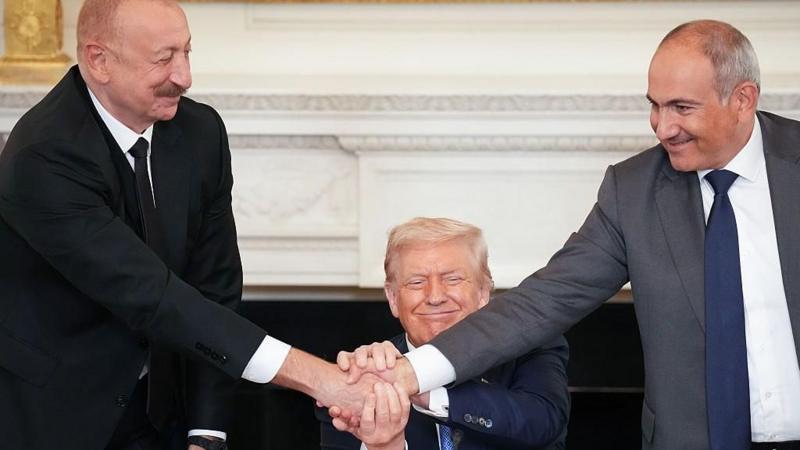
Azerbaijan and Armenia signed a peace agreement at a White House event hosted by President Donald Trump, aiming to end years of conflict over the Nagorno-Karabakh region. The deal is expected to improve travel, business, and diplomatic relations between the two countries and increase U.S. influence in the area. It also includes plans for a new transit corridor called the Trump Route.
Key Facts
Azerbaijan and Armenia signed a peace agreement at the White House.
President Trump hosted the event, describing the agreement as historic.
The peace deal focuses on ending conflicts over Nagorno-Karabakh.
The countries agreed to open transport routes and improve relations.
A new transit corridor, the Trump Route, will be developed to connect Azerbaijan and its Nakhchivan exclave.
The U.S. also plans to expand energy and technology trade with both nations.
This deal indicates increased U.S. influence in the Caucasus region.
Russia, which previously mediated similar conflicts, is now sidelined by this agreement.
Read the Original
Want the full story? Tap a source to open the original
article.