Neutral summaries of your favorite news sources — just the facts.
Your favorite news sources, one neutral feed — we distill their reporting into fact-first
summaries and always link to the original story. How it works
World News
Comprehensive coverage of international news and global events
Israel's representative to the United Nations, Danny Danon, is being questioned about aid for Gaza. Reports indicate that the situation in Gaza is worsening, with some people reportedly dying from starvation.
Key Facts
Danny Danon is Israel's representative to the United Nations.
The situation in Gaza is becoming increasingly severe.
There are reports of people in Gaza dying from starvation.
The topic of aid to Gaza is being discussed.
NPR's Ari Shapiro is speaking with Danny Danon about these issues.
Read the Original
Want the full story? Tap a source to open the original
article.
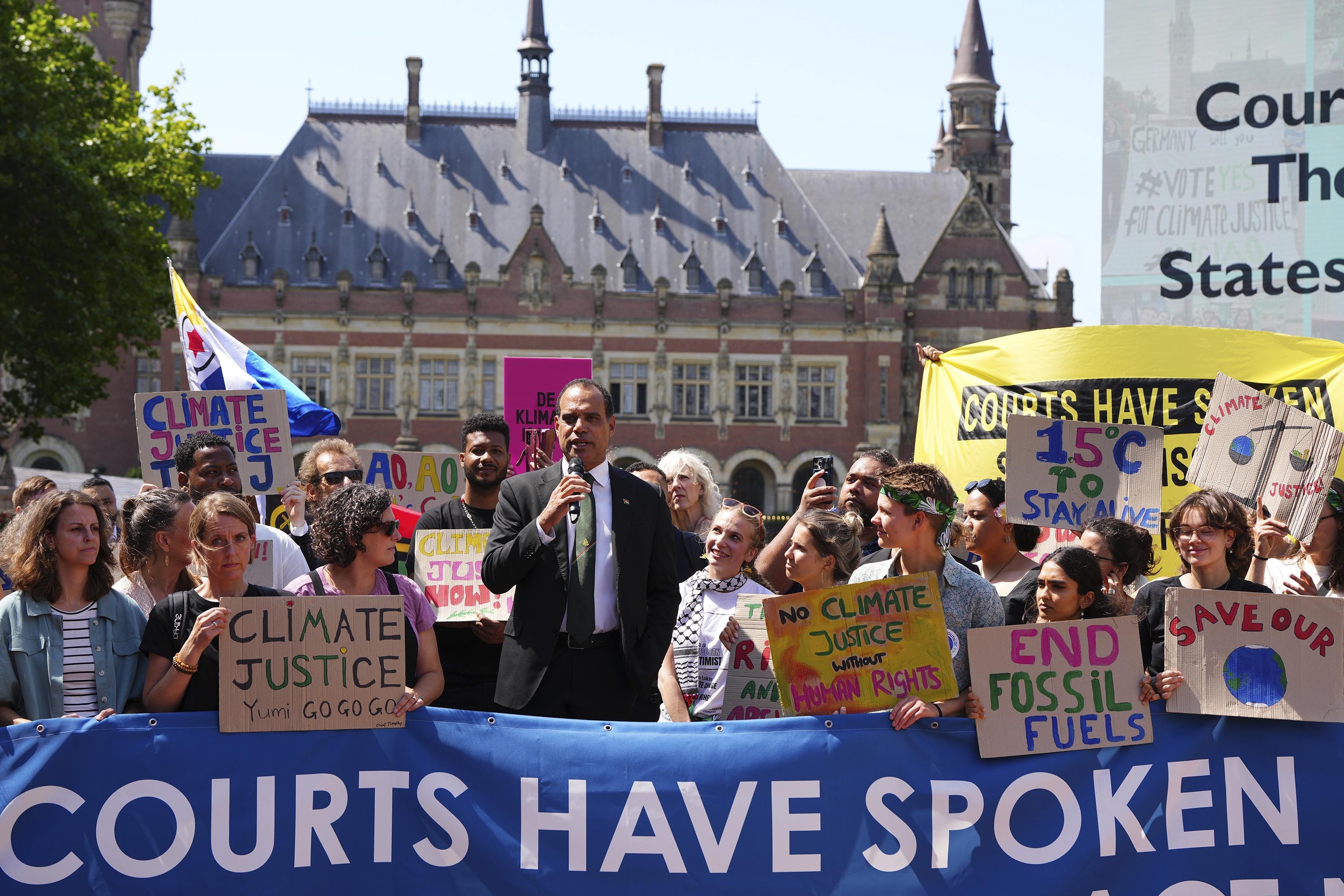
The U.N.'s top court has ruled that countries must take action to address climate change, although the decision is not legally binding. The ruling could influence other climate change lawsuits worldwide and highlights concerns of smaller nations like Vanuatu, which are vulnerable to climate impacts.
Key Facts
The U.N.'s top court issued a ruling stating that nations have a duty under international law to address climate change.
While the ruling is advisory, it may influence future legal actions related to climate change.
The decision supports smaller countries, which have been pushing for stronger global climate action due to their vulnerability to effects like rising sea levels.
The case was initiated by Vanuatu, an island nation facing serious risks from climate impacts.
The court stated that if countries do not reduce fossil fuel emissions, they might be liable for damages caused elsewhere.
The U.S. does not treat the International Court of Justice's rulings as binding and has withdrawn from the 2015 Paris Agreement.
Rising sea levels and stronger cyclones are major concerns for nations like Vanuatu, which contribute minimally to global emissions.
Read the Original
Want the full story? Tap a source to open the original
article.
European countries are helping Ukraine by providing defenses against drone and missile attacks. The European Union has imposed new sanctions on Russia and is increasing its defense budget. Meanwhile, ongoing battles continue between Ukraine and Russian forces, with reported drone and missile attacks on both sides.
Key Facts
European allies are providing Ukraine with air defenses against drones and ballistic missiles.
The EU announced new sanctions to stop all Russian energy imports and increased its defense budget.
The U.S. rejoined the Ukraine Defence Contact Group but not as a donor.
Russian forces made gains in several regions of Ukraine, including Kharkiv, Donetsk, and Zaporizhia.
Ukraine has targeted Moscow using long-range weapons and drones.
On one occasion, Russian air defenses claimed to have shot down 74 Ukrainian drones.
The UK and Germany pledged to jointly supply missiles to help Ukraine defend its airspace.
Ukraine has been using a mix of missile systems to protect against drone attacks, including German and U.S. systems.
Read the Original
Want the full story? Tap a source to open the original
article.
Iran has warned that it might leave an international agreement that helps control nuclear weapons if Europe reimposes sanctions. Iranian and European officials are set to meet to discuss the nuclear deal, with future negotiations planned between Iran and the U.S.
Key Facts
Iran might withdraw from the Nuclear Non-Proliferation Treaty if new sanctions are imposed by Europe.
The 2015 nuclear deal had removed some penalties on Iran in exchange for limits on its nuclear program.
Talks between Iran and European countries, Britain, France, and Germany, are scheduled in Istanbul.
The U.S. walked away from the 2015 nuclear deal during President Trump's first term.
Iran stays open to negotiations with the U.S., but wants assurance against military attacks.
An inspection team from the International Atomic Energy Agency (IAEA) is expected to visit Iran soon.
Iran emphasizes that European countries should not align their policies with the United States.
Read the Original
Want the full story? Tap a source to open the original
article.
Columbia University disciplined around 80 students for participating in protests against Israel's actions in Gaza. The penalties included expulsions and suspensions after protests on campus that drew national attention.
Key Facts
Columbia University took disciplinary action against about 80 students for joining pro-Palestinian protests.
The protests included a significant demonstration at Butler Library and a "Revolt for Rafah" encampment.
The students' actions were part of a larger movement calling for the university to stop investments linked to the Israeli military.
University officials stated that disruptions during protests impacted other students and led to disciplinary measures.
The New York Police Department (NYPD) arrested 78 people during the May 7 protest.
The Trump administration threatened to withhold $400 million in funding from Columbia, citing inadequate responses to anti-Semitism.
Columbia agreed to new restrictions, like banning face masks and granting special arrest powers to campus police, to negotiate the return of funding.
The university kept student identities confidential due to privacy rules.
Read the Original
Want the full story? Tap a source to open the original
article.
President Trump announced a 50% tariff on Brazilian imports, leading to increased closeness between Brazil and China. This decision came after Brazil and China already had strong trade ties and was seen as politically motivated, which caused tension and reactions within Brazil and from China.
Key Facts
President Trump set a 50% tariff on Brazilian imports, starting August 1.
The tariff decision connected to former Brazilian President Bolsonaro's legal troubles.
Brazil-China relations are strong, with China being Brazil's largest export market since 2009.
Brazil responded by planning a new tax office in Beijing to enhance cooperation.
China has invested over $73 billion in Brazil since 2007, focusing on important industries.
Brazilian products affected by the tariff include aircraft, car parts, coffee, and orange juice.
The tariff increase surprised many in Brazil and was criticized for being politically driven.
Trump's claim of a trade deficit with Brazil is incorrect; in reality, Brazil has a trade deficit with the US.
Read the Original
Want the full story? Tap a source to open the original
article.
Dr. Salvador Plasencia pleaded guilty to giving ketamine, a strong drug, to actor Matthew Perry, who was known to have addiction issues. Plasencia admitted to four charges of distributing the drug and will turn in his medical license. He is one of several people charged in connection with Perry's overdose death in 2023.
Key Facts
Dr. Salvador Plasencia supplied actor Matthew Perry with ketamine even though Perry struggled with addiction.
Plasencia pleaded guilty to four counts of distributing ketamine.
Ketamine is mainly used as a surgical anesthetic but can be misused as a recreational drug.
Plasencia will surrender his medical license and has already given up his right to prescribe controlled substances.
The legal agreement includes dropping other charges against Plasencia.
Plasencia is awaiting sentencing in December and remains free until then.
The case highlights concerns about at-home ketamine use, with calls for stricter controls in the industry.
Read the Original
Want the full story? Tap a source to open the original
article.
More than 100 aid and human rights groups have warned of widespread hunger in Gaza, urging governments to act. They say the situation has worsened despite slight easing of an Israeli blockade, with many people unable to get enough food or medicine. Israel disputed the claims, linking the blockade to efforts against Hamas.
Key Facts
Over 100 international aid and human rights groups signed a statement warning of mass starvation in Gaza.
Groups like Médecins Sans Frontières (MSF) and Oxfam say people and aid workers are struggling with severe shortages.
Gaza's health ministry reported 43 malnutrition-related deaths since Sunday.
The UN says that nearly 100,000 women and children in Gaza suffer from severe acute malnutrition.
Israel controls supply entry to Gaza and imposed a blockade, later partially eased, to pressure Hamas.
Basic supplies like food and medicine are running low, causing prices to rise sharply in Gaza.
Hospitals report that many people are exhausted from lack of food and some are collapsing in public areas.
The UN reported that more than 1,050 Palestinians were killed trying to obtain food since late May.
Read the Original
Want the full story? Tap a source to open the original
article.
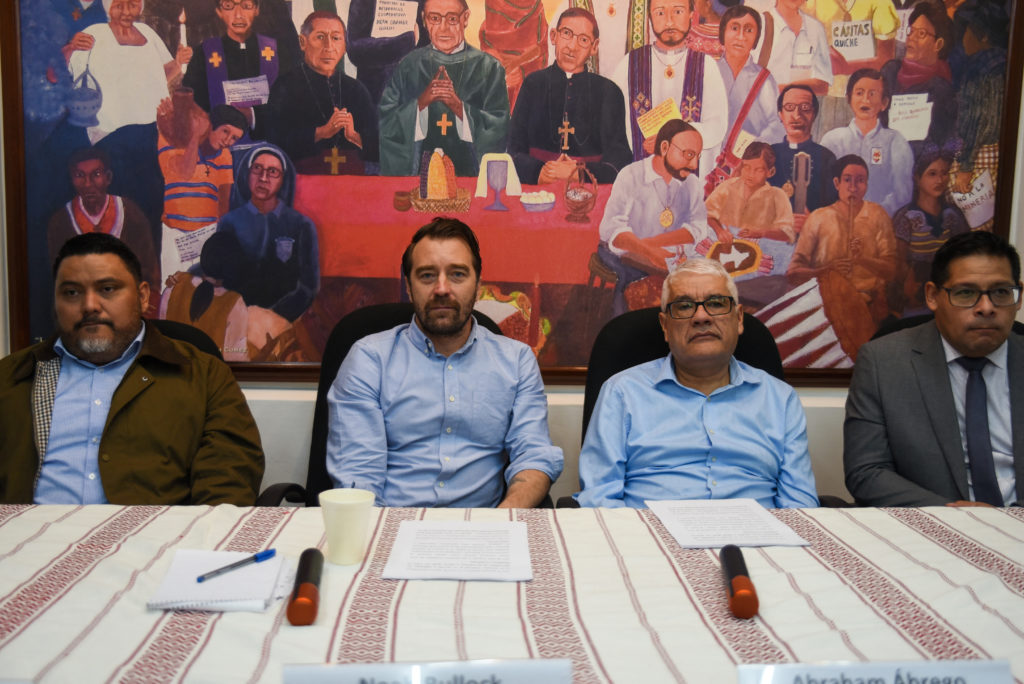
More than 100 people, including journalists and activists, have recently fled El Salvador due to concerns about government crackdowns. President Nayib Bukele's administration has been accused of detaining critics and passing laws that limit dissent, causing fear among those who oppose his government.
Key Facts
Over 100 political exiles have left El Salvador recently.
They include journalists, lawyers, academics, and activists.
Critics of President Bukele fear arrest or forced exile.
Bukele's government passed a law targeting foreign-funded groups.
Some exiles say the current situation is similar to past conflicts.
Bukele's approval ratings remain high despite these issues.
His administration did not comment on these recent events.
Critics accuse the government of using the justice system against them.
Read the Original
Want the full story? Tap a source to open the original
article.
Carlos Uzcátegui was reunited with his family in Venezuela after being released from a prison in El Salvador where he and other migrants were held. The U.S. government had sent them there, accusing them of gang ties, but later released them in a swap with Venezuela.
Key Facts
Carlos Uzcátegui spent more than four months in a prison in El Salvador.
The U.S. government accused the migrants of being members of a violent Venezuelan gang.
Migrants reported abuse and harsh conditions during their detention.
They were released in a prisoner swap between the U.S. and Venezuelan governments.
Venezuela's President Maduro claimed the migrants faced torture, including beatings.
The U.S. administration paid $6 million to El Salvador to house the migrants.
Only seven of the 252 migrants had pending legal cases in Venezuela.
Deportees will have health checks and background checks before returning to their homes in Venezuela.
Read the Original
Want the full story? Tap a source to open the original
article.
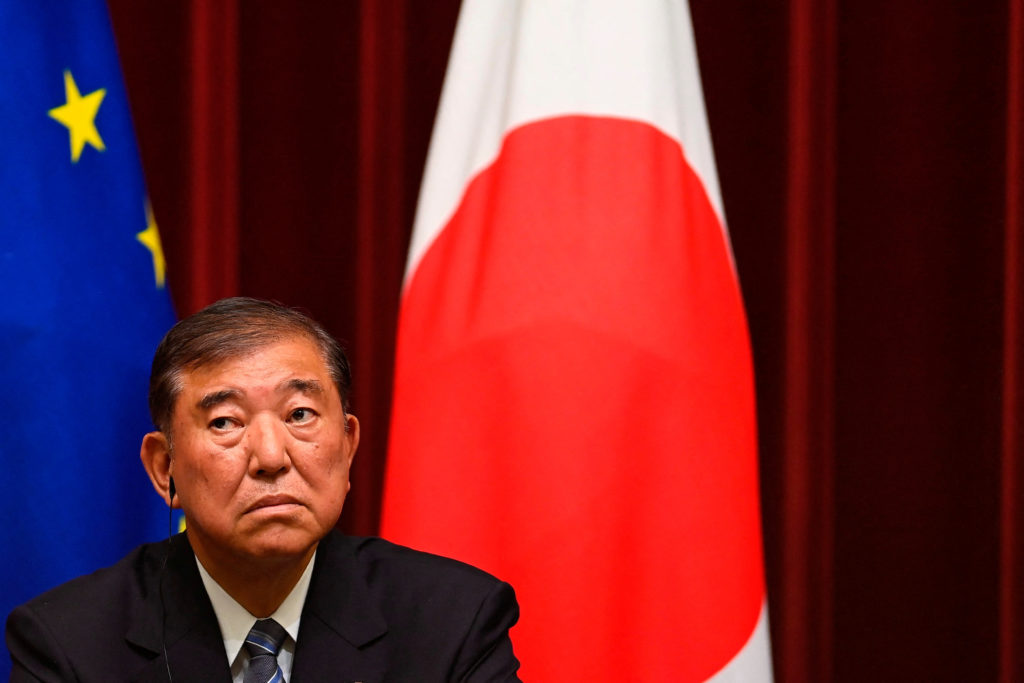
Prime Minister Shigeru Ishiba of Japan said he plans to stay in office to work on a new tariff agreement with the U.S., even though his party lost its majority in recent elections. Despite growing pressure to resign, Ishiba denies reports he will step down soon and focuses on the tariff deal affecting Japanese industries.
Key Facts
Prime Minister Shigeru Ishiba wants to stay in power despite his party losing the majority in Japan's recent elections.
His party, the Liberal Democratic Party (LDP), and its partner lost the upper house majority and previously lost the lower house majority.
Ishiba plans to work on a new trade agreement with the U.S. that affects over 4,000 Japanese goods.
The agreement reduces tariffs on Japanese cars and other goods imported to the U.S. from 25% to 15%.
Some members of Ishiba's party are urging him to resign and seek a new leader.
Japanese media speculates Ishiba might resign by the end of July, but he denies these reports.
The Democratic Party for the People (DPP) gained support in the election, as many voters are unhappy with rising prices.
Potential successors to Ishiba include former Economic Security Minister Sanae Takaichi and Agriculture Minister Shinjiro Koizumi.
Read the Original
Want the full story? Tap a source to open the original
article.
Syria's interim government has asked Turkey for help to strengthen its defense capabilities amid recent violence and tensions in the country. Turkey is considering providing training and technical support to Syria, while also supporting agreements to integrate Kurdish forces into the Syrian army. The ongoing conflicts have involved multiple parties, including Israeli airstrikes, with international attempts like a U.S.-brokered ceasefire to calm the situation.
Key Facts
Syria's interim government has asked for Turkey's support to boost its defense.
Turkey may provide training and technical assistance to Syria.
Recent violence in southern Syria involved fights between Bedouin tribes and Druze militias.
Israeli airstrikes targeted areas in Syria during these conflicts, aiming to protect Druze communities.
The U.S. helped broker a ceasefire between Israel and Syria to stop fighting.
Turkey supports a deal for integrating Kurdish forces into the Syrian army, though execution of the deal is stalled.
Turkey views the Kurdish-led Syrian Democratic Forces (SDF) as linked to a Kurdish group it considers terrorists.
The conflicts have increased tensions between Turkey and Israel, with disputes over possible Turkish military presence in Syria.
Read the Original
Want the full story? Tap a source to open the original
article.
Police in India have arrested a man who allegedly ran a fake embassy from a rented home near New Delhi. He pretended to be an ambassador and reportedly tricked people into giving him money by promising them overseas jobs.
Key Facts
Indian police arrested a man near New Delhi for allegedly running a fake embassy.
The suspect, Harshvardhan Jain, is accused of pretending to be an ambassador.
Jain allegedly promised people jobs abroad in exchange for money.
Police found cars with fake diplomatic plates at Jain's location.
Jain reportedly claimed to represent non-existent places like "Seborga" or "Westarctica."
Authorities discovered fake photographs and seals made to look like they were from official sources.
Jain is also suspected of money laundering through fake companies abroad.
Police seized cash and issued charges for forgery, impersonation, and possessing false documents.
Read the Original
Want the full story? Tap a source to open the original
article.
In June, the Sudanese Armed Forces appointed Kamil Idris as Prime Minister to lead a new civilian government in Port Sudan. However, two powerful armed group leaders remained in their positions, creating tension. Meanwhile, the Rapid Support Forces announced a new alliance called Tasis, which aims to form a parallel government in Sudan.
Key Facts
The Sudanese Armed Forces appointed Kamil Idris as Prime Minister in June.
Idris intended to establish a government led by technocrats.
Leaders from Darfur's armed groups, Gebreil Ibrahim and Mini Arko Minawi, refused to leave their posts.
Army leader Abdelfattah al-Burhan kept these leaders in place, overruling Idris.
The Rapid Support Forces (RSF) formed an alliance called Tasis to create a parallel government.
Tasis includes SPLM-N, an influential armed group from the Nuba Mountains.
The RSF and SPLM-N have had a history of conflict but are now allied.
Tasis plans to install a government to support RSF and allies in their conflict with the Sudanese army.
Read the Original
Want the full story? Tap a source to open the original
article.
The International Court of Justice (ICJ) has started delivering an important opinion on climate change. This opinion states that human activities are clearly causing greenhouse gas emissions, leading to severe effects worldwide. The court's findings are meant to guide future actions on climate and will have significant influence, although they aren't legally binding.
Key Facts
The ICJ is delivering its first advisory opinion on climate change.
Greenhouse gas emissions are described as clearly caused by human actions.
These emissions have negative effects that cross national borders.
The ICJ opinion is non-binding but will influence future climate actions.
The United Nations asked the court for this opinion in 2023.
Small island nations are especially pushing for international legal action.
The ICJ heard extensive documents and arguments before forming its opinion.
There is public support for climate justice outside the court.
Read the Original
Want the full story? Tap a source to open the original
article.
The Barbados threadsnake, the world's smallest-known snake, was recently rediscovered on the Caribbean island of Barbados after not being seen for nearly 20 years. This tiny and elusive snake was found by Connor Blades, a project officer with the Ministry of Environment in Barbados, and announced by the Re:wild conservation group.
Key Facts
The Barbados threadsnake is the world's smallest-known snake.
It had not been seen in almost 20 years, leading some scientists to think it might be extinct.
Connor Blades, from Barbados' Ministry of Environment, found the snake during a search.
The snake is small enough to fit on a coin and is difficult to find in the wild.
It has pale yellow lines on its back and eyes on the sides of its head.
Re:wild conservation group announced the rediscovery.
The snake eats termites and ants, lives underground, and lays only one egg.
The species is considered rare, with few sightings since its initial identification in 1889.
Read the Original
Want the full story? Tap a source to open the original
article.
More than 100 charity and human rights organizations say that Israel's blockade and military action in Gaza are causing severe hunger issues. Meanwhile, ceasefire talks between Israel and Hamas are ongoing, with a U.S. envoy involved in discussions.
Key Facts
Over 100 organizations claim that Israel's actions in Gaza are causing starvation.
Israeli strikes killed 21 people overnight, according to Gaza health officials.
An envoy from the U.S. is meeting with Israeli officials about ceasefire talks.
The World Health Organization reports high malnutrition rates in Gaza, affecting children and pregnant women.
Israel claims it has allowed 4,500 aid trucks into Gaza since May.
The U.N. says it needs 500 to 600 aid trucks daily but is hindered by Israeli restrictions and ongoing conflict.
Hamas wants a ceasefire and Israeli withdrawal to release hostages.
Israel vows to continue its actions until Hamas is defeated or disarmed.
Read the Original
Want the full story? Tap a source to open the original
article.
Humanitarian and human rights organizations say that people in Gaza are facing widespread hunger because critical aid is not being allowed to enter the area. They are calling for a stop to the fighting and for aid to be allowed to reach people who need it. The groups blame Israel's actions for these problems, while Israel says it is not responsible for the lack of food.
Key Facts
109 organizations, including Mercy Corps and Refugees International, report mass starvation in Gaza.
Aid like food, clean water, and medical supplies is blocked from entering Gaza.
These organizations want a ceasefire and for aid delivery restrictions to be lifted.
Gaza's Ministry of Health says 111 people have died from hunger, including 80 children.
More than 800 Palestinians have been killed recently while trying to get food, mostly at aid distribution points.
The UN and others criticize an agency for not being neutral and for involving military in aid efforts.
Israel controls the entry points into Gaza and denies causing the food shortages.
Read the Original
Want the full story? Tap a source to open the original
article.
Prosecutors in South Korea apologized to Choi Mal-ja, an 18-year-old in 1964 who was convicted for biting off part of her attacker's tongue during a sexual assault. Her case was retried after she campaigned for decades to have her conviction overturned, inspired by the #MeToo movement. The final decision on her case is expected soon.
Key Facts
Choi Mal-ja was convicted in 1964 for biting her attacker's tongue during a sexual assault attempt.
She was sentenced to 10 months in prison, suspended for two years.
Her attacker received a lighter sentence for trespassing and intimidation.
The court at the time did not accept her self-defense claim.
Her case has been a notable example in legal textbooks in South Korea.
Ms. Choi sought a retrial inspired by the #MeToo movement, filing a petition in 2020.
In 2023, prosecutors apologized and requested the court overturn her original conviction.
A final court ruling on her retrial is expected on September 10.
Read the Original
Want the full story? Tap a source to open the original
article.
Ozzy Osbourne, a well-known musician, passed away at the age of 76 shortly after his last performance. He had been living with Parkinson’s disease, a condition that affects movement due to a lack of a brain chemical called dopamine.
Key Facts
Ozzy Osbourne died at 76, weeks after a farewell performance.
He had Parkinson’s disease, which affects how people move.
Parkinson’s often begins with tremors and includes slow movements and stiffness.
Around 1 million Americans and 10 million people globally have Parkinson’s.
The disease usually starts after age 60 but can start earlier.
Parkinson’s occurs when the brain stops producing enough dopamine.
No cure exists, but treatments can help manage symptoms.
Symptoms worsen gradually, with serious effects like mobility issues.
Read the Original
Want the full story? Tap a source to open the original
article.