Neutral summaries of your favorite news sources — just the facts.
Your favorite news sources, one neutral feed — we distill their reporting into fact-first
summaries and always link to the original story. How it works
World News
Comprehensive coverage of international news and global events
The Texas Legislature will meet to talk about better emergency plans and warning systems after floods on July 4th caused the deaths of at least 135 people.
Key Facts
The meeting will take place on Wednesday.
The focus is on emergency preparedness and warning systems.
The need for discussion arose due to deadly floods.
The floods happened on July 4th.
At least 135 people died in these floods.
Read the Original
Want the full story? Tap a source to open the original
article.
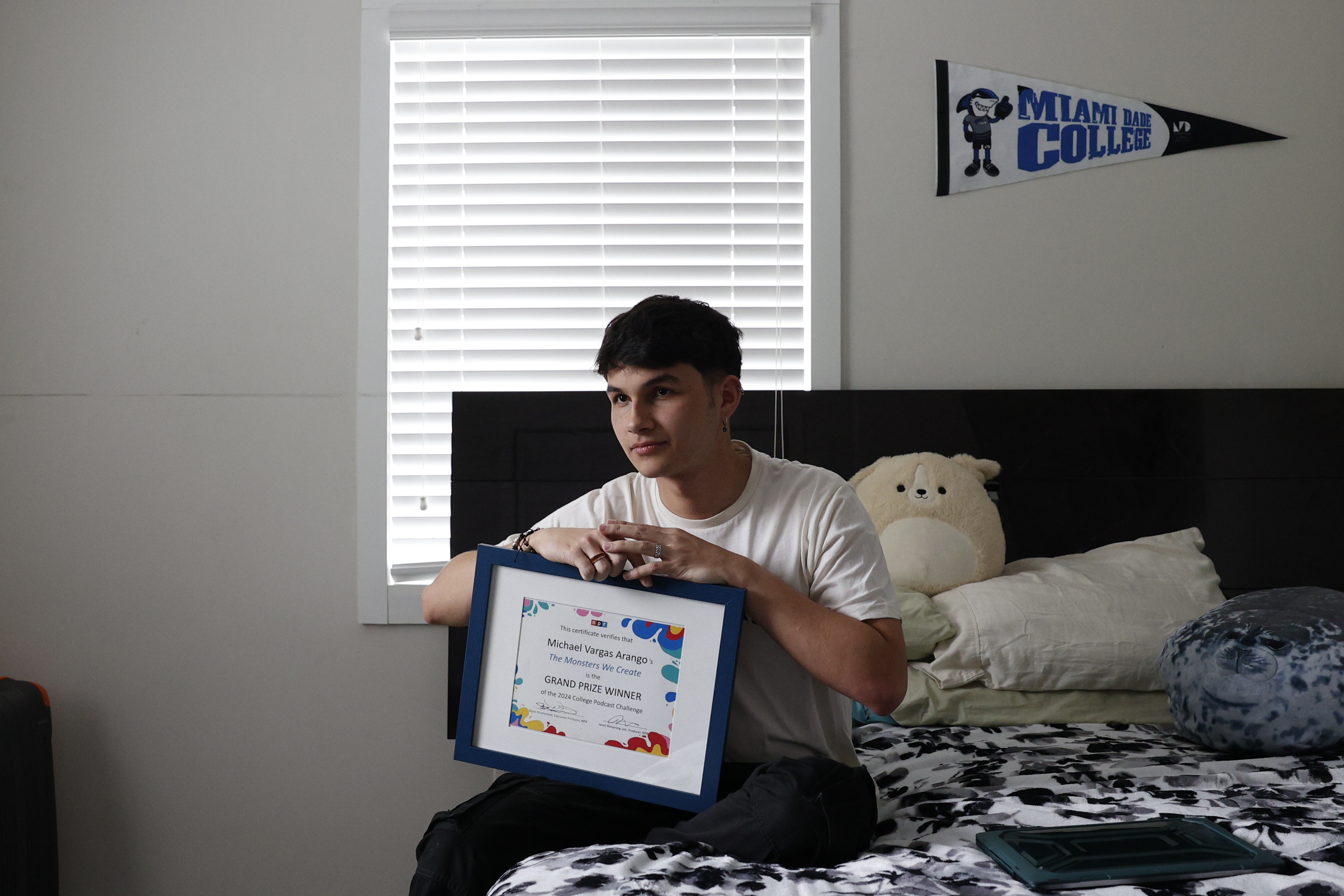
Michael Vargas Arango, a student from Miami-Dade College, created an award-winning podcast about his experiences with a rare mental health condition called schizoaffective disorder. His podcast, The Monsters We Create, not only earned him a scholarship but also inspired people worldwide, leading to a significant outpouring of support and requests for more content in different languages.
Key Facts
Michael Vargas Arango is a student who made a podcast about living with schizoaffective disorder.
Schizoaffective disorder involves symptoms like hallucinations and mood disorders, and it affects about 3 in 1,000 people.
Vargas Arango's podcast won NPR's College Podcast Challenge and a $5,000 scholarship.
His podcast has received global feedback, helping people with similar conditions feel understood.
Listeners have requested translations of his podcast into other languages.
Vargas Arango shares a personal story of connecting with a young listener from his hometown in Colombia.
Although he missed visiting his grandmother before she passed, Vargas found fulfillment in helping others through his podcast.
He graduated from Miami-Dade College and plans to study journalism at the University of North Carolina.
Read the Original
Want the full story? Tap a source to open the original
article.
Precooling is a method to cool homes by setting lower temperatures during off-peak hours to reduce energy costs during peak times. Researchers and power companies have mixed views on its effectiveness, and it may not be efficient for all homes. Other tips include maintaining air conditioning systems and using less energy during peak hours.
Key Facts
Heat waves have affected much of the U.S., leading to increased use of air conditioners.
Precooling involves lowering home temperatures during off-peak times to save on energy costs.
Professor Daniel Barber suggests precooling can work if air conditioning systems are well-maintained and windows/curtains are closed.
Precooling can be energy-intensive and produce greenhouse gases like HFCs.
The U.S. Department of Energy recommends indoor temperatures of 75 to 78 degrees to save energy.
Arizona Public Service supports precooling, advising temperature adjustments throughout the day.
Georgia Power says precooling depends on home efficiency and may not work for all homes.
Exelon Corporation warns that super cooling can increase energy use and costs.
Read the Original
Want the full story? Tap a source to open the original
article.
The European Union has warned Israel that it might take action if the situation in Gaza does not improve, as 101 Palestinians have reportedly died from starvation. The EU's foreign policy chief, Kaja Kallas, urged Israel to increase humanitarian aid and stop harming civilians at aid sites. Meanwhile, the U.S. has sent an envoy, Steve Witkoff, to Europe and possibly the Middle East to work on securing a truce and ensuring more aid reaches Gaza.
Key Facts
At least 101 Palestinians have died from starvation in Gaza, with many deaths occurring in recent weeks.
The European Union's foreign policy chief, Kaja Kallas, has warned Israel to fulfill its promises of increasing humanitarian aid to Gaza.
Israel has allowed limited aid into Gaza, primarily through the US-backed Gaza Humanitarian Foundation, but aid officials say it's not enough.
The U.S. envoy, Steve Witkoff, is traveling to Europe to discuss a ceasefire and ways to increase aid to Gaza.
Witkoff's discussions in Europe will include meetings in Rome and possibly further talks in the Middle East if progress is made.
The humanitarian situation in Gaza remains critical, with over 1,000 Palestinians reportedly killed at or near aid distribution points.
The UN and Gaza health officials continue to report high numbers of starvation-related deaths, with 80 children among those who have died.
Read the Original
Want the full story? Tap a source to open the original
article.
The International Court of Justice (ICJ) is about to issue its first opinion on climate change, examining nations' responsibilities to address the problem. The judges will consider whether there should be consequences for countries contributing significantly to climate change, with a decision expected at the Peace Palace in The Hague.
Key Facts
The ICJ is providing its first-ever opinion on climate change.
Judges reviewed written submissions and heard two weeks of oral arguments.
The opinion will clarify nations' obligations to prevent climate change.
The ruling will be announced at the Peace Palace in The Hague.
Vanuatu and other countries initiated the case to establish climate obligations.
Top fossil fuel polluters argue existing UN agreements are adequate.
The judges will explore legal consequences for major greenhouse gas emitters.
The 2015 Paris Agreement does not address direct compensation for past damages.
Read the Original
Want the full story? Tap a source to open the original
article.
Researchers found teeth marks on a terror bird's leg bone from 13 million years ago, suggesting it was attacked by a crocodile-like reptile. The marks matched an extinct species called Purussaurus neivensis, and scientists believe the bird died in this encounter.
Key Facts
Terror birds were large, predatory birds that lived 13 million years ago, standing taller than a human.
Scientists from Colombia studied teeth marks on a terror bird bone found in the Tatacoa Desert.
The teeth marks matched those of a crocodile-like reptile, Purussaurus neivensis.
Purussaurus could grow up to five meters long and likely ambushed prey near water.
This finding suggests terror birds faced predators more than previously thought.
The leg bone showed no healing, indicating the terror bird likely died in the attack.
The Tatacoa Desert was once a swampy area where many fossils have been preserved.
The bone was discovered 15 years ago by a local fossil collector and later studied in a museum.
Read the Original
Want the full story? Tap a source to open the original
article.
An Instagram account named Babydoll Archi, with 1.4 million followers, turned out to be fake, using AI-generated content that closely resembled a real woman from Assam, India, named Sanchi. Her ex-boyfriend, Pratim Bora, allegedly created and monetized the account as an act of revenge after their relationship ended, leading to his arrest following a police complaint by Sanchi's family.
Key Facts
Babydoll Archi was a popular Instagram account with 1.4 million followers.
The account featured AI-generated content resembling a real woman named Sanchi.
Sanchi, a homemaker in Assam, India, was not aware of the account.
Her ex-boyfriend, Pratim Bora, allegedly created the account after their breakup.
Bora used private photos of Sanchi and AI tools to make deepfake videos and images.
The police arrested Bora after Sanchi's family filed a complaint.
Bora allegedly earned money from the account, with police seizing his devices and bank records.
Sanchi and her family are now receiving counseling, and she had no prior social media presence.
Read the Original
Want the full story? Tap a source to open the original
article.
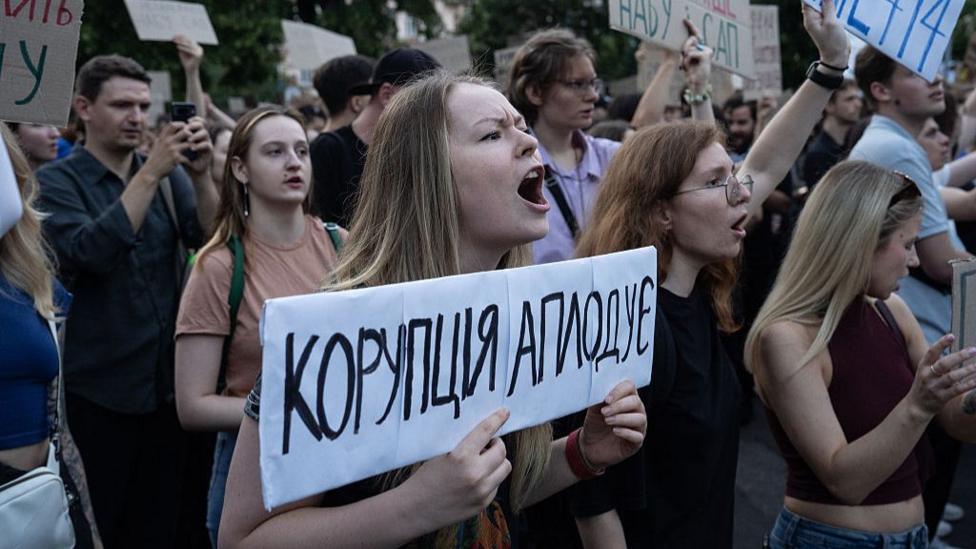
Ukraine's President Volodymyr Zelensky signed a new law that changes how anti-corruption bodies operate, which has led to protests in Kyiv and other cities like Lviv, Dnipro, and Odesa. The law gives more control to the prosecutor general over anti-corruption investigations, causing concern among Ukraine's Western allies and the European Union about its potential impact on anti-corruption efforts and Ukraine's EU membership process.
Key Facts
President Zelensky signed a bill affecting Ukraine's anti-corruption bodies.
The bill places the National Anti-Corruption Bureau and the Specialised Anti-Corruption Prosecutor's Office under the prosecutor general's control.
Hundreds protested in cities like Kyiv, Lviv, Dnipro, and Odesa against the bill.
The European Union and G7 countries expressed concern over the law.
Critics say the bill weakens a decade of anti-corruption and pro-democracy progress in Ukraine.
Zelensky argues the changes are needed to remove "Russian influence" and improve efficiency.
Ukraine's Western allies previously helped set up the country's independent anti-corruption system.
Transparency and anti-corruption reforms are conditions for Ukraine's EU membership application.
Read the Original
Want the full story? Tap a source to open the original
article.
Columbia University in the United States has expelled, suspended, or revoked degrees of nearly 80 students who participated in protests against Israel's actions in Gaza. The university cites disruptions to academic activities as the reason for their actions. The student group involved, Columbia University Apartheid Divest (CUAD), disagrees with the university's response and remains committed to its cause.
Key Facts
Columbia University has expelled or suspended almost 80 students for protest-related actions.
The protests were against Israel's military activities in Gaza.
Students were penalized for disrupting academic activities, including at Butler Library and during Alumni Weekend.
Columbia University Apartheid Divest (CUAD) is the activist group leading these protests.
CUAD criticizes the university's punitive measures as excessive.
The university called police during the protests, which led to multiple arrests.
Columbia's actions have come amid its negotiations with the U.S. government over federal funding.
Mahmoud Khalil, a protest leader, was targeted for deportation but has met with lawmakers in Washington, DC.
Read the Original
Want the full story? Tap a source to open the original
article.
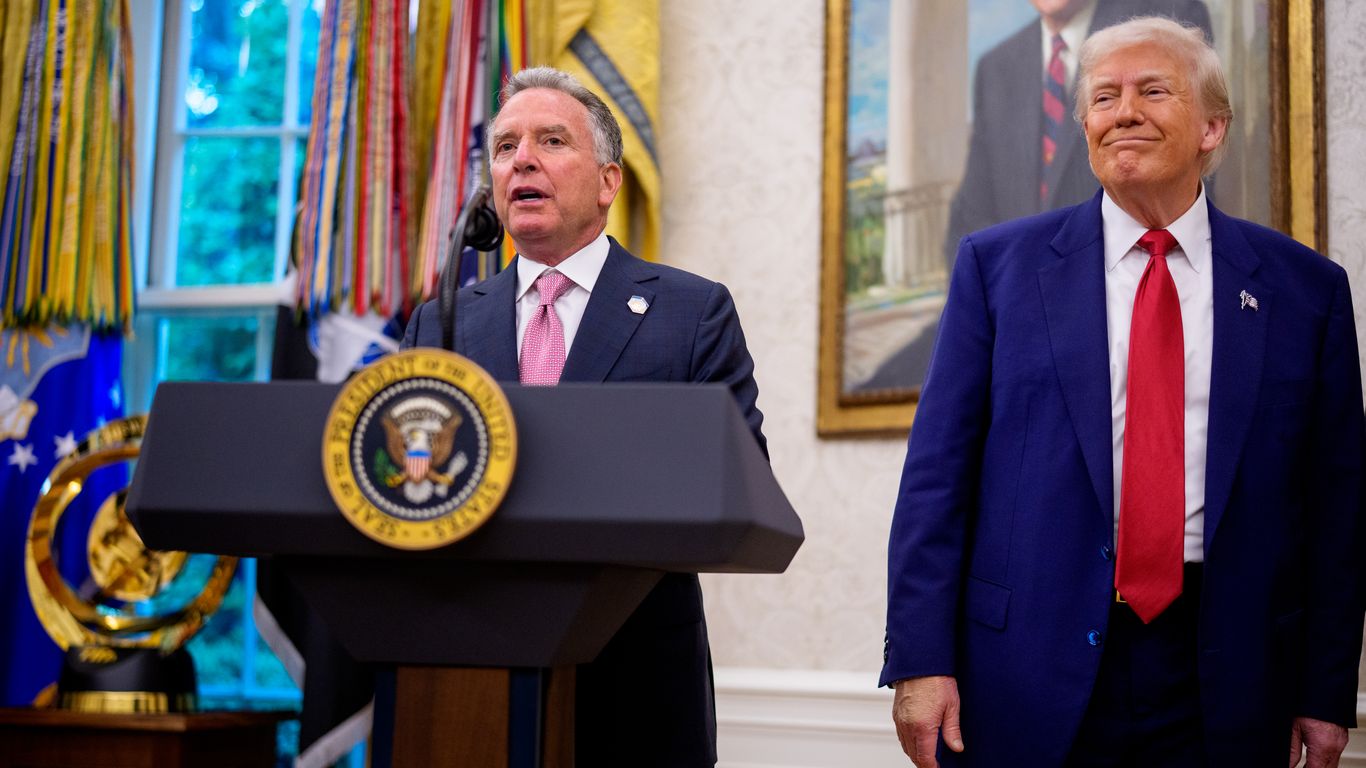
White House Middle East envoy Steve Witkoff plans to meet with Qatari and Israeli officials in Rome to discuss a possible Gaza ceasefire and hostage agreement. The meeting is an important step in ongoing talks, with Witkoff indicating he will join Doha negotiations if progress is near.
Key Facts
Steve Witkoff is a White House envoy working on Middle East peace efforts.
The meeting in Rome will include senior officials from Qatar and Israel.
The discussions focus on a ceasefire and hostage agreement related to Gaza.
Witkoff said he would go to Doha for talks if a deal seems close.
This meeting in Rome follows a previous meeting at the White House.
Hamas is expected to respond to the latest proposal soon.
Qatar, Egypt, and the U.S. are also involved in mediation efforts.
Read the Original
Want the full story? Tap a source to open the original
article.
The United Nations' highest court, the International Court of Justice, is set to give an important opinion on the responsibilities countries have to address climate change. Although the opinion is non-binding, it may influence future legal actions related to climate policies and the environment.
Key Facts
The International Court of Justice is being asked to provide an opinion on countries' duties regarding climate change.
This request came from the U.N. General Assembly after lobbying from vulnerable island nations.
The court will address two main questions about countries' responsibilities under international law related to climate protection and consequences of harmful actions.
Rising sea levels and global warming are major concerns, affecting island nations like Vanuatu.
Any opinion from the court will not be legally binding but could influence future legal cases.
Small island nations have been seeking legal interventions due to slow international climate agreements.
The opinion might aid in domestic and international legal actions concerning environmental harm.
Both the United States and Russia oppose the court enforcing any emissions reductions mandates.
Read the Original
Want the full story? Tap a source to open the original
article.
Thousands of people in Ukraine protested after President Volodymyr Zelenskyy signed a law that changes how anti-corruption agencies operate. This new law might limit the independence of these agencies, which some believe could affect Ukraine's efforts to join the European Union and access aid from Western countries.
Key Facts
Thousands gathered in Kyiv and other Ukrainian cities to protest the new law affecting anti-corruption agencies.
The law changes how two main anti-corruption groups in Ukraine work, potentially reducing their independence.
Protesters want President Zelenskyy to veto (stop) this law.
Fighting corruption is important for Ukraine to join the European Union.
The European Union expressed concern, calling the law a "serious step back" for Ukraine.
Protests in Ukraine are common, usually to influence public policy or express dissatisfaction.
Transparency International in Ukraine criticized the law, saying it harms anti-corruption reforms.
Many protesters believe the law prioritizes government loyalty over fighting corruption.
Read the Original
Want the full story? Tap a source to open the original
article.
Fighting between Russia and Ukraine continued, with reports of casualties from drone and bomb attacks in different regions. Discussions about potential peace talks in Istanbul are taking place, although no confirmation has been made. Ukraine's parliament passed a bill that affects the independence of anticorruption agencies, leading to protests.
Key Facts
A Ukrainian drone strike killed three people and injured three others in the Russian-controlled region of Kherson.
A Ukrainian attack caused a death in Russia's Belgorod region.
A Russian bomb attack killed a 10-year-old boy and injured five in Kramatorsk, Ukraine.
Russia claimed to capture a village in the Donetsk region of Ukraine.
A French-supplied Ukrainian fighter jet crashed due to equipment failure, but the pilot ejected safely.
A Russian drone strike damaged Ukraine's gas infrastructure, according to a Ukrainian energy company CEO.
The Kremlin has not confirmed participation in proposed peace talks in Istanbul, but discussions are ongoing.
Ukraine's parliament passed a bill reducing the autonomy of anticorruption agencies, leading to significant protests in Kyiv.
Read the Original
Want the full story? Tap a source to open the original
article.
The United States President Donald Trump announced a large trade agreement with Japan. This deal includes a 15% tariff on Japanese exports, and Japan will invest $550 billion in the U.S. The announcement led to an increase in Japanese stock indexes.
Key Facts
President Trump has announced a trade deal with Japan.
The U.S. will place a 15% tariff on goods exported from Japan.
Japan plans to invest $550 billion in the United States.
Trump stated that the U.S. will get 90% of the profits from this investment.
The deal is expected to create hundreds of thousands of jobs in the U.S.
The agreement will open Japan to trade more goods such as cars, trucks, rice, and other agricultural products.
There has been no immediate response or confirmation from the Japanese government.
Japanese stock market, particularly the Nikkei 225 index, rose by 1.7% after the announcement.
Read the Original
Want the full story? Tap a source to open the original
article.
President Donald Trump announced a trade agreement with Japan that includes a 15% tax on imported Japanese goods. The agreement aims to create jobs and involves Japan investing $550 billion in the U.S. The previous proposed tax rate was 25%.
Key Facts
The new trade framework introduces a 15% tariff on goods coming from Japan.
This tariff rate is lower than the 25% rate that was initially proposed.
Japan plans to invest $550 billion in the United States as part of this agreement.
The deal is expected to open Japan's market to more American cars and rice.
President Trump announced similar trade agreements with the Philippines and reaffirmed tariffs on Indonesia.
The U.S. had a $69.4 billion trade imbalance with Japan last year.
The deadline for implementing these tariffs and others on countries like the EU is August 1.
General Motors reported a drop in profits, warning that tariffs could negatively impact future business.
Read the Original
Want the full story? Tap a source to open the original
article.
President Trump announced a new trade deal with Japan, where Japan would invest $550 billion in the U.S. and face a 15% tariff on some goods. While Trump claims this deal will open Japan's market to more U.S. products, Japan has not confirmed the agreement or its details.
Key Facts
President Trump announced a trade deal with Japan.
The deal includes Japan investing $550 billion in the United States.
Japan will reportedly pay a 15% tariff on certain goods under this deal.
The deal aims to allow more U.S. products like cars, trucks, and rice in Japan.
Japan has not officially confirmed or commented on the deal yet.
Previously, Trump threatened a 25% tariff on Japanese exports if a new deal was not reached.
The announcement comes with ongoing updates, seeking confirmation from Japanese officials.
Read the Original
Want the full story? Tap a source to open the original
article.
Fighting in Sudan's Kordofan region is intense as the national army and paramilitary forces, known as the Rapid Support Forces (RSF), battle for control. This area is crucial because it holds Sudan's oil supply, and its stability is important for neighboring South Sudan.
Key Facts
Sudan's Kordofan region is important because it has a lot of oil.
Control of Kordofan affects Sudan's and South Sudan’s oil supply routes.
Intense fighting has been happening there since June between the army and RSF.
The conflict began in April 2023 after a disagreement between Sudan’s military leader, Gen Burhan, and RSF leader "Hemedti."
About 150,000 people have died, and 12 million have been displaced due to the conflict.
The RSF wants Kordofan for strategic reasons to be closer to central Sudan, including the capital.
The majority of RSF fighters in Kordofan belong to the local Misseriya ethnic group.
Recent airstrikes in West Kordofan have upset local communities, potentially harming army efforts.
Read the Original
Want the full story? Tap a source to open the original
article.
After Israeli air strikes on Iran's Evin Prison in June, detainees were transferred to other locations that reportedly have poor conditions. The air strikes damaged sections of Evin, and the attack is debated internationally, with claims of human rights violations.
Key Facts
Israeli air strikes hit Iran's Evin Prison on June 23.
The strikes killed 80 people, including prisoners and prison staff.
Surviving detainees from Evin were moved to other prisons with poor conditions.
Problems at the new locations include overcrowding and lack of basic facilities.
Amnesty International says the attack on Evin violates international humanitarian law.
Israel claimed the prison was involved in intelligence operations against it.
Evin held political dissidents, human rights defenders, and other notable prisoners.
Verified videos and satellite images showed significant damage to the prison complex.
Read the Original
Want the full story? Tap a source to open the original
article.
Mahmoud Khalil, a protest leader and legal resident in the U.S., met with lawmakers in Washington, DC, to speak against what he calls U.S. retaliation for his advocacy for Palestine. He was previously detained for over three months under a policy used by the Trump administration to deport foreign nationals involved in pro-Palestinian activities. Khalil is presently challenging his deportation and seeking $20 million in damages from the government.
Key Facts
Mahmoud Khalil, a Columbia University protest leader, is at risk of deportation under a policy used by the Trump administration.
Khalil was detained for over 100 days in Louisiana before being released.
He met with several U.S. lawmakers, including Senator Bernie Sanders and Congresswoman Ayanna Pressley, to discuss his situation.
Khalil challenges his deportation and has filed a lawsuit against the government, claiming malicious prosecution and false imprisonment.
A provision of the Immigration and Nationality Act of 1952 is used to justify his potential deportation.
Khalil’s lawyers argue his detention violates freedom of speech rights protected by the U.S. Constitution.
Some judges have ordered the release of Khalil and other students in similar situations as their cases proceed.
Khalil missed the birth of his son during his detention.
Read the Original
Want the full story? Tap a source to open the original
article.
Morocco's women's soccer team advanced to the Women's Africa Cup of Nations (WAFCON) final after defeating Ghana in a penalty shootout following a 1-1 draw. They will face Nigeria in the final, who defeated South Africa 2-1 in their semifinal match.
Key Facts
Morocco and Ghana finished regular and extra time with a 1-1 tie, leading to a penalty shootout.
Khadija Er-Rmichi, the goalkeeper for Morocco, stopped a key penalty attempt by Ghana.
Morocco won the penalty shootout 4-2 to advance to the final.
In the other semifinal, Nigeria beat South Africa 2-1 to reach the final.
Nigeria's victory was secured when a long ball by Michelle Alozie went into the goal during stoppage time.
Nigeria has won the WAFCON nine times in the past.
The last time Morocco reached the WAFCON final was in 2022, where they lost to South Africa.
During one match, South Africa's Gabriela Salgado left the field injured, and the crowd showed support by chanting her name.
Read the Original
Want the full story? Tap a source to open the original
article.