Neutral summaries of your favorite news sources — just the facts.
Your favorite news sources, one neutral feed — we distill their reporting into fact-first
summaries and always link to the original story. How it works
World News
Comprehensive coverage of international news and global events
Israeli attacks in southern Lebanon killed three people, despite a ceasefire agreement with Hezbollah. The strikes included drone attacks on vehicles, with Israel claiming they targeted a person responsible for missile attacks against its territory.
Key Facts
Israeli attacks killed three people in southern Lebanon.
One person died in a drone strike on a car in the village of Kunin.
Two people were killed on a motorcycle in Mahrouna, near Tyre.
The Israeli army stated that the attack targeted Hassan Muhammad Hammoudi, who they claim attacked Israel with missiles.
A previous attack reportedly killed a woman and injured 25 others.
Lebanon's President accused Israel of violating a ceasefire agreement.
The US-brokered ceasefire deal requires both Israel and Hezbollah to limit military presence and activity in certain areas.
Read the Original
Want the full story? Tap a source to open the original
article.
Ukraine claimed it launched a drone attack on a Russian airfield in Crimea, destroying several helicopters and an air defense system. Meanwhile, Russian strikes killed several people in the Ukrainian cities of Odesa and the Kherson region. Negotiations between Russia and Ukraine in Turkiye did not result in any agreement, as both countries hold opposing views on territorial issues.
Key Facts
Ukraine said it carried out a drone strike on Kirovske airfield in Crimea, targeting Russian helicopters and air defense systems.
Ukraine claimed to have destroyed Mi-8, Mi-26, and Mi-28 helicopters, along with a Pantsir-S1 missile and gun system.
The Russian Defense Ministry reported shooting down over 40 Ukrainian drones over Crimea.
In Odesa, a Russian drone strike killed two people and injured 14 others, including children.
In the Kherson region, a person was killed and three were injured due to Russian strikes, targeting important facilities and homes.
Russia's Defense Ministry announced its control over a settlement in the Donetsk region, claimed by Russia since 2022.
Recent peace talks in Turkiye between Russia and Ukraine did not lead to an agreement due to conflicting demands over territory.
Russia and Ukraine have exchanged prisoners of war, with over 1,000 soldiers freed so far.
Read the Original
Want the full story? Tap a source to open the original
article.
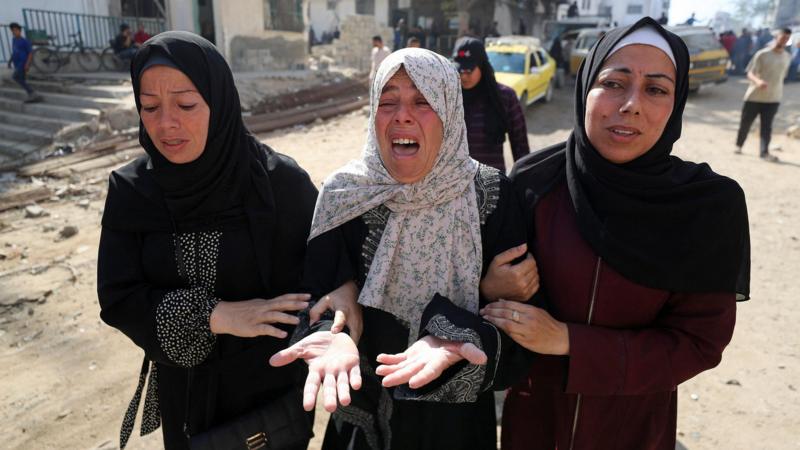
At least 81 people have died and over 400 were injured in Israeli airstrikes in Gaza, according to the health ministry run by Hamas. Efforts to mediate a ceasefire are ongoing, with US involvement, but recent strikes continue, affecting many civilians, including children.
Key Facts
At least 81 Palestinians were reported killed and more than 400 injured in Gaza due to Israeli airstrikes within a 24-hour period.
One strike near a stadium in Gaza City killed at least 11 people, including children; the area housed displaced people in tents.
Rescue operations were challenging as people dug through sand by hand to find bodies buried after attacks.
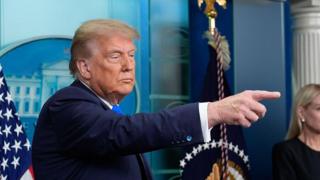
US President Donald Trump expressed hope for a ceasefire agreement in the coming week, with Qatari mediators involved.
Previous ceasefire efforts, starting in January, fell apart after new strikes took place in March.
There is an ongoing effort to broker a ceasefire and hostage release deal, though negotiations with Israel have stalled.
Over a dozen more people were killed in strikes on an apartment and a tent in the al-Mawasi area.
Israeli military has not yet commented on the latest reported strikes causing civilian casualties.
Read the Original
Want the full story? Tap a source to open the original
article.
Thousands of protesters gathered in Belgrade, Serbia, to demand early elections and express dissatisfaction with President Aleksandar Vucic's 12-year rule. The protests were largely driven by university students, following a tragic incident where 16 people died in a building collapse allegedly linked to corruption. Despite the unrest, Vucic remains in power and has not agreed to call for early elections.
Key Facts
Tens of thousands of people protested in Belgrade calling for early elections.
President Aleksandar Vucic has been in power for 12 years.
The protests were organized primarily by university students.
A building collapse last year that killed 16 people triggered the protests.
Many blame the government for corruption and negligence in infrastructure.
Serbia's railway company stopped train services due to an alleged bomb threat.
President Vucic accused unnamed foreign powers of influencing the protest.
Vucic’s party supporters were bused in for a counter-demonstration.
Vucic has refused to call for early elections, aiming to complete his term.
Read the Original
Want the full story? Tap a source to open the original
article.
Israeli airstrikes in Gaza have resulted in the deaths of at least 72 people overnight. Talks about a possible ceasefire between Israel and Hamas are ongoing, with hopes of reaching an agreement soon. Among the dead are men, women, and children, with more than 56,000 Palestinians killed since the war began, according to health officials.
Key Facts
At least 72 people died in Israeli airstrikes in Gaza overnight.
Among the dead were families and children in different locations, including a tent camp and shelters for displaced people.
U.S. President Donald Trump mentioned efforts for a possible ceasefire within a week.
An Israeli official is expected in Washington for talks about the situation in Gaza.
Over 56,000 Palestinians have died since the start of the conflict, including many women and children.
Israel claims it targets militants, blaming Hamas for civilian casualties.
Negotiations between Israel and Hamas for a ceasefire have been inconsistent.
More than 500 Palestinians died seeking food during food supply restrictions in Gaza.
Read the Original
Want the full story? Tap a source to open the original
article.
The researcher Ali Akbar Dareini discussed how Iran's state funeral showed the country's unity when facing challenges from Israel and the United States.
Key Facts
Ali Akbar Dareini is a researcher at the Center for Strategic Studies.
He talked about Iran's state funeral.
The state funeral demonstrated national unity.
The unity was in response to attacks from Israel.
The unity was also in response to attacks from the United States.
Read the Original
Want the full story? Tap a source to open the original
article.
On Saturday, many people gathered in Tehran to mourn the head of Iran's Revolutionary Guard and other leaders killed in a 12-day conflict with Israel. The mourning took place along Tehran’s Azadi Street. During the conflict, Israel targeted Iranian commanders and nuclear sites, while Iran fired missiles at Israel, leading to significant casualties on both sides.
Key Facts
The funeral was held for Gen. Hossein Salami, Gen. Amir Ali Hajizadeh, and others.
The conflict with Israel lasted 12 days, starting on June 13.
Israel aimed to destroy Iran’s nuclear program and military leaders.
Iran fired over 550 ballistic missiles at Israel during the conflict.
The conflict resulted in the deaths of over 1,000 people, including civilians.
State media reported over 1 million people attended the funeral, but this couldn’t be independently verified.
Iran’s Revolutionary Guard was created after the 1979 Islamic Revolution.
Government offices in Tehran were closed so public servants could attend the funerals.
Read the Original
Want the full story? Tap a source to open the original
article.
The United States and Israel launched military actions against Iran, stating that Iran should not have a nuclear weapon. Iran has denied trying to build a nuclear weapon, and there is concern about whether such actions might encourage other countries to seek nuclear arms.
Key Facts
The United States and Israel conducted attacks on Iran.
They claimed Iran should not possess a nuclear weapon.
Iran denies attempting to create a nuclear weapon.
Nine countries currently have nuclear weapons.
There are concerns about whether these actions may lead other countries to pursue nuclear weapons.
Experts discussed the situation, including Tariq Rauf, Laicie Heeley, and Tariq Ali.
Tariq Rauf is a former official from the International Atomic Energy Agency.
Laicie Heeley is an expert in nuclear arms control based in Washington, DC.
Read the Original
Want the full story? Tap a source to open the original
article.
At this week's NATO meeting in The Hague, Trump showed strong support for NATO. At the same time, European leaders met in Brussels to talk about helping Ukraine and dealing with issues in the Middle East.
Key Facts
Trump expressed strong support for NATO at the summit in The Hague.
European Union leaders met in Brussels for their own summit.
The EU summit discussions focused on supporting Ukraine.
Leaders also talked about diplomacy efforts in the Middle East.
Nick Schifrin interviewed Kaja Kallas in The Hague.
The interview included talks about the relationship with Trump and dealing with Iran.
Read the Original
Want the full story? Tap a source to open the original
article.
Heavy rains and flash floods in Pakistan have killed at least 32 people recently. Pakistan's climate change minister expressed concern about the unfair distribution of climate funding, as the country deals with significant weather-related damages. Despite contributing minimally to global emissions, Pakistan faces extreme weather impacts and requires more financial help to manage the climate challenges.
Key Facts
Heavy rains and flash floods killed at least 32 people in Punjab and Khyber Pakhtunkhwa provinces.
In 2022, extreme weather in Pakistan caused significant damage, affecting 33 million people and costing $14.8 billion in damages.
Pakistan's climate change minister highlighted the inequity in global climate funding, calling it a "moral gap."
Pakistan contributes about 0.5% of global CO2 emissions but is highly affected by climate change.
Pakistan needs an estimated $40 to $50 billion annually until 2050 to adapt to climate challenges.
In 2023, it received only $2.8 billion from international lenders against previous funding pledges.
A 2025 report placed Pakistan as the most affected country by climate change based on 2022 data.
The melting of over 13,000 glaciers in Pakistan increases flooding risk and threatens infrastructure, land, and communities.
Read the Original
Want the full story? Tap a source to open the original
article.
Authorities in the UK have seized 2.4 tonnes of cocaine worth $132 million from a ship that arrived from Panama. This was one of the largest cocaine seizures in the UK, discovered as part of an intelligence-led operation. The UK is a major market for cocaine, and cocaine-related deaths have increased recently.
Key Facts
UK border authorities seized $132 million worth of cocaine.
The seizure took place at London Gateway port, near the capital.
The shipment originated from Panama and was found under 37 large containers.
This was the sixth-largest cocaine seizure on record in the UK.
The UK is one of the biggest markets for cocaine in Europe.
Cocaine-related deaths in England and Wales rose by 31% between 2022 and 2023.
The UN reported that cocaine use worldwide grew to 25 million users in 2023.
Colombian cocaine production is increasing to meet rising demand in Europe and the Americas.
Read the Original
Want the full story? Tap a source to open the original
article.
The Democratic Alliance (DA) in South Africa has pulled out of a national dialogue initiative started by President Cyril Ramaphosa. The DA criticized the government for corruption and tensions heightened when a DA member was removed from a ministerial position after taking an unapproved trip to the United States.
Key Facts
The DA has left the national dialogue initiative led by President Cyril Ramaphosa.
John Steenhuisen, DA leader, called the initiative a "waste of time and money."
Steenhuisen blamed government corruption on President Ramaphosa.
The DA and the African National Congress (ANC) formed a Government of National Unity after the ANC lost its parliamentary majority.
The DA and ANC have clashed over political and economic issues due to their different ideologies.
President Ramaphosa started the national dialogue to address big issues like unemployment and crime.
The DA’s deputy minister, Andrew Whitfield, was fired for an unauthorized trip to the US.
The presidency stated the firing was due to violating rules for ministers.
Read the Original
Want the full story? Tap a source to open the original
article.
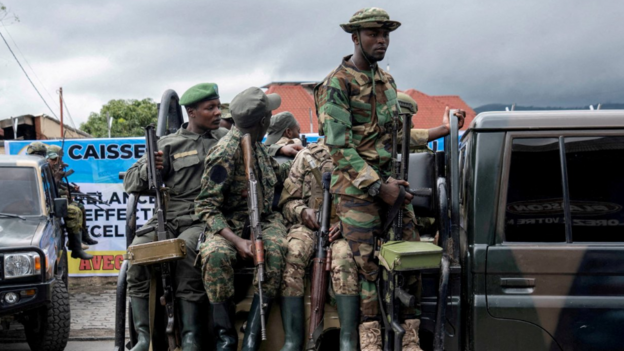
A peace agreement between the Democratic Republic of Congo (DR Congo) and Rwanda was signed in Washington, aiming to address the conflict in eastern DR Congo. The deal involves the disarming and integrating of armed groups but has faced skepticism due to the exclusion of M23, an active rebel group alleged to be backed by Rwanda.
Key Facts
A peace agreement was signed between DR Congo and Rwanda in Washington.
The agreement calls for the disarming and integrating of armed groups in eastern DR Congo.
Former DR Congo President Joseph Kabila criticized the deal, describing it as more of a trade agreement.
Rwanda has denied allegations that it supports the M23 rebel group.
The conflict escalated when M23 took control of large areas in eastern DR Congo.
Many people have died, and hundreds of thousands have been displaced due to the conflict.
DR Congo's government sought help from the US, possibly offering access to its minerals for security help.
Critics note the absence of M23 representatives in the peace talks and express concerns about the deal's effectiveness.
Read the Original
Want the full story? Tap a source to open the original
article.
American warplanes dropped bombs in Iran without any immediate provocation, amid tensions involving Israel's actions against Iranians. The Western media has been accused of biased reporting, often focusing more on Israeli casualties than Palestinian or Iranian ones, and using language that portrays Iran negatively. Human rights groups have accused Israel of committing genocide in Gaza, but this is not widely reported in Western media.
Key Facts
American planes bombed Iranian territory, dropping 14 bombs.
The attack followed Israeli actions that allegedly resulted in 600 Iranian deaths.
Western media is criticized for biased reporting, often focusing on Israeli narratives and downplaying Palestinian or Iranian casualties.
Israel has been accused of genocide in Gaza by major human rights groups like Amnesty International and Human Rights Watch.
The Israeli military has not faced significant media criticism despite evidence of potential war crimes.
Western media is reported to cover Israeli deaths far more than Palestinian ones, with a cited ratio of 33 times more per fatality.
Iran is often depicted in a negative light in Western media, framed as a threat rather than a nation.
Despite accusations, Iran does not possess nuclear weapons; however, it is often portrayed as an existential threat.
Read the Original
Want the full story? Tap a source to open the original
article.
At a NATO pre-summit news conference, US President Donald Trump compared situations involving international conflicts to children fighting in a schoolyard. NATO Secretary-General Mark Rutte chimed in with comments that were viewed as flattering Trump. Leaders from various countries, including the UK and Italy, have used flattery during interactions with Trump, often focusing on shared goals, such as resolving conflicts, but Trump’s subsequent decisions, like freezing military aid to Ukraine, have sparked mixed reactions.
Key Facts
Trump compared international conflicts to children fighting in a schoolyard at a NATO news conference.
NATO Secretary-General Mark Rutte made comments that seemed to flatter Trump during the event.
UK Prime Minister Keir Starmer used flattery and invited Trump for a second state visit to the UK.
Trump announced a freeze on military aid to Ukraine, causing concern among the UK and other countries.
Italian Prime Minister Giorgia Meloni praised Trump’s efforts regarding Ukraine and addressed key issues important to Trump during her visit.
Trump claimed credit for ending several international conflicts, including a war between Israel and Iran, and others.
Leaders employed flattery in hopes of securing favorable decisions or strengthening relations with the US under Trump’s leadership.
Read the Original
Want the full story? Tap a source to open the original
article.
Heavy rain and flooding in Pakistan have killed 32 people since the monsoon season began earlier this week. Most of the deaths happened due to flash floods and collapsed roofs, with children among the victims.
Key Facts
32 people have died in Pakistan since the start of the monsoon season this week.
Flash floods and roof collapses are the main causes of these deaths.
In the past 36 hours, 19 people, including eight children, have died.
13 of the deaths occurred in the Swat Valley.
The eastern province of Punjab reported 13 deaths since Wednesday.
Flooding damaged 56 houses in Khyber Pakhtunkhwa, and six houses were destroyed.
The national weather service warns of continued heavy rain and flood risks until at least Tuesday.
Pakistan is highly vulnerable to extreme weather events, partly due to climate change.
Read the Original
Want the full story? Tap a source to open the original
article.
Donald Trump celebrated several political successes, both internationally and within the United States. These successes included a ceasefire in the Middle East, increased NATO defense spending, and a Supreme Court ruling favoring his policies.
Key Facts
The U.S. conducted a successful strike on Iranian nuclear facilities.
A ceasefire was achieved in the 12-day conflict between Israel and Iran, though it had a rocky start with both sides accused of violations.
Trump received praise from NATO allies, who agreed to a 5% defense spending commitment.
At the NATO summit, the term "Daddy" was used by a secretary general in reference to Trump's role in brokering the ceasefire.
The Supreme Court ruled to limit judges' power to block Trump’s orders nationwide.
The decision may affect policies like stopping funds to sanctuary cities and suspending refugee resettlement.
Read the Original
Want the full story? Tap a source to open the original
article.
Around 100,000 people participated in a Pride march in Budapest, Hungary, defying a government law that banned such public LGBTQ+ events. The march went through the city, despite the risk of police action and fines, marking what organizers claim is the biggest LGBTQ+ Pride in Hungary's history.
Key Facts
Approximately 100,000 people joined the Budapest Pride march on Saturday.
The march defied a government ban on public LGBTQ+ events in Hungary.
The new law, passed in March, makes attending such events illegal and fines can reach up to 200,000 forints ($586).
Budapest Mayor Gergely Karácsony supported the march by declaring it a municipal event.
Police redirected the march route to keep it away from a small group of far-right protesters.
The government argued that such events violated children’s rights, according to a recent constitutional amendment.
More than 70 European Parliament members and officials from other countries attended the march.
Authorities added extra cameras and planned to use facial recognition to identify participants.
Read the Original
Want the full story? Tap a source to open the original
article.
Around 100,000 people marched in Budapest's biggest-ever LGBTQ+ Pride event, despite a government ban and potential fines. The march challenged new Hungarian laws that restrict LGBTQ+ expression and assemblies, drawing attention to broader concerns about democratic rights.
Key Facts
About 100,000 people joined the LGBTQ+ Pride march in Budapest, Hungary.
The government had banned the march, citing a new law that restricts LGBTQ+ events.
The law, passed by Prime Minister Viktor Orbán's party, makes it illegal to promote homosexuality to minors.
Participants risked police actions and fines of up to 200,000 Hungarian forints ($586).
Police altered the march route to keep participants away from far-right counterprotesters.
Budapest’s mayor supported the march, claiming it did not need police approval as a municipal event.
More than 70 members of the European Parliament participated in the event.
The event highlighted concerns over Hungary's restrictions on democratic and LGBTQ+ rights.
Read the Original
Want the full story? Tap a source to open the original
article.
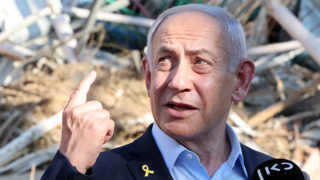
Israel's Prime Minister Benjamin Netanyahu claims a military victory against Iran but faces trust issues at home. Recent polls show many Israelis doubt his motives and leadership, particularly in the ongoing conflict with Gaza.
Key Facts
Netanyahu claims a military victory involving Iran.
Many Israelis do not trust Netanyahu, according to recent polls.
Netanyahu decided to resume attacks on Gaza, halting a ceasefire process.
The ceasefire deal, brokered by the U.S., was ending a war and involved hostage exchanges.
Polls indicate 59% of Israelis want the fighting in Gaza to stop for the hostages' return.
Netanyahu's political party Likud may struggle to form a majority in the Israeli parliament.
Almost half of those polled believe Netanyahu's actions are for political reasons.
Professor Tamar Hermann notes that many Israelis no longer fully trust Netanyahu.
Read the Original
Want the full story? Tap a source to open the original
article.