Neutral summaries of your favorite news sources — just the facts.
Your favorite news sources, one neutral feed — we distill their reporting into fact-first
summaries and always link to the original story. How it works
World News
Comprehensive coverage of international news and global events
The president of the University of Virginia, James Ryan, has resigned under pressure from the Department of Justice, which was examining the school's diversity, equity, and inclusion (DEI) practices. The resignation is part of broader tensions between the Trump administration and academic institutions regarding diversity policies.
Key Facts
James Ryan resigned as president of the University of Virginia due to pressure from the U.S. Department of Justice.
His resignation was related to the university's diversity, equity, and inclusion (DEI) practices.
The Justice Department's scrutiny aligns with broader efforts by the Trump administration to change diversity initiatives in education.
Ryan has led the University of Virginia since 2018.
His departure reflects ongoing conflicts between President Trump's administration and higher education over DEI policies.
The Department of Education has opened investigations into colleges regarding DEI practices, claiming potential discrimination.
Earlier in the year, President Trump signed an order to end federal funding for institutions with DEI programs.
Schools have responded differently, with some closing DEI offices and changing diversity-related programs.
Read the Original
Want the full story? Tap a source to open the original
article.
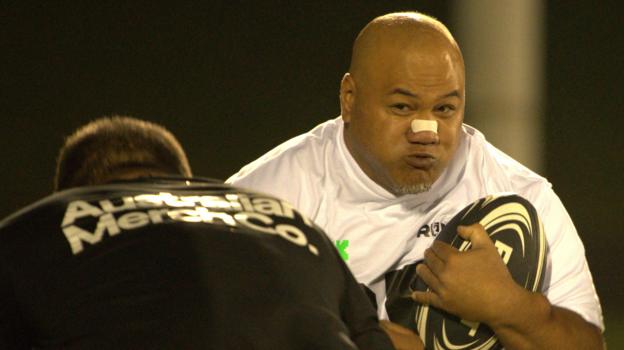
The Run It Championship League is a new sport based on a collision game from Australia and New Zealand. It has gained global attention with viral videos and events, but there are growing safety concerns from medical experts.
Key Facts
The Run It Championship League is a high-impact sport where players collide at full speed without protective gear.
The game started in Australian and New Zealand backyards, especially in Pacific Islander communities.
Players must run directly at each other; they cannot avoid the collision.
The game has become popular online, drawing millions of views and getting big sponsors.
Events have been held in cities like Melbourne, Auckland, and Dubai, with large cash prizes for winners.
Medical experts express concern about possible injuries and mental health effects.
Some competitors have been injured during games, requiring medical attention.
Organizers say they have safety measures, like medical assessments and staff at events.
Read the Original
Want the full story? Tap a source to open the original
article.
Jeff Bezos, founder of Amazon, married Lauren Sanchez in a high-profile wedding in Venice. The event drew many famous guests and sparked protests from local groups concerned about tourism and climate change.
Key Facts
Jeff Bezos married Lauren Sanchez in Venice.
The wedding attracted celebrities, including Oprah Winfrey, Orlando Bloom, and Kylie Jenner.
The celebration lasted three days, ending with a big party.
Protests occurred in Venice during the event.
Protesters included locals worried about too many tourists and climate change activists.
The wedding took place on Venice's famous canals.
Notable figures like Bill Gates and Leonardo DiCaprio attended.
The presence of celebrities caused excitement among onlookers.
Read the Original
Want the full story? Tap a source to open the original
article.
A peace agreement between Rwanda and the Democratic Republic of the Congo (DRC) has been signed in Washington, DC, with support from the United States and Qatar. Rwandan soldiers will leave the DRC, and the two countries will work together on trade and security. This agreement comes after meetings were hosted in Doha, Qatar, and aims to reduce ongoing conflict in the DRC.
Key Facts
Qatar played a mediator role in the peace agreement between Rwanda and the DRC.
The peace deal was signed in Washington, DC, with backing from the US and Qatar.
Rwandan soldiers will withdraw from the DRC as part of the agreement.
Rwanda and the DRC will cooperate on trade and security.
Meetings leading to the agreement included one hosted in Doha by Qatar's Emir.
The M23 armed group in the DRC, linked to Rwanda, had caused renewed violence.
The US, Qatar, the African Union, and Togo will help ensure the agreement is followed.
Qatar also helped mediate a ceasefire between Israel and Iran recently.
Read the Original
Want the full story? Tap a source to open the original
article.
An EU summit in Brussels called for a ceasefire in Gaza but decided not to impose sanctions on Israel. Germany has played a key role in stopping the EU from taking further action during the conflict.
Key Facts
An EU summit took place in Brussels to discuss the conflict in Gaza.
The EU called for a ceasefire in Gaza during the summit.
The EU did not agree to impose sanctions on Israel.
Germany led efforts to prevent the EU from taking additional actions during the conflict.
Some EU member states expressed dissatisfaction with the lack of stronger measures against Israel.
The discussion involved perspectives from Human Rights Watch and members of the European Parliament.
Economic pressure against Israel, like boycotts, was also part of the conversation.
Read the Original
Want the full story? Tap a source to open the original
article.
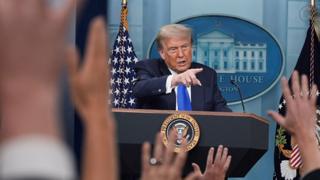
President Donald Trump criticized Iran's Supreme Leader, Ayatollah Ali Khamenei, over his claims that Iran was victorious in a recent conflict with Israel. Trump also warned that the United States might attack Iran again if it continues developing nuclear weapons. Meanwhile, Iran plans to limit inspections by international nuclear agencies in response to these tensions.
Key Facts
President Trump criticized Ayatollah Khamenei for saying Iran won a 12-day war with Israel.
Trump stated the U.S. might attack Iran if it continues pursuing nuclear weapons.
Trump posted a critical message about Khamenei on his Truth Social platform.
A leaked intelligence report suggested U.S. military strikes only set back Iran's nuclear program by a few months.
Iran's government plans to reduce cooperation with the International Atomic Energy Agency (IAEA).
Iran’s Foreign Minister Abbas Araghchi hinted at denying IAEA visits to nuclear sites.
Israeli Defense Minister Israel Katz mentioned plans to keep military readiness against Iran.
Inspectors from the IAEA have not visited Iranian sites since the start of Israeli bombings in June.
Read the Original
Want the full story? Tap a source to open the original
article.
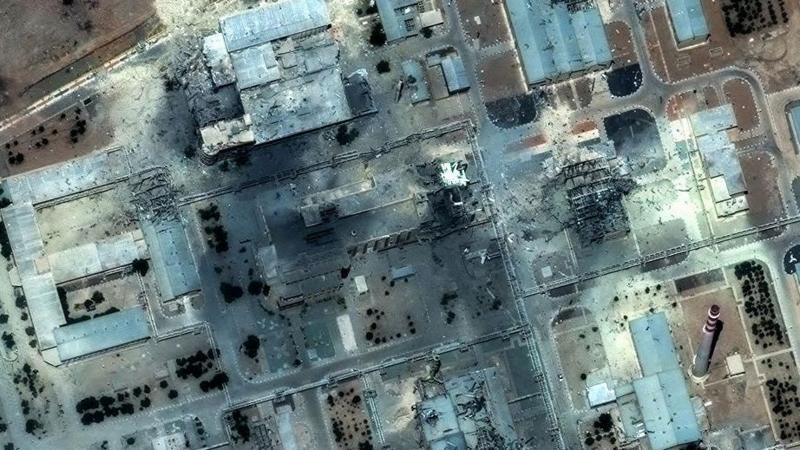
Former US President Donald Trump stated that he would consider bombing Iran if there is intelligence about Iran enriching uranium to risky levels. The US recently participated in strikes on Iran's nuclear sites during a conflict between Israel and Iran. Trump claims Iran's nuclear facilities were severely damaged, although Iran's leadership disputes the extent of the damage.
Key Facts
Trump mentioned he would consider bombing Iran if it enriched uranium to dangerous levels.
The US struck Iran's nuclear sites with advanced bombs during a conflict with Israel.
Iran's Supreme Leader, Ayatollah Ali Khamenei, claimed the attacks had little impact.
Iran's foreign minister admitted the bombings caused significant damage to nuclear sites.
Trump posted on social media claiming Iran's leader had been hiding during the conflict.
Trump paused talks on easing sanctions against Iran after a statement from the Iranian leader.
Iran insists its nuclear program is only for civilian use.
Iranian health officials reported 610 deaths from the conflict, while Israel reported 28 deaths.
Read the Original
Want the full story? Tap a source to open the original
article.
People from different places recently traveled to a small village in Alaska called Kwethluk for a special religious ceremony. They gathered to honor and officially recognize a local midwife and healer from the Yup'ik community as a saint in the Orthodox Christian tradition.
Key Facts
Kwethluk, a village in Alaska, hosted the event.
The event was for the canonization of the first Yup'ik saint.
Canonization means officially declaring someone a saint.
The person canonized was a local midwife and healer.
The ceremony is part of the Orthodox Christian faith.
Pilgrims and religious leaders from different parts of the world attended.
The Yup'ik community is an Alaskan native group.
Read the Original
Want the full story? Tap a source to open the original
article.
Western countries have been imposing sanctions on Russia and reducing their reliance on Russian oil following its invasion of Ukraine. In response, NATO plans to increase defense spending to address Russian threats. Meanwhile, Russia wants to highlight its global partnerships and dispel fears of a recession at an international conference in Saint Petersburg.
Key Facts
Russia launched a full-scale invasion of Ukraine.
Many Western countries imposed sanctions on Russia.
Western countries are trying to reduce their dependence on Russian oil.
NATO announced plans to increase defense spending.
The increase in defense spending is aimed at countering threats from Russia.
Russia is showcasing its global partnerships at an international conference in Saint Petersburg.
Russia is attempting to alleviate fears of an economic recession at home.
Read the Original
Want the full story? Tap a source to open the original
article.
A growing number of people taking SSRIs, which are antidepressants, report facing tough withdrawal symptoms when they stop using them. These symptoms include feelings of unease and sexual problems.
Key Facts
SSRIs are a type of antidepressant medication.
Some people have experienced withdrawal symptoms after long-term use of SSRIs.
Common withdrawal symptoms reported include dysphoria, which means a state of unease or dissatisfaction.
Sexual dysfunction is another withdrawal symptom mentioned by people.
People affected are seeking recognition and more research into these withdrawal symptoms.
SSRIs are commonly prescribed to treat depression and other mental health issues.
The conversation about SSRI withdrawal has gained attention on platforms like NPR's "All Things Considered."
Read the Original
Want the full story? Tap a source to open the original
article.
Russian missile attacks in Ukraine's Dnipropetrovsk region resulted in multiple casualties, with recent strikes on the city of Samar killing five and injuring 23 people. At the same time, Russian President Vladimir Putin expressed interest in new peace talks with Ukraine and noted potential reductions in military spending.
Key Facts
Russian forces attacked Ukraine's Dnipropetrovsk region, targeting the city of Samar twice in three days.
The latest attack killed five people and injured 23, with four in serious condition.
Recent missile strikes in the region have killed at least 23 people as Russia seeks control in Dnipropetrovsk.
Russia claims to have captured two villages near the region's border.
In Ukraine's Kharkiv region, Russian attacks killed one person and wounded three.
In the Kherson region, a Russian attack on an energy facility caused power outages.
Ukraine's air force stopped most of the 363 drones and eight missiles launched by Russia overnight.
President Putin showed willingness for new peace talks and mentioned possible military spending cuts.
Read the Original
Want the full story? Tap a source to open the original
article.
Donald Trump told the BBC he would consider military action against Iran if its uranium enrichment levels become concerning. This statement came after he celebrated a separate legal victory regarding birthright citizenship.
Key Facts
Donald Trump spoke briefly to the BBC's Nomia Iqbal about Iran.
Trump indicated he might strike Iran if uranium enrichment levels increase.
Uranium enrichment relates to producing nuclear energy or weapons.
Trump recently celebrated a Supreme Court win on birthright citizenship.
Birthright citizenship means being granted citizenship of a country where one is born.
Read the Original
Want the full story? Tap a source to open the original
article.
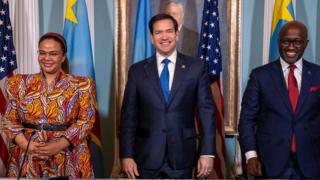
The Democratic Republic of the Congo (DRC) and Rwanda have signed a peace agreement in Washington, DC, to end ongoing conflict between them. The US and Qatar helped make this agreement happen, and it aims to stop fighting, allowing displaced families to return home.
Key Facts
The DRC and Rwanda have fought for many years, but they have now agreed to a peace deal.
The peace talks took place at the White House in the United States.
The US and Qatar played a key role in brokering this agreement.
Fighting between the two countries increased with the rise of M23 rebels earlier this year.
The conflict has caused the deaths of thousands and forced hundreds of thousands to leave their homes since January.
The deal is seen as a significant step toward peace after decades of war.
The US Secretary of State was present at the signing of the agreement.
The agreement might also influence access to important minerals needed for global technology, amidst US-China competition in Africa.
Read the Original
Want the full story? Tap a source to open the original
article.
Rwanda and the Democratic Republic of Congo (DR Congo) signed a peace agreement in Washington, aiming to end long-standing conflicts and possibly allow the US access to valuable minerals. The deal focuses on the removal of armed groups in eastern DR Congo, although details are limited, and past peace attempts have not succeeded.
Key Facts
Rwanda and DR Congo signed a peace deal in Washington.
The agreement includes steps to remove and disarm armed groups in eastern DR Congo.
The US may gain access to important minerals from DR Congo as part of the agreement.
Past peace agreements in this region have not been successful.
Thousands have died, and many have been displaced due to ongoing conflicts.
The DR Congo government sought US help after rebels took key areas in eastern DR Congo.
Rwanda denies supporting rebel groups like M23, despite evidence.
Both countries accuse each other of backing different rebel groups.
Read the Original
Want the full story? Tap a source to open the original
article.
Lewis Capaldi surprised fans with a performance at the Glastonbury festival, two years after taking a break for mental health reasons. Capaldi, who has Tourette's, returned to the stage to finish what he couldn't at his last performance, sharing an emotional moment with the audience.
Key Facts
Lewis Capaldi performed at Glastonbury, marking his return after a two-year break.
His last Glastonbury performance ended emotionally as he faced challenges due to Tourette's.
Capaldi's appearance was hinted at before he was confirmed on stage.
During his short set, he sang songs including "Before You Go" and "Someone You Loved."
He expressed gratitude to fans and acknowledged the struggles he's faced.
Speculation about his return was fueled by the release of a new single, "Survive."
Capaldi's performance included crowd interaction, with fans singing along.
He took a break from music to focus on his physical and mental health.
Read the Original
Want the full story? Tap a source to open the original
article.
Nike plans to reduce the number of shoes made in China for the U.S. market to lessen the impact of U.S. tariffs. They aim to move more production to other countries and have already raised some product prices. Nike's fourth-quarter sales were better than expected, despite a 12% decrease.
Key Facts
Nike announced it will shift shoe production from China for U.S. sales because of U.S. tariffs.
U.S. tariffs could increase Nike's costs by about $1 billion, according to company executives.
Nike's goal is to lower the percentage of U.S. imports from China to single-digit numbers by May 2026.
The company plans to change where it makes products to deal with new U.S. tariff costs.
Nike has increased prices on some U.S. products as a response to tariff impacts.
Nike's marketing expenses rose by 15% in the last quarter.
Nike's fourth-quarter revenue was $11.10 billion, beating expectations despite a 12% drop.
China remains a challenging market for Nike, dealing with tough economic conditions and competition.
Read the Original
Want the full story? Tap a source to open the original
article.
Marius Borg Høiby, the stepson of Norway's future king, is suspected of three rapes and 23 other offenses. Norwegian police completed a 10-month investigation and have sent the case to prosecutors who will decide on possible charges. Høiby has denied most accusations, especially those related to sexual abuse and violence.
Key Facts
Marius Borg Høiby is the son of Norway's crown princess and stepson to the country's future king.
Police arrested Høiby three times last year in August, September, and November.
He is suspected of three rapes and several other offenses, including sexual and violent acts.
Prosecutors will decide if charges will be filed after the police concluded a 10-month investigation.
Høiby has been cooperating with the investigation and denies most of the accusations.
Some cases of sexual offenses were dismissed due to statute of limitations, which limits the time period for pressing charges, and lack of evidence.
The Royal House of Norway has stated the case is in the legal process and will not comment further.
Read the Original
Want the full story? Tap a source to open the original
article.
The United States conducted military strikes on Iranian nuclear sites, sparking debates about its strategy in the Middle East. While some see the strikes as a significant move against Iran's nuclear ambitions, experts have differing views on the impact on regional security and stability.
Key Facts
The U.S. military hit key nuclear sites in Iran, affecting regional strategies.
President Trump viewed the strikes as a major setback for Iran's nuclear plans.
Before the strikes, the U.S., Israel, and Saudi Arabia were working more closely on Middle East strategies.
The strikes marked a shift from just sharing strategic goals to using military force together.
John Bolton, a former U.S. national security adviser, emphasized the need for regime change in Iran for lasting peace.
Bolton argued that destroying Iran's nuclear links is crucial for weakening their program long-term.
A former Iranian diplomat, Seyed Hossein Mousavian, noted this was a unique attack by two nuclear states without UN approval.
Mousavian suggested that direct talks between the U.S. and Iran might be needed now.
Read the Original
Want the full story? Tap a source to open the original
article.
U.S. President Trump expects Iran to allow international inspections to ensure it does not restart its nuclear program. There are currently no agreed-upon talks for resuming negotiations on Iran's nuclear activities, and recent military actions have made discussions more challenging.
Key Facts
Trump expects Iran to allow international inspections of its nuclear activities.
The 2015 nuclear deal, which limited Iran's nuclear program, was abandoned by the U.S. during Trump's first term.
Iran's Foreign Minister Abbas Araghchi indicated that negotiations with the U.S. are not currently planned.
The U.S. attacked three Iranian nuclear sites, complicating potential talks.
Iranian officials have voiced national pride and continued vigilance against perceived threats.
Israel conducted a series of strikes against Iran, claiming significant damage to its military and nuclear capabilities.
Iran retaliated against both Israel and the U.S. with missile attacks, some of which were intercepted.
The conflict has resulted in significant casualties, including civilians, and increased regional tensions.
Read the Original
Want the full story? Tap a source to open the original
article.
Ukraine's European allies, including NATO countries and Canada, promised to give $35 billion in military aid to Ukraine this year. Russia's President Putin stated his goal is to fully absorb Ukraine into Russia. Germany and other European countries plan to increase their defense spending due to concerns over Russia.
Key Facts
European countries and Canada pledged $35 billion in military aid to Ukraine for 2023.
Last year, the total aid was over $50 billion for the entire year.
The aid from Europe is helping to fill a gap left by a pause in military support from the United States.
Ukrainian President Zelenskyy discussed buying Patriot defense systems from the U.S. with President Trump.
Russia, through a spokesman, said it wants a ceasefire only if Ukraine's allies stop providing weapons.
Putin declared that he sees Russia and Ukraine as one nation and wants all of Ukraine.
Germany plans to increase its defense spending to 5% of its economy by 2035 due to Russian threats.
NATO views Russia as preparing for a possible large conflict against them in the future.
Read the Original
Want the full story? Tap a source to open the original
article.