Neutral summaries of your favorite news sources — just the facts.
Your favorite news sources, one neutral feed — we distill their reporting into fact-first
summaries and always link to the original story. How it works
World News
Comprehensive coverage of international news and global events
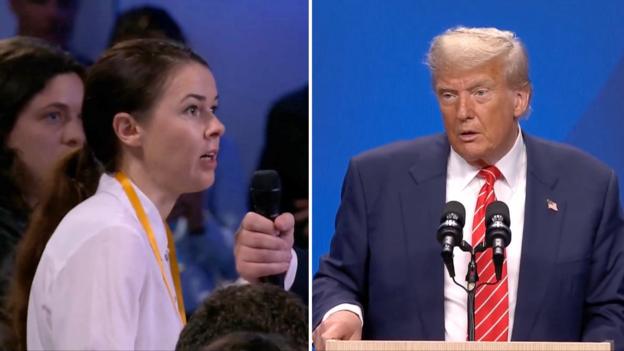
At a NATO press conference in the Netherlands, President Donald Trump engaged with Myroslava Petsa from the BBC Ukrainian Service. After she asked about the U.S. supplying Ukraine with Patriot air defense systems, Trump inquired about her personal life, learning that her husband is a soldier in Ukraine.
Key Facts
President Trump was at a NATO press conference in the Netherlands.
Myroslava Petsa is a reporter from the BBC Ukrainian Service.
She asked Trump if the U.S. would provide Ukraine with Patriot air defense systems.
Trump asked Petsa about her personal life, including her husband's role as a soldier.
Trump expressed empathy to Petsa, acknowledging the personal impact of the situation.
Read the Original
Want the full story? Tap a source to open the original
article.
Geoff Bennett talked with Jon Finer about what happened after Israeli and U.S. strikes on Iran’s nuclear sites. They discussed the possible effects these attacks could have.
Key Facts
Israeli and U.S. forces carried out strikes on Iran’s nuclear facilities.
The conversation was with Jon Finer, a former deputy national security advisor.
Jon Finer currently works at Columbia University as a visiting fellow.
The talk was about the consequences that might follow these strikes.
The discussion took place during a news segment with Geoff Bennett.
Read the Original
Want the full story? Tap a source to open the original
article.
After a weekend of rising tensions, the US, coordinated with Israel, attacked Iranian nuclear sites with bombs and missiles. In response, Iran launched missiles towards a US base in Qatar but caused no harm due to early warnings and preparations. This series of events led to a truce announced by President Trump, facilitated through diplomatic efforts involving several countries.
Key Facts
The US coordinated attacks with Israel on Iranian nuclear sites at Natanz, Fordow, and Esfahan.
Iran fired 14 missiles at a US base in Qatar, a neutral country, but no significant damage occurred.
Qatar was able to intercept most missiles, and one went in a nonthreatening direction.
The attacks ended with a truce announced by US President Donald Trump.
The truce involved diplomatic efforts by Qatar, the US, and Iran.
The US had already evacuated personnel from the targeted base in Qatar before the attack.
The situation had potential regional impacts due to the US military presence in nearby countries.
Read the Original
Want the full story? Tap a source to open the original
article.
Health and Human Services Secretary Robert F. Kennedy Jr. announced that the U.S. will stop funding Gavi, a global vaccine program. Kennedy expressed concerns about Gavi's handling of COVID-19 vaccine recommendations and questioned the safety of a vaccine called DTPw, despite lacking evidence.
Key Facts
Robert F. Kennedy Jr., Secretary of Health and Human Services, announced the U.S. will no longer fund Gavi.
Gavi is a global health program that has vaccinated over a billion children from poor countries.
Kennedy raised questions about Gavi's COVID-19 vaccine recommendations and the DTPw vaccine's safety without providing evidence.
Since 2001, the U.S. contributed $8 billion to Gavi.
Gavi claims the DTPw vaccine has saved millions of lives and states its recommendations follow World Health Organization guidelines.
The Trump administration previously considered cutting $300 million in annual aid to Gavi.
Advocacy groups oppose the funding cut and insist Gavi's science-based recommendations are crucial.
Kennedy replaced all 17 experts on the CDC's vaccine committee with some members holding anti-vaccine views.
Read the Original
Want the full story? Tap a source to open the original
article.
NATO leaders agreed to increase defense spending to 5 percent of each member country's economic output by 2035. This new target comes as a response to growing concerns about threats from Russia, requiring countries to significantly increase their military budgets over the next decade.
Key Facts
NATO will increase defense spending from 2 percent to 5 percent of GDP for each member nation by 2035.
This decision was made at a NATO summit in The Hague, influenced by perceived threats from Russia.
The new target divides spending into 3.5 percent for military needs and 1.5 percent for broader security, like infrastructure and cybersecurity.
Currently, 23 of the 32 NATO countries meet the initial 2 percent GDP defense spending target.
Poland spends the most on defense among NATO nations, with 4.1 percent of its GDP.
The policy will be reviewed in 2029 to assess progress.
Countries will seek their own funding sources for this increased defense budget.
Some NATO members may spend more on defense than education if they meet the new target.
Read the Original
Want the full story? Tap a source to open the original
article.
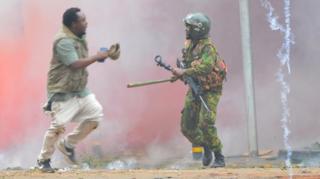
At least 16 people died and 400 were injured during protests in Kenya against President William Ruto's government, according to Amnesty Kenya. Police and protesters clashed, with police using tear gas and water cannons. The protests marked the anniversary of previous demonstrations, and while there were restrictions on media coverage, these were overturned by the High Court.
Key Facts
At least 16 protesters were reported dead during the protests in Kenya.
A total of 400 people, including some police officers, were injured.
Amnesty Kenya provided the death and injury figures from the protests.
The protests were against President William Ruto and involved thousands of people.
The Kenyan government initially banned live TV and radio coverage of the protests, but the High Court overturned this ban.
President Ruto urged for peace, emphasizing the importance of maintaining stability in the country.
The protests occurred on the anniversary of last year's demonstration, where 60 people were killed.
Police used tear gas and water cannons to disperse protesters, and many roads were blocked with barricades and razor wire.
Read the Original
Want the full story? Tap a source to open the original
article.
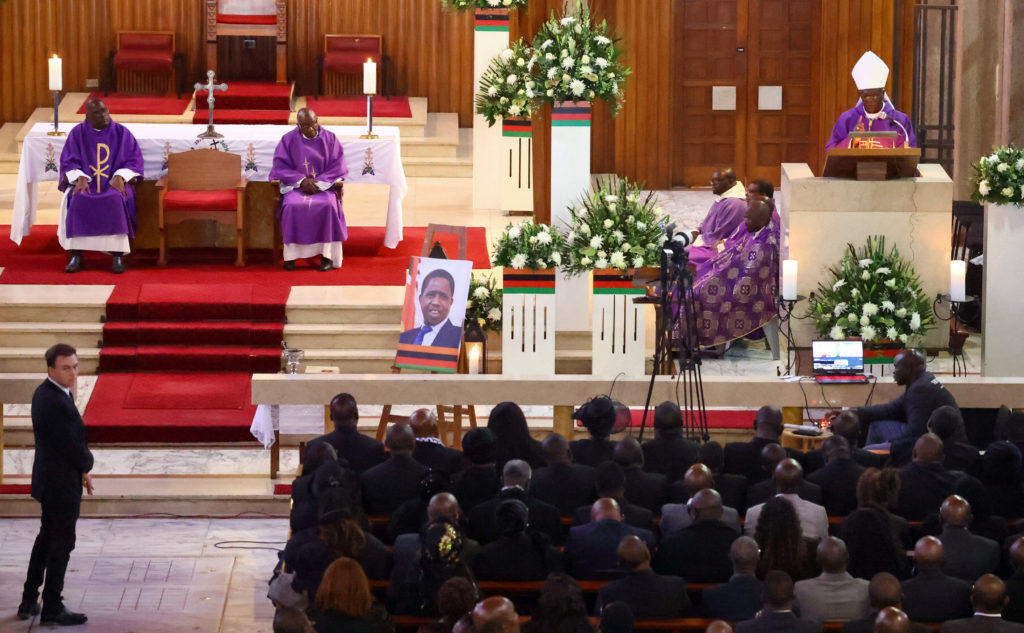
The Zambian government obtained a court order in South Africa to stop the burial of former President Edgar Lungu. The decision came after a dispute with Lungu’s family over whether he should be buried in Zambia or South Africa. The court set another hearing date for August 4 to decide on the funeral arrangements.
Key Facts
The Zambian government wanted Edgar Lungu to have a state funeral in Zambia.
Lungu’s family planned to bury him privately in South Africa.
The dispute arose because of a disagreement over Lungu's final resting place.
The Pretoria High Court ruled that Lungu could not be buried until the court made a final decision.
A new hearing is scheduled for August 4.
Lungu died in a South African hospital on June 5 at the age of 68.
The family opposed a state funeral due to Lungu’s political conflict with current President Hakainde Hichilema.
Lungu and Hichilema had a history of political rivalry, including charges and imprisonment in past years.
Read the Original
Want the full story? Tap a source to open the original
article.
NATO members have agreed to increase defense spending to 5% of GDP by 2035, aiming to enhance their collective security. Some countries, like Spain, have expressed concerns about meeting this new target, while others like the UK have committed to increasing their defense budget sooner.
Key Facts
NATO plans to raise defense spending to 5% of GDP by 2035.
The commitment was agreed upon at a NATO summit in The Hague.
There will be a review of the spending target in 2029.
Spain has stated it cannot meet the 5% target and will stick to 2%.
The US President has supported higher defense spending for NATO.
The UK plans to spend 4.1% on defense by 2027.
Some NATO countries, like Belgium and Slovakia, have concerns about the new target.
The new spending includes core defense and broader security expenses, such as cyber defense and infrastructure.
Read the Original
Want the full story? Tap a source to open the original
article.
The article discusses protests and direct actions taken by groups opposing Britain's military support for Israel, particularly in relation to Palestine. The Home Secretary plans to label one such group, Palestine Action, as a terrorist organization after they targeted military equipment manufacturers. Despite legal challenges, these actions aim to draw attention to what the activists see as injustices, without causing physical harm to people.
Key Facts
Many people in Britain protested the Iraq war and called for an arms embargo on Israel, but the government did not change its stance.
Direct actions by groups like Palestine Action target military equipment related to Israel.
The Home Secretary wants to classify Palestine Action as a terrorist group after their activists damaged a Ministry of Defence aircraft.
Palestine Action started in 2020 and focuses on disrupting companies like Elbit Systems that provide military supplies.
Activists in this group have been arrested, and some see themselves as political prisoners.
These activists have not harmed people but aim to stop support for what they consider genocide in Gaza.
Palestine Action intends to challenge the government's terrorist label in court.
Read the Original
Want the full story? Tap a source to open the original
article.
Germany is increasing its defense spending as part of a wider NATO effort to respond to security concerns about Russia. It aims to have the largest army in the European Union through significant financial investment.
Key Facts
NATO is holding a meeting where most countries agreed to spend more on defense.
Germany is one of the countries planning to expand its military forces.
Germany's goal is to have the biggest army in the EU.
This expansion involves a large financial investment.
The decision comes in response to threats posed by Russia.
Read the Original
Want the full story? Tap a source to open the original
article.
Iran's parliament passed a bill to suspend cooperation with the International Atomic Energy Agency (IAEA) in response to attacks by the United States and Israel. Iran insists on continuing its peaceful nuclear program and seeks guarantees for the protection of its nuclear facilities and scientists.
Key Facts
Iran's parliament voted to suspend cooperation with the IAEA but not end it.
The decision follows attacks on Iranian nuclear sites by the US and Israel.
Iran aims to continue its peaceful nuclear activities under international agreements.
The bill sets conditions for Iran's future interaction with the IAEA, focusing on safety assurances.
US interventions have damaged some of Iran's nuclear facilities.
The IAEA Director-General expressed the need to resume inspections in Iran.
Iran moved some of its enriched uranium before the attacks.
The US and Israel have assessed the impact of their strikes differently, with the US President claiming significant damage.
Read the Original
Want the full story? Tap a source to open the original
article.
Israel is reopening as a ceasefire between Israel and Iran holds. The truce was facilitated by President Trump, and for now, residents of Israel are resuming daily activities without concern about missile attacks.
Key Facts
Israel and Iran have agreed to a ceasefire.
President Trump helped broker this ceasefire.
The ceasefire has allowed Israel to reopen.
People in Israel are starting to return to normal life.
There is no immediate fear of missile attacks from Iran.
Read the Original
Want the full story? Tap a source to open the original
article.
On June 13th, Israel carried out strikes on Iran. A former U.S. diplomat, Mike Fitzpatrick, is discussing the situation to help understand what might happen next.
Key Facts
Israel launched strikes on Iran on June 13th.
These events have raised many questions about future developments.
Sandra Gathmann from #AJStartHere is involved in explaining the situation.
Mike Fitzpatrick, a former U.S. diplomat and nuclear issues expert, is providing insights.
The discussion aims to clarify the current situation and possible outcomes.
Read the Original
Want the full story? Tap a source to open the original
article.
At a NATO meeting, President Trump defended U.S. military actions against Iran, stating they were successful in disrupting Iran's nuclear program. He also expressed strong support for the NATO alliance.
Key Facts
President Trump spoke at the end of a NATO summit.
He defended U.S. military strikes on Iran.
Trump claimed the strikes damaged Iran's nuclear capabilities.
He showed support for the NATO alliance.
The speech was part of discussions at the NATO meeting.
Read the Original
Want the full story? Tap a source to open the original
article.
A ceasefire between Israel and Iran began, with both sides claiming victory. Israeli Prime Minister Benjamin Netanyahu's position strengthened after the conflict, as he argued he weakened Iran and addressed its nuclear threat. Both Iran and the U.S. commented on the outcome, with mixed reactions.
Key Facts
A ceasefire between Israel and Iran started on a Tuesday.
President Trump claimed his efforts helped stop the fighting.
Netanyahu's leadership in Israel gained support as he claimed victories against Iran.
Netanyahu said Iran’s nuclear program was significantly damaged.
Netanyahu is considering calling early elections in Israel.
The threat of Iran has been a long-standing issue for Israel.
Israeli public support for Netanyahu increased due to his handling of the conflict.
Doubts remain about the long-term impact of Netanyahu's actions and the future of the Iranian regime.
Read the Original
Want the full story? Tap a source to open the original
article.
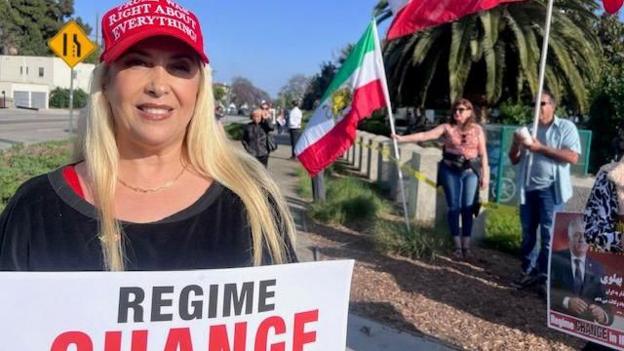
A protest in Los Angeles, known as "Tehrangeles," saw Iranian Americans calling for political change in Iran while showing support for President Trump's decision to conduct air strikes on Iranian nuclear sites. The demonstrations showcase divided opinions within the community, with some backing US involvement and others fearing it may strengthen Iran's current government.
Key Facts
A protest took place in Los Angeles with participants supporting regime change in Iran.
Many demonstrators wore "Make America Great Again" hats, supporting President Trump.
The protest followed US air strikes on Iranian nuclear sites, which Trump ordered.
Some Iranian Americans worry US actions could strengthen Iran's leaders.
"Tehrangeles" in LA has the largest population of Iranians outside Iran.
Participants expressed concern for friends and family affected by communication shutdowns in Iran.
The community has mixed views, with some supporting US interventions and others against it.
Read the Original
Want the full story? Tap a source to open the original
article.
A ceasefire is in place between Israel and Iran after 12 days of fighting triggered by Israeli strikes on Iran's nuclear and military sites. Israel has conducted nearly 35,000 attacks across five countries, primarily in Palestinian territories. In Gaza, heavy attacks over many months have led to significant casualties and destruction.
Key Facts
A ceasefire was announced by US President Donald Trump between Israel and Iran following 12 days of conflict.
The fighting started after Israel struck Iran's nuclear and military sites.
From October 7, 2023, to June 13, 2025, Israel made nearly 35,000 documented attacks in five countries.
Most of these attacks happened in the occupied Palestinian territory, with over 18,235 incidents.
Other countries affected include Lebanon (15,520 attacks), Syria (616), Iran (58), and Yemen (39).
Israel uses advanced aircraft, including US-supplied fighter jets and drones, to conduct long-range strikes.
Casualties in Gaza include at least 56,077 confirmed deaths and 131,848 injuries.
In the occupied West Bank, Israeli operations have displaced about 40,000 Palestinians and resulted in nearly 1,000 deaths over 20 months.
Read the Original
Want the full story? Tap a source to open the original
article.