Neutral summaries of your favorite news sources — just the facts.
Your favorite news sources, one neutral feed — we distill their reporting into fact-first
summaries and always link to the original story. How it works
World News
Comprehensive coverage of international news and global events
The article discusses potential consequences of U.S. airstrikes on Iran's nuclear sites. It covers how these actions might impact Iran's nuclear program and its government's control.
Key Facts
The article is about possible U.S. airstrikes on Iran.
These strikes would target Iran's nuclear sites.
The purpose of the strikes is linked to concerns about Iran's nuclear program.
Experts discuss how this could affect Iran's leadership.
The situation relates to tensions between Israel and Iran.
The article features insights from Iran expert Karim Sadjadpour.
Read the Original
Want the full story? Tap a source to open the original
article.
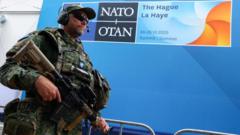
NATO leaders, including Germany and the U.S., are meeting in The Hague to discuss increased defense spending and support for Ukraine. Germany has committed to boosting its defense budget. The summit will also address the situation in Ukraine and feature discussions between leaders like U.S. President Trump and Ukraine's President Zelensky.
Key Facts
The meeting in The Hague is a significant NATO summit focused on European defense.
Germany's Chancellor Merz stated that Russia only responds to force and pledged Germany's fair share for European defense.
NATO leaders plan to commit to spending 3.5% of GDP on defense, with an additional 1.5% on related needs, like infrastructure and cybersecurity.
NATO Secretary General Mark Rutte emphasized U.S. commitment to NATO and urged European nations to increase defense spending.
Ten people were killed in recent Russian missile attacks on Ukraine, with further casualties in Dnipro and Sumy.
German Chancellor Merz said that efforts to negotiate with Russia have been unsuccessful.
NATO countries plan a new investment initiative to reach a defense spending goal of 5% of GDP.
Ukrainian President Zelensky will meet U.S. President Trump at the summit, their first meeting since April.
Read the Original
Want the full story? Tap a source to open the original
article.
A Palestinian worker named Saher attempted to climb Israel’s separation wall to reach a job in Israel but fell and suffered injuries after being spotted by an Israeli patrol. Due to the ongoing conflict, many Palestinians have lost work permits and are risking their lives to find work by illegally crossing the heavily monitored wall. Another worker, Ahed Rizk, was severely injured during a similar attempt by falling and losing the use of both legs.
Key Facts
Saher, a Palestinian construction worker, tried to climb Israel’s separation wall to reach a job in Israel but fell and was injured.
The separation wall is a concrete barrier that can be as high as 8 meters (26 feet) and separates the occupied West Bank from Israel.
Due to recent conflicts, many Palestinian work permits for Israel have been revoked, leading workers to attempt illegal crossings.
The wall is closely watched with drones, sensors, and military patrols, making crossings more dangerous.
Ahed Rizk, another worker, fell from the wall and was severely injured, losing the use of both legs.
Many Palestinians depended on work in Israeli areas before the conflict, but now face unemployment and difficult conditions in the West Bank.
Workers attempting to cross face dangers, including potential falls and being caught by Israeli forces.
Read the Original
Want the full story? Tap a source to open the original
article.
After Iran fired 19 missiles at the US military base in Qatar, 18 were intercepted by Qatari defense forces. Despite initial worry, normal life quickly resumed in Qatar. Residents continued their daily activities like visiting shopping malls and running errands.
Key Facts
Iran launched 19 missiles at the US's Al Udeid airbase in Qatar.
Qatari defense forces intercepted 18 of these missiles.
The base is located 35 kilometers (21 miles) from Qatar's capital, Doha.
The US and Britain advised their citizens to stay indoors briefly after the attack.
Qatar temporarily closed its airspace and announced school closures for safety.
Residents resumed daily activities 12 hours after the attack.
Many residents reported feeling safe due to the swift response and reassurances.
The attack led to an unexpected holiday, and residents used the time for leisure activities.
Read the Original
Want the full story? Tap a source to open the original
article.
NATO leaders met in the Netherlands for a summit to discuss defense spending. The focus is on a new goal for members to spend 5% of their economy on defense. Some countries, like Spain, are against this target. The summit also highlights tensions in the Middle East and Ukraine's ongoing situation.
Key Facts
NATO leaders gathered in the Netherlands for a summit.
The U.S. President shared a private message from NATO Secretary-General Mark Rutte praising him.
There is a proposed goal for NATO members to spend 5% of their GDP on defense.
Spain opposes the 5% defense spending target, calling it unreasonable.
NATO confirmed the deadline for this spending target is 2035.
The summit shifted focus due to the U.S. actions in Iran and a ceasefire between Israel and Iran.
Ukraine needs weapons and attention due to its ongoing conflict.
Ukrainian President Zelenskyy attended meetings in The Hague but NATO membership discussions for Ukraine have stalled.
Read the Original
Want the full story? Tap a source to open the original
article.
Israel and Iran have agreed to a ceasefire, brokered by U.S. President Donald Trump, but tensions remain high as both countries threaten retaliation if the deal is broken. Confusion has increased following a disagreement over missile strikes, and Iran plans to restart its nuclear program. The international response has been cautious, with some calling for further efforts to secure peace in the region.
Key Facts
Israel and Iran agreed to a ceasefire plan announced by U.S. President Donald Trump.
Both countries have warned each other against breaking the ceasefire.
Israel’s Defense Minister ordered a military strike on Iran, claiming missile violations.
Trump urged Israel not to retaliate with bombings, which Prime Minister Netanyahu complied with.
Iran intends to resume its nuclear program quickly.
The United States and the UN previously found no sign Iran was developing a nuclear weapon.
Israel's initial strikes aimed to disrupt Iran's nuclear and missile capabilities.
There is worldwide caution about the ceasefire, with calls to pursue peace in Gaza.
Read the Original
Want the full story? Tap a source to open the original
article.
Dutch authorities are investigating if a power outage affecting the rail network near their main airport was sabotaged. This incident disrupted train services ahead of a NATO summit in the Netherlands, where security measures are heightened due to the gathering of international leaders.
Key Facts
Dutch officials are looking into whether a fire in about 30 rail cables was set on purpose, which led to a power outage.
The power outage disrupted train services between Schiphol Airport and Amsterdam.
ProRail, the rail service operator, found considerable damage from the fire and aimed to restore normal services by early evening.
Security for the NATO summit includes closing roads and airspace, involving 27,000 police officers and over 10,000 defense personnel.
Pro-Russian hackers launched cyberattacks on several organizations linked to the NATO summit.
The previous year, France's rail network also experienced sabotage shortly before a major international event.
Read the Original
Want the full story? Tap a source to open the original
article.
On Monday, US President Donald Trump announced a ceasefire between Israel and Iran after Iran launched a missile attack on a US airbase in Qatar. Following accusations that Iran violated the truce, Israel ordered strikes on Tehran. Iran claimed its attack was a defense against US military actions, while Qatar condemned the missile strike.
Key Facts
Iran launched a missile attack on the US military base Al Udeid in Qatar, which is the largest in the Middle East.
No casualties were reported from the missile strike on Qatar.
The ceasefire between Israel and Iran was announced by Donald Trump on his Truth Social platform.
Qatar's Prime Minister condemned Iran’s missile attack, calling it unacceptable.
Iran's missile attack was claimed to be a response to US actions against its nuclear sites.
President Trump detailed a timeline for the ceasefire, with Iran starting it first.
Israel's Prime Minister Netanyahu stated that Israel agreed to the ceasefire.
Iran defended its attack as a legitimate response under the UN Charter, while denying it was aimed at Qatar.
Read the Original
Want the full story? Tap a source to open the original
article.
President Donald Trump expressed his dissatisfaction with both Iran and Israel over their actions related to a ceasefire. He used strong language to emphasize his concerns.
Key Facts
President Trump voiced his frustration with Iran and Israel over a ceasefire.
He used an expletive to express his dissatisfaction.
Trump mentioned he was "not happy" with either side in the conflict.
There have been missile attacks between Iran and Israel.
Emergency workers in Israel responded to missile strikes.
Iran launched missile attacks on various Israeli cities, causing casualties and damage.
Israeli Prime Minister Netanyahu announced strikes against Iran's nuclear and military sites.
Both Iran and Israel's leaders have exchanged threats amid ongoing violence.
Read the Original
Want the full story? Tap a source to open the original
article.
Israel and Iran agreed to a ceasefire early Tuesday, brokered by Donald Trump and Qatar. Shortly after, Israel accused Iran of violating the ceasefire by launching missiles, which Iran denied, stating that they would respond to any further Israeli aggression.
Key Facts
The ceasefire was announced by Donald Trump on Tuesday just after 05:00 GMT.
Israel agreed to the ceasefire proposal from the US, just after 06:00 GMT.
Iran reportedly agreed to cease attacks if Israel did the same.
Hours after agreeing, Israel accused Iran of violating the ceasefire by launching missiles.
Iran's top security body denied firing missiles and warned it would respond to any Israeli attacks.
Before the ceasefire, there was heavy fire exchange between Iran and Israel, with casualties reported in Beersheba.
Iranian state media said Iran launched another set of missiles just before the truce began.
Israeli military reported destroying missile launchers in western Iran.
Read the Original
Want the full story? Tap a source to open the original
article.
On Tuesday, President Trump used a curse word on camera while expressing frustration about Israel and Iran allegedly breaking a ceasefire. Historically, American presidents have avoided using such language in public.
Key Facts
President Trump used a curse word on camera in relation to the ceasefire between Israel and Iran.
He expressed his frustration, stating the two countries did not know what they were doing.
Presidents typically avoid using explicit language in public.
Trump is known for using coarse language more than previous presidents.
Past incidents of hot-mic moments involve other officials accidentally using curse words.
Historical examples exist where presidents have used strong language in private.
The use of a curse word by a public figure can sometimes lead to discussions and reactions.
Read the Original
Want the full story? Tap a source to open the original
article.
Tropical Storm Andrea, the first of the Atlantic hurricane season, has formed. It is located far from land and is expected to weaken and disappear by Wednesday night.
Key Facts
Tropical Storm Andrea is the first storm of the Atlantic hurricane season.
Andrea is 1,205 miles (1,940 kilometers) west of the Azores.
The storm has winds of 40 mph (65 kph).
Andrea is moving east-northeast at 17 mph (28 kph).
It is expected to fade by Wednesday night.
No land areas are under threat, so no warnings have been issued.
Read the Original
Want the full story? Tap a source to open the original
article.
Israeli forces have killed over 70 Palestinians in Gaza, mainly near places where people go to get aid. This is part of ongoing violence since October 7, with thousands harmed or killed overall.
Key Facts
Israeli forces and drones killed over 70 Palestinians in Gaza in one day, including 51 people near aid centers.
In the city of Rafah, 27 people seeking aid were killed.
Since the conflict began on October 7, over 56,000 people have died, and more than 131,000 have been injured.
Aid centers in Gaza, run by the Gaza Humanitarian Foundation (GHF), have been scenes of violence and killings.
The UN agency for Palestinian refugees described the aid distribution system as a “death trap.”
An incident on Salah al-Din Street resulted in 25 deaths and over 140 injuries.
Footage verified by media showed bodies being taken to hospitals, including al-Awda Hospital in the Nuseirat refugee camp.
Israel claims shootings near aid sites happen when "suspects" approach soldiers, though others report no warnings before attacks.
Read the Original
Want the full story? Tap a source to open the original
article.
The UK has promised to spend 5% of its GDP on national security by 2035 to meet a new goal set by NATO. The new spending target will divide into 3.5% for core defense needs and 1.5% for areas like cybersecurity and border protection. The UK government is discussing how to finance this increase amid concerns from some political figures.
Key Facts
The UK aims to spend 5% of GDP on national security by 2035.
The spending will be split: 3.5% on core defense and 1.5% on other security areas.
NATO members, including the UK, have agreed on this 5% goal.
Conservative politician Dame Priti Patel criticized the announcement, saying it lacks new funding.
Liberal Democrats support the spending increase to meet NATO's target.
Current UK defense spending is set to reach 2.5% of GDP by 2027, with a potential rise to 3% by 2034 if conditions allow.
The commitment comes amid pressures for increased defense spending since Russia's 2022 Ukraine invasion and Trump's reelection.
Read the Original
Want the full story? Tap a source to open the original
article.
Russian attacks in Ukraine have killed at least 18 people and injured nearly 200 others. Ukrainian President Volodymyr Zelenskyy is seeking more help from Western countries to support Ukraine in its defense against Russia. Meanwhile, Ukraine has also launched drones into Russia, targeting residential areas.
Key Facts
Russian drones, missiles, and artillery killed 18 civilians and injured about 200 people in Ukraine.
Ukrainian President Zelenskyy is seeking more military support from Western countries during a NATO summit.
A Russian missile attack in Dnipro killed nine people and injured 164, damaging schools and medical facilities.
In Samar, two people were killed, and 11 were injured in Russian attacks.
Russia shelled the Kherson region, killing four civilians and injuring 11.
A drone attack in the Sumy region killed three civilians, including a child, and injured six others.
Russian air defense reported shooting down 20 Ukrainian drones, some near Moscow.
Air traffic was paused briefly at Moscow airports due to drone activity.
Read the Original
Want the full story? Tap a source to open the original
article.
An Iranian missile struck a residential building in Beersheba, Israel, killing at least four people. Three of the victims were inside a "safe room" when the attack happened. The incident occurs amidst ongoing missile exchanges between Israel and Iran.
Key Facts
An Iranian missile hit a residential building in Beersheba, Israel.
At least four people died in the attack.
Three victims were found inside a "safe room" in the building.
The attack happened in the early hours of the day.
Rescue teams rushed to clear rubble and assist survivors.
This incident is part of a broader conflict between Israel and Iran.
Israel has carried out strikes against Iran's nuclear and military sites recently.
Both Israel and Iran have made statements indicating the conflict might continue.
Read the Original
Want the full story? Tap a source to open the original
article.
Israeli forces and drones fired on Palestinians waiting for aid in southern and central Gaza, killing at least 44 people, according to witnesses and hospitals. The incidents occurred at food distribution sites supported by the U.S. and Israel. Gaza's Health Ministry reports that over 56,000 Palestinians have died since Israel's military operations began.
Key Facts
Israeli forces and drones fired on Palestinians gathered for aid in southern and central Gaza.
Witnesses and hospitals reported at least 44 deaths from these incidents.
The incidents took place at food distribution sites supported by the U.S. and Israel.
Israeli military said it fired warning shots at people approaching its forces suspiciously; they are reviewing the incident.
In central Gaza, reports say tanks and drones fired on crowds, resulting in many casualties.
Awda hospital confirmed 25 deaths and 146 injuries in one incident, with 62 critically injured.
In Rafah, 19 people were killed, and 50 wounded at another food distribution site.
Gaza’s Health Ministry states that over 56,000 people have died in the current conflict, which escalated after Hamas' attack in October 2023.
Read the Original
Want the full story? Tap a source to open the original
article.
NATO leaders met in the Netherlands to discuss plans for members to spend 5% of their economy's total value on security. Some countries, like Spain, find the target too high. The summit also addressed ongoing conflicts involving Ukraine and the Middle East, with Ukraine's leader attending for discussions but not part of formal NATO membership talks.
Key Facts
NATO leaders are meeting for a two-day summit in the Netherlands.
The main topic is a proposal for members to spend 5% of their GDP on defense.
GDP, or Gross Domestic Product, is the total value of all goods and services a country produces.
Spain and the U.S. have expressed concerns about the 5% spending goal.
Ukraine's President Zelenskyy came for talks but wasn't included in NATO membership discussions.
The summit also focuses on conflicts in Ukraine and the Middle East.
The Netherlands announced new support for Ukraine, including radar systems and drone production.
Read the Original
Want the full story? Tap a source to open the original
article.
Ali Vaez, from the International Crisis Group, stated that Iran and Israel have both agreed to a ceasefire proposed by Trump. However, Iran thinks that Israel's conflict with them might not be over.
Key Facts
Ali Vaez works with the International Crisis Group.
He is the director of the project focusing on Iran.
Both Iran and Israel agreed to a ceasefire introduced by Trump.
Iran suspects that Israel might continue its conflict with Iran.
The ceasefire is a temporary stoppage of fighting agreed by both sides.
Read the Original
Want the full story? Tap a source to open the original
article.
President Trump announced a ceasefire between Israel and Iran after earlier conflicts and accusations that both sides violated an agreement. Israel accused Iran of missile attacks, which Iran denied, during this 12-day conflict involving nuclear concerns.
Key Facts
President Trump said a ceasefire was in place between Iran and Israel.
Israel accused Iran of launching missiles into its airspace after the ceasefire was supposed to start.
Iran's military denied firing missiles at Israel.
Two Iranian missiles were intercepted by Israel, according to an Israeli military official.
The conflict started with Israel targeting Iranian nuclear and military sites to prevent nuclear weapon development.
The U.S. joined the conflict by dropping bombs on the weekend before the ceasefire.
Israel held off further attacks on Iran after discussions between President Trump and Prime Minister Netanyahu.
Iran's Foreign Minister indicated that Iran would not fire at Israel unless attacked.
Read the Original
Want the full story? Tap a source to open the original
article.