Neutral summaries of your favorite news sources — just the facts.
Your favorite news sources, one neutral feed — we distill their reporting into fact-first
summaries and always link to the original story. How it works
World News
Comprehensive coverage of international news and global events
A ceasefire between Israel and Iran started under U.S. pressure, aiming to stop ongoing fights. Iran's military power has weakened, and Israel has mostly reached its goals. However, issues with Iran's nuclear activities remain unresolved.
Key Facts
Israel and Iran agreed to a ceasefire recently.
U.S. President Donald Trump pushed for this ceasefire.
Iran's military strength has decreased significantly.
Israel's military aims, such as reducing Iran's missile and nuclear capabilities, are largely achieved.
The future of Iran's nuclear program is still a concern.
Diplomatic efforts may involve countries like Oman or China.
Iran's ability to deter Israel has weakened.
Talks about Iran's nuclear capabilities were ongoing before the conflict.
Read the Original
Want the full story? Tap a source to open the original
article.
President Trump traveled to The Hague in Europe to meet with leaders from NATO countries. The meeting will focus on increasing defense spending commitments among the member countries.
Key Facts
President Trump is visiting The Hague for a NATO summit.
This meeting involves leaders from different NATO countries.
The main topic is increasing defense spending by the member countries.
NATO stands for North Atlantic Treaty Organization, which is a group of countries that work together for defense.
Leaders will discuss how much money each country will commit to defense.
This discussion is important for strengthening military cooperation among these countries.
Read the Original
Want the full story? Tap a source to open the original
article.
Airlines have canceled or changed their flight routes in the Middle East due to a conflict between Israel and Iran, affecting airports like Doha and Dubai. This has caused delays and disruptions for travelers, with some passengers stranded as they wait for flights to resume. A proposed ceasefire was announced by the US President, but it has not been officially confirmed by Israel or Iran.
Key Facts
Qatar's Doha airport stopped operations after Iran fired missiles at a US military base, in response to American strikes on Iranian sites.
Dubai airport also paused flights, causing more delays and cancellations.
More than a dozen airlines, including Air India and Japan Airlines, canceled flights to parts of the Middle East.
Daily, Dubai and Doha airports handle nearly 400,000 passengers, serving as major flight hubs for Europe, Asia, and Australia.
US President announced a proposed ceasefire, but Israel and Iran have not confirmed it yet.
Passengers in Doha reported long waits and a calm atmosphere after initial reports of missile strikes.
Aviation experts say these flight disruptions have widespread effects on air travel, leading to increased costs and safety concerns.
Many governments are advising against travel to the troubled region, influencing travelers' plans.
Read the Original
Want the full story? Tap a source to open the original
article.
**Summary:** Russian military attacks in Ukraine resulted in at least 14 civilian deaths, with significant damage in Kyiv, where part of an apartment building collapsed. These attacks coincided with Ukrainian President Zelenskyy's visit to the United Kingdom for talks on defense strategies and pressure on Russia. Air defense systems intercepted many of the incoming threats, though damage and casualties were still significant.
**Key Facts:**
- Russian drones and missiles killed at least 14 civilians in Ukraine.
- Nine people died in Kyiv, where a section of an apartment building collapsed.
- Ukraine's air force intercepted 339 drones and 15 missiles overnight.
- A Russian missile struck a high school in Odesa, killing two staff members.
- President Zelenskyy visited the UK to discuss defense and strategies to pressure Russia.
- The attacks followed another recent Russian strike in Kyiv that killed 28 people.
- President Zelenskyy accused Russia of using missiles from North Korea in the attacks.
- Drones and missiles also struck hospitals and residential areas in Kyiv, causing further injuries and destruction.
Key Facts
Read the Original
Want the full story? Tap a source to open the original
article.
**Summary:** Iran has the potential to block the Strait of Hormuz, a key waterway through which a large portion of the world's ship-transported oil travels. Recent actions by Israel and the U.S. towards Iran have heightened concerns about this possibility and its global impact. The program also examines how insurance could provide insight into these tensions in the Middle East.
**Key Facts:**
- The Strait of Hormuz is a narrow passage where almost 25% of the world's ship-transported oil passes.
- Recent military actions from Israel and the U.S. have increased tensions affecting this route.
- Blocking the Strait could have significant impacts on global oil supply and prices.
- The discussion explores what consequences might arise if Iran closes off this passage.
- Insurance responses to risks in the region may offer clues about rising tensions.
- The program is part of NPR's "The Indicator from Planet Money" series, which airs on multiple platforms.
Key Facts
Read the Original
Want the full story? Tap a source to open the original
article.
This NPR article discusses the tense historical relationship between the U.S. and Iran, focusing on the 1953 event when the CIA helped overthrow Iran's prime minister. This episode is the first in a series and revisits key events that affected U.S.-Iran relations.
Key Facts
The U.S. and Iran have had a complicated and tense relationship for many years.
In August 1953, the CIA was involved in overthrowing Iran's prime minister.
The new episode from NPR explores this historical event.
The episode's title is "Four Days in August."
Several resources are suggested for further reading on the 1953 coup.
These resources include a book by Stephen Kinzer and an article from The New York Times.
The episode is part of a series examining U.S.-Iran relations.
Read the Original
Want the full story? Tap a source to open the original
article.
Several Polish-language Telegram channels are sharing pro-Russian disinformation and propaganda. These channels often spread misleading information by posing as news services and cite Russian state media and officials.
Key Facts
A misleading video showing men in camouflage burning an American flag and portraits was shared on a Polish Telegram channel.
The Telegram channel Polska Grupa Informacyjna is one of 22 identified by the BBC as spreading pro-Russian content in Polish.
These channels have over 150,000 subscribers combined and often present themselves as impartial news services.
They frequently cite banned Russian state media like RT and Sputnik, known for disinformation.
The channels often portray Ukrainian leaders and soldiers as "Nazis" and claim they are controlled by the United States.
Some channels share false information, like implying the Bucha killings did not happen.
These channels emerged around the time of Russia's invasion of Ukraine in 2022, with some initially publishing in Russian before switching to Polish.
Despite low Telegram use in Poland, false messages are amplified and spread to other platforms with larger audiences.
Read the Original
Want the full story? Tap a source to open the original
article.
Iran launched missiles at a US base in Qatar, with no reported American casualties or damage, in response to a recent US strike on Iranian nuclear sites. President Trump warned of a strong US response if Iran attacked US interests but expressed hope for peace if hostilities do not escalate further.
Key Facts
Iran fired missiles at a US base in Qatar to retaliate for a US strike on its nuclear facilities.
All Iranian missiles were reportedly intercepted, causing no American casualties or damage.
Iranian officials indicated more responses might come, despite this initial missile attack.
President Trump warned that the US would respond strongly to any Iranian attacks on US interests.
Trump suggested that peace could follow if Iran does not continue attacking.
In a past similar situation in January 2020, the US did not escalate after an Iranian missile attack injured US soldiers.
Iran reportedly tried to keep the attack proportional by giving advance notice to Qatar.
President Trump commented that the US military is prepared for any further Iranian threats.
Read the Original
Want the full story? Tap a source to open the original
article.
Iran fired several missiles at a U.S. military base in Qatar but also showed an interest in reducing tensions. President Trump announced a ceasefire between Iran and Israel, which had started the conflict by attacking Iran's nuclear program earlier.
Key Facts
Iran launched missiles at a U.S. base in Qatar.
Iran communicated a wish to lower tensions after the missile launch.
President Trump announced a ceasefire between Iran and Israel.
The recent conflict began when Israel attacked Iran's nuclear facilities.
The attack on Iran's nuclear program happened 12 days before the missile launch.
Read the Original
Want the full story? Tap a source to open the original
article.
The Trump administration plans to cancel the Roadless Rule, a conservation policy from 2001 that prevents new roads and logging on 58 million acres of federal forests. This action aims to increase logging and forest management to reduce wildfire risks, but environmental groups plan to oppose it in court.
Key Facts
The Roadless Rule was created in 2001 under President Clinton to protect forest and wildland areas from development.
The rule protects approximately 58 million acres of national forests from road construction and logging.
President Trump ordered the Forest Service to increase logging on federal lands to help prevent wildfires.
The Trump administration's decision to rescind the rule aligns with efforts to reduce regulations and support logging activities.
Critics, including environmental groups, argue that developing forests with roads may increase wildfire risks.
Environmental groups like Earthjustice plan to challenge the rollback of the Roadless Rule in court.
The Wilderness Act is a law that reserves certain powers for Congress, and some Republican states and industry groups argue Clinton overstepped those powers with the Roadless Rule.
Read the Original
Want the full story? Tap a source to open the original
article.
Geoff Bennett discussed the U.S. strikes on Iran's nuclear sites and Iran's response with retired Vice Admiral Kevin Donegan. Donegan once led the U.S. 5th Fleet from Bahrain and now works with the Middle East Institute.
Key Facts
The conversation was about U.S. military actions against Iran's nuclear facilities.
Iran responded to these military actions.
Geoff Bennett conducted the interview with Kevin Donegan.
Kevin Donegan is a retired Vice Admiral.
Donegan previously commanded the U.S. 5th Fleet, located in Bahrain.
He is currently a distinguished military fellow at the Middle East Institute.
Read the Original
Want the full story? Tap a source to open the original
article.
In a recent action, President Trump launched airstrikes on Iran's nuclear facilities without consulting Congress, sparking debate about the distribution of war powers between Congress and the President. The U.S. Constitution gives Congress the power to declare war, while the President acts as the Commander in Chief, leading to ongoing disputes over military actions.
Key Facts
President Trump ordered airstrikes on Iran's nuclear facilities without Congress's approval.
Some lawmakers criticized the President, claiming the Constitution requires Congress to declare war.
Article I of the U.S. Constitution gives Congress the power to declare war.
Article II names the President as the Commander in Chief of the military.
Historically, U.S. presidents have sent forces into conflict without formal war declarations.
Technological advancements and global institutions like the U.N. influenced quicker military responses post-World War II.
The U.N. Charter limits the use of force by member states, permitting it mainly for self-defense or with Security Council approval.
Read the Original
Want the full story? Tap a source to open the original
article.
Iran has warned that it might close the Strait of Hormuz after the U.S. bombed its nuclear sites. This strait is an important route for global energy shipments.
Key Facts
Iran said it may shut down the Strait of Hormuz.
This warning follows U.S. bombings of Iranian nuclear facilities over the weekend.
The Strait of Hormuz is a narrow water channel.
It is a key route for transporting energy supplies worldwide.
If closed, it could disrupt energy shipments globally.
Read the Original
Want the full story? Tap a source to open the original
article.
Israel is now less cautious about taking military action against Iran. Recently, the U.S. conducted a military strike on Iran, and Israel's Prime Minister, Benjamin Netanyahu, is feeling more confident about this change in U.S. policy.
Key Facts
Israel used to be cautious about attacking Iran.
The United States recently conducted a military strike on Iran.
Benjamin Netanyahu is Israel's Prime Minister.
Netanyahu has focused on Iran for a long time.
There was a period when President Trump seemed to limit Netanyahu's options regarding Iran.
After the U.S. action, Netanyahu is feeling more confident.
Read the Original
Want the full story? Tap a source to open the original
article.
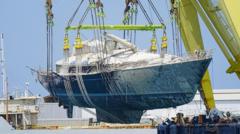
The British superyacht Bayesian, which sank in a storm last summer, has been recovered from the seabed in Sicily. The yacht belonged to tech entrepreneur Mike Lynch, and the sinking resulted in seven deaths, including Lynch. Now on land, Italian prosecutors will examine the wreck to investigate the causes of the incident, which are currently unknown.
Key Facts
The Bayesian yacht sank last summer during a storm near Sicily, causing the deaths of seven people.
The yacht belonged to Mike Lynch, a British tech entrepreneur.
Italian authorities are investigating the incident for possible manslaughter and negligent shipwreck.
A complex $30 million operation was conducted to recover the wreck from the seabed.
During the recovery, a diver was killed in an underwater explosion, delaying the operation.
Remote-controlled submersibles replaced divers to complete the salvage safely.
The yacht is now in a port where it will dry out before further inspections.
Investigators plan to examine if human error or design flaws contributed to the sinking.
Read the Original
Want the full story? Tap a source to open the original
article.
President Trump is attending a NATO meeting in The Hague shortly after ordering military actions in Iran. The meeting will focus on defense spending among NATO member countries.
Key Facts
NATO is an international military alliance that includes countries from North America and Europe.
President Trump is traveling to The Hague to meet with leaders of NATO member countries.
The visit happens just days after Trump ordered strikes on Iran.
A main topic for the meeting is how much each country spends on defense.
Defense spending has been a frequent discussion point within NATO, especially regarding each country's financial contributions.
The meeting in The Hague is part of ongoing discussions on international security and alliance commitments.
Read the Original
Want the full story? Tap a source to open the original
article.
Iranians have mixed feelings about recent U.S. strikes on Iran’s nuclear sites. Some people hope the strikes will weaken the current government, while others fear it could lead to a larger conflict.
Key Facts
U.S. strikes targeted Iran's nuclear facilities.
The strikes have led to mixed reactions among the Iranian population.
Some Iranians hope these strikes might weaken Iran’s government.
Others are worried the strikes could escalate into a larger war.
The uncertainty is causing confusion among the people in Iran.
Read the Original
Want the full story? Tap a source to open the original
article.
Iran launched missiles at a significant U.S. air base in Qatar in response to recent U.S. military airstrikes on Iranian nuclear sites. Prior to Iran's action, President Trump warned Iran not to retaliate after the U.S. strikes.
Key Facts
The U.S. military conducted airstrikes on Iran's nuclear sites over the weekend.
Iran responded by firing missiles at a major U.S. air base located in Qatar.
President Trump had cautioned Iran against retaliating for the U.S. attacks.
The conflict involves strategic sites important to both nations.
Both actions signal escalating tensions between the United States and Iran.
Read the Original
Want the full story? Tap a source to open the original
article.
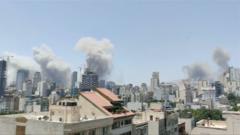
Since June 13, 2025, Israel and Iran have been exchanging missile strikes, with Israeli attacks reportedly targeting Iranian security and military sites. Iran claims 500 deaths from these strikes, while a human rights group reports 950 fatalities. The ongoing attacks have also resulted in 24 Israeli deaths due to Iranian strikes.
Key Facts
Israel has targeted sites in Tehran and Karaj in Iran.
The attacks reportedly hit Iranian security forces and the Islamic Revolutionary Guard Corps (IRGC).
Iran's health ministry reports around 500 deaths from Israeli strikes; a rights group claims 950.
Israeli authorities say 24 Israelis have died from Iranian attacks.
Both countries continue exchanging missile fire nightly.
Each side's leadership vows to continue military actions.
The conflict began with intensified strikes from Israel on June 13, 2025.
Media footage shows damage and explosions in both Israel and Iran.
Read the Original
Want the full story? Tap a source to open the original
article.