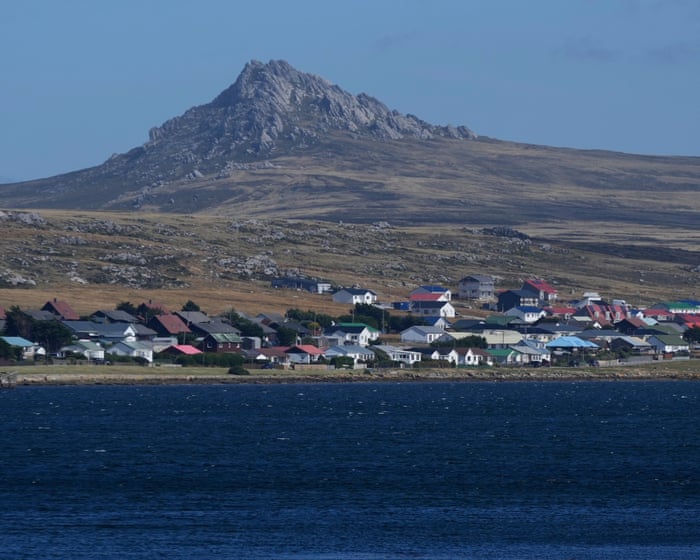
Argentina's President Javier Milei has renewed strong claims that the Falkland Islands belong to Argentina, marking a sharper tone in the dispute with Britain. President Donald Trump has suggested he might reconsider the United States' traditional neutral position, which has so far recognized British control over the islands.
Key Facts
Argentina and the UK have long disputed control over the Falkland Islands, which Britain reoccupied in 1833.
President Milei said the islands "rightfully belong" to Argentina, accusing Britain of colonial occupation.
Historically, the islands were uninhabited when Britain took control, and Argentina's earlier settlement was removed by the US Navy in 1831.
The US has traditionally been neutral but supported Britain during the 1982 Falklands War.
President Trump said he is "re-evaluating" the US position on the Falklands, breaking from usual US policy.
The change in US stance has energized Argentina's political debate ahead of next year’s presidential election.
Argentina sees the Falklands issue as urgent partly due to upcoming energy explorations by Israeli and UK companies near the islands.
The Falkland Islanders voted overwhelmingly in 2013 to remain a British overseas territory.
Read the Original
Want the full story? Tap a source to open the original
article.
Mexican authorities seized almost 17 tonnes of methamphetamine from three secret labs in Sinaloa. They also shut down a large 5,700-square-metre facility where the drugs were made, causing criminal groups to lose about $347 million.
Key Facts
Nearly 17 tonnes of methamphetamine were seized.
The drugs came from three hidden labs in Sinaloa, Mexico.
A 5,700-square-metre production facility was dismantled.
The operation caused a financial loss of $347 million to criminal groups.
The action was carried out by Mexican authorities.
The labs were used to produce methamphetamine, a powerful illegal drug.
Read the Original
Want the full story? Tap a source to open the original
article.
The USS Abraham Lincoln aircraft carrier, commanded by Captain Dan Keeler, recently completed a record-setting deployment of about 286 days, with 264 days continuously at sea. The ship conducted combat missions related to the U.S. war on Iran and made a historic visit to Thailand for rest and resupply.
Key Facts
Captain Dan Keeler took command of the USS Abraham Lincoln in June 2025.
The ship spent approximately 286 days deployed, with 264 consecutive days at sea.
The deployment included operations in the Middle East and the Indo-Pacific region.
The carrier and its strike group carried out combat missions connected to the U.S. conflict with Iran.
The USS Abraham Lincoln participated in the first combat strikes by the F-35C fighter jet.
It was the first Nimitz-class carrier to refuel from a civilian oil tanker.
The carrier made a notable visit to Malaysia, the first by a U.S. aircraft carrier in over 10 years.
The USS Abraham Lincoln docked in Thailand at Laem Chabang port to allow the crew rest and ship maintenance.
Read the Original
Want the full story? Tap a source to open the original
article.
President Donald Trump has indicated he is reconsidering the long-standing U.S. support for Britain’s control over the Falkland Islands, a disputed territory between the UK and Argentina. This move aligns with Argentinian President Javier Milei’s plan to reopen Argentina’s claim to the islands, following decades of tension and a brief war in 1982.
Key Facts
The Falkland Islands are a group of islands in the South Atlantic controlled by the UK but claimed by Argentina, where they are called the Malvinas.
The last conflict over the islands occurred in 1982, when Argentina’s military invaded and Britain responded with a naval taskforce to reclaim them.
Argentina has never dropped its claim, but the islanders prefer British rule.
President Trump said he is “reviewing” U.S. support for Britain’s sovereignty over the islands.
Trump’s comments come amid his ongoing displeasure with some allies, including Britain, for not supporting his decisions in other matters like potential war with Iran.
Argentinian President Javier Milei used Trump’s statement to revive Argentina’s claim on the Falklands.
Trump may use this issue as leverage to ask the UK for higher defense spending and more NATO contributions.
This situation reflects broader strain in U.S. relations with traditional allies under Trump’s presidency.
Read the Original
Want the full story? Tap a source to open the original
article.
A serious crash on the A66 road near Middlesbrough killed seven people, including two police officers. The police are investigating the area, focusing on organized crime, while local residents express fear and distrust of the police.
Key Facts
The crash happened on the A66 dual carriageway near Middlesbrough.
Seven people died in the crash, including two police officers.
Police are conducting a large operation in the Grangetown and South Bank areas of Middlesbrough.
The police operation is related to organized crime in the area.
Some local residents said they are afraid and do not trust the police.
During a BBC filming visit, a crew member was hit by a pellet gun shot.
The incident has raised concerns about social problems in the community.
Read the Original
Want the full story? Tap a source to open the original
article.
Israeli military drones dropped bombs on the southern Lebanese town of Mansouri, causing several explosions. The incident happened recently and affected the area with multiple blasts.
Key Facts
Israeli drones carried out airstrikes on Mansouri in southern Lebanon.
Multiple explosions were reported in the town.
The attacks involved dropping explosives from drones.
Mansouri is located in southern Lebanon, near the Israeli border.
The event is part of ongoing tensions between Israel and Lebanon.
Read the Original
Want the full story? Tap a source to open the original
article.
Channel 4 investigated Reform UK over possible serious breaches of British election law. The investigation focused on how political influence is paid for and hidden in British democracy, especially regarding political polls used to shape public opinion.
Key Facts
Channel 4 conducted an undercover investigation into Reform UK for possible election law breaches.
The investigation looked at how political polls can influence voters by shaping news and election momentum.
Polls may be paid for by one party but presented as independent, hiding their true source.
Peter Geoghegan, an investigative journalist, says undercover work can be justified if it reveals important hidden actions.
Reform UK officials explained how some political funding mechanisms might work during the investigation.
The inquiry raises questions about political practices usually kept out of the public eye.
The issue involves the transparency of funding behind polls and their role in elections.
Read the Original
Want the full story? Tap a source to open the original
article.
An Israeli air strike hit a motorcycle in the Lebanese town of Kfar Reman, killing two people as Israel increases attacks in southern Lebanon. The strikes target areas controlled by Hezbollah amid ongoing clashes and recent ceasefire agreements mediated by President Donald Trump's administration.
Key Facts
Israeli air strike killed two people in Kfar Reman, southern Lebanon.
The attack was part of intensified Israeli military actions in southern Lebanon.
Israeli army claims to have captured the strategic Ali al-Taher ridge; Hezbollah has not confirmed losing it.
Israeli strikes and shelling targeted seven towns in Tyre and Nabatieh districts without causing more casualties.
Two truce agreements were made in June with U.S. mediation but fighting continues.
Since March 2, over 4,000 people have died and 12,000 have been injured in the escalating conflict.
More than one million people have been displaced due to the fighting.
Israel released four Lebanese prisoners to Lebanon via the Red Cross after recent negotiations.
Read the Original
Want the full story? Tap a source to open the original
article.
The University of Cambridge has started an independent review to examine how it supported Professor Jason Arday before his death. The review will look at the help Arday received, how the university handled plagiarism allegations against him, and the broader environment during his time at Cambridge.
Key Facts
Jason Arday, a sociology professor, died in August, shortly after resigning amid plagiarism accusations.
Arday denied plagiarism but admitted making errors related to his autism.
The university launched a two-part review into its actions and support for Arday.
The first part of the review, led by Nazir Afzal, will focus on support before Arday’s death and report within three months.
The second part will study wider issues like staff recruitment, mentoring, and handling of public accusations.
There has been an increase in racist and abusive attacks online affecting black and neurodiverse staff and students after Arday’s death.
Arday was Cambridge’s youngest ever black professor, appointed at age 37.
Thousands attended a vigil in Trafalgar Square to honor Arday after his passing.
Read the Original
Want the full story? Tap a source to open the original
article.
Romanian prosecutors have officially charged Andrew Tate with sex trafficking of minors, having sex with a minor, and money laundering. His brother Tristan is also charged for helping, and both deny the accusations.
Key Facts
Andrew Tate faces charges in Romania for trafficking minors, sex with a minor, and money laundering.
Tristan Tate, his brother, is charged as an accomplice.
They allegedly recruited victims by pretending to want relationships, then forced them to create sexual content on webcam.
One victim was reportedly 15 when manipulated in the UK and later moved to Romania.
Prosecutors say the brothers earned about $1.25 million from the victims’ webcam videos.
They tried to hide their earnings by buying four luxury cars.
Both brothers deny all the charges.
The Tates were arrested in Florida after the UK asked for their extradition.
Romanian law allows prosecution even if the defendants are not in the country.
The case will be reviewed by a Romanian judge next.
Read the Original
Want the full story? Tap a source to open the original
article.
The United Nations General Assembly voted to adopt a new world map that shows countries, especially Africa, in their true sizes. This decision aims to correct the long-standing distortion caused by the popular Mercator map, which makes Africa look much smaller than it really is.
Key Facts
The UN adopted the “Correct the Map” resolution with 164 votes in favor, 1 against (the United States), and 6 abstentions.
The resolution was proposed by African Union countries and the Bahamas to fix Africa’s size distortion.
The Mercator map, created in the 1500s, enlarges areas near the poles and shrinks equatorial regions like Africa.
Africa is about 14 times bigger than Greenland, but the Mercator map shows them as similar in size.
The resolution recommends using the Equal Earth projection, which shows land sizes more accurately.
The resolution is not legally binding and does not change the use of the Mercator map for navigation.
France announced plans to stop using the Mercator map and adopt more accurate maps for different purposes.
Togo leads the campaign to replace the Mercator map in schools and other places by the end of the year.
Read the Original
Want the full story? Tap a source to open the original
article.
Scientists studied DNA from sheeppox virus preserved in the animal skins used to make medieval manuscripts. Their research shows that sheeppox has affected sheep for at least 3,500 years and helps understand how the virus evolved over time.
Key Facts
Sheeppox is a virus that spreads quickly among sheep and can often be deadly.
The disease was mostly removed from European sheep in the 20th century but still appears sometimes, like in Greece last year.
Researchers extracted virus DNA from the leather (parchment) of old manuscripts made from sheep skins.
Ancient texts from Roman times and the Middle Ages mention sheeppox outbreaks.
The virus caused significant sheep deaths in Europe from the Middle Ages through the 19th century.
DNA analysis from manuscripts offers a new way to study how animal diseases have changed through history.
Similar techniques have been used before to find disease DNA in old human remains.
The study was published in the journal Science Advances.
Read the Original
Want the full story? Tap a source to open the original
article.
Italian Prime Minister Giorgia Meloni celebrated her government becoming the longest-serving single government in Italy’s republican history, lasting 1,414 days. She said this political stability allows her administration to pursue economic and foreign goals more effectively.
Key Facts
Meloni's government surpassed the previous record of 1,412 days set by Silvio Berlusconi’s second government (2001-2005).
The current government is the longest-serving single government in Italy’s republican era.
Meloni highlighted her right-wing coalition as key to the government’s stability.
She said stability is important for reforms and for achieving economic goals like supporting jobs and businesses.
Meloni emphasized that her government has improved Italy’s credibility with international partners.
The government has maintained support for Ukraine and kept strong alliances with Europe and NATO.
Meloni became Italy’s first female prime minister in 2022 and has moved from outsider to establishment leader.
Some Europeans were initially cautious due to her party’s roots but she worked to build trust and cooperation.
Read the Original
Want the full story? Tap a source to open the original
article.
Several well-known people died in 2026, including musicians, actors, political leaders, and activists. The article highlights some of these individuals and their contributions, such as Dolly Parton’s music and philanthropy and Claudette Colvin’s role in the Civil Rights Movement.
Key Facts
Dolly Parton, a famous country music singer and philanthropist, died in August 2026.
Actor Hayden Panettiere, known for TV shows “Heroes” and “Nashville,” also died in August 2026.
Other notable August deaths included former Chinese Premier Zhu Rongji, actor Tim Curry, ZZ Top drummer Frank Beard, Japanese artist Yayoi Kusama, Canadian news anchor Lloyd Robertson, and Norwegian King Harald V.
Diane Crump, the first woman to ride in a professional horse race and the Kentucky Derby, died on January 1, 2026.
Aldrich Ames, a CIA spy convicted of betraying Western secrets to Russia, died in prison on January 5, 2026.
Claudette Colvin, who played an important role in the early Civil Rights Movement by refusing to give up her bus seat in 1955, died on January 13, 2026.
Valentino Garavani, a famous Italian fashion designer known for his red gowns, died on January 19, 2026.
The article lists other influential figures who passed away in early 2026, including actors, musicians, and filmmakers.
Read the Original
Want the full story? Tap a source to open the original
article.
Five European countries—Germany, Austria, Greece, Denmark, and the Netherlands—are working on deals with a non-EU country to create migrant return centers by 2027. These centers will hold migrants who do not have legal permission to stay, and the countries hope to finalize agreements this year.
Key Facts
The five countries are known as the Group of Five.
They want to send migrants without legal residency to return centers outside the EU.
The partner countries to host these centers have not been named yet.
The group plans to have a common understanding with a partner country around New Year.
They will also talk with the International Organization for Migration and the UN Refugee Agency (UNHCR).
The European Parliament approved a migration policy to speed up deportations and allow such centers abroad.
Some groups warn the return centers may risk human rights and may not stop dangerous migration routes.
The Group of Five will meet again in Munich at the end of September to work on the plan.
Read the Original
Want the full story? Tap a source to open the original
article.
Brazil’s Supreme Court is involved in a corruption dispute between two justices, Alexandre de Moraes and Andre Mendonca, who have accused each other of wrongdoing. The conflict relates to investigations involving former President Jair Bolsonaro and has increased political tensions ahead of Brazil’s upcoming presidential election.
Key Facts
Justice Alexandre de Moraes oversaw the case that convicted former President Jair Bolsonaro.
Justice Andre Mendonca, appointed by Bolsonaro, accused de Moraes of links to a banker involved in a fraud scandal.
De Moraes accused Mendonca of misusing his authority by releasing confidential documents.
Brazil’s Chief Justice gave the attorney general five days to review the accusations against Mendonca.
The court will soon decide whether to start an investigation into de Moraes.
Bolsonaro is under house arrest with a 27-year sentence over a coup plot and efforts to overturn the 2022 election results.
President Donald Trump has publicly supported Bolsonaro and criticized the investigation as unfair.
The dispute contributes to political conflict ahead of Brazil’s October 4, 2024, presidential election, where Bolsonaro’s son is running against current President Lula.
Read the Original
Want the full story? Tap a source to open the original
article.
Nigel Farage, leader of Reform UK, announced plans to stop small boat crossings, reduce energy bills, and end net zero policies if his party forms the next government. He threatened to change the House of Lords and judicial appointment rules to push through these policies, declaring he would use emergency powers if necessary.
Key Facts
Reform UK's first 100 days would focus on stopping small boat crossings and cutting energy bills by £250 a year.
Farage plans to end the government's net zero carbon emissions goals.
He would declare a "national emergency" to speed up lawmaking, with Parliament sitting long hours until key laws pass.
Farage threatens to appoint many new members to the House of Lords to secure support for his policies or hold a public vote to change the Lords.
He wants to limit judges from using the European Convention of Human Rights to block government actions.
Farage said ministers who fail in 100 days would be replaced by others ready to deliver promises.
Civil servants opposing his plans would be replaced by business people.
His speech was disrupted by protesters and shadowed by ongoing investigations into the party's funding.
Read the Original
Want the full story? Tap a source to open the original
article.
German police are investigating sabotage attacks on the country’s power grid. Officials believe a 48-year-old militant climate activist is responsible for damaging electrical lines to protest against fossil fuels.
Key Facts
The attacks targeted electricity substations in western and eastern Germany.
Firework-like devices were used to throw wires onto high-voltage lines to cause short circuits.
Some power units at coal-fired plants were temporarily disconnected but no major blackouts occurred.
A suspect, aged 48, has been identified and searched in the town of Gevelsberg.
Letters confessing to the attacks and explaining motives related to fighting fossil fuels were sent to authorities.
Officials found suspected explosive materials in the suspect’s home.
German Interior Minister Alexander Dobrindt described this as a case of "climate extremism".
The investigation continues as authorities look for the suspect.
Read the Original
Want the full story? Tap a source to open the original
article.
National Geographic’s Photo Ark is celebrating 20 years of showing different kinds of animals and encouraging people to protect wildlife. One of the animals featured recently is the shaggy sea hare, a type of sea creature.
Key Facts
National Geographic’s Photo Ark started 20 years ago.
The project shows many animals to highlight biodiversity, which means the variety of life in the world.
It aims to inspire people to help protect wildlife.
The shaggy sea hare is one of the animals featured in the latest spotlight.
A sea hare is a marine animal, related to sea slugs.
The Photo Ark helps raise awareness about endangered species and nature’s importance.
Read the Original
Want the full story? Tap a source to open the original
article.
Israeli forces demolished all homes and many structures in the West Bank village of Khirbet al-Tabban, leaving about 70 Palestinians homeless. Despite this, the villagers say they will stay and rebuild on their land, even as they face difficulties getting basic needs like shelter, water, and sanitation.
Key Facts
Israeli forces destroyed 12 homes and community buildings in Khirbet al-Tabban, in the southern West Bank.
About 70 people from the village became homeless after the demolition.
The demolition happened without prior warning on a Wednesday morning.
The Israeli government said the buildings were demolished because they were built without official permission.
It is very hard for Palestinians in this area to get permission to build legally.
A 2022 Israeli court ruling allowed displacement of residents in Masafer Yatta, where the village is located, designating it as a military firing zone.
Villagers have begun clearing rubble and setting up temporary shelters and say they plan to rebuild their homes.
The community’s immediate needs are shelter, clean water, and sanitation, especially with cold weather coming soon.
Read the Original
Want the full story? Tap a source to open the original
article.