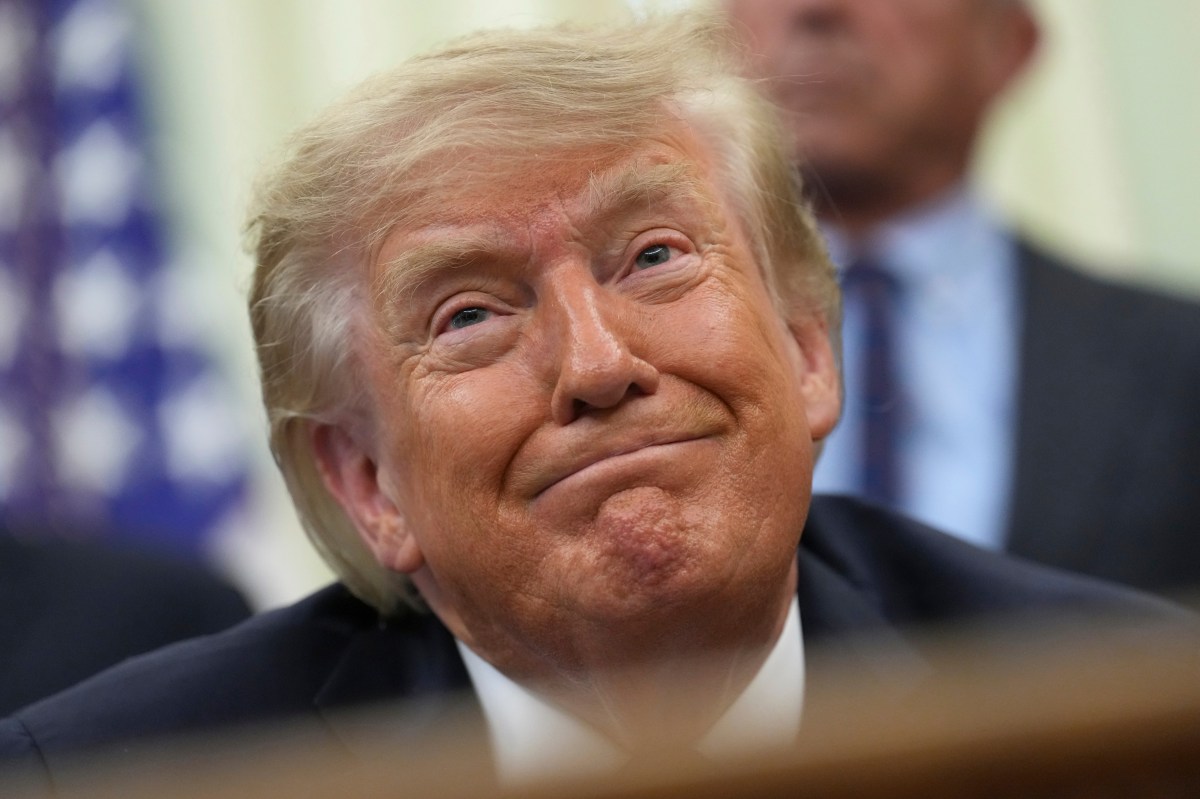
President Donald Trump suggested renaming the Strait of Hormuz to "Trump Strait" in a post on Truth Social. He claimed the waterway is now under U.S. control amid rising tensions with Iran.
Key Facts
President Trump proposed renaming the Strait of Hormuz the "Trump Strait."
He made the suggestion in a post on the social media platform Truth Social.
The Strait of Hormuz is a crucial waterway for global energy transportation.
Trump said the strait would be "hotter" than ever with the new name.
He stated the U.S. has control over the strait, a claim linked to current tensions with Iran.
The post ended with Trump signing it as "President DONALD J. TRUMP."
The situation is evolving, and more updates are expected.
Read the Original
Want the full story? Tap a source to open the original
article.
Germany says Russia is responsible for sending a drone with explosives to Leipzig airport on August 4. In response, Germany has imposed new sanctions on Russia, including actions against its consulate in Bonn and a cultural center in Berlin believed to be linked to spying.
Key Facts
A drone carrying explosives was found at Leipzig airport in Germany on August 4, 2026.
Germany blames Russia for the drone incident.
Following this, Germany introduced new sanctions targeting Russia.
Sanctions include measures against Russia’s consulate in Bonn.
Germany also sanctioned the Russian House in Berlin, suspected to be a Russian spying center.
The incident is part of ongoing tensions between Germany and Russia.
The event relates to broader issues of hybrid warfare, which means using a mix of regular and covert attacks.
This action is connected to wider European Union responses to Russia’s activities.
Read the Original
Want the full story? Tap a source to open the original
article.
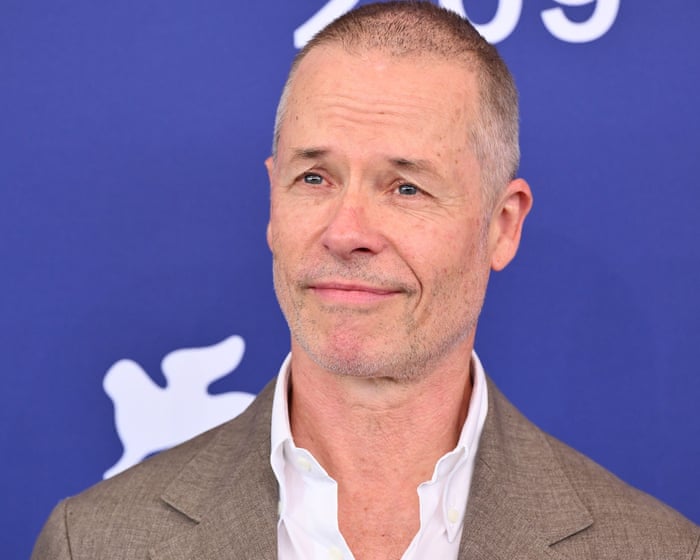
Rupert Murdoch is pleased that actor Guy Pearce plays him in the new film Ink, which tells the story of Murdoch’s early years with the British newspaper the Sun. The film shows how Murdoch changed the UK newspaper world in 1969, challenging the old newspapers and introducing a new, more entertaining style of journalism.
Key Facts
Guy Pearce plays Rupert Murdoch in the movie Ink.
Murdoch’s daughter said her father is happy about the casting.
The film focuses on 1969, when Murdoch bought the Sun newspaper.
Larry Lamb, played by Jack O’Connell, was put in charge to make the Sun outsell the Daily Mirror.
The movie shows the tough, messy work of printing newspapers at the time.
Murdoch’s move led to major changes in British journalism, making it more about entertainment.
The film’s director, Danny Boyle, says Murdoch brought change to a very traditional British society.
The story contrasts with American TV shows like Succession, as it focuses on Murdoch’s early UK years only.
Read the Original
Want the full story? Tap a source to open the original
article.
President Donald Trump suggested renaming the Strait of Hormuz to the "Trump Strait" after claiming the U.S. had control over it. The Strait of Hormuz is an important water passage, but no single country owns it.
Key Facts
President Trump proposed changing the name of the Strait of Hormuz to the Trump Strait.
The Strait of Hormuz is a key waterway used for global shipping and oil transport.
The waterway is located between the Persian Gulf and the Gulf of Oman.
No country officially owns or controls the Strait of Hormuz.
President Trump said the new name would make it “hotter” than ever before, referring to America.
The suggestion came in a public message by President Trump on Wednesday.
The idea highlights U.S. influence but does not change the international status of the strait.
Read the Original
Want the full story? Tap a source to open the original
article.
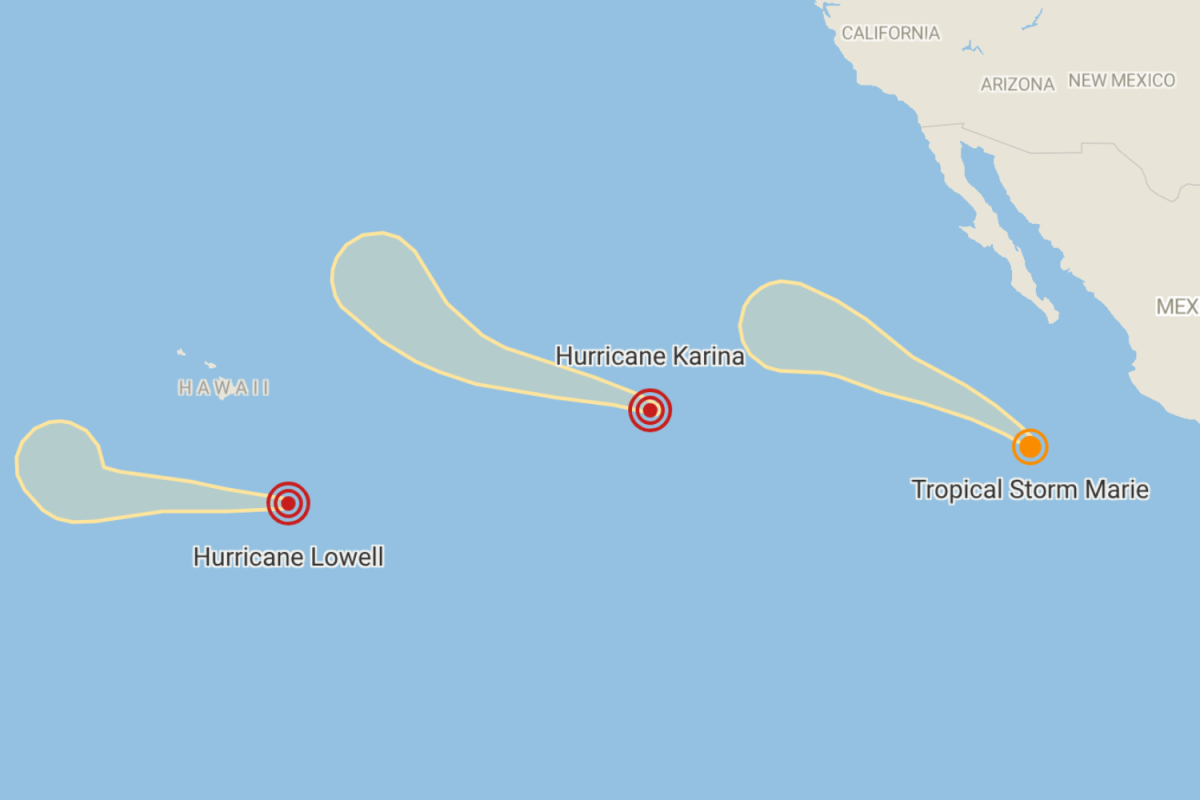
This year’s El Niño, a climate pattern with warmer ocean waters in the Pacific, is causing more hurricanes in the Pacific Ocean and fewer in the Atlantic. Currently, there are three tropical storms in the Pacific, including two strong hurricanes, while the Atlantic has no active hurricanes.
Key Facts
Three tropical storms are active in the Pacific: Hurricanes Karina and Lowell (both strong Category 4 storms) and Tropical Storm Marie.
The Atlantic Ocean currently has no named storms after Tropical Storm Edouard weakened and moved inland.
El Niño causes warmer Pacific waters, which lead to more storms forming there.
El Niño also increases wind shear (strong winds high in the atmosphere) over the Atlantic, making it harder for hurricanes to form.
Meteorologists expected more Pacific storms and fewer Atlantic ones because of this El Niño event.
Historically, in a normal year, the Atlantic would already have two hurricanes and one major hurricane by early September.
The Pacific's current hurricane activity, including multiple major hurricanes, is consistent with previous strong El Niño years.
Forecasters warn that even though the Atlantic has been quiet so far, dangerous storms can still develop, especially since September is the peak hurricane month.
Read the Original
Want the full story? Tap a source to open the original
article.
Reform UK initially banned three journalists from its 2026 annual conference, citing reasons like their media status. After some confusion and reinstatement emails, the party confirmed the journalists would not be allowed to attend. The bans sparked criticism, as these reporters had previously investigated the party and its leader, Nigel Farage, including scrutiny over an undeclared large donation.
Key Facts
Reform UK banned Anna Isaac (The Guardian), Peter Geoghegan (investigative reporter), and Michael Crick (broadcaster and biographer) from its conference.
The conference was set to take place at the National Exhibition Centre in Birmingham in 2026.
The party called the event “the most talked about event of 2026” and hopes to reset its image after a controversial summer.
The controversy involved Nigel Farage receiving an undeclared £5 million donation from Christopher Harborne before the 2024 election.
After initial bans, all three journalists received emails saying their passes were reinstated, but later the party said this was a mistake and the exclusions stood.
Reform UK claimed Geoghegan and Crick were not accredited because they were minor media figures and gave no reason for Isaac’s ban.
Farage faced public and political fallout from the donation story, including resigning and then winning back his parliamentary seat in a by-election.
The party spokeswoman said about 950 out of 1,000 media applications were accepted and that Isaac could watch the conference online.
Read the Original
Want the full story? Tap a source to open the original
article.
A 51-year-old Chinese man named Lianyong Wei died in a hospital hours after being taken into U.S. Immigration and Customs Enforcement (ICE) custody in the Northern Mariana Islands. The Chinese government is asking for a full investigation into his death, which is still under review.
Key Facts
Lianyong Wei was arrested on August 21, 2026, on criminal charges related to an alleged assault.
Wei was taken into ICE custody on August 22, 2026, while awaiting removal (deportation) proceedings.
He was found unresponsive during a routine check on August 23 and died after life-saving attempts at the hospital.
Wei had entered the Northern Mariana Islands in February 2019 with permission to stay for two weeks.
The Chinese Consulate General in Los Angeles requested a thorough investigation and support for Wei’s family.
Wei is the fifth Chinese national to die in ICE or Border Patrol custody since March 2025, with causes including suicide and medical problems.
Since President Donald Trump took office in January 2025, 57 ICE detainees have died.
It is unclear if Wei received the standard medical screening ICE promises within 12 hours of custody.
Read the Original
Want the full story? Tap a source to open the original
article.
Brazil’s top election court set new rules about using AI-created deepfakes in political ads to fight misinformation before the October elections. The rules came after a case involving Senator Flávio Bolsonaro, who showed AI images of his imprisoned father endorsing his campaign during a private party event.
Key Facts
Brazil’s election court issued new standards on AI-generated deepfakes in political advertising.
The case involved Senator Flávio Bolsonaro using AI images of his father, former President Jair Bolsonaro, in a party convention.
Jair Bolsonaro is in prison, sentenced to 27 years for leading a coup attempt.
The court decided 4-3 not to punish Sen. Bolsonaro, saying the deepfake was used in a private event before his campaign started.
In a separate vote (5-2), the court defined deepfakes as AI-made or altered images, voices, or speeches of real or fictional people with realistic details.
The rules will apply to political ads before Brazil’s presidential election on October 4.
Broadcasters must reserve daily time for many short ads and longer blocks only for presidential candidates.
Read the Original
Want the full story? Tap a source to open the original
article.
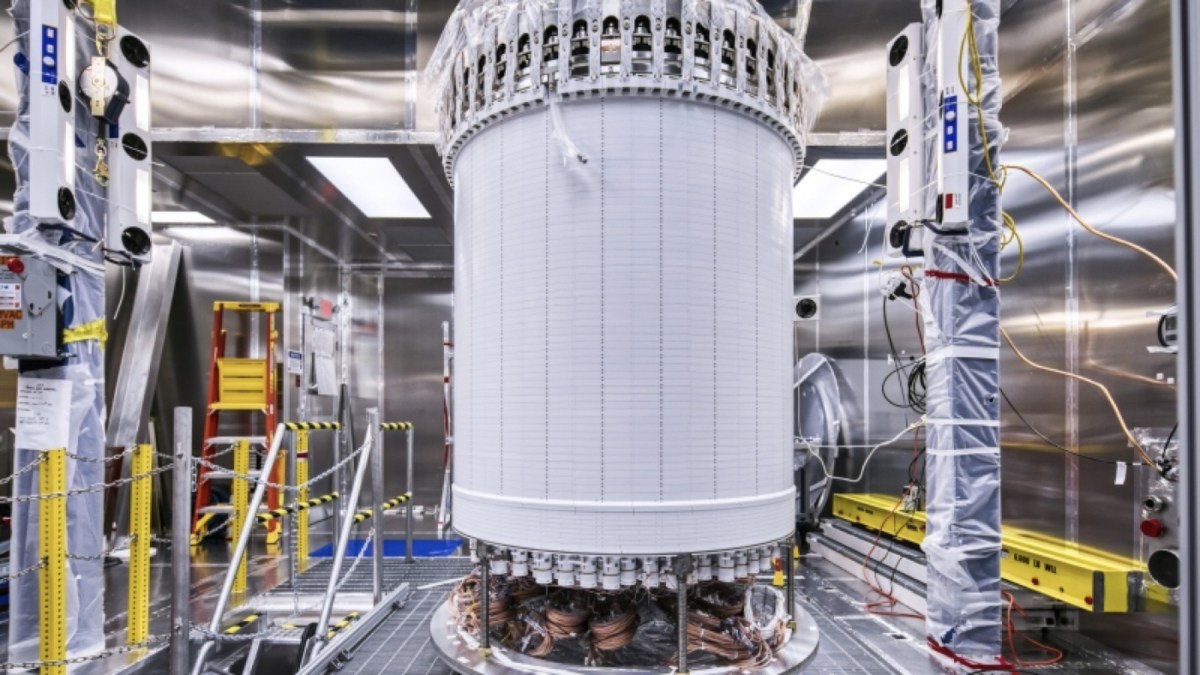
Scientists using the LUX-ZEPLIN (LZ) detector deep underground in South Dakota recorded an unusual event that might be a sign of dark matter, an invisible substance thought to make up most of the universe's matter. While the event is interesting, researchers say more data is needed to confirm if this is actually dark matter or something else.
Key Facts
Dark matter makes up about 85% of matter in the universe but cannot be seen directly; its existence is inferred from its gravity.
LUX-ZEPLIN (LZ) is a detector located nearly a mile underground in South Dakota, using liquid xenon to detect rare collisions of particles.
The unusual event was found in data collected from March 2023 to April 2024 and occurred in a part of the detector expected to catch dark matter signals.
Scientists estimate there is a 1-in-200 chance that known background activity caused the event, meaning it is rare but not definitive proof.
The event was announced at a scientific conference in Japan and will be submitted for publication in a scientific journal.
Researchers have not confirmed this as dark matter yet and stress the need for more data to rule out other explanations.
Dark matter was first proposed in the 1930s to explain why galaxies move the way they do and became widely accepted in the 1970s.
One popular theory suggests dark matter is made of weakly interacting massive particles (WIMPs) that rarely interact with normal matter and are hard to detect.
Read the Original
Want the full story? Tap a source to open the original
article.
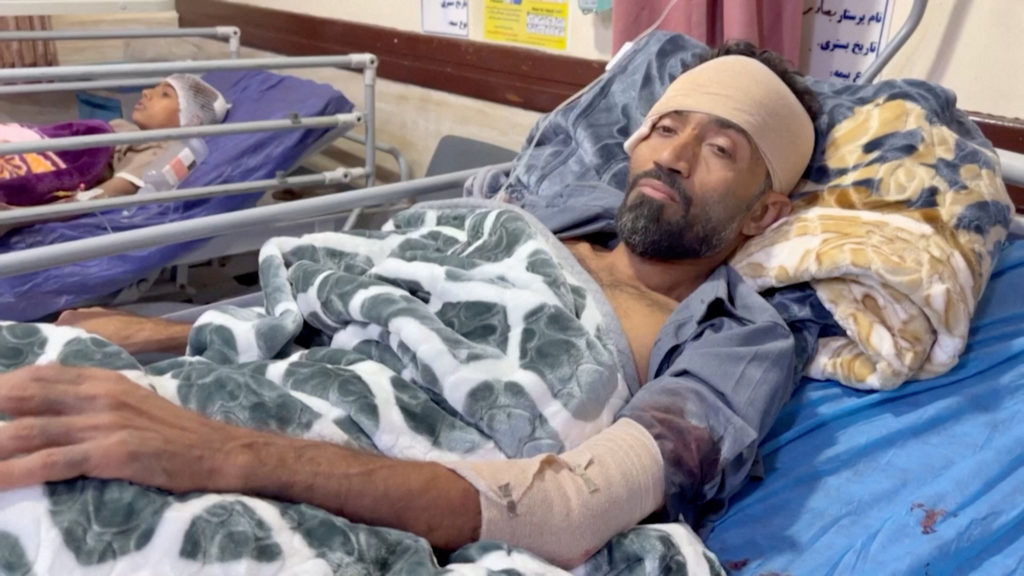
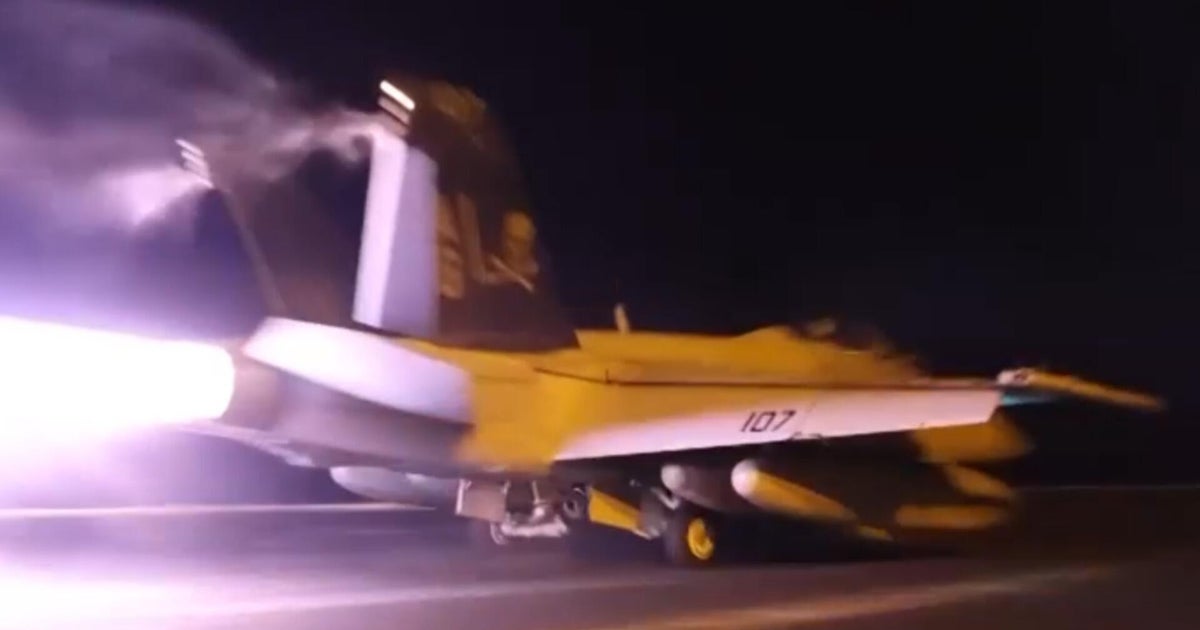
Iran fired missiles at U.S. allies in the Gulf after the U.S. conducted airstrikes that reportedly hit a wedding party. This exchange follows a six-month conflict that has increased oil prices and affected global politics.
Key Facts
Iran launched attacks on Gulf neighbors early Wednesday.
The attacks came after the U.S. bombed Iranian rocket launchers.
Iranian officials say the U.S. strikes included a deadly hit on a wedding.
The conflict has lasted six months and recently saw a pause before resuming.
Increased fighting has raised oil prices worldwide.
The war is creating political challenges for President Donald Trump’s Republican Party before the November midterm elections.
The U.S. targeted rocket launchers believed to be for placing mines in the Strait of Hormuz.
Iran fired missiles at U.S. bases in Jordan, but they were intercepted.
Read the Original
Want the full story? Tap a source to open the original
article.
Israeli Prime Minister Benjamin Netanyahu said Israel will not leave the areas its military controls in Gaza. He promised to keep working to remove weapons from Hamas and make Gaza free of military threats.
Key Facts
Prime Minister Netanyahu spoke about Israel’s military presence in Gaza.
He stated Israel has no plans to pull back from controlled areas in Gaza.
Netanyahu emphasized the goal to disarm Hamas, a Palestinian group.
The aim is to demilitarize the Gaza Strip, meaning removing its weapons.
This comes amid ongoing conflict and security concerns in the region.
Gaza is a small area controlled by Hamas, which Israel considers a security threat.
The announcement signals Israel’s intention to maintain a strong military role in Gaza.
Read the Original
Want the full story? Tap a source to open the original
article.
Chinese President Xi Jinping visited Egypt and called for Middle Eastern countries to oppose outside interference and work on their own security arrangements. During talks with Egyptian President Abdel Fattah el-Sisi, both leaders emphasized the need for diplomatic solutions to the ongoing US-Israel war with Iran and agreed on expanding Chinese investment in Egypt’s Suez Canal industrial zone.
Key Facts
President Xi visited Cairo, his first visit in 10 years, and met with President el-Sisi.
Xi urged Middle East countries to control their own affairs and reject external interference.
The two leaders discussed the six-month war involving the US, Israel, and Iran, calling for diplomacy to end the conflict.
Egypt and China agreed to begin the third phase of an industrial zone at the Suez Canal, hosting 200 companies with about $4 billion in investments.
China aims to increase its influence in the Middle East, especially as US involvement appears uncertain.
Egypt wants to diversify its foreign partnerships beyond traditional alliances.
The visit came before a planned meeting between President Xi and US President Donald Trump.
Regional countries recently formed the Mecca Defence Alliance, showing interest in new security partnerships beyond the US.
Read the Original
Want the full story? Tap a source to open the original
article.
Tensions between the U.S. and Iran are increasing with more military strikes happening. At the same time, several resignations and firings are occurring within the U.S. military.
Key Facts
Military strikes between the U.S. and Iran are rising again.
The increase in conflict is taking place alongside changes in U.S. military leadership.
Some U.S. military officials have resigned recently.
Other military personnel have been fired.
These events may affect how the U.S. handles national security related to Iran.
The situation is being closely monitored by security analysts.
The news was reported by CBS News and national security expert Aaron MacLean.
Read the Original
Want the full story? Tap a source to open the original
article.
Andy Burnham appeared for the first time in Prime Minister’s Questions (PMQs), where he responded to questions from Kemi Badenoch. Nigel Farage spoke about his return to parliament and addressed questions about a £5 million gift he received from a crypto billionaire before becoming an MP.
Key Facts
Andy Burnham took part in his first PMQs session.
Nigel Farage returned to parliament as the MP for Clacton.
Farage received £5 million from a crypto billionaire before becoming an MP.
Farage said this money was a personal gift and did not need to be registered under parliamentary rules.
Farage described the UK as a "complainants' society" amid questions about his funding.
The PMQs discussion included views on whether Burnham’s leadership poses a threat to the Reform party.
The article is based on a BBC Newscast episode with political analysis.
Kemi Badenoch questioned Andy Burnham during his PMQs debut.
Read the Original
Want the full story? Tap a source to open the original
article.
Egyptian President Abdel Fattah al-Sisi welcomed Chinese President Xi Jinping to Cairo. This visit reflects growing ties between Egypt and China as regional instability leads some U.S. allies to rethink their security partnerships.
Key Facts
President Xi Jinping visited Egypt on February 9, 2026.
Egyptian President Abdel Fattah al-Sisi officially welcomed Xi in Cairo.
The visit shows closer relations between Egypt and China.
Regional turmoil is causing shifts in security alliances.
Some countries traditionally allied with the U.S. are reassessing their relationships.
China's influence in the region is growing as part of its broader international strategy.
The visit highlights China's expanding role in Africa and the Middle East.
Read the Original
Want the full story? Tap a source to open the original
article.
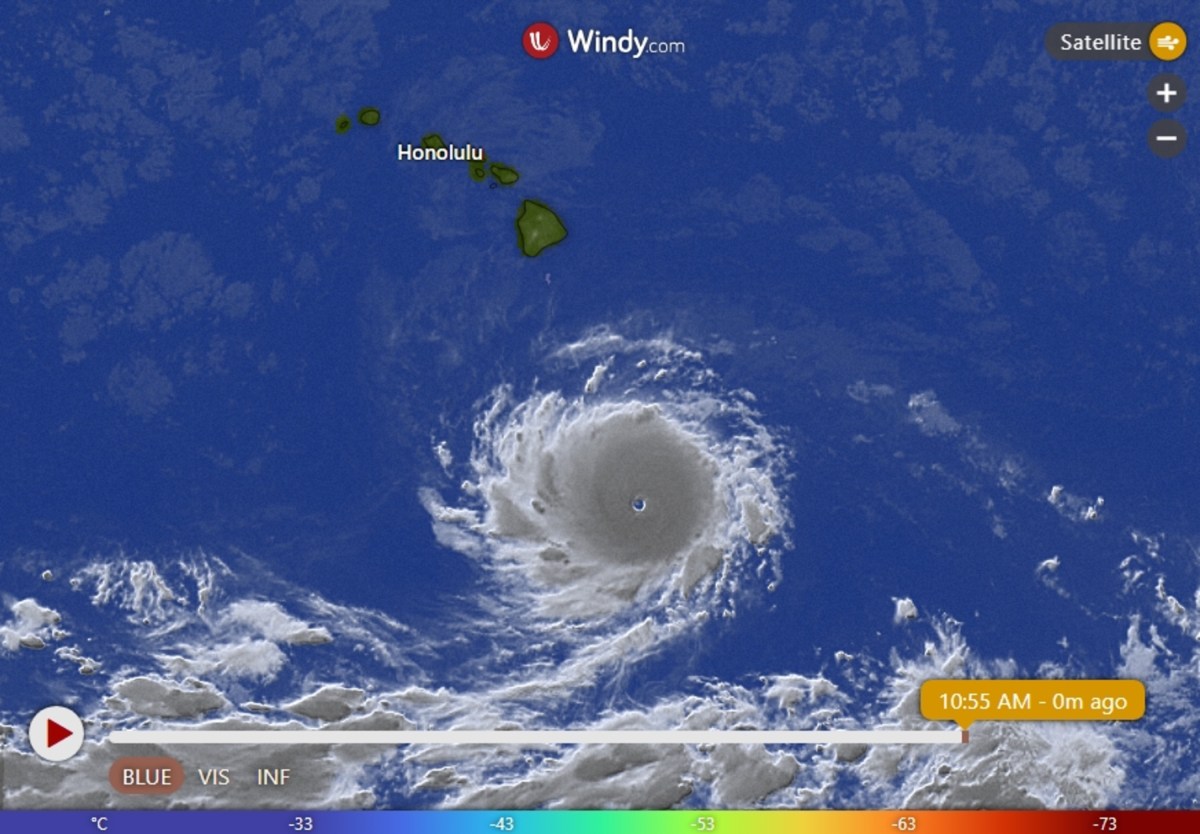
Hurricane Lowell, a strong Category 4 storm with winds of 145 mph, is moving through the Central Pacific near Hawaii. Although it is not expected to hit the islands directly, it is causing dangerous winds, large waves, and marine hazards around Hawaii.
Key Facts
Hurricane Lowell has maximum sustained winds of 145 mph and may get stronger.
The storm is about 470 miles south-southeast of Hilo, Hawaii, moving west at 12 mph.
Hawaii's offshore waters are under a tropical storm warning due to high seas up to 18 feet.
Large waves and strong winds are expected to affect parts of Hawaii through the end of the week.
No direct landfall is forecasted, but wind advisories warn of gusts up to 55 mph on several islands.
Strong winds could cause damage like torn shingles, fallen branches, and power outages.
Hawaii’s hurricane season lasts from June 1 to November 30.
Past storms near Hawaii have caused flooding and hazardous surf even without making landfall.
Read the Original
Want the full story? Tap a source to open the original
article.
Nigel Farage compared his ongoing investigation over financial gifts to the years of legal scrutiny faced by President Donald Trump, describing both as outsiders challenged by the system. Farage is being investigated for failing to declare a £5 million gift and other financial support, but he denies wrongdoing and says the criticism is unfair.
Key Facts
Nigel Farage faces a parliamentary inquiry for not declaring a £5 million gift from donor Christopher Harborne.
He also received financial support from George Cottrell, who has a criminal fraud record.
Farage says the gifts were personal, not political.
The investigation resumed after Farage won a byelection in Clacton.
Farage compares his situation to the multiple investigations against President Donald Trump in the U.S.
Farage claims the inquiries are coordinated attacks by the political establishment.
He admits to being upset because his family has faced threats and banking problems recently.
Despite criticism and lower poll numbers for Reform UK, Farage intends to remain party leader for the next election.
Read the Original
Want the full story? Tap a source to open the original
article.
A couple in the Philippines got married inside a Catholic church that was flooded with water up to their hips. This happened after heavy rains had caused flooding across much of the country for a month.
Key Facts
The wedding took place in a Catholic church in the Philippines.
The church was filled with floodwaters reaching hip height.
The flooding was caused by heavy rains.
These rains have affected large parts of the Philippines for about one month.
The event showed people continuing life events despite difficult weather conditions.
The flooding is part of a wider regional issue affecting nearby countries like Nepal and China.
Floods in neighboring countries have resulted in many deaths and missing people.
Read the Original
Want the full story? Tap a source to open the original
article.
Heavy rains in Nepal have caused severe flooding, trapping dozens of workers inside hydropower tunnels. Rescue teams are continuing their search efforts but face challenges due to bad weather and flooding.
Key Facts
Dozens of workers are trapped inside hydropower tunnels in Nepal after floods.
Some tunnels have chambers with air supplies, giving hope that the workers might still be alive.
Rescue teams are working to find and save the trapped workers.
Heavy rains and difficult weather conditions are making rescue work harder.
Hundreds of unidentified bodies have been found due to the floods.
The floods in Nepal are part of a larger problem related to climate change.
Nepali authorities and international teams are involved in rescue efforts.
The situation remains critical as the search continues.
Read the Original
Want the full story? Tap a source to open the original
article.
More than 1,000 people have died and nearly 4,000 are missing after sudden floods near the Nepal-Tibet border. The BBC visited the affected area in Betrawati, Nepal, where people are returning to see the damage and rescue efforts continue.
Key Facts
The floods happened about a week ago along the Nepal-Tibet border.
Over 1,000 people have died in the floods.
Nearly 4,000 people are still missing.
The disaster agency in Nepal provided these numbers.
The BBC visited Betrawati district to report on the event.
Some survivors are returning home to see the destruction.
Rescue teams are still working to find missing people.
A local person told the BBC about waiting for his wife’s body to be recovered.
Read the Original
Want the full story? Tap a source to open the original
article.