Leanne Morgan, a stand-up comedian in her sixties, stars in the Netflix multicam sitcom "Leanne," which recently started its second season. The show features Morgan as a single woman starting over after her husband leaves her, and the multicam sitcom format is becoming popular again, especially with older women leading shows.
Key Facts
Leanne Morgan spent 27 years as a stand-up comedian before starring in her own sitcom.
"Leanne" is a multicam comedy show on Netflix created by Morgan, Susan McMartin, and Chuck Lorre.
The show tells the story of Leanne, a woman rebuilding her life after a breakup, helped by her sister Carol.
Kristen Johnston, an Emmy-winning actress, plays Leanne's sister and helped Morgan adjust to the multicam format.
Multicam sitcoms were popular in the 1990s but fell out of favor, now they are making a comeback.
NBC is also bringing back multicam sitcoms with shows like Reba McEntire’s "Happy's Place" and the upcoming "Newlyweds."
The multicam style includes filming in front of a live studio audience with multiple cameras capturing scenes simultaneously.
Morgan says people relate to her character’s life stage and that audiences miss the traditional multicam sitcom style.
Read the Original
Want the full story? Tap a source to open the original
article.
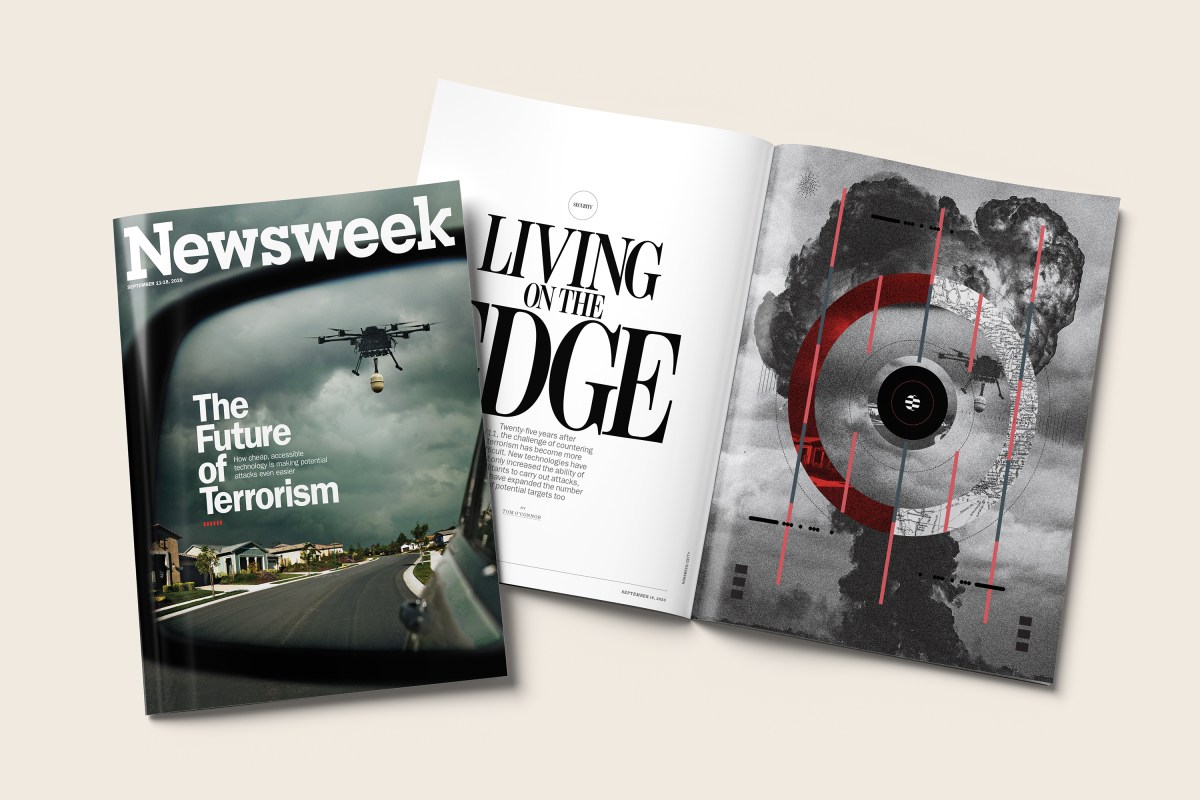
The 9/11 terrorist attacks used simple tools like box cutters to hijack planes, showing that big acts of violence do not always need advanced technology. Today, new technologies such as drones and artificial intelligence are easier for violent nonstate groups to get, increasing security risks worldwide.
Key Facts
The 9/11 attacks involved 19 Al-Qaeda militants using box cutters to hijack planes.
Since 2001, technology like drones and AI has become more widely available to the public.
Violent nonstate actors (groups not tied to governments) can now access these advanced tools more easily.
This access lowers the cost and raises the scale of potential attacks by these groups.
Security experts worry more about how attackers and defenders use these tools than a single specific threat.
Previously, export controls and high costs limited militant groups from getting military-grade tech.
ISIS used small, inexpensive drones to carry out attacks and spread propaganda through social media.
The increase in available technology challenges current security resources and forces governments to adapt.
Read the Original
Want the full story? Tap a source to open the original
article.
President Donald Trump is considering a limited ceasefire agreement focused on the Black Sea region as a step toward peace in the Ukraine conflict. This maritime ceasefire would protect civilian shipping, ports, and energy infrastructure and help test if negotiated agreements can be trusted and followed.
Key Facts
The Black Sea is seen as a practical area to test a ceasefire before broader peace negotiations.
Russia and Ukraine have agreed to temporary short-term ceasefires in recent years around religious and military holidays.
Past ceasefires have lacked strong, independent ways to verify that both sides keep their promises.
A ceasefire focused on protecting civilian merchant ships and energy infrastructure could improve safety and economic stability.
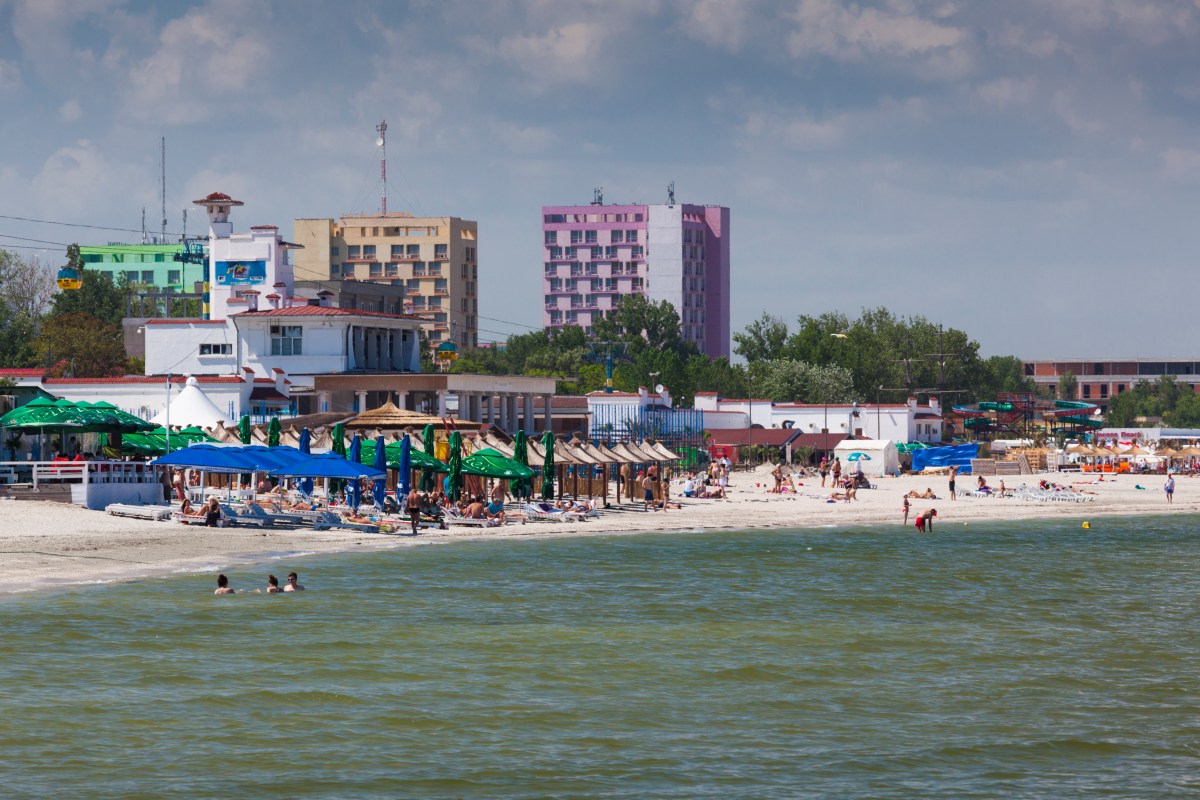
Recent incidents, including attacks near a Romanian gas project and a sunken ship, highlight rising dangers in the Black Sea.
Disrupted commercial shipping in this area raises shipping costs and affects countries relying on grain exports from the region.
Romania’s Neptun Deep gas field could significantly boost European natural gas supply and reduce dependence on Russian energy.
Improving security in the Black Sea aligns with NATO and European energy independence goals.
Read the Original
Want the full story? Tap a source to open the original
article.
Mohammed Atta, one of the 9/11 hijackers, wrote instructions to his fellow hijackers about religious rituals and behavior before their attacks. He told them to pray, shave their bodies, wear tight clothes and socks, and shout “Allahu Akbar” during the attack to create fear.
Key Facts
On September 2, 2001, Atta and another hijacker shopped for razor blades used for body shaving, part of their ritual before the attack.
Shaving and cleanliness are part of traditional Islamic burial rites and were meant to prepare the body for heaven.
Atta sent a letter to the other hijackers explaining religious verses to read and how to prepare mentally and physically.
He advised them to keep their prayer silent so no one could tell they were reciting it.
Atta instructed the hijackers to shout “Allahu Akbar” at the moment of attack to scare others.
He encouraged them to face death with a smile, believing they would go to paradise.
The letter was found in Atta’s luggage that never boarded the flight.
The instructions included wearing socks that stay up in their shoes, following the example of early Muslims in battle.
Read the Original
Want the full story? Tap a source to open the original
article.
The United States and Iran have recently attacked each other’s military sites, leading to several deaths and injuries. The US struck multiple locations along Iran’s southern coast, while Iran fired missiles at US bases in Jordan, Bahrain, Kuwait, and Iraq. President Donald Trump warned Iran of more severe consequences if it continues retaliating.
Key Facts
The US attacked dozens of military targets along Iran’s southern coast, killing at least 18 people and injuring many others.
One US strike hit a house during a wedding in Kuhestak, Iran, killing at least four people and wounding over 68, including women and children.
Iran responded by firing ballistic missiles at US bases in Jordan, Bahrain, Kuwait, and Iraq’s Kurdish region.
Iranian forces claimed damage to US drones and facilities in Kuwait and other Gulf countries.
Kuwait and Jordan reported intercepting many of the Iranian missiles and drones, preventing casualties.
President Donald Trump stated Iran would be "totally wiped out" if it retaliated further and threatened harder strikes.
The conflict is centered around control of the Strait of Hormuz, a key global oil route, which Iran has blockaded.
The attacks mark the largest exchange between the US and Iran in over a month, raising fears of wider war in the region.
Read the Original
Want the full story? Tap a source to open the original
article.
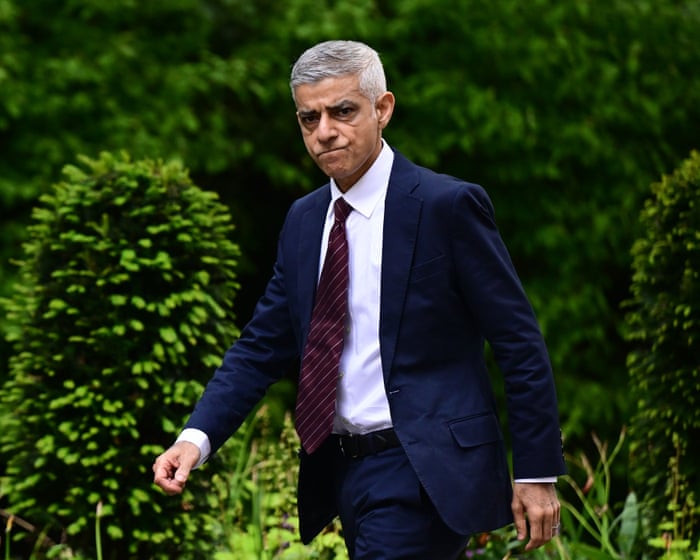
London Mayor Sadiq Khan was fined for not taxing a 24-year-old car in a fast-track court. City Hall says the car is not his, and the Driver and Vehicle Licensing Agency (DVLA) is reviewing the case after the conviction.
Key Facts
Sadiq Khan was convicted and fined for an untaxed car through a fast-track court system.
The car is a blue Nissan Micra first registered in 2002.
City Hall says the car does not belong to Khan or Transport for London.
The DVLA accused Khan of being responsible for the untaxed vehicle seen in January.
Khan was fined £220, ordered to pay £85 court costs, and £35.84 for unpaid tax.
The fast-track court is called the single justice procedure, used for minor cases and private hearings.
DVLA letters about the unpaid tax were mistakenly sent to a restaurant instead of the correct TfL address.
The DVLA is now reviewing the prosecution and case details after the media raised the issue.
Read the Original
Want the full story? Tap a source to open the original
article.
A BBC team joined a United Nations peacekeeping mission to visit southern Lebanon, an area occupied by Israeli forces. Israel continues military actions there, claiming to create a security zone to stop attacks by Hezbollah, while Western and Lebanese officials say Israel is expanding its military presence.
Key Facts
The BBC visited southern Lebanon as part of a UN peacekeeping mission called Unifil.
Israel has occupied parts of southern Lebanon and carried out air strikes and demolitions.
These military actions have continued even after a ceasefire was announced in June.
Israel says it is building a "security zone" to prevent attacks from the armed group Hezbollah.
Israeli forces say buildings they destroyed were used by Hezbollah for military purposes.
Western and Lebanese officials report Israel is increasing its military presence in the occupied areas.
The August visit by the BBC was approved by the Israeli military through an agreement with the UN.
This is similar to Israel’s actions in Gaza, where entire villages have been flattened.
Read the Original
Want the full story? Tap a source to open the original
article.
Congo is facing a fast-moving Ebola outbreak that has caused over 3,000 deaths from more than 6,100 confirmed cases. The disease is spreading faster than health workers can track and control it, making this the fastest-growing Ebola outbreak ever recorded.
Key Facts
The Ebola outbreak in Congo started in mid-May 2026.
As of the latest report, there are 6,186 confirmed Ebola cases.
More than 3,000 people have died from the disease.
The outbreak is spreading at an unprecedented rate.
Health officials are struggling to slow down the transmission of the virus.
The outbreak is the fastest-growing Ebola epidemic in history.
Protective measures like temperature checks are in place in schools.
Burial practices with protective gear are being used to prevent further spread.
Read the Original
Want the full story? Tap a source to open the original
article.
A bus crash in Egypt’s South Sinai killed 16 people and injured 28 others. The accident happened on a road popular with tourists between Dahab and Nuweiba along the Red Sea coast.
Key Facts
The crash took place on Wednesday morning in South Sinai governorate.
The road connects Dahab and Nuweiba, a tourist area on the Sinai Peninsula.
Egypt’s Ministry of Health sent 20 ambulances to rescue and treat injured people.
The Health Minister ordered hospitals to prepare and provide medical care and supplies.
Road accidents are a frequent cause of death in Egypt.
In 2023, about 6,000 people died in road accidents across Egypt.
Last month, another road crash killed 18 and injured 30 in the Ismailia governorate.
Read the Original
Want the full story? Tap a source to open the original
article.
Seven U.S. embassies in the Middle East issued security alerts warning Americans about possible increased dangers after new attacks involving Iran. The alerts advised Americans to be cautious, prepare for travel disruptions, and warned that Iran or its supporters might target U.S. interests or people.
Key Facts
Seven U.S. embassies in Jordan, Israel, Qatar, UAE, Saudi Arabia, Kuwait, and Bahrain issued security warnings.
Americans in the region were advised to be vigilant and cautious.
Travelers were warned of possible flight cancellations and airspace closures.
The alerts mentioned that Iran and groups supporting Iran might attack U.S. targets overseas.
Fighting resumed with U.S. strikes hitting Iranian defenses, and Iran responding with missiles and drones.
A ceasefire agreement from June has broken down.
Iranian President Masoud Pezeshkian said Iran is open to returning to the ceasefire and asked India’s Prime Minister for help in peace talks.
The situation in the Middle East is described as unpredictable and fluid by U.S. officials.
Read the Original
Want the full story? Tap a source to open the original
article.
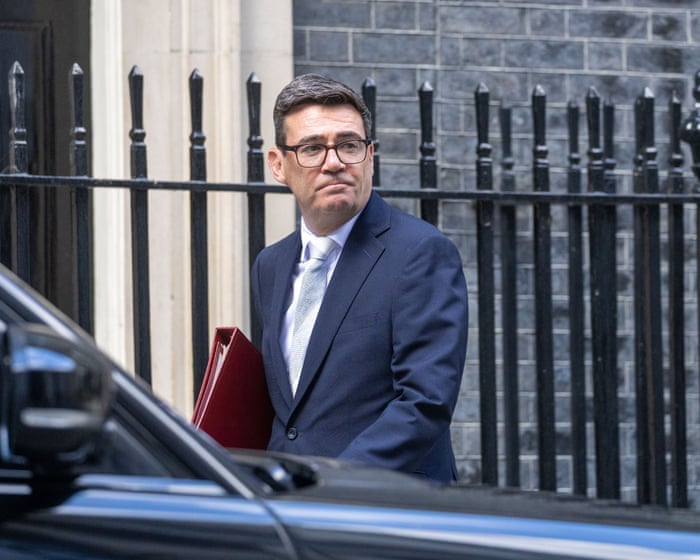
Andy Burnham, the new UK Prime Minister, will face his first set of questions in Parliament today. Meanwhile, the UK is experiencing a rise in long-term borrowing costs due to international financial factors, which affects government spending plans.
Key Facts
Andy Burnham will attend his first Prime Minister’s Questions (PMQs) session today.
Conservative MP Kemi Badenoch has prepared questions about defence spending, immigration, taxes, and benefits for Burnham.
The UK’s long-term borrowing costs reached their highest level since early 1998, mainly because of global financial trends.
Several other countries, including Australia, India, and Germany, are also seeing rising government borrowing costs.
Higher borrowing costs reduce the UK Treasury’s financial safety margin by around £12 billion.
Burnham has announced two tax cuts so far but did not rule out tax increases in the upcoming budget.
A report by the Resolution Foundation suggests that raising defence spending will likely require tax increases on average workers.
Today’s parliamentary agenda includes a session with energy officials discussing energy matters.
Read the Original
Want the full story? Tap a source to open the original
article.
Voters in Guinea-Bissau approved a new constitution that increases the powers of the president before elections later this year. The changes let the president control the government more, such as choosing the prime minister and cabinet, but the main opposition party boycotted the vote, saying it threatens democracy.
Key Facts
The military government, which took power in November 2025 after a disputed election, organized the referendum.
About 70% of voters approved the new constitution, with nearly 60% turnout.
The new rules allow the president to appoint or remove the prime minister and cabinet and dissolve parliament in serious political crises.
The opposition party PAIGC boycotted the referendum, saying it weakens democracy and concentrates too much power in the presidency.
The constitution reduces parliament seats from 102 to 65 and cuts constituencies from 29 to 12.
It keeps the president’s term at five years and a two-term limit but adds a rule that candidates must have lived in Guinea-Bissau for the previous five years.
Guinea-Bissau has a history of coups and political instability and is known for drug trafficking through its coastal islands.
Elections are planned for December 2025, which will test if the military will return the country to civilian rule under the new constitution.
Read the Original
Want the full story? Tap a source to open the original
article.
The European Union held talks to discuss how to respond to a drone attack on Leipzig airport that Germany officially blamed on Russia. EU leaders are working together to consider stronger sanctions against Russia and ways to support Ukraine amid ongoing conflict.
Key Facts
Germany formally blamed Russia for the attempted drone attack at Leipzig airport last month.
EU foreign policy chief Kaja Kallas called the attack “state sponsored terrorism.”
EU foreign ministers met in Wicklow, Ireland, to discuss political responses and possible new sanctions.
The EU and France summoned Russian officials to protest the attack.
Britain’s foreign secretary Ed Miliband stated the UK will continue supporting Ukraine and oppose Russia’s attempts to divide Europe.
The EU plans to expand sanctions targeting many individuals linked to Russia.
German police are also investigating possible deliberate attempts to disrupt the energy grid in other parts of Germany.
Talks between EU and NATO leaders, as well as between European leaders, are taking place to coordinate responses related to the attack and the situation in Ukraine.
Read the Original
Want the full story? Tap a source to open the original
article.
Israeli forces used tear gas inside a mosque in the West Bank, making worshippers struggle to breathe. Earlier, Israeli settlers tried to set fire to another mosque nearby. The Palestinian Ministry of Religious Affairs reported that at least 13 mosques in the area have been attacked this year.
Key Facts
Israeli forces fired tear gas inside a mosque in Madama, affecting worshippers during evening prayers.
Israeli settlers attempted to set fire to Nur al-Din Zanki Mosque in Bazariya, causing some damage.
The Palestinian Ministry said at least 13 mosques have been attacked by Israeli forces or settlers since the start of 2024.
Slogans with threats and a message to the US ambassador were sprayed at the attacked mosque.
Attacks on mosques in the West Bank have increased sharply since the start of the 2023 Gaza conflict.
Palestinian President Mahmoud Abbas warned about the risk of escalating religious conflict due to these attacks.
Settlers also burned vehicles in other towns near Nablus and Bethlehem.
The UN reported over 76 Palestinians killed and 3,800 displaced this year due to settler violence and demolitions in the West Bank.
Read the Original
Want the full story? Tap a source to open the original
article.
Greece and Israel signed a $3.5 billion defense deal called the Achilles Shield to build a strong, multi-layered system to protect Greece. This agreement includes advanced missile interceptors, radars, and anti-drone systems, and reflects growing concerns over drone threats and shared regional security challenges, especially related to Turkey and Iran.
Key Facts
Greece and Israel agreed on a $3.5 billion defense deal named Achilles Shield to protect Greek territory.
The deal combines missile defense systems like David’s Sling, Spyder, Barak, and multimission radars.
A separate agreement adds Drone Dome anti-drone systems to guard important Greek sites.
This is the largest defense deal ever between Greece and Israel, and a major export deal for Israel.
The deal comes amid rising drone threats, such as an Iranian drone strike on nearby Cyprus.
Israel’s strategy includes building military ties with non-Arab states, like Greece, to counter regional threats.
Israel’s previous close ties with Turkey have deteriorated since 2008, causing Greece to strengthen its partnership with Israel.
Greece, Israel, and Cyprus recently signed a plan to increase military cooperation, partly motivated by shared energy interests from gas reserves in the eastern Mediterranean.
Read the Original
Want the full story? Tap a source to open the original
article.
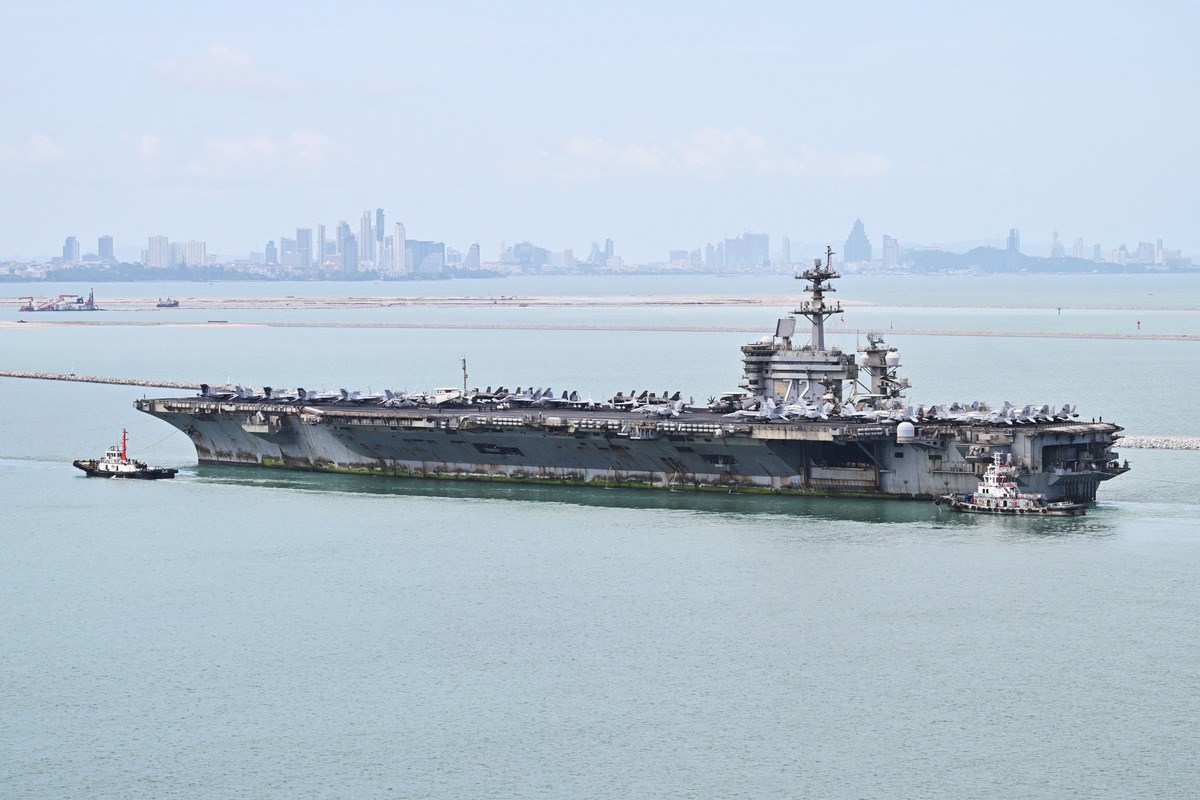
Thai police detained around 40 to 50 people in Pattaya on suspicion of prostitution ahead of the arrival of about 5,000 U.S. sailors and Marines on the USS Abraham Lincoln. The U.S. aircraft carrier arrived after a long sea deployment and will stay in Thailand for four days before returning to its home port in San Diego.
Key Facts
About 40 to 50 people were detained in Pattaya during police raids on suspicion of prostitution.
The raids happened before approximately 5,000 U.S. sailors and Marines arrived in eastern Thailand.
The USS Abraham Lincoln had been at sea for more than 200 days without a port stop, a record for this ship.
The carrier was rerouted from the South China Sea to the Middle East to support the U.S. war against Iran.
Pattaya is known for visible sex tourism, though prostitution is illegal in Thailand.
Local officials say prostitution is tough to fully control and detect.
Police conducted late-night inspections in popular beach and city areas on August 29.
The U.S. personnel will stay in Thailand for four days before heading back to San Diego.
Read the Original
Want the full story? Tap a source to open the original
article.
The European Union’s top diplomat, Kaja Kallas, called an attempted drone attack on a German airport "state sponsored terrorism," blaming Russia. The EU is considering how to respond as Germany has already announced actions against Russia, including closing a Russian consulate.
Key Facts
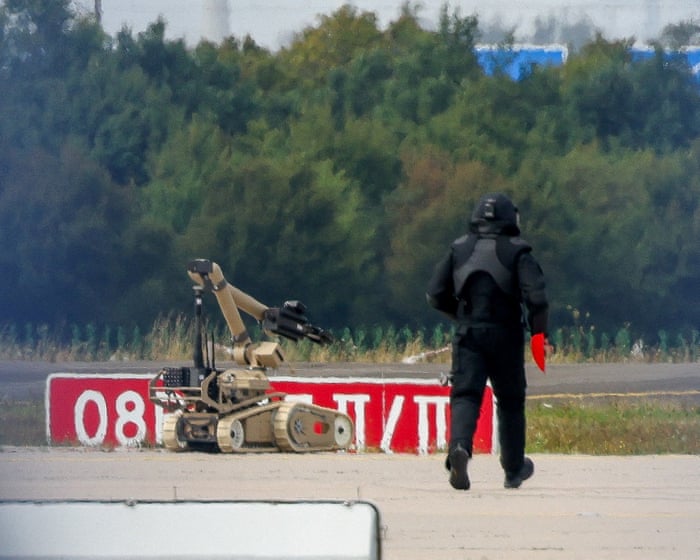
On August 4, a drone loaded with explosives was used in an attempted attack at Leipzig/Halle Airport in Germany.
The drone was found and disarmed near a Ukrainian plane.
Germany blamed Russia for the attack and said it posed a new level of danger.
Germany plans to close a Russian consulate and take other measures in response.
EU foreign policy chief Kaja Kallas described the attack as likely "state sponsored terrorism."
The EU is preparing more sanctions against Russia related to its war on Ukraine.
These sanctions target thousands of people and entities, including Russian officials and companies.
The EU and NATO are cautious about increasing conflict with Russia, which is a nuclear-armed country.
Read the Original
Want the full story? Tap a source to open the original
article.
Two historic schooners, the Victory Chimes and the Pilot, sank in a canal inlet near Brooklyn, New York, in early July 2026. These boats, more than a century old and with significant maritime history, are currently underwater while efforts continue to assess how to recover them.
Key Facts
The Victory Chimes dates back to 1900 and is featured on the 2003 Maine state quarter.
The Pilot is about 121 feet long and a little over 100 years old.
Both schooners sank near the Gowanus Canal, an area known for pollution, after strong storms.
The boats were owned by Crew, a New York City company that turns historic ships into floating bars and restaurants.
Crew is working with experts and insurers to decide how to raise the vessels, which is a complicated and costly process.
The Victory Chimes is listed on the National Register of Historic Places and is the last surviving Chesapeake ram schooner.
Maritime groups and local communities want the ships saved and more information on why they sank.
The Pilot served important roles, including ferrying pilots in Boston Harbor and supporting the Coast Guard.
Read the Original
Want the full story? Tap a source to open the original
article.
The USS Abraham Lincoln, a US Navy aircraft carrier, has docked near the Thai city of Pattaya after spending 250 days at sea. The article explains the historical connection between US troops and Pattaya, a city known for its lively nightlife.
Key Facts
The USS Abraham Lincoln is a US Navy aircraft carrier.
It recently completed a record 250 days at sea.
The ship docked near Pattaya, a city in Thailand.
Pattaya is known for its lively nightlife and sex tourism.
The article explores the history between US military personnel and Pattaya.
This connection dates back to past periods when US troops visited the area.
Read the Original
Want the full story? Tap a source to open the original
article.
A man named Talka Sada from southern Nepal is searching for his missing son Vinod after deadly flash floods hit northern Nepal on August 26, 2026. Vinod was working at a hydropower plant in the affected region and has not been found despite ongoing search efforts. Sada borrowed money and traveled long distances on foot to look for him in hospitals, mortuaries, and flood-hit areas.
Key Facts
Flash floods on August 26, 2026, destroyed homes and infrastructure in northern Nepal, especially in Rasuwa district.
Vinod, 19 years old, was working at a hydropower plant near the flood site when he went missing.
His father, Talka Sada, lives in Saptari in southern Nepal and borrowed about $13 to travel and search for his son.
Sada traveled from Saptari to Kathmandu by bus, then walked about 60 km toward Nuwakot and flood-affected areas.
Many flood victims were taken to hospitals in Kathmandu, but Vinod’s name or photograph has not appeared among survivors or bodies.
Sada and his brother have faced difficulties accessing rescue centers and mortuaries in the disaster zone.
The flood caused severe damage to schools, bridges, power plants, and roads, making travel and rescue difficult.
Sada continues his search despite exhaustion, hunger, and financial hardship.
Read the Original
Want the full story? Tap a source to open the original
article.