Pope Leo returned to Peru on November 12, 2026, for a visit described as historic. It was his first return to the country where he served as a missionary and bishop for nearly two decades.
Key Facts
Pope Leo returned to Peru.
His visit took place on November 12, 2026.
The visit was described as historic.
This was Pope Leo’s first return to Peru.
Pope Leo served as a missionary in Peru.
Pope Leo served as a bishop in Peru.
He served in the country for nearly two decades.
Read the Original
Want the full story? Tap a source to open the original
article.
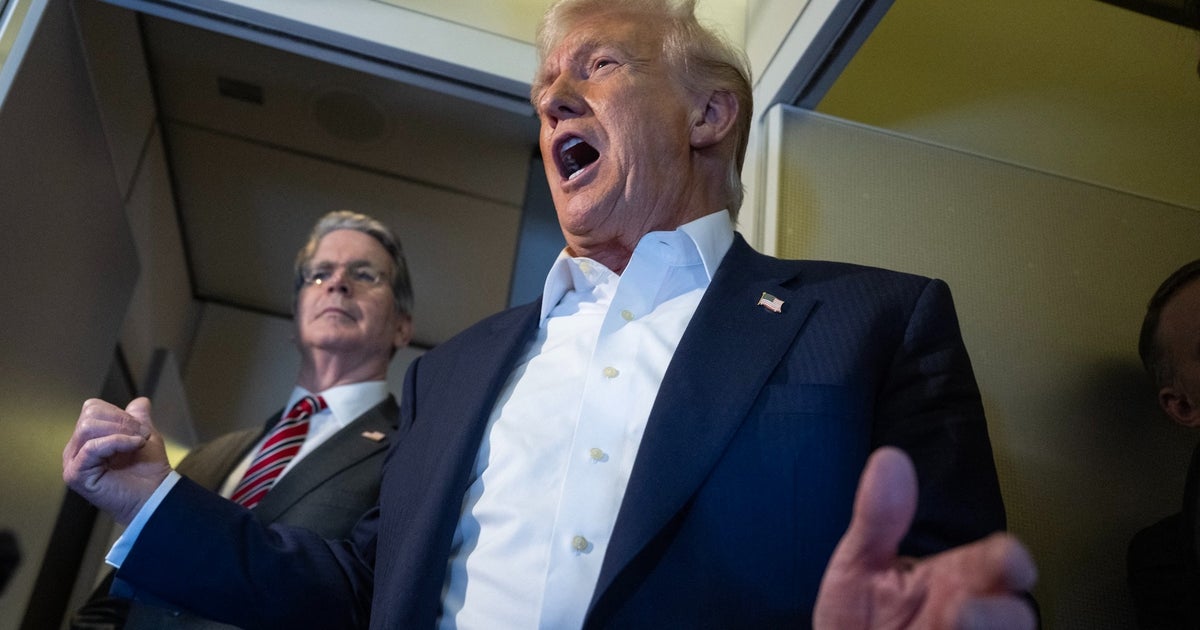
President Donald Trump said the United States does not need a deal with Iran, even as the conflict enters its ninth month. Possible paths include a negotiated settlement, quiet reciprocal steps to reduce tensions, or continued U.S. pressure through a blockade.
Key Facts
Trump wrote on Truth Social that the United States does not need a deal with Iran.
The article says the conflict has lasted nine months.
Vice President JD Vance had emerged as Washington’s lead negotiator with Tehran a day before Trump’s post, according to the article.
A proposed Qatari framework would have the United States lift its blockade and release some frozen Iranian funds in exchange for Iran allowing U.N. inspectors into bombed nuclear sites and reopening the Strait of Hormuz.
Iranian Foreign Minister Abbas Araghchi said Tehran’s two-day proposal remained on the table.
Secretary of State Marco Rubio said economic pressure from the U.S. blockade could push Iran toward an agreement.
One proposal described by Middle Eastern officials would have the United States move its aircraft carriers farther from Iran and partly ease the blockade in exchange for Iran allowing 25 tankers through the Strait of Hormuz.
Read the Original
Want the full story? Tap a source to open the original
article.
President Donald Trump said Wednesday that the United States had won the war with Iran. Treasury Secretary Scott Bessent was relocated to a military base amid apparent threats from Tehran.
Key Facts
Donald Trump is the U.S. president.
Trump said Wednesday that the United States had won the war with Iran.
Scott Bessent is the Treasury secretary.
Bessent faced apparent threats from Tehran.
Bessent was relocated to a military base.
Read the Original
Want the full story? Tap a source to open the original
article.
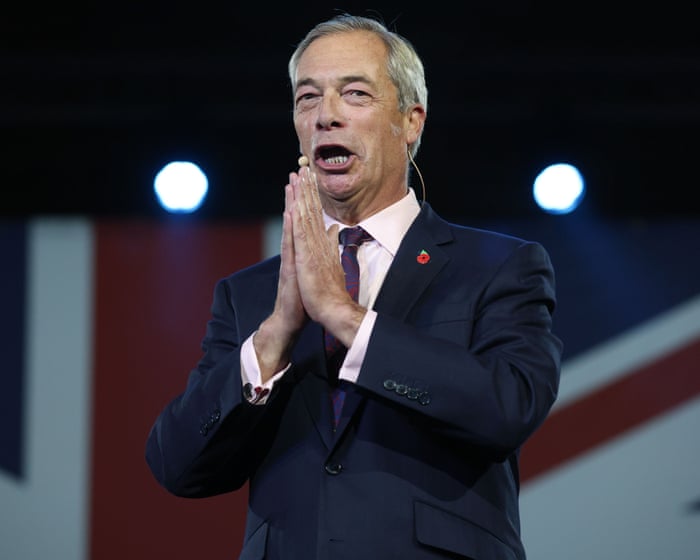
Nigel Farage appeared on Russell Brand’s US podcast in July 2024, months after police began investigating allegations of sexual assault against Brand and before Brand was charged in April 2025. Farage later said he regretted appearing and expressed support for Brand’s victims; Brand was sentenced to more than 10 years in prison for rape and sexual assault.
Key Facts
Women publicly accused Russell Brand of sexual assault in September 2023.
Police interviewed Brand under caution in autumn 2023.
Farage discussed the allegations on GB News in September 2023 and said he would not prejudge Brand’s guilt or innocence.
On Brand’s podcast, Farage and Brand discussed their opposition to what they described as the establishment.
Farage said the West had provoked Russia into the war in Ukraine by deliberately provoking Vladimir Putin.
A spokesperson for Farage said he regretted the podcast appearance and his thoughts were with Brand’s victims.
Farage later said he believed Jemima Goldsmith’s account that Brand had been violent and abusive toward her.
Brand was sentenced to more than 10 years in prison for rape and sexual assault.
Read the Original
Want the full story? Tap a source to open the original
article.
French butter is attracting attention internationally, with tourists buying flavored artisan varieties as souvenirs. French rules govern what can be called butter, and butter also appears in many French expressions.
Key Facts
France has rules governing products sold as butter.
Tourists are buying flavored artisan butter to take home as souvenirs.
French culture has a strong connection to butter.
The French language includes many expressions involving butter.
The segment aired on November 12, 2026, as part of the program Entre Nous.
Read the Original
Want the full story? Tap a source to open the original
article.
Four armed robbers stole luxury goods worth hundreds of thousands of euros from the De Beers store on Rue de la Paix in central Paris on Thursday morning. They fled on motorcycles, and police are searching for them; no one was hurt.
Key Facts
The robbery took place at about 11:15 a.m. on November 12, 2026.
Four black-clad suspects entered the De Beers store near Place Vendôme.
The suspects displayed weapons but did not fire them.
A Paris police union representative said the suspects carried assault-style rifles and took the goods within minutes.
The exact value of the stolen goods was not immediately known.
The store closed while investigators work, and the company is providing well-being support.
Read the Original
Want the full story? Tap a source to open the original
article.
Spain’s parliament approved a decree extending eviction protections for tenants in precarious financial or social circumstances when local authorities cannot offer alternative housing. It rejected a separate restriction on property purchases, after a nationwide strike over housing costs and rents. The measures’ future depends on a snap election scheduled for later in November.
Key Facts
The decree extending eviction protections passed by a vote of 35–34.
The protections apply to tenants whom social services consider financially or socially vulnerable, if regional authorities cannot provide another residence.
A proposal to bar real estate companies from buying properties for less than 70 percent of their value was rejected by a vote of 34–35.
The centre-right Basque party opposed the property-purchase restriction, arguing it could reduce rental supply and raise prices.
A nationwide 24-hour strike over rents and the cost of living took place on Wednesday.
Prime Minister Pedro Sánchez called a snap election after parliament blocked earlier versions of the decrees.
The conservative Popular Party said it would repeal the measures if it took power.
Read the Original
Want the full story? Tap a source to open the original
article.
Donald Trump is due to travel to Shenzhen next week for the APEC summit and meet Chinese President Xi Jinping. Nvidia CEO Jensen Huang’s departure and scrutiny of his ties to a former executive suspected by U.S. officials of working for Chinese intelligence are unlikely, by themselves, to change U.S.-China policy, analysts said.
Key Facts
China has denied allegations that former Megaspeed executive Alice Huang worked for Chinese intelligence.
Nvidia announced that Jensen Huang would step down as chief executive.
Trump approved sales of Nvidia’s H200 AI chips to China in December 2025, with 25 percent of proceeds to go to the U.S. government.
China’s slow import approvals kept H200 shipments low, despite the U.S. sales approval.
Huang joined Trump’s delegation to Beijing in May as Nvidia sought to advance stalled H200 sales.
Analysts said pressure for a tougher U.S. approach to China could come from Congress and hawkish voices in the administration.
Trump has said Huang is an “honourable guy” and has shown no sign of disrupting the current U.S.-China rapprochement, according to an analyst cited in the text.
Read the Original
Want the full story? Tap a source to open the original
article.
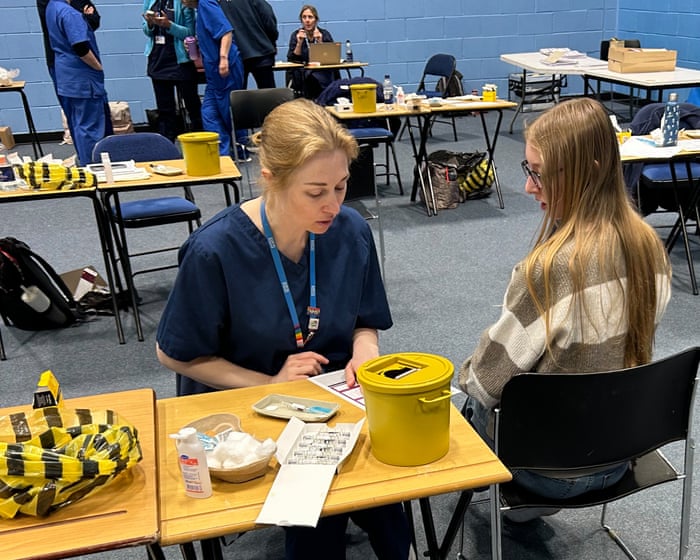
The UK is offering a one-time MenB vaccination programme to eligible young people after outbreaks earlier this year caused three deaths. By the latest figures, 28.2% of eligible 18- and 19-year-olds had received a first dose, and the deadline for starting the course is 31 December 2026.
Key Facts
Outbreaks of meningitis B in Kent, with clusters of cases in Dorset and Berkshire, caused three deaths earlier this year.
The government announced the time-limited vaccination programme in June.
The programme offers two doses of a vaccine that protects against most strains of MenB bacteria.
Only 28.2% of eligible 18- and 19-year-olds had received a first dose, according to UK Health Security Agency figures.
The first dose must be given by 31 December 2026, and the second dose is available until 31 March 2027.
The doses must be given at least 28 days apart.
Those born between 1 September 2007 and 31 August 2008 are eligible, as are people under 25 who started university or residential further education for the first time this autumn.
UKHSA says first-year students face about seven times the risk of MenB infection compared with peers who do not attend university.
Read the Original
Want the full story? Tap a source to open the original
article.
Colombian President Abelardo de la Espriella said an air strike in Antioquia killed eight people, including Gulf Clan leader Haminton Mosquera. De la Espriella said he authorized the strike and vowed to continue operations against criminal groups.
Key Facts
The Colombian armed forces carried out the air strike in Antioquia, in north-west Colombia.
President Abelardo de la Espriella said he personally authorized the strike.
Eight people were killed in the strike, according to the president.
Haminton Mosquera was among those killed and was described by the president as a senior Gulf Clan member.
Mosquera was one of 10 people designated as priority targets by Colombia's security forces.
The Gulf Clan is involved in cocaine trafficking, illegal mining and people smuggling.
The United States added the Gulf Clan to its list of Foreign Terrorist Organizations last year.
De la Espriella said the offensive against criminal groups would continue.
Read the Original
Want the full story? Tap a source to open the original
article.
At talks in Abu Dhabi, Russian negotiator Vladimir Medinsky called for a new European security framework based on the 1975 Helsinki Final Act. The article says Russia’s annexation of Crimea and parts of Ukraine, its 2022 full-scale invasion, and its demands that Ukraine accept neutrality conflict with the act’s principles of sovereignty and territorial integrity; Moscow argues that Western actions have also undermined European security.
Key Facts
The Helsinki Final Act was signed in 1975 by 35 countries, including the United States and the Soviet Union.
The act was a political agreement, not a legally binding treaty, and set out 10 principles for relations between states.
Its principles recognized each state's right to choose its political and security arrangements, including whether to join an alliance or remain neutral.
The act prohibited using or threatening force against another state's territorial integrity or political independence.
Russia annexed Crimea in 2014 and launched its full-scale invasion of Ukraine in 2022.
Russia later proclaimed the annexation of four additional Ukrainian regions, parts of which it does not control, according to the article.
Russia has repeatedly demanded that Ukraine abandon its NATO ambitions and accept permanent neutrality as a condition for peace.
Russian officials say Western actions have eroded Russia's security; the article notes Moscow's December 2021 proposals sought to rule out Ukraine joining NATO and restrict military activity in Eastern Europe.
Read the Original
Want the full story? Tap a source to open the original
article.
Russian attacks on Ukraine’s energy grid have led to planned power cuts, with some Kyiv families facing outages of up to 20 hours. A power station damaged by a ballistic missile strike is undergoing repairs, but frequent air raid alerts interrupt the work.
Key Facts
Ukraine is operating a rolling schedule of planned power cuts.
The article reports intensified Russian attacks on Ukraine’s energy grid.
Ukraine has responded by striking Russian oil refineries.
Officials are concerned that life could become unsustainable for millions if power supplies fall below four hours a day.
Some families in Kyiv are experiencing outages of up to 20 hours.
A Ukrainian power station visited by the BBC was devastated by a direct ballistic missile strike.
Frequent air raid alerts hamper repairs at the power station.
Peace talks between Ukraine and Russia are continuing.
Read the Original
Want the full story? Tap a source to open the original
article.
The Guardian will release NAZA, a documentary about Israeli military intelligence personnel’s accounts of surveillance and attacks in Gaza, for free on its website in early December. Directed by Yuval Abraham and Rachel Szor, the film has screened in 47 countries and won awards; its makers and confidential sources have faced threats and criticism from Israeli officials, according to the article.
Key Facts
The Guardian plans to stream NAZA for free in early December and offers a sign-up for the exact date and a viewing link.
The article says the film has been shown in cinemas in 47 countries and seen by more than 1.5 million people since its release last month.
NAZA features testimony from 24 Israeli military intelligence officers and soldiers involved in surveillance and remote attacks on Palestinian civilians during the Gaza war.
The interviewees describe AI-based systems used to identify people suspected of being Hamas operatives, and attacks on their homes that also killed family members, according to the film’s accounts.
Directors Yuval Abraham and Rachel Szor filmed interviews at night in Tel Aviv and digitally altered participants’ appearances and voices to protect their identities.
The Guardian produced the film, which draws on reporting published by +972 Magazine, Local Call and the Guardian between 2023 and 2025.
NAZA won a special jury prize at the Venice Film Festival in September and the Critics Choice Association’s best political documentary award in November.
The article says Prime Minister Benjamin Netanyahu called for the sources’ identities to be revealed and threatened to strip the directors of their Israeli citizenship; military chief Eyal Zamir also condemned the film.
Read the Original
Want the full story? Tap a source to open the original
article.
The International Committee of the Red Cross says it is classifying more armed conflicts than at any time since the Second World War. Its president, Mirjana Spoljaric, warns that attacks on civilians, displacement, emerging military technologies and reduced diplomacy are weakening protections under the laws of war.
Key Facts
Mirjana Spoljaric is president of the International Committee of the Red Cross.
The ICRC is currently classifying the highest number of armed conflicts since the Second World War.
Spoljaric says international humanitarian rules that protect civilians are being weakened.
She cites Gaza, Ukraine, Sudan and Yemen as conflicts where civilians and civilian infrastructure face harm.
Spoljaric says drones and artificial intelligence have not delivered the promised protection for civilians.
She warns that autonomous weapons that target people raise legal and ethical questions.
Spoljaric says humanitarian aid cannot replace preventing wars and urges citizens to press governments to uphold the laws of war.
Read the Original
Want the full story? Tap a source to open the original
article.
France created its social security system after World War II. It provides healthcare, family benefits and pensions, but an ageing population and growing deficits are putting its finances under pressure.
Key Facts
The system was established in the aftermath of World War II.
It provides healthcare, family benefits and pensions.
The system is a major part of French society.
France's ageing population is adding to financial pressure on the system.
Growing deficits raise questions about whether France can sustain its social protections.
Read the Original
Want the full story? Tap a source to open the original
article.
About 1,500 migrants set out from Tapachula in southern Mexico on November 10, aiming to travel first to Mexico City and seek help and protection from detention. President Donald Trump warned Mexico to stop migrants heading toward the U.S. border or face doubled tariffs.
Key Facts
The caravan, called “God With Us,” includes many families and migrants mostly from Central America.
The migrants said they planned to reach Mexico City, more than 1,000 kilometers from Tapachula.
A Chiapas state government source estimated that about 1,500 people were in the caravan.
Trump said the caravan had been encouraged by the Democratic Party’s gains in the midterm elections.
Democrats won control of both the House of Representatives and the Senate in the midterms.
Mexican authorities blocked a separate group of about 100 migrants who had crossed the Suchiate River from Guatemala; about 40 were detained.
This was the third caravan to try to reach the United States since September, according to the report.
Read the Original
Want the full story? Tap a source to open the original
article.
Iranian parliament speaker and chief negotiator Mohammad Bagher Ghalibaf says Tehran is open to a ceasefire and reopening the Strait of Hormuz, but wants the United States to meet its conditions before talks resume. The United States has maintained a naval blockade and tightened sanctions, while fighting remains paused and no formal peace deal has been reached.
Key Facts
Iran says it controls which vessels can pass through the Strait of Hormuz.
Attacks on tankers using routes Iran calls unauthorized have disrupted shipping.
Iran has set seven conditions for a ceasefire and reopening the strait.
Iran's stated conditions include lifting the U.S. naval blockade, easing sanctions, releasing frozen Iranian funds, ending hostilities on all fronts, and formally declaring the war over.
Ghalibaf says Iran will not resume negotiations until the conditions are implemented.
Donald Trump has said there is momentum toward ending the conflict.
U.S. Secretary of State Marco Rubio has called Iran's demands unacceptable.
Qatar says it is working to resolve the crisis and has reported positive statements about diplomacy from both sides.
Read the Original
Want the full story? Tap a source to open the original
article.
Australian authorities report a sharp rise in teenagers facing terrorism-related charges, amid concerns that young people encounter violent extremist material and coercive networks online. Experts say the cases vary, but young people’s online social connections and search for identity can draw them into harmful content and behavior.
Key Facts
The Australian Federal Police said 32 of the 37 young people prosecuted in counter-terrorism cases since 2020 were charged in the past two years.
In a review of 55 youth terrorism cases, the AFP found a mixed profile; many were young men, and many had received support or intervention for a mental health condition.
Two teenagers in Darwin were charged in the past month with collecting documents that could facilitate terrorism.
The AFP said material and online discussions found during an examination in one Darwin case included praise for mass-casualty school attacks.
A teenager in the Northern Territory was charged five months earlier over posts with pro-Nazi, anti-immigration, anti-trans and white nationalist themes, and possession of videos of terrorist attacks.
Experts say the age of young people involved in extremism cases has fallen over the past decade.
A New South Wales teenager said he first encountered violent extremist content on TikTok at age 14 and later used ChatGPT to research a bomber and security arrangements; he received a three-year community corrections order.
The article describes online spaces, including Telegram gore channels, where users trade increasingly extreme footage and may pressure others into violence or self-harm.
Read the Original
Want the full story? Tap a source to open the original
article.
Médecins Sans Frontières warned that hundreds of millions of dollars allocated to the Ebola response in the Democratic Republic of Congo are not reaching patients and frontline workers. The charity says the outbreak remains out of control, with more than 5,400 deaths and 11,000 infections reported since May; it called for stronger financial oversight and better support for response teams.
Key Facts
MSF reported that some health workers were unpaid or untrained, ambulances lacked fuel, and frontline teams lacked supplies.
Africa CDC said last month that $700 million of the $962 million disbursed to organisations carrying out the Ebola response was unaccounted for; its chief said it was too early to call this embezzlement.
MSF said contact tracing and disease surveillance remained weak, and that two-thirds of deaths were occurring in communities rather than treatment centres.
MSF said North Kivu's response was too slow and Haut-Uélé was overlooked, while health facilities in both provinces lacked essential supplies and systems.
British epidemiologist Neil Ferguson said more than half of cases were going undetected and predicted the outbreak could last another year, Reuters reported.
The outbreak is caused by the Bundibugyo species of Ebola and has spread beyond DR Congo, with cases reported in Kenya, Uganda and Nigeria.
Kenya discharged its last known Ebola patient on Wednesday, according to the article.
Read the Original
Want the full story? Tap a source to open the original
article.
Shanghai authorities fined Zongzheng Food 800,000 yuan (about $120,000) over a Dove chocolate advertisement that they said promoted inappropriate views on marriage and relationships. The ad showed a woman receiving chocolates from a man she was involved with while her boyfriend ignored her; Dove apologized in August and said the video did not follow its content review process.
Key Facts
Zongzheng Food created the advertisement and operates a Dove store on the Chinese e-commerce platform Kuaishou.
Authorities said the ad portrayed infidelity as a “sweet experience” and violated good social customs.
The video was first posted online in August and drew criticism from some Chinese social media users.
Dove said it was responsible for content posted on its official channels and described the ad as clearly inappropriate.
China's marriage registrations fell 9.8% year over year from January to September, to 4.6 million, according to the civil affairs ministry.
In May, Chinese electronics company OPPO said it had punished executives over an ad that joked about infidelity.
Read the Original
Want the full story? Tap a source to open the original
article.