Germany is expected to formally accuse Russia of being behind a drone incident at a strategic airport near Leipzig on the night of August 4-5. One of the drones involved was found to be carrying explosives, and German officials are blaming a Russian intelligence service for the attack.
Key Facts
The incident happened at a strategic airport near Leipzig, Germany, on August 4-5, 2026.
Drones involved in the incident included at least one carrying explosives.
Germany’s Foreign Minister Johann Wadephul and Interior Minister Alexander Dobrindt will officially blame Russia.
This would be the first time Germany formally accuses Russia of such an attack with drones.
German authorities suspect a Russian intelligence service is responsible.
The event raises concerns about security at key infrastructure sites in Europe.
The accusation occurs amid wider tensions between Germany (and Europe) and Russia.
Read the Original
Want the full story? Tap a source to open the original
article.
Nepal has started burying flood victims in mass graves after collecting DNA samples to identify them. The flood, caused by a glacial collapse, has resulted in over 1,000 bodies found and nearly 4,000 people missing.
Key Facts
The flood hit Nepal on August 26, caused by a collapse of a high mountain glacier.
At least 1,003 bodies have been recovered so far.
Around 3,916 people are still missing.
Authorities are burying unidentified victims in mass graves after taking DNA samples.
The disaster swept through Himalayan valleys with freezing water, rocks, and debris.
Traditional Hindu funeral rites have been difficult to perform due to the disaster’s scale.
Police found 24 bodies in one house in Nuwakot district using a drone.
Seventeen bodies have been found downstream in India.
Nepal’s Prime Minister Balendra Shah called the disaster heartbreaking.
Read the Original
Want the full story? Tap a source to open the original
article.
Qatar is talking with Oman and Pakistan to reduce tensions caused by the conflict between the US and Iran, especially regarding the Strait of Hormuz. The strait, an important shipping route, has seen much less traffic because of the fighting, raising global energy prices and hurting economies.
Key Facts
Qatar’s Foreign Ministry is working with Oman and Pakistan to ease regional tensions.
The Strait of Hormuz is a key waterway where about 25% of world shipping used to pass.
Fighting between the US and Iran has almost stopped shipping traffic through the strait.
The US blocks Iranian ports, and Iran has attacked ships and planted mines in the waterway.
Energy prices have risen sharply worldwide due to reduced shipping in the strait.
Iran and Oman have talked about opening a temporary shipping route, but Iran wants the US to return to an earlier agreement first.
Qatar’s prime minister recently visited Tehran to support peace talks.
The Qatari Foreign Ministry also criticized Israel for escalating conflicts in Palestinian, Lebanese, and Syrian areas during this broader regional crisis.
Read the Original
Want the full story? Tap a source to open the original
article.
Britain experienced its hottest summer ever recorded, with a series of heatwaves breaking the previous temperature record from last year. The Met Office linked the extreme heat to human-caused climate change, showing that such hot summers are now much more frequent than in the past.
Key Facts
This summer had an average temperature of 16.5°C (61.7°F), beating the 2025 record of 16.1°C (61°F).
The top five hottest summers in Britain have all happened since 2003.
Human-caused climate change made this extreme summer 130 times more likely.
Without human greenhouse gases, such a summer would only occur once every 1,000 years but now happens about every 9 years.
Heatwaves began in late May and happened every month through the summer, including two in July.
The highest temperatures were 38°C (100.4°F) in Norfolk in June and 38.1°C (100.6°F) in London in August.
About 2,877 deaths in England are linked to the heatwaves in May and June.
Many parts of England and Wales are still facing drought conditions due to low rainfall.
Read the Original
Want the full story? Tap a source to open the original
article.
Turkey’s President Recep Tayyip Erdogan said Turkey plans to work more with Russia to build new nuclear power plants. This announcement came as the Akkuyu nuclear power plant, built by Russia’s state company Rosatom, nears completion and will provide about 10% of Turkey’s electricity.
Key Facts
Turkey and Russia are collaborating to build more nuclear power plants.
The Akkuyu nuclear power plant on Turkey’s Mediterranean coast is almost finished.
Akkuyu will have four reactors and generate about 10% of Turkey’s electricity.
Erdogan said Turkey-Russia relations are stronger now than before.
Russian President Vladimir Putin called Turkey a “privileged partner.”
Turkey depends heavily on energy imports, with about 70% of its energy coming from abroad.
Turkey imported $42.37 billion worth of goods from Russia last year, including $29.8 billion in energy.
The announcement may worry Western countries because of Turkey’s close ties with Russia during the war in Ukraine.
Read the Original
Want the full story? Tap a source to open the original
article.
UK Prime Minister Andy Burnham gave his first speech to parliament six weeks after becoming Prime Minister. This event marks his initial formal meeting with lawmakers since taking office.
Key Facts
Andy Burnham became UK Prime Minister six weeks before this speech.
This was his first time speaking to parliament as Prime Minister.
The article mentions recent events related to Russia's attacks on Kyiv.
There are notes about European reactions to Russia's invitation to the G20 summit.
EU defense ministers recently met in Dublin to discuss support for Ukraine.
Russian missile and drone attacks on Kyiv have increased in recent days.
French President Macron finalized a large frigate ship deal with Sweden.
Iceland voted against resuming European Union membership talks in a recent election.
Read the Original
Want the full story? Tap a source to open the original
article.
Teachers at private and Christian schools in East Jerusalem began a strike after Israel required some classes to use the Israeli curriculum and blocked entry permits for West Bank teachers. This change affects over 45,000 Palestinian students and has caused staffing shortages and school disruptions.
Key Facts
Israeli authorities require all new first and seventh-grade classes in East Jerusalem’s Palestinian-majority schools to use the Israeli curriculum.
About one-third of Palestinian students in East Jerusalem, more than 45,000, are now enrolled under the Israeli curriculum.
Israel has blocked entry permits for over 70 West Bank teachers and school staff, causing a major staff shortage.
Teachers and school officials say the new rules threaten the schools' cultural and educational identity.
Israeli forces seized educational buildings run by the UN for Palestinian refugees and will replace them with Israeli-run facilities.
A recent Israeli law bans hiring teachers with degrees from Palestinian Authority institutions in Israeli-run education, affecting many local teachers.
The strike is open-ended and includes teachers at private, Christian, and Palestinian municipal schools.
Palestinian officials describe the curriculum change as a threat to their identity and national history.
Read the Original
Want the full story? Tap a source to open the original
article.
A recent mutiny in Niger was stopped with the help of Russian mercenaries known as the Africa Corps. This shows that Niger’s ruling military government depends on Russia for security, despite claiming to be independent from foreign powers.
Key Facts
The mutiny happened in Niger’s capital, Niamey, and involved soldiers attacking sensitive places including a major military base near the airport.
Niger’s military government asked Russia’s Africa Corps for help to stop the mutiny.
The Africa Corps provided both ground and air support to loyalist forces to regain control.
Russia’s ambassador said the Africa Corps helped "repress the mutiny."
Analysts say Niger’s government relies on Russian mercenaries even though it claims to be independent.
Niger, along with neighboring Burkina Faso and Mali, turned to Russia after breaking ties with France, their former colonial power.
The Africa Corps also protects the ruling government from internal threats, not just fighting jihadist groups.
This situation raises questions about how much true independence Niger has when it depends heavily on Russia for security.
Read the Original
Want the full story? Tap a source to open the original
article.
David Guttenfelder is a photojournalist with 35 years of experience who has worked in many countries, including North Korea and Rwanda. This year, he is photographing events in Minneapolis, focusing on federal immigration actions by ICE and related violence. His new photo exhibition is shown at the Visa pour l'Image festival in France.
Key Facts
David Guttenfelder works for The New York Times and has photographed major historical events worldwide.
He has taken pictures in places like North Korea, Rwanda, and conflict zones.
In 2026, he focused on Minneapolis, showing the impact of federal immigration enforcement by ICE.
His photos document clashes and deaths connected to ICE operations in the city.
The exhibition is called "The People of Minneapolis vs. ICE."
It is displayed at the Visa pour l'Image photojournalism festival in Perpignan, France.
Guttenfelder discussed his career and photographing events near his home.
The festival also honors photographers Jean-François Leroy and Raymond Depardon.
Read the Original
Want the full story? Tap a source to open the original
article.
UK Prime Minister Andy Burnham will speak to members of Parliament for the first time since becoming leader six weeks ago. His government faces pressure from ongoing wars in Europe and the Middle East, which affect his plans to boost the economy and reduce living costs.
Key Facts
Andy Burnham became UK Prime Minister six weeks before September 1, 2026.
He has not met lawmakers since becoming leader due to the summer break.
Burnham will face the House of Commons for the first time on September 1.
His leadership comes at a time of conflicts in Europe and the Middle East.
The wars are making it harder to improve the economy and lower the cost of living.
UK politics currently deal with these external pressures alongside domestic issues.
Read the Original
Want the full story? Tap a source to open the original
article.
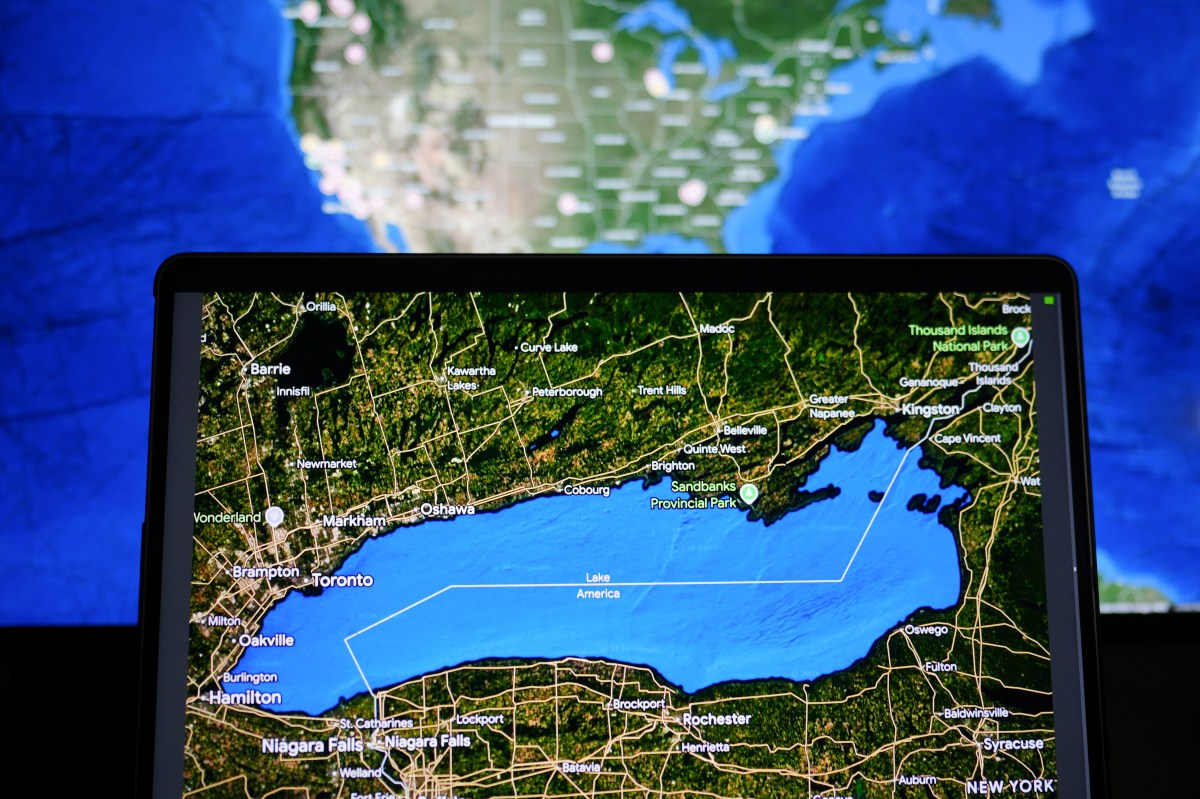
Google Maps started showing the name “Lake America” instead of “Lake Ontario” for users in the United States after the Trump administration changed the federal records. This change led to many negative reviews, and some users switched to other map apps like MapQuest, which kept using the original name “Lake Ontario.” Canada and international authorities still use “Lake Ontario.”
Key Facts
President Trump signed an order to rename Lake Ontario as “Lake America” in U.S. federal geographic records.
Google Maps updated the lake’s name for U.S. users following the federal government’s records.
Canadian users and users outside the U.S. still see the name “Lake Ontario” or both names.
Many Google Maps users criticized the new name and some deleted the app or switched to other apps like MapQuest.
MapQuest refused to change the name and gained more users in both the U.S. and Canada.
The name change is meant to highlight the lake’s importance to U.S. commerce, defense, and energy.
Private map companies are not required to use the new name but Google chose to follow federal data.
Apple Maps has not yet changed the name, although Trump asked them to do so.
Read the Original
Want the full story? Tap a source to open the original
article.
Oil prices have increased after the United States started military strikes against Iran again. This situation has raised concerns about energy and gas costs.
Key Facts
The U.S. has resumed military strikes targeting Iran.
Following these actions, oil prices have risen.
Higher oil prices can lead to increased energy and gas costs for consumers.
The situation has economic implications due to the importance of oil in global markets.
The news was reported by CBS News correspondent Kelly O’Grady.
Read the Original
Want the full story? Tap a source to open the original
article.
President Donald Trump announced a large oil deal with Venezuela to access 65 billion barrels of oil, involving nearly 20% of Venezuela's proven reserves. Alejandro Betancourt, a Venezuelan businessman with a controversial background, is reported to be a key partner in this deal, although details remain unclear.
Key Facts
The deal grants the U.S. the right to develop 17 oil fields in Venezuela, representing about 20% of the country’s proven oil reserves.
Venezuela’s interim President Delcy Rodriguez expects the agreement to bring $100 billion in investments.
Alejandro Betancourt, a Venezuelan oil tycoon with past legal issues, is believed to be the main intermediary working with the U.S.
Betancourt has faced legal problems in the UK, Spain, and Switzerland over accusations like money laundering and embezzlement.
Betancourt heads North American Blue Energy Partners (NABEP), Venezuela’s second-largest private oil producer.
The exact terms of the deal have not been made public, and Venezuelan officials have been cautious about confirming details.
Experts note the importance of Betancourt’s connections within the Venezuelan government for this agreement.
The deal is described by President Trump as "the biggest oil deal in world history."
Read the Original
Want the full story? Tap a source to open the original
article.
Russian air strikes hit Kyiv and nearby areas on September 1, 2026, killing at least 12 people and injuring many others, including children. This was the sixth day in a row of intense attacks using new jet-powered drones.
Key Facts
At least 12 people died in air strikes on Kyiv on September 1, 2026.
More than a dozen people were injured, including three children.
The attacks coincided with Ukrainian students returning to school.
Russia used swarms of jet-powered drones for these strikes.
The attacks damaged homes and warehouses in Kyiv and surrounding areas.
This marked the sixth consecutive day of heavy Russian strikes on the Ukrainian capital.
The drone attacks represent a new tactic by Russia in the conflict.
Read the Original
Want the full story? Tap a source to open the original
article.
Israeli forces bulldozed olive trees belonging to Palestinian farmers near Arraba, in the West Bank. The farmers inspected the damage caused by this destruction.
Key Facts
The olive trees destroyed belong to Palestinian farmers.
The location of the incident is near the entrance to Arraba, southwest of Jenin.
The area affected is in the occupied West Bank.
Israeli forces carried out the bulldozing of the trees.
Palestinian residents examined the damage after the event.
Read the Original
Want the full story? Tap a source to open the original
article.
Children in France returned to school on September 1, 2026, amid worries about many reports of sexual assault and rape involving school and childcare monitors. These monitors care for children before, during, and after school, and parents are asking the government to ensure better safety.
Key Facts
The return to school happened on September 1, 2026.
Hundreds of sexual assault and rape allegations have been made against monitors in Paris schools and childcare centers.
Monitors are staff hired by local authorities to supervise children outside regular class times.
Parents are concerned and want the government to guarantee child safety.
The abuse reports have caused widespread attention and worry among families.
Read the Original
Want the full story? Tap a source to open the original
article.
On the first day of school in Kyiv, Ukraine, an air raid alert interrupted celebrations following overnight Russian missile attacks. Schools are adapting to the ongoing war with remote, in-person, and shelter-based classes to keep students safe despite frequent attacks.
Key Facts
Russian missile strikes hit Kyiv overnight before the first day of school.
An air raid alert forced children and parents to take shelter during school celebrations.
This is Ukraine’s fifth school year affected by the Russian invasion.
About one million textbooks have been destroyed by Russian attacks.
Kyiv schools are using a mix of in-person, remote, and blended learning based on safety.
Many schools have underground shelters and prepare for potential winter power outages.
Ukraine has limited ability to stop Russian ballistic missiles and drone attacks.
Education officials report nearly a third of schools cannot fully open in person due to the war.
Read the Original
Want the full story? Tap a source to open the original
article.
NASA's Artemis II mission successfully used its heat shield to protect the spacecraft during reentry into Earth's atmosphere after orbiting the Moon. The heat shield performed better than in the previous mission, with fewer damaged areas and gave NASA confidence for future lunar missions.
Key Facts
Artemis II mission included a spacecraft named Orion returning safely from around the Moon.
The heat shield protects the spacecraft by charring (burning the outer layer) to absorb heat during reentry.
In a previous test flight (Artemis I), the heat shield lost large chunks and showed over 100 damaged sites.
Artemis II’s heat shield had only about nine damaged sites, a significant improvement.
The heat shield is made of 186 blocks of Avcoat, a material that prevents heat damage.
NASA changed the spacecraft’s reentry path to reduce the time it spent heating up, helping the heat shield perform better.
The new reentry path reduced the spacecraft’s possible landing area distance (downrange capability) from 4,800 to 1,775 nautical miles.
NASA plans to use a more breathable Avcoat material in future missions to avoid heat shield damage and increase landing options.
Read the Original
Want the full story? Tap a source to open the original
article.
President Donald Trump’s administration is increasing contacts with Russian officials, including a visit to Moscow by CIA Director John Ratcliffe and a surprise appearance by Russian Finance Minister Anton Siluanov at a U.S.-hosted meeting. Despite these contacts, major disagreements and sanctions remain due to Russia’s ongoing war in Ukraine, and peace talks have not yet made progress.
Key Facts
CIA Director John Ratcliffe recently visited Moscow and met with Russian intelligence officials.
Kremlin said President Vladimir Putin was informed about the talks but did not meet Ratcliffe.
President Trump described Ratcliffe’s visit as “semiroutine” and linked it to efforts to end the Ukraine war.
Russian Finance Minister Anton Siluanov attended a Group of 20 finance meeting in North Carolina, his first since the Ukraine conflict began.
U.S. Treasury Secretary Scott Bessent stated there would be no financial or economic relief for Russia until the war ends.
The U.S. maintains sanctions against Russia because of its invasion of Ukraine.
Peace talks between Russia and Ukraine have stalled, mainly over territorial disputes.
Ukrainian President Volodymyr Zelenskyy recently discussed peace efforts with U.S. envoys, but fighting continues in eastern Ukraine.
Read the Original
Want the full story? Tap a source to open the original
article.