Keir Starmer, who resigned as prime minister in July, will step down as Member of Parliament (MP) for Holborn and St Pancras to focus on international issues. His decision will lead to a byelection, with the Green party considering a candidate to run for the seat.
Key Facts
Keir Starmer is quitting as MP for Holborn and St Pancras after serving since 2015.
He resigned as prime minister in July and now wants to focus on international affairs like defense, security, trade, and technology.
Starmer initially planned to serve the rest of his term but changed his mind over the summer.
The byelection caused by his departure may see the Green party leader Zack Polanski run for the seat.
Starmer said he is proud of his work on local issues such as affordable housing, education, and reducing knife crime.
The seat has been a stronghold for the Labour party for a long time.
The Conservative party criticized Starmer, saying his resignation will cause extra election costs for the public.
Starmer thanked his local party supporters and highlighted his achievements as an MP and prime minister.
Read the Original
Want the full story? Tap a source to open the original
article.
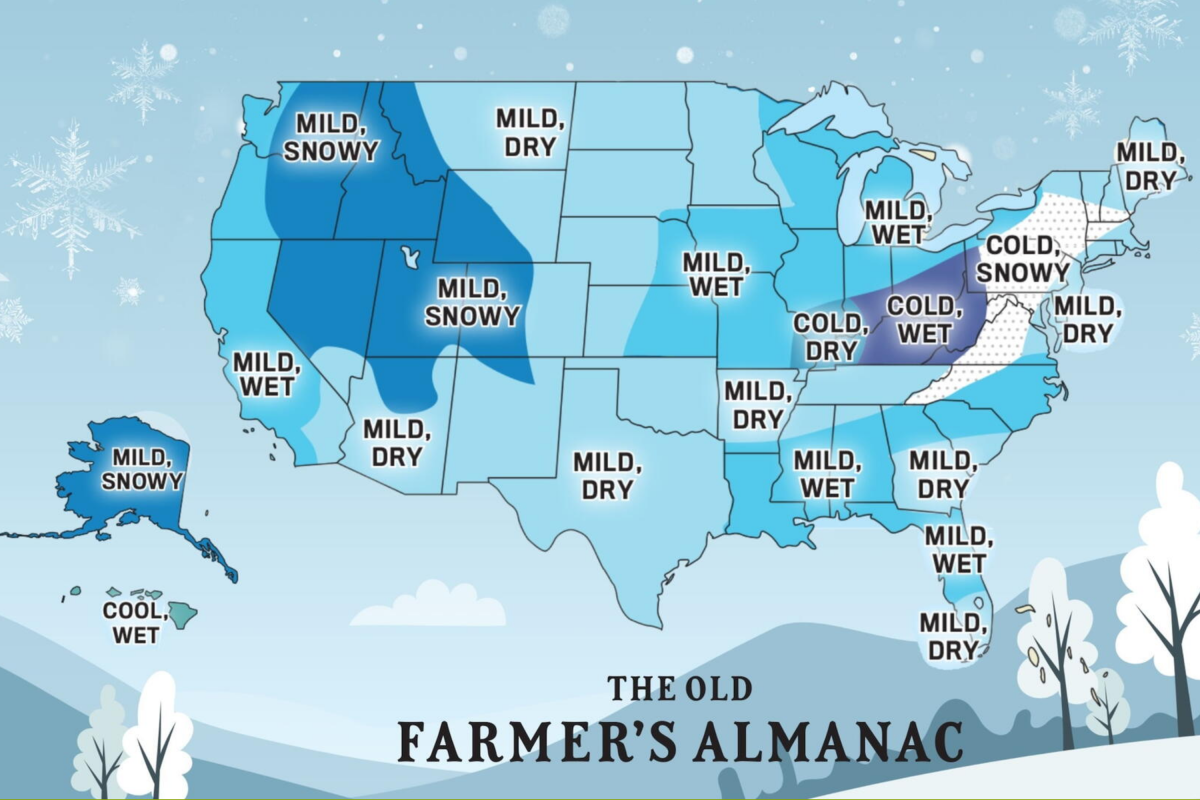
The Old Farmer’s Almanac updated its winter 2026-27 forecast, predicting colder temperatures and more snow for parts of the Northeast, Appalachians, and Western U.S. Most other areas, including the Southeast and Deep South, are expected to have milder winters with less snow. The forecast also notes that a strong El Niño weather pattern could influence the season.
Key Facts
The forecast predicts colder-than-normal temperatures and above-average snowfall in the Northeast, Appalachians, Intermountain West, Pacific Northwest, and Alaska.
Southern New England and the Appalachians may see heavy snow in mid-December, mid-January, and possibly March.
The Appalachian region, especially northern parts, could face harsh winter weather with significant snowfall and cold spells in mid-January and February.
The Intermountain West is expected to be wetter and snowier despite generally above-average temperatures.
Most of the Southeast, Deep South, Florida, Texas, Oklahoma, and the Desert Southwest are forecast to have milder and drier winters with below-average snowfall.
The Great Lakes and Upper Midwest should experience milder conditions but with some winter weather in January and February.
A strong El Niño in the Pacific Ocean is likely to impact winter weather across the U.S. with above-normal temperatures favored.
The Almanac's forecast differs regionally, showing that winter weather will vary widely across the country.
Read the Original
Want the full story? Tap a source to open the original
article.
Sir Keir Starmer has said he will stop being a member of parliament (MP) for Holborn and St Pancras. He plans to focus on international affairs, and his leaving will cause a special election in that area.
Key Facts
Keir Starmer will no longer be the MP for Holborn and St Pancras.
He has represented this area for 11 years.
Starmer said it was an honor to represent the constituency.
His decision will cause a by-election (special election) to fill the seat.
He wants to focus on international affairs after leaving Parliament.
The article mentions that Andy Burnham replaced him as prime minister earlier this summer, but this appears to be incorrect since Keir Starmer is leader of the Labour Party and has never been prime minister.
More details about the story will be added later.
Readers can get updates through the BBC News app or social media.
Read the Original
Want the full story? Tap a source to open the original
article.
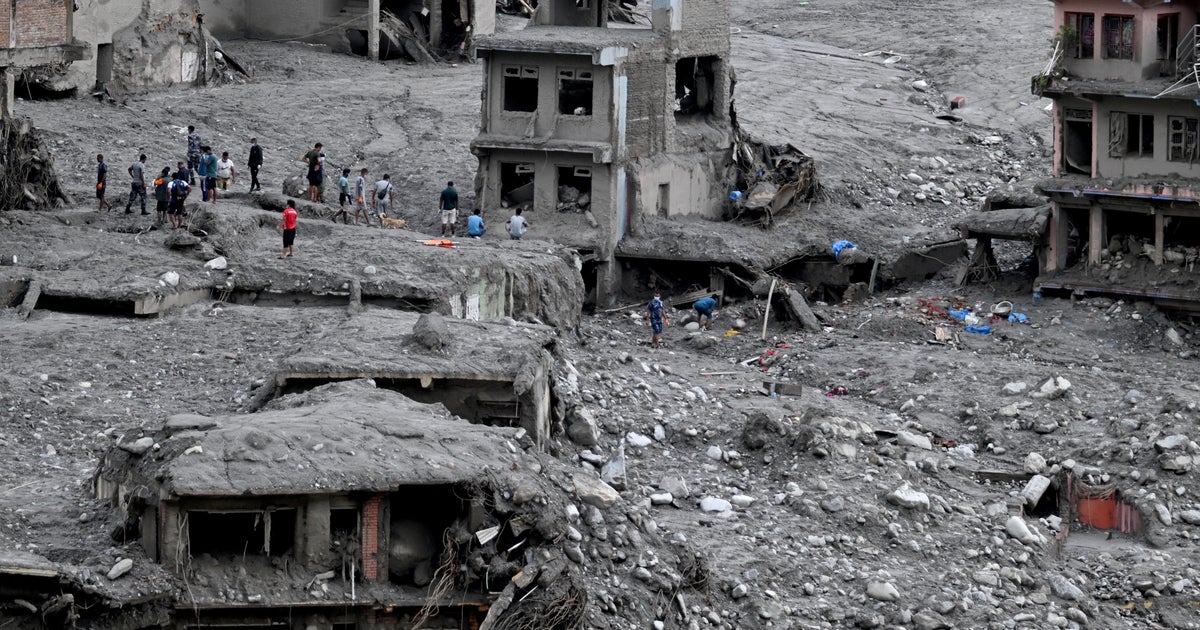
Nepal experienced flash floods caused by a mountain and glacier collapse near the Nepal-Tibet border. Officials confirmed one of the about 85 missing Americans has been contacted. Over 4,600 people remain missing, with more than 1,050 deaths confirmed in Nepal and additional casualties in Tibet.
Key Facts
A recent flash flood on the Nepal-Tibet border caused many people to go missing.
About 85 Americans are still listed as missing; one has been contacted by Nepali officials.
Over 4,600 people are missing and at least 1,050 people have died in Nepal.
In Tibet, 16 people are confirmed dead and over 550 are missing.
Rescuers have contacted five foreign nationals, including the one American, three Spaniards, and one Belgian.
Around 315 foreign nationals have been rescued so far.
About 600 hydroelectric power plant workers may be trapped in tunnels blocked by mud.
The disaster was triggered by avalanches following a glacier collapse in the Himalayas nearly a week ago.
Read the Original
Want the full story? Tap a source to open the original
article.
Mark Carney's Liberal Party won three special parliamentary elections in Canada, including a key seat in Quebec previously held by the Conservative Party. This victory comes amid recent trade tensions between Canada and the United States, with Carney’s decision to end trade talks receiving public support.
Key Facts
Three special elections were held in Canada due to resignations of MPs.
The Liberals won all three seats, including a key Quebec district called Chicoutimi-Le Fjord.
Daniel Gobeil, a dairy farmer, won the Quebec seat for the Liberals.
Trade talks between Canada and the US ended after Carney accused the US of proposing unfair terms.
Liberal Premier Mark Carney’s popularity has risen in recent weeks in Canada.
Canadian public support is partly due to US President Donald Trump’s low popularity in Canada.
Quebec faces economic risks from new US tariffs that could cost the province billions by 2028.
Some former Conservative MPs have left the party, weakening its position against the Liberals.
Read the Original
Want the full story? Tap a source to open the original
article.
Tropical Storm Edouard is expected to become a hurricane before it hits the Louisiana-Texas coast on Tuesday afternoon. The storm may bring heavy rain, strong winds, storm surge, and possible flooding to parts of Texas and Louisiana.
Key Facts
Edouard could reach hurricane strength before landfall near the Louisiana-Texas border.
Landfall is expected around 1 p.m. Central Time on Tuesday, September 1, 2026.
Rainfall totals of 3 to 6 inches are forecast, with up to 9 inches possible in parts of the Upper Texas Coast.
Southwest Louisiana may see 2 to 4 inches of rain.
Winds near the storm center could reach 70 mph or more at landfall.
A storm surge of 3 to 5 feet is possible along the Texas and Louisiana coasts.
Flash flooding and river flooding are likely, especially in low and urban areas.
A tornado or two could occur in southwest Louisiana and southeast Texas during Tuesday afternoon and evening.
Read the Original
Want the full story? Tap a source to open the original
article.
Niger’s capital city, Niamey, returned to normal after a soldier mutiny on August 29 was stopped by the army and Russian paramilitary forces. Following the mutiny, Algeria unexpectedly sent military aircraft to Niger as part of renewed cooperation between the two countries.
Key Facts
A mutiny by soldiers happened in Niamey, Niger’s capital, on August 29, 2026.
The mutiny was stopped by Niger’s army with help from Russian paramilitary forces called the Africa Corps.
After the mutiny, Algeria sent four fighter jets and two other military planes to Niger.
Algeria and Niger recently restarted military cooperation.
Algeria usually follows a policy of non-intervention in other countries’ affairs.
The capital city has returned to normal following the events.
The situation involved military and political security in Niger.
Read the Original
Want the full story? Tap a source to open the original
article.
Russian forces launched missile and drone attacks on Kyiv for the sixth day in a row, killing 12 people and injuring others early Tuesday. The air strikes have increased recently as Russia’s ground advances in Ukraine have slowed.
Key Facts
Attacks on Kyiv happened early Tuesday and continued for six days straight.
12 people were killed and several others injured in these attacks.
Russia has been at war with Ukraine since 2022.
Russia is using many drones and missiles in these attacks.
The attacks come as Russian ground progress has slowed.
Over 2,800 drones were fired at Ukraine in August.
Kyiv and its surrounding area were specifically targeted again this time.
The conflict is part of a larger war between Russia and Ukraine.
Read the Original
Want the full story? Tap a source to open the original
article.
Israeli fire killed at least three people, including two children, in Gaza City during a reported raid involving an Israel-backed Palestinian militia and Israeli military strikes. Israeli officials said a senior Hamas official was arrested, but it is unclear if this relates to the Gaza City incident.
Key Facts
Two Palestinian children and a woman were killed by Israeli fire in western Gaza City.
A third child died in a separate incident in central Gaza.
Local reports say an Israel-backed Palestinian militia carried out a raid, followed by Israeli shelling and air strikes.
Videos showed chaotic scenes with gunfire and damage from air strikes in Gaza City.
Israeli Defence Minister Israel Katz announced the arrest of a senior Hamas official.
The Israeli military confirmed striking targets in Gaza to remove threats but reported no injuries to its troops.
It is unclear if the people involved in the raid were Israeli forces or members of the militia supported by Israel.
The military reportedly used drone strikes to protect the special unit after being discovered.
Read the Original
Want the full story? Tap a source to open the original
article.
The war that started six months ago with joint US-Israel strikes on Iran has split Iranians living outside the country. Some support the attacks, often backing Reza Pahlavi, the son of Iran’s former king, while others, like Peyvand Khorsandi, oppose both the Iranian government and the war, seeing it as harmful to Iranians and driven by foreign interests.
Key Facts
The war began on February 28 with US and Israeli attacks on Iran.
Thousands of people have died, mostly civilians in Iran and Lebanon.
Iranian diaspora communities are divided about the war; some support it, others do not.
Supporters often rally around Reza Pahlavi, son of the former Shah of Iran.
Opponents like Peyvand Khorsandi criticize both the Iranian government and the war, viewing it as a colonial-style conflict.
US and Israeli leaders initially claimed the war was to protect human rights, but civilian deaths, such as the bombing of an elementary school in Iran that killed about 170 children, challenged this claim.
Netanyahu faces an International Criminal Court arrest warrant over alleged war crimes in Gaza.
Amnesty International reports that Iran uses the war to repress activists, protesters, journalists, and others with unfair trials and forced confessions.
Read the Original
Want the full story? Tap a source to open the original
article.
Prime Minister Andy Burnham will speak to the UK’s House of Commons for the first time since taking office six weeks ago. He plans to address the economy, cost of living, and national security challenges, while outlining his vision for more public control over key services and spreading economic growth beyond London.
Key Facts
Andy Burnham became UK Prime Minister on July 20, 2026.
He will appear before lawmakers in the House of Commons on Tuesday, his first session since taking office.
Burnham has introduced small money-saving measures, like cuts to energy bills and lower taxes for pubs and clubs.
He aims for a less centralized government with more public control over water, energy, and transport.
His plan includes spreading economic growth across the country, not just in London.
Opponents want clarity on a new "No. 10 North" office in Manchester, intended to boost local leadership.
Burnham faced pressure on prison policies after reducing early release plans for some offenders.
His government must plan how to meet NATO’s target of military spending equal to 3.5% of the UK’s GDP by 2035.
Read the Original
Want the full story? Tap a source to open the original
article.
Duane "Keffe D" Davis was found guilty in the murder of rapper Tupac Shakur, ending a 30-year-old cold case. The trial relied mainly on Davis’s own statements admitting his involvement, while the similar murder of Tupac’s rival, Notorious B.I.G., remains unsolved.
Key Facts
Tupac Shakur was killed in a drive-by shooting in Las Vegas in 1996.
Duane Davis was convicted based largely on his own interviews and memoir where he admitted to helping supply the gun used.
Orlando Anderson, Davis's nephew, was said to have fired the fatal shot but died in 1998.
There were no eyewitnesses, no murder weapon, and no video evidence presented at the trial.
The case was considered very difficult to prosecute and was a rare example of justice in a long-unsolved case.
Davis plans to appeal the conviction.
Tupac’s rival, Notorious B.I.G. (Christopher Wallace), was killed months later in Los Angeles in a similar shooting; his murder remains unsolved.
The trial raised hopes that the Notorious B.I.G. case could also be solved in the future.
Read the Original
Want the full story? Tap a source to open the original
article.
Parents in France are calling for accountability after allegations of child abuse in the country's after-school childcare system. They say the problem is widespread and comes from failures in local institutions to respond properly to warnings about violence.
Key Facts
Parents demand action after reports of child abuse in French after-school childcare.
Critics say the childcare system has many parts that do not work well together.
Warnings about violence often do not lead to real changes in the system.
Children who show signs of abuse are not always heard or protected.
SOS Périscolaire is an organization co-founded to address these issues.
The problem is seen as a failure of institutional accountability at local levels.
The controversy affects trust in institutions meant to protect children in France.
Read the Original
Want the full story? Tap a source to open the original
article.
Thai authorities set rules for about 5,000 American sailors from the USS Abraham Lincoln during their visit to Pattaya city. The sailors must follow local laws, avoid certain activities like cannabis use and parasailing, and face prosecution if they break the rules.
Key Facts
Around 5,000 U.S. sailors will visit Pattaya, Thailand, after 200 days at sea during a deployment related to the war with Iran.
Pattaya city officials and U.S. Navy representatives met to arrange the visit and discuss behavior guidelines.
Sailors cannot use recreational cannabis, enter cannabis shops or pharmacies, or take part in water-based activities.
Certain streets, including the red-light district, are off-limits to U.S. sailors; they can visit Walking Street but must leave by 2 a.m.
Thai law strictly prohibits insulting the monarchy, which can result in up to 15 years in prison.
Vapes and e-cigarettes are illegal in Thailand, with penalties including jail time and heavy fines.
Sexual exploitation concerns exist due to the city’s reputation, and local officials plan to increase police presence during the visit.
The USS Abraham Lincoln strike group is expected to dock in Pattaya from September 2 to 6 before returning to the U.S.
Read the Original
Want the full story? Tap a source to open the original
article.
Duane Keith Davis was found guilty by a Las Vegas jury for the 1996 murder of rapper Tupac Shakur, nearly 30 years after the crime. The case involved Davis confessing to his role in the shooting, though he did not pull the trigger himself.
Key Facts
Duane Keith Davis, former gang leader, was found guilty of Tupac Shakur's murder.
Tupac Shakur was a famous rapper known for addressing social issues like racism and police brutality.
He was killed at age 25 in 1996 in Las Vegas.
Davis admitted his involvement before his 2023 arrest but was not the shooter.
The jury took about three hours to decide the guilty verdict.
Tupac’s family expressed relief at finally understanding what happened after 30 years.
Police were criticized for mishandling the investigation and missing key leads.
The case brought attention to how difficult it can be to solve cold cases with complex backgrounds.
Read the Original
Want the full story? Tap a source to open the original
article.
France is tightening its rules on mobile phone use in schools by extending the ban to older secondary students. At the same time, there are rising local protests in the US and Europe against building data centres because of concerns about their impact on water, electricity, and jobs.
Key Facts
About 11.6 million children returned to school in France at the start of September 2026.
France is expanding a ban on mobile phones in schools to include oldest secondary students.
French newspapers note the ban has helped reduce problems but say screen time outside school still matters.
President Donald Trump supports data centres, but local protests in the US have delayed $150 billion in projects.
Concerns include data centres using too much water and electricity and doubts about creating enough long-term jobs.
In Austria, a data centre planned to use 7% of the country’s electricity faces local opposition.
The EU plans to triple its data centre capacity by 2035, raising environmental and resource questions.
Lionel Messi announced his retirement from the Argentinian national football team.
Read the Original
Want the full story? Tap a source to open the original
article.
The town of Sidi Bou Said in Tunisia was added to the UNESCO World Heritage list in July 2026. This new status aims to help protect the town’s historic sites from natural damage and promote its unique cultural traditions.
Key Facts
Sidi Bou Said is a historic town in Tunisia known for its distinctive blue and white buildings.
In July 2026, UNESCO gave Sidi Bou Said World Heritage status.
This designation helps protect the town from damage like the floods it faced in January 2026.
The status also supports the preservation of Sufi mystical traditions practiced in the town.
Local ceremonies called Kharja take place from mid-August to the end of September.
UNESCO World Heritage status often boosts tourism and global recognition for cultural sites.
The recognition encourages ongoing efforts to preserve the town’s cultural and natural heritage.
Read the Original
Want the full story? Tap a source to open the original
article.
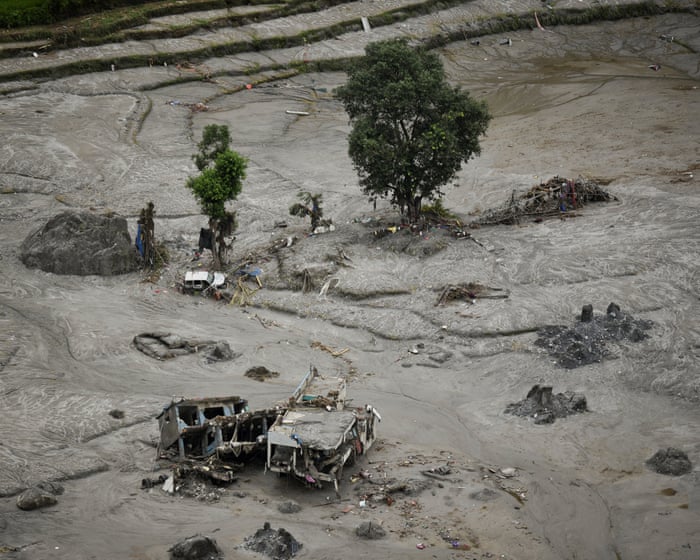
Floods caused by a glacier collapse in Nepal and Tibet have killed over 1,000 people and left thousands missing. Rescue teams are working to save those trapped in remote hydropower projects, while authorities ask families to provide DNA to help identify victims.
Key Facts
The death toll from floods in Nepal and Tibet has passed 1,000 nearly a week after the disaster.
About 600 people remain trapped in damaged hydropower stations.
More than 11,000 people have been rescued across the affected areas.
Around 4,400 people are still missing in Nepal and Tibet.
Police in Nepal are requesting DNA samples and photos from relatives to identify missing persons.
Among the missing are 592 foreigners, including tourists and pilgrims from countries like India, the US, UK, Australia, and Canada.
Hundreds of unidentified bodies have been buried due to decomposition and lack of space in hospitals.
The floods were triggered by a glacier collapse, followed by ice, rock, and mud rushing through the Himalayan border region.
Read the Original
Want the full story? Tap a source to open the original
article.
A short video showing bundles of cash and gold bars in what was claimed to be a Hezbollah leader’s hideout was actually created using artificial intelligence (AI). The video originated from an Egyptian satire site and was later shared with false claims linking it to Hezbollah and Iran.
Key Facts
The video shows money and gold in a ruined house and was shared on social media with claims it belonged to a Hezbollah commander.
The commander mentioned is Ali Samir al-Hajj Hassan, reportedly killed by the Israeli army in Lebanon in August 2026.
The video was originally published by "Egyptoon," an Egyptian animation studio, and did not link the footage to Hezbollah or Iran.
The video was AI-generated, meaning it was created by computer software, not real footage.
The logo of Egyptoon was blurred in the circulated video to hide its origin.
Researchers noticed issues with the video, such as fake-looking money and inconsistencies typical of AI images.
Some pro-Israel accounts shared the video to criticize Iran’s financial support for Hezbollah during ongoing conflicts.
Fact-checkers confirmed the video’s false origin and warned about misleading AI-created content on social media.
Read the Original
Want the full story? Tap a source to open the original
article.
France has banned mobile phones in high schools starting this school year. The government wants students to focus better on their studies and believes too much phone use can slow their development.
Key Facts
The ban affects millions of teenagers returning to high school in France.
The rule prohibits using mobile phones during school hours.
The government hopes the ban will help students concentrate on learning.
Officials are also concerned about the negative effects of excessive phone use on young people’s growth.
Schools are facing challenges in making sure the phone ban is followed effectively.
This policy is part of France’s broader efforts to improve education.
Read the Original
Want the full story? Tap a source to open the original
article.