A South Korean police officer admitted to closing missing persons cases without proper investigation to avoid extra work. After his actions were discovered, police found four bodies on Jeju island, and the government promised to reform the police.
Key Facts
A police officer named Bu in South Korea closed missing persons cases without investigating them.
Bu falsely reported contacting missing people and closed their cases prematurely.
He was charged with forgery of records, obstructing duties, and neglect of duty.
Police found four bodies on Jeju island linked to the cases Bu closed.
Bu admitted closing cases early to avoid extra work and pressure from case handovers.
One victim was a 37-year-old woman whose boyfriend reported her missing; Bu falsely said she did not want contact.
Authorities suspect Bu may have falsely closed up to 25 more cases, though some missing people were safe.
The scandal comes amid public distrust of police and recent laws giving police more investigative power in South Korea.
Read the Original
Want the full story? Tap a source to open the original
article.
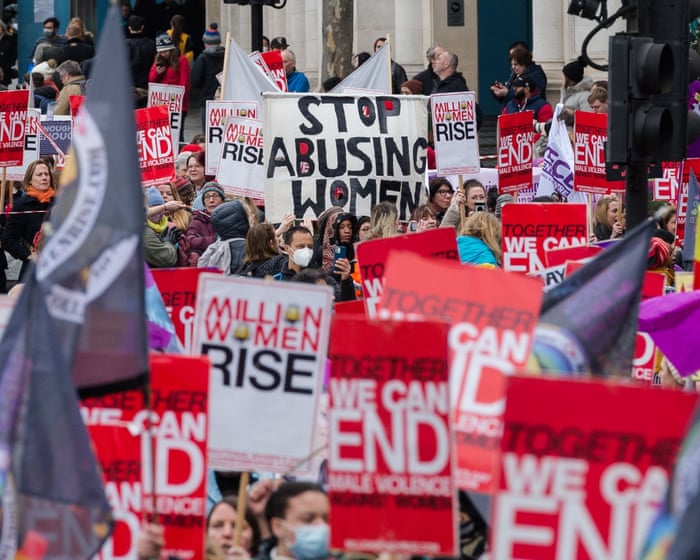
Scotland’s First Minister John Swinney has promised to make ending violence against women a top priority in his government’s upcoming program. Despite past strong laws and strategies, violence against women in Scotland is still rising, including domestic abuse and sexual crimes. New technology has created additional ways for abusers to harm women, such as through online harassment and tracking.
Key Facts
Violence against women is a long-standing global problem made worse by new technology.
Scotland has previously introduced leading laws to address domestic violence.
John Swinney is leading a new government effort focusing on ending violence against women.
Recorded sexual crimes in Scotland increased by 10% last year to the highest levels since 1971.
Many crimes are committed by people known to the victims.
Technology has enabled new abuses like deepfakes, revenge porn, and GPS tracking.
Surveys show young boys and girls in Scotland are exposed to and sometimes accept sexist attitudes.
Economic inequalities and broader social factors are linked with increased violence and misogyny.
Read the Original
Want the full story? Tap a source to open the original
article.
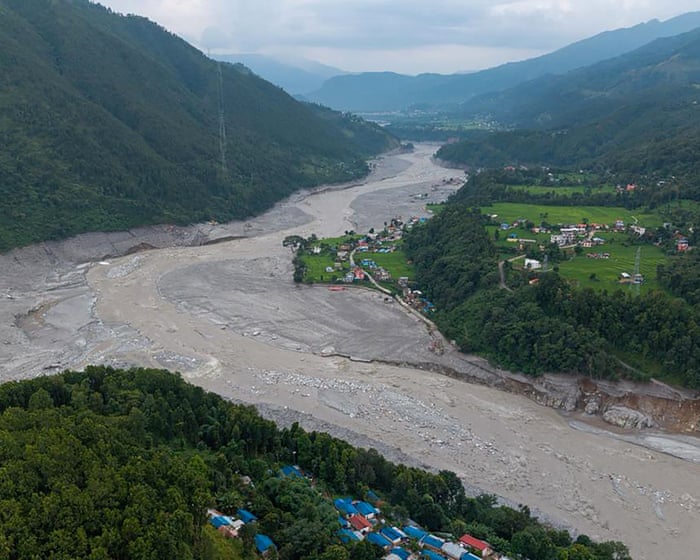
An Australian who was missing after floods hit the Nepal-Tibet border last week has been found alive and is getting help from Australian officials. The death toll from the disaster has reached 939, with more than 4,400 people still missing on both sides of the border.
Key Facts
An Australian missing in the Nepal-Tibet floods has made contact with officials and is receiving support.
The number of Australians missing has decreased from 43 to 42.
Another Australian, Cara Severino, was found safe recently.
The death toll from the floods is now 939, with 16 more deaths reported in Tibet.
More than 4,400 people are still missing after the floods.
Communication and rescue efforts are difficult due to destroyed infrastructure and hard-to-reach areas.
The Australian government has provided $8 million to help communities affected by the floods.
Nepal and China have deployed thousands of emergency and security personnel to assist in search and rescue operations.
Read the Original
Want the full story? Tap a source to open the original
article.
The Colombian government carried out air strikes that killed 20 suspected guerrilla fighters from the Central General Staff group in southern Colombia. The operation was ordered by President Abelardo de la Espriella, who is increasing military actions against armed groups linked to drug trafficking and other crimes.
Key Facts
Twenty alleged members of the rebel group Central General Staff (EMC) were killed in a bombing raid in Guaviare, southern Colombia.
Five guerrillas were captured and two minors were rescued during the operation.
The EMC is a dissident group that split from the former Revolutionary Armed Forces of Colombia (FARC) after a 2016 peace deal.
The operation targeted forces under Ivan Mordisco, a most-wanted rebel leader.
President Abelardo de la Espriella is a right-wing leader allied with U.S. President Donald Trump.
The U.S. pledged $1 billion in security aid to Colombia since De la Espriella took office.
Earlier air strikes in August killed at least four minors, according to Colombian forensic sources.
Armed groups in Colombia reportedly recruit children and teens through social media.
Read the Original
Want the full story? Tap a source to open the original
article.
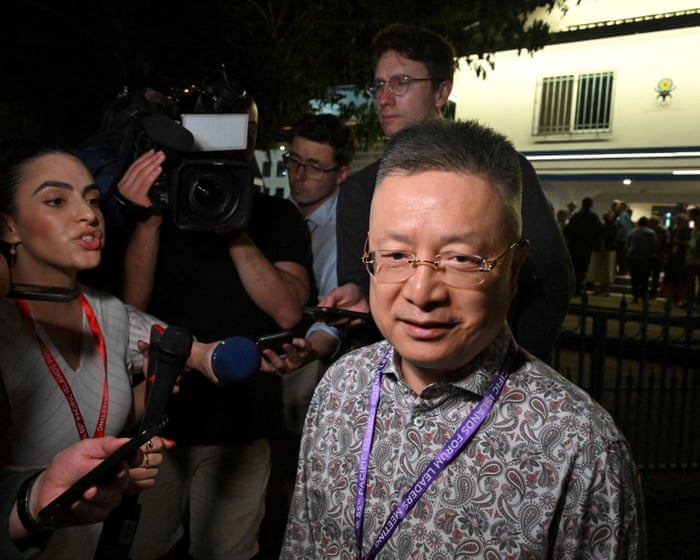
China expressed strong concerns about Taiwan attending the Pacific Islands Forum in Palau and warned of unspecified consequences. Taiwan was present as a development partner, while Pacific nations and partners like Australia and New Zealand defended the group's independence from outside influence.
Key Facts
China sees Taiwan as part of its territory and opposes Taiwan's participation in the Pacific Islands Forum.
Taiwan attended the forum's opening ceremony in Palau, which still has diplomatic ties to Taiwan.
Chinese envoy Qian Bo said Taiwan's presence will have consequences but did not specify what.
Australia’s Prime Minister and New Zealand’s Foreign Minister said the Pacific Islands Forum decides its own membership and actions.
Taiwan is a development partner of the forum but not a formal dialogue partner like China.
Only three Pacific Island countries still have formal diplomatic ties with Taiwan: Palau, Tuvalu, and the Marshall Islands.
Some Pacific Island leaders did not attend the forum; ministers represented their countries instead.
Australia, New Zealand, and the US are working to limit China's growing influence in the Pacific region.
Read the Original
Want the full story? Tap a source to open the original
article.
Police in Western Australia stopped a man and found about 3.5 grams of methamphetamine hidden inside a McMuffin in a fast-food bag during a car search. The man was charged with possession of a drug with the intent to sell or supply and will appear in court in September.
Key Facts
The arrest happened on August 20 in Broome, Western Australia.
Police were investigating illegal drug activity in the area.
A 39-year-old man was seen near a house linked to the investigation before he got into his car.
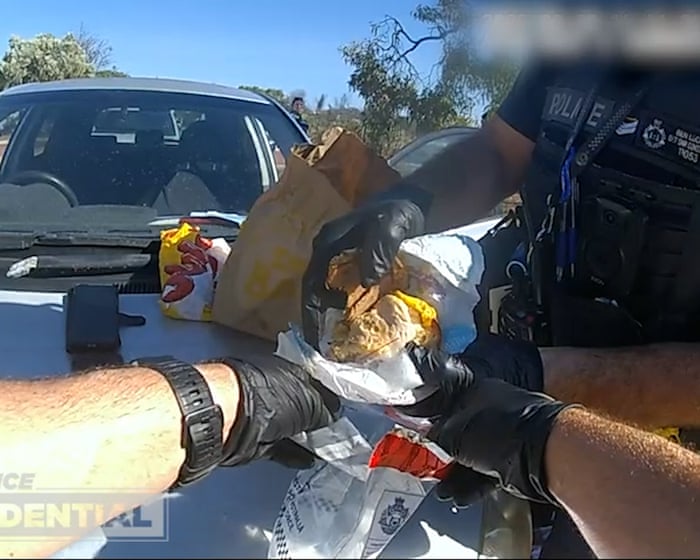
Police stopped the car and found a bag with hot fast food on the back floor.
Methamphetamine was hidden inside a cold McMuffin burger at the bottom of the food bag.
Video footage from police body cameras shows officers searching the food bag.
The man was charged with possessing a prohibited drug with intent to sell or supply.
A woman in the car was questioned and then released.
The man is scheduled to appear in magistrates court on September 9.
Read the Original
Want the full story? Tap a source to open the original
article.
A person is trying to encourage people to reduce the number of hours they work. The goal is to promote better wellbeing and mental health by working less.
Key Facts
The mission is focused on convincing people to work fewer hours.
The effort is linked to improving wellbeing and mental health.
The article includes multimedia content like a video (which requires JavaScript to play).
The story is reported from Wales.
The topic relates to health and mental health issues.
The article is recent, published 23 minutes ago.
Readers can follow updates on Wales, Wellbeing, Mental Health, and Health topics.
Read the Original
Want the full story? Tap a source to open the original
article.
Israeli forces have destroyed several Palestinian homes in the West Bank, while settlers attacked residents of the village of Burqa. These events happened as Ireland pushed the European Union to consider banning goods made in illegal Israeli settlements.
Key Facts
Israeli soldiers demolished buildings in Birzet and Nablus in the occupied West Bank.
Settlers attacked people in Burqa, throwing stones, trying to set cars on fire, and stealing livestock.
The United Nations said settler violence is at a record high and sometimes occurs with the Israeli army.
Ireland leads the EU Council and wants the EU to ban goods from Israeli settlements.
The EU currently requires products from settlements to be labeled as made in occupied territory but has no trade ban.
EU member countries are divided over how to handle trade with settlements.
Possible EU measures include import licenses, tariffs, or a full ban on settlement goods.
An Irish minister said Israel’s actions violate international law and criticized some European support for the Israeli government.
Read the Original
Want the full story? Tap a source to open the original
article.
The United Nations peacekeeping mission in southern Lebanon, known as UNIFIL, will end in 2026. The European Union is considering sending a new mission to support Lebanese forces, but the plan would not replace UNIFIL’s role fully. The UN is also exploring options for a smaller force to continue some peacekeeping duties.
Key Facts
UNIFIL has been in southern Lebanon for nearly 50 years and will end its mission in 2026.
Lebanon faces ongoing Israeli attacks, with a fifth of its land occupied and many displaced people.
The EU proposes a three-year mission to advise and train the Lebanese army and police, focusing on border and maritime security.
The EU mission would not replace UNIFIL but aim to strengthen Lebanon’s own security forces.
UNIFIL could monitor but never enforce Israeli withdrawal or disarm armed groups like Hezbollah.
Israel criticized UNIFIL for not preventing Hezbollah’s military growth and pushed for the mission’s end.
The UN suggests smaller forces for future peacekeeping, with options ranging from 900 to 3,000 soldiers.
There is concern a gap after UNIFIL ends could let Israel push for more direct coordination with Lebanese forces, changing current international peacekeeping arrangements.
Read the Original
Want the full story? Tap a source to open the original
article.
Canada’s Liberal Party won three special elections, showing public support for Prime Minister Mark Carney’s strong stance against U.S. President Donald Trump. These victories included winning a key Quebec seat previously held by the opposition Conservatives amid growing trade tensions between Canada and the U.S.
Key Facts
The Liberals won special elections in Chicoutimi-Le Fjord (Quebec), Beaches-East York (Toronto), and North Vancouver-Capilano (British Columbia).
Chicoutimi-Le Fjord was previously held by Conservatives since 2018 but shifted to Liberal Daniel Gobeil.
Canada and the U.S. recently failed to reach a trade deal, leading to U.S. tariffs on $20 billion Canadian goods and Canadian retaliation.
President Trump renamed Lake Ontario to “Lake America” by executive order as part of escalating tensions.
Prime Minister Carney’s party now holds 173 of 343 seats in the Canadian House of Commons.
The Liberal wins are seen as approval of Carney’s approach, including ending trade talks with the U.S. in August 2026.
The Conservative Party’s support dropped significantly in Quebec, falling from 34% to about 13% in the Chicoutimi-Le Fjord riding.
Carney is working to strengthen Canada’s trade relations with Europe and other countries amid U.S. tensions.
Read the Original
Want the full story? Tap a source to open the original
article.
The traditional Spanish folding hand fan, called an abanico, is becoming very popular again because of extreme heat in Spain this summer. People of all ages are using these fans to cool themselves in public places like subways and plazas. The fan has a long history in Spain and is also a symbol used in flamenco dancing.
Key Facts
The abanico is a small, folding hand fan that fits in a purse and creates a breeze with a flick of the wrist.
Heat waves in Western Europe have caused temperatures in Madrid to reach around 39°C (102°F).
Both women and men are using abanicos to stay cool in public areas like transport, concerts, and festivals.
The fan has historical roots from Asian trade with Europe in the 15th and 16th centuries and became popular in Spain by the 18th century.
Valencia is known as the fan-making capital of Spain.
In the 1800s, abanicos were used by women in Spain to communicate emotions through "the language of the fan."
Flamenco dancers use the abanico as a traditional and expressive dance prop.
Mass-produced fans with tourist designs are sold in places like Seville.
Read the Original
Want the full story? Tap a source to open the original
article.
The world’s economic center is shifting toward the Asia-Pacific region. The Shanghai Cooperation Organization (SCO), originally symbolic, is becoming a key group where Asian countries work together on energy, technology, trade, and security. This shows the global system is becoming more complex and less dominated by the United States.
Key Facts
Much of the world's economic production (GDP) now comes from the Asia-Pacific area.
The Shanghai Cooperation Organization (SCO) includes China, Russia, India, and other Asian countries.
The SCO is evolving from a symbolic group to a practical forum for cooperation on key issues like energy and technology.
India participates in multiple groups and pursues its own strategies, showing the world order is flexible.
The global order is moving away from U.S. dominance to a more divided and transactional system.
Even with changes in the U.S. government, the previous single-power dominance is unlikely to return.
The economic and strategic focus of the world is shifting steadily toward the Pacific region.
Read the Original
Want the full story? Tap a source to open the original
article.
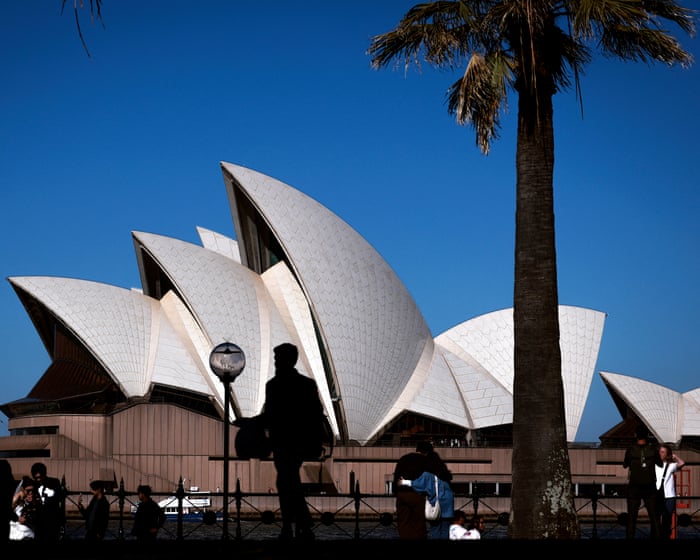
A 16-year-old boy in New South Wales pleaded guilty to planning a terrorist bombing targeting the Sydney Opera House during the Sydney Marathon. The teenager was influenced by extremist material online and communicated with others about terrorism but now says he rejects those views and is sorry for his actions.
Key Facts
The boy is 16 and cannot be named for legal reasons.
He became interested in extremist content online starting at age 14, first seeing historical videos then violent Islamic State propaganda.
He communicated with others on the encrypted app Telegram about terrorism plans.
The target was the Sydney Opera House during the Sydney Marathon to cause maximum harm.
The planning was inspired by videos of the 2013 Boston Marathon bombing.
He expressed mixed feelings about actually carrying out the attack and said a voice in his head discouraged him.
The teenager now disavows extremist views and seeks forgiveness.
His lawyer asked for no jail time so he can continue deradicalisation, while the prosecutor argued custody is needed.
A judge will decide the sentence on 29 October.
Read the Original
Want the full story? Tap a source to open the original
article.
The Aberfan disaster in 1966 was a tragic accident where a coal waste tip collapsed onto Pantglas Junior School, killing 116 children and 28 adults. Survivors, like Janett Bickley and Denise Morgan, often kept silent about their experiences for decades but have later shared how the event shaped their lives and their work helping others.
Key Facts
On 21 October 1966, a coal waste tip collapsed in Aberfan, Wales, covering Pantglas Junior School in coal slurry.
The disaster killed 144 people, including 116 children and 28 adults.
Janett Bickley, an eight-year-old student, survived after being rescued by a classmate.
Survivors were told not to talk about the disaster and often remained silent until middle age.
Denise Morgan lost her younger sister in the disaster and struggled with grief and education but later became a head teacher.
Many survivors found healing by finally discussing their experiences as adults.
Some survivors dedicated their lives to education, community work, and charity in memory of those lost.
The disaster profoundly affected the Aberfan community for decades.
Read the Original
Want the full story? Tap a source to open the original
article.
John Swinney, Scotland’s First Minister, announced plans focused on reforming public services, growing the economy, ending child poverty, and fighting violence against women and girls. He emphasized that these changes will be part of his government’s new program to address current challenges facing Scotland.
Key Facts
John Swinney is setting out a government program focused on public service reform.
A new cabinet minister has been appointed to lead the public service reform efforts.
The government plans to grow the economy and reduce child poverty.
Policies will focus on reaching net zero carbon emissions and tackling violence against women and girls.
Swinney highlighted the need to change how public services are delivered to improve them.
The government has balanced its budget every year during the SNP’s time in power.
Child poverty efforts include payments to families and support addressing issues like housing, addiction, and childcare.
Swinney expressed strong personal leadership to combat violence against women following many recent cases.
Read the Original
Want the full story? Tap a source to open the original
article.
The number of illegal sewage releases by water companies into rivers and seas during dry weather in England and Wales has risen sharply in early 2026. These discharges happen without rain to dilute the sewage, which makes pollution more harmful and violates environmental rules.
Key Facts
Water companies are required to report raw sewage discharges during dry weather to the Environment Agency.
Between January and May 2026, there were 7,280 reported illegal sewage spills during dry weather, nearly as many as the 8,576 reported in all of 2025.
Dry weather spills are more toxic because rivers have less water flow and no rain to lessen pollution effects.
Combined sewer overflows are designed for heavy rain emergencies but are often misused to discharge sewage regularly.
South West Water reported 1,299 dry weather sewage spills in the first five months of 2026, compared with 2,451 for the whole of 2025.
Environmental officials and whistleblowers say water companies prioritize profits over stopping illegal sewage discharges.
Recent spills happened quickly after light rain following long droughts, showing ongoing contamination problems.
Regulators have promised tougher action but the problem has continued or worsened according to whistleblower data.
Read the Original
Want the full story? Tap a source to open the original
article.
Scotland and England are handling early prisoner release differently due to overcrowded prisons and public concerns. Scotland has released some short-term prisoners early with safety exemptions and is proposing changes to when long-term prisoners can be released, while England has introduced laws to allow more prisoners out early but excluded serious offenders after public backlash.
Key Facts
Scotland’s prisons are overcrowded, leading to emergency early release of nearly 1,100 short-term prisoners since 2024.
Scotland excludes prisoners convicted of sex offences and domestic abuse from early release programs.
About 13% of those released early in Scotland were returned to prison due to safety concerns.
Scotland has reduced the automatic early release point for short-term prisoners from serving 50% to as low as 30% of their sentence.
Long-term prisoners in Scotland are eligible for parole halfway through their sentence or automatically released when six months remain.
The Scottish government proposes adjusting early release rules for long-term prisoners convicted of serious crimes such as rape and manslaughter.
In England, tens of thousands of inmates were released early starting in 2024 to ease overcrowding.
England’s Sentencing Act now allows many prisoners to be released after serving one-third of their sentence, but some serious offenders are excluded after public and political opposition.
Read the Original
Want the full story? Tap a source to open the original
article.
Nearly six million Afghans have been forced to return to Afghanistan from Pakistan and Iran since the Taliban took power in 2021. Many returnees, including those born outside Afghanistan, face difficult conditions and struggle to restart their lives in a country with few resources.
Key Facts
The Taliban took control of Afghanistan in August 2021.
Since then, Pakistan and Iran have increased deportations of Afghans, including those with official documents.
Around one million Afghans were forced to return in the current year alone.
Many deportees have never been to Afghanistan or have not lived there for decades.
Refugee camps near the border are crowded and make-shift, with basic shelters provided by the UN and aid groups.
Deportees report experiencing harassment and discrimination in Pakistan before being sent home.
Pakistan and Iran argue that many Afghans pose security risks or economic burdens.
The UN Refugee Agency (UNHCR) says this is the largest forced return movement in recent history.
Read the Original
Want the full story? Tap a source to open the original
article.
Chelsea McGillivray, a 31-year-old woman from South Lanarkshire, died during childbirth after an unexpected heart problem. Her newborn son, Tommy, was born safely and is now at home with his father, who plans to honor Chelsea's memory.
Key Facts
Chelsea McGillivray had a healthy, full-term pregnancy with no known health issues.
She experienced a sudden cardiac event while in labor at Queen Elizabeth University Hospital in Glasgow.
Despite immediate CPR efforts, doctors were unable to save Chelsea.
Baby Tommy was delivered safely and briefly stayed in the neonatal intensive care unit.
Tommy is now home and doing well with his father, Jack.
Chelsea’s family described her as excited to become a mother and very loving to her nephews.
Jack, the baby’s father, is self-employed and receiving support from a family fundraiser.
The family is coping with their loss while celebrating Tommy’s arrival.
Read the Original
Want the full story? Tap a source to open the original
article.
The UK Met Office, along with Ireland’s Met Éireann and the Netherlands' KNMI, has released a list of new storm names for the 2026-2027 season. These names were chosen with public input and will be used for storms expected to cause damage or disruption during the storm season starting September 1.
Key Facts
The 2026-2027 storm names include Austen, Boelo, Chloe, Dano, and Evelyn.
Storms are named when they are forecast to cause medium or high impact, like strong winds, heavy rain, or snow.
Storm names help provide clear information to the public about severe weather.
This will be the 11th year of naming storms in the UK region.
Names are selected jointly by weather agencies from the UK, Ireland, and the Netherlands.
Over 40,000 name suggestions were submitted by the public for 2026-2027.
Some names honor individuals, such as Austen Nagle, the first Irish Meteorological Service director.
Tropical storms crossing from the Atlantic keep their original names (e.g., Storm Erin).
Storms are named when an amber or red weather warning is likely due to expected impacts.
Read the Original
Want the full story? Tap a source to open the original
article.