Iceland is holding a vote to decide if it should restart talks about joining the European Union. This vote comes after U.S. President Donald Trump made threats about taking control of Greenland, which has caused concern in Iceland about its own security.
Key Facts
Icelanders are voting on whether to resume negotiations to join the European Union.
About 265,000 people in Iceland are eligible to vote in this referendum.
A yes vote will start talks with the EU covering many topics, including the economy and fishing rights.
Iceland is worried because Greenland, nearby and part of Denmark, was targeted by President Trump for potential U.S. control.
The Icelandic government believes EU membership could help protect the country from future threats.
President Trump has said he will not use force to take Greenland but his interest has worried Icelanders.
If the vote is no, Iceland likely will not restart EU talks for a very long time.
The current Icelandic government is left-leaning and supports joining the EU partly due to mistrust of U.S. intentions.
Read the Original
Want the full story? Tap a source to open the original
article.
King Harald V of Norway, who was Europe’s oldest king, died at the age of 89 after spending several days in the hospital. His son has become the new king, known as King Haakon VIII.
Key Facts
King Harald V was 89 years old when he died.
He was Europe’s longest-serving monarch.
The king had been in the hospital for several days before his death.
Upon his death, his son became King Haakon VIII.
Norwegians are mourning the loss of King Harald V.
King Harald V was often called "the whole country’s grandfather" by Norwegians.
The transition of the throne to King Haakon VIII happened immediately after King Harald’s death.
Read the Original
Want the full story? Tap a source to open the original
article.
Ratko Mladić, the Bosnian Serb military leader responsible for massive killings during the 1990s Bosnian war, has died in prison. While many around the world view him as a war criminal responsible for genocide and ethnic cleansing, some in Serbia consider him a hero and plan to honor him with full military and state honors.
Key Facts
Ratko Mladić led Bosnian Serb forces during the breakup of Yugoslavia in the 1990s.
He was responsible for about 100,000 deaths, including the Srebrenica massacre where at least 8,000 Bosnian Muslim men and boys were killed.
Mladić oversaw the siege of Sarajevo, lasting 1,425 days, causing thousands of deaths, including many children.
An estimated 20,000-50,000 women and girls were sexually assaulted during the conflict, and 2.7 million people were forced to leave their homes.
Mladić was convicted of genocide, war crimes, and crimes against humanity, and he was serving a life sentence when he died.
Despite international condemnation, the Serbian government announced Mladić would be buried with full military and state honors.
The war and Mladić’s actions remain highly divisive in the Balkans, with some viewing him as a national hero.
The Srebrenica massacre was declared a failure of the international community, including the United Nations, which had promised to protect the area.
Read the Original
Want the full story? Tap a source to open the original
article.
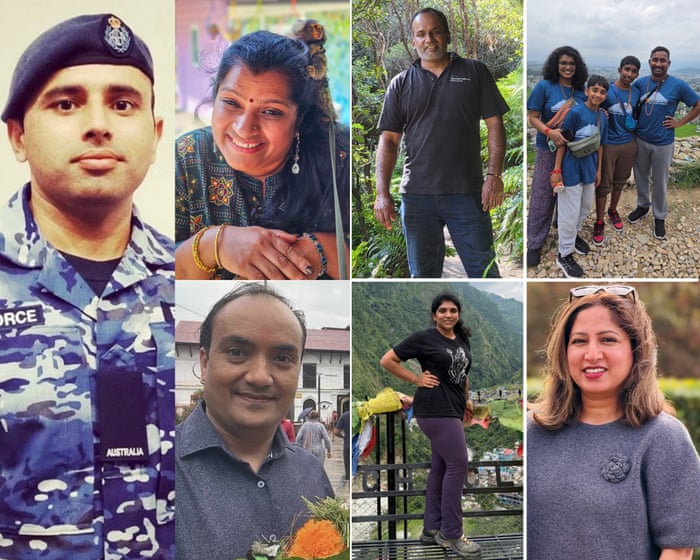
At least 41 Australians are missing after deadly flash floods and landslides hit the Nepal-Tibet border area. Many of the missing were pilgrims and trekkers, including groups from tour companies and members of the Australian Defence Force. Rescue efforts continue amid widespread devastation affecting about 93,000 people.
Key Facts
Flash floods and landslides struck the Nepal-Tibet border, causing many people to go missing.
About 41 Australians are among the nearly 2,500 people reported missing.
Around 93,000 people have been affected by the disaster according to the Red Cross.
Fifteen Australians went missing while on a pilgrimage to Mount Kailash with Himalayan Glacier Adventures.
The missing include multiple families and individuals, such as medical students and a young child.
Six Australians are missing from the Kailash Journeys tour group, including a Royal Australian Air Force member.
Narayan Panthi, a volunteer from Brisbane, is also missing after charity work in Kathmandu.
Another 11 Australians are missing after traveling with the Isha Foundation pilgrimage group.
Read the Original
Want the full story? Tap a source to open the original
article.
An Ecuadorian court found former President Lenin Moreno guilty of bribery related to the country's largest hydroelectric plant. He was sentenced to five years in prison and banned from holding public office. Several of his family members and others were also convicted in the corruption case.
Key Facts
Lenin Moreno was found guilty of bribery connected to the Coca Codo Sinclair hydroelectric plant.
He received a five-year prison sentence and a lifetime ban from public office.
The corruption involved bribes paid by the Chinese state-owned company Sinohydro, totaling about $76.1 million from 2009 to 2018.
Moreno’s wife, daughter, two brothers, and their wives were sentenced to 2.5 years in prison.
China’s former ambassador to Ecuador, Cai Runguo, was sentenced to five years in prison.
Money flowed through overseas bank accounts and shell companies in tax havens before reaching the accused.
Prosecutors say Moreno and his close family received over $1 million during his term as vice president (2007–2013).
Moreno denies the charges, saying he did not sign or oversee the project’s contracts.
Read the Original
Want the full story? Tap a source to open the original
article.
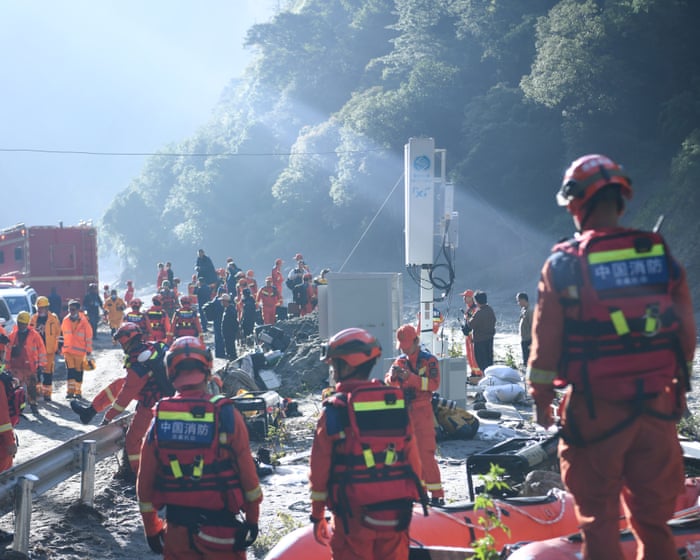
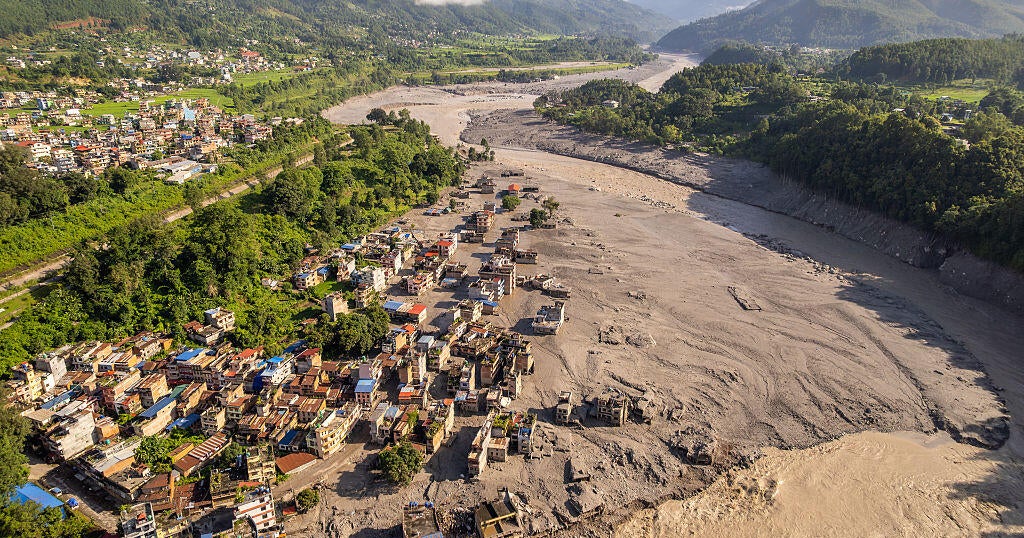
Rescuers have resumed flood recovery efforts near the Nepal-Tibet border after a pause due to fears of a second flood from a newly formed glacial lake. The disaster, caused by a glacier collapse, has killed at least 584 people and left thousands missing in Nepal and Tibet.
Key Facts
A glacier collapsed on Wednesday morning in the Himalayas at about 5,200 meters altitude.
The collapse caused a huge landslide that hit the Lende River and caused flooding downstream in Nepal.
At least 579 people have died and 1,924 are missing in Nepal; in Tibet at least 5 have died and 558 are missing.
Flood waters raised the Trishuli River by 9 meters within 30 minutes.
A new lake formed at the glacier collapse site, causing fears of a second flood and a temporary stop to rescue operations.
Rescuers have resumed work after officials judged the risk from the new lake as manageable.
Chinese Premier Li Qiang and President Xi Jinping have directed focused rescue efforts and monitoring of glacial lakes.
International aid has come from India, the UN, the Red Cross, Australia, South Korea, and the US.
Roads and access remain damaged, so rescuers are still reaching some isolated areas.
Read the Original
Want the full story? Tap a source to open the original
article.
A Chinese rescue team reached the heavily damaged Gyirong border crossing between China and Nepal and found only ruins. The glacier collapse and floods in the Himalayan region have killed over 600 people and left nearly 3,000 missing. Nepal is asking for foreign help with technical tasks like identifying and storing bodies and restoring transport but is handling rescue efforts on its own.
Key Facts
The Gyirong border crossing was destroyed by flooding caused by a glacier collapse.
At least 626 people have died in Nepal and 7 in China’s Tibet from the disaster.
Nearly 3,000 people are still reported missing, with over 2,400 in Nepal and 550 in Tibet.
Nepal has requested foreign aid for technical help, such as DNA testing and repairing transport routes, but not for general search and rescue.
India sent flights with relief supplies and a special tunnel rescue team to Nepal.
Over 100 people are trapped inside a hydropower tunnel in Nepal, with rescue operations ongoing under dangerous conditions.
Nepal and China continue to monitor nearby glacier lakes that could cause further flooding.
China has called for international aid but has not specified what assistance it is sending to Nepal.
Read the Original
Want the full story? Tap a source to open the original
article.
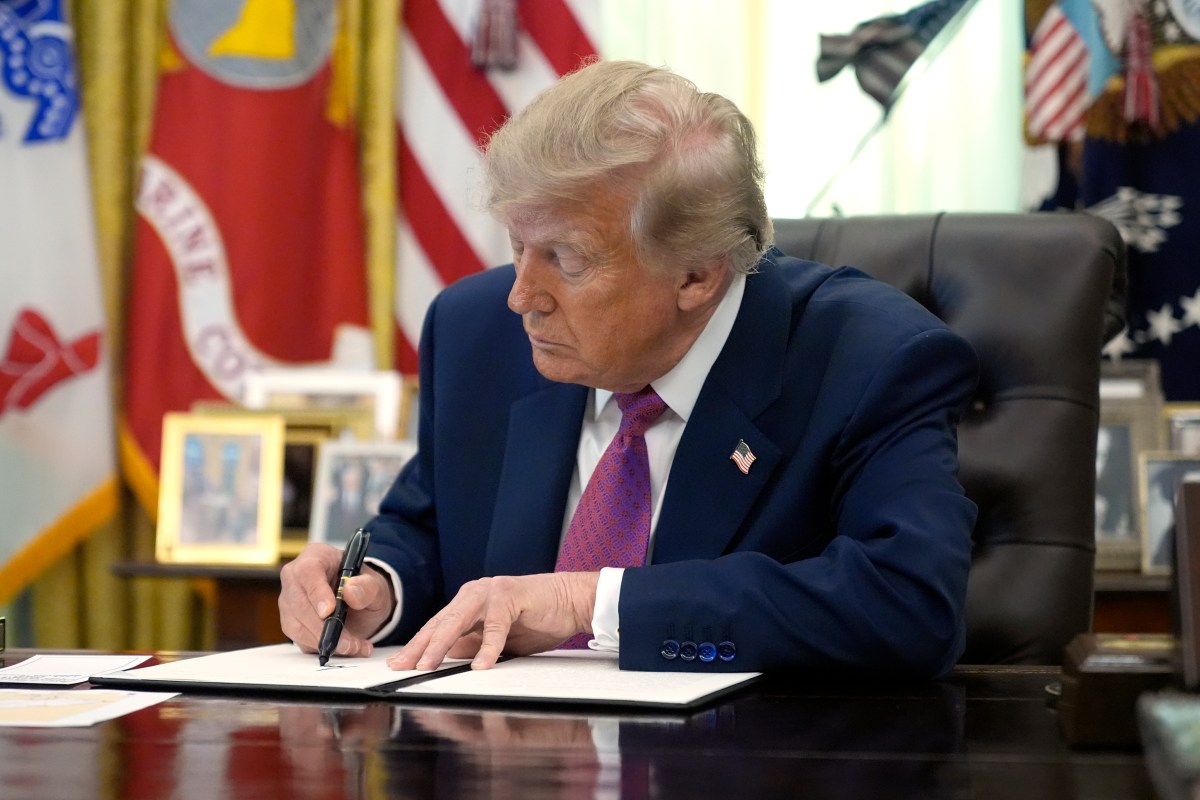
President Donald Trump signed an order renaming Lake Ontario as "Lake America" for use by the U.S. government after trade talks with Canada failed. Some companies, like MapQuest, and officials in the U.S. and Canada have refused to use the new name.
Key Facts
President Trump issued an executive order renaming Lake Ontario to "Lake America" for U.S. federal government use.
The order was part of tensions following the collapse of trade talks between the U.S. and Canada.
The U.S. Geological Survey has updated its electronic documents to reflect the new name.
MapQuest stated it will not change the lake’s name and created a tool for users to name the lake themselves.
Canadian Prime Minister Mark Carney rejected the new name, citing the name’s longstanding history and Indigenous origins.
New York Governor Kathy Hochul said New York would not recognize the name change.
The order does not affect Canadian use or private companies’ naming choices.
A similar renaming happened previously with the Gulf of Mexico, called the Gulf of America by the U.S. government.
Read the Original
Want the full story? Tap a source to open the original
article.
Guinea-Bissau will hold a referendum on August 30 to approve a new constitution that would give the president more power and change the country’s electoral system. This vote follows a military coup in November 2025 and takes place before presidential and legislative elections planned for December 6.
Key Facts
The referendum will decide if a new constitution, approved by the National Transitional Council, will take effect.
The new constitution would give the president more control over the government, including appointing and removing the prime minister.
It would reduce the size of parliament from 102 to 65 seats and cut electoral districts from 29 to 12.
Presidential candidates would need to have lived in Guinea-Bissau for five years before running and pay a large deposit of about $90,000.
Political parties must have at least 5,000 members to support a presidential candidate.
Guinea-Bissau has a history of political instability, with military coups and disputes among government branches.
The military took power in November 2025, installing General Horta Inta-A Na Man as transitional president.
Supporters say the changes will reduce political conflicts; opponents worry about too much power going to the president.
Read the Original
Want the full story? Tap a source to open the original
article.
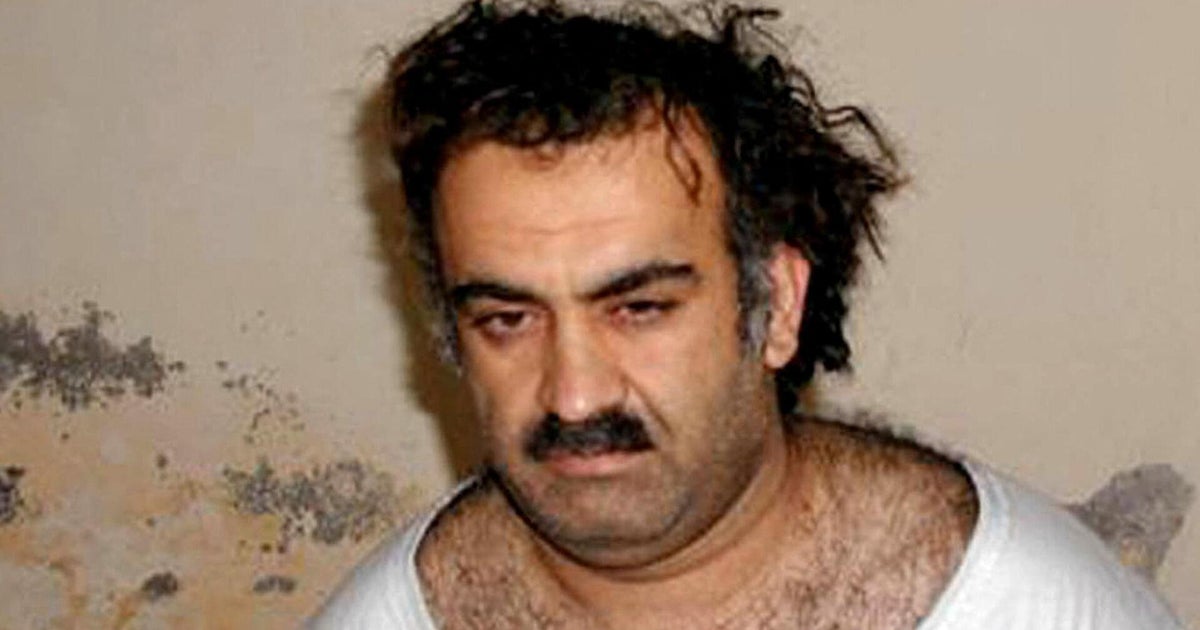
A military judge ruled that the confessions made by Khalid Sheikh Mohammed to FBI agents at Guantanamo Bay were not given voluntarily. Because of this, the judge said these confessions cannot be used in the trial, which is planned for June 2028.
Key Facts
Khalid Sheikh Mohammed is accused of planning the September 11, 2001 attacks.
His trial is scheduled for June 2028.
A military judge decided his confessions to FBI agents were not voluntary.
The confessions were made while he was held at Guantanamo Bay.
As a result, the confessions cannot be used as evidence in the trial.
The FBI agents involved are featured in a CBS documentary called "Daughters of 9/11."
The documentary will air on September 11 on CBS and Paramount Plus.
The news comes almost 25 years after the 9/11 attacks.
Read the Original
Want the full story? Tap a source to open the original
article.
Former Ecuadorian President Lenín Moreno was sentenced to five years in prison for accepting bribes from a Chinese company. Due to his disability, he will serve his sentence under house arrest. Several of his family members also received prison sentences for their involvement.
Key Facts
Lenín Moreno was found guilty of taking bribes from Chinese company Sinohydro linked to a hydroelectric plant project.
Moreno was 73 years old and has a disability that prevents him from walking, so he will serve his sentence at home.
His wife and daughter each received 30-month prison sentences; two brothers and a brother-in-law were also convicted.
All convicted family members were ordered to repay three times the amount of money taken within 90 days.
Moreno’s involvement in corruption dates back to when he was vice president under President Rafael Correa.
Moreno is the third former Ecuadorian president sentenced for corruption; Correa and Jamil Mahuad also received prison sentences.
The bribery network operated from 2008 to 2018 and involved 4% kickbacks from a $2 billion hydroelectric plant project.
The hydroelectric plant, Coca Codo Sinclair, was built by Sinohydro between 2010 and 2016 and has faced criticism over defects.
Read the Original
Want the full story? Tap a source to open the original
article.
Tuareg rebels freed about 60 Malian soldiers in exchange for one of their leaders, Inkinane Ag Attaher, who was held by Nigerian forces. The prisoner swap was monitored by Niger’s government and is part of ongoing efforts to ease tensions amid Mali’s conflict involving multiple armed groups.
Key Facts
Approximately 60 Malian soldiers were released by Tuareg rebels in a prisoner exchange.
The rebels received Inkinane Ag Attaher, a former Malian army officer and Tuareg rebel leader accused of coordinating attacks.
Ag Attaher had been arrested by Nigerian security forces near the Niger-Nigeria border in 2025.
The exchange was overseen by Niger’s government with involvement from Mali and Algeria.
The Azawad Liberation Front (FLA), led by Tuareg rebels, and Jama’at Nusrat al-Islam wal-Muslimin (JNIM), linked to al-Qaeda, are key groups in the conflict.
Mali’s Prime Minister recently visited Algeria to restart talks due to security disagreements.
Mali has been in conflict since 2012 with a civil war involving Tuareg separatists and Islamist groups.
JNIM has grown stronger after Mali expelled French and UN forces, turning to Russian paramilitaries for help.
Read the Original
Want the full story? Tap a source to open the original
article.
The UK government sent a nationwide emergency alert on 14 August warning of a high risk of wildfires across England and Wales. Oliver Dowden, who helped create the alert system, questioned whether using it for this broad warning was appropriate, saying alerts should be reserved for immediate life threats.
Key Facts
The UK's emergency alert system was launched in April 2023 to warn people about life-threatening emergencies.
On 14 August, a "severe alert" was sent nationally about a high wildfire risk.
Oliver Dowden, former Conservative minister involved in the system’s creation, said the alert should be limited to smaller areas with imminent danger.
The alert followed a day when 19 homes burned in a wildfire and 43 wildfires were active in the country.
The government says fire chiefs requested the alert, which was approved and sent after emergency meetings.
Some people criticized the alert, saying it caused confusion and fear, leading some to consider turning off alerts on their phones.
Experts worry frequent or broad alerts might make people ignore future genuine emergencies.
A government spokesperson said the alert helped people behave more safely and reduced wildfire incidents afterwards.
Read the Original
Want the full story? Tap a source to open the original
article.
Heavy gunfire and explosions were heard in several parts of Niamey, the capital of Niger, early Saturday. Reports say the fighting took place near the international airport and the presidential palace amid ongoing conflict in the city.
Key Facts
Gunfire and blasts occurred in multiple areas of Niamey, Niger’s capital.
Shots were reported near Diori Hamani International Airport and the presidential palace.
The gunfire was heavy and ongoing around the presidential palace.
Niger has been under military rule since a coup in July 2023.
The coup removed President Mohamed Bazoum from power.
The military government is led by General Abdourahamane Tiani.
Niger’s current leaders have moved away from Western allies and are building closer ties with Russia.
Similar shifts have been seen in neighboring countries Mali and Burkina Faso.
Read the Original
Want the full story? Tap a source to open the original
article.
Box breathing is a simple breathing exercise that helps reduce stress and improve focus. It involves breathing in, holding the breath, breathing out, and holding again, all for equal counts of four seconds. This technique has been used by groups like the US Navy Seals and recently gained attention for helping people manage anxiety and improve sleep.
Key Facts
Box breathing means inhaling, holding, exhaling, and holding again for four seconds each in a cycle.
The technique comes from traditional practices like yoga and martial arts.
It is used to calm the mind and balance the nervous system.
The US Navy Seals use box breathing before dangerous missions.
A recent study found box breathing can reduce heart rate and stress in high-pressure situations.
The most important part is holding the breath after exhaling, which changes how the body reacts by increasing carbon dioxide levels.
Maria Medina, who lives in the US, uses box breathing to help with sleep and reducing anxiety.
Doctors recommend box breathing because it is a simple, evidence-based way to control stress.
Read the Original
Want the full story? Tap a source to open the original
article.
Canada’s public broadcaster CBC changed its policy after criticism for not calling the September 11 attacks “terrorism.” CBC will now allow the use of the term “terrorism” for 9/11 but will continue to follow rules of attributing causes and motivations to experts for other events.
Key Facts
CBC had a policy not to label specific events as terrorism unless quoting someone else.
A memo reminding CBC journalists of this policy before the 9/11 anniversary caused public and official backlash.
The FBI director, U.S. ambassador to Canada, some Republican lawmakers, and Canada’s Conservative party criticized CBC.
CBC’s senior director stated they never denied 9/11 was terrorism but followed strict attribution rules.
CBC decided to make an exception for the 9/11 attacks to improve clarity for the public.
Canada’s Culture Minister praised CBC’s policy change on social media.
The Canadian government officially recognizes 9/11 as the deadliest terrorist attack.
U.S. officials viewed the original CBC policy as disrespectful to the victims of 9/11.
Read the Original
Want the full story? Tap a source to open the original
article.
The Canadian Broadcasting Corporation (CBC) changed its policy after telling journalists not to call the September 11, 2001 attacks by Al Qaeda a "terrorist attack." This initial guidance caused strong criticism from political leaders, leading CBC to reverse its decision.
Key Facts
CBC originally advised its journalists not to use the phrase "terrorist attack" for 9/11.
The policy was shared in an internal memo reported by The Toronto Sun.
The memo recommended avoiding direct labeling of the 9/11 attacks as terrorism.
Political leaders criticized CBC’s initial guidance widely.
Following the backlash, CBC reversed the policy and allowed the use of "terrorist attack."
The attacks on 9/11 were carried out by the group Al Qaeda.
The incident had significant impact on international and U.S. security policies.
CBC’s reversal shows the influence of public and political pressure on media language decisions.
Read the Original
Want the full story? Tap a source to open the original
article.
Piracy near Somalia has increased sharply, with 13 ships attacked since the start of the year, including two recent hijackings in the Gulf of Aden. This rise is linked to regional conflicts involving the US and Iran that have distracted international naval forces, making pirate attacks more likely.
Key Facts
Two cargo ships were seized in the Gulf of Aden within four days last week.
At least 13 ships have been attacked by Somali pirates since early 2024.
Regional conflicts include the US-Iran tension around the Strait of Hormuz and a blockade by Iran’s allies in Yemen at the Bab el-Mandeb Strait.
Pirate groups see an opportunity because international forces focus on these other conflicts.
The MV Lutuf, a Cameroon-flagged ship, was hijacked off Somalia’s Puntland coast on August 17.
Drone strikes have targeted people supplying pirates, with local officials blaming Turkey for the attacks.
Six ships are currently held by pirates demanding millions in ransom.
The surge in piracy is partly caused by overfishing by foreign vessels harming Somali fishing communities, pushing pirates to target more ships closer to the coast.
Read the Original
Want the full story? Tap a source to open the original
article.
A couple from the San Francisco Bay Area survived a deadly flood in the Himalayas caused by a glacier collapse. The flood killed nearly 600 people and left thousands missing in Nepal and Tibet, with many survivors rescued from dangerous conditions.
Key Facts
A glacier broke apart in the Himalayas, causing massive flash floods in Nepal and Tibet on August 26, 2026.
Nearly 600 people died, and around 2,500 remain missing after the disaster.
About 90 Americans are believed to be among those missing, according to the U.S. State Department.
The flood hit areas near the Nepal-China border, including the village of Timure and Nepal's Rasuwa District.
Anjana Raja and her partner, Pattabiraman Venkatesan, were on a pilgrimage to Tibet and escaped the flood by running and climbing to higher ground.
They spent the night in a goat shed with other survivors before being rescued by helicopter.
Cellphone videos showed people struggling and some being swept away by the floodwaters.
The couple described their survival as a miracle and said the experience made them appreciate life more.
Read the Original
Want the full story? Tap a source to open the original
article.
Iceland is holding a close referendum to decide if it should restart talks to join the European Union (EU), after stopping talks in 2013. The vote focuses mainly on concerns about fishing rights and national control, with the final decision dependent on future agreements and approvals.
Key Facts
Icelanders are voting on whether to resume EU membership talks 13 years after they stopped.
The latest polls show a very close race, with the No side slightly ahead at 51.6%.
Iceland already participates in the EU single market and Schengen zone but is not an EU member.
If talks restart, Iceland could finalize membership talks in one or two years, but a second referendum and parliamentary approval are needed.
A major concern is Iceland’s fishing industry, which makes up almost 40% of exports and is tied to national sovereignty.
Iceland fought to become fully independent in 1944 and fears losing control over fishing waters under EU rules.
Early voting showed more than 20% of voters had cast ballots before the main voting day.
Iceland’s economy is strong by GDP per person but has high interest rates and inflation, which some say EU membership could help lower.
Read the Original
Want the full story? Tap a source to open the original
article.