A new lake has formed upstream in Nepal near the Chinese border after a glacier collapsed. This lake could burst and cause more flooding, so emergency teams are staying alert as rescue efforts continue following recent deadly floods.
Key Facts
A glacier collapse in Nepal caused severe flooding along the Nepal-China border.
The collapse led to the formation of a new lake upstream.
Authorities fear the lake may burst and cause fresh flooding downstream.
Rescue teams are working actively to help people affected by the floods.
About 93,000 people have been impacted by the disaster, according to the Red Cross.
Satellite images have helped track the formation and size of the new lake.
The floods have damaged homes and infrastructure, worsening the situation for survivors.
Both Nepal and Tibet regions remain at risk due to the unstable conditions created by the glacier collapse.
Read the Original
Want the full story? Tap a source to open the original
article.
A flash flood hit the border area between Nepal and Tibet, causing many people to go missing. Rescue teams are working hard to save survivors, but a second flood is making their efforts more difficult. Families are anxiously waiting for news about their loved ones.
Key Facts
A flash flood occurred on Wednesday at the Nepal-Tibet border.
More than 1,500 people are reported missing after the flood.
Rescue teams are actively trying to find and help survivors.
A secondary flood has happened, causing delays in rescue operations.
Families of missing people are waiting for information about their relatives.
Read the Original
Want the full story? Tap a source to open the original
article.
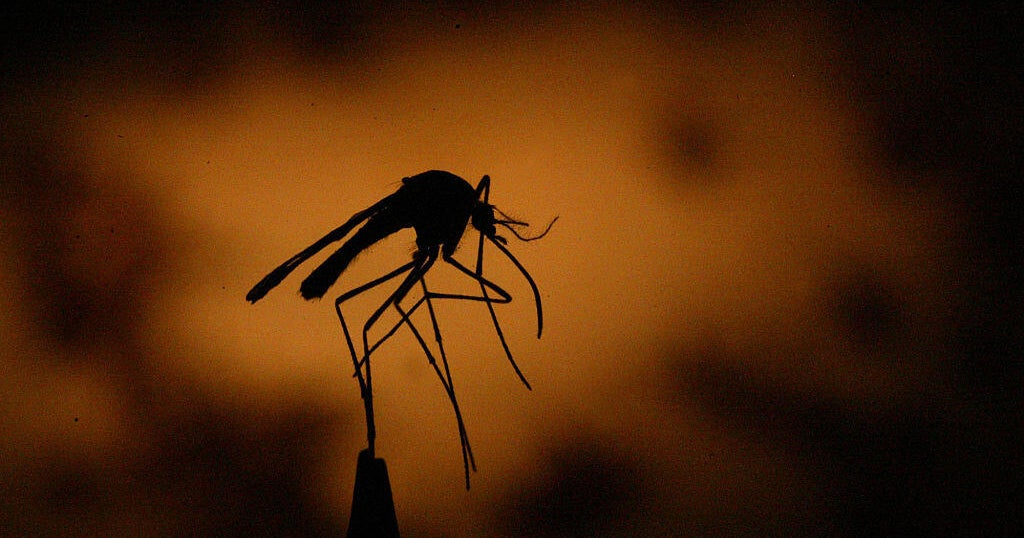
Two workers at Frankfurt Airport in Germany died after catching malaria from a mosquito believed to have arrived on a plane. Several other workers were infected and are receiving treatment while authorities investigate the source and take precautions.
Key Facts
Two employees at Frankfurt Airport died from malaria contracted via a mosquito likely brought in on an aircraft.
Six workers in total were infected; four are hospitalized and being treated.
The Robert Koch Institute identified an imported Anopheles mosquito as the probable cause.
Mosquito traps have been set up at the airport to capture and study mosquitoes for origin and species.
Malaria is usually caught by travelers from high-risk countries; local transmission in Germany is very rare.
The disease spreads only through mosquitoes, not from person to person.
Lab tests to confirm the infection source will take several weeks.
Malaria can cause fever and chills but is treatable if caught early, and most patients recover fully.
Read the Original
Want the full story? Tap a source to open the original
article.
Eswatini has received two migrants deported from the United States under an agreement between the two countries. This deal is part of a U.S. policy to deport people to third countries, which has faced criticism from human rights groups.
Key Facts
Two migrants from Latin America arrived in Eswatini after deportation from the U.S.
These individuals are called "third-party nationals" because they are not citizens of the U.S. or Eswatini.
This group is the fifth batch sent from the U.S. to Eswatini since July 2025.
Some deportees were later sent back to their home countries or released after detention.
The Trump administration has made agreements with around 24 countries, including 11 African nations, to deport migrants who are not from those countries.
Human rights advocates say this practice may push asylum seekers back to the dangerous places they fled.
Eswatini and some other African countries involved in these deals have poor human rights records and strict governments.
Pro-democracy and civil rights groups in Eswatini oppose these deportation agreements through protests and legal action.
Read the Original
Want the full story? Tap a source to open the original
article.
Mohan Bhagwat, leader of the Hindu nationalist group Rashtriya Swayamsevak Sangh (RSS), is scheduled to speak at a large event in New York City. The event has sparked protests and criticism from New York's mayor and a U.S. religious freedom panel because of RSS’s controversial views and actions.
Key Facts
Mohan Bhagwat is the chief of the RSS, linked to India’s ruling Bharatiya Janata Party (BJP).
The RSS is a Hindu nationalist group founded about 100 years ago.
The group promotes the idea of Hindutva, defining Indian culture mainly by Hindu values.
Critics accuse RSS of encouraging intolerance and human rights abuses against minorities, including mob violence and destruction of Muslim properties.
The event in New York, called the "Universal Oneness Celebration," is organized by American Hindus for Engagement and Dialogue.
About 5,000 Indian Americans are expected to attend the event at Madison Square Garden.
New York Mayor Zohran Mamdani opposes the event due to the RSS ideology conflicting with the city's diverse values.
The event brings together over 200 Hindu American groups and uses the phrase “Vasudhaiva Kutumbakam,” meaning “the world is one family.”
Read the Original
Want the full story? Tap a source to open the original
article.
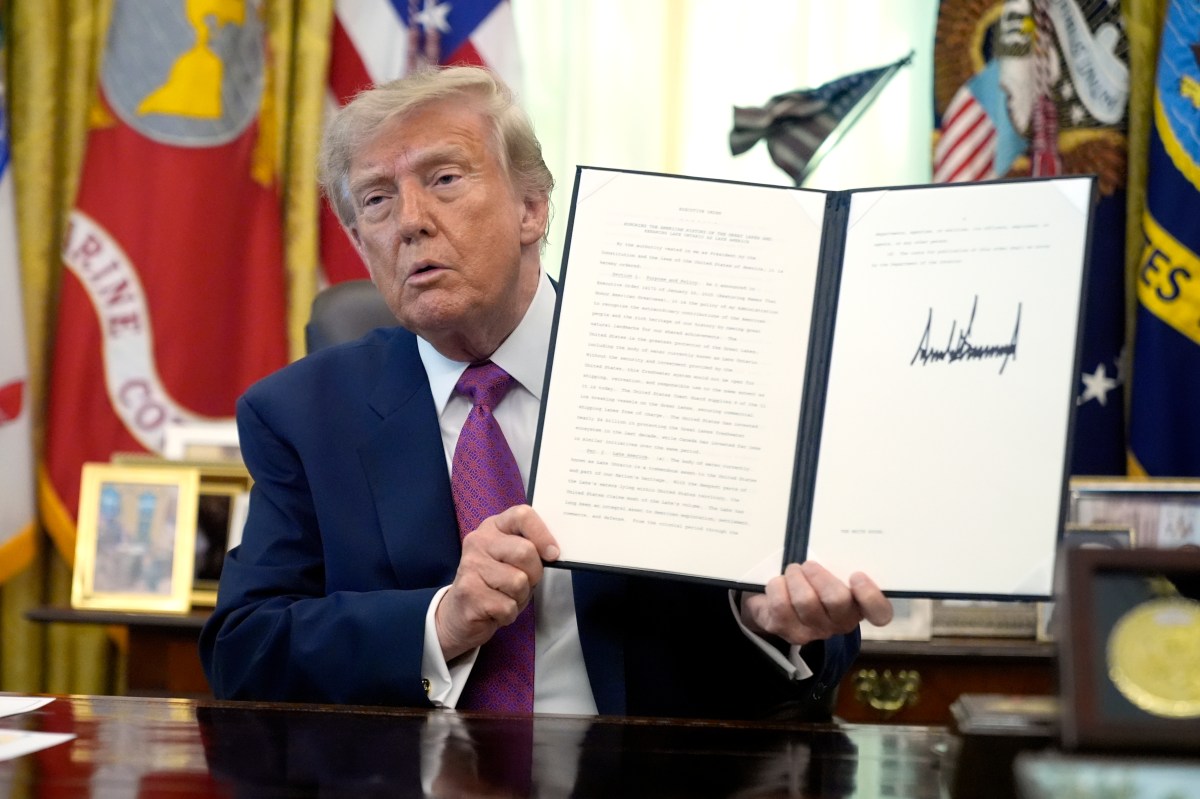
President Donald Trump signed an order on August 27, 2026, to rename Lake Ontario as "Lake America." The Canadian Prime Minister Mark Carney responded that the lake’s name would stay the same. This happened after trade talks between the U.S. and Canada failed, leading both countries to impose tariffs on each other.
Key Facts
President Trump signed an executive order to rename Lake Ontario to "Lake America."
The order was announced on August 27, 2026, and was to take effect immediately.
Canada’s Prime Minister Mark Carney stated the lake’s name will remain "Lake Ontario."
The renaming order follows the collapse of trade talks between the U.S. and Canada.
After the talks ended, both countries introduced tariffs against each other as a trade conflict.
Lake Ontario is one of the Great Lakes, which are shared by the U.S. and Canada.
The name change is a political move connected to disagreements over trade policy.
Read the Original
Want the full story? Tap a source to open the original
article.
The UK Ministry of Defence plans to start testing powered paragliders for soldiers, allowing troops to fly quietly up to 200 miles behind enemy lines. These lightweight gliders can be carried as backpacks, assembled quickly, and launched on foot to covertly enter hostile areas.
Key Facts
The powered paragliders are made by Blakcro, a British company founded in 2023.
The gliders have a titanium frame and can carry body armor, night vision gear, and weapons.
They have a flying range of up to 200 miles and are quieter and harder to detect than regular aircraft.
The Ministry of Defence is investing £6 million to start trials of this technology soon.
The paragliders are currently being used by other NATO countries.
Blakcro also works with the US Department of Defense on similar projects.
The UK government aims to increase spending on domestically made defence equipment.
The UK government plans to meet NATO defence spending goals of 3.5% of GDP by 2035.
Read the Original
Want the full story? Tap a source to open the original
article.
A Dutch court sentenced a Dutch-Rwandan man named Eugene N to life in prison for his role in the 1994 genocide in Rwanda. He was found guilty of war crimes and genocide after attacking Tutsis who sought shelter in a stadium during the massacre.
Key Facts
Eugene N, 66 years old, was sentenced to life in prison by a court in the Netherlands.
He was convicted for throwing a hand grenade at Tutsis trapped in a stadium during the 1994 Rwanda genocide.
The judge said Eugene N acted with "genocidal intent," meaning he planned to kill people because of their ethnic group.
The genocide happened over about 100 days in 1994, killing around 800,000 Tutsis and moderate Hutus.
Eugene N held a powerful position in his community during the genocide, overseeing about 1,000 people.
He instructed Hutus not to let Tutsis escape the stadium, where many were killed by stones, guns, grenades, clubs, and machetes.
The Netherlands started investigating Eugene N in 2014 and formally arrested him in 2024 after interviewing more than 30 witnesses.
Eugene N denies the charges and claims he is a victim who lost family during the genocide. His lawyers plan to appeal the verdict.
Read the Original
Want the full story? Tap a source to open the original
article.
Two men paid to enter the Museum of Applied Arts in Vienna and stole a 200-carat diamond and platinum necklace by breaking its glass case. The necklace, made by Van Cleef and Arpels and worth millions, was part of a special exhibition that has now been closed. European museums have seen many recent high-value thefts of jewelry and artwork.
Key Facts
The theft happened at the Museum of Applied Arts (MAK) in Vienna.
The necklace stolen is platinum with 673 diamonds, weighing 200 carats.
The necklace was designed for former Egyptian royalty and worn in 1939 at a royal wedding.
The thieves paid for entry and were caught on security cameras without wearing masks.
The necklace was part of a Van Cleef and Arpels exhibition scheduled to end on September 27.
Recently, European museums have experienced multiple major thefts, including a $102 million jewelry heist at the Louvre.
Other art and jewelry thefts have occurred in Spain, Italy, and France in the past year.
Police are still investigating the Vienna theft and the necklace’s whereabouts are unknown.
Read the Original
Want the full story? Tap a source to open the original
article.
Around 12,000 people are reported missing in Nepal after severe floods destroyed entire villages. The floods caused widespread damage and triggered a large-scale search and rescue effort.
Key Facts
Heavy floods hit Nepal, causing major destruction.
Entire villages were washed away by the floods.
Approximately 12,000 people are missing.
Local news outlets reported the situation.
Rescue teams are working to find the missing people.
The floods are described as catastrophic and deadly.
The event has caused a significant humanitarian crisis.
Read the Original
Want the full story? Tap a source to open the original
article.
A group of Democratic senators asked Israeli Prime Minister Benjamin Netanyahu to stop plans for building new homes in the West Bank. They are worried the project would split the Palestinian territory, impacting peace efforts.
Key Facts
Over a dozen Democratic senators signed a letter to Prime Minister Netanyahu.
The letter was led by Arizona Senator Ruben Gallego.
The planned housing development is in the West Bank, an area with disputed control.
Senators fear the new homes would divide Palestinian land further.
The Israeli government has started the bidding process for the construction.
The senators want the Israeli government to reverse this decision to build the homes.
The issue relates to the ongoing conflict and peace process between Israelis and Palestinians.
Read the Original
Want the full story? Tap a source to open the original
article.
Humpback whales off Brazil's coast have made a strong comeback since commercial whaling was banned in 1986. Today, about 35,000 humpbacks live in the South Atlantic, with Brazil’s Abrolhos archipelago as a major breeding ground studied by scientists.
Key Facts
Commercial whaling was banned worldwide in 1986, and Brazil followed with its own ban in 1987.
The Abrolhos archipelago off Brazil is the largest breeding area for Southern Atlantic humpback whales.
The humpback whale population in the South Atlantic is around 35,000, nearly half of the global total.
In 2014, humpback whales were removed from Brazil’s threatened species list due to their population growth.
Scientists collect skin and blubber samples using a crossbow to study whale family relationships and migration patterns.
Humpbacks migrate long distances, with some traveling from Brazil to places as far as South Georgia island and Australia.
Researchers use an artificial intelligence tool called Happy Whale to identify individual humpbacks from tail patterns in photos.
The AI helped track a whale that traveled over 15,000 kilometers from Brazil to Australia.
Read the Original
Want the full story? Tap a source to open the original
article.
An armed attack on a cattle camp and village in northwest South Sudan killed at least 49 people and injured 33 others. The raid is part of ongoing violence between herders fighting over land and water, causing serious problems for local communities.
Key Facts
The attack happened early Thursday at Machar-Pakuek cattle camp and Mading Juer Boma in Warrap State.
At least 49 people were killed and 33 wounded in the raid.
The raid was carried out by an armed cross-border criminal group, according to local officials.
This area faces frequent violent cattle raids due to competition over scarce grazing land and water.
The local government called the attack a humanitarian crisis and asked for help from aid groups.
A similar raid three weeks ago killed 60 people and wounded 50 in the same region.
South Sudan's President Salva Kiir declared a six-month state of emergency last year due to rising violence from such raids.
The United Nations is concerned about ongoing community violence in this region of South Sudan.
Read the Original
Want the full story? Tap a source to open the original
article.
Flash floods caused by a glacier collapse hit the Nepal-Tibet border area, killing over 550 people and leaving about 1,500 missing, including many foreign tourists. Survivors told stories of quickly escaping rushing floodwaters, with rescue teams using helicopters to save people trapped in valleys.
Key Facts
The disaster happened at the Himalayan border between Nepal and Tibet (China).
Over 550 people have died, and about 1,500 are still missing.
Many missing people are foreign tourists.
A glacier collapse likely triggered the floods and landslides.
Survivors described vehicles being swept away and heavy mudslides.
Rescue crews used helicopters to reach survivors in hard-hit valleys.
A group of pilgrims from India escaped by climbing a hill after their bus was caught.
Workers at dam construction sites suffered heavy losses; some survived by sheltering in tunnels.
Read the Original
Want the full story? Tap a source to open the original
article.
Drone strikes in Sudan’s North Kordofan region killed eight civilians and injured dozens, according to a rights group. A second drone attacked rescuers arriving to help victims, which the group called a war crime and urged for an independent investigation.
Key Facts
Eight civilians were killed and dozens wounded by drone strikes in the desert town of Sowdari, North Kordofan, Sudan.
A second drone struck while people were helping the initial victims.
The rights group Emergency Lawyers says this repeated targeting violates international law and is considered a war crime.
Sudan has been in conflict since April 2023 between the Rapid Support Forces paramilitary and the Sudanese military.
At least 59,000 people have died in the fighting, but the real toll may be higher.
Both sides in the conflict have used drones for attacks.
The United Nations reports drone strikes caused 80% of civilian deaths in Sudan during the first four months of 2024.
The rights group is calling for an independent investigation to find out who is responsible for the drone attacks.
Read the Original
Want the full story? Tap a source to open the original
article.
A flash flood along the Nepal-China border caused heavy damage and many missing people. Authorities warn that a new lake formed by a glacial collapse could overflow and cause more flooding downstream. Rescue efforts continue while officials stay alert for further risks.
Key Facts
A flash flood hit the Himalayan border region between Nepal and China, causing serious damage.
A glacial collapse on August 26 blocked a river, creating a new lake behind debris.
The lake holds several million cubic meters of water—about 1,200 Olympic-sized swimming pools.
The lake is located about 6 miles from Gyirong Port, a border crossing that was flooded.
Officials warn the lake could burst and cause more flooding downstream.
More than 1500 people are still missing after the disaster.
Rescue workers are on high alert and ready to evacuate if needed.
Scientists say melting glaciers and debris increase the risk of further floods but a flood as severe as the first is unlikely to happen again.
Read the Original
Want the full story? Tap a source to open the original
article.
Ottawa’s city council voted to start the process of renaming a street called Trump Avenue, which has had the name for about 25 years. One suggested new name is "Taco Avenue," which refers to a phrase making fun of President Donald Trump.
Key Facts
Trump Avenue is a residential street in Ottawa, Canada’s capital.
The council voted unanimously to begin renaming the street.
Possible new names include Taco Avenue, Pelosi Avenue, Obama Avenue, Gulf of Mexico Avenue, and Rosie O'Donnell Avenue.
"Taco Avenue" stands for "Trump Always Chickens Out," a phrase that became popular online in 2025.
More than half of the local residents need to agree to the name change before it can move forward.
After resident approval, there will be another public consultation to choose the final name.
Officials expect the process to continue after Ottawa’s municipal election in October 2024.
President Trump recently signed an order to rename Lake Ontario as "Lake America" for U.S. federal agencies, but Canada is not required to follow this change.
Read the Original
Want the full story? Tap a source to open the original
article.
A lake created by floods and mudslides on the border between China and Nepal overflowed on Friday. This caused rescue efforts in the area to stop temporarily.
Key Facts
Floods and mudslides occurred on the China-Nepal border.
These disasters created a lake by blocking water flow.
The lake’s banks broke on Friday, causing more flooding.
Rescue operations in the affected area were paused because of the flooding.
The event took place near the border between China and Nepal.
Al Jazeera reported from Nepal’s capital about the situation.
Read the Original
Want the full story? Tap a source to open the original
article.
Six months ago, the United States and Israel started strikes on Iran, killing Iran’s Supreme Leader and hitting key sites. Since then, Iran has attacked US forces and allies, Hezbollah has launched rockets at Israel, and fighting has caused many deaths and economic disruptions, but no side has gained a clear victory.
Key Facts
At least 7,900 people have died since the conflict began, including thousands in Lebanon and Iran, and dozens of Americans and Israelis.
The US and Israel have carried out over 3,500 attacks on Iran, while Iran has launched more than 2,000 attacks in the Gulf region.
Ship traffic through the Strait of Hormuz, an important oil route, has dropped from 100 ships daily to about 7 due to blockades and attacks.
There have been 70 confirmed attacks on ships in the Strait of Hormuz, causing 19 deaths of crew members.
The war has cost the US government at least $37.5 billion so far, with some estimates much higher to cover repairs and military supplies.
Oil prices have risen by about 22% since the war started, with a peak increase of 67% earlier this year.
The US Strategic Petroleum Reserve is at its lowest level since 1982, holding 290 million barrels, down from its full capacity of 714 million barrels.
Read the Original
Want the full story? Tap a source to open the original
article.
Qatar’s Minister of State for Foreign Affairs visited eastern Libya for the first time in 14 years. This visit is part of efforts by Qatar, Egypt, and Turkiye to help unify Libya after many years of conflict between two opposing governments.
Key Facts
Qatar’s foreign minister visited eastern Libya, marking the first visit in 14 years.
The visit aims to promote the idea of a united Libya, often called ‘One Libya’.
Libya has been divided and in conflict for over ten years.
Two rival authorities have been fighting for control of the country.
Qatar is cooperating with Egypt and Turkiye in these diplomatic efforts.
The push for unity involves talks and visits to different parts of Libya.
The goal is to end the long-lasting political split and violence in Libya.
Read the Original
Want the full story? Tap a source to open the original
article.