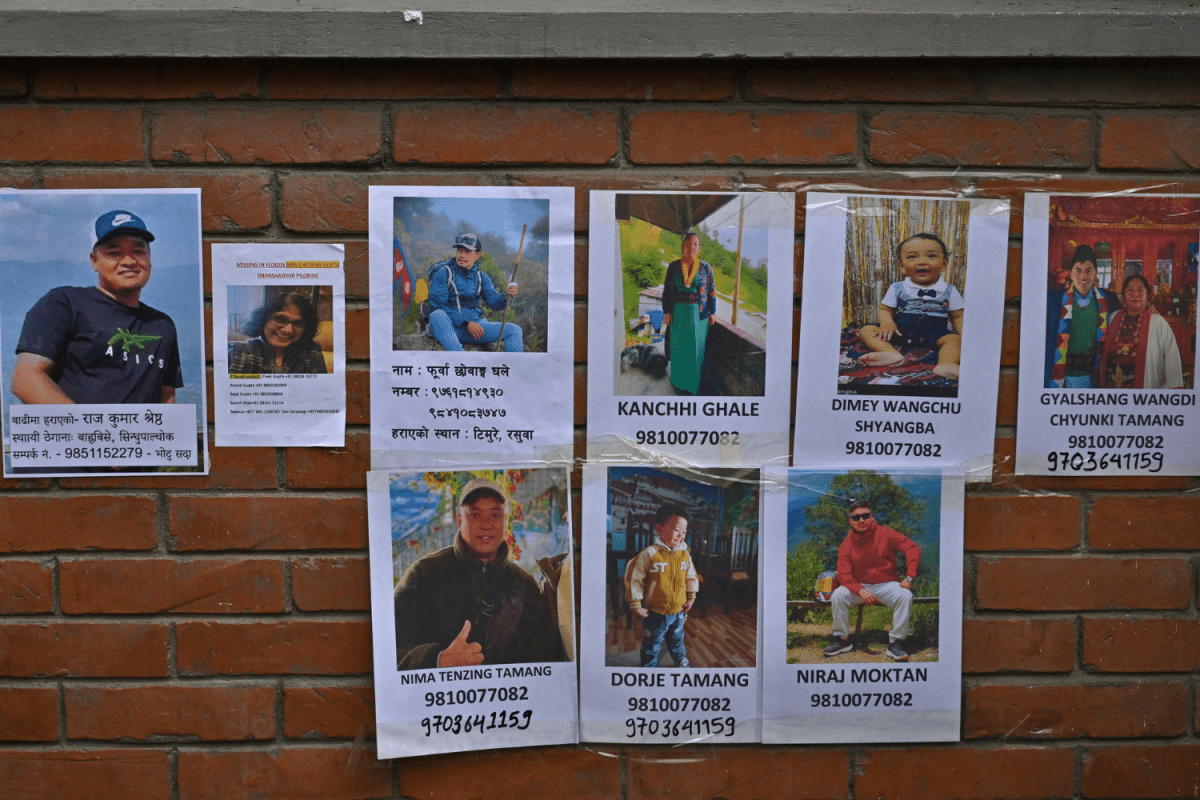
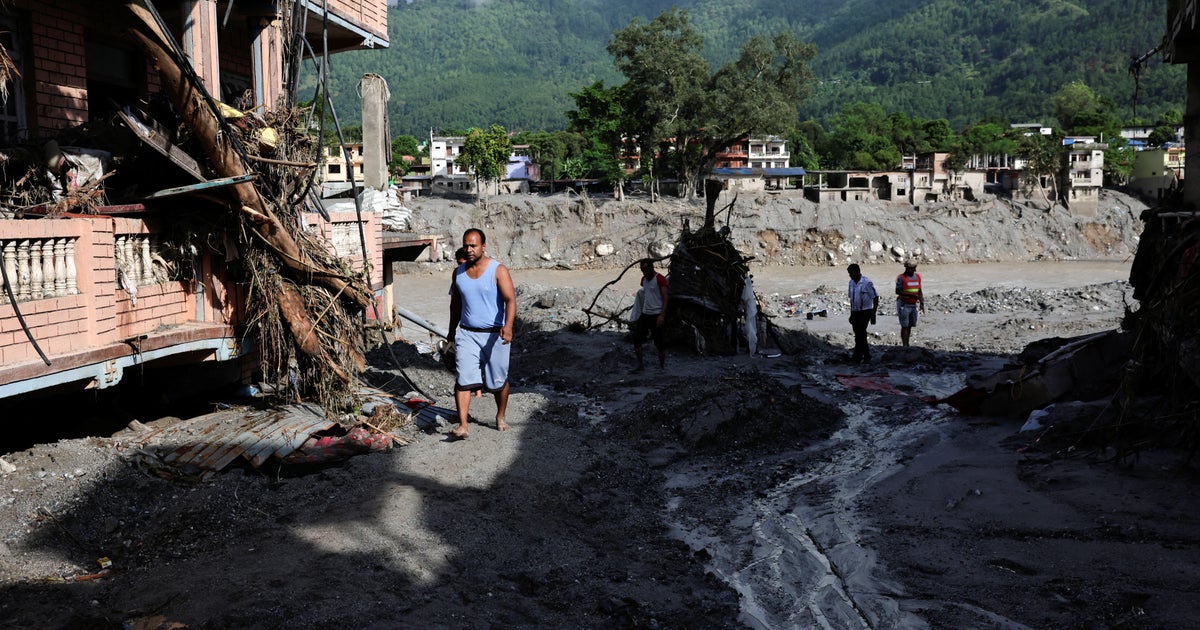
Heavy flooding caused by a glacier avalanche in Nepal's Rasuwa district has killed at least 475 people and left many others unaccounted for. Authorities reported that 63 Americans are currently out of contact, and rescue operations are in progress. The U.S. government has offered help and sent aid to support relief efforts.
Key Facts
Flooding in Nepal began on Wednesday after a glacier avalanche blocked a river, causing a sudden flood downstream.
At least 475 people have died in the Rasuwa district due to the floods.
Over 500 foreign nationals are currently out of contact; among them, 63 are U.S. citizens.
Two Americans previously reported missing have since been rescued.
Rescue teams are working to clear roadblocks and restore access to affected areas.
President Donald Trump said the U.S. offered Nepal any needed help and is sending aid.
The U.S. State Department deployed a disaster response adviser to Nepal.
The U.S. is providing $500,000 for emergency shelter, supplies, and water services in the flood areas.
Read the Original
Want the full story? Tap a source to open the original
article.
Experts warn that climate change is making extreme weather more intense and unpredictable. Natural events like El Niño can increase this effect, causing dangerous heat, droughts, storms, and floods to happen more often in Europe.
Key Facts
Climate change is making extreme weather events stronger and less predictable.
El Niño is a natural climate event that can worsen the effects of climate change.
The combination of El Niño and climate change can make heatwaves, droughts, and storms worse.
Europe is already experiencing more severe heat, drought, water shortages, and flooding.
These extreme weather events are becoming more common and should be expected as part of the new normal.
Governments in Europe are currently not well prepared to handle these increasing climate risks.
Experts say this growing climate instability affects not only weather but also ecosystems and human health.
Read the Original
Want the full story? Tap a source to open the original
article.
Heavy floods have caused serious damage in Nepal, especially near the Tibetan border in Trishuli. Roads are blocked, and entire villages have been destroyed by the floodwaters, making rescue efforts difficult.
Key Facts
The floods hit areas between Nepal’s capital, Kathmandu, and Trishuli near the Tibetan border.
Many roads are blocked due to the flooding and damage.
Ambulances and hearses have been seen traveling to and from the affected areas.
Rescue teams say entire villages have been washed away by the floodwaters.
The BBC correspondent Azadeh Moshiri reports from the site.
Rescue operations are ongoing as the disaster unfolds.
The flooding is part of severe weather conditions affecting the region.
Read the Original
Want the full story? Tap a source to open the original
article.
Sudipto Bhattacharya’s wife, Subhrasree Chakraborty, was about to cross from Nepal into Tibet for a religious pilgrimage to Mount Kailash when her messages suddenly stopped. She is now one of at least 290 Indians reported missing after deadly flash floods hit the Nepal-Tibet border area during the pilgrimage.
Key Facts
Subhrasree Chakraborty was on a pilgrimage to Mount Kailash, a sacred Hindu site in Tibet.
She sent her last message on 26 August at 08:03 local time after completing Nepal immigration and waiting to enter China.
At least 290 Indians are missing following flash floods near the Nepal-Tibet border.
The pilgrimage resumed recently after disruptions due to COVID-19 and tensions between India and China.
Subhrasree was traveling with a group of about 30 people, but without her family.
The group faced some travel difficulties before, including a landslide that blocked their road for several hours.
Subhrasree had been excited about the trip and shared photos from Kathmandu just before setting out.
Her husband has not heard from her since the messages stopped and is uncertain of her whereabouts.
Read the Original
Want the full story? Tap a source to open the original
article.
Nepal and China have stopped rescue efforts near their border after a natural dam, called a barrier lake, formed by a glacier collapse began to overflow. This lake threatens to cause another big flood, forcing rescue teams to move to safer areas while residents prepare for possible flooding.
Key Facts
A glacier collapsed in the Himalayas, causing a flash flood with ice, rock, mud, and water.
The flood blocked a river, forming a natural dam called a barrier lake.
The barrier lake started to overflow, raising the risk of another large flood wave downstream.
Rescue operations were paused temporarily in both Nepal and China due to safety concerns.
Over 470 people have died, about 1,550 rescued, and more than 1,500 people remain missing.
Around 90,000 people are affected by the disaster.
Roads are destroyed, making it hard to deliver supplies and reach survivors.
China and Nepal have deployed thousands of security and military personnel for rescue and relief missions.
Read the Original
Want the full story? Tap a source to open the original
article.
The United States has taken control over most of the Strait of Hormuz, a key waterway for global oil transport, reducing Iran's influence in the area. This change has allowed more ships to pass safely and helped lower oil prices after months of disruption caused by Iran's threats and attacks.
Key Facts
The Strait of Hormuz is a crucial route for global oil shipments.
Iran initially tried to close the strait and threatened to attack ships.
Iran deployed naval mines in the main shipping lane early in the conflict.
The U.S. and the UAE worked together to guide ships safely through the strait.
The U.S. military struck Iranian military positions to reduce attacks.
Special teams cleared over 200 mine-like objects, with only 11 confirmed as real mines.
About 20 to 30 oil tankers now pass through the strait each night, carrying roughly half the usual amount of oil.
Iran still fires at ships but hits only a small percentage of them.
Read the Original
Want the full story? Tap a source to open the original
article.
Heavy flash floods in Nepal and China have caused over 470 deaths and left more than 1,500 people missing. Rescue teams are working to save survivors, including people trapped in a hydropower tunnel, while authorities monitor the risk of additional flooding from a barrier lake.
Key Facts
Over 470 people have died due to flash floods in Nepal and China.
More than 1,500 people remain missing after the disaster.
Helicopters have evacuated over 3,000 people to safety in Nepal.
Nepal rescuers are helping people stuck in a hydropower tunnel covered by mud.
Scientists say a glacier collapse caused the floods, with a large rockfall triggering a river surge.
Hundreds of foreigners, including at least 65 Americans, were among those missing.
Nepal police issued warnings about a burst dam in Tibet and flood risks from a nearby barrier lake.
Chinese state media reported evacuations and relief efforts but gave fewer details on survivors.
Read the Original
Want the full story? Tap a source to open the original
article.
New satellite images and video analysis show that deadly floods in Nepal started when part of a glacier near the China border broke off. This caused a fast-moving flow of rocks and water that destroyed areas over 80 kilometers. Officials say the disaster may continue because a new lake upstream is spilling over.
Key Facts
A glacier near the border between Nepal and China collapsed.
The collapse triggered a debris flow moving at up to 150 km/h (about 93 mph).
The flood affected communities along more than 80 kilometers of the river.
Scientists are working to understand the exact chain of events causing the flood.
Authorities warn that the disaster might worsen due to an overflowing new lake upstream.
Rescue teams are searching for people missing after the floods.
The disaster has caused significant damage and loss in Nepal and nearby regions.
Relief and aid efforts are being carried out to help affected communities.
Read the Original
Want the full story? Tap a source to open the original
article.
During China’s one-child policy era, many children were taken from their families and put up for adoption abroad. Some adoptees are now adults searching for their origins, while Chinese authorities have worked to stop child trafficking and set up a DNA database to help match children with their birth families.
Key Facts
China began allowing international adoption in 1992.
Over 150,000 Chinese babies have been adopted by foreign families since then.
Some children were taken from their families illegally and sold for adoption or marriage.
Chinese authorities cracked down on child trafficking related to adoption.
A DNA database was created in 2009 to verify children’s family connections before adoption.
This database is now also used to help adoptees find their birth parents.
Many adoptees from the one-child policy period have unanswered questions about their past.
The one-child policy officially ended about ten years ago.
Read the Original
Want the full story? Tap a source to open the original
article.
Flash floods have struck the Himalayan border region between Nepal and China, killing at least 472 people and leaving more than 1,500 missing. Over 3,250 people have been evacuated by helicopter, and rescuers are working to find survivors while warning of potential further flooding from an overflowing lake upstream.
Key Facts
At least 472 people have died due to flash floods in the Himalayan border area between Nepal and China.
More than 1,500 people are reported missing after the floods.
Over 3,250 people have been evacuated by helicopter from affected areas.
Rescue teams are searching for survivors amidst dangerous conditions.
Authorities warn that a nearby lake is overflowing, which could cause more flooding.
The floods caused widespread destruction including landslides and washed-out villages.
The disaster affected both Tibet (China) and Nepal regions along the Himalayan border.
Emergency aid and rescue efforts are ongoing to assist those impacted.
Read the Original
Want the full story? Tap a source to open the original
article.
The European Union is asking Meta, the company behind Facebook and Instagram, to apply the same safety rules for teenagers in Europe that Meta has agreed to follow in the United States. These rules include limits on how much screen time teens have and stronger controls for parents over their children’s accounts. The EU also wants Meta to add more safety measures for young users in Europe.
Key Facts
The EU wants Meta to protect users under 18 years old on Facebook and Instagram in Europe.
Meta has agreed to special teen safety rules in the United States in a legal settlement.
These rules include limits on how long teens can use the platforms each day.
Parents get stronger tools to manage their teen children’s social media accounts.
The EU is pushing Meta to extend these protections to European users under 18.
Brussels (the EU’s main office) is also asking Meta to add extra safety measures beyond what is in the US rules.
The goal is to make social media safer for teenagers in Europe.
Read the Original
Want the full story? Tap a source to open the original
article.
The Villena Treasure, a very valuable collection from Europe’s Bronze Age, was stolen from a museum in eastern Spain. Thieves broke in by smashing a window and bulletproof glass, stealing almost all the items in just four minutes.
Key Facts
The Villena Treasure is one of Europe’s most important Bronze Age collections.
The theft happened at a museum in eastern Spain.
Thieves smashed through a window and bulletproof glass to enter.
The robbery lasted about four minutes.
Police believe multiple people and vehicles were involved.
The thieves likely caused a distraction by triggering a nearby sports centre’s alarm before the break-in.
Read the Original
Want the full story? Tap a source to open the original
article.
The conflict between the U.S. and Iran has lasted six months with no clear end in sight. President Trump’s plan to end the war has changed many times, moving from military actions to attempted negotiations and now to economic pressure on Iran.
Key Facts
The war began on February 28 and was initially expected to last four to five weeks.
President Trump set goals to destroy Iran’s missile and naval capabilities and prevent Iran from getting nuclear weapons.
By April, Trump claimed military objectives were met and negotiations aimed at reopening the Strait of Hormuz began.
A memorandum of understanding was signed on June 17 to stop hostilities and start talks, but it fell apart by summer.
After the deal collapsed, Trump stopped negotiations with Iran in early July.
Trump threatened more military force if Iran did not agree to a deal.
In August, Trump announced a strong economic strategy to isolate Iran financially.
The goal to stop Iran from acquiring nuclear weapons remains a firm priority throughout these changes.
Read the Original
Want the full story? Tap a source to open the original
article.
A video shows children in Gaza hiding behind a shopping cart loaded with water cans during a gun attack by an Israeli drone. A recent United Nations investigation accused Israel of intentionally killing children in Gaza as part of genocide.
Key Facts
Children in Gaza were seen taking cover behind a shopping cart during a drone attack.
The drone involved is described as a quadcopter, a small unmanned aircraft.
The attack was reportedly carried out by an Israeli drone.
A UN commission of inquiry recently investigated violence in Gaza.
The commission found Israel responsible for deliberately killing children in Gaza.
The commission described these killings as an act of genocide.
The video illustrates the dangerous conditions faced by children in Gaza.
The incident is part of ongoing conflict and violence in the region.
Read the Original
Want the full story? Tap a source to open the original
article.
Several countries, including South Korea, India, China, the UK, and the EU, are increasing rescue and aid efforts after severe floods in Nepal and nearby China. Many people are still missing, and officials are worried that a lake created by the disaster might break, causing more flooding.
Key Facts
The floods affected Nepal and parts of China, especially near the Himalayan mountains.
Hundreds of foreign nationals are among those missing after the floods.
Rescue work is difficult because the area has rough mountain terrain.
A new lake has formed due to the floods and could burst, leading to more damage.
Countries involved in aid include South Korea, India, China, the UK, and the European Union.
Relief agencies like the Red Cross are active in helping the affected people.
The disaster is linked to a natural mudslide and flood events in a geologically sensitive area.
Authorities continue to search for over 1,300 missing people.
Read the Original
Want the full story? Tap a source to open the original
article.
A 2001 CIA intelligence report identified Khalid Sheikh Mohammed, the mastermind behind the 9/11 attacks, by his nickname "Mukhtar," but the CIA did not connect this information to other warnings. Despite multiple reports linking KSM to terrorism dating back to the 1990s, the agency failed to recognize his role in planning attacks on the United States before 9/11.
Key Facts
On August 28, 2001, the CIA received a report linking the nickname "Mukhtar" to Khalid Sheikh Mohammed (KSM).
KSM was known to the CIA since at least 1996 for planning the 1993 World Trade Center bombing.
KSM lived in Afghanistan and Pakistan after escaping a failed CIA rendition in Qatar in 1996.
The CIA had information tying KSM’s alias and nickname to previous terrorist attacks, such as the 1998 African embassy bombings.
The CIA focused on other suspects like Khalid al-Mihdhar and Zacarias Moussaoui and did not fully investigate KSM’s involvement.
KSM had family members connected to al-Qaeda who were involved in terrorist activities.
German intelligence later showed KSM communicated via phone with other terrorists before 9/11.
The CIA failed to "connect the dots" and link all these pieces of intelligence before the 9/11 attacks.
Read the Original
Want the full story? Tap a source to open the original
article.
Iran has used missiles, drones, and cyberattacks to challenge the U.S. and its allies during a conflict that has lasted six months. Experts warn that Iran’s cyber operations targeting important data centers and infrastructure could cause serious damage and disruption in the U.S. and beyond.
Key Facts
The U.S. and Israel have been engaged in a conflict with Iran for six months.
Iran has caused billions of dollars in damage with missile and drone strikes on military and trade targets.
Iran is also carrying out cyberattacks against critical infrastructure, including U.S. water systems and a UK power plant.
Iranian forces targeted a data center in Bahrain, describing it as hitting "the brain of the operations processor."
Experts say data centers are critical for economies, security, and technologies like artificial intelligence.
Iran’s cyber strategy does not rely on matching traditional military power but targets weaker points to cause large effects.
Cyberattacks can combine with physical strikes to create wide-ranging disruption.
Iran has a history of cyber warfare and has been targeted itself, notably by the Stuxnet computer worm.
Read the Original
Want the full story? Tap a source to open the original
article.
Six months ago, the United States launched Operation Epic Fury against Iran, aiming to weaken its government and military. While the mission caused significant damage, Iran’s leadership remains intact, and both sides are now involved in difficult negotiations with uncertain outcomes.
Key Facts
Operation Epic Fury began six months ago, targeting Iran’s leadership and military.
The operation killed Iran’s top leader Ayatollah Ali Khamenei and damaged military infrastructure.
Iran survived the attack, and its Revolutionary Guards increased control over the country.
Iran controls the Strait of Hormuz, a key waterway for global oil transport.
Negotiations are ongoing, including talks about safe shipping routes through Hormuz.
President Donald Trump threatened military action against Oman for involvement in negotiations.
The Islamabad Memorandum is a key but expired agreement framework for talks between the U.S. and Iran.
Both Iran and the U.S. face challenges accepting a deal due to lack of trust and differing goals.
Read the Original
Want the full story? Tap a source to open the original
article.
The Pakistan Ambassador to the U.S. responded to claims by India’s Ambassador that the Indus Waters Treaty (IWT) is unfair and that Pakistan has blocked India’s water projects. He said the treaty was carefully negotiated, benefits both sides, and that Pakistan is following the treaty’s rules by resolving disputes through proper channels. He also noted that India’s recent suspension of the treaty has no legal basis.
Key Facts
The Indus Waters Treaty was signed in 1960 after long negotiations with the World Bank’s help.
The treaty gives India full rights over three eastern rivers and protects Pakistan’s rights over three western rivers.
Pakistan gave up using the eastern rivers and changed its irrigation system accordingly.
The treaty sets rules for India’s hydropower projects on western rivers to protect Pakistan’s water rights.
Pakistan uses the treaty’s dispute-resolution process when disagreements arise about India’s projects.
A Court of Arbitration confirmed in 2026 that the treaty is still valid and must be followed.
India’s decision in 2025 to suspend the treaty is not supported by the treaty or international law.
Political or security issues cannot override legal obligations under the Indus Waters Treaty.
Read the Original
Want the full story? Tap a source to open the original
article.