Sheryl Crow honored Dolly Parton, the famous country music singer who passed away on August 25 at age 80. Crow’s tribute recognizes Parton’s influence and legacy in music.
Key Facts
Dolly Parton was a well-known country music singer.
She died on August 25, 2026, at the age of 80.
Sheryl Crow is an artist who publicly paid tribute to Dolly Parton.
Parton had a significant impact on country music.
The tribute was shared shortly after Parton’s passing.
Read the Original
Want the full story? Tap a source to open the original
article.
At the Rock en Seine music festival in Paris, people with visual impairments can enjoy concerts through live audio description. The festival provides special platforms and equipment like headphones to help them experience the music better from August 26 to August 30.
Key Facts
The Rock en Seine festival takes place in Paris, France.
It runs from August 26 to August 30, 2026.
Visually impaired attendees receive live audio description to follow the concerts.
The festival offers dedicated platforms for these spectators.
Headphones and receivers are provided for free by the Valentin Haüy Association.
The Valentin Haüy Association is a pioneer in audio description services in France.
Each day of the festival includes a concert with audio description.
This effort aims to make music culture more accessible to people with vision impairments.
Read the Original
Want the full story? Tap a source to open the original
article.
A Russian drone attack struck a parking lot in Vyshneve, a town near Kyiv, Ukraine's capital. A woman walking nearby narrowly escaped harm after falling and quickly moving to safety. This was the second day in a row of Russian attacks on the Kyiv region.
Key Facts
The attack involved a Russian drone hitting a parking lot in Vyshneve, near Kyiv.
A woman close to the strike fell to the ground but managed to get away safely.
Authorities reported this was the second consecutive day of attacks on the Kyiv region by Russia.
The incident was caught on video showing the moment of the attack and the woman’s reaction.
Vyshneve is a residential area close to the capital city of Ukraine.
The attacks are part of ongoing conflict affecting populated areas around Kyiv.
No reports of casualties were mentioned from this specific attack in the article.
Read the Original
Want the full story? Tap a source to open the original
article.
Lawmakers in Pakistan-administered Kashmir elected Syed Iftikhar Ali Gillani as their new prime minister. He is from Pakistan’s ruling Pakistan Muslim League-N party, which has returned to power in the region after ten years.
Key Facts
Syed Iftikhar Ali Gillani won 30 out of 44 votes in the legislative assembly election.
Gillani represents the Pakistan Muslim League-N (PML-N), the ruling party in Pakistan.
His main opponent, Mukhtar Ahmed Abbasi from the Pakistan People’s Party, got 14 votes.
The election took place after phased voting due to security concerns.
The outlawed Joint Awami Action Committee (JAAC) called for a boycott and led protests before being banned.
Pakistan-administered Kashmir is part of a disputed region claimed by both Pakistan and India.
Both countries have fought three wars since 1947, two of which were over Kashmir.
Pakistan’s Prime Minister Shehbaz Sharif congratulated Gillani on his election.
Read the Original
Want the full story? Tap a source to open the original
article.
Canadian Prime Minister Mark Carney responded to President Donald Trump’s renaming of Lake Ontario as “Lake America.” Carney explained the lake’s original name comes from the indigenous Wendat language and means "the lake is beautiful, the lake is big."
Key Facts
President Donald Trump called Lake Ontario “Lake America.”
Prime Minister Mark Carney disagreed with this new name.
Carney shared the history of the lake’s original name from the Wendat people.
The Wendat word "Ontari’io" means "the lake is beautiful, the lake is big."
Lake Ontario is one of the Great Lakes in North America.
Carney made his statement on social media.
The name reflects indigenous heritage and respect for history.
Read the Original
Want the full story? Tap a source to open the original
article.
People around the world watched a near-total lunar eclipse, known as a 'Blood Moon,' when the Sun, Earth, and Moon lined up in the sky. This event happened just weeks after a major solar eclipse was seen by millions.
Key Facts
A near-total lunar eclipse occurred on Thursday night and early Friday morning.
This type of eclipse where the Moon appears red is called a 'Blood Moon.'
The eclipse happens when the Sun, Earth, and Moon align.
The event was visible to people in many parts of the world.
It followed a significant solar eclipse seen by millions about weeks ago.
Lunar eclipses allow people to see changes in the Moon’s color and brightness.
Stargazers gathered globally to observe this natural event.
Read the Original
Want the full story? Tap a source to open the original
article.
Six months after President Trump said a war with Iran would last six weeks, the conflict between the U.S. and Iran continues. Reports suggest that Tehran might be starting to think about negotiations as the fighting extends beyond the original timeline.
Key Facts
President Trump predicted a war with Iran would last only six weeks.
The conflict between the U.S. and Iran has now lasted six months.
Tehran, the capital of Iran, may be open to negotiating.
The ongoing conflict involves military and political tensions.
CBS News is reporting on the situation and potential talks.
The war’s duration is longer than initially expected by U.S. leadership.
Read the Original
Want the full story? Tap a source to open the original
article.
A glacier broke apart near the Nepal-China border, causing an ice and rock avalanche. This triggered an earthquake and a landslide, which led to severe floods damaging large areas in Nepal’s Nuwakot district. Rescue teams are still working to find survivors two days after the disaster.
Key Facts
The disaster began with a glacier breaking apart.
An avalanche of ice and rocks happened after the glacier broke.
An earthquake followed this avalanche.
A landslide triggered major floods in the valley.
The floods caused heavy damage along the Trishuli River in Nepal.
Rescue teams continue to search for survivors 48 hours after the event.
About 93,000 people have been affected by the floods, according to the Red Cross.
Several villages and communities were destroyed or washed away by the floods.
Read the Original
Want the full story? Tap a source to open the original
article.
A partial lunar eclipse occurred overnight on August 28, 2026, during which Earth’s shadow covered most of the moon visible from much of North America. This made the moon appear reddish in color.
Key Facts
The event took place on the night of August 28, 2026.
It was a partial lunar eclipse, meaning only part of the moon was covered by Earth’s shadow.
The eclipse was visible across a large part of North America.
During the eclipse, the moon appeared with a red color, often called a "blood moon."
A lunar eclipse happens when Earth comes between the sun and the moon, casting a shadow on the moon.
Read the Original
Want the full story? Tap a source to open the original
article.
During the final months of World War II, Japan used kamikaze attacks, where young pilots crashed their planes into enemy ships to cause damage. One of the last living kamikaze pilots, Kunitake Toriya, survived because Japan surrendered before his mission, and he spent two years as a prisoner in the Soviet Union. The memory of kamikaze pilots remains controversial in Japan today, seen by some as heroes and by others as symbols of militarism.
Key Facts
Kamikaze attacks involved pilots crashing planes filled with explosives into Allied naval ships.
These pilots were mostly around 21 years old.
About 3,800 kamikaze pilots died, killing over 7,000 Allied naval personnel and damaging many ships.
The word "kamikaze" means "divine wind" but became associated with these suicide missions during WWII.
Kunitake Toriya was one of the last surviving kamikaze pilots; he never flew his attack because Japan surrendered first.
After the war, Toriya was a Soviet prisoner for nearly two years before returning to Japan.
Some Japanese view kamikaze pilots as heroes, while others see them as reminders of Japan’s aggressive military past.
The use of kamikaze attacks reflected Japan’s desperate efforts to stop the advancing Allied forces near the war’s end.
Read the Original
Want the full story? Tap a source to open the original
article.
Nepali soldiers rescued about 100 people trapped inside a flooded tunnel at a hydropower site after heavy floods caused by rains between Nepal and China. The floods have killed many and over 1,500 people remain missing, while rescue efforts are ongoing but face new risks from possible landslide floods.
Key Facts
Around 100 people were trapped and rescued from a flooded hydropower tunnel in Nepal.
The flood disaster involves Nepal and the China (Tibet) border region.
More than 1,500 people are still missing due to the floods.
The death toll continues to rise as rescue operations proceed.
Rescue efforts were temporarily stopped because an overflowing landslide lake could cause more flooding.
About 93,000 people were affected by the floods, according to the Red Cross.
Families in the disaster area are still searching for missing relatives.
Aid and rescue teams are working hard to help survivors and manage the ongoing risks.
Read the Original
Want the full story? Tap a source to open the original
article.
Six months after the US and Israel launched missile strikes on Iran beginning February 28, the conflict has resulted in thousands of deaths, damaged Iran’s nuclear sites, and caused a global oil supply crisis. Despite heavy fighting and diplomatic efforts, Iran's nuclear program continues, and Iran's political leadership remains in place.
Key Facts
On February 28, the US and Israel struck Iran, killing Supreme Leader Ayatollah Ali Khamenei and other officials.
The initial US goal included stopping Iran’s nuclear weapons program and promoting regime change.
The war spread across multiple areas, including near the Caspian Sea.
The conflict caused around 8,000-10,000 deaths and tens of thousands of injuries.
The war disrupted global oil supplies by impacting the Strait of Hormuz, a key passage for oil and gas shipments.
Iran still holds 440kg of highly enriched uranium, important for making nuclear weapons.
Both sides signed a June 17 memorandum limiting Iran’s nuclear weapon development, but it was unclear and disagreements arose.
Iran’s political leadership remains intact despite the US efforts and strikes.
Read the Original
Want the full story? Tap a source to open the original
article.
A new lake has formed upstream in Nepal near the Chinese border after a glacier collapsed. This lake could burst and cause more flooding, so emergency teams are staying alert as rescue efforts continue following recent deadly floods.
Key Facts
A glacier collapse in Nepal caused severe flooding along the Nepal-China border.
The collapse led to the formation of a new lake upstream.
Authorities fear the lake may burst and cause fresh flooding downstream.
Rescue teams are working actively to help people affected by the floods.
About 93,000 people have been impacted by the disaster, according to the Red Cross.
Satellite images have helped track the formation and size of the new lake.
The floods have damaged homes and infrastructure, worsening the situation for survivors.
Both Nepal and Tibet regions remain at risk due to the unstable conditions created by the glacier collapse.
Read the Original
Want the full story? Tap a source to open the original
article.
A flash flood hit the border area between Nepal and Tibet, causing many people to go missing. Rescue teams are working hard to save survivors, but a second flood is making their efforts more difficult. Families are anxiously waiting for news about their loved ones.
Key Facts
A flash flood occurred on Wednesday at the Nepal-Tibet border.
More than 1,500 people are reported missing after the flood.
Rescue teams are actively trying to find and help survivors.
A secondary flood has happened, causing delays in rescue operations.
Families of missing people are waiting for information about their relatives.
Read the Original
Want the full story? Tap a source to open the original
article.
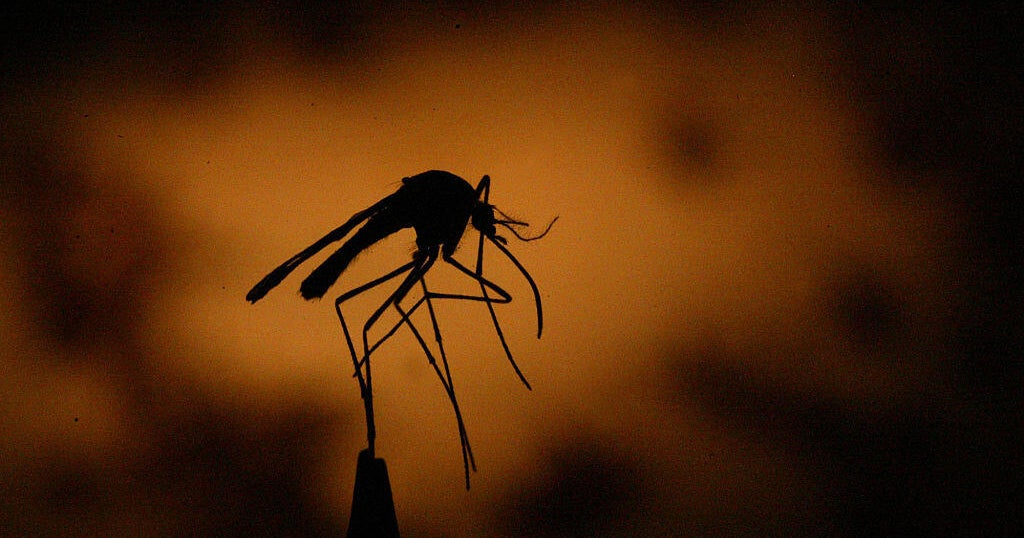
Two workers at Frankfurt Airport in Germany died after catching malaria from a mosquito believed to have arrived on a plane. Several other workers were infected and are receiving treatment while authorities investigate the source and take precautions.
Key Facts
Two employees at Frankfurt Airport died from malaria contracted via a mosquito likely brought in on an aircraft.
Six workers in total were infected; four are hospitalized and being treated.
The Robert Koch Institute identified an imported Anopheles mosquito as the probable cause.
Mosquito traps have been set up at the airport to capture and study mosquitoes for origin and species.
Malaria is usually caught by travelers from high-risk countries; local transmission in Germany is very rare.
The disease spreads only through mosquitoes, not from person to person.
Lab tests to confirm the infection source will take several weeks.
Malaria can cause fever and chills but is treatable if caught early, and most patients recover fully.
Read the Original
Want the full story? Tap a source to open the original
article.
Eswatini has received two migrants deported from the United States under an agreement between the two countries. This deal is part of a U.S. policy to deport people to third countries, which has faced criticism from human rights groups.
Key Facts
Two migrants from Latin America arrived in Eswatini after deportation from the U.S.
These individuals are called "third-party nationals" because they are not citizens of the U.S. or Eswatini.
This group is the fifth batch sent from the U.S. to Eswatini since July 2025.
Some deportees were later sent back to their home countries or released after detention.
The Trump administration has made agreements with around 24 countries, including 11 African nations, to deport migrants who are not from those countries.
Human rights advocates say this practice may push asylum seekers back to the dangerous places they fled.
Eswatini and some other African countries involved in these deals have poor human rights records and strict governments.
Pro-democracy and civil rights groups in Eswatini oppose these deportation agreements through protests and legal action.
Read the Original
Want the full story? Tap a source to open the original
article.
Mohan Bhagwat, leader of the Hindu nationalist group Rashtriya Swayamsevak Sangh (RSS), is scheduled to speak at a large event in New York City. The event has sparked protests and criticism from New York's mayor and a U.S. religious freedom panel because of RSS’s controversial views and actions.
Key Facts
Mohan Bhagwat is the chief of the RSS, linked to India’s ruling Bharatiya Janata Party (BJP).
The RSS is a Hindu nationalist group founded about 100 years ago.
The group promotes the idea of Hindutva, defining Indian culture mainly by Hindu values.
Critics accuse RSS of encouraging intolerance and human rights abuses against minorities, including mob violence and destruction of Muslim properties.
The event in New York, called the "Universal Oneness Celebration," is organized by American Hindus for Engagement and Dialogue.
About 5,000 Indian Americans are expected to attend the event at Madison Square Garden.
New York Mayor Zohran Mamdani opposes the event due to the RSS ideology conflicting with the city's diverse values.
The event brings together over 200 Hindu American groups and uses the phrase “Vasudhaiva Kutumbakam,” meaning “the world is one family.”
Read the Original
Want the full story? Tap a source to open the original
article.
President Donald Trump signed an order on August 27, 2026, to rename Lake Ontario as "Lake America." The Canadian Prime Minister Mark Carney responded that the lake’s name would stay the same. This happened after trade talks between the U.S. and Canada failed, leading both countries to impose tariffs on each other.
Key Facts
President Trump signed an executive order to rename Lake Ontario to "Lake America."
The order was announced on August 27, 2026, and was to take effect immediately.
Canada’s Prime Minister Mark Carney stated the lake’s name will remain "Lake Ontario."
The renaming order follows the collapse of trade talks between the U.S. and Canada.
After the talks ended, both countries introduced tariffs against each other as a trade conflict.
Lake Ontario is one of the Great Lakes, which are shared by the U.S. and Canada.
The name change is a political move connected to disagreements over trade policy.
Read the Original
Want the full story? Tap a source to open the original
article.
The UK Ministry of Defence plans to start testing powered paragliders for soldiers, allowing troops to fly quietly up to 200 miles behind enemy lines. These lightweight gliders can be carried as backpacks, assembled quickly, and launched on foot to covertly enter hostile areas.
Key Facts
The powered paragliders are made by Blakcro, a British company founded in 2023.
The gliders have a titanium frame and can carry body armor, night vision gear, and weapons.
They have a flying range of up to 200 miles and are quieter and harder to detect than regular aircraft.
The Ministry of Defence is investing £6 million to start trials of this technology soon.
The paragliders are currently being used by other NATO countries.
Blakcro also works with the US Department of Defense on similar projects.
The UK government aims to increase spending on domestically made defence equipment.
The UK government plans to meet NATO defence spending goals of 3.5% of GDP by 2035.
Read the Original
Want the full story? Tap a source to open the original
article.
A Dutch court sentenced a Dutch-Rwandan man named Eugene N to life in prison for his role in the 1994 genocide in Rwanda. He was found guilty of war crimes and genocide after attacking Tutsis who sought shelter in a stadium during the massacre.
Key Facts
Eugene N, 66 years old, was sentenced to life in prison by a court in the Netherlands.
He was convicted for throwing a hand grenade at Tutsis trapped in a stadium during the 1994 Rwanda genocide.
The judge said Eugene N acted with "genocidal intent," meaning he planned to kill people because of their ethnic group.
The genocide happened over about 100 days in 1994, killing around 800,000 Tutsis and moderate Hutus.
Eugene N held a powerful position in his community during the genocide, overseeing about 1,000 people.
He instructed Hutus not to let Tutsis escape the stadium, where many were killed by stones, guns, grenades, clubs, and machetes.
The Netherlands started investigating Eugene N in 2014 and formally arrested him in 2024 after interviewing more than 30 witnesses.
Eugene N denies the charges and claims he is a victim who lost family during the genocide. His lawyers plan to appeal the verdict.
Read the Original
Want the full story? Tap a source to open the original
article.