The BBC confirmed that the TV show Top Gear will return after being off the air for four years. The show stopped in 2022 when co-host Andrew Flintoff was badly hurt in a car crash during filming.
Key Facts
Top Gear is a popular motoring TV show.
The show paused in 2022 after Andrew Flintoff crashed an open-topped three-wheeled car.
Flintoff suffered serious facial and rib injuries in the crash.
At that time, Flintoff co-hosted Top Gear with Paddy McGuinness and Chris Harris.
The show’s return date and new hosts have not been announced yet.
Reports say comedian Jimmy Carr might join as a new presenter.
BBC Studios has not confirmed details about the new hosting team.
Flintoff’s crash and its effects on him have been widely reported in the past.
Read the Original
Want the full story? Tap a source to open the original
article.
Floods at the Nepal-Tibet border were caused by a "glacial collapse," where part of a glacier broke apart. Initial ideas that an earthquake caused the floods were ruled out. Scientists say Himalayan glaciers are melting faster due to climate change.
Key Facts
The US Geological Survey reported the floods came from a glacial collapse.
A glacier, or part of one, disintegrated and caused the flooding.
Early reports thought an earthquake was the cause but this was found to be incorrect.
The exact reason for the glacier breaking is still unknown.
Scientists warn Himalayan glaciers are melting more quickly.
Rising temperatures and climate change are factors in glacier melting.
The event happened along the Nepal-Tibet border.
Authorities and experts are monitoring the situation closely.
Read the Original
Want the full story? Tap a source to open the original
article.
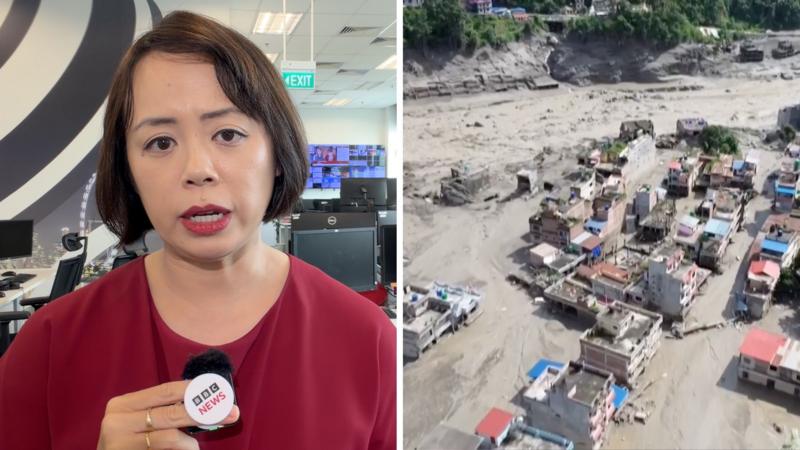
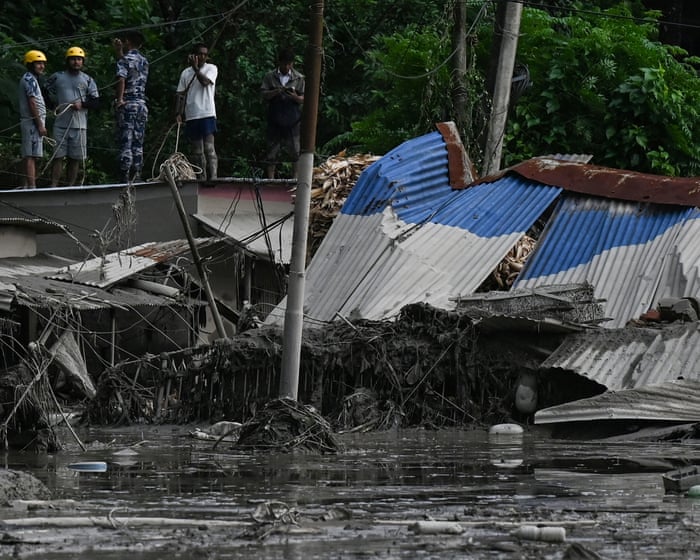
A large glacial collapse caused floods along the Nepal-Tibet border, killing more than 270 people and leaving over 1,500 missing, including many foreign tourists. The floodwaters destroyed homes, bridges, and roads, with rescue efforts ongoing in the affected mountainous areas.
Key Facts
The flood was triggered by a glacial collapse, where a large portion of glacier ice and rock detached and caused a debris flow.
The event happened near the Nepal-China border, with major damage in Nepal’s Rasuwa district.
Water levels in the Trishuli River rose about 9 meters (27 feet) in just 30 minutes.
Over 800 foreign tourists are among the missing, with the total missing count above 1,500 people.
More than 270 people have been confirmed dead, but the number is expected to rise.
Officials originally thought a 4.4 magnitude earthquake triggered the floods, but experts confirmed the seismic event was caused by the glacier collapse.
Glacial collapses are gravity-driven failures of glacier ice on mountains and can cause large avalanches or debris flows.
The Himalayas are experiencing rapid glacier loss due to climate change, which increases the risk of such disasters.
Read the Original
Want the full story? Tap a source to open the original
article.
President Donald Trump mentioned that he was trying to help free American citizens detained in China. Families of some detainees find hope in his approach to diplomacy. The article focuses on one family's experience during this process.
Key Facts
Grace Jin Drexel has been working for seven months to help free her father from a Chinese prison.
President Trump spoke publicly about assisting Americans held in China.
A friend told Drexel her phone was receiving many messages after Trump's comment.
The article highlights how President Trump's style of diplomacy gives some families hope.
The story centers on the personal struggle and relief related to diplomatic efforts.
The communication was reported through The Hill news outlet.
The focus is on U.S.-China relations involving detained Americans.
The article does not provide detailed outcomes but emphasizes ongoing efforts.
Read the Original
Want the full story? Tap a source to open the original
article.
A drought in Europe has lowered the water level of the Danube River in northern Bulgaria, exposing mammoth bones that were previously underwater. About 20 volunteers are helping the Regional Museum of History of Ruse search the dried riverbanks for new fossils and historical items.
Key Facts
The Danube River in northern Bulgaria is at a record low due to drought in Europe.
The receding water has revealed mammoth bones that were buried under the river.
A group of around 20 volunteers is taking part in the fossil search.
The search is organized by the Regional Museum of History of Ruse.
Volunteers hope to find more fossils or artifacts along the dried riverbank.
The discovery is linked to natural climate changes causing drought in the region.
This event has attracted local and scientific interest in the area's prehistoric past.
Read the Original
Want the full story? Tap a source to open the original
article.
Russia is using hybrid attacks that mix actions between war and peace against NATO countries. These attacks include spying with drones, targeting people and infrastructure, and cause debate within NATO about when to respond with military force.
Key Facts
Hybrid attacks combine unclear acts that are not full wars but still cause harm and confusion.
Russia has targeted individuals, military sites, and infrastructure in NATO countries.
A plot to kill a US-Ukrainian citizen inside NATO territory was discovered.
Russian drones have flown over NATO countries, sometimes causing injuries and damage.
Poland and Estonia invoked NATO Article 4, requesting alliance consultations about these threats.
President Donald Trump expressed discomfort with triggering NATO's emergency consultations.
NATO is planning stronger air and missile defenses to prevent future drone incursions.
Attacks on pipelines and undersea cables in Europe have caused outages, with unclear perpetrators.
Read the Original
Want the full story? Tap a source to open the original
article.
France’s main presidential candidates will face questions from business leaders at the Medef employers federation’s conference. They will discuss key issues like taxes, government rules, rebuilding industry, and France’s large public debt of over 3.5 trillion euros.
Key Facts
The event is the Medef employers federation’s annual end of summer conference.
Presidential candidates for France’s next election in 2027 will attend.
Business leaders will ask candidates about their economic plans.
Topics include taxation and the weight of regulations on businesses.
Reindustrialisation, or rebuilding France’s industry, will be addressed.
France currently has a public debt exceeding 3.5 trillion euros.
The conference is scheduled for Thursday.
The focus is on France’s economic challenges and future strategies.
Read the Original
Want the full story? Tap a source to open the original
article.
Over 1,300 people are missing in Nepal and Tibet after severe flooding caused by a glacier collapse. About 800 of the missing are foreign tourists, and several countries have sent rescue teams to help find them.
Key Facts
A glacier collapse caused flooding in the Himalayan region of Nepal and Tibet.
More than 1,300 people are reported missing after the disaster.
Approximately 800 missing people are foreign tourists.
Missing tourists include citizens from South Korea, India, and Australia.
Countries affected have sent rescue teams to assist in search and rescue operations.
The flooding event happened recently, and rescue efforts are ongoing.
The disaster is one of the worst natural events in the area recently.
Officials continue to search for survivors and assess damage caused by the flooding.
Read the Original
Want the full story? Tap a source to open the original
article.
Russia launched a large overnight missile and drone attack on nine cities in Ukraine, hitting military and industrial targets as well as civilian areas. Ukraine is struggling to defend itself with limited air defense systems as the conflict between the two countries continues in its fifth year.
Key Facts
Russia attacked nine Ukrainian cities with missiles and drones overnight and into Thursday morning.
Targets included military sites, industrial facilities, oil refineries, logistics centers, and ports.
Civilian areas were also damaged; one woman was killed and at least nine others injured.
Ukraine lacks enough U.S.-made Patriot missile defenses to stop all incoming threats.
Russian drones pose a new challenge because they fly fast and are jet-powered.
Ukraine strikes back by targeting important locations inside Russia.
Ukrainian President Zelenskyy is urging more support from Europe and the U.S. for missile defense systems.
Moldova reported five drones entering its airspace overnight, raising regional concerns.
Read the Original
Want the full story? Tap a source to open the original
article.
Flash floods caused by a glacier collapse have hit the border region between Nepal and Tibet, killing at least 270 people and leaving nearly 1,400 people missing. Among the missing are at least 33 British tourists, and rescue teams are actively searching for them and others trapped in the disaster zone.
Key Facts
A glacier collapsed, causing floods that destroyed villages along the Nepal-Tibet border.
At least 270 people have died, and about 1,400 people are missing, mostly tourists.
Thirty-three British nationals are among those missing, including adults and a 13-year-old girl.
Two Irish citizens are also reported missing in the floods.
British tour companies confirmed some of their travelers are unaccounted for after the disaster.
The UK government has pledged £5 million and is sending emergency teams to help Nepal.
Nepal’s disaster official described the floods as a “tsunami from the sky” with massive water and debris flow.
Rescue efforts focus on the mountainous Rasuwa region, a popular area for pilgrims and trekkers.
Read the Original
Want the full story? Tap a source to open the original
article.
A house fire in Grangetown, near Middlesbrough, killed a 34-year-old woman, Natalie McDonald, and her seven-year-old niece, Valentina Foster. Two men have been arrested for murder, and police are investigating possible links between the fire and a deadly car crash nearby involving police officers and young men.
Key Facts
Natalie McDonald (34) and her niece Valentina Foster (7) died in a house fire early Wednesday in Grangetown, near Middlesbrough.
Valentina was spending summer holidays with her family.
McDonald’s 15-year-old daughter and a friend escaped by breaking an upstairs window.
Two men, aged 23 and 31, have been arrested on suspicion of murder and remain in custody.
Police are investigating if there is a connection between the house fire and a fatal car crash on the A66 nearby that killed seven people.
The A66 crash involved a car driving the wrong way and hitting a police vehicle, killing two officers and five others.
Inquests into the seven deaths from the crash are scheduled to begin soon.
Neighbors described the house fire as very intense, and local people tried to help those inside.
Read the Original
Want the full story? Tap a source to open the original
article.
A group of Jewish Israeli activists, motivated by their religious beliefs, travel to the West Bank to protect Palestinians from violence by extremist settlers. Recently, at least five activists were hurt during a clash with settlers near the Palestinian village of Jannatah, close to Bethlehem.
Key Facts
Jewish Israeli activists say their faith drives them to protect Palestinians in the West Bank.
On August 25, 2026, five activists were injured while trying to help Palestinians harassed by settlers in Jannatah.
The settlers used stones, pepper spray, and sticks to attack the activists and journalists.
The activists aimed to defend the home and land of the Palestinian Faraj family, who face ongoing settler pressure.
Settlers often build illegal outposts, like Kochav Yehuda, which Israeli authorities repeatedly dismantle but are rebuilt.
The extremist Hilltop Youth movement of settlers seeks to push Palestinians off their land through violence.
Over 500,000 Israelis live in the occupied West Bank, which also houses about three million Palestinians.
The Israeli government under Prime Minister Netanyahu continues to support settlement expansion before upcoming elections.
Read the Original
Want the full story? Tap a source to open the original
article.
A group of religious Jewish Israeli activists travel to the West Bank to protect Palestinian families from attacks by Israeli settlers. Recently, these activists were violently attacked by settlers while trying to defend a Palestinian family’s home near Bethlehem.
Key Facts
Around 30 Israeli activists, many religious Jews, go to the West Bank to protect Palestinians from violent settlers.
On August 25, 2026, at least five activists were injured during a violent attack by settlers at the outpost of Jannatah near Bethlehem.
The activists were trying to protect the Faraj family, whose member Mohammed Faraj was killed in clashes with settlers in March.
Settlers attacked activists by throwing stones, using pepper spray, and damaging their cars.
The settler outpost called Kochav Yehuda has been dismantled by Israeli authorities 64 times but rebuilt repeatedly.
The extremist Hilltop Youth movement, linked to the settlers, aims to pressure Palestinians to leave their land and create new outposts.
Over 500,000 Israelis live in the West Bank, an area occupied by Israel since 1967, where about three million Palestinians also live.
The activists belong to Bnei Avraham, a religious Jewish group founded to oppose injustices against Palestinians, differing from largely secular Israeli peace groups.
Read the Original
Want the full story? Tap a source to open the original
article.
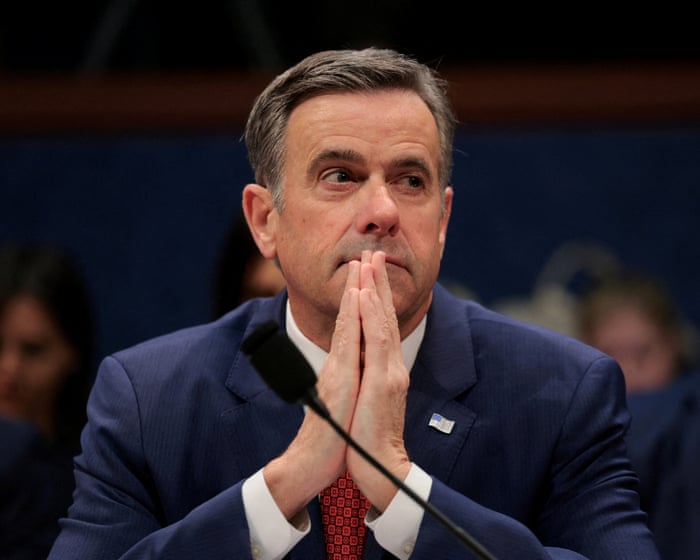
CIA Director John Ratcliffe visited Moscow and met with Russian intelligence officials to discuss sensitive matters. U.S. media reported that Ratcliffe warned Russia against attacking NATO member countries, but the Kremlin called these reports false and described the meeting as normal.
Key Facts
CIA Director John Ratcliffe traveled to Moscow this week on a government plane.
U.S. media said Ratcliffe warned Russia not to attack NATO members.
Kremlin spokesperson Dmitry Peskov said such claims are "scare stories" with no basis in reality.
Russia’s SVR foreign intelligence chief, Sergei Naryshkin, confirmed meeting Ratcliffe to discuss sensitive intelligence topics.
President Donald Trump described Ratcliffe’s visit as "semi-routine" and denied it was to respond to any new threats.
Ratcliffe’s visit was one of the highest-level U.S. diplomatic contacts with Russia since the war in Ukraine began.
Reports suggested Moscow might test NATO’s resolve, but U.S. officials aim to prevent escalation.
The meeting happened amid ongoing tensions related to the war in Ukraine and international diplomacy.
Read the Original
Want the full story? Tap a source to open the original
article.
A small plane carrying four people crashed into shallow water near the remote town of Seldovia, Alaska, killing everyone on board. Officials are investigating the cause, and rescue teams recovered the bodies after waiting for the tide to lower.
Key Facts
The plane was a Piper PA-24 flying from Anchorage to Seldovia.
The crash happened in about 15 feet of water near the shore in Seldovia Slough.
Four adults died in the crash; their identities will be released after family notifications.
Alaska State Troopers used helicopters and boats to reach the crash site.
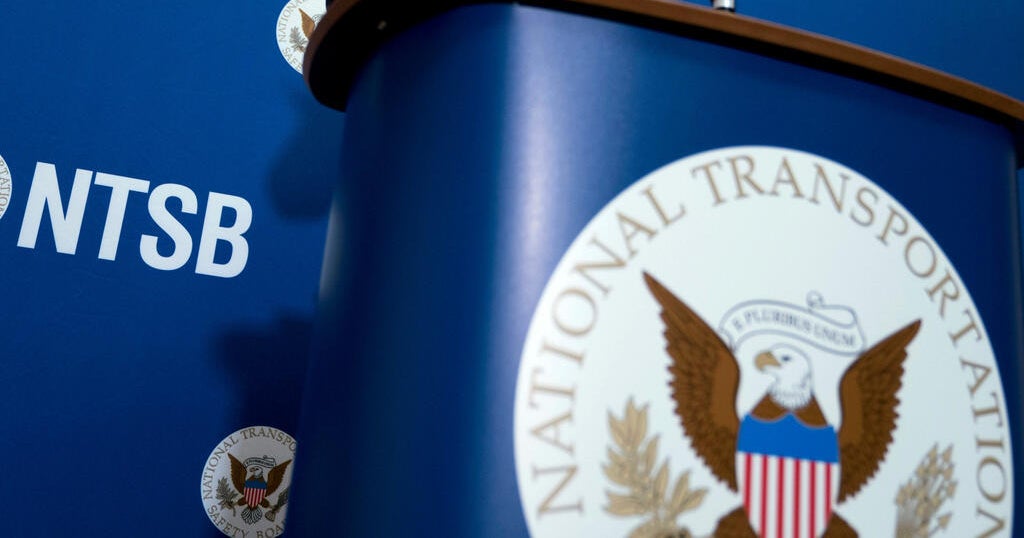
The National Transportation Safety Board (NTSB) is conducting an investigation.
Senator Dan Sullivan of Alaska will receive briefings from the NTSB and FAA about the crash.
Less than a week earlier, another plane crash in western Alaska killed eight people during poor weather conditions.
Aviation safety and infrastructure continue to be a key concern in Alaska.
Read the Original
Want the full story? Tap a source to open the original
article.
Tim Curry, a well-known English actor famous for playing Dr. Frank-N-Furter in "The Rocky Horror Picture Show," died at the age of 80. He had been in poor health for over ten years after suffering a severe stroke and passed away at his home in Los Angeles.
Key Facts
Tim Curry was an English actor recognized for his role in the musical film "The Rocky Horror Picture Show."
He played the character Dr. Frank-N-Furter in this cult classic.
Curry had health problems for more than ten years after a major stroke.
He died at age 80.
The death was reported by US media and information came from unnamed sources cited by TMZ.
He passed away at his home in Los Angeles.
Read the Original
Want the full story? Tap a source to open the original
article.
Yayoi Kusama, a famous Japanese artist known for her colorful polka dot designs, has died at the age of 97. She was admired worldwide for turning her experiences with hallucinations and mental health into unique and vibrant artwork.
Key Facts
Yayoi Kusama was a leading figure in contemporary art.
She was famous for using polka dots, nets, and repeating patterns called infinity motifs.
Kusama used her art to express her mental health struggles and hallucinations.
Her career lasted many decades and had global influence.
She passed away at the age of 97.
Her death was officially announced by her company.
She earned nicknames like "polka dot queen" because of her signature style.
Read the Original
Want the full story? Tap a source to open the original
article.
A flight attendant in France has won a legal case that officially recognizes her breast cancer as caused by her work. This is the first time a cancer case linked to the aviation industry has been accepted as an occupational disease in France.
Key Facts
The flight attendant’s name is Sophie Lainault.
She used to work for Air France.
She often worked night shifts.
She was exposed to passive smoking at work.
Her breast cancer has now been recognized as related to her job.
This ruling is the first of its kind in France’s aviation sector.
Occupational disease means an illness caused by the work environment or job duties.
The case sets a precedent for how cancer linked to flight attendant work is viewed legally.
Read the Original
Want the full story? Tap a source to open the original
article.
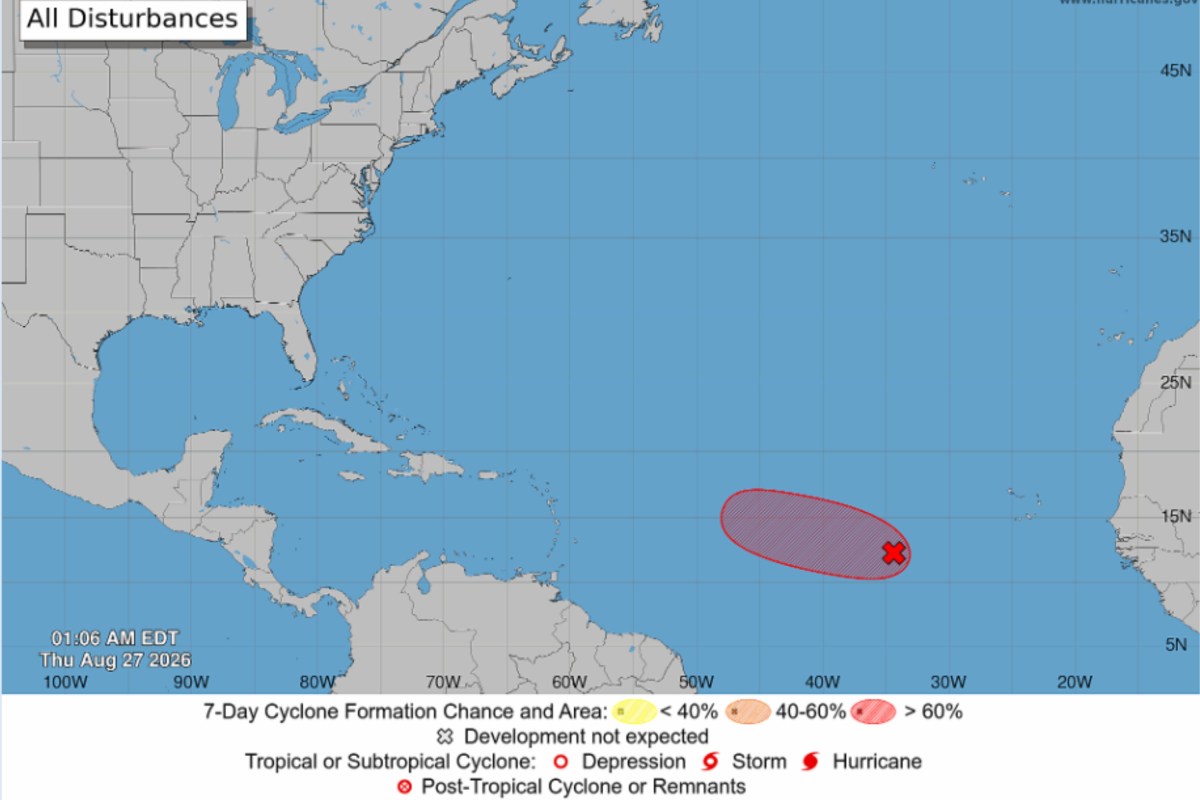
Meteorologists are watching an area of disturbed weather in the Atlantic called Invest 96L. The National Hurricane Center says it has a 70% chance of becoming a tropical storm named Dolly within the next few days.
Key Facts
Invest 96L is a weather disturbance southwest of the Cabo Verde Islands.
The National Hurricane Center (NHC) monitors Invest 96L for tropical development.
Showers and thunderstorms linked to Invest 96L have become more organized.
There is a 70% chance the system will develop into a tropical cyclone in 48 hours and seven days.
If it becomes a tropical storm, it will be named Dolly.
Conditions may become less favorable for development by Friday.
The NHC may issue official advisories if Invest 96L strengthens into a tropical depression or storm.
Forecast models show different possible paths for the storm, signaling a potential threat.
Read the Original
Want the full story? Tap a source to open the original
article.