German Chancellor Friedrich Merz warned that those behind recent drone attacks against Germany, including an incident at Leipzig/Halle Airport, will face consequences. The attacks reveal a growing threat, and Germany is improving its drone defenses while supporting Ukraine in its conflict with Russia.
Key Facts
On August 4, a drone carrying explosives was found at Leipzig/Halle Airport but did not explode due to a faulty detonator.
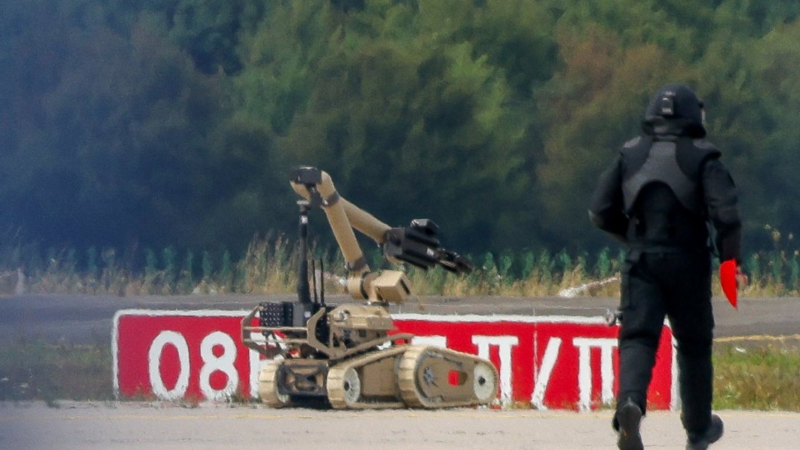
Police used a robot to safely defuse the explosive device.
A second drone may have collided with a cargo plane nearby, and a third drone was later found near the airport.
Investigators found traces of a military explosive called hexogen close to the site.
Security experts suspect Russian involvement, although Germany has not officially accused Russia, and Moscow denies it.
Leipzig/Halle Airport is used by the German military, NATO allies, and Ukraine's Antonov Airlines for cargo transport.
Chancellor Merz confirmed Germany's strong support for Ukraine and said the government is boosting drone defenses and plans to allow security services to conduct retaliatory cyber operations.
Unauthorized drone flights have recently targeted sensitive locations in Germany, raising police concerns about foreign agents organizing them.
Read the Original
Want the full story? Tap a source to open the original
article.
Nigerian President Bola Tinubu has ordered security forces to start a rescue mission following the kidnapping of about 600 people from a mosque in Niger State. The attack also killed 30 people, and local officials are still confirming the exact numbers of those missing.
Key Facts
Around 600 women, children, and elderly were kidnapped from a mosque in Niger State, Nigeria.
The kidnapping happened last week during an attack by armed gunmen.
Approximately 30 people were killed in the attack and buried recently.
The kidnapped victims are mainly from communities called Dakera, Gidan-Zana, and Sabon Gida.
Many villagers fled to the neighboring Benin Republic after the attack.
President Tinubu called the attack cowardly and vowed to protect citizens and bring the attackers to justice.
Kidnappings for ransom are common in Nigeria’s northwestern and north-central regions, often involving heavily armed criminal gangs.
Security agencies have been directed to provide updates on the rescue efforts.
Read the Original
Want the full story? Tap a source to open the original
article.
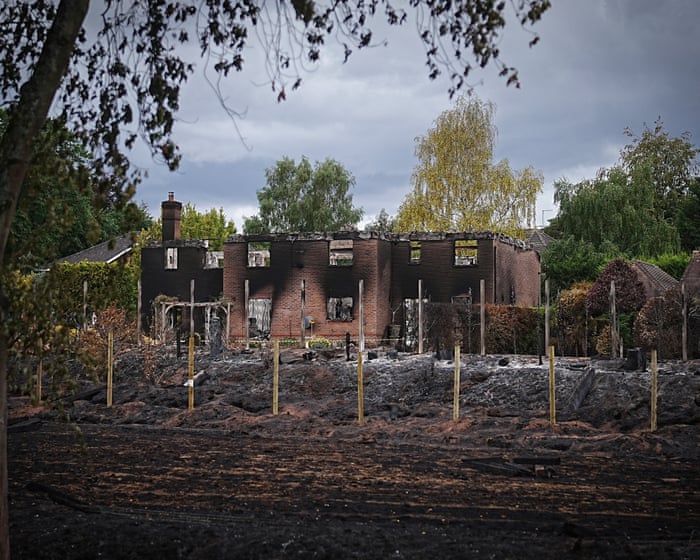
A historic British mansion used in the movie "Batman Begins" is in poor condition and must be repaired, including bat habitat surveys, or local authorities may take legal steps to take control of it. The house, called Mentmore Towers, is considered very important for its history and design, and officials say urgent repairs are needed to save it.
Key Facts
Mentmore Towers is a grand estate in Buckinghamshire, England, used as Wayne Manor in "Batman Begins" (2005).
The building is a Grade I-listed heritage site, meaning it has special historical and architectural value.
Buckinghamshire Council issued a formal notice requiring repairs and bat surveys by the estate’s owners.
Owners have one month to start bat surveys with a licensed expert and must finish repair preparations by August 2027.
If the owners do not comply, the council may seek government approval to take over the property.
Mentmore Towers is listed as "very bad" condition and at risk of rapid decay by Historic England.
The estate has appeared in other films and music videos and was once home to the Rothschild family.
The property has been owned by Mentmore Towers Limited, controlled by Simon Halabi, since 1999.
Read the Original
Want the full story? Tap a source to open the original
article.
The UK government has started a new campaign urging citizens to prepare for emergencies by stocking up on food and water. This effort aims to help people handle extreme weather and possible attacks, so government support can focus on the most vulnerable. Rising threats include cyber-attacks, extreme heat, flooding, and potential military actions from hostile states.
Key Facts
The UK Cabinet Office advises people to keep tinned food and bottled water for emergencies.
The campaign addresses risks from climate change and hostile countries.
Europe is warming faster than any other continent, increasing extreme weather threats.
The government is reviewing military attack preparedness in case of hostile actions.
Coordination across UK government departments aims to speed up help for affected communities.
Recent events include a cyber-attack linked to Iran that temporarily shut down a UK power plant generator.
UK officials warn of Russian threats and note the UK's support for Ukraine risks escalating tensions.
Some emergency alerts have faced criticism for potentially endangering vulnerable people.
Read the Original
Want the full story? Tap a source to open the original
article.
There are long lines at gas stations in Tehran because of fuel shortages caused by U.S. sanctions. Despite heavy pressure from these sanctions, Iran’s leaders have not changed their stance or government policies.
Key Facts
Gas lines in Tehran have grown longer, with some people waiting over two hours to fill up.
The U.S. has increased sanctions and threatened more, aiming to cut Iran off from the global economy.
Iranian officials are considering reducing fuel subsidies to cope with the blockade.
The Iranian currency, the rial, has fallen to a record low against the U.S. dollar.
Inflation in Iran is high, making many goods more expensive for ordinary people.
Despite economic pain, there are no signs of a major political change or protests restarting.
The sanctions come about six months into a conflict involving President Donald Trump and Israel.
Shelves in stores remain stocked, but people have less money to buy goods.
Read the Original
Want the full story? Tap a source to open the original
article.
Nigeria’s President Bola Tinubu has ordered a search for kidnappers who attacked four villages in Niger state, killing many and abducting up to 500 people. The kidnappers posted a video of some captives online, and local officials say the attack worsens security problems in the region.
Key Facts
Armed men attacked four villages in Niger state, Nigeria, targeting mosques during prayers.
More than 40 people were reportedly killed, though exact numbers are not confirmed.
Up to 500 people may have been kidnapped, according to local sources.
Kidnappers released a video online showing some of the abducted victims in a forest.
The attackers wore military-style clothes and planted explosives in the villages.
Some kidnapped people have been rescued, while others are still missing.
Residents fled to neighboring states and Benin for safety.
The government vows to find and punish those responsible for the attack.
Read the Original
Want the full story? Tap a source to open the original
article.
The United States, led by President Trump, is shifting from military strikes to tough economic sanctions against Iran in an effort to force a peace deal. This new approach targets Iran's sources of money, but risks increasing tensions in the Gulf region.
Key Facts
The U.S. and Israel began missile attacks on Iran about six months ago.
The U.S. Treasury launched "Operation Economic Outcast" to cut off Iran’s financial resources.
Sanctions target Iran’s digital assets, technology, gold, aviation, and shipping sectors.
Companies and banks dealing with Iran face penalties from the U.S.
Gulf countries are pressured to reduce economic ties with Iran but fear retaliation.
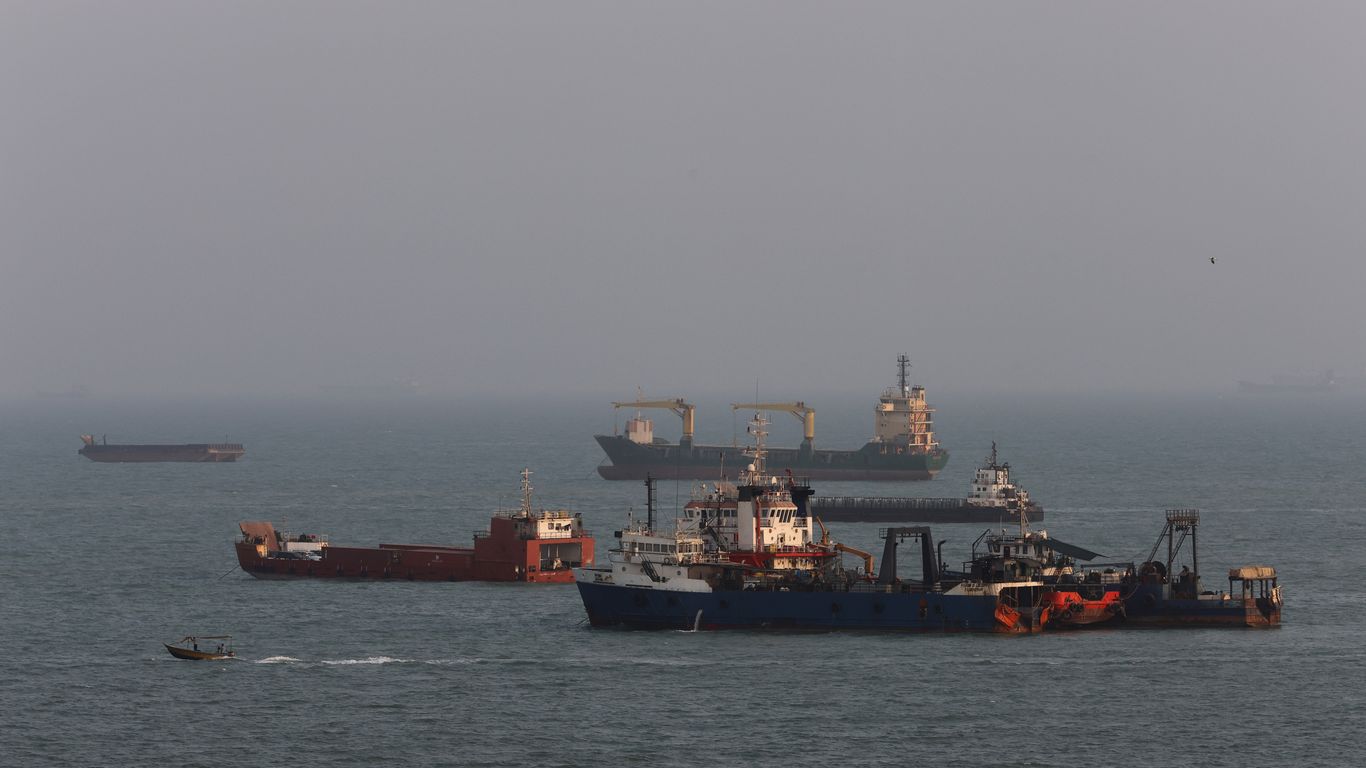
Iran warned it could stop oil shipments through the Strait of Hormuz, a key global route.
The UAE has cut economic ties with Iran, while Saudi Arabia, Qatar, and Oman remain cautious.
Critics compare this sanctions effort to past U.S. policies that failed to change Iran’s behavior.
Read the Original
Want the full story? Tap a source to open the original
article.
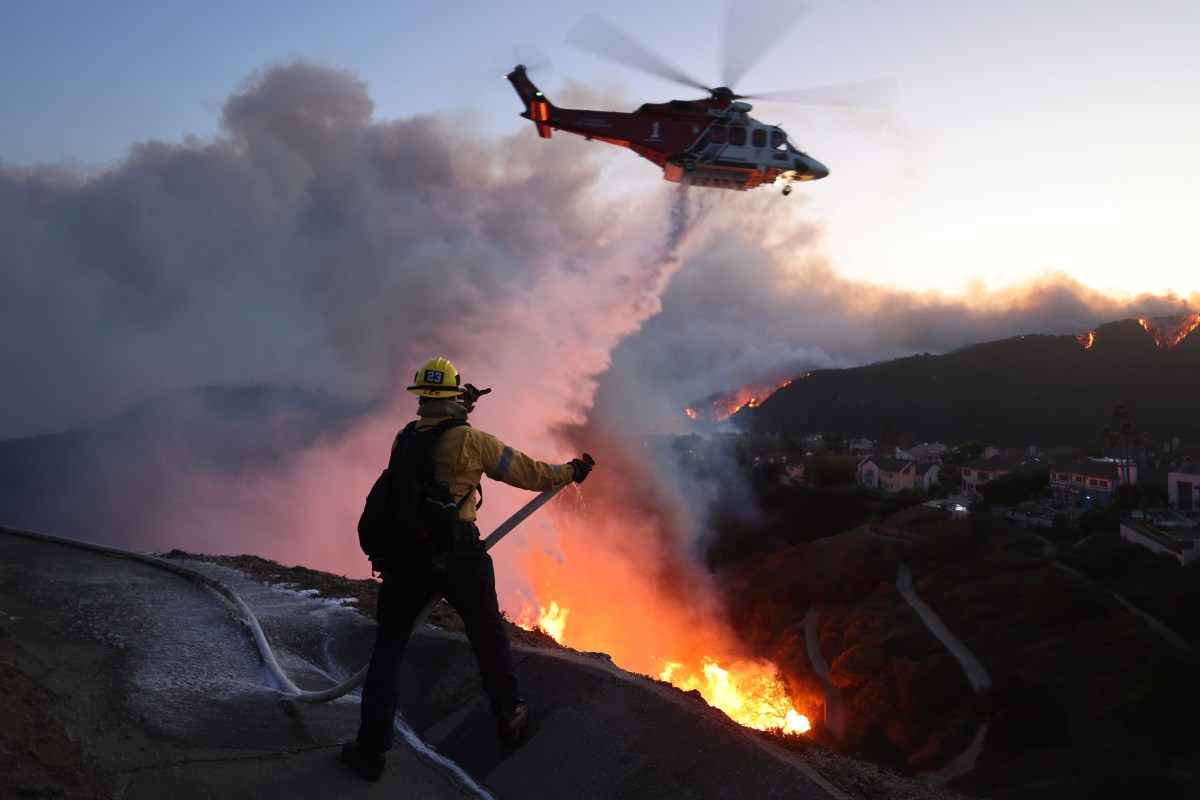
A very strong El Niño is expected to develop in late 2026, which will change weather patterns across the U.S. This could lower wildfire risk in much of the southern and western U.S. but increase the risk in northern states and parts of Florida.
Key Facts
The National Oceanic and Atmospheric Administration (NOAA) predicts over a 90% chance of a very strong El Niño in fall and winter 2026-27.
There is a 69% chance this El Niño will be the strongest since records began in 1950.
El Niño is a natural climate cycle that warms the tropical Pacific Ocean and affects weather worldwide.
Typical El Niño winters bring more rain to the southern U.S. and warmer, drier conditions in the north.
Increased rain in California, the Southwest, and southern Plains will likely reduce wildfires there by early October 2026.
Northern states like Montana, the Dakotas, and the Northeast may see less rain and higher wildfire risk during fall 2026.
Florida’s central and southern regions might also see a short-term increase in fire risk until mid-October.
Changes in another climate pattern, the Pacific Decadal Oscillation, could alter expected wet and dry areas in the western U.S.
Read the Original
Want the full story? Tap a source to open the original
article.
About 1,800 people in northern Japan pulled a heavy castle tower weighing 360 tonnes by hand. They used a traditional Japanese method called hikiya, which moves buildings on rollers without taking them apart, to put the tower closer to where it originally stood after earthquake damage.
Key Facts
The event took place in northern Japan at Hirosaki Castle.
The castle keep weighs 360 tonnes (about 397 tons).
Approximately 1,800 people participated in pulling the castle tower by hand.
The tower was moved in 2015 to fix stone walls damaged by an earthquake.
Hikiya is a technique that uses rollers to move buildings carefully without dismantling them.
Participants were chosen by a lottery system.
The moving process will continue until the end of August 2026.
The goal is to return the castle keep closer to its original location.
Read the Original
Want the full story? Tap a source to open the original
article.
President Trump announced that the U.S. Navy has cleared all mines from the main shipping lane in the Strait of Hormuz. This action makes it safer for oil tankers to pass through the strait and reduces Iran’s ability to control oil flow and influence negotiations.
Key Facts
The U.S. Navy removed or detonated more than 100 suspected mines from the central part of the Strait of Hormuz.
The mines were placed by Iran during a past conflict, creating risks for ships passing through.
Iran promised to remove the mines under a summer agreement with the U.S., but the mines were not removed as agreed.
The U.S. used drones and private companies to carefully find and clear the mines over several months.
President Trump warned Iran that any new mines placed would be destroyed immediately.
The U.S. Space Force is watching the strait to enforce a zero tolerance mine policy.
Before the mine removal, ships mainly used a southern lane near Oman, where most recent attacks from Iranian drones or missiles were low.
Iran and Oman were negotiating a joint agreement about the strait at the same time, but no deal was reached.
Read the Original
Want the full story? Tap a source to open the original
article.
Tens of thousands of Rohingya refugees in Bangladesh protested to mark nine years since they fled Myanmar due to a military crackdown. They called for better living conditions in the camps and safe return to their homes in Myanmar’s Rakhine state.
Key Facts
Over 1.2 million Rohingya refugees live in about 30 camps in Cox’s Bazar, Bangladesh, the world’s largest refugee settlement.
The refugees fled Myanmar in 2017 after a military crackdown in Rakhine state following an attack by an armed group.
The protest on the ninth anniversary aimed to remember the violence and highlight ongoing problems faced by refugees.
Refugees demand security guarantees in Myanmar before returning home.
Previous attempts by Bangladesh to repatriate refugees failed because refugees fear for their safety.
Bangladesh says it will not force refugees to return to Myanmar.
Myanmar’s military government claims over 300,000 of the refugees are from Rakhine and says it will accept their return when conditions improve.
Bangladesh disputes Myanmar’s numbers and rejects Myanmar’s refusal to use the term “Rohingya,” viewing it as a denial of their identity and rights.
Read the Original
Want the full story? Tap a source to open the original
article.
A new forensic method has helped identify a victim of the 9/11 terrorist attack nearly 25 years after the event. The attack killed 2,753 people in New York City.
Key Facts
The 9/11 terrorist attack occurred in New York City.
It resulted in 2,753 deaths.
A new forensic technique was used to identify a victim almost 25 years later.
Forensic techniques involve scientific methods to identify people based on evidence like DNA.
This identification brings closure to the victim’s family after many years.
The attack happened in 2001.
Efforts to identify victims have continued for decades.
Read the Original
Want the full story? Tap a source to open the original
article.
A local medical group in Sudan says a rebel group called SPLM-N killed at least 27 people, including four children, in ethnic clashes in South Kordofan. The attacks targeted the Otoro tribe and forced many people to flee, adding to ongoing conflicts in the region.
Key Facts
At least 27 people were killed in South Kordofan, Sudan, during recent ethnic clashes.
Four children were among those killed.
The rebel group Sudan People’s Liberation Movement-North (SPLM-N) is accused of carrying out the killings.
The clashes happened in areas inhabited by the Otoro tribe, a minority group in the Nuba Mountains.
Fighting began earlier this year over land disputes between SPLM-N forces and the Otoro tribe.
The violence has caused many people to flee to nearby villages and towns such as Abu Hitan and Kadugli.
The Sudan Doctors Network said targeting unarmed civilians breaks international humanitarian law.
The SPLM-N is linked to a faction in South Sudan and has allied with paramilitary forces involved in Sudan’s ongoing civil war.
Read the Original
Want the full story? Tap a source to open the original
article.
At least 47 people were killed and over 50 were kidnapped in a gang attack on a community near Haiti’s capital, Port-au-Prince. The attack, led by a gang called the one led by Izo 2, is one of the largest kidnappings in recent Haitian history and poses a serious challenge to government security efforts.
Key Facts
The attack happened on Sunday in Kenscoff, a community near Port-au-Prince, Haiti.
At least 47 people died and more than 50 were taken hostage by gang members.
A gang leader known as Izo 2 threatened to kill hostages if police or security forces harm gang members.
Izo 2 works for and coordinates with the powerful gang leader Izo (Johnson André).
The gangs aim to force Haitian police and U.N.-backed forces to spread their limited resources thinner.
The attack undermines claims that security is improving in Haiti.
The incident sends a message to the government ahead of general elections scheduled for December 13.
Officials face a difficult choice: act and risk the lives of hostages or avoid action and be seen as failing to protect citizens.
Read the Original
Want the full story? Tap a source to open the original
article.
Canada has announced tariffs on many U.S. products to respond to new American tariffs imposed under President Donald Trump. The Canadian government aims to match the U.S. tariffs roughly dollar for dollar, targeting key industries like dairy, steel, and outdoor equipment. This move escalates a trade dispute between the two countries.
Key Facts
Canada will impose tariffs on U.S. goods including cosmetics, dairy, wood products, outdoor equipment, steel, appliances, and agricultural tools.
The tariffs cover over 700 items and will mostly be set at 25% or 50%, with some items at 15%.
These tariffs will start on September 8 and apply only to goods made in the United States.
Canada’s retaliation matches the value of U.S. tariffs, which President Trump enacted under a 1930 trade law.
The Canadian government has pledged more than 7 billion Canadian dollars to support affected businesses, adding to 20 billion dollars in aid from the past 18 months.
President Trump threatened to rename Lake Ontario "Lake America" amid tensions with Ontario’s premier, Doug Ford, who has publicly criticized the president.
President Trump denied plans to interfere with French language rules in Canada, responding to reports involving his trade team.
Both countries are engaged in an ongoing trade conflict that could impact billions of dollars worth of goods.
Read the Original
Want the full story? Tap a source to open the original
article.
French government agencies have faced several large cyberattacks in 2026, targeting important personal data. The finance ministry alone suffered three major attacks that affected millions of people’s information.
Key Facts
In 2026, French government agencies were frequently targeted by hackers.
The attacks compromised the personal data of many individuals.
The finance ministry in France was hit by three major cyberattacks this year.
Millions of people’s data were affected by these attacks.
Cybersecurity risks to government information are increasing in France.
The incidents raise concerns about the protection of sensitive data.
France continues to face cyber threats amid growing digital risks.
Read the Original
Want the full story? Tap a source to open the original
article.
The FDA has recalled certain thyroid tablets sold nationwide because they may have higher strength than labeled. Patients using these tablets should talk to their doctor before stopping them.
Key Facts
The recalled tablets are thyroid medicine.
They were distributed across the whole country.
The reason for recall is that the tablets might be stronger than indicated.
Taking a stronger dose than needed can cause health problems.
Patients should not stop taking the medicine on their own.
Doctors should be consulted for advice if using these tablets.
Read the Original
Want the full story? Tap a source to open the original
article.
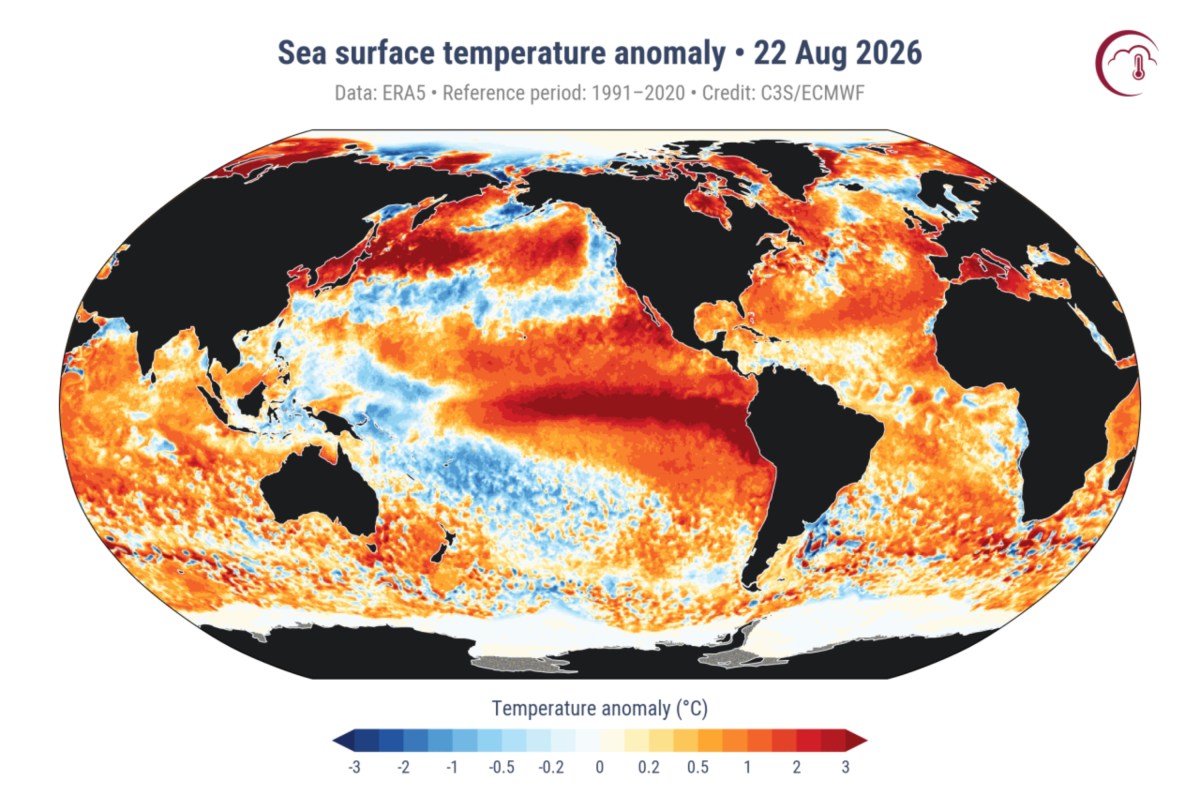
The world's oceans have reached their highest average surface temperature on record due to a strengthening El Niño, a natural climate pattern. This heat increase adds to long-term human-caused warming and poses risks to marine life and coastal communities.
Key Facts
The global average ocean surface temperature reached 21.1°C (about 70°F) on August 22, 2026, setting a new record.
This breaks the previous record of 21.09°C, which was set in March 2024.
El Niño causes warmer waters in the Pacific Ocean and contributes to higher ocean temperatures worldwide.
Ocean temperatures outside polar regions have been consistently higher than average over the past three years.
El Niño events occur every 2 to 7 years and affect weather patterns globally.
NOAA predicts a very strong El Niño is likely through fall and winter 2026-2027.
Marine heatwaves have more than tripled since the 1990s, stressing ocean ecosystems and people living near coasts.
The recent ocean heat records highlight ongoing climate change impacts combined with natural climate cycles.
Read the Original
Want the full story? Tap a source to open the original
article.
China is expected to continue buying oil from Iran despite threats from the United States to punish countries that trade with Iran. A former U.S. government economist under President Biden said that these U.S. threats are unlikely to stop China’s oil purchases from Iran.
Key Facts
The U.S. has warned it will impose secondary sanctions on countries that trade with Iran.
Secondary sanctions target countries or companies that do business with Iran, even if they are not directly from the U.S.
China is a major buyer of Iranian oil.
An economist who worked for the U.S. State Department during the Biden administration believes China will not stop buying Iranian oil because of these threats.
The U.S. campaign aims to hurt Iran economically by limiting its oil exports.
Despite pressure, China values its oil relationship with Iran and appears not to be backing down.
Read the Original
Want the full story? Tap a source to open the original
article.
Hundreds of students in Bihar, India, protested against the police because they believed exam papers were leaked. The exam, aimed at selecting state officers, took place more than a year ago but has caused ongoing anger among candidates.
Key Facts
The protest happened in Bihar, a state in India.
Students were angry about leaks in a state-level exam paper.
The exam is used to recruit officers for Bihar’s state administration.
The exam was held over a year ago.
The protest led to clashes between students and police.
Students want action due to suspected cheating in the exam process.
The issue has caused frustration among many candidates.
Read the Original
Want the full story? Tap a source to open the original
article.