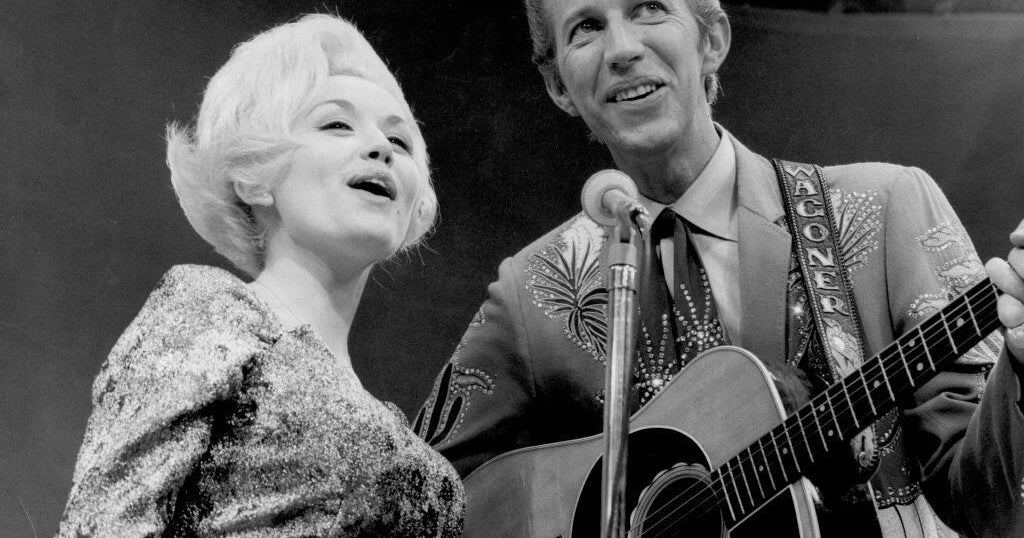
The article shares many photos that show key moments in Dolly Parton's long career as a country singer and actress. It highlights her performances, awards, collaborations with other stars, and appearances at important events.
Key Facts
Dolly Parton performed with Porter Wagoner on his TV show in 1967.
She appeared with comedian John Belushi in 1970 in New York.
Parton won the Entertainer of the Year award in 1978, surrounded by Johnny Cash and Ronnie Milsap.
She acted with Jane Fonda in the 1979 movie "9 to 5."
Dolly hosted her own variety show and performed with Willie Nelson in 1987.
She opened her Dollywood theme park in Tennessee, pictured in 1987.
Parton starred in the film "Steel Magnolias," attending the premiere in 1989 with other actresses.
She performed with Norah Jones and Miley Cyrus at various award shows and TV programs.
Dolly was inducted into the Rock & Roll Hall of Fame in 2022, celebrated with many famous musicians.
Read the Original
Want the full story? Tap a source to open the original
article.
The U.S. is currently focusing on increasing sanctions and economic pressure on Iran instead of launching new military strikes. The naval blockade in the Strait of Hormuz is limiting Iran’s oil exports, reducing its ability to influence global energy markets and weakening its economy.
Key Facts
Secretary of State Marco Rubio told allied countries the U.S. will not start new strikes on Iran "for the time being."
The U.S. is using sanctions and a naval blockade to put economic pressure on Iran.
The Strait of Hormuz is a key shipping route where the U.S. Navy cleared mines, reducing Iran’s control.
More oil tankers are passing through the southern lane of the strait, helping global energy markets.
Iran’s main oil export hub, Kharg Island, has seen almost no tanker activity recently.
The U.S. aims to cut off Iran’s financial resources and prevent it from developing a nuclear weapon.
Pakistan’s army chief visited Iran as a mediator; President Trump had contact with him but no official talks with Iran are planned.
U.S. officials say the current pressure strategy might bring Iran back to negotiations.
Read the Original
Want the full story? Tap a source to open the original
article.
Dolly Parton, a famous country music singer, died at the age of 80 in Nashville, Tennessee. Her family and representatives announced her death in a statement.
Key Facts
Dolly Parton was known as the "Queen of Country."
She was 80 years old when she passed away.
She died in Nashville, Tennessee.
Her family and representatives made the announcement.
Dolly Parton was a legendary figure in country music.
Read the Original
Want the full story? Tap a source to open the original
article.
Israeli strikes in Gaza have killed at least seven Palestinians and destroyed a warehouse storing food supplies for vulnerable groups. Despite a ceasefire that began last October, attacks continue, causing injuries and worsening shortages of medical oxygen in Gaza’s hospitals.
Key Facts
At least seven Palestinians were killed in recent Israeli strikes in Gaza.
One strike hit a home near Kamal Adwan Hospital, killing three people and injuring others.
A drone strike killed a man and injured three civilians in Khan Younis.
An Israeli military attack destroyed a warehouse holding nutrition supplies for children, pregnant women, and breastfeeding mothers.
The warehouse belonged to a local group working with Medical Aid for Palestinians and had their entire stock ruined.
Gaza’s health ministry warns of a critical shortage of medical oxygen, with only 12 out of 34 oxygen stations still working.
The health official warned that a lack of oxygen could cause patients to die if supplies stop.
President Donald Trump has urged Israel to stop attacks on Gaza and noted that Hamas agreed to stop fighting under a US-backed peace plan.
Read the Original
Want the full story? Tap a source to open the original
article.
Dolly Parton, a famous country music star, has died at age 80. She had a long career that included music, movies, TV shows, books, and business projects, making her a well-known figure worldwide.
Key Facts
Dolly Parton died at age 80, as announced by her publicist.
She began her music career in Nashville and had her first hit, "Dumb Blonde," in 1967.
Parton gained fame on "The Porter Wagoner Show," a country music TV program.
She released many famous songs, like "Jolene" and "I Will Always Love You."
Parton won 10 Grammy Awards and was nominated 55 times.
She sold over 100 million music units worldwide, with many gold and platinum albums.
Parton acted in movies like "9 to 5," "The Best Little Whorehouse in Texas," and "Steel Magnolias."
She appeared on TV shows including "Designing Women," "Hannah Montana," and "Grace & Frankie."
Read the Original
Want the full story? Tap a source to open the original
article.
A new mother in Missouri woke up to find her 3-week-old baby blue and not breathing. She performed infant CPR and helped her daughter start breathing again before they got to the hospital, where the baby was diagnosed with a brief unexplained medical event.
Key Facts
Layna Wells is the mother of a 3-week-old daughter named Stevie.
Around 7 a.m., Wells found her baby blue, cold, and not breathing.
Wells performed CPR by giving back blows and chest compressions.
After CPR, the baby began breathing and opened her eyes but did not cry until over an hour later at the hospital.
Doctors diagnosed the baby with a Brief Resolved Unexplained Event (BRUE), which is different from Sudden Infant Death Syndrome (SIDS).
BRUE incidents usually do not increase the risk of sudden infant death.
Wells did CPR imperfectly but effectively, and doctors advised her to repeat the same actions if needed.
Wells hopes her story encourages other parents to learn infant CPR.
Read the Original
Want the full story? Tap a source to open the original
article.
A man in Melbourne was charged after he allegedly stabbed a woman with scissors and punched her young son in a random attack near a police station. The mother and child, who were visitors to the area, were taken to the hospital with injuries that are not life-threatening.
Key Facts
The incident happened in Sunshine West, a suburb in Melbourne’s inner west.
The man was charged with several offenses, including assault and conduct endangering life.
The mother and child were visiting from Cowes, a town on Phillip Island.
Police believe the attacker and the victims did not know each other.
The man will appear in Melbourne Magistrates’ Court on Wednesday.
The injuries to the mother and child are serious but not life-threatening.
The attack took place outside a police station.
This case is being reported alongside discussions about new rules for datacentres in Australia.
Read the Original
Want the full story? Tap a source to open the original
article.
The trial of Abu Agila Mohammad Mas'ud Kheir Al-Marimi, accused of making the bomb that destroyed Pan Am Flight 103 in 1988, has been delayed due to new evidence. Families of the victims, including many Americans, continue to wait nearly 40 years for justice as Al-Marimi faces charges in a U.S. courtroom for the first time.
Key Facts
Pan Am Flight 103 was bombed over Lockerbie, Scotland, in 1988, killing 270 people, mostly Americans.
Abu Agila Mohammad Mas'ud Kheir Al-Marimi, a former Libyan intelligence officer, is accused of making the bomb.
Al-Marimi was imprisoned in Libya for years and is now being prosecuted in the U.S.
The trial was scheduled to start in Washington, D.C., but was postponed due to new evidence.
In 2017, officials obtained an interview where Al-Marimi reportedly admitted to building the bomb and said Libya’s intelligence ordered the attack.
Victims’ families have been waiting for decades for the trial and justice.
Many family members attended an earlier trial in 2000, which convicted one accomplice but acquitted another.
Some families have found ways to cope, such as funding a photography grant in memory of their loved ones.
Read the Original
Want the full story? Tap a source to open the original
article.
The Kurdish-led Syrian Democratic Forces (SDF) have agreed to dissolve as an independent military group. This decision comes from a new agreement with the Syrian government in Damascus.
Key Facts
The Syrian Democratic Forces are mainly led by Kurdish fighters.
The SDF was the main U.S. partner in Syria during fights against the Islamic State (ISIL).
The SDF will no longer operate independently as a military force.
This change is part of an agreement made with the Syrian government in Damascus.
The announcement was made by the SDF leader, Mazloum Abdi.
Read the Original
Want the full story? Tap a source to open the original
article.
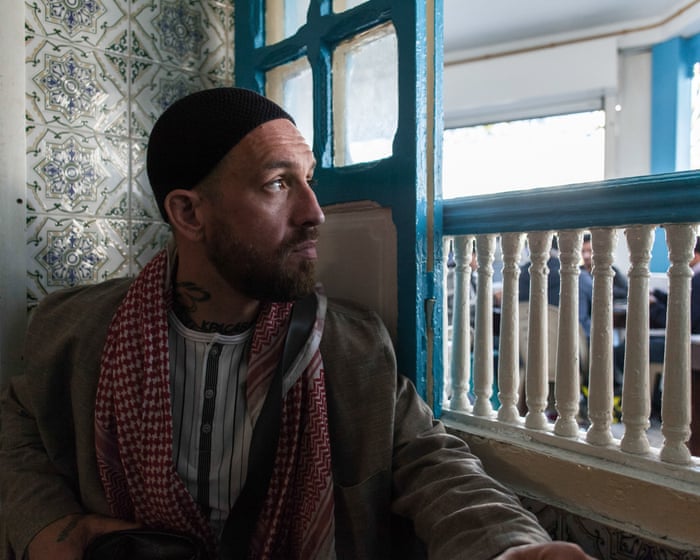
The FBI raided the vacation rental in Ibiza, Spain, of James "Fergie" Chambers, a US citizen and wealthy donor, after his arrest on charges related to alleged financial support for Hamas. Chambers is facing extradition to the US under President Donald Trump's administration, with the case involving allegations of money laundering and support for Palestinian projects, although details remain sealed and the raid found no evidence.
Key Facts
James "Fergie" Chambers is a 41-year-old US citizen and wealthy donor to leftwing and humanitarian projects.
He was arrested in Spain and the FBI raided his Ibiza vacation rental shortly afterward.
Chambers is wanted by the US government under President Trump for alleged financial support of Hamas and other charges.
The case involves about $7.5 million allegedly laundered from a US bank account to Tunisia.
Chambers has donated over $1 million to humanitarian projects in Gaza.
His lawyers say the indictment is weak and that no evidence was found during the FBI raid.
The US must submit extradition documents within 45 days of Chambers’ arrest; otherwise, he will be released.
Chambers is heir to the Cox family fortune and has funded around 100 projects in 20 countries.
Read the Original
Want the full story? Tap a source to open the original
article.
The article highlights key moments from Dolly Parton’s career and explains how she influenced music and culture. It also notes her strong connection to her hometown in Tennessee.
Key Facts
Dolly Parton is a famous country music singer.
She had many important moments in her music career.
Her work impacted both music and culture broadly.
She maintained close ties with her Tennessee hometown.
The article is presented by entertainment journalist Aunyea Lachelle.
Dolly Parton has a star on the Hollywood Walk of Fame.
The piece focuses on celebrating her life and legacy in entertainment.
Read the Original
Want the full story? Tap a source to open the original
article.
Busta Rhymes released "Dillagence II," an album featuring beats by the late Detroit producer J Dilla, who passed away in 2006. The album includes 19 tracks that mix Rhymes' rapping with Dilla’s unique style of rhythms.
Key Facts
J Dilla, a Detroit producer and hip-hop innovator, died in 2006 at age 32 from lupus complications.
Dilla worked with many artists, including Busta Rhymes, sending him over 300 beats during their collaboration.
"Dillagence II" was released by Busta Rhymes and features 19 tracks using Dilla's beats and Rhymes' vocals.
Dilla’s style, known as "Dilla Time," uses uneven beats that create a distinctive, offbeat rhythm.
The album features guest appearances, including Lil Wayne and Dilla’s mother Ma Dukes, as well as Rhymes’ children.
It includes a posthumous track with R&B singer D’Angelo, who died in 2025.
The album received a 3.5 out of 5-star rating and is seen as appealing to fans of classic and legacy hip-hop.
Read the Original
Want the full story? Tap a source to open the original
article.
The celebration of Mawlid, the birthday of the Prophet Muhammad, was cancelled in the Tigray region due to recent drone attacks. Meanwhile, the United States has urged the United Nations to increase sanctions against fighting groups in Sudan. Additionally, a gold discovery in a Kenyan village has attracted many amateur miners.
Key Facts
Mawlid celebrations were cancelled in Tigray because of recent drone attacks.
Mawlid is a Muslim holiday that celebrates the Prophet Muhammad's birthday.
The United States called for stronger U.N. sanctions against the warring parties in Sudan.
Sudan is currently experiencing conflict involving multiple armed groups.
In Cheporor, a village in Kenya, a gold discovery has caused a rush of amateur gold prospectors.
The article covers current issues affecting parts of Africa, including conflict and economic activity.
Drone attacks refer to strikes carried out by unmanned flying devices often used in warfare.
Read the Original
Want the full story? Tap a source to open the original
article.
Dolly Parton, a famous music icon, has passed away at the age of 80. Her family announced her death publicly, and media outlets are discussing her impact on music and culture.
Key Facts
Dolly Parton was a well-known singer and songwriter.
She died at the age of 80.
Her family shared the news of her death on a Tuesday.
Media and journalists are reflecting on her life and achievements.
CBS News and Rolling Stone have featured discussions about her legacy.
Parton was recognized internationally for her contributions to music and entertainment.
Read the Original
Want the full story? Tap a source to open the original
article.
Nigerian President Bola Ahmed Tinubu announced a rescue mission for about 600 people kidnapped from a mosque in Dekera village. This action follows a video of the victims being shared on social media by the kidnappers.
Key Facts
Around 600 people were kidnapped from a mosque in Dekera village, Nigeria.
The victims were shown in a video posted on Facebook and WhatsApp by the kidnappers.
President Bola Ahmed Tinubu publicly announced a rescue operation for the kidnapped individuals.
The rescue effort is currently underway to free the victims.
This mass abduction is a significant security concern in Nigeria.
The kidnappers used social media to spread their message and possibly pressure authorities.
The incident highlights ongoing issues with armed groups in the region.
The government is responding with a focused operation to recover the hostages.
Read the Original
Want the full story? Tap a source to open the original
article.
The United States has imposed new sanctions on Iran and many global companies doing business with Iran. This move aims to pressure Iran into negotiations to end the ongoing conflict. The U.S. military efforts have had limited success, leading the government to rely more on economic measures.
Key Facts
The U.S. announced new sanctions on Iran, calling the effort “Operation Economic Outcast.”
President Donald Trump demanded Iran stop claims on the Strait of Hormuz and resume nuclear talks.
Military action against Iran so far has not achieved quick victory and has depleted key U.S. munitions.
Iran has used missiles and drones to strike important oil and gas infrastructure in the region.
The war has caused higher gasoline prices, increasing about 40% for U.S. consumers.
The U.S. is facing shortages of missile interceptors needed to defend its forces.
U.S. military resources, including aircraft carriers, have been redirected from other regions like China to the Persian Gulf.
Some U.S. bases in the Persian Gulf have become unusable, causing longer supply routes and operational challenges.
Read the Original
Want the full story? Tap a source to open the original
article.
Dolly Parton spoke in a 1979 BBC interview about growing up poor in rural Tennessee and how her determination helped her become a famous country music star. Recently, her family announced that she passed away at the age of 80.
Key Facts
Dolly Parton appeared on a BBC chat show hosted by Michael Parkinson in 1979.
In the interview, she talked openly about her childhood poverty in Tennessee.
She described using flour as face powder during her early years.
Dolly credited her strong will for achieving international fame in country music.
Dolly Parton’s family announced her death at age 80 on social media.
The interview was notable for its personal and honest storytelling about her life.
Dolly Parton was a major figure in country music with a global audience.
Read the Original
Want the full story? Tap a source to open the original
article.
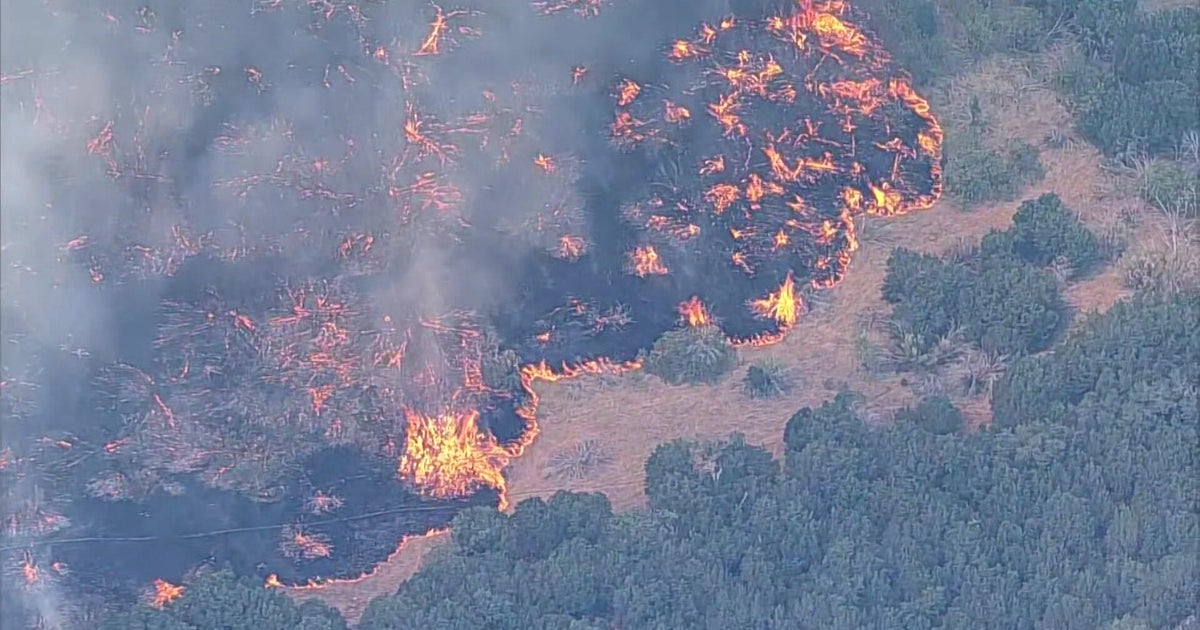
A large wildfire called the Ross Fire started near Ross in Palo Pinto County, Texas. It has burned over 50,000 acres, forced evacuations in nearby Jack County, and affected local schools. Firefighters are working to contain the fire amid dry and windy conditions.
Key Facts
The Ross Fire began Monday afternoon near Ross in Palo Pinto County.
The fire has grown to more than 50,000 acres in Palo Pinto and Jack counties.
As of Tuesday, the fire was 8% contained.
Evacuations were ordered for residents in parts of Jack County near County Road 2210 toward Highway 281.
An evacuation center is open at Twin Lake Recreation Center in Jacksboro.
Local schools delayed or canceled classes because of the fire.
U.S. Highway 180 is closed between South FM 4 and FM 919 due to the wildfire.
Dry weather, no recent rain, and gusty winds are raising wildfire risks in North Texas.
Authorities are providing a place for displaced livestock at the Old Mineral Wells Sale Barn in Graham.
Read the Original
Want the full story? Tap a source to open the original
article.
Dolly Parton, the country music star who died at age 80, was widely known for her long history of giving to others. She supported programs that help children learn to read, funded medical research, and aided people affected by disasters, especially in Tennessee.
Key Facts
Dolly Parton died at age 80; no cause of death was given.
She created the Imagination Library in 1995, giving free books monthly to children from birth to age 5.
The book program started in her home county in Tennessee and later spread across the U.S. and other countries.
Parton donated $1 million in 2020 to Vanderbilt University for COVID-19 research that helped develop the Moderna vaccine.
In 2022, she gave another $1 million for research on diseases affecting children.
She helped families affected by Tennessee wildfires with monthly financial aid through the My People Fund.
In 2024, she donated $1 million following Hurricane Helene to support disaster relief.
President Donald Trump ordered flags to be lowered in her honor, calling her a unique person who was a loss to millions.
Read the Original
Want the full story? Tap a source to open the original
article.