Swiss voters are taking part in a referendum to decide if Switzerland should add a stricter rule about the country’s long-standing neutrality to its constitution. This comes as other neutral countries increase defense spending and work more closely with NATO amid tensions in Europe caused by the war in Ukraine.
Key Facts
Switzerland has been neutral and not fought in a war since 1815.
The referendum asks if neutrality should be more clearly defined in the Swiss constitution.
Some people believe that actions like sanctions may harm Switzerland’s neutral status.
Other neutral European countries, like Austria and Ireland, are increasing defense budgets and strengthening ties with NATO.
The vote comes during a time of increased security concerns in Europe due to the Russia-Ukraine war.
The United States is also pressuring traditional alliances such as NATO to adapt to the changing situation.
The outcome will show how Switzerland plans to keep its neutrality in today's changing world.
Read the Original
Want the full story? Tap a source to open the original
article.
The Labour Party conference began in Liverpool with Labour showing strong support in recent polls, gaining many seats compared to earlier projections. Labour leader Andy Burnham said he is ready to make honest and difficult decisions, with more details expected in his upcoming speech.
Key Facts
Recent polls show Labour gaining about 250 seats, while Reform UK dropped to around 147 seats.
Last year, Reform UK was projected to get 293 seats and Labour only 110.
Labour conference is taking place in Liverpool with several key party leaders speaking.
Andy Burnham emphasizes honesty and willingness to make tough but necessary decisions.
Important speakers include deputy leader Lucy Powell, first secretary of state Louise Haigh, and defence secretary Wes Streeting.
The conference agenda includes discussions on housing, education, defence, and AI workers' preparation.
Burnham plans to meet Norwegian Prime Minister Jonas Gahr Støre during the conference.
Labour has announced a new homes scheme for first-time buyers at the start of the conference.
Read the Original
Want the full story? Tap a source to open the original
article.
Police in Gloucestershire, England, declared a major incident near RAF Fairford, a U.K. airbase used by the U.S. military for attacks on Iran. Several properties were evacuated, and men were arrested on suspicion of explosives offenses, with the situation described as contained.
Key Facts
The major incident took place in Whelford, about two miles from RAF Fairford.
RAF Fairford is a British airbase used by the U.S. for attacks on Iran.
Several properties were evacuated, and residents were moved to a nearby leisure center.
Multiple men were arrested for possible explosives-related offenses.
British Army explosive experts are examining vehicles connected to the incident.
The U.K. allowed the U.S. to use RAF Fairford for strikes on Iran starting in March.
The U.S. uses RAF Fairford for bombers including B-1 and B-52 types.
Iran has called U.K. bases used by the U.S. for attacks on Iran "legitimate targets."
Read the Original
Want the full story? Tap a source to open the original
article.
Police declared a major incident near RAF Fairford in Gloucestershire and evacuated homes in the nearby village of Whelford. Several men were arrested on suspicion of breaking explosives laws, and a special Army team is checking vehicles for explosives.
Key Facts
The incident happened near RAF Fairford, a base used by the U.S. Air Force.
Residents of Whelford were moved to a nearby leisure center for safety.
Multiple men were arrested for suspected offences under the Explosives Act.
The Army's explosive ordnance disposal team is inspecting several vehicles.
Police set up a safety cordon and said the situation is under control.
A large emergency services team was present, including a Hazardous Area Response Team.
Police are following planned safety procedures and working with partner agencies.
Read the Original
Want the full story? Tap a source to open the original
article.
Tensions in the Strait of Hormuz remain high after President Donald Trump rejected Iran’s plan to reopen the waterway. Explosions and attacks on ships have continued, as both Iran and the US take steps that keep the strait partly closed and disputed.
Key Facts
The Strait of Hormuz is a critical shipping route for oil between the Persian Gulf and the open ocean.
Iran proposed a plan to reopen the strait with seven conditions, including lifting the US blockade and releasing frozen Iranian funds.
President Trump rejected Iran’s proposal, leading to continued conflict in the area.
Explosions and attacks, including missile and drone strikes, have targeted ships near Iran’s Qeshm Island in the strait.
Iran’s Revolutionary Guard says the strait is closed to ships that don’t coordinate with Iranian authorities.
Iran has asked shipping companies to use an approved temporary route and pay fees, threatening to blacklist companies that do not comply.
The US Navy claims to escort oil tankers safely through a different route and enforces a naval blockade on Iran’s ports.
Iran says the US gives false information to show control of the strait and blames the US and Israel for starting a war against Iran on February 28.
Read the Original
Want the full story? Tap a source to open the original
article.
A student from St Andrews University shared her experience of feeling left out because of her working-class background, sparking a wider discussion about social divisions on campus. Many students say the rise of wealthy American students and private school backgrounds has changed the university’s culture, making it feel less welcoming to those from poorer families.
Key Facts
Sophie Rose Jenkins decided not to return to St Andrews because of class-based exclusion.
St Andrews limits free spots for Scottish students, who make up about 30% of the student body.
Many wealthy international students, especially Americans, pay more than three times the UK fee.
About 20% of undergraduates at St Andrews are American, the highest rate in the UK.
The university has a large number of privately educated students.
Some students say social groups form along national and class lines, with the American presence influencing campus life.
Expensive shops and exclusive social events reflect growing wealth gaps.
An article compared St Andrews to Manhattan’s Upper East Side, known for elite social circles.
Read the Original
Want the full story? Tap a source to open the original
article.
Prince Harry and Meghan Markle recently returned to the UK after six years in California. Their relationship with the royal family remains tense, with possible conflicts expected at several upcoming royal events in the next year.
Key Facts
Harry and Meghan moved back to Britain in August after living in California for six years.
A recent letter from King Charles III’s office called them "private citizens," which their team disagreed with.
Tensions continue due to personal comments in Harry’s book "Spare" and his lack of communication with his brother, Prince William.
Harry has not spoken to William since Queen Elizabeth II’s funeral in September 2022.
Upcoming royal events, like Remembrance ceremonies and Princess Kate’s carol service, could be potential conflict points.
Harry is a war veteran who served in Afghanistan and has previously tried to participate in Remembrance Day ceremonies.
Past actions, like dropping the Netflix documentary on the same day as the royal carol service, have added to tensions.
Read the Original
Want the full story? Tap a source to open the original
article.
A court in Northern Ireland allowed a Protestant parade to go through a Catholic area for the first time in nearly 30 years. This has led to protests and police efforts to prevent violence, linked to a long-standing dispute that once caused serious conflict.
Key Facts
The Protestant parade is set to pass through a Catholic neighborhood in Northern Ireland.
This route has been controversial since the mid-1990s.
Past disputes over this parade caused riots, roadblocks, and deaths.
The parade ban was lifted by a court decision on Sunday.
Police are separating marchers and protesters to keep peace.
The conflict affects the Drumcree area near Portadown.
The dispute has historical ties to religious tensions in Northern Ireland.
It previously threatened the peace process in the region.
Read the Original
Want the full story? Tap a source to open the original
article.
The article tells the story of a man known as the "Dosa King" who built a restaurant business worth millions. After a young woman rejects him, he threatens her marriage, and her husband is later found dead. The man has spent nearly 20 years trying to avoid being punished for this crime.
Key Facts
The "Dosa King" became wealthy by building a successful restaurant empire.
He threatened a young woman's marriage after she rejected him.
The woman's husband was found dead following the threats.
The man has fought the legal system for almost two decades to avoid justice.
The story is featured in Season 2 of the True Crime Reports series by Al Jazeera.
The episode includes illustrations made with the help of AI-powered software.
The episode features commentary from a journalist and a feminist scholar.
The podcast production team and contributors are listed, highlighting fact-checking and creative roles.
Read the Original
Want the full story? Tap a source to open the original
article.
Germany’s far-right AfD party recently won regional elections in Saxony-Anhalt and is trying to form a government there. Officials worry the AfD could access sensitive intelligence and possibly reveal spies or share information with Russia, raising security concerns in Germany and among its allies.
Key Facts
AfD won 44% of the vote in Saxony-Anhalt, a German state with broad regional powers.
The German domestic intelligence agency (BfV) considers right-wing extremists the biggest threat to democracy.
AfD’s national party is labeled a “suspected extremist group” and the Saxony-Anhalt chapter is considered “confirmed extremist” and under surveillance.
If AfD controls the state interior ministry, it could access files about intelligence agents spying on them.
French intelligence told Germany it will withhold sensitive info on far-right and Russia if AfD governs Saxony-Anhalt.
Officials fear AfD might expose spies and share classified security information with Russia, especially during tensions around the Ukraine war.
Defence Minister Boris Pistorius opposes giving AfD officials access to classified information.
Read the Original
Want the full story? Tap a source to open the original
article.
Experts in the West Midlands of the UK are encouraging families to look closely for fungi during autumn walks, as many unusual mushrooms start to appear. They say observing fungi turns ordinary walks into interesting nature adventures and helps people discover rare species.
Key Facts
Autumn is the season when many unusual mushrooms appear in parks, woods, and nature reserves in the UK.
Fungi such as fly agaric (a bright red mushroom with white spots), bird’s nest fungi, and the rare red cage fungus have been found in the West Midlands.
James Benwell from the Birmingham and Black Country Wildlife Trust says looking for fungi can make walks more exciting, especially for children.
The UK has more than 15,000 species of fungi, many hidden under leaves or on rotting wood.
Experts advise people to take photos and record mushrooms rather than picking them.
The red cage fungus is very rare in the area and smells unpleasant to attract flies that spread its spores.
The West Midlands Fungus Group notes growing public interest in fungi and holds events to explore these species.
Fungi come in many shapes, colors, and sizes, offering a variety of sights for those who pay close attention on walks.
Read the Original
Want the full story? Tap a source to open the original
article.
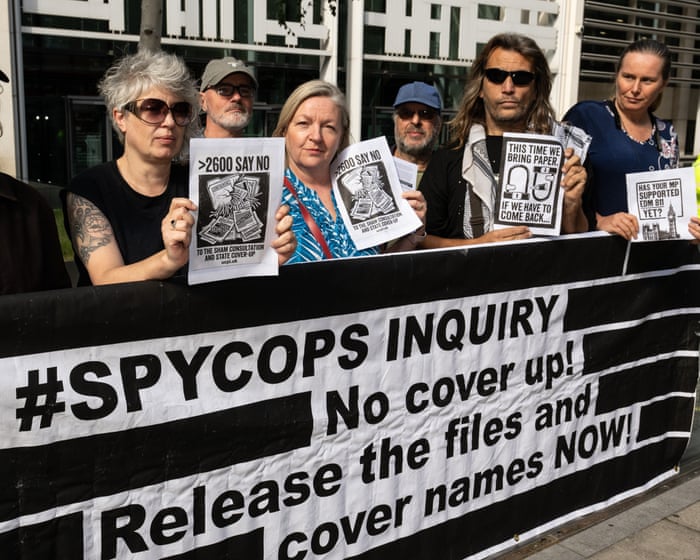
An undercover police officer named Dave Evans admitted to lying about having a sexual relationship during his spying work on leftwing and animal rights groups. The spycops inquiry is investigating undercover officers who had secret relationships without revealing their true identities, which raises serious ethical and legal questions.
Key Facts
Dave Evans was an undercover officer spying on leftwing and animal rights groups from 1998 to 2005.
He initially denied having any sexual relationship during his undercover work but later admitted to a relationship that lasted at least six months.
Evans said he did not disclose the relationship because the woman involved was not an activist.
The inquiry focuses on undercover officers who had sexual relations with women without revealing they were police officers.
Some undercover officers fathered children with women they met while undercover.
Evans used a fake name and identity, posing as a landscape gardener.
The inquiry has been ongoing for more than ten years and is examining serious wrongdoing by undercover officers.
Victims say cutting the inquiry short would hide important truths about the surveillance.
Read the Original
Want the full story? Tap a source to open the original
article.
A letter written by a 10-year-old girl in 1982 was found during house renovations in Essex after being hidden for 44 years. The current resident posted about it on social media, and the letter's author was quickly identified and contacted.
Key Facts
The letter was written by Rachel Miles in August 1982 when she was 10 years old.
It was hidden in the cavity of the stairs in a house on Betts Farm Estate, Essex.
The house is now lived in by Michelle Harwood, who found the letter during renovations.
Michelle posted an image of the letter on her local Facebook group, leading to Rachel being identified.
Rachel Miles is now a 54-year-old teacher living in Milton Keynes.
The letter was part of a time capsule trend in the 1980s, inspired by a TV show called Blue Peter.
Both families have personal connections to the area, and coincidentally both had pet cats.
The letter is now kept on the family fridge as a meaningful keepsake.
Read the Original
Want the full story? Tap a source to open the original
article.
Yemen’s health system is at risk of collapse in some areas due to a severe lack of funding and resources. The ongoing war and increasing displacement have forced many health facilities to close, causing shortages of medicine and emergency services.
Key Facts
Yemen’s health sector may not cope with more displaced people because of funding cuts.
Less than half of health facilities are working fully, down from a previous estimate of 60 percent.
Essential services like emergency care, vaccinations, maternal health, dialysis, and cancer treatment are especially threatened.
About 19.3 million people in Yemen need health help, but only 17 percent of required funding has been provided.
Over 134,000 people have been displaced by the war from June to September 2025, mainly in Taiz, Lahij, and Aden.
Reporting of health data from areas controlled by the Houthi group has stopped for almost a year, making it hard to understand the full health situation.
Outbreaks of cholera, measles, and polio are happening alongside high malnutrition and low vaccination rates.
Nearly 130,000 people have been displaced in seven governorates since fighting increased in early September 2025.
Read the Original
Want the full story? Tap a source to open the original
article.
Studies show that marriages are lasting longer before couples get divorced in several countries including England, the US, Germany, and the Netherlands. Financial reasons and the complexity of separating lives, especially with changes in divorce laws, may explain why couples delay divorce decisions.
Key Facts
In England and Wales, the average marriage length before divorce reached 13 years in 2025, up from 8.9 years in 1985.
Fewer couples are divorcing within their first 10 years of marriage compared to previous decades.
No-fault divorce laws, which make it easier to divorce without blame, were introduced in England in 2022.
Financial issues like taxes, mortgages, childcare costs, and reduced legal aid make divorce more complicated and expensive.
Similar trends of longer marriages before divorce are seen in the US, Germany, Belgium, and the Netherlands.
Women tend to be financially disadvantaged after divorce, so some wait to advance their careers before divorcing.
Couples often take time trying to fix their relationships before deciding on divorce, especially when marrying later in life.
The different ways countries report divorce statistics mean exact comparisons are difficult, but longer marriages before divorce is a common pattern.
Read the Original
Want the full story? Tap a source to open the original
article.
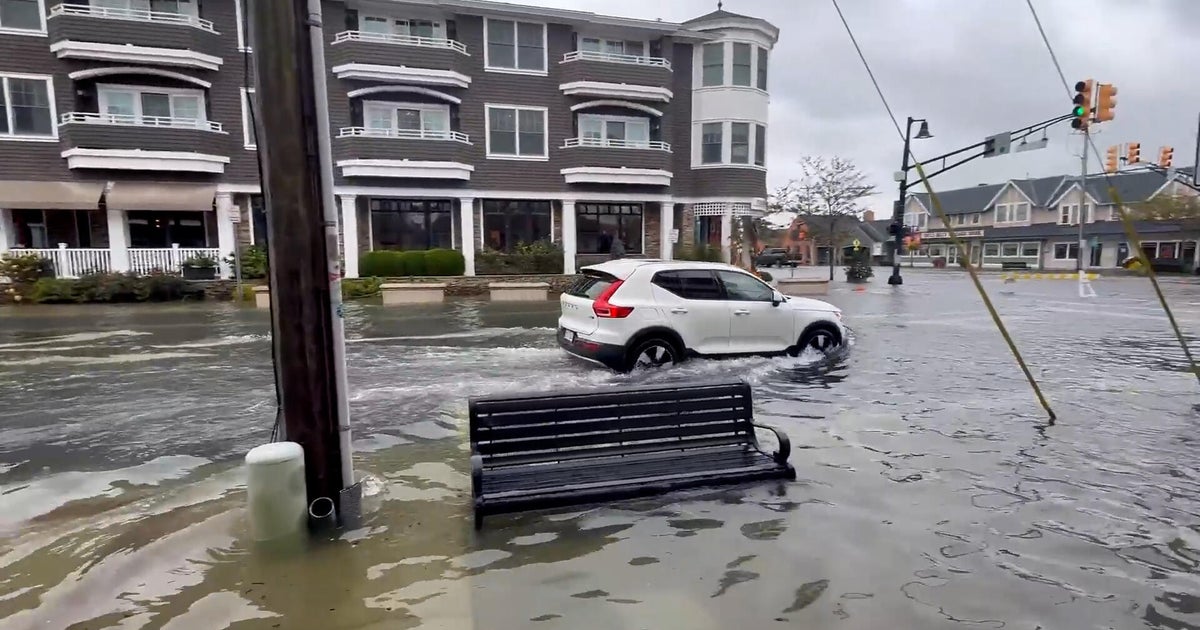
A nor'easter storm has caused heavy rain and flooding across New York, New Jersey, Maryland, and other areas. The storm disrupted daily life and led to cancellations of events.
Key Facts
The nor'easter brought heavy rain to several states including New York, New Jersey, and Maryland.
Streets in affected areas experienced significant flooding.
Residents faced disruptions in their daily routines because of the storm.
Some planned events were cancelled due to the weather conditions.
Videos have captured the flooding and damage caused by the storm.
The storm hit during the first night of rainfall, showing early severe impacts.
Local authorities and news outlets are monitoring and reporting on the situation.
Read the Original
Want the full story? Tap a source to open the original
article.
Pope Leo XIV is visiting Lourdes, France, as part of a four-day official trip, the first papal state visit to the country in 18 years. During his visit, he held an open-air mass at the Sanctuary of Our Lady of Lourdes and planned private meetings with victims of clergy sexual abuse.
Key Facts
Lourdes is a famous Catholic pilgrimage site known for its healing spring water and visions reported by Bernadette Soubirous in 1858.
Pope Leo XIV’s visit to France includes stops in Paris and Lourdes.
About 150,000 people were expected to attend the Pope’s open-air mass at Lourdes.
The Pope’s schedule in Lourdes included meetings with bishops, pilgrims, nuns, and victims of sexual abuse.
Lourdes attracts millions of pilgrims yearly, many hoping for healing or spiritual support.
Local businesses in Lourdes hope the Pope’s visit will boost the town’s economy through pilgrim spending.
The number of adult baptisms in France has tripled since 2016, indicating growing interest in the Catholic Church.
Read the Original
Want the full story? Tap a source to open the original
article.
Israel’s Finance Minister Bezalel Smotrich has called for a military war in the West Bank, similar to Israel’s actions in Gaza. He also suggested annexing parts of southern Lebanon and Gaza controlled by Israel. His comments come before upcoming Israeli elections and follow increased violence and military actions in the occupied territories.
Key Facts
Bezalel Smotrich is Israel’s far-right Finance Minister.
He called for a full-scale war in the occupied West Bank using tactics like those in Gaza.
Smotrich wants to dismantle the Palestinian Authority, which governs the West Bank.
He also proposed annexing Israeli-controlled parts of Gaza and southern Lebanon.
His comments were made in an interview with Ynet News ahead of Israel’s general election.
Violence and military crackdowns in the West Bank and Gaza have increased recently.
Over 74,000 Palestinians have been reported killed by Israel since October 2023, according to Gaza’s health ministry.
Some legal experts and human rights groups describe Israel’s actions in Gaza as genocide.
Read the Original
Want the full story? Tap a source to open the original
article.
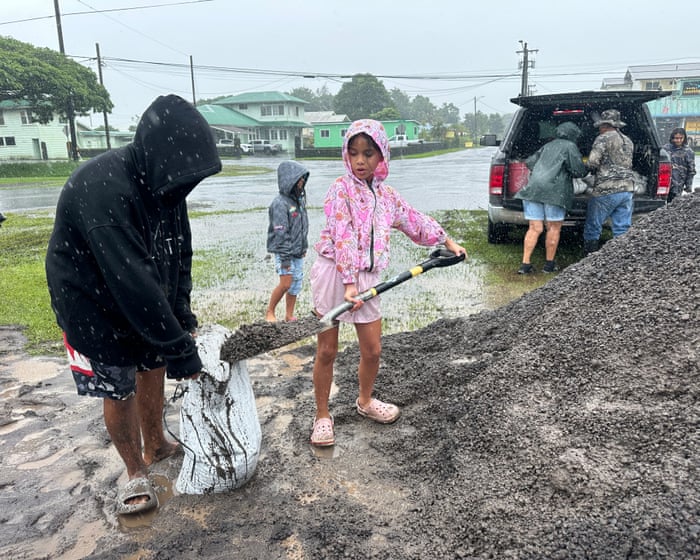
Hurricane Nolo is approaching Hawaii with strong winds and heavy rain, threatening flooding and mudslides on islands still recovering from previous storms. President Donald Trump has approved emergency federal help for Hawaii, while local officials are preparing shelters and activating the National Guard. Meanwhile, Hurricane Polo is heading toward Mexico’s Baja California peninsula, causing worry for local communities with limited resources.
Key Facts
Hurricane Nolo had winds of 105 mph and was located about 145 miles south of Hawaii’s Big Island.
The storm could cause up to 20 inches of rain on the Big Island, leading to flooding and mudslides.
President Trump approved an emergency declaration for Hawaii, allowing federal aid and funding.
Hawaii’s governor activated the National Guard and urged residents to prepare emergency kits.
Utility crews are preparing for possible power outages across Hawaiian islands.
Hurricane Polo, with stronger winds of 155 mph, is moving toward Mexico's Baja California peninsula.
Residents of San Juanico, Mexico, are concerned because the town has limited electricity, fuel, and emergency support.
Local officials in San Juanico plan to use the elementary school as a shelter but worry about road access and extended isolation.
Read the Original
Want the full story? Tap a source to open the original
article.
Four people died when a private helicopter crashed and caught fire near Montreal, Canada. Authorities found the wreckage on Saturday afternoon and are investigating the cause of the crash.
Key Facts
The crash happened about 50 kilometers (31 miles) from Montreal, in Sainte-Brigide-d'Iberville.
Emergency services arrived shortly after 14:30 local time and found the helicopter on fire.
All four people on the helicopter died at the scene.
The victims have not yet been identified, and this could take a few days.
The Major Crime Unit of the Sûreté du Québec is leading the investigation.
Investigators from the Transportation Safety Board of Canada are also involved.
The crash site is near Rang des Écossais road off Highway 10.
The fire was under control about an hour after the crash was reported.
Read the Original
Want the full story? Tap a source to open the original
article.