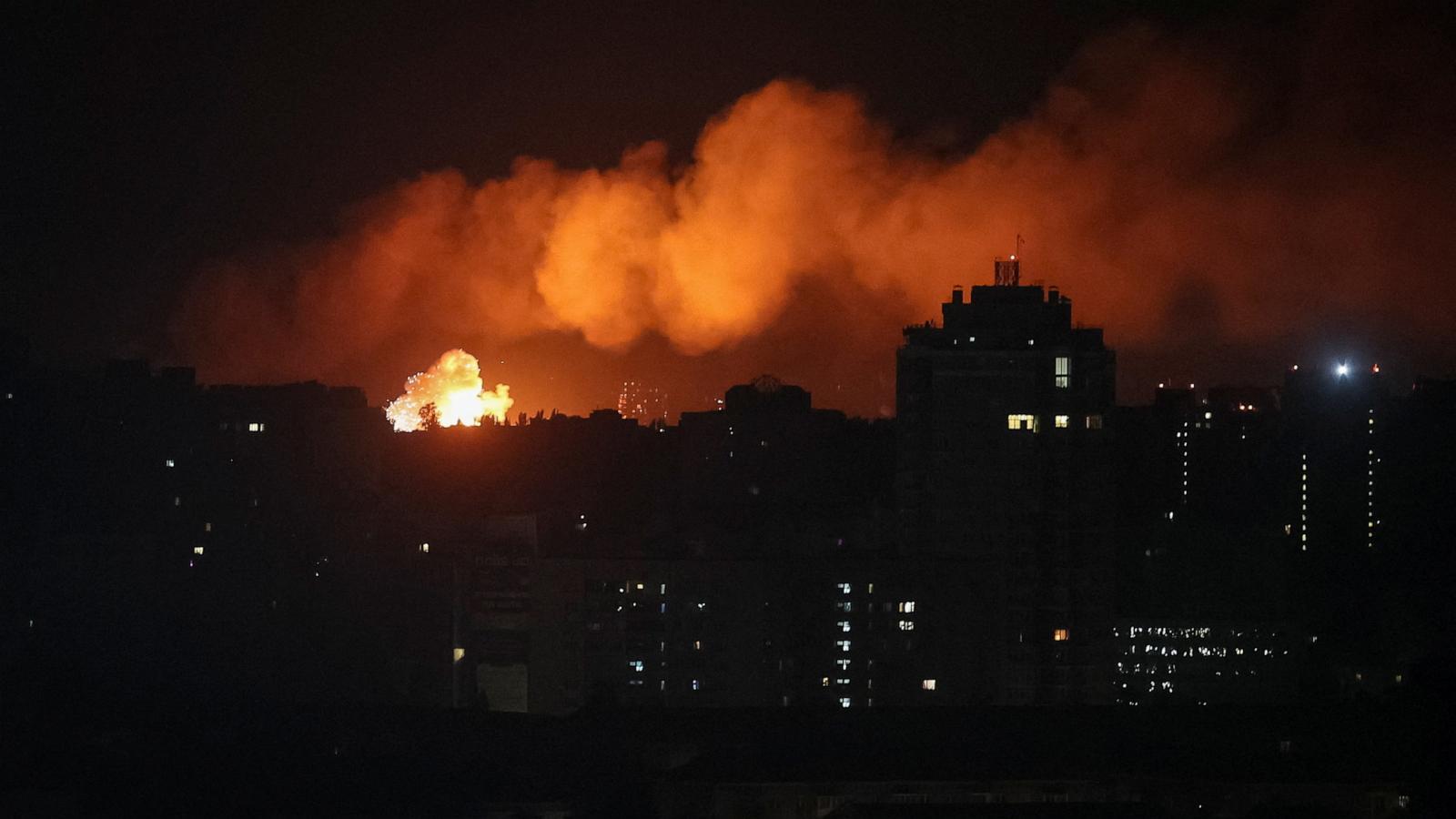
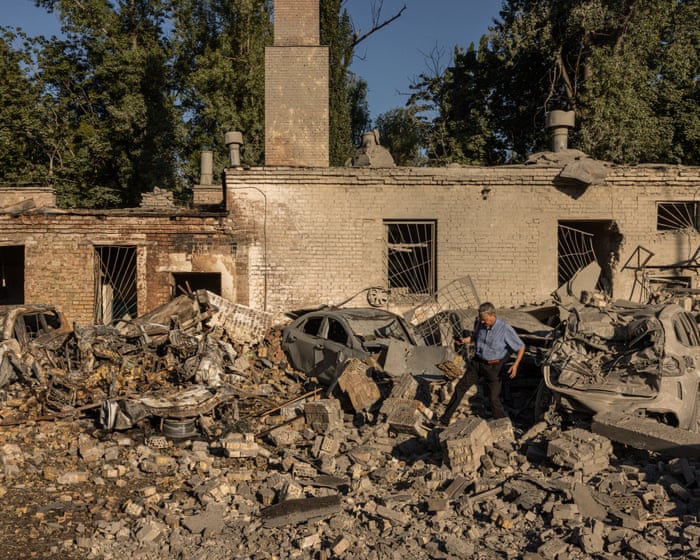
Russian missile strikes killed at least 12 people and injured many others in Kyiv and nearby areas overnight. The attacks are part of ongoing long-range bombardments in the conflict between Russia and Ukraine, which has lasted over four years.
Key Facts
At least 12 people died from Russian strikes in and around Kyiv.
Dozens more were wounded in the attacks.
The conflict between Russia and Ukraine has lasted about four and a half years.
Both sides have increased long-range missile attacks recently.
The civilian death toll has been rising due to these attacks.
The strikes occurred overnight before authorities reported the casualties.
The information comes from official Ukrainian authorities and news reports.
Read the Original
Want the full story? Tap a source to open the original
article.
The International Criminal Court (ICC) criticized the United States for imposing sanctions on the ICC President Tomoko Akane and a trial lawyer, calling it a direct attack on the court's independence. The US said it targeted the ICC because it believes the court is corrupt and politically biased, while the European Union expressed strong support for the ICC's leadership.
Key Facts
The US imposed sanctions on ICC President Tomoko Akane of Japan and trial lawyer Abdoulaye Seye of Senegal.
The US claims the ICC is corrupt and politically biased.
The ICC called the sanctions a "flagrant attack" on its independence.
The European Union publicly supported Akane and other ICC officials.
The sanctions are part of a larger US campaign against the ICC.
Tomoko Akane is the current president of the International Criminal Court.
The ICC is an international court that tries serious crimes like war crimes and crimes against humanity.
Read the Original
Want the full story? Tap a source to open the original
article.
Thousands of migrants entered the Spanish enclave of Ceuta from Morocco at the end of July. Many women among them say they face sexual harassment while waiting in difficult conditions to be officially registered by authorities.
Key Facts
Around 72,000 migrants crossed from Morocco into Ceuta on July 30.
Authorities estimate 5,000 to 8,000 migrants still remain in Ceuta over two weeks later.
Migrant women report fear and threat of sexual harassment during the wait.
Many migrants have to sleep outdoors without proper shelter.
Ceuta is a Spanish territory located in North Africa.
The border crossing caused a crisis due to the large number of arrivals.
Local officials and aid groups are involved in registering and helping migrants.
The situation highlights challenges in managing sudden mass migration flows.
Read the Original
Want the full story? Tap a source to open the original
article.
North Korea launched a suspected missile toward the sea, according to Japan and South Korean reports. This happened after the U.S. and South Korea scaled back joint military drills following orders from President Trump, but North Korea's leader's sister said the smaller drills still provoke them and rejected attempts at diplomacy.
Key Facts
Japan detected a possible ballistic missile launch from North Korea toward the sea.
South Korean media reported an unidentified projectile was fired off North Korea’s east coast.
The U.S. and South Korea reduced the length and size of their annual Ulchi Freedom Shield military exercises.
President Trump ordered the Pentagon to “substantially reduce” these drills, citing good relations with North Korea and South Korea’s stance on the Iran conflict.
Kim Yo Jong, sister of North Korean leader Kim Jong Un, rejected the reduction of drills as meaningful and called them still provocative.
She said the U.S. would not get the response it wants by scaling back the drills.
North Korea referred to other U.S.-South Korea military activities and South Korea’s plan to get nuclear-powered submarines as concerns.
Read the Original
Want the full story? Tap a source to open the original
article.
Severe storms hit parts of Germany overnight, killing one woman and injuring at least two others. The storms caused widespread damage, including uprooted trees, damaged houses, and power outages in several regions.
Key Facts
A 58-year-old woman died in Waldorf when a tree fell on a shelter where she and another woman were taking cover.
The injured 47-year-old woman was taken to a hospital.
A tornado struck Fürstenwalde near Berlin, damaging roofs, cars, and injuring one person.
In Höhr-Grenzhausen, storms tore walls from two buildings and uprooted several trees.
Around 60 houses were damaged in Wetzlar, with pieces of roof blown far from the buildings.
A large outdoor festival in Kronach, Bavaria, was partially evacuated due to the storms.
Power outages occurred in affected areas.
The German Weather Service warned of more strong storms expected later in the day, especially in southern Germany.
Read the Original
Want the full story? Tap a source to open the original
article.
The Strait of Hormuz is a key waterway for shipping oil and gas. President Donald Trump says the US controls the strait and keeps it open, but Iran claims it closed the strait for ships not approved by Tehran. Data shows most ships avoid official routes and use untracked paths, making it hard to know who truly controls the strait.
Key Facts
The Strait of Hormuz lies between Iran and Oman and is a major route for oil and gas shipments.
President Donald Trump claims the US controls the strait and that it is open to all vessels.
Iran insists ships must get Tehran’s approval before passing and claims the southern Omani route is not allowed.
There are two main shipping routes: the northern "Iranian" route near Iran’s coast and the southern "Omani" route near Oman.
Between August 1 and 19, 112 oil and gas vessels passed through the strait; 21 used the Iranian route and 2 used the Omani route openly.
Over 80% of oil and gas ships used unclassified or “dark” routes with their tracking systems turned off or unclear.
In total, 236 vessels went through the strait in the same period; 83 openly used the Iranian route, 3 used the Omani route, and most ships (148) went dark or used unknown routes.
It is difficult to confirm precise ship routes because many turn off tracking systems, making control of the strait unclear.
Read the Original
Want the full story? Tap a source to open the original
article.
Andy Burnham has announced a government plan to clean up illegal waste dumps in parts of England, including West Yorkshire, Surrey, and Kent. The plan includes using taxpayer money to clear 22,000 tonnes of rubbish, raising fines for illegal dumping, and using AI drones to monitor waste sites.
Key Facts
The government has identified illegal waste sites in Bradford, Runnymede, and the Isle of Sheppey for cleanup.
These sites contain about 22,000 tonnes of illegal waste.
Taxpayer money will be used to remove the waste.
Fines for people who dump waste illegally will be increased.
AI-powered drones will help detect illegal dumping as it happens.
Hundreds of illegal waste sites exist across England.
Andy Burnham is focusing on cleaning toxic dumps in his own constituency, Makerfield.
Burnham says that solving homelessness and illegal waste dumping requires efforts from government, councils, charities, and communities.
Read the Original
Want the full story? Tap a source to open the original
article.
Nearly one in four boys in England achieved top grades in GCSE maths this year, helping push overall results to their highest level outside the pandemic years. English results also improved for both boys and girls, with more students reaching passing grades compared to last year.
Key Facts
23.1% of pupils got top grades in GCSE maths and English combined, a slight increase from last year.
In maths, 24% of boys and 20.5% of girls achieved top grades (7 or above).
Overall, 70.7% of students earned a passing grade (grade 4 or higher) in their GCSEs.
English results improved with 66.1% of boys and 76.8% of girls passing.
Many students faced earlier educational disruptions due to Covid-19 school closures.
There remains a significant number of students who do not pass English and maths at age 16.
More students are taking business studies GCSEs, with entries up by one third in five years.
Across the UK, 22% of GCSE entries received top grades, higher than before the pandemic.
Read the Original
Want the full story? Tap a source to open the original
article.
The article explains that nearly six months after the U.S. and Israel began attacks on Iran, the country has not surrendered and continues to pose security threats in the Gulf. However, Iran is experiencing serious economic damage, especially in its oil sector, due to sanctions and policies, and President Donald Trump is planning to increase pressure through a new economic operation aimed at isolating Iran further.
Key Facts
Iran’s missiles are still active, and its security forces remain united despite ongoing conflict.
Iran continues to threaten commercial ships in the Strait of Hormuz, affecting global energy prices.
The war has caused a deep economic crisis in Iran pre-dating the conflict, including currency drops and energy shortages.
Iran’s oil production dropped by nearly 23% compared to before the war, limiting its foreign currency income.
Lower oil production hurts Iran’s ability to pay for imports and support its government and military.
The Purchasing Managers’ Index showed Iran’s economy rapidly shrinking after the attacks, indicating many businesses shut down or operated at low capacity.
President Trump announced a new, intensified economic campaign called "Operation Economic Fury" to further isolate Iran.
The success of these economic measures in achieving a broader political victory over Iran remains uncertain.
Read the Original
Want the full story? Tap a source to open the original
article.
Europe is facing its fifth heatwave this year, causing wildfires, crop failures, and dry rivers. The extreme heat and rising energy costs from the Iran war are putting heavy strain on the European economy.
Key Facts
Europe is experiencing its fifth heatwave of the year.
Wildfires are occurring, crops are failing, and rivers are drying up.
Economists estimate the economic cost of the heatwave at about $209 billion in 2024.
This cost equals roughly 1% of the European Union’s total economic output (GDP).
A Dutch bank, Triodos, says this loss could cancel out almost all expected economic growth in 2026.
Europe is also dealing with higher energy prices caused by the conflict involving Iran.
The combination of heat damage and energy costs is affecting industries like tourism, food production, insurance, and government budgets.
Read the Original
Want the full story? Tap a source to open the original
article.
Erin Patterson poisoned four relatives of her estranged husband with deadly mushrooms, causing three deaths. A prosecutor in Australia’s Victoria Court of Appeal demanded she never be released from prison or receive a much longer minimum sentence before parole.
Key Facts
Erin Patterson poisoned her estranged husband’s relatives with death cap mushrooms at a lunch in Leongatha, Australia, in July 2023.
Three people died, and one survived after spending weeks in hospital.
Patterson was convicted of three murders and one attempted murder.
Prosecutor Brendan Kissane said her current sentence requiring 33 years before parole is too short and asked for no parole at all or a longer minimum term.
Patterson is held in a high-security prison unit for her protection due to her notoriety.
The trial judge said she might be kept in solitary confinement for years.
Patterson claimed the poisoning was accidental during her trial.
The court has not yet decided on the prosecutor’s appeal.
Read the Original
Want the full story? Tap a source to open the original
article.
Russian ballistic missiles hit Kyiv early on Thursday, killing at least 12 people and injuring many more. The missile strikes damaged civilian places, including a children’s hospital.
Key Facts
The missile attack occurred in Kyiv, the capital of Ukraine.
At least 12 people died from the strikes.
Dozens of people were injured.
Civilian buildings were hit during the attack.
A children’s hospital was among the places damaged.
Ukrainian officials reported the incident.
The missiles used were ballistic missiles, which are long-range weapons.
The attack happened early in the morning on Thursday.
Read the Original
Want the full story? Tap a source to open the original
article.
Israeli Minister Itamar Ben-Gvir expressed support for the demolition of 10,000 Palestinian homes in Israel. These demolitions are happening because the homes are said to lack the required permits.
Key Facts
Itamar Ben-Gvir is a far-right Israeli government minister.
He praised the destruction of 10,000 Palestinian homes.
The demolitions took place in Israel, including in the city of Ramla.
Ben-Gvir described the sound of the demolitions as "wonderful."
The official reason for demolishing the homes is that they do not have legal building permits.
These actions affect Palestinian communities living in Israel.
Read the Original
Want the full story? Tap a source to open the original
article.
A new clinical trial from Spain found that strength training during pregnancy may lower the risk of gestational diabetes in overweight or obese women. The study also showed that women who did strength exercises reported better quality of life and fewer pregnancy-related symptoms.
Key Facts
The study involved 209 pregnant women with a body mass index (BMI) of 25 or higher.
Women were randomly assigned to either a strength-training program or standard prenatal care.
The exercise group started training between 12 and 14 weeks of pregnancy and continued until about 36 weeks.
Only 2% of women in the exercise group developed gestational diabetes, compared to more than 7% in the control group.
Women who exercised at least twice per week did not develop gestational diabetes at all.
No cases of hydramnios (too much amniotic fluid) occurred in the exercise group, while four cases were reported in the control group.
Women who did strength training reported less fatigue, anxiety, pain, and other common pregnancy symptoms.
Researchers say larger studies are needed to confirm these results.
Read the Original
Want the full story? Tap a source to open the original
article.
Israel’s military decided not to open a criminal investigation into the killing of Australian aid worker Zomi Frankcom during an April 2024 drone strike that also killed other aid workers. The Australian government condemned this decision and promised to continue pushing Israel for justice and transparency about the attack.
Key Facts
Zomi Frankcom, an Australian aid worker, died in an Israeli drone strike on a World Central Kitchen convoy in Gaza in April 2024.
Seven employees of the US-based aid group were killed in the strike.
The convoy had coordinated its movements with the Israeli military but was hit multiple times, destroying clearly marked humanitarian vehicles.
Israel’s military said the strike resulted from mistaking the convoy members for armed militants and said the convoy did not follow the agreed route.
Israel concluded commanders showed no criminal misconduct; some officers were removed or reprimanded.
Australia expressed outrage, with the foreign affairs minister and prime minister demanding justice and transparency.
Frankcom’s family called Israel’s decision an insult and demanded a full independent investigation and release of all evidence, including drone audio.
The Australian government promised to keep pressing for justice and consult with Frankcom’s family on further steps.
Read the Original
Want the full story? Tap a source to open the original
article.
A family of four got into trouble in the sea near Shoreham-by-Sea, West Sussex. Three family members, including a 14-year-old girl named Sara El-Khawas and her parents, died, while a younger girl remains in critical condition in the hospital.
Key Facts
The family went into the water near Shoreham Fort on Tuesday.
Sara El-Khawas attended Ellen Wilkinson School for Girls in west London.
The school described Sara as a well-liked and kind student and is supporting those affected.
The family are British citizens of Palestinian origin, with ties to a refugee camp in Lebanon.
Police say the incident was a tragic accident with no involvement of others.
The community and local leaders expressed sadness and offered prayers.
Floral tributes were left at Kingston Beach near Shoreham.
Prime Minister Andy Burnham warned about the dangers of swimming in open water following the tragedy.
Read the Original
Want the full story? Tap a source to open the original
article.
A large missile and drone attack by Russia hit Kyiv, Ukraine, killing at least 12 people and injuring more than 40. Ukraine’s air force said they intercepted many missiles and drones, but significant damage occurred to homes, schools, and hospitals in the Kyiv area.
Key Facts
The attack happened on the night of August 19-20, 2026.
Russian forces used a mix of ballistic missiles, cruise missiles, and drones.
Ukraine’s air force said it intercepted 41 cruise missiles and 145 drones.
At least 12 people died, and over 40 were injured in Kyiv.
Damage was reported to residential buildings, a children's hospital, and a school.
Similar attacks also hit the Odesa and Chernihiv regions.
Ukrainian officials said their stock of anti-missile defenses is running low.
Ukraine is developing its own missile defense system called FREYJA, expected by 2027.
Read the Original
Want the full story? Tap a source to open the original
article.
Israeli Prime Minister Benjamin Netanyahu said Israel will not allow Turkey to expand its military presence in southern Syria. This statement came after Israel attacked a Syrian military base, and Netanyahu said Israel had sent a clear warning to Turkey.
Key Facts
Israel attacked a military base in Syria.
Prime Minister Netanyahu warned Turkey about its military activities in Syria.
Israel opposes the expansion of Turkish forces southward in Syria.
The warning was described as a ‘message’ sent by the Israeli government to Turkey.
The situation involves ongoing military and political tensions in the region.
Turkey currently has a military presence in parts of Syria.
Israel is closely monitoring Turkey’s movement and actions in Syria.
Read the Original
Want the full story? Tap a source to open the original
article.
Russia launched a large attack on Kyiv and nearby areas, using missiles and drones that caused damage to homes, schools, and hospitals. At least 12 people were killed and 40 were injured, leading Kyiv’s mayor to declare a day of mourning.
Key Facts
The attack involved ballistic missiles, cruise missiles, and drones targeting civilian buildings in Kyiv and other regions.
Ukraine’s president, Volodymyr Zelenskyy, said Russia had been preparing the attack for a long time.
Damage was reported in Kyiv, Odesa, and Chernihiv regions.
Kyiv mayor Vitali Klitschko said 18 people were hospitalized and rescue efforts were ongoing.
Poland issued emergency alerts and activated air defenses near its border with Ukraine in response.
Zelenskyy highlighted Ukraine’s shortage of air defense missiles and called for more Patriot interceptors from allies.
The attack increased concerns about the need for stronger defense to protect Ukrainian civilians.
Kyiv declared a day of mourning on the day following the attacks.
Read the Original
Want the full story? Tap a source to open the original
article.
Oil exports through the Strait of Hormuz nearly tripled during a 60-day agreement between the United States and Iran, but volumes were still far below pre-war levels. The agreement ended without a peace deal, and attacks on commercial ships in the area continue, highlighting ongoing tensions that affect a key global oil route.
Key Facts
About 374 million barrels of oil passed through the Strait of Hormuz during the 60-day US-Iran Memorandum of Understanding (MoU).
This equals about 6.1 million barrels per day, nearly triple the 2.3 million barrels per day exported before the agreement.
Despite the increase, oil flow was only about 40% of pre-war levels, which were around 15 million barrels daily.
The MoU expired on June 17 without a peace deal due to stalled talks between Washington and Tehran.
Attacks on commercial ships in the Strait of Hormuz have continued, with five vessels attacked in one week.
One seafarer died in a recent attack on a bulk carrier off Oman; no group has claimed responsibility.
Since war began between the US/Israel and Iran, at least 18 seafarers have died in attacks on commercial vessels.
Oil shipments through the Strait have decreased recently, and oil prices have slightly risen, reflecting market concerns.
Read the Original
Want the full story? Tap a source to open the original
article.