Neutral summaries of your favorite news sources — just the facts.
Your favorite news sources, one neutral feed — we distill their reporting into fact-first
summaries and always link to the original story. How it works
World News
Comprehensive coverage of international news and global events
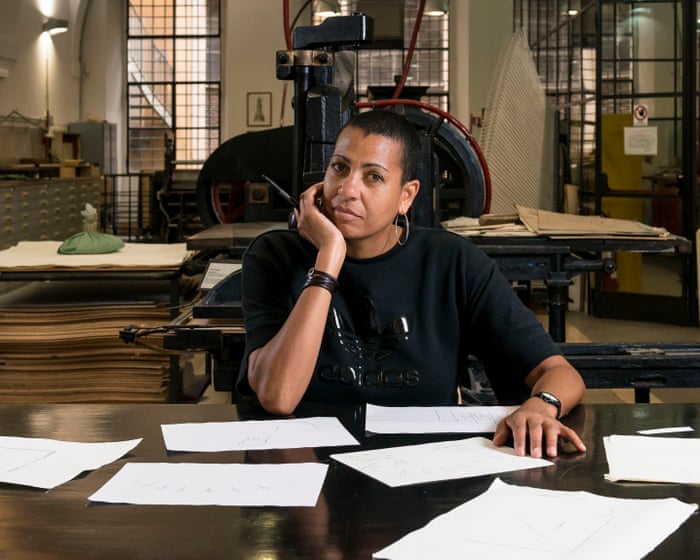
An artwork about Winston Churchill’s role in the 1943 Bengal famine, created by artist Helen Cammock, was removed from the National Portrait Gallery after critics, including Churchill’s grandson and historians, objected to its portrayal. The gallery removed the piece at the artist’s request after a week of controversy over its comments on Churchill’s responsibility for the famine.
Key Facts
The artwork, called Persistence, was a 40-minute video installation by Turner Prize-winning artist Helen Cammock.
The piece linked Churchill’s actions during the Bengal famine to deliberate starvation, which caused criticism.
Fifty members of the British peerage, including Churchill’s grandson Sir Nicholas Soames, signed a letter calling the installation an ideological rant.
The National Portrait Gallery initially defended the work but removed it after Cammock requested the removal.
The Bengal famine of 1943 caused around 3 million deaths in eastern India.
Historians disagree on Churchill’s responsibility, with some blaming natural disasters and mismanagement, and others accusing Churchill of ignoring food shortages and worsening the crisis.
The gallery said the artwork was a personal, artistic response and did not represent the gallery’s official views.
Cammock emphasized that art should challenge ideas and reflect on history.
Read the Original
Want the full story? Tap a source to open the original
article.
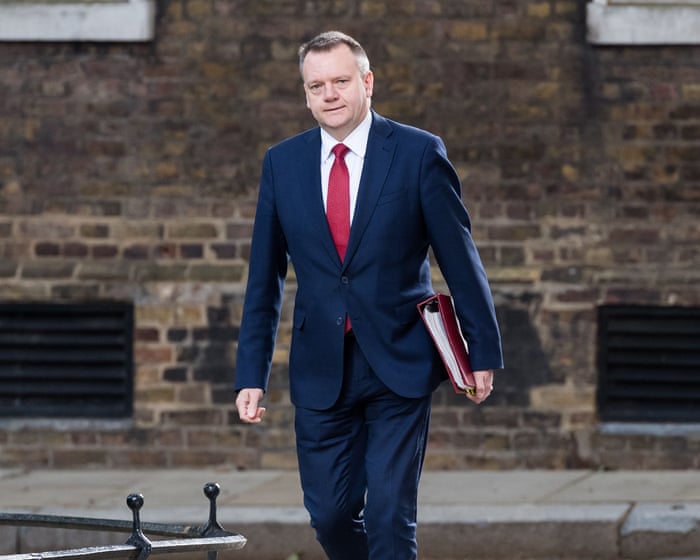
A UK minister has called for a quick and smooth handover of Labour party leadership to Andy Burnham without a contest from other candidates. Labour MPs and members largely support Burnham, making him the likely next leader ahead of official nominations.
Key Facts
Andy Burnham is expected to become the next Labour party leader in the UK.
Labour MPs and party members strongly support Burnham’s leadership.
Official leadership nominations open on 9 July, with Burnham seen as the clear favorite.
Some potential challengers, including Darren Jones and Al Carns, have not ruled out running but lack enough support.
Minister Nick Thomas-Symonds favors a quick transition to Burnham without a leadership contest.
Former minister Margaret Hodge thinks avoiding a leadership election would be better for the government’s work.
The article provides other UK political updates like a Brexit anniversary, court sentencing for an SNP official, and political campaigns.
Read the Original
Want the full story? Tap a source to open the original
article.
A United Nations investigation has found evidence that Israeli forces have deliberately targeted Palestinian children in Gaza, contributing to ongoing violence described as genocide. The report says this has caused widespread death, injury, and trauma to children, and Israeli officials have rejected these findings.
Key Facts
UN investigators say Israeli security forces deliberately targeted Palestinian children in Gaza.
The report claims this targeting is part of a plan to destroy the Palestinian people’s future in Gaza.
The investigative team previously concluded that Israel committed genocide in Gaza, which Israel denies.
Since a ceasefire in October 2025, over 265 children have been killed and many wounded, according to UNICEF.
Israeli attacks have resulted in thousands of Palestinian child deaths and injuries over two years.
The report describes severe physical and mental harm to Gaza’s children, including loss of education and healthcare.
Israel accuses the UN investigators of ignoring attacks by Hamas and using children as shields.
The UN inquiry was set up by the Human Rights Council in 2021 but does not officially represent the entire UN.
Read the Original
Want the full story? Tap a source to open the original
article.
The Czech Republic's President Petr Pavel has formally complained after being excluded from the Czech delegation to the NATO summit in Ankara, a decision made by the Czech Prime Minister Andrej Babiš. The disagreement highlights tensions over defense policy and spending, with Pavel criticizing the move as unprecedented and harmful to national unity during a time of serious security challenges for NATO.
Key Facts
Czech President Petr Pavel was excluded from the Czech delegation for the upcoming NATO summit.
Prime Minister Andrej Babiš said the exclusion was a practical decision to avoid unnecessary disputes.
Pavel has filed a complaint against this decision with the Constitutional Court.
The conflict is linked to disagreements over defense spending, which is below NATO’s target of 2% of GDP.
Pavel has attended NATO summits before and followed government policies but wanted to attend the informal policy part of the summit this time.
He views the exclusion as a break from tradition and harmful to Czech Republic’s image among NATO allies.
The Constitutional Court will consider how to proceed with Pavel’s complaint.
The article also marks the 10th anniversary of the UK’s Brexit referendum and mentions other European political topics.
Read the Original
Want the full story? Tap a source to open the original
article.
The United States and Iran have agreed to release $12 billion of frozen Iranian funds after talks in Switzerland. The US also temporarily lifted sanctions on Iranian oil, while a ceasefire between Israel and Hezbollah in Lebanon continues to hold.
Key Facts
Iran’s negotiator Mohammad Bagher Ghalibaf said $12 billion in frozen Iranian funds will be released following talks with the US.
The US eased sanctions on Iranian oil and related products for 60 days, until August 21.
Iran agreed to allow international nuclear inspectors to return as part of the negotiations.
Technical talks ended, with future discussions supervised by a high-level committee including US Vice President JD Vance.
Iran’s Central Bank governor said the released funds will be used for basic goods and medicine, not to buy US farm products.
President Trump stated that Iran will agree to weapons inspections and that the funds will help buy US agricultural goods.
US House Democrats criticized the sanctions relief as premature without progress on Iran’s nuclear program and regional activities.
A ceasefire between Israel and Hezbollah in Lebanon has so far held, with no air attacks reported by UN peacekeepers since early March.
Read the Original
Want the full story? Tap a source to open the original
article.
Comedian Keegan-Michael Key recreated his famous “substitute teacher” sketch using distorted names of World Cup soccer players in a video posted by FIFA. The clip has been very popular on TikTok, blending humor with the global soccer event.
Key Facts
The video features Keegan-Michael Key as Mr. Garvey, a substitute teacher mispronouncing students’ names.
The “students” are actually names of international soccer stars, altered for comedic effect.
Names mentioned include Aurélien Tchouaméni, Kylian Mbappé, and Jude Bellingham, among others.
The video has more than 11.3 million views on TikTok from FIFA’s official account.
The sketch humorously highlights how global soccer names can be hard to pronounce or recognize.
The original “substitute teacher” sketch is well known and helps viewers understand the joke quickly.
The World Cup is drawing attention not only on the field but also through social media and pop culture moments.
Other World Cup-related social media events include a U.S. government post and viral fan stories.
Read the Original
Want the full story? Tap a source to open the original
article.
The European Union is planning talks in Brussels with a Taliban delegation about returning failed Afghan asylum-seekers. The EU invited the Taliban team despite not recognizing their government, causing criticism from human rights groups.
Key Facts
The Taliban delegation was given one-day visas by Belgium to meet EU officials in Brussels.
The EU aims to discuss sending back Afghan migrants who were denied asylum.
The EU does not officially recognize the Taliban as Afghanistan’s government.
Human rights groups oppose the talks, arguing it conflicts with EU values.
Belgium issued visas after security checks, but only valid for Belgium, not the whole Schengen area.
Afghan asylum requests in the EU total about one million from 2013 to 2024, with roughly half approved.
EU countries want to deport migrants who committed serious crimes or pose security risks.
Afghanistan is facing a humanitarian crisis, raising concerns about the safety of returned migrants.
Read the Original
Want the full story? Tap a source to open the original
article.
The European Union is hosting a meeting in Brussels with a delegation from the Taliban to discuss migration issues and the deportation of Afghan asylum seekers from Europe. This is the first time the EU has engaged directly with the Taliban since they took power in Afghanistan in 2021.
Key Facts
Belgium issued five one-day visas to Taliban officials for the EU meeting.
The meeting will focus on managing irregular migration from Afghanistan and the return of Afghans without legal status in the EU.
The EU has not formally recognized the Taliban government through this meeting.
Some Taliban leaders remain under EU sanctions.
The EU seeks to deport Afghans who have committed serious crimes or are seen as security risks.
Human rights groups have criticized the talks, warning against deporting people to danger.
Around one million Afghans have applied for asylum in the EU since 2013.
Afghanistan is experiencing a severe humanitarian crisis, with over 17 million people facing food insecurity.
Read the Original
Want the full story? Tap a source to open the original
article.
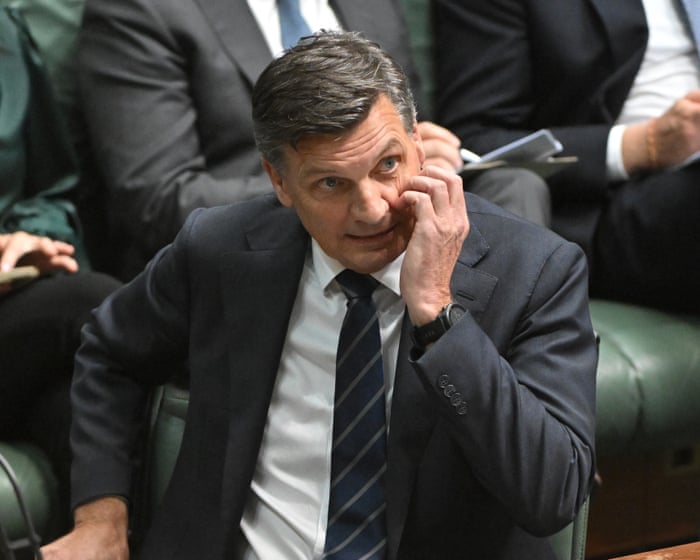
Angus Taylor, a political leader in Australia, has avoided saying if he supports multiculturalism, while Treasurer Jim Chalmers criticized him for aligning with One Nation’s call for a single national culture. Pauline Hanson from One Nation said Australia should have a "monoculture," similar to Japan, and not treat all cultures the same.
Key Facts
Angus Taylor refused to clearly say if he supports multiculturalism during a press conference.
Treasurer Jim Chalmers accused Taylor of trying to mimic One Nation’s ideas about culture.
Pauline Hanson called multiculturalism a failed policy and supports a “monoculture” for Australia.
Hanson said her idea means being united under one culture, not erasing people’s backgrounds.
Hanson pointed to Japan, a mostly one-culture country, as a model for Australia.
Taylor talked about Australians sharing core values but did not clearly say if that includes multiculturalism.
Taylor has appointed a shadow assistant minister for multicultural affairs, Senator Dave Sharma.
Prime Minister Anthony Albanese said Australia has never been a monoculture and supports cultural diversity.
Read the Original
Want the full story? Tap a source to open the original
article.
Iranian President Masoud Pezeshkian is visiting Pakistan after recent US-Iran talks in Switzerland produced a 60-day plan toward a final deal. The visit follows a significant agreement Pezeshkian signed at home and aims to strengthen political and economic ties between Iran and Pakistan.
Key Facts
Pezeshkian’s trip to Pakistan is his first foreign visit since attacks on Iran by the US and Israel on February 28.
The visit comes after Pakistan and Qatar announced progress in US-Iran talks held in Switzerland.
The 2015 JCPOA was a nuclear deal where Iran limited its nuclear program in return for lifting sanctions; the US left that deal in 2018 under President Trump.
Pezeshkian signed a new Memorandum of Understanding (MoU) with Pakistan before arriving, showing intent to build on diplomatic progress.
In Pakistan, Pezeshkian will meet top officials including Prime Minister Shehbaz Sharif, who helped mediate the US-Iran talks.
The two countries plan to discuss cooperation in trade, energy, security, and regional connections.
Iran and Pakistan have had tense moments, including missile attacks and military responses in early 2024, but quickly worked to ease tensions.
This visit is part of Pezeshkian’s effort to support the fragile political deal at home and improve regional relations.
Read the Original
Want the full story? Tap a source to open the original
article.
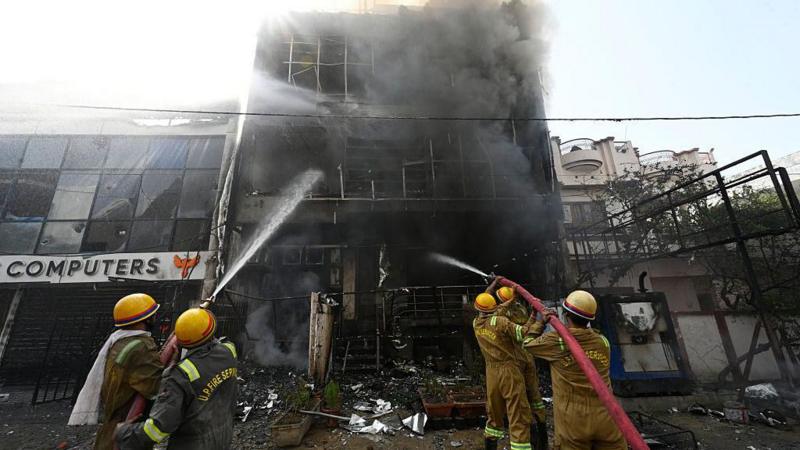
A fire in a building in Lucknow, northern India, killed at least 15 people. The building, which had a pet shop and an animation center, had only one exit blocked by smoke, trapping people inside. Authorities have started an investigation into the cause and safety violations.
Key Facts
The fire happened on Monday around 2:45 pm local time in Lucknow’s Aliganj area.
The building had a pet shop on the ground floor and an animation center on the upper floors.
The only staircase was blocked by smoke and fire, trapping people inside.
Witnesses saw people jumping from windows and climbing down cables to escape.
At least 15 people died, including trainees and employees inside the building.
The building lacked emergency exits, and a biometric entry system limited access, making escape difficult.
Police arrested four people and suspended four public officials linked to the fire.
The incident raised concerns about fire safety in crowded buildings in India.
Read the Original
Want the full story? Tap a source to open the original
article.
The recent war between Israel and Hezbollah caused about $1.38 billion in damage in southern Lebanon. Although the latest peace deal between the US and Iran includes a $300 billion fund, it does not cover rebuilding Lebanon.
Key Facts
The Israel-Hezbollah war caused roughly $1.38 billion in destruction in southern Lebanon.
This damage estimate comes from a United Nations agency and a Lebanese research center.
A new US-Iran peace agreement was recently made, including a proposed $300 billion fund.
Lebanon’s reconstruction was not mentioned in the peace agreement, called the Islamabad memorandum of understanding.
The report highlights uncertainties about who will pay for rebuilding Lebanon.
The article was reported from Beirut by journalist Renée Davis.
The conflict involves multiple countries, including Lebanon, Israel, Iran, and the United States.
Read the Original
Want the full story? Tap a source to open the original
article.
The Strait of Hormuz has seen more ship traffic after Iran and the U.S. signed a temporary agreement to end a war that disrupted global oil supplies. However, disputes remain over who controls the waterway and whether ships will have to pay fees, which could affect ongoing peace talks.
Key Facts
Iran and the U.S. signed a temporary deal to stop a war that hurt global oil flow and raised prices.
Ship traffic increased in the Strait of Hormuz following the agreement, but not back to prewar levels.
Iran claims it manages the strait and says ships must register with its new Persian Gulf Strait Authority.
Iran announced the strait was closed due to Israeli actions in Lebanon, but the U.S. disagreed and ships kept passing.
Neither Iran nor any single country owns the Strait of Hormuz; it also borders Oman.
The interim deal lets Iran manage the strait while talks continue with Oman and six other Gulf states on its future management.
Iran agreed not to charge ships tolls for 60 days, but President Donald Trump said the U.S. might charge tolls if no final deal is made.
Experts say charging tolls would break international trade rules for global waterways.
Read the Original
Want the full story? Tap a source to open the original
article.
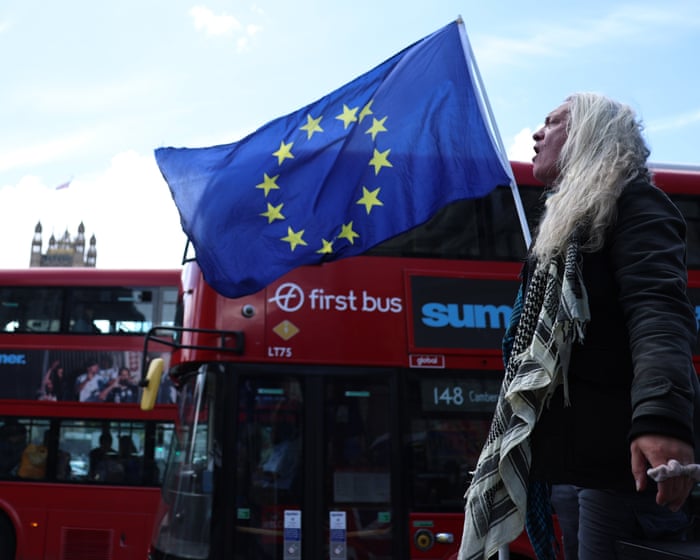
Britain voted to leave the European Union (EU) in a 2016 referendum, ending over 40 years of membership. Since then, the country has faced ongoing political challenges, including frequent changes in prime ministers and difficulties managing the consequences of Brexit.
Key Facts
The UK voted 52% to 48% to leave the EU on June 23, 2016.
David Cameron, the prime minister who called the referendum and supported staying in the EU, resigned the day after the vote.
Since Brexit, the UK has had seven prime ministers due to political instability.
Brexit aimed to give the UK control over its laws, economy, and borders.
The Leave campaign focused on immigration, EU regulations, and national identity.
The UK officially left the EU on January 31, 2020, followed by an 11-month transition period.
Negotiations over the UK’s future relationship with the EU were difficult and prolonged.
Current prime minister Keir Starmer announced his resignation after two years of economic and political difficulties linked partly to Brexit.
Read the Original
Want the full story? Tap a source to open the original
article.
British Prime Minister Keir Starmer resigned less than two years after leading his Labour Party to a big election win in 2024. His party suffered heavy losses in local elections due to a struggling economy, policy problems, and poor public support, which led to internal rebellion.
Key Facts
Keir Starmer became Prime Minister on July 4, 2024, after Labour won 411 out of 650 seats in Parliament.
Labour ended 14 years of Conservative Party rule with this victory.
Starmer promised to support working people and renew the country after years of Conservative government.
The economy was weak, affected by the COVID-19 pandemic and the war in Ukraine.
Early actions by Starmer’s government failed to improve the economy and lowered confidence among businesses and consumers.
Labour avoided raising major taxes despite budget problems but still faced financial challenges.
Local election losses in 2026 led to Labour party members pushing Starmer to resign.
Andy Burnham was sworn in as a Member of Parliament on the same day Starmer resigned.
Read the Original
Want the full story? Tap a source to open the original
article.
A Polish anti-corruption activist, Monika Silva Koniuszek, who investigated alleged crimes linked to Ecuador’s president’s family business, was found dead in Ecuador. Initial claims of suicide were contradicted by a postmortem report showing violent causes, raising concerns about her murder.
Key Facts
Monika Silva Koniuszek, aged 41, was found dead in her home in Montañita, Ecuador, with evidence of strangulation and a head injury.
Ecuador’s interior minister initially suggested her death was suicide based on the scene but a later autopsy found it was a violent death.
Silva Koniuszek was known for exposing environmental crimes, corruption, land trafficking, and drug smuggling linked to President Daniel Noboa’s family business.
She had delivered a report about alleged cocaine seizures involving Noboa Trading to the US embassy before her death.
Friends and colleagues say she received death threats and faced legal harassment, related to larger criminal networks in Ecuador.
The Polish government has requested cooperation from Ecuador to investigate her death thoroughly.
Silva Koniuszek was a single mother of two daughters and was respected for her bravery in speaking out despite risks.
Her death has drawn international attention, especially in Poland, with doubts about the initial suicide claim.
Read the Original
Want the full story? Tap a source to open the original
article.
Andy Burnham is expected to become the UK’s next prime minister after Keir Starmer resigned. Burnham’s recent election win in Makerfield suggests he may help Labour defeat the hard right in future elections.
Key Facts
Keir Starmer resigned as UK Labour leader and prime minister after less than two years in office.
Andy Burnham won the Makerfield byelection, boosting his chances to become Labour leader and prime minister.
Wes Streeting, Burnham’s main challenger, declared support for him after Starmer’s resignation.
Burnham is considered capable of defeating the hard-right Reform party in future elections.
Starmer announced his resignation to King Charles and pledged to support a smooth leadership transition.
Recent UK political polls show many young Britons now want a fresh vote to rejoin the EU.
The UK Met Office has issued a rare red weather warning due to an extreme heatwave.
Iran agreed to let UN nuclear inspectors back under a deal involving US sanctions and reopening the Strait of Hormuz.
Read the Original
Want the full story? Tap a source to open the original
article.
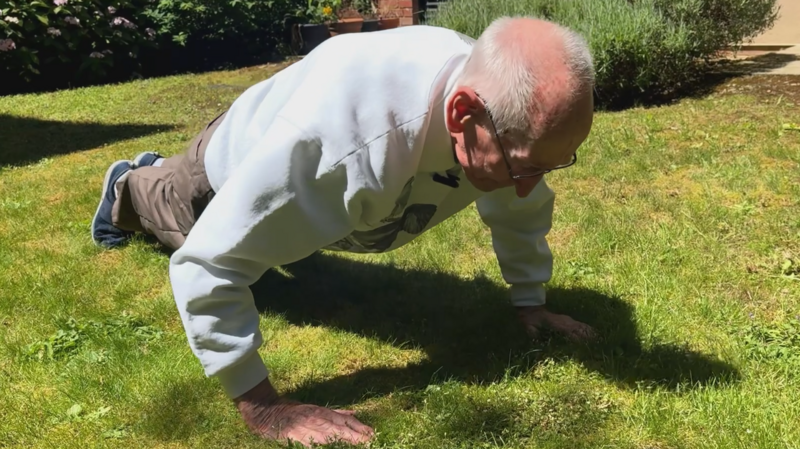
Bill Kober, a 98-year-old man from Woodbridge, Suffolk, does 40 press-ups every day—20 in the morning and 20 in the evening. He stays active with exercises like Pilates and believes staying fit helps maintain his health and strength.
Key Facts
Bill Kober is 98 years old and exercises daily with press-ups.
He does 20 press-ups in the morning and 20 in the evening.
He also practices Pilates and recently learned the "crow" pose.
Press-ups can improve upper body strength and help with daily activities.
The NHS recommends people aged 65+ be active daily and do strength, balance, and flexibility exercises at least twice a week.
Bill worked in manual jobs, served two years in the Army, and stayed physically active throughout his life.
He has been married for over 75 years and volunteers locally in retirement.
Bill credits good genes and physical activity for his long life and hopes to keep fit until at least 100.
Read the Original
Want the full story? Tap a source to open the original
article.
People in Gaza are facing many difficulties watching the FIFA World Cup due to frequent power and internet outages caused by ongoing war conditions. Despite these challenges, football still provides a small escape for some residents amid the hardship and displacement.
Key Facts
Many people in Gaza cannot watch World Cup matches live because of electricity and internet cuts.
Before the war, watching football was a social event that brought friends and family together.
Over 73,000 Palestinians have died since the conflict began in October 2023.
Some residents, like Sameeh Totah, have been displaced from their homes and now live in tents.
Football offers brief moments of relief from the stresses of war and displacement.
Young fans like Yousef al-Nuaizi still care about football but find it hard to enjoy due to the situation.
Efforts to watch matches can involve long travel and struggles to find places with electricity.
The ongoing war has changed how people in Gaza experience and feel about the World Cup.
Read the Original
Want the full story? Tap a source to open the original
article.
This week, Israeli officials openly said they are taking more control over Palestinian land in Hebron and Gaza. Israel has expanded its hold quietly in Gaza and more openly in the West Bank, despite international criticism and disagreements with agreements. An Al Jazeera cameraman was also killed in Gaza amid ongoing violence.
Key Facts
Israeli Finance Minister Bezalel Smotrich said Israel canceled parts of the 1997 Hebron Agreement, taking planning control from the Palestinian municipality.
Israel's Foreign Ministry said a cabinet decision gave Israel planning authority over Jewish settlements and holy sites in Hebron’s H2 zone.
The Palestinian Authority, Organisation of Islamic Cooperation, and the US State Department said Israel’s actions in Hebron and the West Bank are illegal or opposed.
Israeli media said a larger Israeli ground attack on Gaza was blocked by the US, leading Israel to quietly expand control ("creeping annexation") westward in Gaza.
The Palestinian Centre for Human Rights said Israeli forces now control about 64% of Gaza, up from 53% under the October 2023 ceasefire terms.
Israel built its first permanent military post inside Area A of the West Bank, an area meant to be fully under Palestinian control.
The Israeli Supreme Court recently allowed construction of a barrier in the northern Jordan Valley that will separate Palestinian areas.
Since October 2023, over 73,000 Palestinians have died in Gaza, with over 1,000 killed since the ceasefire began in October 2023.
Al Jazeera cameraman Ahmed Wishah was killed in an Israeli strike on the Bureij refugee camp in Gaza this week.
Read the Original
Want the full story? Tap a source to open the original
article.