Neutral summaries of your favorite news sources — just the facts.
Your favorite news sources, one neutral feed — we distill their reporting into fact-first
summaries and always link to the original story. How it works
World News
Comprehensive coverage of international news and global events
The United States and Iran will begin new talks in Switzerland to finalize a Memorandum of Understanding signed last week. The discussions will focus on Iran's nuclear program and uranium stockpiles, while fighting between Israel and Hezbollah continues in Lebanon.
Key Facts
The US and Iran signed a Memorandum of Understanding recently and aim to complete details in 60 days.
A main topic at these talks is the future of Iran's nuclear program and uranium stockpiles.
The talks will take place in Switzerland starting Sunday.
Fighting between Israel and Hezbollah in Lebanon continues despite ceasefire efforts.
Israel has refused to withdraw from Lebanese territory amid the conflict.
Israel and Hezbollah are not parties to the US-Iran agreement but their conflict affects the peace process.
The situation in Lebanon remains tense with ongoing clashes and casualties.
The US and Iran are negotiating to reduce tensions and create stability in the Middle East.
Read the Original
Want the full story? Tap a source to open the original
article.
Ukrainian forces launched a large drone attack on Russian-occupied Crimea, killing four people and injuring 28. The attack damaged energy facilities, stopped fuel sales at gas stations, and cut power in parts of Crimea. Ukraine said it targeted Russian military and energy sites as a response to the ongoing conflict.
Key Facts
The drone attack hit Crimea’s Kerch peninsula, which is controlled by Russia.
Four civilians died and 28 were wounded during the strikes.
Fuel sales at Crimean petrol stations were halted, only state enterprises can get fuel now.
The attacks also damaged an oil terminal in Russia’s Krasnodar region near Crimea.
Power outages affected parts of Crimea after the strikes.
Ukrainian President Zelensky called the attacks "long-range sanctions" against Russian military logistics and energy.
Ukraine also targeted the Crimean Bridge and Russian air defense systems.
Ukraine’s improved drones let them reach far behind front lines to damage Russian energy infrastructure.
Read the Original
Want the full story? Tap a source to open the original
article.
A large Ukrainian attack on Russian-occupied Crimea killed four people and caused fuel stations to stop selling petrol to the public. Ukraine said it targeted military and energy sites in Crimea, which Russia uses as a key base for its military actions in Ukraine.
Key Facts
Four civilians died and 28 were injured after a Ukrainian drone strike on Crimea’s Kerch peninsula.
Fuel sales at Crimean petrol stations were suspended, with fuel sold only to state businesses.
The attack hit military and energy facilities, including an oil terminal in Russia’s nearby Krasnodar region.
Part of Crimea lost power due to the strikes.
Ukrainian President Zelensky described these attacks as “long-range sanctions” against Russian military and energy targets.
Ukraine has improved its drone abilities and increased attacks on Russian supply routes and energy sites.
Russia annexed Crimea from Ukraine in 2014, and the area is strategically important for Russia’s military.
Fuel exports from Russia have been banned since April, and some Russian petrol stations have rationed fuel due to these attacks.
Read the Original
Want the full story? Tap a source to open the original
article.
Tens of thousands of people in Albania have protested for 21 days in a row against plans to build a luxury resort on the southern coast. The resort project is connected to Jared Kushner, and the protesters demand that Prime Minister Edi Rama resign.
Key Facts
Protests in Albania have lasted 21 days continuously.
The protests focus on plans to build a luxury resort on the southern coast of Albania.
The resort project is linked to Jared Kushner.
Tens of thousands of people have joined the protests.
Protesters carry signs saying "Albania is not for sale."
Demonstrators are calling for the resignation of Prime Minister Edi Rama.
Read the Original
Want the full story? Tap a source to open the original
article.
A Spanish judge has ordered Begoña Gomez, the wife of Spain’s Prime Minister Pedro Sanchez, to stand trial for corruption. She is accused of using her status as the PM’s wife to get work contracts for personal benefit, and she faces travel restrictions and must report regularly to the court.
Key Facts
Begoña Gomez is the wife of Spanish Prime Minister Pedro Sanchez.
She is charged with corruption for allegedly using her position to secure work contracts.
A judge has ordered her to go to trial over these accusations.
Gomez is banned from leaving Spain during the trial.
She must check in with the court twice a month until the case is resolved.
This case is part of several corruption investigations near Pedro Sanchez’s government.
The scandals could threaten the stability of Sanchez’s minority coalition government.
Read the Original
Want the full story? Tap a source to open the original
article.
It has been nearly ten years since the United Kingdom left the European Union, an event known as Brexit. There are growing calls, especially from progressive groups, for the UK to rejoin the EU, especially as political uncertainty affects Prime Minister Keir Starmer's leadership.
Key Facts
Brexit happened around 10 years ago when the UK left the EU.
Some people, mainly progressives, want the UK to rejoin the EU.
The issue is more talked about because Prime Minister Keir Starmer is facing a leadership challenge.
Andy Burnham is one of the challengers to Keir Starmer’s leadership.
It is unclear if a new government would try to bring the UK back into the EU.
The topic reflects ongoing political uncertainty in the UK.
The article was published on June 21, 2026.
Other related political events in Europe are also noted but focus remains on the UK’s relationship with the EU.
Read the Original
Want the full story? Tap a source to open the original
article.
France has issued a red alert for a heatwave affecting more than one-third of the country on Sunday. To keep people safe during the Fête de la Musique celebrations, the government has banned drinking alcohol in public spaces.
Key Facts
A heatwave is causing high temperatures across more than a third of France.
The heatwave alert is classified as "red," indicating severe weather.
The Fête de la Musique is a nationwide music festival held on June 21.
To protect public health, France banned alcohol consumption in public areas during the festival.
The ban aims to reduce risks linked to heat and alcohol use outside.
The heatwave is one of several France has faced recently, with earlier early heatwaves occurring.
Authorities are taking measures to adapt to changes caused by climate and heat challenges.
Read the Original
Want the full story? Tap a source to open the original
article.
Bolivia's government sent soldiers and bulldozers to break up roadblocks after President Rodrigo Paz declared a state of emergency. The protests, led by unions, Indigenous groups, and coca farmers, have lasted over six weeks against economic reforms.
Key Facts
President Rodrigo Paz declared a state of emergency in Bolivia.
The state of emergency reduces the right to protest and allows military deployment.
Soldiers and bulldozers were sent to remove roadblocks.
Protests have continued for more than six weeks.
The protesters include unions, Indigenous groups, and coca farmers.
The protests oppose recent economic reforms.
The roadblocks have disrupted transportation in parts of Bolivia.
Read the Original
Want the full story? Tap a source to open the original
article.
Iran closed the Strait of Hormuz after Israeli strikes in Lebanon, saying the strikes broke a ceasefire agreement made between the US and Israel. Despite this, US and Iranian officials plan to meet in Switzerland to discuss a temporary agreement to end the war.
Key Facts
Iran’s Revolutionary Guard warned that ships should avoid the Strait of Hormuz for safety reasons.
Iran shut the strategic shipping lane on Saturday due to Israeli attacks in Lebanon.
The ceasefire was initially agreed upon by the US and Israel on the previous Wednesday.
The Israeli strikes in Lebanon resulted in casualties and concern over the ceasefire’s status.
US and Iranian delegations are scheduled to hold peace talks in Switzerland on Sunday.
These talks aim to create an interim agreement to stop the ongoing conflict.
The conflict involves multiple parties including Israel, Lebanon, Hezbollah, Iran, and the US.
Read the Original
Want the full story? Tap a source to open the original
article.
The United States and Iran are preparing for technical talks in Switzerland to discuss a Memorandum of Understanding they recently signed. The main issues include ending hostilities in Lebanon, Iran’s nuclear program, and implementing economic commitments from the agreement.
Key Facts
The talks will take place in Burgenstock, Switzerland, at a luxury hotel near Lake Lucerne.
Iran’s team is led by Parliament Speaker Mohammad Bagher Ghalibaf and Foreign Minister Abbas Araghchi.
The US delegation is led by Vice President JD Vance and includes Steve Witkoff and Jared Kushner.
Pakistan’s Prime Minister Shehbaz Sharif and army chief Asim Munir, plus Qatar’s Prime Minister Sheikh Mohammed bin Abdulrahman bin Jassim Al Thani, will also participate.
Iran’s Revolutionary Guard Corps closed the Strait of Hormuz, citing violations of the ceasefire in Lebanon.
The two sides will negotiate for 60 days to resolve key issues such as Iran’s nuclear program, economic sanctions, and the situation in Lebanon.
Iran demands full implementation of US commitments including lifting sanctions, reopening the Strait of Hormuz, and releasing Iranian assets.
The ceasefire in Lebanon, where recent Israeli attacks killed dozens, is expected to be a primary topic on the first day.
Read the Original
Want the full story? Tap a source to open the original
article.
Abelardo de la Esperiella is a far-right candidate running in Colombia’s presidential election. He promises strong actions to improve security and wants big changes for the country. Before running for president, he worked in the rum and wine business.
Key Facts
Abelardo de la Esperiella is running for president in Colombia.
He represents the far-right political side.
He is competing against Ivan Cepeda, who is from the left-wing.
His campaign focuses on restoring security with strict policies.
He previously owned rum and wine businesses.
The election is part of Colombia’s wider presidential race.
Voters are deciding on who will lead the country next.
The article mentions issues like gang violence as part of the election context.
Read the Original
Want the full story? Tap a source to open the original
article.
A memorandum of understanding (MOU) between the U.S. and Iran has caused mixed reactions and doubts about its terms and structure. The agreement involves lifting a blockade, resuming oil exports, and sanction relief, but questions remain about security issues and Iran's intentions.
Key Facts
The MOU has 14 points covering sanctions relief, oil trade, and regional security.
The blockade on Iran will be lifted, allowing oil to move again.
There are concerns about how both sides interpret the terms differently.
Issues remain about freedom of navigation in the Strait of Hormuz.
Iran's regime is seen as hostile to Israel, Gulf states, and U.S. interests.
Israel and Gulf countries had more input in this negotiation than in past deals.
Hard-line groups within Iran's Revolutionary Guard may oppose the agreement.
Some officials believe there could be a pragmatic group in Iran seeking change.
Read the Original
Want the full story? Tap a source to open the original
article.
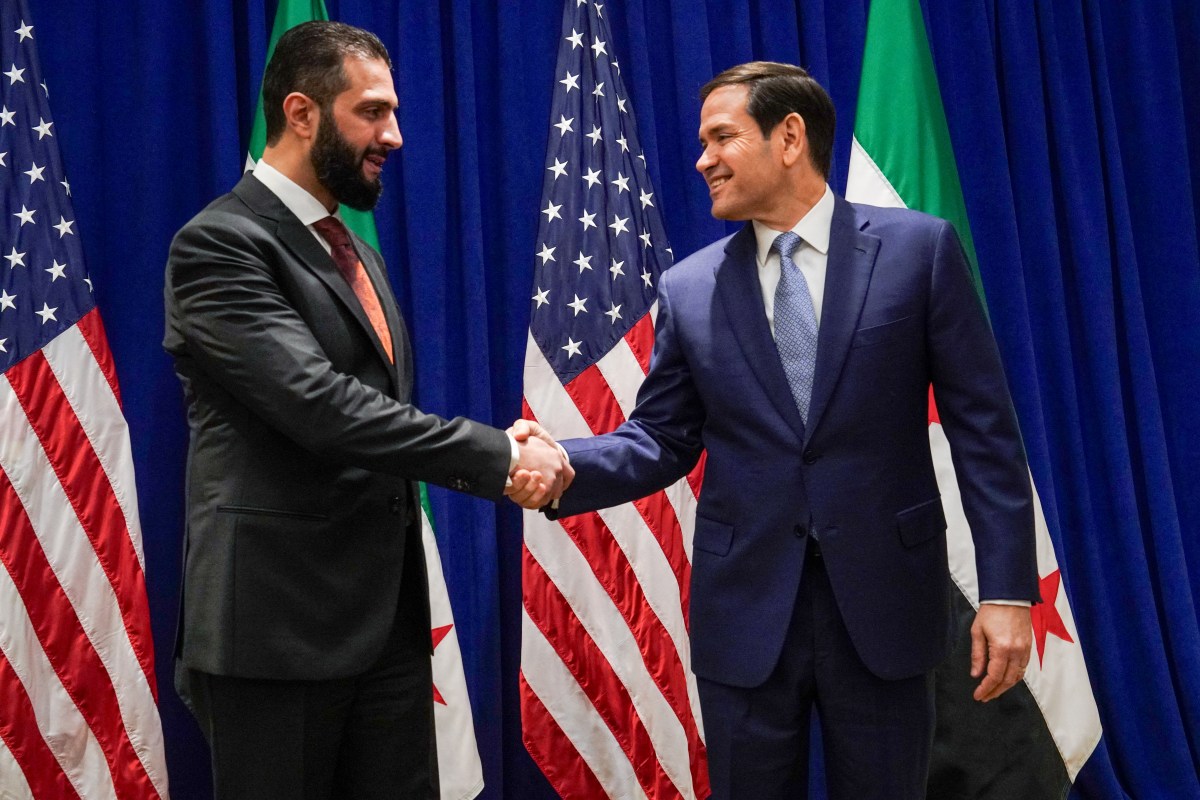
The U.S. has changed its policy toward Syria following the fall of Bashar al-Assad's regime in December 2024. The new Syrian government, led by President Ahmed al-Sharaa, is working with the U.S. and regional partners to fight terrorism and promote stability. Efforts include removing sanctions and building partnerships in the region.
Key Facts
Assad’s regime fell in December 2024, opening a new chapter in Syria-U.S. relations.
The Trump administration lifted most Syria sanctions in June 2025 and removed Hayat Tahrir al-Sham from the terrorism list.
Syria’s new government is cooperating with U.S. counterterrorism goals and working against remnants of the old regime.
In April 2026, Syrian authorities arrested Amjad Youssef, linked to a 2013 massacre, showing progress toward justice.
Regional countries like Saudi Arabia, Qatar, Turkey, Jordan, and Iraq support Syria’s financial and border stability efforts.
Syria is trying to protect minority groups better than before, including Christians and the Druze community.
The U.S. is reviewing Syria’s designation as a state sponsor of terrorism, which could end due to new government changes.
Removing Syria from this terrorism list depends on clear evidence of government change and policy shifts.
Read the Original
Want the full story? Tap a source to open the original
article.
An Israeli drone strike in the Bureij refugee camp in central Gaza killed Ahmed Wishah, an Al Jazeera journalist. The Israeli military said Wishah was involved with Hamas militants but did not provide proof.
Key Facts
Ahmed Wishah, an Al Jazeera cameraman, was killed in a drone strike in Gaza.
The strike targeted a house in the Bureij refugee camp.
The Israeli military claimed Wishah was a Hamas militant and involved in attacks against Israeli troops.
Israel said Wishah acted as a sniper operative and worked with his brother, Mohammed Wishah, who was also killed earlier in April.
Al Jazeera has lost several journalists in Gaza since October 7, 2023.
Reporters Without Borders says over 220 journalists have been killed in the conflict, with at least 70 killed while doing their job.
Israel says it does not deliberately target journalists but says some militants disguise themselves as media workers.
The Gaza war began after Hamas attacked Israel on October 7, 2023.
Read the Original
Want the full story? Tap a source to open the original
article.
Colombians are voting in a presidential runoff between Abelardo de la Espriella, a conservative businessman and lawyer, and Iván Cepeda, a progressive lawmaker and political heir of outgoing leftist President Gustavo Petro. Both candidates aim to prevent a return to past violence in Colombia, though they propose different approaches to peace, security, health care, public debt, and corruption.
Key Facts
The runoff election features Abelardo de la Espriella and Iván Cepeda after nine other candidates were eliminated in the first round.
De la Espriella supports a hardline approach to security and has the endorsement of U.S. President Donald Trump.
Cepeda wants to continue President Petro’s efforts, including talks with illegal armed groups, despite past failures.
Colombia faces challenges like guerrilla violence, kidnappings, bombings, and forced displacements from prior decades.
The election follows a 2016 peace agreement with guerrilla groups, which has not fully ended rebel violence.
In the first round, de la Espriella received 44% of the vote, and Cepeda got 41%.
President Petro questioned the election results without providing evidence after Cepeda did not win outright.
Many Colombians are concerned about political division and want the election outcome to be accepted peacefully.
Read the Original
Want the full story? Tap a source to open the original
article.
British Prime Minister Keir Starmer is facing pressure to resign after Labour Party rival Andy Burnham won a recent special election. Starmer has said he will stay, but many in his party want a leadership change as Labour struggles with public support and political challenges.
Key Facts
Keir Starmer is the Prime Minister of the United Kingdom and leader of the Labour Party.
Andy Burnham recently won a special election in Makerfield, England, becoming a member of Parliament.
Burnham plans to challenge Starmer for leadership of the Labour Party.
Labour Party colleagues are increasingly critical of Starmer’s leadership.
Starmer’s government has faced problems with economic growth, public services, and cost of living.
Starmer made a controversial appointment of Peter Mandelson as UK ambassador to the US.
Labour is losing some voters to the Green Party and Reform UK, a party led by Nigel Farage.
Starmer is spending time reflecting on his position and may announce plans for resignation soon.
Read the Original
Want the full story? Tap a source to open the original
article.
A large tent near Taylor Swift’s home in Watch Hill, Rhode Island, sparked widespread rumors that she was planning a wedding there. However, the wedding rumors were not confirmed, and the tent was part of regular local events unrelated to Swift.
Key Facts
Taylor Swift owns a home in Watch Hill, Rhode Island, where rumors of a wedding began after a large tent appeared nearby.
Fans, photographers, and curious visitors gathered in the village due to these rumors.
No confirmation has been made that Taylor Swift is having a wedding at this location.
A local wedding planner said the tent was for other weddings happening throughout the month, not for Swift’s event.
Many visitors asked locals and police officers about Swift’s presence and the wedding rumors.
There was also online speculation about Swift and her fiancé, Travis Kelce, holding a celebration at Madison Square Garden, but no details have been confirmed.
Watch Hill has limited luxury lodging, which may make it impractical for a large wedding event.
Local authorities are used to answering questions from visitors curious about Swift and her activities in the area.
Read the Original
Want the full story? Tap a source to open the original
article.
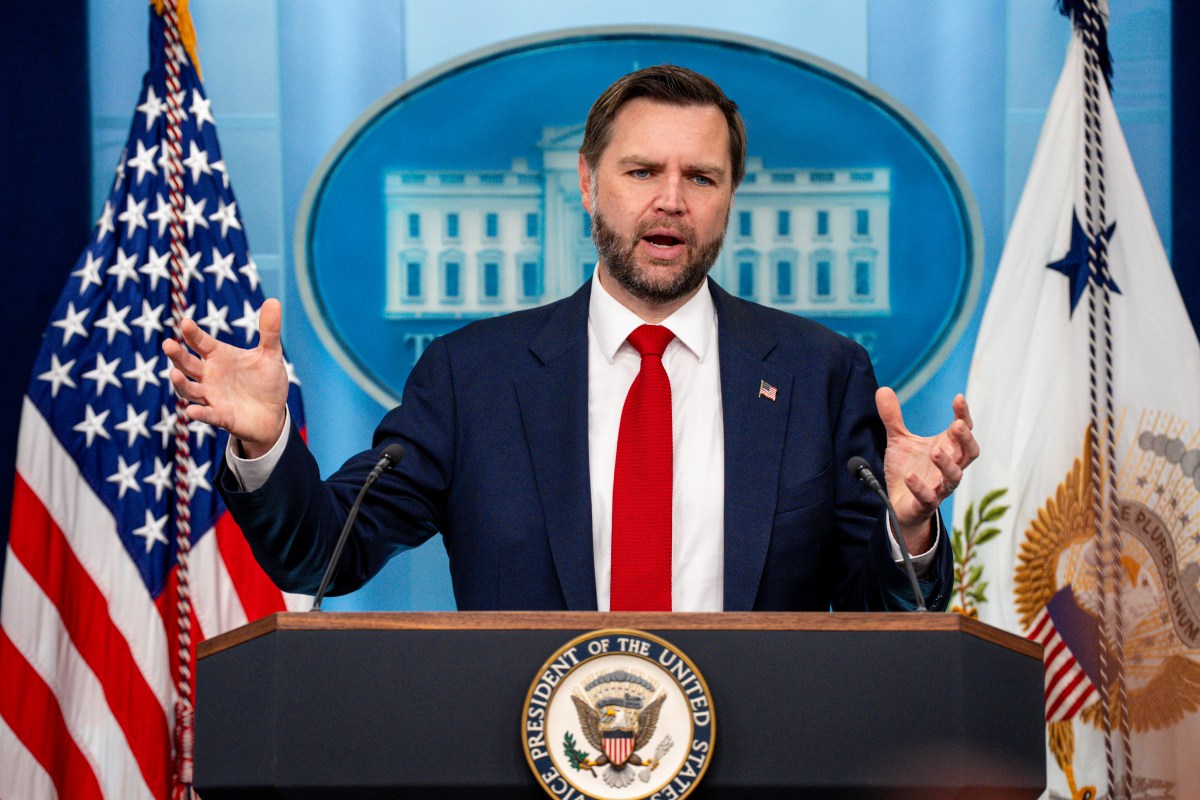
U.S. Vice President JD Vance arrived in Switzerland to start talks with Iran about controlling its nuclear program and finalizing details of a recent temporary agreement. The talks come amid tensions, including Iran closing the Strait of Hormuz in response to Israeli attacks in Lebanon.
Key Facts
Vice President JD Vance traveled to Switzerland to join negotiations with Iranian leaders.
The negotiations focus on limiting Iran’s nuclear program and finalizing a recent interim deal.
The current talks have a 60-day period to work out technical details of the agreement.
Iran closed the Strait of Hormuz, a key route for about 20% of the world's oil and gas trade, due to recent conflicts.
Fighting increased in Lebanon between Israel and Hezbollah, an Iranian-backed group, complicating the talks.
The temporary agreement was signed last week, aiming to help end the ongoing conflict.
Pakistani Prime Minister Shehbaz Sharif and military officials also arrived in Switzerland to participate in related discussions.
Iranian Foreign Minister Seyyed Abbas Araghchi arrived at the same Swiss resort for the talks.
Read the Original
Want the full story? Tap a source to open the original
article.
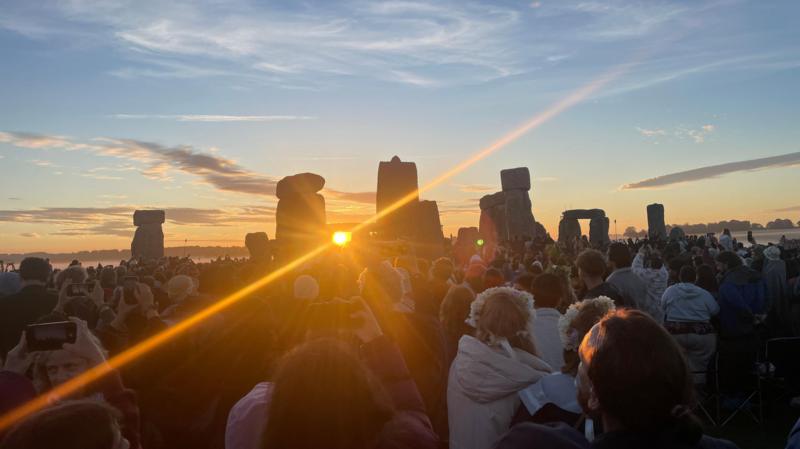
The summer solstice, marking the start of astronomical summer in the northern hemisphere, occurred on 21 June at 09:24 BST this year. People across the UK celebrated by gathering at places like Stonehenge, taking part in walks, and enjoying outdoor activities such as swimming and hiking.
Key Facts
The summer solstice happens when the northern hemisphere's pole is tilted closest to the Sun.
This year, the exact solstice time was 21 June at 09:24 British Summer Time (BST).
The solstice is the longest day of the year in the northern hemisphere.
People gathered in large numbers at Stonehenge in Wiltshire to watch the sunrise.
More than 200 people joined a solstice walk in Worcestershire.
The word "solstice" comes from the Latin word meaning "sun standing still."
The date of the solstice changes slightly each year due to the Earth's orbit taking about 365.25 days.
A leap day is added every four years to keep our calendar aligned with the Earth's orbit.
Read the Original
Want the full story? Tap a source to open the original
article.
France is dealing with a severe heat wave by limiting public alcohol drinking, canceling some outdoor sports, and putting emergency and military forces on wildfire alert. Around one-third of the country is under a high heat warning, with temperatures reaching up to 40°C (104°F), and authorities have taken extra steps to protect vulnerable people during the annual Fête de la musique celebration.
Key Facts
About one-third of France is under a heat red alert due to very high temperatures.
Temperatures are expected to reach 40°C (104°F) in some areas, with even hotter weather forecast for the next day.
Public alcohol consumption is banned in the heat alert zones to help emergency services focus on vulnerable people.
Some outdoor sports events have been canceled to reduce health risks from the heat.
Emergency services and the military are on wildfire alert to respond to possible fires caused by the heat.
The Eiffel Tower and other locations in Paris have set up misting stations to help cool people down.
The heat wave affects not only France but also parts of Italy and other European countries.
The government is monitoring water supplies for nuclear reactors and may rearrange school exam schedules to avoid the hottest times of the day.
Read the Original
Want the full story? Tap a source to open the original
article.