Neutral summaries of your favorite news sources — just the facts.
Your favorite news sources, one neutral feed — we distill their reporting into fact-first
summaries and always link to the original story. How it works
IBM has developed a new chip design called the "nanostack" architecture that can fit nearly 100 billion transistors on a chip the size of a fingernail. This design, called the world’s first sub-1 nanometer chip technology, promises much better computing power and energy efficiency for artificial intelligence (AI) data centers.
Key Facts
IBM’s new chip can hold almost 100 billion transistors on a tiny chip about the size of a fingernail.
The chip uses a sub-1 nanometer (0.7 nanometer) technology, which is called the 7 angstrom node.
The "nanostack" technology stacks transistors vertically to pack more into the same space.
Each transistor is made of three nanosheets, each about 5 nanometers thick, separated by 9 nanometers.
IBM says this chip design can improve computer performance by 50% or increase energy efficiency by 70% compared to their previous 2-nanometer chips.
The new design also offers a 40% improvement in memory scaling for SRAM, important for AI tasks.
These advancements were presented at the 2025 IEEE Symposium on VLSI Technology and Circuits in Japan.
The improvements could help overcome physical limits that have made shrinking chip features more difficult in recent years.
Read the Original
Want the full story? Tap a source to open the original
article.
Many renters across the United States are asking the government to stop extra fees that increase their housing costs and risk of eviction. The Federal Trade Commission (FTC) is working on new rules to regulate these additional charges after receiving widespread comments from renters and industry groups.
Key Facts
Renters say landlords use "take-it-or-leave-it" fees that they must pay or risk losing their home.
Nearly 400 out of 471 public comments to the FTC supported regulating these extra fees.
Property management companies have grown and now manage nearly half of rental units, often using fees to increase profits.
In 2024, Invitation Homes paid $48 million to settle claims about unfair fees but did not admit wrongdoing.
Also in 2024, Greystar settled for $24 million on similar allegations without admitting fault.
Industry groups say fees are necessary and oppose strict limits, although they support transparency about them.
The ongoing FTC rulemaking follows previous efforts limited by industry pushback and aims to create fairer fee rules.
Lawmakers have shown interest in the issue and a coalition is involved.
Read the Original
Want the full story? Tap a source to open the original
article.
The Trump administration has officially called frozen embryos "children" in new federal guidelines for a grant program that promotes frozen embryo adoption. This change reflects a stronger legal stance supporting fetal personhood, which could impact abortion rights and fertility treatments.
Key Facts
The Department of Health and Human Services now refers to frozen embryos as "children" in grant guidelines.
The change applies to a nearly 20-year-old program that supports adopting frozen embryos created by IVF (in vitro fertilization).
The program began in 2002 during President George W. Bush’s administration and helps couples use surplus frozen embryos instead of discarding them.
Calling embryos "children" is a legal step toward granting embryos full personhood rights under the law.
This move aligns with anti-abortion efforts to ban abortion and certain birth control methods by recognizing embryos as persons.
The new focus prioritizes the "best interests of the child," meaning the frozen embryos, rather than the prospective parents.
Similar legal recognition of frozen embryos as persons led to clinics in Alabama stopping IVF treatments.
The Trump administration’s policy shift could have wide effects on abortion, fertility treatments, and reproductive rights.
Read the Original
Want the full story? Tap a source to open the original
article.
Randy Smith, the sheriff of St Tammany Parish in Louisiana, retired after pleading guilty to beating a local podcaster who often criticized him. Smith admitted to the attack, which happened at a restaurant while he was drinking, and agreed to more than a year of probation.
Key Facts
Randy Smith served as sheriff from July 2016 until his retirement in 2024.
He pleaded guilty to second-degree battery and disturbing the peace by public intoxication.
The victim was Bobby Couvillion, a podcaster who had frequently criticized Smith.
The incident occurred at a steakhouse on May 29, where Smith had consumed 18 alcoholic drinks.
Smith attacked Couvillion by putting him in a chokehold, slamming him to the ground, punching, and kicking him.
Emergency calls led to Smith’s deputies first responding, but the investigation was handed over to the Louisiana Bureau of Investigation.
Medical reports showed Couvillion suffered a concussion and lost two front teeth.
Smith was arrested on June 4, posted a $10,000 bond, apologized without naming Couvillion, then pled guilty and retired.
Read the Original
Want the full story? Tap a source to open the original
article.
Iran is involved in Lebanon and supports the group Hezbollah, which causes disagreement in talks between Israel and Lebanon. These two countries are meeting in Washington, D.C., for the fifth time to discuss their issues, with Iran’s influence being a main concern.
Key Facts
Iran supports Hezbollah, a military group active in Lebanon.
Hezbollah’s presence is a key problem in talks between Israel and Lebanon.
Israeli and Lebanese officials are meeting directly in Washington, D.C.
These meetings are part of ongoing negotiations that began in April.
The Trump administration shows unclear signals about Iran’s role in Lebanon.
Iran wants to keep its influence in Lebanon through Hezbollah.
Read the Original
Want the full story? Tap a source to open the original
article.
Lawmakers, military officials, and agency leaders gathered in Washington, D.C., to discuss new information about Unidentified Anomalous Phenomena (UAP), commonly known as UFOs. The meeting focused on government transparency, national security, and oversight of UAP-related issues.
Key Facts
The event took place in Washington, D.C.
Participants included lawmakers, military leaders, and agency officials.
The topic was Unidentified Anomalous Phenomena (UAP), which are unexplained objects or events in the sky.
Discussions covered government policies related to UAPs.
Transparency and how much information to share with the public were key issues.
National security concerns were part of the conversation.
Congressional oversight and whistleblower protections were also discussed.
Read the Original
Want the full story? Tap a source to open the original
article.
Four states will vote on abortion-related questions in the November elections. Democrats hope these votes will bring attention to abortion rights and challenge Republicans. The issue gained importance after the Supreme Court ended the federal protection for abortion in 2022.
Key Facts
Four states have abortion measures on their November ballots.
These votes focus on abortion rights and access.
Democrats see this as a chance to highlight abortion issues.
The Supreme Court overturned Roe v. Wade in 2022, ending federal abortion rights.
The 2022 midterm elections saw Democratic gains partly due to voter concern about abortion.
Abortion remains a key topic in U.S. politics and elections.
Republicans and Democrats have sharply different views on abortion laws.
The ballot measures will test voter opinions on abortion in those states.
Read the Original
Want the full story? Tap a source to open the original
article.
Democratic candidates with progressive views won important elections in New York, leading to a strong debate within the Democratic Party. Some party members want bigger, faster changes, while others believe those ideas could hurt the party’s chances in more conservative areas.
Key Facts
Progressive Democrats won key races in New York.
The victories have intensified debates inside the Democratic Party.
One side supports bold, fast changes in government policy.
The other side worries that radical ideas may cause losses outside big cities.
The debate highlights differing views on how the party should appeal to voters.
The contest shows tension between urban progressive areas and more moderate regions.
This discussion could shape the party's strategies in future elections.
Read the Original
Want the full story? Tap a source to open the original
article.
Speaker Mike Johnson is working to include a grant program from the SAVE America Act in a new budget plan called reconciliation 3.0. He hopes that using this mostly Republican process will help pass a key priority shared by conservatives and President Donald Trump.
Key Facts
Mike Johnson is the Speaker of the House and a Republican from Louisiana.
He wants to push forward a grant program linked to the SAVE America Act.
The SAVE America Act focuses on voter eligibility safeguards.
Johnson plans to use reconciliation 3.0, a budget process that usually requires only a simple majority to pass laws.
This approach relies mostly on support from Republicans, since Democrats may not back it.
The grant program is a major priority for conservative lawmakers and President Donald Trump.
Johnson revealed the proposal during a press event on Wednesday.
Read the Original
Want the full story? Tap a source to open the original
article.
The U.S. House of Representatives has agreed on a plan to improve children’s safety on the internet. However, reaching an agreement in the Senate is difficult due to different priorities between the two chambers, which may delay the law.
Key Facts
The House made a bipartisan deal on several bills focused on kids' online safety.
Lawmakers want to pass these bills before the end of the year.
The Senate has different views, which makes passing the laws harder.
The legislation aims to protect children from online dangers.
Time is limited for Congress to approve the laws in 2024.
The House breakthrough is seen as a rare cooperation across party lines.
The bills target issues such as online content and social media impacts on kids.
Challenges in the Senate could stop or slow down the new rules.
Read the Original
Want the full story? Tap a source to open the original
article.
A severe heatwave is affecting over 100 million people across Europe, with temperatures above 35°C in many areas from Spain to Germany. This extreme weather, worsened by climate change, is causing health risks and deaths, including a child found dead in a hot car near Paris.
Key Facts
At least 101 million Europeans faced temperatures over 35°C on Thursday.
Over 380 million people across Europe faced temperatures above 30°C.
France, Spain, Germany, Italy, and the UK are among the hardest-hit countries.
Heat led to over 200 deaths in Spain from Sunday to Wednesday, and several deaths in northern France, including a 3-year-old boy.
The heatwave is caused by a "heat dome" trapping hot air from North Africa.
Climate experts say human-caused climate change is making heatwaves hotter and more frequent.
Paris authorities opened the Canal Saint-Martin for swimming to help people cool off.
Temperatures are expected to drop in western Europe soon, but eastern Europe will stay hot over the weekend.
Read the Original
Want the full story? Tap a source to open the original
article.
Two strong earthquakes hit Venezuela on Wednesday evening, causing many buildings to collapse and resulting in dozens of deaths and hundreds of injuries. Emergency teams are searching through the rubble to find survivors, and the government declared a state of emergency, especially in the worst-affected area of La Guaira.
Key Facts
Two earthquakes struck Venezuela’s coast with magnitudes of 7.2 and 7.5.
At least 32 people have died from the earthquakes.
More than 700 people have been injured.
The earthquakes caused buildings to fall in Caracas and nearby areas.
La Guaira state has been declared a disaster zone by the government.
Rescue workers are conducting intensive operations to find survivors.
Acting President Delcy Rodriguez made the announcement in a televised address.
The quakes happened just seconds apart on Wednesday evening.
Read the Original
Want the full story? Tap a source to open the original
article.
New research shows that how much you sleep may affect your risk of Alzheimer’s disease, especially if you have certain genes linked to the illness. The study found that poor sleep and specific gene variants can work together to cause brain changes years before any symptoms appear.
Key Facts
The study focused on the AQP4 gene, which helps clear waste from the brain during sleep.
Researchers studied 351 adults in their mid-70s who showed early signs of Alzheimer’s-related protein buildup.
People with some AQP4 gene variants lost brain volume faster if they slept less or had poor sleep quality.
Sleep problems, like taking longer to fall asleep, were linked to changes in brain structure and thinking abilities.
The study suggests sleep can change how genetic risk affects Alzheimer’s development over time.
Experts say this research supports the idea that both genes and lifestyle play roles in disease risk.
The research was published in the June 2026 issue of Alzheimer’s & Dementia.
Scientists caution that genetic testing for Alzheimer’s based on these findings is not yet ready for medical use.
Read the Original
Want the full story? Tap a source to open the original
article.
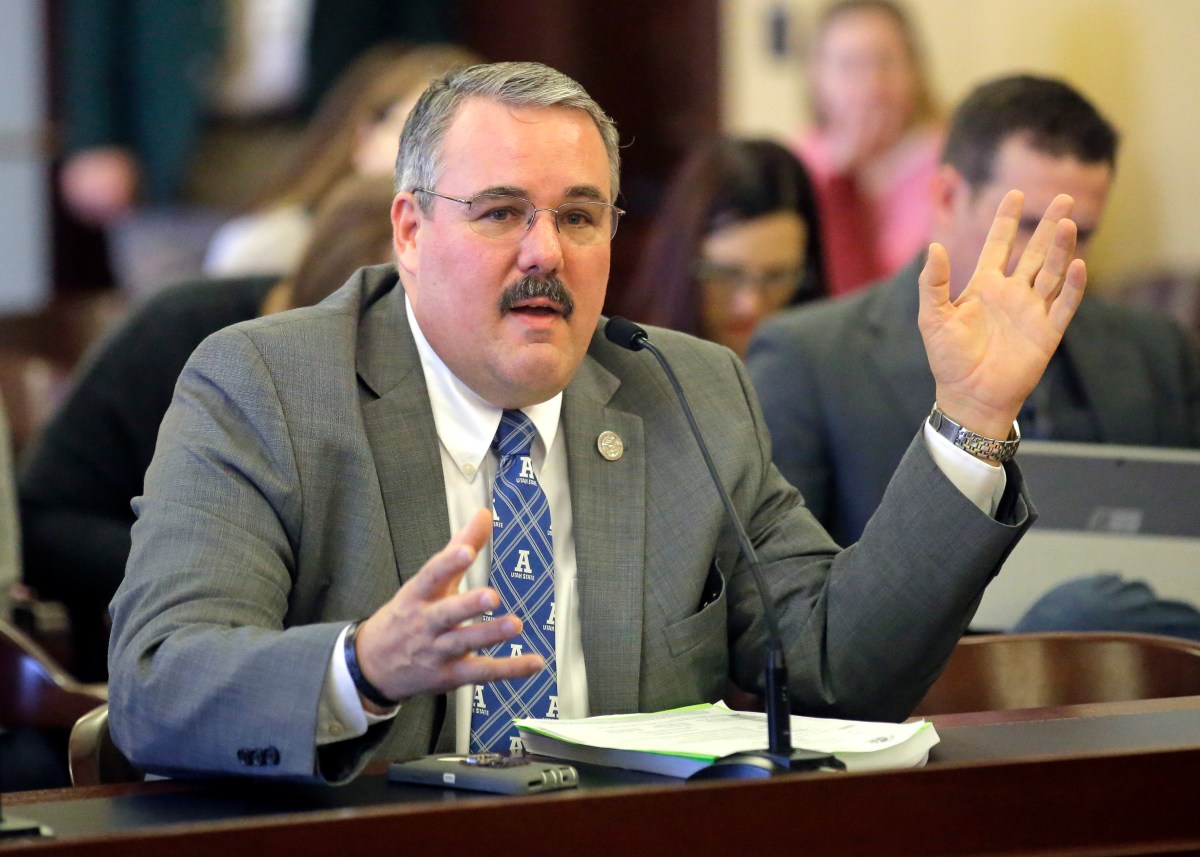
Voter opposition to large data center projects is influencing local and state elections in the U.S. In Utah, several elected officials lost their primary races after supporting the proposed Stratos data center near the Great Salt Lake, reflecting widespread public concerns about these developments.
Key Facts
Utah State Senate President J. Stuart Adams lost his primary election after backing a major data center project called Stratos.
The Stratos project would be one of the largest data centers in the world and require more electricity than Utah currently uses.
Local officials who supported the project in Box Elder County also lost their elections.
Many Americans oppose data centers near their communities due to concerns about water use, energy demand, land use, and government subsidies.
Surveys show that around 57-70% of Americans oppose building new data centers close to where they live.
Data centers were once seen as economic benefits but are now creating political challenges for politicians nationwide.
Some cities, like Festus in Missouri, have seen local officials voted out after supporting large data center proposals.
The issue reflects a growing conflict between the demand for AI infrastructure and local environmental and resource concerns.
Read the Original
Want the full story? Tap a source to open the original
article.
JD Vance, the US vice-president, is leading a delicate peace deal with Iran amid ongoing conflict. This role risks his political future as the deal faces criticism and pressure from President Donald Trump’s remarks and hawkish members of his party.
Key Facts
JD Vance is the US vice-president and the main negotiator in a ceasefire deal with Iran.
His involvement in the Iran deal marks the highest-level US-Iran engagement since 1979.
Vance opposes “forever wars” but supports the current Middle East military intervention.
The Iran deal includes sanctions relief and release of frozen Iranian assets.
Some members of Vance’s party criticize him for being too trusting of Iran.
President Trump has threatened to resume attacks on Iran, complicating diplomatic efforts.
Vance tries to manage Trump’s harsh statements about Iran during negotiations.
Vance hopes the deal will help restore his image and political standing ahead of a possible 2028 presidential run.
Read the Original
Want the full story? Tap a source to open the original
article.
The United States has proposed a plan to use $12 billion of Iran’s frozen assets to buy American agricultural products, which would then be sent to Iran. Negotiations between the US and Iran are ongoing, but Iran has not agreed to conditions that limit how it can spend the funds.
Key Facts
The US wants Iran’s frozen money to be used to buy food like corn, wheat, and soybeans from American farmers.
The money will be kept in a controlled account overseen by the US and used only for food and medical supplies.
Iran’s officials say they have not agreed to US conditions and want the freedom to decide how to spend their funds.
Iran’s foreign ministry insists purchases will be based on fair prices and not terms dictated by the US.
The two countries have had a difficult relationship for decades, with very limited trade mostly for humanitarian needs.
Any agreement over how Iran’s money is spent may require long and complex negotiations.
Some US lawmakers and companies are cautious about restarting trade with Iran due to political risks.
President Donald Trump stated that the deal would help American farmers and address a humanitarian crisis in Iran.
Read the Original
Want the full story? Tap a source to open the original
article.
A woman in New York City woke up several times unable to breathe and found an oyster mushroom growing under her bed. The mushroom’s spores can cause breathing problems and lung inflammation if inhaled for a long time. She removed the mushroom and is working with her landlord to resolve the issue.
Key Facts
Amelia Axelrod woke up at night unable to breathe and felt chest tightness.
She went to urgent care but did not get a medical solution.
She discovered a large oyster mushroom growing out of the floorboard under her bed.
Oyster mushrooms release tiny spores that can cause asthma-like symptoms when inhaled.
Long exposure to these spores can cause a lung condition called hypersensitivity pneumonitis.
The mushroom likely grew from spores entering through open patio doors or leaks.
Axelrod has removed the mushroom and her landlord is assisting her.
She is monitoring the situation to avoid further health problems.
Read the Original
Want the full story? Tap a source to open the original
article.
Tech companies like Google, Amazon, Microsoft, and Nvidia are addressing concerns about their data centers’ water use as part of the growing AI industry. They are promoting efforts to reduce and manage water consumption, such as recycling water and using new cooling methods. Public worries about water and energy use are influencing policies and debates worldwide.
Key Facts
Major tech companies are working to explain and reduce water use in AI data centers.
Google, Amazon, and Microsoft have water replenishment projects and use recycled water for cooling.
Nvidia says its new technology can greatly reduce water concerns.
About 70% of U.S. people oppose data centers in their communities mainly due to water and energy use.
Virginia lawmakers are moving to restrict water-heavy cooling methods in data centers.
Data centers use less water overall than many other big industries.
Experts warn that local water use matters most, especially in drought areas.
Water cooling uses less electricity than air cooling, but uses more water, creating a tradeoff.
Read the Original
Want the full story? Tap a source to open the original
article.
Inspectors found several bodies in poor condition at Nottingham University Hospitals NHS trust’s mortuary because they were not put in freezers on time. The trust, facing a large investigation into maternity care failures, admitted it lacks enough storage and is working on fixing these problems.
Key Facts
Eight bodies were found in advanced decay during a March inspection at Nottingham’s NHS trust mortuary.
The bodies were not transferred to freezers quickly enough, causing decomposition.
Identification wristbands were sometimes not checked, risking the wrong body being given to families.
The trust is central to the NHS’s biggest maternity care investigation, involving more than 500 mothers and babies harmed or died between 2012 and 2025.
A report by midwife Donna Ockenden highlighted systemic failings at the trust and detailed poor treatment of families.
The trust’s chief executive apologized and accepted responsibility for the mortuary issues.
The trust has created an action plan with independent oversight to improve mortuary services and maintain its regulatory license.
Two men were arrested and bailed on suspicion of misconduct related to mortuary practices as part of a police inquiry called Operation Perth.
Read the Original
Want the full story? Tap a source to open the original
article.
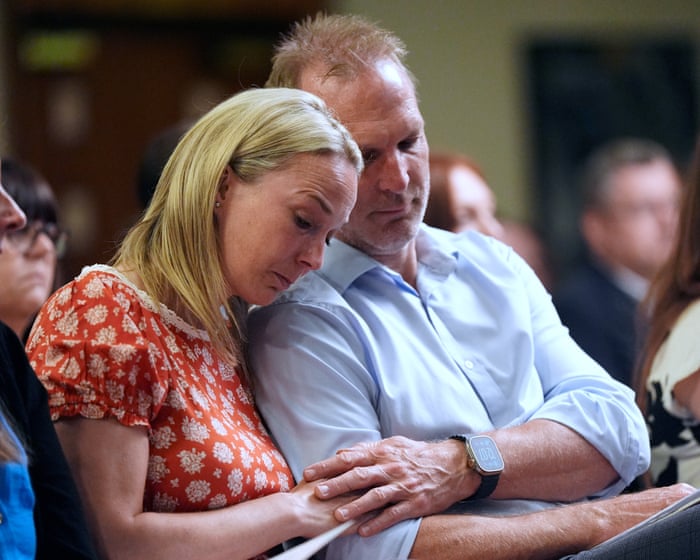
A UK report has revealed a major scandal in maternity care within the National Health Service (NHS), called the Nottingham maternity care scandal. The report found long-term failures in care that caused serious harm or death to over 500 mothers and babies, especially affecting women of color and teenagers.
Key Facts
The report reviewed 2,500 childbirth cases from 2012 to 2025.
There were “deeply rooted and systemic” failures in the NHS maternity services.
Women and families raising concerns were often ignored.
Women of color and teenage mothers were particularly affected.
Chronic understaffing was a key problem contributing to poor care.
More than 500 babies and mothers died or suffered serious harm.
NHS leaders knew about the problems but did not take action for over ten years.
Calls are being made for a public inquiry to hold those responsible accountable.
Read the Original
Want the full story? Tap a source to open the original
article.