The World Cup is attracting many fans in Kibera, Kenya, where people are buying and selling second-hand soccer jerseys. Antonio Massari, an Italian volunteer English teacher, enjoys searching the local market for these jerseys during the tournament.
Key Facts
The World Cup soccer tournament is currently happening.
In Kibera, Kenya, there is a popular market selling second-hand soccer jerseys.
Fans and collectors look for jerseys at this market.
Antonio Massari, an Italian volunteer teaching English, often visits this market.
The article focuses on the excitement around soccer jerseys during the World Cup.
The market offers affordable options for fans who want World Cup merchandise.
The story highlights local demand and enthusiasm for World Cup gear in Kenya.
Read the Original
Want the full story? Tap a source to open the original
article.
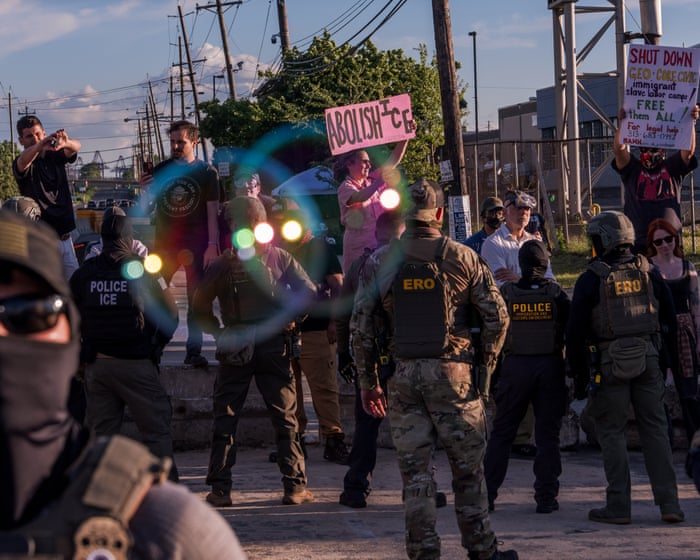
Radio Jornalera NJ is a small local media group in New Jersey that reports on conditions inside the ICE detention center at Delaney Hall. They provide updates to immigrant communities, challenge misinformation, and give a voice to detainees and their families during protests and hunger strikes.
Key Facts
Radio Jornalera NJ uses live streaming, Instagram, and radio to share news about the ICE jail in Newark.
The outlet focuses on the Spanish-speaking immigrant community in New Jersey.
They have exposed issues like police blocking family visits even when visitation was allowed.
The team interviews released immigrants and documents protests and hunger strikes inside the facility.
Other media and social influencers have covered the protests, sometimes showing violence or clashing with protesters.
Radio Jornalera NJ aims to provide accurate information and highlight detainees’ experiences.
Their reporters sometimes face risks; one volunteer was arrested on May 31 while reporting.
The group works to support and empower immigrant communities by sharing truthful and timely updates.
Read the Original
Want the full story? Tap a source to open the original
article.
The article discusses whether the Senate will keep supporting farming methods that rely heavily on chemical pesticides or choose to fund healthier and more sustainable farming practices. It highlights growing voter opposition to harmful pesticides and questions if lawmakers will respond.
Key Facts
Many voters are showing concern about the use of toxic pesticides in farming.
Current farming often depends on chemicals made by a few large companies.
These pesticides can have negative effects on health and the environment.
The Senate provides subsidies that support chemical-based farming systems.
There is a debate about shifting funds toward more sustainable farming methods.
Sustainable farming aims to protect both people’s health and the environment.
Farmers currently may depend on big corporations for their pest control products.
Read the Original
Want the full story? Tap a source to open the original
article.
Indian Prime Minister Narendra Modi traveled to France to attend the G7 summit. He is expected to have talks with U.S. President Donald Trump during the event.
Key Facts
The G7 summit is a meeting of leaders from seven major advanced economies.
Prime Minister Modi from India is attending the summit held in France.
Modi plans to hold one-on-one discussions with President Trump.
The agenda of their talks has not been fully detailed.
The G7 summit focuses on global economic and political issues.
The event brings together leaders to discuss cooperation and challenges.
This visit highlights India's involvement in major international meetings.
The article mentions related current global news but focuses on Modi’s attendance at the G7.
Read the Original
Want the full story? Tap a source to open the original
article.
A 35-year-old woman was seriously injured by a white shark while swimming near Coogee Beach in Sydney, Australia. Lifeguards and bystanders helped rescue her, and she was airlifted to a hospital in critical condition.
Key Facts
The woman was attacked about 100 feet from shore while swimming with two friends.
The shark was estimated to be about 11 feet long.
Lifeguards and an off-duty doctor helped rescue her and applied tourniquets to stop bleeding.
The woman had large bite wounds on her thigh and arm, with exposed bone.
She was airlifted to a hospital and needs extensive surgery.
The beach and nearby areas were closed for 24 hours after the attack.
Australia has seen several shark attacks in 2026, including fatal attacks on spearfishing divers.
Shark attacks have increased as more people participate in water activities and the population grows.
Read the Original
Want the full story? Tap a source to open the original
article.
Thousands of people gathered in Belfast for an anti-racism rally after violent attacks took place across the city. The rally, called "Together Against Hate," aimed to show support for victims and oppose racism following disorder sparked by a widely shared video of a knife attack.
Key Facts
The rally started around 1 p.m. at Belfast City Hall with thousands attending.
Violence across Belfast targeted homes, businesses, and vehicles, causing fear in communities.
The unrest began after a knife attack in north Belfast was widely shared on social media.
Political parties, trade unions, and various community groups took part in the protest.
Participants held signs with messages supporting refugees and condemning racism.
Volunteers helped by evacuating people, providing meals, and supporting those affected.
Public transport and businesses across Northern Ireland were disrupted due to the disorder.
A man from Sudan was charged with attempted murder related to the knife attack incident.
Read the Original
Want the full story? Tap a source to open the original
article.
A former US ambassador, Henry Ensher, said the agreement between the US and Iran is just the beginning and not a final deal. He warned that many problems could still happen during the process.
Key Facts
Henry Ensher is a former US ambassador.
He commented on the US–Iran agreement.
He said the deal is not a final settlement.
The agreement marks the start of a process.
Many things could still go wrong with this process.
The agreement aims to address issues between the US and Iran.
The situation remains uncertain despite the agreement.
Read the Original
Want the full story? Tap a source to open the original
article.
Millions of people in the United States are being warned to stay indoors and avoid heat because very hot weather is spreading in many areas. The National Weather Service has issued extreme heat warnings and heat advisories for places like Oregon, Washington, California, and parts of the southern and central states.
Key Facts
Extreme heat warnings are active in Oregon, Washington, and California, with temperatures reaching up to 110 degrees Fahrenheit in some areas.
Heat advisories cover states including Oklahoma, Kansas, Arkansas, Louisiana, Mississippi, Florida, Georgia, the Carolinas, and parts of California, Oregon, and Washington.
The National Weather Service recommends staying in air-conditioned places, drinking plenty of water, taking breaks in shade, and checking on others.
Nighttime temperatures will remain warm, offering little relief.
The warnings come during events like the UFC Freedom 250 and President Donald Trump’s 80th birthday weekend.
Oregon’s Portland and surrounding areas expect dangerously hot days from Sunday to Tuesday.
Northern California’s inland valleys may experience temperatures as high as 112 degrees Fahrenheit.
Texas’s Palo Duro Canyon State Park is under a heat advisory with temperatures up to 105 degrees.
Read the Original
Want the full story? Tap a source to open the original
article.
Anthropic, an AI company, will stop all users from accessing its most advanced AI models after the US government ordered it to block foreign users due to national security concerns. The government worries these models might be exploited to find software weaknesses, and Anthropic is working to restore access while disagreeing with the government’s decision.
Key Facts
The US government ordered Anthropic to suspend foreign access to its AI models called Fable 5 and Mythos 5.
Anthropic must disable these models for all users to comply with this order.
The government cited a possible way to bypass safety measures, called a “jailbreak,” as the security concern.
Anthropic disagrees that this risk justifies removing the models from widespread use.
These AI models could potentially be used to find software bugs that might be exploited in cyberattacks.
Anthropic has refused US military use of its AI for surveillance and autonomous weapons, which hurt its relationship with the government.
The US government has previously focused export controls on AI hardware, but this order targets AI software access.
Anthropic recently filed confidentially for an IPO and released the new Mythos-class AI model.
Read the Original
Want the full story? Tap a source to open the original
article.
A Ukrainian drone strike killed one person and injured three in Russia’s southern Krasnodar region. The attack caused a fire at a sea terminal used for oil and gas exports. Ukraine also reported hitting other Russian military and energy targets far inside Russia.
Key Facts
A Ukrainian drone attack killed one person and injured three in Krasnodar, Russia.
The strike damaged a Black Sea sea terminal in the village of Volna, which handles oil and gas exports.
Ukraine’s military also said it struck an oil preparation and pumping station in Russia’s Volgograd region.
Ukrainian forces hit Russian-occupied areas in Ukraine’s Donetsk and Zaporizhzhia regions.
Ukrainian President Volodymyr Zelenskyy said long-range missiles hit a Russian military factory over 900 km from the front line.
The conflict front line, stretching over 1,000 km, remains mostly unchanged amid ongoing drone warfare.
Russian President Vladimir Putin promised to improve air defenses after previous Ukrainian strikes on Russian facilities.
Russia continues bombing Ukrainian regions, injuring civilians and damaging places like marketplaces.
Read the Original
Want the full story? Tap a source to open the original
article.
The United States and Iran are close to making a deal to end the ongoing war and reopen the Strait of Hormuz, an important shipping route. The agreement is expected to be signed soon, with talks to follow on details like Iran’s nuclear program and sanctions relief.
Key Facts
Pakistan’s Prime Minister said the war-ending deal is closer than ever and may be finalized within 24 hours.
Recent fighting involved Iran firing at U.S. and Israeli forces and the interception of Iranian drones targeting ships in the Strait of Hormuz.
The U.S. and Israel began the war on February 28, which has severely disrupted oil and gas shipments from the Persian Gulf.
A fragile ceasefire has been in place since April 7.
The deal will include steps to reduce or remove Iran’s highly enriched uranium within 60 days after signing.
Iran wants to charge fees for ships passing through the Strait of Hormuz, but this conflicts with international law.
The reopening of the Strait of Hormuz aims to ease disruptions to global energy supplies and lower worldwide fuel and food prices.
The agreement is expected to include phased lifting of U.S. sanctions on Iran and the release of frozen Iranian funds.
Read the Original
Want the full story? Tap a source to open the original
article.
Artificial intelligence (AI) is changing agriculture by helping farmers grow plants more efficiently and sustainably. AI tools analyze data like weather, soil, and plant health to improve crop quality and yield, benefiting industries like wellness and cosmetics that rely on plant ingredients.
Key Facts
The wellness industry, worth about $2 billion in 2025, depends heavily on agriculture for ingredients.
Climate change challenges farming through heat, pests, and extreme weather, making resilience and stable yields crucial.
AI uses satellite images, sensors, and weather data to optimize watering, fertilizing, and detect plant diseases early.
AI helps predict crop yields and manage harvests, supporting better farm planning.
Medicinal and cosmetic plants are sensitive to climate changes, but AI can help maintain soil and plant health.
Companies like Brightseed and NotCo use AI to improve ingredient sourcing and create better products.
AI can identify plant compounds beneficial for skin health and discover new cosmetic ingredients.
The technology is turning farming into a data-driven process that supports sustainable and profitable agriculture.
Read the Original
Want the full story? Tap a source to open the original
article.
Iran will hold funeral ceremonies for its late Supreme Leader Ali Khamenei in Tehran starting July 4, with burial planned in Mashhad on July 9. The burial was delayed from March because of ongoing conflict and will include ceremonies in Tehran and the city of Qom.
Key Facts
Ali Khamenei, Iran’s Supreme Leader, died in a joint US-Israeli air strike in February.
Funeral events will start in Tehran on July 4 and last three days.
There will be additional ceremonies in Qom on July 7.
Burial will take place in Mashhad on July 9, Khamenei’s hometown.
The burial was originally set for March but postponed due to the war.
The funeral start date coincides with the United States’ Independence Day.
Khamenei led Iran since 1989 after Ayatollah Ruhollah Khomeini died.
Khamenei’s son, Mojtaba, is reportedly becoming more involved as US-Iran talks continue.
Read the Original
Want the full story? Tap a source to open the original
article.
A military transport plane crashed in Assam, a region in northeastern India, during a normal flight. At least five people died, and rescue workers are retrieving victims from the site.
Key Facts
The crash happened in Assam, India’s northeast area.
It was a military transport aircraft.
The flight was routine, meaning it was a usual scheduled trip.
At least five people on the plane died.
Rescue teams are working at the crash location to recover victims.
The cause of the crash is not mentioned.
Details about the number of people on board are not provided.
Read the Original
Want the full story? Tap a source to open the original
article.
Workers started removing President Trump’s name from the outside of the Kennedy Center on Saturday morning, after a court set a deadline to do so. The Justice Department asked for more time because of safety issues caused by bad weather.
Key Facts
President Trump’s name is being removed from the Kennedy Center building.
The removal had a court-ordered deadline of 11:59 p.m. Friday.
The Justice Department asked the court for a 12-hour delay to meet the deadline.
The request for more time was due to safety concerns from bad weather.
The work started early Saturday morning, after the original deadline passed.
The Kennedy Center is a historic performing arts center in the United States.
Attorneys from the Justice Department represent the Kennedy Center in this case.
Read the Original
Want the full story? Tap a source to open the original
article.
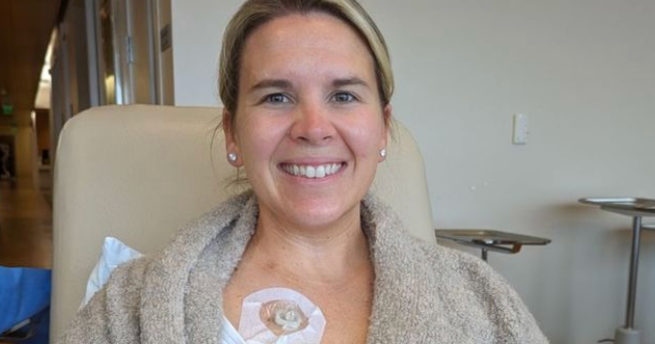
Amy Piccoli was diagnosed with Stage IV colon cancer that had spread to her liver, despite having no symptoms. After chemotherapy and immunotherapy shrank her tumors, she became a candidate for a rare liver transplant, which was performed using a living donor, offering her a much better chance of survival.
Key Facts
Amy Piccoli, a 39-year-old mother from Los Angeles, was diagnosed with late-stage colon cancer after a routine scan during a hospital visit.
She had no typical symptoms of colon cancer and no family history of the disease.
Her cancer spread to her liver, making surgery difficult for the liver tumors.
Chemotherapy combined with immunotherapy caused significant tumor shrinkage.
Recent research from Europe shows liver transplants for certain patients with colon cancer liver metastases can increase five-year survival rates up to 80%.
Only a few U.S. centers offer this liver transplant procedure, which requires strict criteria to select patients.
Piccoli was evaluated at Northwestern Medicine and found eligible for a liver transplant using a living donor.
A family friend donated a liver segment, and Piccoli underwent the transplant in December 2025.
Read the Original
Want the full story? Tap a source to open the original
article.
John Healey, the UK Defence Secretary, unexpectedly resigned, criticizing Prime Minister Sir Keir Starmer's defence spending plans as unsafe. His exit raises questions about Starmer's leadership and the government's ability to manage defence funding and national security.
Key Facts
John Healey resigned as UK Defence Secretary, citing concerns about inadequate defence funding.
Healey publicly stated that the Prime Minister’s decisions put the country at risk.
Healey is considered a loyal Labour politician, making his resignation a significant judgment on the government.
He accused Downing Street of being unwilling or unable to allocate sufficient money for defence.
The UK government had difficulty agreeing on how much extra money to announce for defence spending.
Healey demanded a clear date for reaching 3% of national income spent on defence, a target related to a previous NATO promise.
Healey tried to speak directly with Prime Minister Starmer about the issue but was delayed and ultimately ignored.
Many Labour MPs have expressed dissatisfaction with Starmer’s leadership, with some calling for him to quit.
Read the Original
Want the full story? Tap a source to open the original
article.
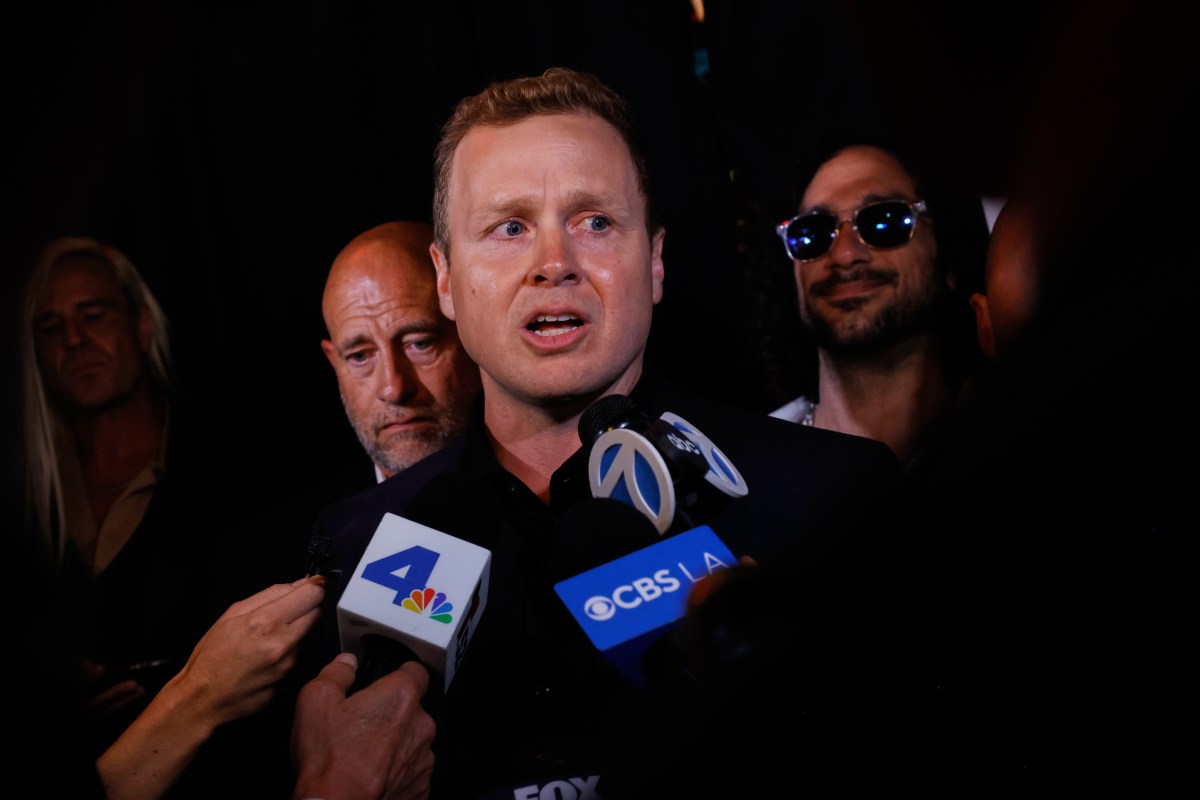
Spencer Pratt, a former reality TV star and candidate in the Los Angeles mayoral race, says he has secret audio recordings that could make either Mayor Karen Bass or City Councilmember Nithya Raman resign. Pratt lost in the June 2 primary but declared a political "war," promising to release the recordings and warning of possible FBI investigations.
Key Facts
Spencer Pratt ran as an independent candidate in the 2025 Los Angeles mayoral race.
Pratt lost the primary election, receiving 25.5% of the vote.
Mayor Karen Bass and Nithya Raman advanced to the runoff with 34.3% and 29% of the vote, respectively.
Pratt claims he has audio recordings that could force Bass or Raman to resign.
He posted a video on social media threatening to release the recordings now that his campaign is over.
Pratt accused city leaders of failing to address homelessness, crime, and wildfire recovery.
President Donald Trump endorsed Pratt during the mayoral race.
Pratt said he expects possible FBI investigations into Bass and Raman’s offices.
Read the Original
Want the full story? Tap a source to open the original
article.
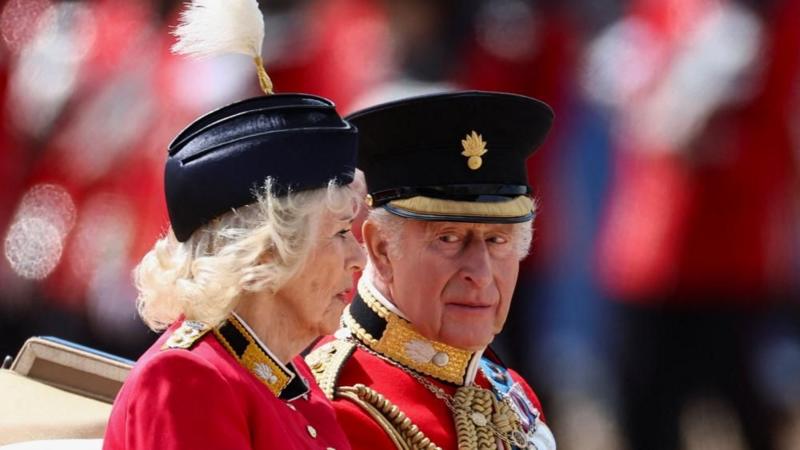
Crowds gathered to watch the Trooping the Colour parade, which celebrates King Charles III's official birthday. The Royal Family took part in the event, traveling in carriages and on horseback, and it ended with a flypast by the Red Arrows.
Key Facts
The parade started from Buckingham Palace and went along The Mall to Horseguard's Parade.
King Charles III and Queen Camilla rode in a traditional carriage called an Ascot Landau.
The Prince of Wales, Princess Royal, and Duke of Edinburgh rode horses as royal colonels.
The Princess of Wales and her three children traveled by carriage.
About 400 musicians performed as part of the Massed Bands of the Household Division.
The Royal Family watched the Red Arrows flypast from the Buckingham Palace balcony.
Some dignitaries, including Sir Keir Starmer and Lady Victoria Starmer, attended the event.
King Charles wore the Grenadier Guards uniform that carried his mother Queen Elizabeth II’s cypher.
Read the Original
Want the full story? Tap a source to open the original
article.
Workers began removing President Donald Trump’s name from the Kennedy Center in Washington, DC, after a judge ruled that the name had been added illegally. The court said only Congress can change the center’s name, which honors President John F. Kennedy.
Key Facts
President Trump’s name was added to the Kennedy Center last December by a board he chose.
A federal judge ordered the removal of Trump’s name, saying only Congress can rename the center.
The judge set a deadline for removal, which was missed, leading to work starting overnight.
People gathered outside the center to watch and supported removing Trump’s name.
Trump took control of the center by replacing its board members and naming himself chair.
The center had already removed Trump’s name from its website before the physical removal.
Lawyers for Trump tried twice to stop the removal but lost both appeals.
The Department of Justice requested extra time to remove the name because of safety concerns but was denied.
Read the Original
Want the full story? Tap a source to open the original
article.