French President Emmanuel Macron is meeting Italian Prime Minister Giorgia Meloni to strengthen their political relationship. Even though they have had disagreements before, shared interests and Meloni’s issues with U.S. President Donald Trump are bringing them closer.
Key Facts
The summit between Macron and Meloni is a rare meeting aimed at improving ties between France and Italy.
Macron is the President of France; Meloni is the Prime Minister of Italy.
Their past relationship included political differences.
Meloni recently had conflicts with U.S. President Donald Trump.
Shared political interests are helping Macron and Meloni work together more.
The meeting takes place on June 25, 2026.
This summit is part of ongoing European political discussions.
Read the Original
Want the full story? Tap a source to open the original
article.
The Lincoln Memorial Reflecting Pool has returned to a clear blue color after weeks of problems with algae growth and peeling paint. The Trump administration linked the earlier issues to vandalism, but evidence supporting those claims is limited.
Key Facts
The Reflecting Pool was recently resurfaced with a new blue coating called “American flag blue” by President Donald Trump.
Shortly after reopening, the water turned green due to an algae bloom, which officials treated with chemicals.
Experts suggested the darker coating might have caused water temperature changes that encouraged algae growth.
Sections of the new coating started peeling, possibly because of trapped moisture under the surface.
The Trump administration claimed that vandalism caused some of the damage, including allegations of chemical use and cuts to the pool lining.
U.S. Park Police released video footage seeking help to identify a person seen near the pool around the time of the alleged damage.
Recent pictures and videos show the pool water is now clearer and blue again, similar to its appearance before the problems.
No confirmed public evidence has fully supported the claims of vandalism so far.
Read the Original
Want the full story? Tap a source to open the original
article.
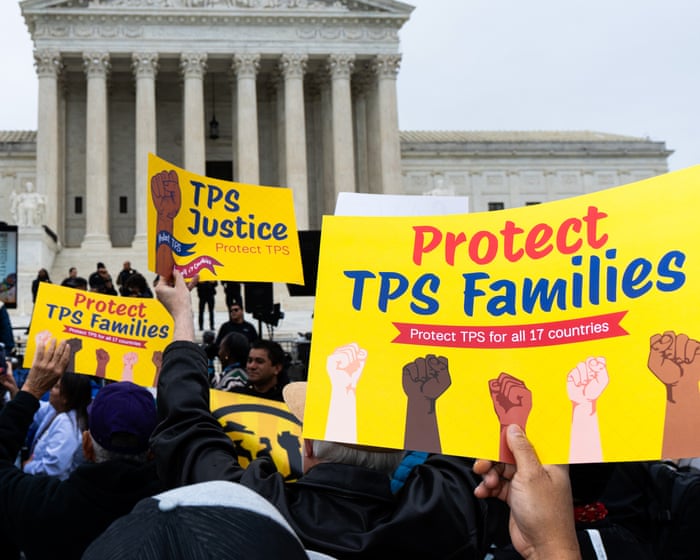
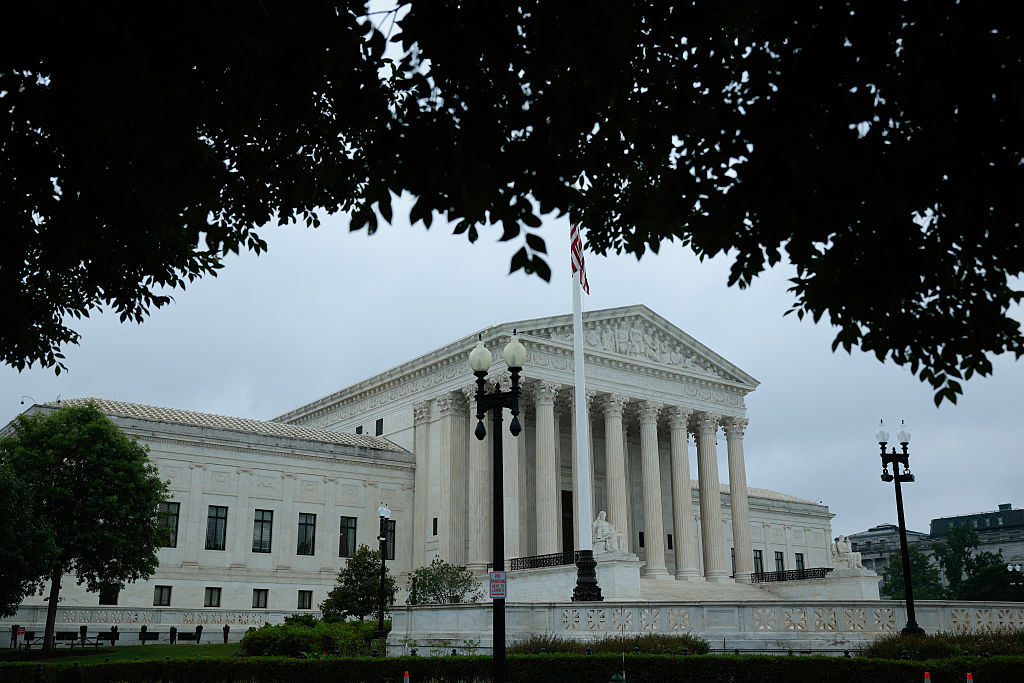
The US Supreme Court ruled in favor of President Donald Trump’s administration to end temporary protected status (TPS) for hundreds of thousands of people from Haiti and Syria. TPS allows people from unsafe countries to live and work in the US without fear of deportation.
Key Facts
The Supreme Court allowed the government to remove TPS from over 350,000 Haitians and 6,100 Syrians.
TPS is given to people from countries affected by war, natural disasters, or political instability.
The administration argued that the courts cannot review the decision to end TPS because of the original law’s wording.
Lawyers opposing the removal argued that DHS did not follow the correct process and that Haiti and Syria are still unsafe.
Last year, the court allowed the Trump administration to end TPS for over 300,000 Venezuelans.
Nearly 1.3 million people had TPS status in the US when President Trump began his second term in January 2025.
The decision could lead to ending TPS for many more countries, affecting a large number of immigrants.
The Supreme Court currently has a conservative majority that seemed supportive of ending TPS during arguments.
Read the Original
Want the full story? Tap a source to open the original
article.
President Donald Trump criticized some European NATO allies for not fully supporting the US military campaign against Iran. NATO Secretary General Mark Rutte said most European countries did help by allowing the use of their military bases and continuing support near the Strait of Hormuz, but a few like Spain and France refused.
Key Facts
President Trump expressed disappointment with Italy, the UK, Germany, France, and Spain for their limited support in the US war against Iran.
Trump’s top diplomat, Marco Rubio, said Europe’s refusal to allow use of bases hurt the alliance with the US.
NATO Chief Mark Rutte said many European countries provided bases and logistical help for the US military during the six-week conflict.
About 4,000 to 5,000 US planes took off from European bases during the operation called Epic Fury.
Italy and Romania allowed significant US military use of their bases; Romania reduced commercial flights to store tankers.
The UK allowed the use of its Diego Garcia base only for defensive purposes, while Spain and France prohibited military use of their bases.
European nations largely supported the US campaign politically but avoided direct military involvement, saying the war was not Europe’s.
European countries were concerned about the legal justification for the war and avoided actions that might violate international laws.
Read the Original
Want the full story? Tap a source to open the original
article.
France is experiencing very high temperatures due to a heatwave. The French government has raised its health alert to the highest level because the heat is putting a lot of pressure on hospitals and healthcare services.
Key Facts
A heatwave is causing extremely hot weather across France and Europe.
France's health alert warning system is now at its highest level.
The healthcare system is struggling to handle the increased number of heat-related illnesses.
Prime Minister Sébastien Lecornu announced the health alert increase on June 25, 2026.
Some groups, such as homeless migrants in Paris, are particularly affected by the extreme heat.
Tourist sites in Paris have had to close early because of the heat.
Read the Original
Want the full story? Tap a source to open the original
article.
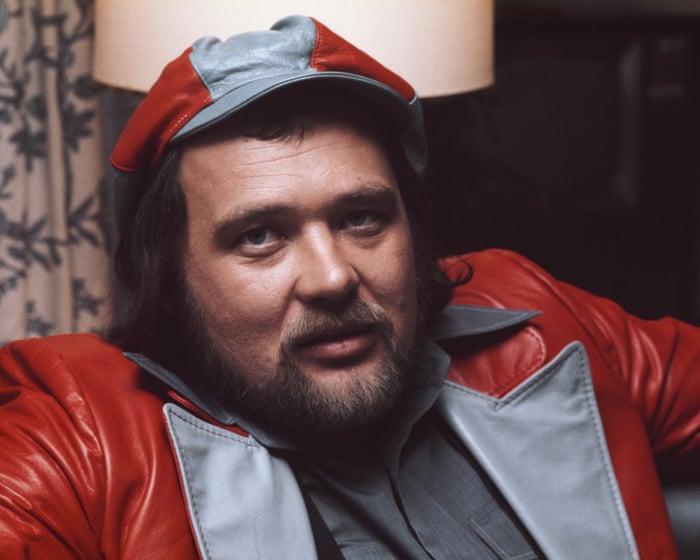
David Clayton-Thomas, the Canadian singer and lead vocalist of the band Blood, Sweat & Tears, has died at age 84. He was known for writing the hit song "Spinning Wheel" and leading the band to international success in the 1960s and 70s.
Key Facts
David Clayton-Thomas died peacefully in a Toronto hospital; no cause of death was given.
He wrote "Spinning Wheel," a song that reached number two in the US and won a Grammy award.
Born in England, his family moved to Toronto after World War II.
He faced hardships in his youth, including homelessness and legal troubles.
Clayton-Thomas joined Blood, Sweat & Tears after moving to New York; their first album with him sold 10 million copies and won five Grammys.
The band’s music combined rock, jazz, and R&B styles.
They toured Eastern Bloc countries during the Cold War, a trip connected to Clayton-Thomas receiving a US green card.
After leaving the band in 1972, he released solo albums, formed a band in Toronto, helped troubled youth, and wrote a memoir.
A memorial concert for him is planned soon.
Read the Original
Want the full story? Tap a source to open the original
article.
The Supreme Court ruled 6-3 in favor of allowing presidents to control who can request asylum in the U.S. This decision supports a border practice that lets agents turn away migrants before they reach official entry points.
Key Facts
The Supreme Court decision was announced on a Thursday.
The ruling supports a method called "metering," which limits asylum seekers' access before they reach U.S. checkpoints.
Lower courts had previously said people arriving at ports of entry had a right to apply for asylum.
The Supreme Court overturned those lower court decisions.
The "metering" policy was officially ended in 2021 but similar restrictions continue under both President Trump and President Biden administrations.
The ruling affects who can make an asylum claim at the U.S. border.
The decision was made with a 6-3 vote by the justices.
Read the Original
Want the full story? Tap a source to open the original
article.
The US Commerce Department has stopped Polestar from importing new cars starting with model year 2027 due to rules banning connected cars from companies linked to China. Polestar will still sell and support its current US models but cannot sell future models like the Polestar 5 or Polestar 6 in the US.
Key Facts
Polestar is an electric car brand owned by Zhejiang Geely Holding, a Chinese company.
The US Commerce Department denied Polestar permission to import vehicles from model year 2027 onward.
The ban is part of a rule targeting connected cars from automakers with Chinese ties.
Polestar can continue selling existing Polestar 3 and Polestar 4 SUVs in the US and provide service support.
Polestar’s Polestar 3 SUV is built in South Carolina, but Polestar 4 SUVs sold in the US are made in South Korea.
Volvo, also owned by Geely, was authorized to import model year 2027 vehicles, unlike Polestar.
Polestar plans to focus on growth in Europe, Southeast Asia, Eastern Europe, Latin America, and Canada.
The company says it will manufacture the upcoming Polestar 7 model in Europe.
Read the Original
Want the full story? Tap a source to open the original
article.
Central air conditioning systems can improve home comfort by cooling the entire house evenly and controlling humidity. Although the upfront costs for installation and equipment are high, newer, efficient units may save money on energy bills over time and increase home value, especially in warm areas.
Key Facts
Installing a central air conditioner often costs several thousand dollars, not including the unit.
Inflation has raised the prices for HVAC equipment and labor recently.
Central AC cools the whole home evenly, unlike window or portable units that cool only one room at a time.
Homes with central air may be more attractive to buyers in hot climates.
Newer central AC models use less energy than systems from 15 to 20 years ago.
Lower monthly energy bills may help offset installation costs over time.
A new system can be more reliable and come with warranties that reduce repair costs.
Central air may not be worth the investment if the home or owner's situation does not justify the cost.
Read the Original
Want the full story? Tap a source to open the original
article.
President Donald Trump will attend a fireworks display at Mount Rushmore in South Dakota next Friday. This event is part of a three-day weekend celebrating Independence Day.
Key Facts
President Trump is scheduled to attend a fireworks show at Mount Rushmore.
The event will take place next Friday in South Dakota.
It is part of a three-day weekend of Independence Day celebrations.
South Dakota Governor Larry Rhoden announced Trump's attendance.
The announcement was made in a press release on the Thursday before the event.
Governor Rhoden expressed honor in welcoming President Trump to South Dakota.
Read the Original
Want the full story? Tap a source to open the original
article.
Vinii, leader of the House of Revlon, explains that voguing is a dance form focused on personal freedom and self-expression. Voguing started in Harlem in the 1960s and 1980s and has become popular in France, especially within the LGBTQ+ community.
Key Facts
Voguing is a dance style mixing fashion, posing, and self-expression.
It began in Harlem’s ballroom scene during the 1960s and 1980s.
The dance is closely linked to the LGBTQ+ community, especially in France.
Vinii is known as the Father of the international House of Revlon, a voguing group.
Voguing is described as a way to experience liberation and freedom.
Paris has become a major center for voguing culture today.
The interview with Vinii was featured on France 24’s show Perspective.
The dance scene offers a community and refuge for LGBTQ+ people in France.
Read the Original
Want the full story? Tap a source to open the original
article.
The U.S. Supreme Court ruled that the Trump administration can end the Temporary Protected Status (TPS) program for thousands of Haitian and Syrian immigrants. The court said that federal government decisions on TPS cannot be overturned by courts.
Key Facts
The Supreme Court decision was made on June 25, 2026.
The ruling was a 6-3 majority vote.
Justice Samuel Alito wrote the majority opinion.
Temporary Protected Status (TPS) is a program that protects immigrants from certain countries during conflicts or disasters.
The decision allows the Trump administration to cancel TPS for Haitians and Syrians.
The court stated that federal government choices about TPS are not for courts to override.
Thousands of Haitian and Syrian immigrants currently benefit from TPS.
This ruling affects their ability to stay protected in the U.S.
Read the Original
Want the full story? Tap a source to open the original
article.
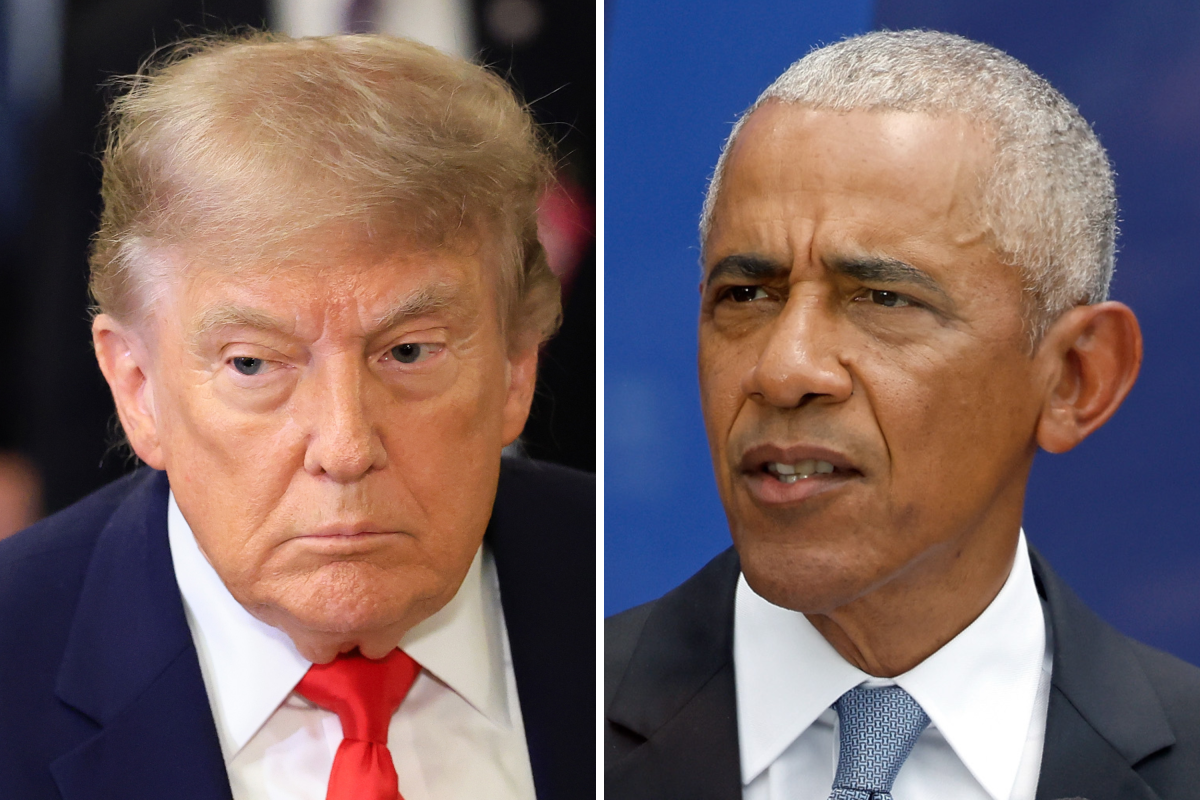
President Donald Trump has frequently mentioned former President Barack Obama in public statements, continuing their long-standing political rivalry. In a recent podcast, Obama said that Trump's repeated focus on him suggests an obsession and a lack of focus on current government work.
Key Facts
Barack Obama described President Trump’s frequent references to him as an "obsession."
Obama said when he was president, he did not have time to worry about his predecessor.
Trump has increased his mentions of Obama during his second term, including attacks and criticisms.
The rivalry began in 2011 when Trump promoted the false “birther” theory questioning Obama’s birthplace.
Despite Obama releasing his birth certificate, Trump continued to question its authenticity for years.
Trump’s attacks have included both policy critiques and personal insults, and they continue into 2026.
Obama suggested that focusing too much on a predecessor shows misplaced priorities for a sitting president.
The ongoing clash influences political messages and how voters view leadership in the United States.
Read the Original
Want the full story? Tap a source to open the original
article.
The Supreme Court decided that President Trump's administration can end temporary legal protections for many Haitians and Syrians living in the U.S. The court ruled that lower federal judges cannot stop this decision by reviewing the challengers’ claims.
Key Facts
The Supreme Court voted 6-3 in favor of the Trump administration.
The ruling allows ending temporary protected status (TPS) for Haitians and Syrians.
TPS is a program that gives temporary legal status and protection from deportation.
Federal judges do not have the power to block the administration’s decision in this case.
The decision supports President Trump’s efforts to reduce immigration.
Thousands of Haitians and Syrians currently benefit from TPS.
Ending TPS could force these people to leave the United States.
The case involved legal challenges against the administration's plan to end these protections.
Read the Original
Want the full story? Tap a source to open the original
article.
New York Assembly member Claire Valdez, running for Congress in New York’s 7th District, responded to criticism from Senator John Fetterman. She emphasized that the Democratic Party welcomes many different views and highlighted her recent election victory.
Key Facts
Claire Valdez is a New York State Assembly member and Democratic nominee for the 7th Congressional District.
Senator John Fetterman criticized her campaign and some democratic socialist candidates.
Valdez said the Democratic Party is a “big-tent party,” meaning it includes a wide range of ideas and members.
She focused on her recent win as a sign of strong support from voters.
The exchange highlights differing opinions within the Democratic Party.
Read the Original
Want the full story? Tap a source to open the original
article.
Poland and Ukraine opened the annual Ukraine Recovery Conference in Gdansk with a friendly tone despite recent disagreements over historical issues. Ukraine’s Prime Minister Yulia Svyrydenko attended instead of President Zelensky, and leaders called for strong Western support to help rebuild Ukraine after the war with Russia.
Key Facts
The conference focuses on rebuilding Ukraine’s economy after damage from the Russian invasion.
President Zelensky did not attend due to a dispute with Poland over a military naming decision linked to historical conflicts.
Ukrainian Prime Minister Yulia Svyrydenko represented Kyiv and spoke in a conciliatory manner without addressing the historical tensions.
Polish Prime Minister Donald Tusk emphasized hope for Ukraine’s recovery and called for Western investment.
Poland has taken in over one million Ukrainian refugees since the war began in 2022 and supports Ukraine joining the European Union.
Anti-Ukrainian sentiment has grown in Poland, with nearly 60% of Poles opposing Ukraine’s EU membership according to a recent poll.
Security was very tight in Gdansk due to concerns about possible provocations connected to the ongoing conflict.
Ukraine estimates that it needs over $500 billion for reconstruction and is seeking international support and investment.
Read the Original
Want the full story? Tap a source to open the original
article.
This article compares how much interest you can earn on $45,000 placed in either a certificate of deposit (CD) or a high-yield savings account over one year. Both have similar interest rates and federal insurance, but the CD offers a fixed rate while the savings account’s rate can change.
Key Facts
Both CDs and high-yield savings accounts currently offer around 4% interest.
Both types of accounts are insured by the FDIC up to $250,000.
A 3-month CD at 3.95% would earn about $437.94 in interest on $45,000.
A high-yield savings account at 4.10% after three months would earn $454.32, slightly more than the CD.
At six months, both accounts would earn the same interest, about $913.23.
Over nine months, the high-yield savings account earns $33.42 more than the CD.
After one year, the CD at 4.15% would earn $22.50 more than the savings account.
If interest rates rise, a savings account could earn more since its rate changes; if rates fall or stay the same, a CD might be better because its rate is fixed.
Read the Original
Want the full story? Tap a source to open the original
article.
Iran’s Islamic Revolutionary Guard Corps (IRGC) has told commercial ships to use only Iran-approved routes when passing through the Strait of Hormuz. This warning came after Oman announced a new shipping route through the strait, coordinated with the International Maritime Organization, causing tensions during ongoing peace talks between the US and Iran.
Key Facts
The IRGC insists that ships use only routes through the Strait of Hormuz approved by Iran.
Oman announced a new shipping transit route through the strait, coordinated with the International Maritime Organization (IMO).
The dispute covers control and safety of shipping routes in the Strait of Hormuz, a key waterway for global oil and gas transport.
The US and Iran recently signed a memorandum of understanding that paused hostilities and started negotiations regarding the strait.
The strait sees about 20 million barrels of oil and petroleum products shipped daily, which is about one-fifth of the world’s supply.
The strait is bordered by Iran to the north, and Oman and the UAE to the south, and is a narrow but vital route for energy exports.
Iran objects to Oman’s new route, saying it was announced without Iranian approval and threatens safety.
Iran previously issued a map directing ships to pass closer to its coast than before, asserting greater control over the shipping lanes.
Read the Original
Want the full story? Tap a source to open the original
article.
The U.S. Supreme Court ruled 6-3 to allow the Trump administration to end Temporary Protected Status (TPS) for Haitian and Syrian migrants. This decision lets the government remove legal protections and work permits from about 350,000 people while legal challenges continue.
Key Facts
The Supreme Court decision blocks a lawsuit on jurisdictional grounds, meaning courts cannot review the case right now.
The case, Mullin v. Doe, tests whether the Trump administration can end TPS protections for certain groups.
TPS is a program that temporarily protects people in the U.S. from deportation when their home countries have crises like wars or natural disasters.
TPS allows people to live and work legally in the U.S. while the unsafe conditions continue but does not offer a path to citizenship.
To qualify for TPS, people must be from a designated country and have lived continuously in the U.S. during the designation period.
The Department of Homeland Security decides which countries get TPS and can end the program if conditions improve.
Critics argue ending TPS for Haitians and Syrians is unlawful and discriminatory, but the administration says courts have limited ability to review these decisions.
Read the Original
Want the full story? Tap a source to open the original
article.
The Supreme Court has allowed the Trump administration to continue turning away asylum seekers at the US-Mexico border, changing how asylum law is applied. The court ruled 6-3 that migrants must physically enter US soil to claim asylum, overturning protections that had allowed them to apply while still at the border.
Key Facts
The Supreme Court ruled 6-3 to let the Trump administration turn back asylum seekers at the border.
The ruling means migrants must set foot on US soil to claim asylum rights.
Justices Kagan, Jackson, and Sotomayor dissented, warning the decision harms people fleeing persecution.
The case started in 2017 and challenges the practice of sending migrants back before they can apply for asylum.
The Biden administration had ended this policy in 2021 but it was reinstated after President Trump’s 2024 election.
The decision focuses on the interpretation of the word “arrive” in immigration law.
Lower courts had previously ruled that turning away asylum seekers before entry was illegal.
The Trump administration sees limiting asylum as key to controlling the southern border.
Read the Original
Want the full story? Tap a source to open the original
article.